

Global Solvent Free Reactive Diluents Market Size & Forecast:
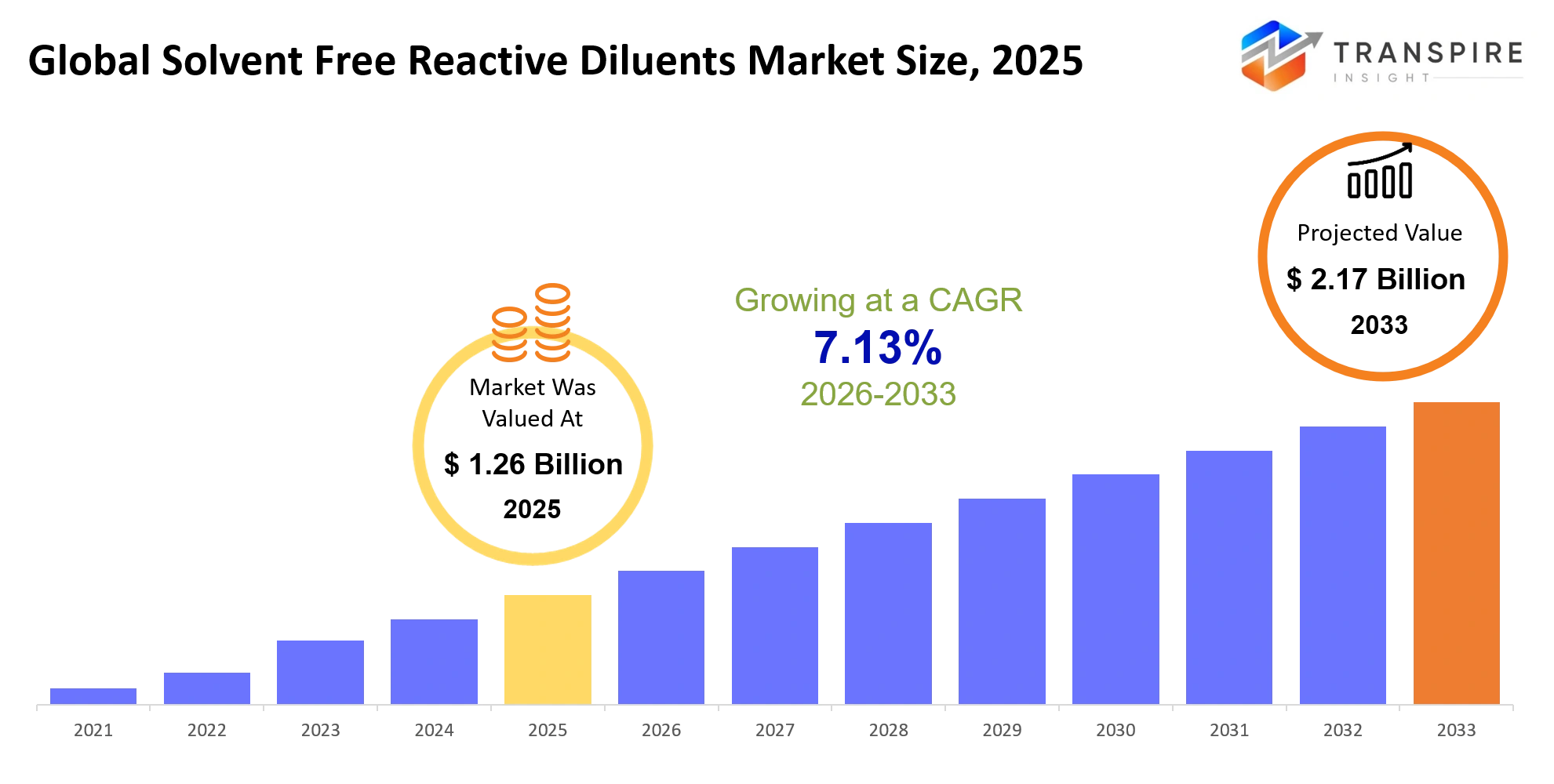
- Global Solvent Free Reactive Diluents Market Size 2025: USD 1.26 Billion
- Global Solvent Free Reactive Diluents Market Size 2033: USD 2.17 Billion
- Global Solvent Free Reactive Diluents Market CAGR: 7.13%
- Global Solvent Free Reactive Diluents Market Segments: By Product Type (Aliphatic Glycidyl Ethers, Aromatic Glycidyl Ethers, Cycloaliphatic Reactive Diluents, Bio-based Reactive Diluents, Monofunctional Reactive Diluents, Multifunctional Reactive Diluents, Specialty Reactive Diluents, Others); By Resin Type (Epoxy Resins, Polyurethane Resins, Acrylic Resins, Vinyl Ester Resins, Polyester Resins, Hybrid Resins, High-performance Resins, Others); By Application (Protective Coatings, Industrial Flooring, Adhesives & Sealants, Electrical & Electronics, Wind Energy, Composites, Construction Materials, Others); By End User (Construction, Automotive, Marine, Aerospace, Electrical & Electronics, Industrial Manufacturing, Renewable Energy, Others); By Distribution Channel (Direct Sales, Chemical Distributors, OEM Suppliers, Online B2B Platforms, Industrial Wholesalers, Regional Dealers, Export Suppliers, Others).
Global Solvent Free Reactive Diluents Market Summary:
As per Transpire Insight Analysis, the Global Solvent Free Reactive Diluents Market size is estimated at USD 1.26 Billion in 2025 and is anticipated to reach USD 2.17 Billion by 2033, growing at a CAGR of 7.13% from 2026 to 2033.
The global solvent-free reactive diluents market is really helpful to manufacturers because it improves the flow and processing of epoxy and other resin systems. This is all done without using organic solvents. People use these materials to make coatings, adhesives, composites and electrical components. They are also used in construction. The reason is that these materials are strong and good for the environment.
In the past five years, the solvent-free reactive diluent market has changed a lot. Now people want formulations. This is because there are rules about emissions, and people want materials that work really well. The use of energy is also increasing. For example, more wind turbines are being made. This means that people need resin solutions.
The solvent-free reactive diluents market is growing because of these changes. Manufacturers are using solvent-free reactive diluents to make their products better. They are also reducing emissions. Making sure their products meet the new standards. The solvent-free reactive diluents market is helping manufacturers in different areas.
Key Market Insights:
The market is developing as companies strive to use materials that provide superior performance and low-emission properties without violating environmental laws. Innovations in material technology and its applications are opening up new avenues for growth in the coatings, adhesives, composite materials, and electrical insulation sectors.
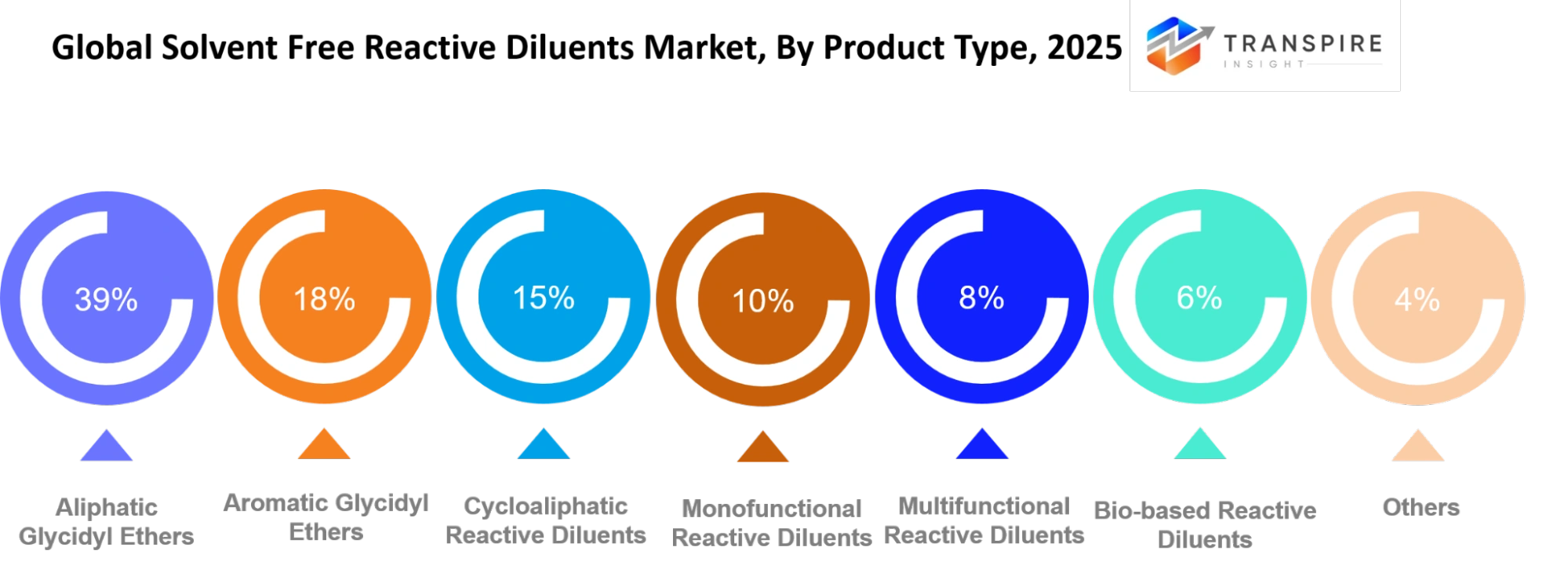
- Aliphatic Glycidyl Ethers make up 39% of the market share owing to their wide usage in epoxy resins due to their properties such as viscosity control, chemical resistance, and superior performance characteristics.
- The highest growth in the market will be witnessed by Bio-based Reactive Diluents with a CAGR of 15.4% due to growing investments in sustainable raw material and manufacturing processes.
- Product portfolio is highly diversified with Aromatic Glycidyl Ethers accounting for 18%, Cycloaliphatic Reactive Diluents making up 15%, Monofunctional Reactive Diluents making up 10%, Multifunctional Reactive Diluents making up 8%, Bio-based Reactive Diluents contributing 6%, and others making up 4%.
- Leading companies in chemicals are increasingly spending on R&D for the development of reactive diluents that increase efficiency and decrease volatiles.
- The demand is expected to increase from the wind energy and electrical industries where advanced resin formulations provide durability, insulation performance, and longevity.
- Manufacturers are increasingly including bio-based products in their portfolio.
What are the Key Drivers, Restraints, and Opportunities in the Global Solvent Free Reactive Diluents Market?
Drivers
The market is gradually gathering steam due to the fact that more and more companies are using solvent-free formulations in order to comply with toughened legislation regarding the environment and boost productivity. Due to the development of low-VOC coatings, high-performance adhesives, and durable composites, the demand for reactive diluents, which help in improving the process of resin manufacturing while maintaining the product’s quality, is on the rise. Additional construction and renewable energy projects, along with investments in industry manufacturing, have contributed to the increase in demand.
Restraints
Despite the optimistic attitude, there are still obstacles in the form of price changes of raw materials and insufficient access to biological resources that pose a problem for market growth. The creation of solvent-free coatings requires special engineering knowledge, while the application of the existing standards results in higher production costs. Such structural problems are especially difficult for small and medium-sized enterprises when competing against big chemical corporations.
Opportunities
The opportunity is represented by the creation of sustainable and bio-based reactive diluents for future epoxides. Increased investment in green chemistry, electric vehicles, wind power equipment, and new construction materials creates new business opportunities. Those firms that make innovations in product development, regional growth, and partnerships can be successful in gaining their market position in accordance with growing demands for eco-friendly products.
What Has the Impact of Artificial Intelligence Been on the Global Solvent Free Reactive Diluents Market?
The application of artificial intelligence has helped to revolutionise the development, manufacture, and testing of solvent-free reactive diluents. Manufacturers have been using artificial intelligence to evaluate different combinations of raw materials and resins used in the manufacture of the diluent. Artificial intelligence helps in analysing production data to improve the quality of the products, reduce any formulation errors, and make the production process efficient. The automated process control helps to minimise wastage of material and energy needed for production.
Predictive analytics has helped to predict equipment maintenance, monitor raw material demand, and detect process deviations before they negatively impact production. These features enable manufacturers to enhance their supply chain planning and minimise any downtimes for the manufacture of high-quality reactive diluents. The research team has been helped by AI technology to speed up screening of materials and identify ways of improving formulations for higher chemical resistance, durability, and processability. Implementing artificial intelligence technology is very costly as it involves the cost of installing adequate digital infrastructure, personnel, and accurate production data. Small and medium-sized manufacturers are still struggling to adopt AI technology because of the cost involved. In May 2025, Artificial intelligence and digital manufacturing have been incorporated into the process of formulating and producing special chemicals at BASF. Artificial intelligence has been utilised to speed up the formulation of resins, provide quality control, predict production results, and cut down on material wastage. This will facilitate the creation of high-performing epoxy systems that increase the efficiency of manufacturing solvent-free reactive diluents.
Key Market Trends:
There is a transition within the market towards high-performance, environmentally friendly formulations as manufacturers try to comply with regulations and maintain efficiency in their products. Innovations in resin chemistry and sustainable raw materials continue to drive product development and use by industries.
- Manufacturers are substituting traditional solvent-containing additives with solvent-free versions to improve compliance with regulations and to lower emissions of volatile substances.
- More efforts are being paid to bio-based raw materials, as large chemical corporations develop renewable raw materials to ensure their sustainable future.
- Product development is now focusing on multi-functional reactive diluents, which increase the mechanical properties and chemical stability of the products, as well as their processing efficiency.
- Automated production lines are becoming a common tool that helps manufacturers to be consistent in their quality and avoid production losses.
- Wind energy and advanced composite manufacturing are developing into application markets; thus, resin suppliers have to create special formulations for these areas of use.
- Partnerships of resin producers and raw material suppliers promote innovations and improve the availability of advanced chemical formulations on the market.
- Customised formulations, developed for certain industrial applications, become more popular among customers.
Global Solvent Free Reactive Diluents MarketSegmentation
By product type
Aliphatic Glycidyl Ethers dominate the market based on product type because of their exceptional compatibility with epoxy resins, low viscosity, and properties such as enhancement of mechanical strength and chemical resistance, making up a total of 39% of the market share. Aromatic Glycidyl Ethers make up 18%, while Cycloaliphatic Reactive Diluents occupy 15%. Monofunctional Reactive Diluents constitute 10%, with Multifunctional Reactive Diluents taking 8%. Bio-based Reactive Diluents take up 6% of the market share but are anticipated to record the highest CAGR of 15.4% owing to the increasing use of sustainable chemical solutions by manufacturers. The Others segment constitutes 4% of the market share, which caters to specific industrial purposes.
By Resin Type
Epoxy resins dominate the market owing to the extensive use of solvent-free reactive diluents for improving processing, durability, and adhesion properties. In addition, polyurethane and acrylic resins continue to enjoy widespread usage in protective coating and industrial applications, whereas vinyl ester and polyester resins are used for corrosion resistance and composite production. Furthermore, hybrid and high-performance resins are gaining popularity owing to the need of materials that offer enhanced thermal stability, strength, and service life. The future of the market is anticipated to rely on the development of new resin formulations for high-performance industrial environments.
By Application
Protective coatings make the largest revenue owing to rising demands from the construction sector, industrial machinery, and corrosion resistance applications. In addition, there is considerable revenue from industrial floorings owing to the construction and expansion of manufacturing plants. On the other hand, adhesives and sealants, electrical and electronics, wind energy, composites, and construction materials continue to generate significant demand for solvent-free reactive diluents owing to their ability to improve flow and curing of resins and long-term performance of products.
By End User
The construction sector still holds the largest share of the market from the user point of view due to high levels of investment in buildings, transport infrastructure, and coating applications. The automotive industry is now increasingly using more sophisticated resins for reducing the weight of cars while increasing their durability and corrosion resistance properties. Moreover, the marine industry, aerospace industry, electrical and electronics industry, industrial manufacturing, and renewable energy sources industries are also using solvent-free reactive diluents to a greater extent for improving reliability in harsh environments.
By Distribution Channel
In terms of the distribution channel, direct sales still prevail because major manufacturers prefer long-term deals that guarantee steady product quality and technical support. Distribution channels such as chemical distributors and OEM suppliers are of great importance for increasing the availability of products in regional markets. The role of wholesalers and regional dealers should be noted as well. The use of B2B online platforms becomes more and more popular due to their simplicity and easy access to technical data on the product. Export suppliers are engaged in expanding product availability in international markets.
What are the Key Use Cases Driving the Global Solvent Free Reactive Diluents Market?
Global Solvent-free reactive diluents have been used mainly in epoxy coating, where Aliphatic Glycidyl Ethers have an important contribution as they improve the performance of resins in terms of flow, adhesion, and resistance to chemicals. This makes them appropriate for applications related to infrastructure protection, heavy industry, and heavy-duty floorings.
Applications have started to grow also in adhesives and sealants, electrical insulation, composites production, and building materials. In fact, producers utilise solvent-free reactive diluents in order to increase the processability, decrease the viscosity, and ensure the longevity of the final product. New developments include wind energy components, electric vehicles, and advanced lightweight composites. The increasing trend towards using biobased reactive diluents is another factor favouring sustainable product development.
|
Report Metrics |
Details |
|
Market size value in 2025 |
USD 1.26 Billion |
|
Market size value in 2026 |
USD 1.34 Billion |
|
Revenue forecast in 2033 |
USD 2.17 Billion |
|
Growth rate |
CAGR of 7.13% from 2026 to 2033 |
|
Base year |
2025 |
|
Historical data |
2021 - 2024 |
|
Forecast period |
2026 - 2033 |
|
Report coverage |
Revenue forecast, competitive landscape, growth factors, and trends |
|
Regional scope |
United States; Canada; Mexico; United Kingdom; Germany; France; Italy; Spain; Denmark; Sweden; Norway; China; Japan; India; Australia; South Korea; Thailand; Brazil; Argentina; South Africa; Saudi Arabia; United Arab Emirates |
|
Key company profiled |
Hexion, Huntsman Corporation, Olin Corporation, Aditya Birla Chemicals, Kukdo Chemical, Cargill, Evonik Industries, Cardolite Corporation, EMS-Chemie, Atul Ltd., BASF, Dow, Arkema, Mitsubishi Chemical, SACHEM. |
|
Customization scope |
Free report customization (country, regional & segment scope). Avail customized purchase options to meet your exact research needs. |
|
Report Segmentation |
By Product Type (Aliphatic Glycidyl Ethers, Aromatic Glycidyl Ethers, Cycloaliphatic Reactive Diluents, Bio-based Reactive Diluents, Monofunctional Reactive Diluents, Multifunctional Reactive Diluents, Specialty Reactive Diluents, Others); By Resin Type (Epoxy Resins, Polyurethane Resins, Acrylic Resins, Vinyl Ester Resins, Polyester Resins, Hybrid Resins, High-performance Resins, Others); By Application (Protective Coatings, Industrial Flooring, Adhesives & Sealants, Electrical & Electronics, Wind Energy, Composites, Construction Materials, Others); By End User (Construction, Automotive, Marine, Aerospace, Electrical & Electronics, Industrial Manufacturing, Renewable Energy, Others); By Distribution Channel (Direct Sales, Chemical Distributors, OEM Suppliers, Online B2B Platforms, Industrial Wholesalers, Regional Dealers, Export Suppliers, Others). |
Which Regions are Driving the Global Solvent Free Reactive Diluents Market Growth?
North America
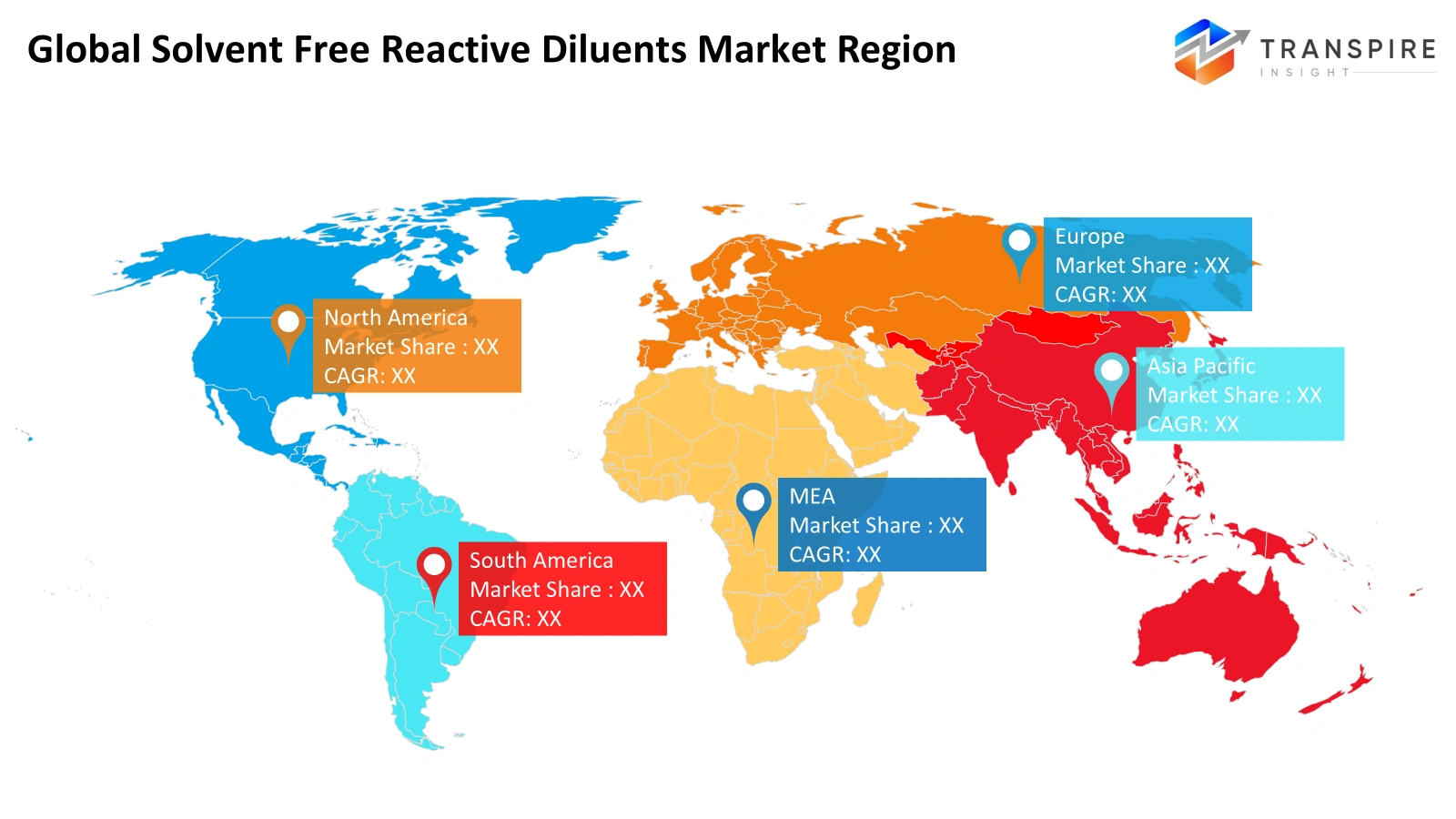
North America constitutes 23% of the total global market and is expected to be the fastest-growing region at a CAGR of 14.8%. Increase in investments in advanced manufacturing, electric cars, renewable energy, and industrial automation has resulted in an increase in demand for high-performance resin systems. Growth in production capacity and adoption of novel technologies is being observed by the players in order to enhance the efficiency of the products. In August 2025,Hexion emphasized further advancements made in developing sustainable technology of epoxy resins and bio-based epichlorohydrin in order to increase the availability of advanced epoxy resins for use in coatings, composites, wind energy, and electronics sectors. These advancements meet the demand for solvent-free reactive diluents in the high performance resin formulas.
Europe
Europe holds a share of 25% in the global market and holds a stable market share due to strict environmental policies and an established speciality chemicals industry. Unlike Asia-Pacific, Europe focuses on sustainable manufacturing, emission-free manufacturing processes, and advanced materials development. Efficient R&D activities and coordination among chemical manufacturers and industrial manufacturers facilitate innovations in the products.In April 2025,Arkema stated that the entire product line of acrylic rheology additives made in Europe would become fully bio-based production with carbon footprint cut by 25%. The project will help the development of sustainable coatings, adhesives, and epoxy resins where solvent-free reactive diluents are used.
Asia-Pacific
Asia-Pacific dominates the global solvent-free reactive diluent market by accounting for 43%, which is aided by the presence of the vast chemical manufacturing industry and rising demands from construction, electronics, and industrial manufacturing sectors. The region leverages extensive production of epoxy resins, affordable production facilities, and ongoing infrastructure developments. The growth is driven by rising industrialisation, renewable energy projects, and advanced coating applications. The above factors help the region to maintain its market dominance and drive further growth of the market.
Who are the Key Players in the Global Solvent Free Reactive Diluents Marketand how do they Compete?
The global solvent free reactive diluents market competition is based on product innovation, environmental formulation, efficient production, and an effective regional network of distribution. The key players of the market are involved in conducting advanced research work, increasing production capacity of production, and building strong relationships with customers to satisfy the increasing need for chemical solutions that are performance-oriented and environmentally friendly.
Huntsman Corporation distinguishes itself by providing innovation in speciality epoxy chemicals and high-performance reactive diluents. Olin Corporation highlights its strengths in the integrated manufacture of epoxies and efficient production of chemicals. Aditya Birla Chemicals keeps adding epoxy chemicals to its range while establishing itself in the Asian region. Evonik Industries AG is specialised in developing additives for formulation optimisation and achieving sustainability objectives. Cardolite Corporation utilises biologically derived materials in the development of green reactive diluents. Hexion Inc., on the other hand, emphasises developing resin technology and strategic partnerships for expanding its client base. Such approaches enable top firms to compete through innovation, sustainability, efficiency, and market growth.
Global Solvent Free Reactive Diluents Market companies
- Hexion
- Huntsman Corporation
- Olin Corporation
- Aditya Birla Chemicals
- Kukdo Chemical
- Cargill
- Evonik Industries
- Cardolite Corporation
- EMS-Chemie
- Atul Ltd.
- BASF
- Dow
- Arkema
- Mitsubishi Chemical
- SACHEM
Recent Development News
In June 2026, a new company was formed due to an equal merger of Olin Corporation and Huntsman Corporation, resulting in a new chemical company having revenues exceeding USD 12 billion per year. The joint venture will help enhance the epoxy material innovation process and increase the manufacturing efficiency of both firms, along with expanding the speciality chemicals portfolio of their products utilised in solvent-free reactive diluent applications.
Source: https://www.huntsman.com
What Strategic Insights Define the Future of the Global Solvent Free Reactive Diluents Market?
The global market for solvent-free reactive diluents will tend towards sustainability and high-performance formulation as industries look for formulations that can balance regulatory compliance with efficiency in processing. Developments in bio-based product formulation, innovations in epoxy formulations, and growing applications in renewable energy, electric vehicles, and industrial infrastructure will determine future demand. Supply chain risks associated with reliance on speciality feedstock materials, which may lead to price fluctuations, are one issue that is not well-known.
Investment in green chemistry technology, digital manufacturing, and production plants in different regions is another area of opportunity for growth in the future. Businesses that focus on sustainable product formulation, resilient supply chains, and close collaboration with resin producers and end users will be able to leverage competitive advantages in the years to come.
Key Segmentations are:
By Product Type
- Aliphatic Glycidyl Ethers
- Aromatic Glycidyl Ethers
- Cycloaliphatic Reactive Diluents
- Bio-based Reactive Diluents
- Monofunctional Reactive Diluents
- Multifunctional Reactive Diluents
- Specialty Reactive Diluents
By Resin Type
- Epoxy Resins
- Polyurethane Resins
- Acrylic Resins
- Vinyl Ester Resins
- Polyester Resins
- Hybrid Resins
- High-performance Resins
By Application
- Protective Coatings
- Industrial Flooring
- Adhesives & Sealants
- Electrical & Electronics
- Wind Energy
- Composites
- Construction Materials
By End User
- Construction
- Automotive
- Marine
- Aerospace
- Electrical & Electronics
- Industrial Manufacturing
- Renewable Energy
By Distribution Channel
- Direct Sales
- Chemical Distributors
- OEM Suppliers
- Online B2B Platforms
- Industrial Wholesalers
- Regional Dealers
- Export Suppliers
Regional Outlook
North America
- United States
- Canada
- Mexico
Europe
- Germany
- United Kingdom
- France
- Spain
- Italy
- Rest of Europe
Asia Pacific
- Japan
- China
- Australia & New Zealand
- South Korea
- India
- Rest of Asia Pacific
South America
- Brazil
- Argentina
- Rest of South America
Middle East & Africa
- Saudi Arabia
- United Arab Emirates
- South Africa
- Rest of the Middle East & Africa
Frequently Asked Questions
Find quick answers to common questions.
The global keyword size was valued at USD 1.26 Billion in 2025 and is poised to reach USD 2.17 Billion by 2033, expanding at a 7.13%CAGR.
Key segments for the global solvent free reactive diluents market are By Product Type (Aliphatic Glycidyl Ethers, Aromatic Glycidyl Ethers, Cycloaliphatic Reactive Diluents, Bio-based Reactive Diluents, Monofunctional Reactive Diluents, Multifunctional Reactive Diluents, Specialty Reactive Diluents, Others); By Resin Type (Epoxy Resins, Polyurethane Resins, Acrylic Resins, Vinyl Ester Resins, Polyester Resins, Hybrid Resins, High-performance Resins, Others); By Application (Protective Coatings, Industrial Flooring, Adhesives & Sealants, Electrical & Electronics, Wind Energy, Composites, Construction Materials, Others); By End User (Construction, Automotive, Marine, Aerospace, Electrical & Electronics, Industrial Manufacturing, Renewable Energy, Others); By Distribution Channel (Direct Sales, Chemical Distributors, OEM Suppliers, Online B2B Platforms, Industrial Wholesalers, Regional Dealers, Export Suppliers, Others).
Growth is primarily driven by increasing demand for coatings with low VOC and eco-friendly properties, growing demand for epoxy resins in construction and wind energy, increased government regulations on the environment, and increasing adoption of adhesives and composites.
The global market is led by major manufacturers including Hexion, Huntsman Corporation, Olin Corporation, Aditya Birla Chemicals, Kukdo Chemical, Cargill, Evonik Industries, Cardolite Corporation, EMS-Chemie, Atul Ltd., BASF, Dow, Arkema, Mitsubishi Chemical, SACHEM.
Asia-Pacific constitutes a 43% share in the worldwide solvent-free reactive diluents market, due to high levels of industrialisation, growing construction and automobile industries, increasing production of coatings & adhesives, and rising demand for eco-friendly and low VOC materials.
Commercial prospects within the global solvent-free reactive diluents market encompass growing requirements for coatings that have low VOC content and are environmentally sustainable, rising use within wind energy and electric vehicles composites, rising use within construction adhesives and sealants, and increasing industrial use within developing economies.
- Hexion
- Huntsman Corporation
- Olin Corporation
- Aditya Birla Chemicals
- Kukdo Chemical
- Cargill
- Evonik Industries
- Cardolite Corporation
- EMS-Chemie
- Atul Ltd.
- BASF
- Dow
- Arkema
- Mitsubishi Chemical
- SACHEM
About the Authors

Pankaj Ghogare Patil
I am Pankaj Ghogare Patil, a Senior Research Analyst at Transpire Insight, specializing in the Pharmaceutical, Chemicals & Materials, Healthcare IT, and Biotechnology industry. My expertise lies in conducting comprehensive market research, analyzing industry trends, evaluating competitive landscapes, and translating complex data into actionable insights. At Transpire Insight, I closely follow emerging technologies, regulatory developments, and market innovations to create accurate, well-researched, and informative content that helps businesses and professionals make informed decisions. I am committed to producing credible, evidence-based articles that reflect industry best practices while making technical topics accessible and valuable for a broad audience.

Chakradhar Khansole
Chakradhar serves as the Research Director at Transpire Insight, bringing over 8 years of experience in technology, innovation, and strategic market intelligence. He specializes in transforming complex market data into actionable business insights that enable organizations to make informed, growth-oriented decisions. Recognized for his strategic vision and analytical expertise, Chakradhar leads high-impact research initiatives, delivering comprehensive market assessments, competitive intelligence, and forward-looking industry analysis.
Recently Published Reports
-
May 2026
Healthcare Polymer Packaging Market
Healthcare Polymer Packaging Market Size, Share & Analysis Report By Packaging Type (Syringes, IV Bottles and Pouches, Clamshells, Blisters, Bottles & Jars, Containers, Tubes, IV Parental Packaging, Others), By Type (Regulated, Non-regulated), By Polymer Type (LDPE (Low-Density Polyethylene), HDPE (High-Density Polyethylene), Homo-polymer (Homo), Random Copolymer (Random), Block Copolymer (Block), PET, Polystyrene, Polyvinyl Chloride, Polyamide/EVOH, Others), and Geography (North America, Europe, Asia-Pacific, Middle East and Africa, South and Central America), 2021 - 2031
-
Apr 2026
Hydrophilic Tape (Waterstop) Market
Hydrophilic Tape (Waterstop) Market Size, Share & Analysis Report By Type (Bentonite-Based Hydrophilic Tape, Rubber-Based Hydrophilic Tape), By Application (Residential Buildings, Commercial Buildings, Infrastructure Projects), and Geography (North America, Europe, Asia-Pacific, Middle East and Africa, South and Central America), 2021 - 2031
-
Apr 2026
Metalens Market
Metalens Market Size, Share & Analysis Report By Type (Visible Light Metalens, and Infrared Metalens), By Application (Consumer Electronics, Automotive Electronics, Industrial, Medical, and Others), and Geography (North America, Europe, Asia-Pacific, Middle East and Africa, South and Central America), 2021 - 2031
-
Apr 2026
PBT Resin Market
PBT Resin Market Size, Share & Analysis Report By Type (Reinforced PBT Resin, Unreinforced PBT Resin), By Processing Method (Injection Molding, Extrusion, Blow Molding, Others), By End-User (Automotive, Electrical & Electronics, Consumer Appliances, Industrial Machinery, Medical Devices, Packaging, Others), and Geography (North America, Europe, Asia-Pacific, Middle East and Africa, South and Central America), 2021 - 2031