

Global Rigless Intervention Services Market Size & Forecast:
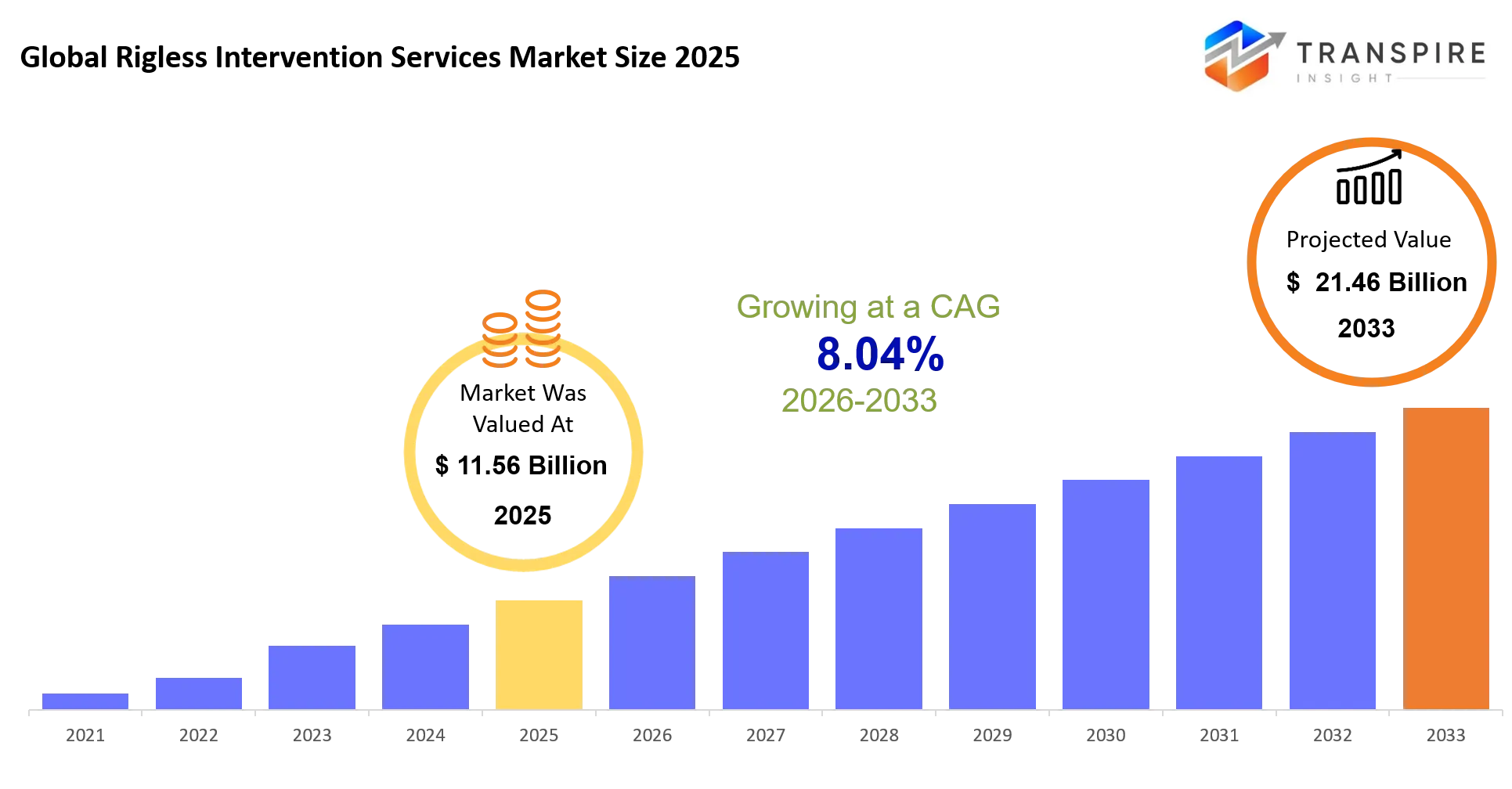
- Global Rigless Intervention Services Market Size 2025: USD 11.56 Billion
- Global Rigless Intervention Services Market Size 2033: USD 21.46 Billion
- Global Rigless Intervention Services Market CAGR: 8.04%
- Global Rigless Intervention Services Market Segments: By Service (Wireline Services, Coiled Tubing Services, Hydraulic Workover, Snubbing Services, Well Logging, Well Stimulation, Others); By Well Type (Onshore, Offshore, Deepwater, Mature Wells, Others); By Application (Well Maintenance, Well Completion, Production Enhancement, Well Abandonment, Others); By End User (Oil Companies, Service Companies, EPC Contractors, Others); By Technology (Mechanical, Hydraulic, Electric, Digital Monitoring, Others)
Global Rigless Intervention Services Market Summary
The Global Rigless Intervention Services Market size is estimated at USD 11.56 Billion in 2025 and is anticipated to reach USD 21.46 Billion by 2033, growing at a CAGR of 8.04% from 2026 to 2033. This field provides the specialized mechanical, hydraulic, and digital downhole solutions required to perform maintenance, logging, and production enhancement inside oil and gas wells without deploying a costly, heavy-duty conventional drilling rig. Over the last few years - the sharp escalation in offshore asset management costs and declining reservoir pressure forced exploration operators to pivot sharply from drilling new assets to maximizing older, existing infrastructure. This capital discipline triggered a major structural shift toward compact, deployment-ready slickline and coiled tubing setups that load quickly onto small supply boats. Because operators must intensely lower operating expenses while extracting maximum flow volumes from aging brownfields, they are rapidly expanding rigless deployments to skip expensive rig-mobilization fees entirely.
Key Market Insights
The Global Rigless Intervention Services Market is fundamentally transitioning from basic mechanical remediation toward intelligent, live-monitored reservoir optimization ecosystems. Spurred by strict capital restrictions across exploration firms and the physical degradation of aging downhole assets, global energy corporations are swapping costly, heavy-duty drilling structures for nimble, surface-launched slickline and coiled tubing deployments that modify well parameters in real time.
- Locking down a dominant 36% share, Wireline Services anchor the service landscape, with industry mainstays like Schlumberger deploying advanced electric-line conveyances to transmit high-resolution downhole imagery without interrupting active oil streams.
- Expanding at an explosive, market-leading CAGR of 13.6%, Digital Well Intervention operates as the primary technological driver as operators integrate subsea fiber-optic telemetry and smart sensors to continuously adjust downhole valve calibrations.
- Capturing a dominant 39% share of total industry revenue, the Middle East & Africa stands as the undisputed geographic anchor, heavily supported by massive state-owned national oil companies scaling downhole workovers to defend peak oil capacity across mature super-giant fields.
- Securing an essential 25% market slice, North America acts as a highly stable structural driver, compelling regional oil networks to deploy automated coiled tubing and hydraulic workover units to optimize production across high-decline shale basins.
- Accounting for 13% of global industry volume, the Asia Pacific theater represents the fastest-growing territory with a skyrocketing 14.4% CAGR, propelled by massive offshore gas developments that prompt organizations to integrate platforms from players like Baker Hughes.
- Controlling a critical 23% portion of the service matrix, Coiled Tubing services are undergoing deep structural updates as developers embed internal continuous e-line cables straight into flexible steel pipe strings to run deep-well stimulation.
- Representing a substantial 15% share of the mechanical intervention market, Hydraulic Workover systems are gaining rapid operational momentum as service companies launch compact, high-pressure snubbing setups to repair high-pressure wells under live asset conditions.
- Claiming an integrated 11% market footprint, Well Logging modules are transitioning toward closed-loop data modeling, enabling reservoir engineering teams to automatically track, update, and analyze geological fluid shifts using memory-based downhole sensors.
- Securing a targeted 18% slice of global sector capital, Europe acts as a mature development zone, driving strict system compliance and well-decommissioning frameworks that push operators to adopt rigless plug-and-abandonment tools across aging North Sea basins.
- Capturing the remaining 5% slice of global revenue, Latin America scales its deepwater intervention footprint, relying on specialized vessel-based light well intervention systems from firms like Oceaneering to protect remote subsea production margins.
What Strategic Drivers, Restraints, and Opportunities Define the Global Rigless Intervention Services Market?
Driver
The market expansion is heavily propelled by the absolute financial urgency to maximize production margins from aging brownfields and avoid the extreme mobilization costs of traditional drilling rigs. As oil and gas fields mature globally, natural reservoir pressure decays, causing severe production declines that require frequent downhole remediation, such as fluid scale removal or chemical re-stimulation. This pressure was triggered by strict post-pandemic corporate capital discipline mandates, forcing exploration and production operators away from high-risk exploration toward lower-cost maintenance. This operational evolution drives massive oilfield service revenue as companies rapidly adopt slickline, electric-line, and subsea riserless systems to perform fast downhole adjustments without taking wells offline for extended periods.
In September 2024, oilfield services giant Halliburton officially introduced its Clear portfolio of electromechanical well intervention technologies to modernize high-angle downhole deployments. This technical release shifts downhole execution away from traditional, bulky pipe-conveyed methods by introducing a specialized suite of electric-line solutions—including the ClearTrac wireline tractor and ClearCut non-explosive electromechanical pipe cutters. By integrating real-time surface readout telemetry directly into highly deviated or horizontal wellbores, this specialized tool array allows service crews to execute precise, single-trip mechanical repairs and logging from smaller offshore support vessels. This deployment eliminates heavy-lift drillship requirements, slashing operator non-productive time and accelerating rigless infrastructure adoption across mature offshore basins. [https://www.halliburton.com/en/about-us/press-release/clear-portfolio-electromechanical-solutions-well-intervention]
Restraint
Severe mechanical friction boundaries, high downhole temperatures, and extreme pressure deltas inside highly complex, deepwater horizontal wells act as a persistent bottleneck capping broader service expansion. While modern downhole tooling has evolved significantly, traditional mechanical slicklines and flexible coiled tubing strings frequently experience extreme structural fatigue and buckling risk when navigating highly deviated well paths or thick carbonate formations. This deployment limitation persists because managing high mechanical torque at depths exceeding 15,000 feet requires substantial physical material upgrades, introducing intense engineering friction and delaying rapid rigless operations.
Opportunity
The most lucrative growth window lies in the wholesale integration of subsea riserless light well intervention packages paired with advanced electromechanical downhole tractors optimized for ultra-deepwater infrastructure. Fusing continuous live telemetry tools smoothly with electric-actuated downhole cutting and valve-shifting modules allows remote engineering teams to execute precise mechanical repairs from standard support vessels. This technological movement unlocks massive field-service licensing revenue as expanding oil networks across high-growth corridors invest heavily in fully automated, rigless fleet packages to systematically eliminate single-vendor drilling dependencies and slash carbon intensity.
What Has the Impact of Artificial Intelligence Been on the Global Rigless Intervention Services Market?
Artificial intelligence is completely reshaping how professional reservoir engineers and oilfield service crews execute downhole mechanical remediation, shifting rigless intervention from reactive, manual troubleshooting into the era of predictive optimization and fully autonomous structural tracking. Instead of forcing technicians to manually calculate downhole tool drag or rely on retrospective physical inspections to evaluate component degradation, oilfield operations units leverage machine learning models to instantly run predictive pipe strain analysis and flag structural anomalies before a downhole failure occurs.
On the offshore well platform floor, advanced AI agents streamline complex mechanical pipelines by feeding raw historical downhole telemetry, real-time tool tension metrics, and live fluid friction data directly into specialized data processing loops. These smart systems continuously audit active wireline and coiled tubing transactions, predicting localized string fatigue and alerting field crews to operational anomalies hours in advance. However, a major operational limitation persists around an integration and accuracy gap; automated AI models frequently struggle to interpret highly erratic, multi-phase fluid flows and unique downhole sand restrictions, meaning final human engineering validation remains non-negotiable.
In March 2025, pioneering energy researchers officially published landmark field analytics showcasing the integration of advanced machine learning algorithms—specifically CatBoost and XGBoost models directly into real-time coiled tubing fatigue prediction networks. This digital automation framework achieves exceptional predictive accuracy, recording R-squared validation values exceeding 0.94 in mapping live string fatigue life to significantly outperform traditional analytical formulas. By automatically tracing structural micro-fractures and calculating optimal string management lifecycles during active high-pressure well cleanouts, this technical advancement completely eliminates premature downhole failures while protecting expensive rigless tool strings from catastrophic downhole parting. [https://connect.spe.org/blogs/olowo-lazarus/2026/03/26/the-future-of-well-intervention-cutting-edge-techn]
Key Market Trends
The global rigless intervention services landscape is moving away from purely mechanical, isolated downhole troubleshooting deployments toward completely integrated, data-driven well-optimization frameworks. Driven by the critical industrial mandate to flatten offshore operational expenditure and extract late-stage hydrocarbons from complex brownfield reservoirs, energy operators are replacing massive rig-reliant workovers with containerized, surface-controlled deployment packages.
- Historically, field crews treated wireline runs as static diagnostic measures between production runs, but asset managers are rapidly transitioning to continuous, high-speed electric-line telemetry loops to map real-time wellbore dynamics under full flow conditions.
- Rather than deploying conventional heavy-lift rigs for simple downhole cleanouts, operators are universally shifting toward high-capacity coiled tubing systems with built-in internal cables to pump targeted localized chemical washes.
- Reservoir engineering departments used to handle hydraulic workovers via manual mechanical throttles, but modern exploration architectures are adopting digital automated snubbing systems that automatically adjust to downhole pressure waves.
- Intervention teams are shifting from retrospective physical tool inspections to advanced machine learning digital twins that simulate line fatigue and mechanical drag factors during active deepwater descents.
- Instead of managing subsea wells through cumbersome, heavy vertical riser lines, offshore operators are moving en masse to flexible, vessel-deployed Riserless Light Well Intervention (RLWI) subsea lubricators to directly bypass heavy drilling vessel logistics.
- Global energy producers are altering their contract strategies, moving away from standard flat day-rates for intervention services toward performance-linked, activity-based contracts tied directly to net production volume improvements.
- Production teams that once treated aging assets as immediate candidates for permanent plugging are leveraging micro-electromechanical tractors to safely navigate severely deviated pathways and restore choked oil streams.
- Highly regulated marine regions are moving past standard environmental oversight, enforcing the use of closed-circuit subsea lubricator systems that flush all residual hydrocarbons directly back into the wellbore to avoid surface discharge.
- Oilfield service vendors are pivoting from standard hydraulic tool arrays toward specialized, fully electric downhole tools to achieve precise cutting, milling, and valve adjustments inside high-pressure reservoirs.
Global Rigless Intervention Services Market Segmentation
By Service
Wireline Services command the largest portion of market capital, holding a dominant 36% share of global revenue due to their high structural versatility, rapid deployment times, and critical application in live downhole data logging. Coiled Tubing follows as a major operational pillar at 23%, with Hydraulic Workover and Well Logging securing 15% and 11% respectively, while miscellaneous mechanical interventions account for the final 15%. This segment division persists because every downhole fluid restoration or mechanical repair campaign fundamentally requires an optimized conveyance engine to lower specialized sensory toolstrings or perforating guns beneath the wellhead before heavy chemical pumping or active mechanical milling can occur. Wireline Services retain their peak market position because exploration firms must deploy lightweight slickline or electric-line setups frequently sourced from market leaders like Schlumberger and Halliburton to run routine wellbore geometry diagnostics without halting baseline hydrocarbon flow. Moving forward, individual slickline units will fully transition into continuous, intelligent e-line setups. Leading oilfield service vendors will focus heavily on shifting away from passive, disconnected mechanical lines to embed internal fiber-optic telemetry cores that instantly stream downhole structural data directly to surface control rooms.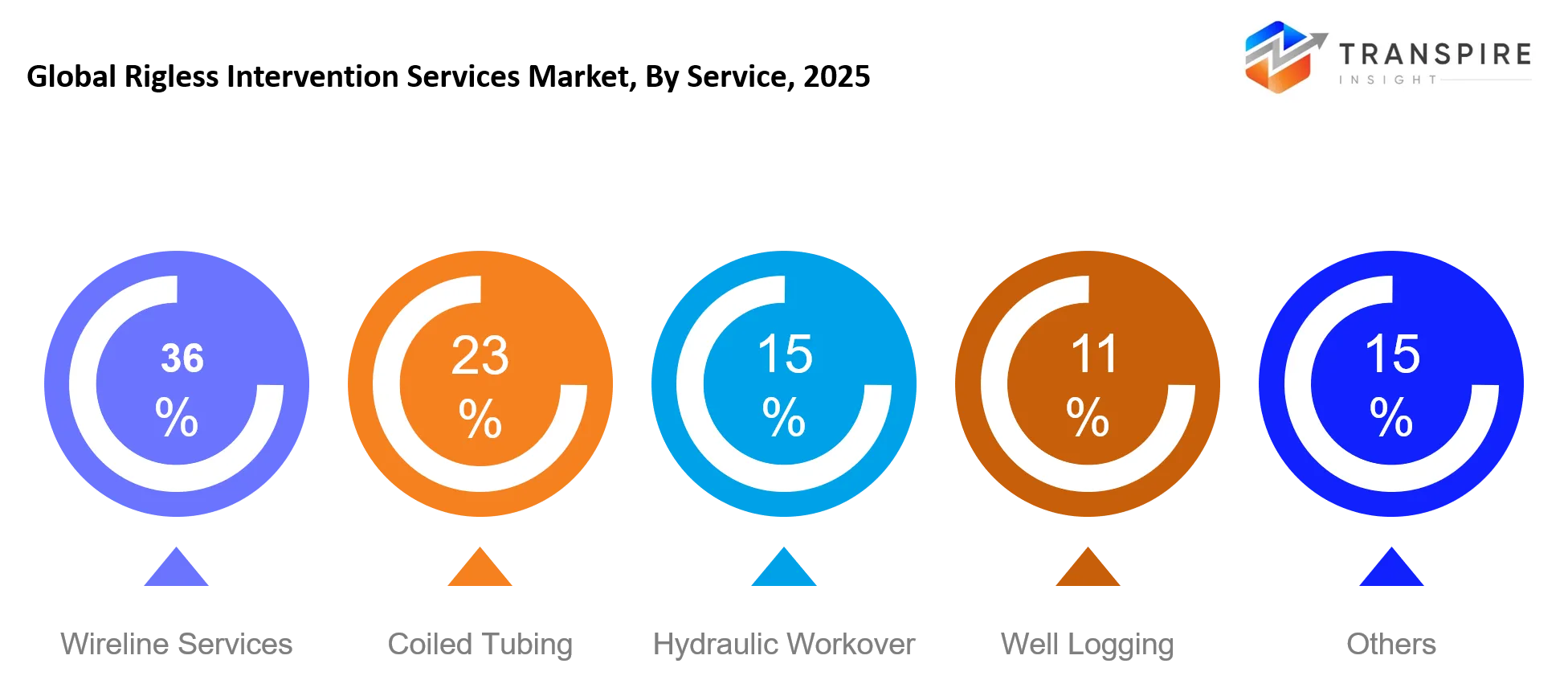
By Well Type
Onshore well networks serve as the primary operational anchor of the industry, holding the largest portion of global infrastructure volume, while Offshore and Deepwater configurations represent the fastest-accelerating architectural segments. This growth logic is tied directly to the structural shifting of modern energy investment strategies, where oil networks concentrate intensive production-enhancement capital on existing, highly complex subsea manifolds to bypass the extreme multi-billion dollar capital expenditure required to drill new exploration holes. Onshore setups retain their high volume share because thousands of active, low-pressure conventional and shale assets require routine, low-cost mechanical fluid cleanouts to sustain baseline economic margins. However, Deepwater and Offshore fields are growing at an accelerated clip because managing complex subsea sand blockages or downhole valve scaling requires highly technical, vessel-deployed light well intervention (RLWI) lubricator systems. Moving forward, well management patterns will move entirely past traditional rig-reliant workovers. Market dominance will belong to service companies that design fully modular, riserless deepwater subsea intervention packages capable of docking directly onto remote subsea trees to run complex chemical flushes from standard offshore support boats.
By Application
Well Maintenance functions as the absolute financial anchor of the matrix, capturing the biggest revenue footprint due to the relentless mechanical degradation and natural pressure decline of aging global oilfields. Concurrently, Production Enhancement and Well Abandonment represent highly active, fast-growing secondary application pipelines. The underlying market dynamic relies on pure asset lifecycles and rigid regional environmental safety mandates; mature brownfield reservoirs develop systemic scale, corrosion, and fluid blockages over time, creating severe flow bottlenecks that mandate dedicated, high-tier remediation systems. Well Maintenance leads the market position because engineering crews must constantly clear downhole debris and run structural logging checks to protect active corporate asset integrity. Conversely, Well Abandonment is expanding rapidly as aging basins—particularly within mature marine sectors like the North Sea—reach their economic limits, requiring rigless plugging and permanent isolation tools to safely meet modern environmental rules. Looking ahead, application boundaries will completely unify under predictive software frameworks. Leading technology suites will continuously feed real-time downhole sensor metrics into predictive machine learning models to automatically execute targeted chemical cleanouts months before physical scaling can choke reservoir production.
By End User
National and International Oil Companies function as the primary financial engine of the market, controlling massive exploration budgets as they scale brownfield production-optimization investments to defend peak production capacities. Concurrently, independent Oilfield Service Companies and Engineering, Procurement, and Construction (EPC) contractors rise as highly active, fast-growing secondary buyers. The market dynamic here relies on changing procurement models and operating risk profiles, where major operators seek to completely offload execution risks while keeping asset ownership centralized. Oil Companies maintain their peak position because major state-owned and international operators must manage massive, multi-well assets across varied geographic fields while keeping per-barrel extraction costs safely below global price baselines. Moving forward, long-term market profitability will belong to service vendors that engineer comprehensive, integrated rigless packages. Leading providers will shift away from single-service contracts to deliver bundled, risk-sharing agreements that couple physical mechanical toolstrings with advanced cloud analytics to guarantee net production volume increases for the operator.
By Technology
Mechanical intervention systems rule this matrix, holding a dominant share of total revenue due to their reliable, low-cost track record in executing baseline downhole clearing and tool setting. Simultaneously, Hydraulic and Digital Monitoring systems represent highly vital secondary technology pipelines, with Digital Monitoring leading technical growth at a standalone CAGR of 13.6%. This structural alignment persists because the ultimate goal of any modern intervention practice is to shift away from blind, open-loop downhole tool pushing toward fully visible, highly precise mechanical manipulation. Mechanical systems lead because businesses must reliably run everyday slicklines to deploy basic plugs and patches to protect field infrastructure margins. Meanwhile, Digital Monitoring tools are growing swiftly as reservoir engineers demand high-resolution, real-time downhole data streams to monitor tool strain and avoid catastrophic string parting. Moving forward, technology boundaries will completely merge under intelligent electromechanical systems. Rather than treating mechanical tool deployment and data logging as separate steps, forward-looking systems will integrate real-time sensor loops that instantly adjust downhole tractor tracking to execute precision repairs on a single trip.
What Are the Key Use Cases Driving the Global Rigless Intervention Services Market?
The core use case centers on high-speed wireline mechanical remediation, where international oil companies deploy slickline and electric-line toolstrings into high-decline onshore and mature reservoirs. This operational model relies on continuous downhole data logging to instantly locate fluid scale and mechanical blockages, giving production engineering teams a precise structural map to clear clogged wellbores and restore baseline oil flow without interrupting active production.
Beyond routine downhole cleaning, expanding applications focus heavily on dynamic subsea coiled tubing stimulation within high-cost offshore and deepwater facilities. Driven by declining pressure across complex marine fields, operators rely on flexible steel pipe strings with internal e-line cables to execute precision acid washes and chemical treatments, systematically boosting reservoir flow while eliminating heavy drilling vessel logistics.
Emerging use cases are shifting toward fully digitalized, rigless well abandonment and permanent plug operations across aging marine basins. As mature offshore infrastructure reaches its regulatory end-of-life, operators leverage intelligent electromechanical downhole tractors paired with live telemetry sensors to place zero-leak isolation barriers, ensuring total compliance with strict regional environmental safety mandates.
|
Report Metrics |
Details |
|
Market size value in 2025 |
USD 11.56 Billion |
|
Market size value in 2026 |
USD 12.49 Billion |
|
Revenue forecast in 2033 |
USD 21.46 Billion |
|
Growth rate |
CAGR of 8.04% from 2026 to 2033 |
|
Base year |
2025 |
|
Historical data |
2021 - 2024 |
|
Forecast period |
2026 - 2033 |
|
Report coverage |
Revenue forecast, competitive landscape, growth factors, and trends |
|
Regional scope |
United States; Canada; Mexico; United Kingdom; Germany; France; Italy; Spain; Denmark; Sweden; Norway; China; Japan; India; Australia; South Korea; Thailand; Brazil; Argentina; South Africa; Saudi Arabia; United Arab Emirates |
|
Key company profiled |
Schlumberger, Halliburton, Baker Hughes, Weatherford, Expro, Oceaneering, Archer, Superior Energy Services, Altus Intervention, Welltec, NOV, TechnipFMC, Helix Energy Solutions, Aker Solutions, Cudd Energy Services |
|
Customization scope |
Free report customization (country, regional & segment scope). Avail customized purchase options to meet your exact research needs. |
|
Report Segmentation |
By Service (Wireline Services, Coiled Tubing Services, Hydraulic Workover, Snubbing Services, Well Logging, Well Stimulation, Others); By Well Type (Onshore, Offshore, Deepwater, Mature Wells, Others); By Application (Well Maintenance, Well Completion, Production Enhancement, Well Abandonment, Others); By End User (Oil Companies, Service Companies, EPC Contractors, Others); By Technology (Mechanical, Hydraulic, Electric, Digital Monitoring, Others) |
Which Regions Are Driving the Global Rigless Intervention Services Market Growth?
The Middle East & Africa maintains a commanding grip on the rigless intervention services market, capturing a dominant 39% share of all worldwide industry revenue. This geographic leadership is heavily driven by the presence of giant, mature onshore reservoirs and super-giant oilfields that require aggressive production-enhancement measures to combat declining natural reservoir pressure. The regional ecosystem is structurally supported by major state-owned national oil companies that possess substantial capital budgets dedicated exclusively to brownfield optimization rather than high-risk new exploration. Consequently, deploying heavy-duty coiled tubing units and hydraulic workover platforms has become the primary operational baseline for domestic producers to defend their peak oil extraction targets.
North America serves as a highly stable, predictable secondary pillar for the global market, locking down an essential 25% share of total industry demand. While Middle Eastern operational expansion is propelled by giant conventional fields and state-backed extraction mandates, North American rigless adoption is shaped by thousands of high-decline shale oil assets and tight gas formations distributed across widespread horizontal basins. This regional market stability is structurally insulated by a mature private operator network that leverages fast, low-cost truck-mounted slickline and electric-line units to sustain thin economic margins in older wells. To balance structural production declines amidst volatile commodity price cycles, domestic exploration groups continuously invest in high-efficiency downhole mechanical tools to run rapid, low-cost optimization cycles.
The Asia Pacific region has emerged as the fastest-growing territory globally, accelerating at a market-leading CAGR of 14.4% to capture a 13% slice of global sales. This sudden structural shift is driven by a massive, government-backed wave of offshore natural gas field developments and a wholesale institutional transition toward decommissioning hundreds of depleted legacy offshore assets. Historically, regional operators relied on fragmented local contractors and manual downhole line calculations, but the territory has now rapidly pivoted toward high-resolution digital monitoring systems to navigate complex marine geology safely. Looking ahead, future financial and technical expansion in this booming corridor relies entirely on deploying advanced vessel-based riserless light well intervention (RLWI) units to manage deepwater deep-set subsea valve shifting efficiently.
In April 2025, Australian energy major Woodside Energy officially received environmental regulatory clearance from NOPSEMA to proceed with a major subsea well intervention and permanent plug and abandonment (P&A) campaign off the coast of Western Australia. This offshore operation targets multiple suspended subsea exploration wells, utilizing specialized hybrid semi-submersible units and inspection support vessels to execute complex downhole isolation workflows. The project deploys mechanical wellhead cutters and localized cement-remediation packages to isolate old production zones permanently, strictly satisfying the nation's stringent legislative marine safety frameworks. This structural rollout accelerates digital downhole safety standards across Asia Pacific by establishing a rigorous, audited framework for managing mature subsea energy infrastructure. 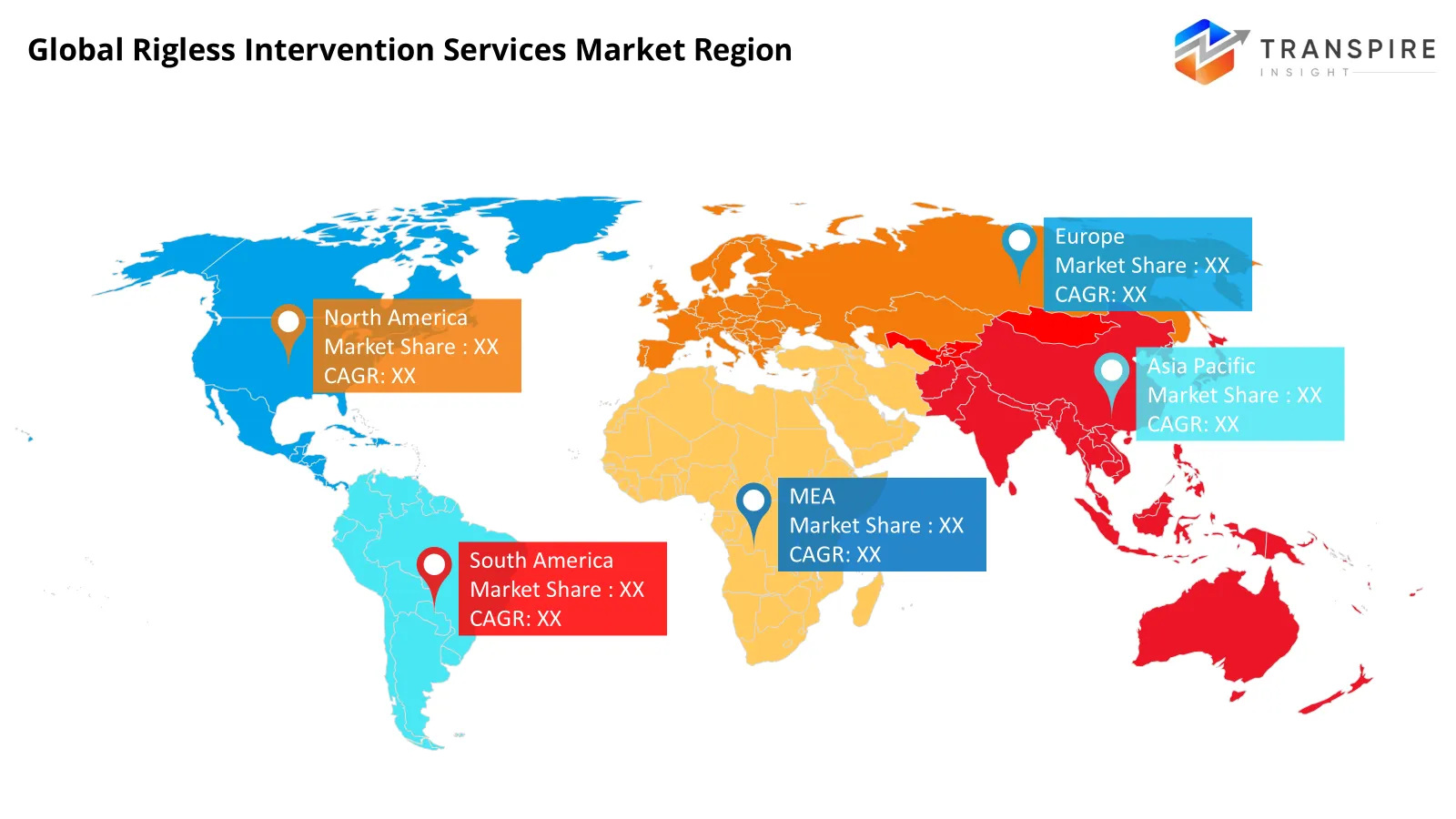
Who Are the Key Players in the Global Rigless Intervention Services Market and How Do They Compete?
The Global Rigless Intervention Services Market is characterized by intense technical competition between entrenched Tier-1 oilfield technology conglomerates and specialized subsea marine engineering providers. As international oil corporations focus on driving down per-barrel processing costs within active infrastructure corridors, competition has centralized entirely around three operational pillars: eliminating downhole tool failure latency, expanding multi-phase fluid tracking accuracy, and designing lightweight vessel-deployed subsea lubricators that can directly bypass heavy drilling vessel logistics.
Schlumberger (SLB) implements an aggressive innovation-first corporate strategy centered heavily on cloud-native digital downhole telemetry and intelligent data processing loops. Their main operational differentiator is the seamless integration of downhole physics monitoring with automated reservoir modeling tools, a footprint heavily expanded through their landmark acquisition of specialized software providers like Stimline Digital. This architecture allows them to bundle real-time coiled tubing strain monitoring and automated wireline analysis directly into integrated field lifecycle packages for complex horizontal deepwater wells.
Halliburton executes a cost-optimization and integrated project management strategy, focusing on reducing operator non-productive time through single-trip physical interventions and modular plug-and-abandonment layouts. They differentiate themselves by delivering specialized, dual-system electromechanical portfolios such as their Clear wireline tractors and custom chemical-wash packages to safely execute high-pressure downhole isolations on a single run. They systematically expand their market share by securing multi-year, bundled service frameworks across mature basins like the North Sea and the Middle East to safely maximize aging brownfields.
Company List
- Schlumberger (SLB)
- Halliburton
- Baker Hughes
- Weatherford
- Expro Group
- Oceaneering International
- Archer Limited
- Superior Energy Services
- Altus Intervention
- Welltec
- National Oilwell Varco (NOV)
- TechnipFMC
- Helix Energy Solutions
- Aker Solutions
- Cudd Energy Services
Recent Development News
In December 2025, SLB walked away with a five-year contract from Saudi Aramco to handle well stimulation, rigless intervention - automated fracturing. By putting automated deployment tools and digital downhole modeling software straight into the Kingdom's unconventional gas push, the duo expects to shore up day-to-day reliability and pick up lagging extraction rates in older basins. [https://www.worldoil.com
In May 2026, energy infrastructure firm Expro Group signed a definitive deal to buy out Norway's Enhanced Drilling for roughly - USD 215 million in cash. Adding these specialized managed pressure drilling systems to Expro's technical lineup instantly tacked USD 275 million onto their project backlog, which should speed up deepwater well interventions and subsea completion work down the line. [https://www.worldoil.com
What Strategic Insights Define the Future of the Global Rigless Intervention Services Market?
The Global Rigless Intervention Services Market is heading toward full procedural automation, where surface-controlled robotic conveyances dynamically execute downhole remediation with zero manual crew adjustment at the wellhead.
A significant hidden risk lies in "tool-string fatigue masking." As operators continuously extend horizontal lengths past 20,000 feet - standard mechanical stress sensors fail to capture micro-fracture propagation inside highly deviated wellbores, risking catastrophic downhole cable parting that triggers expensive, multi-week fishing operations.
Conversely - a major emerging opportunity is the conversion of mature, depleted oil reservoirs into certified carbon capture and storage (CCS) injection wells, using specialized rigless plug-and-abandonment toolsets to install permanent, zero-leak isolation barriers.
Strategic recommendation - Oilfield operators must immediately stop procuring disconnected mechanical slickline units and pivot to fully integrated, electromechanical e-line architectures that combine continuous internal fiber-optic telemetry with machine learning algorithms to guarantee real-time strain visualization and autonomous downhole tool tracking.
By Service
- Wireline Services
- Coiled Tubing Services
- Hydraulic Workover
- Snubbing Services
- Well Logging
- Well Stimulation
- Others
By Well Type
- Onshore
- Offshore
- Deepwater
- Mature Wells
- Others
By Application
- Well Maintenance
- Well Completion
- Production Enhancement
- Well Abandonment
- Others
By End User
- Oil Companies
- Service Companies
- EPC Contractors
- Others
By Technology
- Mechanical
- Hydraulic
- Electric
- Digital Monitoring
- Others
Regional Outlook
North America
- United States
- Canada
- Mexico
Europe
- Germany
- United Kingdom
- France
- Spain
- Italy
- Rest of Europe
Asia Pacific
- Japan
- China
- Australia & New Zealand
- South Korea
- India
- Rest of Asia Pacific
South America
- Brazil
- Argentina
- Rest of South America
Middle East & Africa
- Saudi Arabia
- United Arab Emirates
- South Africa
- Rest of the Middle East & Africa
Frequently Asked Questions
Find quick answers to common questions.
The Global Rigless Intervention Services Market size was valued at USD 11.56 Billion in 2025 and is poised to reach USD 21.46 Billion by 2033, expanding at a 8.04% CAGR.
Key segments for the Global Rigless Intervention Services Market are Service (Wireline Services, Coiled Tubing Services, Hydraulic Workover, Snubbing Services, Well Logging, Well Stimulation, Others), Well Type (Onshore, Offshore, Deepwater, Mature Wells, Others), Application (Well Maintenance, Well Completion, Production Enhancement, Well Abandonment, Others), End User (Oil Companies, Service Companies, EPC Contractors, Others), and Technology (Mechanical, Hydraulic, Electric, Digital Monitoring, Others).
Growth is primarily driven by the financial urgency to maximize production margins from aging brownfields, post-pandemic corporate capital discipline mandates shifting operators away from expensive drilling rigs, a massive increase in offshore and deepwater subsea exploration projects, and the development of continuous surface-controlled electric-line telemetry loops.
The global market is led by major manufacturers including Schlumberger (SLB), Halliburton, Baker Hughes, Weatherford International, Expro Group, Oceaneering International, Archer Limited, Superior Energy Services, Altus Intervention, Welltec, National Oilwell Varco (NOV), TechnipFMC, Helix Energy Solutions, Aker Solutions, and Cudd Energy Services.
The Middle East & Africa holds a dominant 39% share of total worldwide market revenue. This massive footprint influences global dynamics because its huge state-owned national oil companies possess massive capital budgets dedicated exclusively to brownfield production optimization, forcing a widespread operational shift toward heavy-duty coiled tubing units and automated rigless pumping spreads.
Lucrative opportunities exist in the wholesale integration of vessel-bound subsea riserless light well intervention (RLWI) packages paired with electromechanical downhole tractors. Additionally, converting mature, depleted oil reservoirs into certified carbon capture and storage (CCS) injection wells presents a major expanding opportunity for specialized permanent plug-and-abandonment toolsets.
- Schlumberger (SLB)
- Halliburton
- Baker Hughes
- Weatherford
- Expro Group
- Oceaneering International
- Archer Limited
- Superior Energy Services
- Altus Intervention
- Welltec
- National Oilwell Varco (NOV)
- TechnipFMC
- Helix Energy Solutions
- Aker Solutions
- Cudd Energy Services
About the Authors

Avinash Kumar
I’m Avinash Kumar, a Senior Research Analyst at Transpire Insight, with expertise in the Electronics and Semiconductor and Energy & Power industry. My work focuses on analyzing emerging technologies, market trends, industry developments, and innovation across these sectors. I specialize in transforming complex technical and market insights into clear, research-backed content that helps professionals, businesses, and decision-makers stay informed. Through continuous industry research and data-driven analysis, I strive to deliver accurate, reliable, and practical perspectives on the latest advancements shaping the semiconductor and energy landscape.

Chakradhar Khansole
Chakradhar serves as the Research Director at Transpire Insight, bringing over 8 years of experience in technology, innovation, and strategic market intelligence. He specializes in transforming complex market data into actionable business insights that enable organizations to make informed, growth-oriented decisions. Recognized for his strategic vision and analytical expertise, Chakradhar leads high-impact research initiatives, delivering comprehensive market assessments, competitive intelligence, and forward-looking industry analysis.
Recently Published Reports
-
Apr 2026
Active Power Filter Market
Active Power Filter Market Size, Share & Analysis Report By Type (Shunt Active Power Filters, Series Active Power Filter, Hybrid Active Power Filter), By Application (Harmonics Mitigation, Reactive Power Compensation, Voltage Regulation, Power Factor Correction), By Phase (Single Phase, Three Phase), By End-User Industry (Manufacturing, Healthcare, Commercial, Automotive, Oil and Gas, Others), and Geography (North America, Europe, Asia-Pacific, Middle East and Africa, South and Central America), 2021 - 2031
-
Apr 2026
Electrical Transformer Market
Electrical Transformer Market Size, Share & Analysis Report By Core (Closed, Shell, and Berry), By Insulation (Gas, Oil, Solid, Air, and Other), By Phase (Single, and Three), By Rating (100 MVA to 500 MVA, 501 MVA to 800 MVA, and 801 MVA to 1200 MVA), and Geography (North America, Europe, Asia-Pacific, Middle East and Africa, South and Central America), 2021 – 2031
-
Apr 2026
Hydraulic Piston Pumps Market
Hydraulic Piston Pumps Market Size, Share & Analysis Report By Type (Axial Piston Pumps, Radial Piston Pumps), By Operating Pressure (Low Pressure, Medium Pressure, High Pressure), By Application (Construction, Mining, Agriculture, Automotive, Oil & Gas, Industrial Machinery, Others), By End-User (OEMs, Aftermarket), and Geography (North America, Europe, Asia-Pacific, Middle East and Africa, South and Central America), 2021 – 2031
-
Apr 2026
Laboratory Gas Generators Market
Laboratory Gas Generators Market Size, Share & Analysis Report By Product (Nitrogen Gas Generator, Hydrogen Gas Generator, Zero Air Gas Generator, Purge Gas Generator, TOC Gas Generators, Others), By Application (Gas Chromatography, Liquid Chromatography-mass Spectrometry (LC-MS), Gas Analyzers, Others), By End-user (Life Science, Chemical & Petrochemical, Food & Beverage, Others), and Geography (North America, Europe, Asia-Pacific, Middle East and Africa, South and Central America), 2021 – 2031