
Global Radiation Detection Device Market Size & Forecast:
- Global Radiation Detection Device Market Size 2025: USD 2.09 Billion
- Global Radiation Detection Device Market Size 2033: USD 2.95 Billion
- Global Radiation Detection Device Market CAGR: 4.42%
- Global Radiation Detection Device Market Segments: By Product Type (Personal Dosimeters, Survey Meters, Area Monitors, Portal Monitors, Spectrometers, Radiation Detectors, Nuclear Imaging Devices, Others); By Technology (Scintillation Detectors, Semiconductor Detectors, Geiger-Müller Counters, Ionization Chambers, Solid-state Detectors, Gamma Detection Systems, Neutron Detection Systems, Others); By End User (Healthcare, Nuclear Power Plants, Defense & Homeland Security, Industrial Manufacturing, Research Laboratories, Environmental Monitoring Agencies, Government Organizations, Others); By Application (Radiation Monitoring, Security Screening, Medical Diagnostics, Industrial Inspection, Nuclear Waste Management, Environmental Monitoring, Emergency Response, Others); By Device Type (Portable Devices, Fixed Systems, Wearable Devices, Handheld Detectors, Vehicle-mounted Systems, Networked Monitoring Systems, Smart Detection Devices, Others)
Global Radiation Detection Device Market Summary:
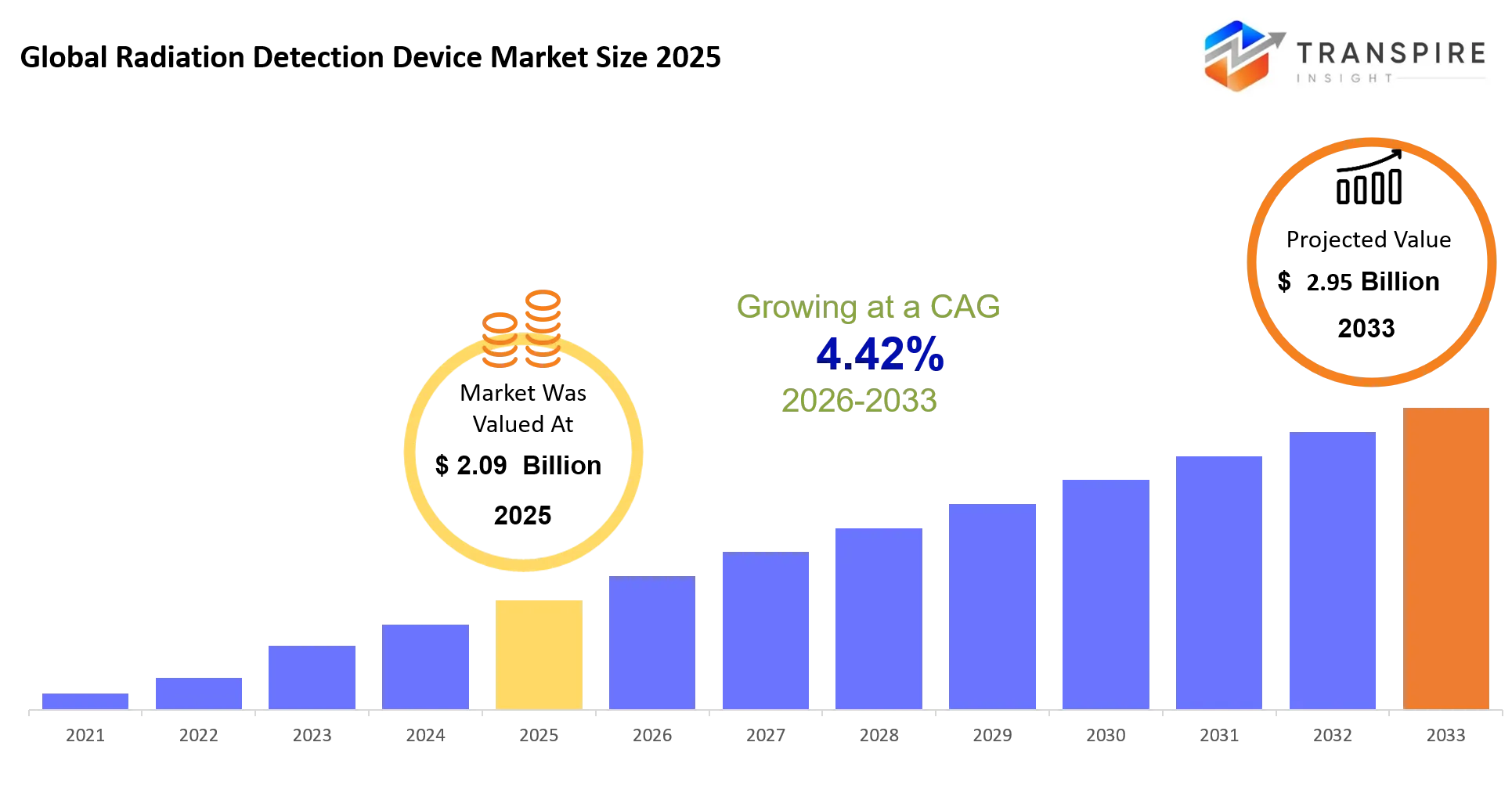
The Global Radiation Detection Device Market size is estimated at USD 2.09 billion in 2025 and is anticipated to reach USD 2.95 billion by 2033, growing at a CAGR of 4.42% from 2026 to 2033
Global demand for radiation detectors is rising due to the increased awareness of the need for safety measures in the workplace, environmental concerns and regulations. The use of radiation detection devices can be observed in many different areas including hospitals, nuclear power stations, industrial facilities, border security, and research laboratories.
In the past few years, people have started using new kinds of radiation detection devices that are portable, can connect to the internet and are really smart. These devices can give us information in time and let us monitor things from far away. This change happened because there are radiation safety rules now, nuclear power plants are being updated, and people are investing more in advanced medical imaging technology. The fact that more nuclear energy projects are being built, and people are getting more worried about materials and radiation-based technologies being used more in healthcare and industry, has made the market for radiation detection devices even stronger. As companies keep investing in monitoring solutions that're accurate, reliable and connected to computers, manufacturers are working on making radiation detection devices better at finding radiation that's easier to move around and able to handle data more effectively, which will help the radiation detection device market keep growing in the long run.
Key Market Insights:
The market for radiation detection devices is evolving through the use of digital technology, stricter regulatory requirements, and greater adoption in healthcare, industrial, and nuclear uses. Smart monitoring solutions have become a priority among radiation detector manufacturers due to their effectiveness in improving efficiency and compliance.
- Personal Dosimeters have 37% of the market share, being the most significant segment, due to ongoing innovations in the production of lightweight devices that allow for tracking radiation exposure on-the-go for healthcare personnel and nuclear workers.
- The Survey Meters segment accounts for 21% of the total market due to the improvement of the products in order to achieve more precise measurements and faster reaction times in industrial settings and radiation emergencies.
- Area Monitors make up for 15% of the market, owing to the increasing number of networked devices used in order to conduct continuous monitoring in nuclear facilities, laboratories, and industrial plants.
- The Spectrometers segment has a 10% market share, fueled by new developments in isotope identification technology aimed at helping researchers identify sources of radiation.
- Portal Monitors have a 7% share in the market, due to government efforts towards enhancing border security through installation of radiation detection equipment in ports, airports, and customs checkpoints.
- The Radiation Detectors segment makes up for 6% of the market, thanks to constant developments in semiconductor and scintillation detector technology, which allows for increased sensitivity of smaller devices.
- The market for smart radiation detection devices is expected to grow at a CAGR of 16.1%, owing to increased investments in analytics and cloud-based platforms.
What are the Key Drivers, Restraints, and Opportunities in the Global Radiation Detection Device Market?
Drivers
Growing concerns about safety from radiation exposure within the healthcare industry, nuclear energy, industrial manufacturing, and defence have played a key role in the development of the global market for radiation detection devices. There have been stringent safety measures implemented by governments and regulatory authorities for the proper handling of radioactive materials; this has compelled organisations to use effective detection devices. Increased use of nuclear medicine and radiation-based diagnostic methods has also increased the use of detection devices. Investment in the infrastructure of nuclear power plants and border security systems has led to a continuous demand for portable and real-time radiation monitoring systems.
Restraints
There are some challenges facing this market. High costs associated with the purchase and maintenance of advanced radiation detection systems make it hard for small medical institutions and industrial organisations to adopt them. This is because there is also the cost of calibration and maintenance of the system, which is usually done in accordance with certain regulations. Shortage of competent operators of the system has hindered its implementation in some parts of the world.
Opportunities
Opportunities exist in the market due to the increased use of digital technologies within the radiation monitoring sector. Some companies have developed innovative radiation detection instruments that have wireless technology, cloud computing capability, and predictive analytics tools for improved efficiency and speed in decision-making. Increased construction of nuclear power plants in the Asia Pacific region and the Middle East, coupled with enhanced expenditure on preparation against emergencies and environmental monitoring, is anticipated to provide additional sources of income. Growth in the development of portable, wearable, and artificial intelligence radiation monitoring tools will result in broader applications of radiation detection instruments.
What Has the Impact of Artificial Intelligence Been on the Global Radiation Detection Device Market?
The use of AI has greatly increased the effectiveness of radiation detection instruments due to rapid data analysis and more precise detection of radiation sources. Modern radiation detection equipment is capable of processing vast amounts of sensor information and allowing operators to differentiate harmful radiation from the harmless background radiation. Such capabilities have helped reduce false alarms and improve response times in terms of safety precautions at nuclear facilities, hospitals, border control checkpoints, and other sites where such technology is used.
AI-based analytics allow for the effective implementation of predictive maintenance of radiation detection equipment. This technology provides an opportunity for companies to discover problems with the equipment before any failures happen and avoid the costly process of equipment breakdowns. The combination of cloud-based platforms and AI allows organisations to monitor equipment remotely and make decisions quickly in case of emergencies.
One more great benefit of using AI in radiation detection systems is the use of machine learning in portable and wearable radiation detectors. Such systems help detect unusual radiation patterns and raise alerts, making organisations' safety and compliance with regulations much easier. While there are clear advantages to the application of such a technology, the spread of AI-assisted radiation detection technologies faces certain limitations due to the expensive nature of the process, complex integration with the current setup, as well as the requirement of massive amounts of high-quality data. Such issues will have to be overcome in order to promote the technology further.
Instance
In February 2025, RadNet’s DeepHealth division launched AI-driven radiology informatics and imaging diagnostic technologies at ECR 2025. AI is integrated into imaging processes with the aim of improving image interpretation, increasing the speed of detecting abnormalities, enhancing diagnostic accuracy, and assisting in decision-making. It shows the increasing influence of AI on the world market for radiation detection and medical imaging devices.
Key Market Trends:
The global radiation detection devices market is seeing a trend towards smart, connected, and mobile radiation monitoring devices in light of the need for workplace safety and operational efficiency. Technological advances and digital connectivity are changing the way products are developed for use in areas such as healthcare, nuclear energy production, industrial radiographic inspection, and security sectors.
- Wireless monitoring and internet-based remote access are becoming common features of radiation monitoring devices.
- There is an increasing demand for portable and wearable radiation monitoring devices as opposed to bulkier equipment.
- Advanced radiation monitoring devices are now integrating artificial intelligence and machine learning algorithms to facilitate radiation source detection and minimise false alarms.
- Healthcare sector players are employing cutting-edge radiation monitoring solutions in parallel with increasing services in nuclear medicine and diagnostic imaging.
- Nuclear energy companies and other industrial facilities are deploying automation of radiation monitoring systems that provide continuous monitoring at all times while minimising the need for manual inspections.
- Demand for semiconductors and scintillation detector technologies is on the rise due to their accuracy and rapidity of detecting radiation.
Global Radiation Detection Device Market Segmentation
By Product Type
Among product types, Personal Dosimeters have the largest share in the market, holding 37%, due to their extensive application in health care settings, nuclear power plants, industries, and research labs for constant monitoring of radiation levels. Survey Meters have 21% of the market share, owing to their significant role in conducting radiation surveys as well as responding to emergency situations. Area Monitors have 15% of the market, owing to their growing applications for continuous surveillance in hazardous places. Spectrometers contribute to 10% of the market share on account of rising demand for isotope identification. Portal Monitors constitute 7% of the market, whereas Radiation Detectors account for 6% of the market share. The rest of the 4% is comprised of other kinds of radiation monitoring equipment used in industrial and scientific applications. Moving forward, smart radiation detection systems are predicted to witness the highest growth at a CAGR of 16.1%.>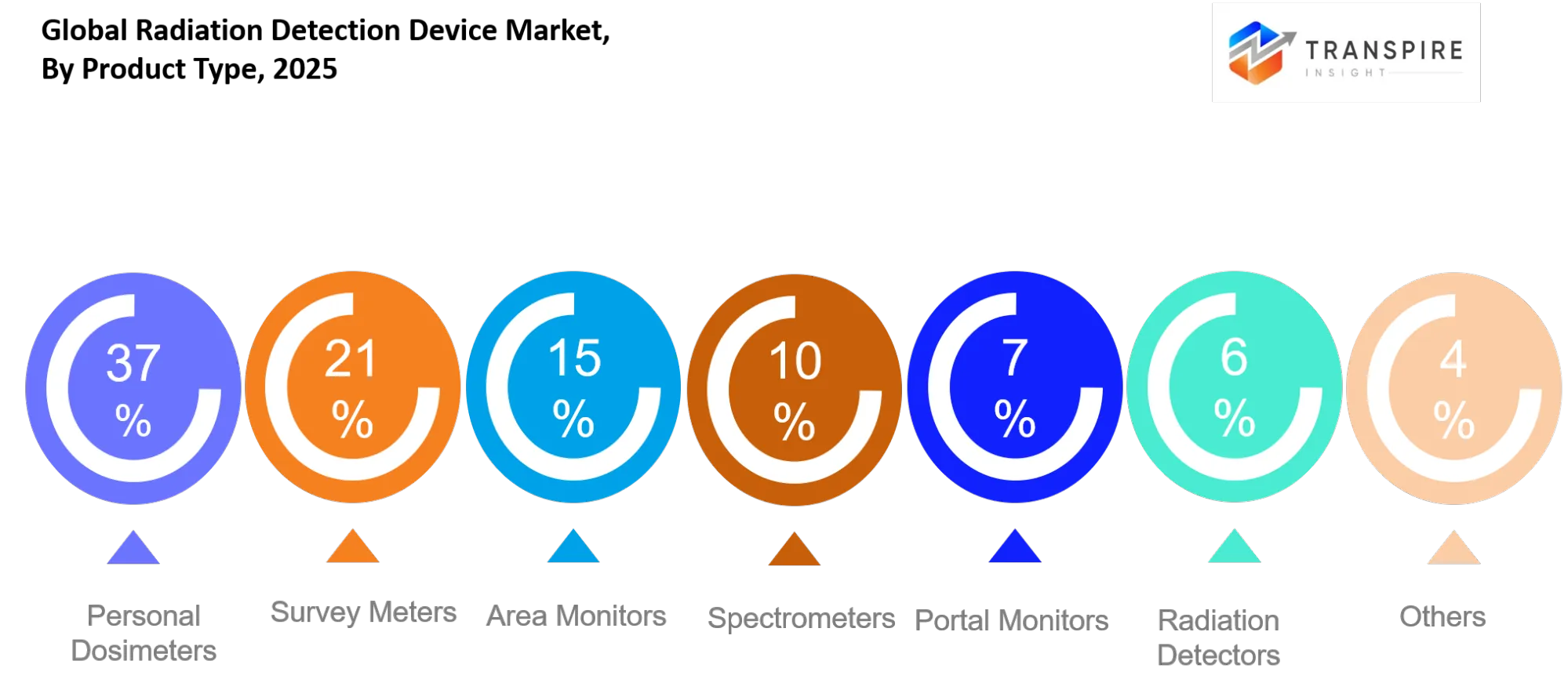
By Technology
Based on technology, scintillation detectors are continuing to enjoy significant market share due to high sensitivity and speed in detection of radiation. On the other hand, semiconductor detectors are increasingly being adopted in terms of accuracy and compact designs, especially in healthcare and industrial settings. Geiger-Müller detectors are commonly applied due to reliability and cheapness, whereas ionisation chambers are constantly used where a high degree of accuracy in dose measurement is required. At the same time, solid-state detectors, gamma detectors, and neutron detectors benefit a lot from constant technological advancement, which improves their performance in nuclear safety, homeland security, and scientific applications.
By End User
The healthcare industry will continue to dominate the market as the biggest consumer of radiation detectors since there are many activities that involve diagnostic imaging, radiotherapy, and nuclear medicine. In nuclear power plants, investments are constantly being made in order to increase safety of operations and meet regulations. In defence and homeland security sectors, efforts to increase radiation surveillance continue in order to improve border protection and emergency preparedness. Manufacturers in the industries continue to invest in radiation monitoring during non-destructive testing and quality control.
By Application
Radiation monitoring continues to be the most dominant application in terms of revenue as companies emphasise the need to have constant safety monitoring within medical, industrial, and nuclear settings. Safety screening has become another key application, owing to increased funding in areas such as airports, ports, and border security. Medical diagnosis applications have continued to grow due to the increasing use of nuclear imaging techniques, whereas industrial inspection is based on radiation monitoring to enhance quality and safety. Other applications include nuclear waste management and emergency response situations.
By Device Type
As per the type of devices, portable devices and handheld detectors will have a high requirement since they offer convenience for inspection in the field, emergencies, and monitoring at workplaces. The fixed systems would continue to be needed for radiation surveillance in nuclear plants, hospitals, and industries. The wearable devices would see an increasing popularity since organisations are enhancing the safety initiatives of their employees using continuous exposure monitoring. The vehicle-mounted systems would help perform environmental surveys and security activities, while network monitoring systems and smart detectors are picking up the pace due to their ability to connect via cloud and intelligent analysis of data.
What are the Key Use Cases Driving the Global Radiation Detection Device Market?
Personal dosimeters continue to be popular among other radiation detectors as they play an important role in measuring radiation exposure of people working with this kind of equipment. These devices are widely used by healthcare specialists, nuclear plant employees, industrial workers, researchers, and others who have to work with radiation in order to ensure that safety standards are followed and health risks are reduced.
The utilisation of radiation detection devices has gone far beyond nuclear plants. Medical institutions use monitoring equipment to perform diagnostics using X-rays or radiation therapies, while industrial companies apply radiation detection technology when conducting tests and inspections of products. Radiation detection equipment is also applied by defence institutions, border security organisations, and customs in order to control and prevent the smuggling of radioactive material across the border.
There is an increasing number of emerging applications which provide new opportunities for market growth. Smart radiation detectors are connected to the cloud and are equipped with artificial intelligence in order to analyse and predict results. In addition, environmental monitoring organisations are starting to use radiation detectors to assess the radiation level in the environment near nuclear plants, mining facilities, disaster zones, etc.
|
Report Metrics |
Details |
|
Market size value in 2025 |
USD 2.09 Billion |
|
Market size value in 2026 |
USD 2.18 Billion |
|
Revenue forecast in 2033 |
USD 2.95 Billion |
|
Growth rate |
CAGR of 4.42% from 2026 to 2033 |
|
Base year |
2025 |
|
Historical data |
2021 - 2024 |
|
Forecast period |
2026 - 2033 |
|
Report coverage |
Revenue forecast, competitive landscape, growth factors, and trends |
|
Regional scope |
United States; Canada; Mexico; United Kingdom; Germany; France; Italy; Spain; Denmark; Sweden; Norway; China; Japan; India; Australia; South Korea; Thailand; Brazil; Argentina; South Africa; Saudi Arabia; United Arab Emirates |
|
Key company profiled |
Mirion Technologies, Thermo Fisher Scientific, Fortive, Ludlum Measurements, Bertin Technologies, AMETEK ORTEC, Polimaster, Kromek Group, Fuji Electric, Tracerco, Arktis Radiation Detectors, Hitachi, Canberra Industries, Radiation Solutions Inc., FujiFilm |
|
Customization scope |
Free report customization (country, regional & segment scope). Avail customized purchase options to meet your exact research needs. |
|
Report Segmentation |
By Product Type (Personal Dosimeters, Survey Meters, Area Monitors, Portal Monitors, Spectrometers, Radiation Detectors, Nuclear Imaging Devices, Others); By Technology (Scintillation Detectors, Semiconductor Detectors, Geiger-Müller Counters, Ionization Chambers, Solid-state Detectors, Gamma Detection Systems, Neutron Detection Systems, Others); By End User (Healthcare, Nuclear Power Plants, Defense & Homeland Security, Industrial Manufacturing, Research Laboratories, Environmental Monitoring Agencies, Government Organizations, Others); By Application (Radiation Monitoring, Security Screening, Medical Diagnostics, Industrial Inspection, Nuclear Waste Management, Environmental Monitoring, Emergency Response, Others); By Device Type (Portable Devices, Fixed Systems, Wearable Devices, Handheld Detectors, Vehicle-mounted Systems, Networked Monitoring Systems, Smart Detection Devices, Others) |
Which Regions are Driving the Global Radiation Detection Device Market Growth?
North America
North America has been leading the global market for radiation detection devices, commanding a share of 42% of overall revenue. This dominance by the region is backed by the advanced healthcare industry infrastructure, presence of nuclear power plants and investment in homeland security measures. Stringent regulations on radiation safety by government organisations motivate constant upgrading of monitoring technologies in the healthcare, industrial and defence segments. Continued improvements in radiation detection technology and investments in emergency readiness further bolster the market dominance of North America.In February 2025, Mirion Technologies showcased the growth of its product line of radiation detection and monitoring solutions through its 2024 Annual Report, enhancing solutions in healthcare, nuclear power generation, industrial and homeland security sectors in North America, thus reinforcing the position of the region in the radiation detection devices market.
Europe
Europe has a market share of 28% in the global market. Stable growth in the region is backed by a strict regulatory environment and a tradition of nuclear and environmental safety. Countries within the region continue to invest in radiation monitoring solutions in their hospitals, nuclear power stations, research activities and industrial activities. In comparison to North America, the region focuses more on regulation compliance, sustainable energy and cross-border safety programs. In July 2025, Kromek Group successfully received its first £1.7 million contract by UK Government Radiological Nuclear Detection Framework for providing advanced radiation detection solutions and services, thus emphasising the investment of the region in nuclear security and radiation detection technologies.
Asia Pacific
The Asia Pacific region, with a 22% share of the worldwide market, is estimated to witness the highest growth at a CAGR of 17.3% during the forecast period. The fast development of nuclear energy projects, improved healthcare infrastructure, increased industrialisation, and the increase in the number of government investments in the field of radiation safety have become the driving factors in the adoption of these products in the region. Awareness regarding occupational safety, medical imaging services, and investments in intelligent monitoring systems will provide lucrative opportunities for manufacturers in the coming years.In November 2024, according to the International Atomic Energy Agency (IAEA), the radiation monitoring systems in operation at Japan's Fukushima Daiichi Nuclear Power Station meet the international safety standards, thus demonstrating the continued investment of the region in radiation detection and monitoring technologies.>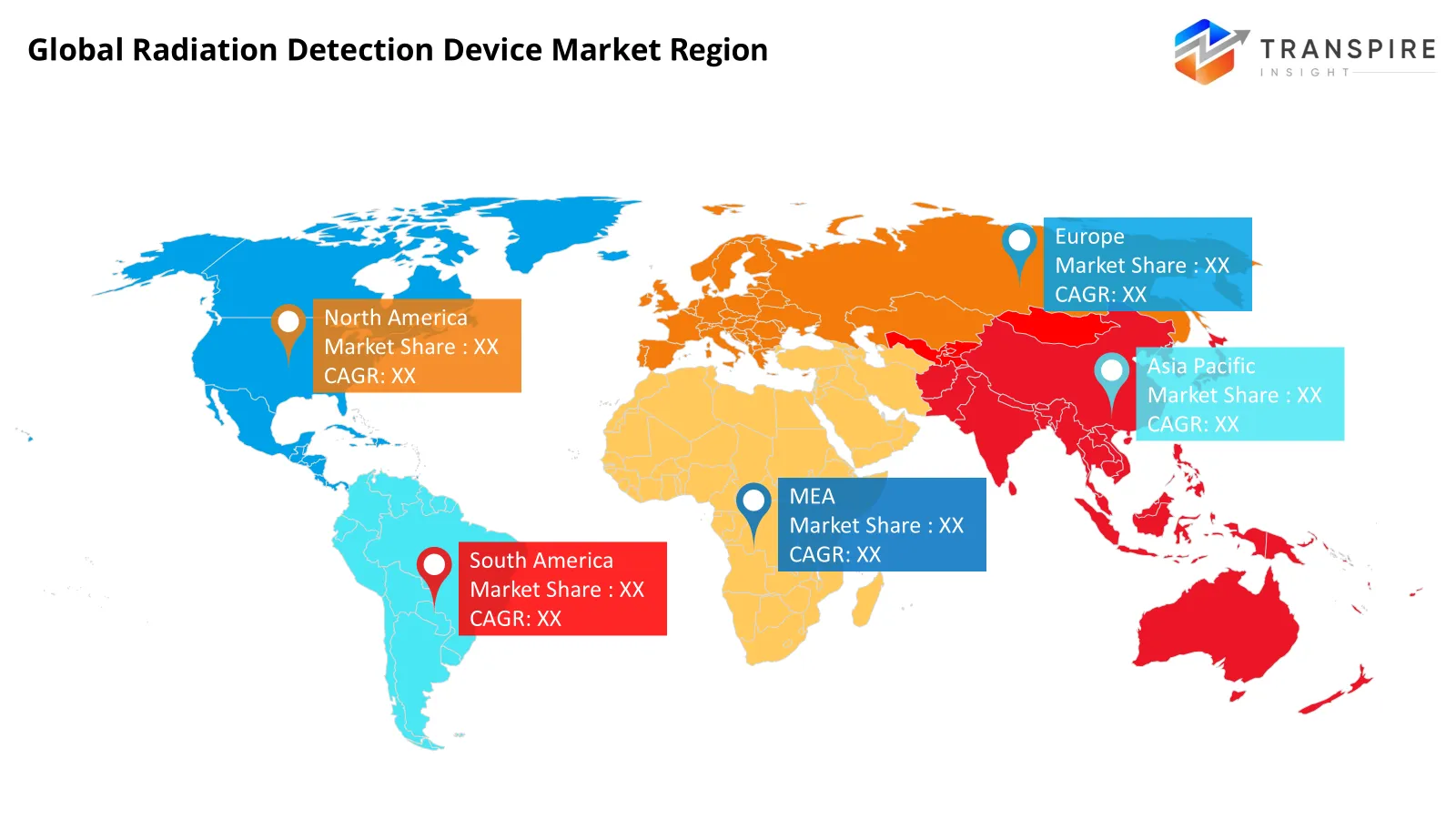
Who are the Key Players in the Global Radiation Detection Device Marketand how do they Compete?
The competition within the global radiation detection device industry is fueled by consistent improvements in terms of product development and technology, as well as adherence to new international radiation safety standards. The firms are making heavy investments in research and development to boost detection efficiency, make the products portable, and enable various digital features such as wireless connectivity, cloud integration, and AI analytics. On top of that, the companies are working towards increasing their distribution channels across the globe as well as forming strong relationships with healthcare service providers, nuclear plants, industries, and government agencies.
Competitive advantage of the leading companies lies in their ability to develop special product lines for use in medical diagnosis, nuclear power generation, homeland security, industrial inspection, and environmental monitoring. Several companies specialise in manufacturing compact and wearable radiation detection devices that are capable of providing real-time monitoring and convenience to the users, while other firms concentrate on developing high-performance fixed monitoring devices intended for industrial and nuclear purposes. The continuous improvement in semiconductor detector technology and scintillation systems provides a competitive advantage to the companies.
In order to enhance their competitive advantage, market players are forming alliances, expanding geographically and introducing new products in response to changing consumer needs. Further, companies are making efforts towards software integration, predictive maintenance and centralised monitoring in order to increase efficiency and comply with regulations. It is through technological advancements coupled with customer-oriented solutions and expanded service networks that the major players have been able to further establish themselves in the ever-changing global market of radiation detection devices.
Global Radiation Detection Device Market companies
- Mirion Technologies
- Thermo Fisher Scientific
- Fortive
- Ludlum Measurements,
- Bertin Technologies,
- AMETEK ORTEC
- Polimaster
- Kromek Group
- Fuji Electric
- Tracerco
- Arktis Radiation Detectors
- Hitachi
- Canberra Industries
- Radiation Solutions Inc.
- FujiFilm
Recent Development News
In May 2025, Mirion Technologies released the TELE-GMP telescopic pole accessory used in radiation surveys. The device expands the measurement range in potentially dangerous or difficult-to-reach places. Thus, it allows for better protection of workers and effective inspection when conducting radiation surveys in nuclear and industrial facilities.
In November 2025, Thermo Fisher Scientific presented advanced radiation detection equipment designed to be used in clinical laboratories and for nuclear medicine. Thanks to the improved detection sensitivity, it facilitates the monitoring process during handling radioactive substances in healthcare environments.
In June 2026, Thermo Fisher Scientific demonstrated its latest innovations regarding AI-powered research and analysis within the scientific instrumentation portfolio at BIO International 2026.
https://newsroom.thermofisher.com
What Strategic Insights Define the Future of the Global Radiation Detection Device Market?
The global market for radiation detectors is evolving towards intelligent monitoring technologies that include real-time data analysis, wireless communication, and automation to enhance radiation safety at healthcare institutions, nuclear power facilities, industrial manufacturing companies, and homeland security services. The introduction of stricter regulations by governments and innovations by industries will make the demand switch from standard radiation detectors to integrated smart monitoring systems that provide better accuracy and reaction rates.
One of the factors that can inhibit further development of the market is the high price of advanced detection systems and complicated integration of new digital technologies. Some organisations might also experience difficulties with maintenance, calibration, and professionals, which can slow down technology deployment. The expansion of nuclear power stations, investment in radiation safety programs, and introduction of AI-based monitoring systems bring many opportunities for radiation detector manufacturers. Companies should focus on producing connected and compact systems with predictive abilities while emphasising cybersecurity, compliance with regulations, and after-sales technical support to gain market share in the future.
By Product Type
- Personal Dosimeters
- Survey Meters
- Area Monitors
- Portal Monitors
- Spectrometers
- Radiation Detectors
- Nuclear Imaging Devices
By Technology
- Scintillation Detectors
- Semiconductor Detectors
- Geiger-Müller Counters
- Ionisation Chambers
- Solid-state Detectors
- Gamma Detection Systems
- Neutron Detection Systems
By End User
- Healthcare
- Nuclear Power Plants
- Defense & Homeland Security
- Industrial Manufacturing
- Research Laboratories
- Environmental Monitoring Agencies
- Government Organizations
By Application
- Radiation Monitoring
- Security Screening
- Medical Diagnostics
- Industrial Inspection
- Nuclear Waste Management
- Environmental Monitoring
- Emergency Response
By Device Type
- Portable Devices
- Fixed Systems
- Wearable Devices
- Handheld Detectors
- Vehicle-mounted Systems
- Networked Monitoring Systems
- Smart Detection Devices
Regional Outlook
North America
- United States
- Canada
- Mexico
Europe
- Germany
- United Kingdom
- France
- Spain
- Italy
- Rest of Europe
Asia Pacific
- Japan
- China
- Australia & New Zealand
- South Korea
- India
- Rest of Asia Pacific
South America
- Brazil
- Argentina
- Rest of South America
Middle East & Africa
- Saudi Arabia
- United Arab Emirates
- South Africa
- Rest of the Middle East & Africa
Frequently Asked Questions
Find quick answers to common questions.
The Global Radiation Detection Device Market size was valued at USD 2.09 Billion in 2025 and is poised to reach USD 2.95 Billion by 2033, expanding at a 4.42% CAGR.
Key segments for the Global Radiation Detection Device Market are By Product Type (Personal Dosimeters, Survey Meters, Area Monitors, Portal Monitors, Spectrometers, Radiation Detectors, Nuclear Imaging Devices, Others); By Technology (Scintillation Detectors, Semiconductor Detectors, Geiger-Müller Counters, Ionization Chambers, Solid-state Detectors, Gamma Detection Systems, Neutron Detection Systems, Others); By End User (Healthcare, Nuclear Power Plants, Defense & Homeland Security, Industrial Manufacturing, Research Laboratories, Environmental Monitoring Agencies, Government Organizations, Others); By Application (Radiation Monitoring, Security Screening, Medical Diagnostics, Industrial Inspection, Nuclear Waste Management, Environmental Monitoring, Emergency Response, Others); By Device Type (Portable Devices, Fixed Systems, Wearable Devices, Handheld Detectors, Vehicle-mounted Systems, Networked Monitoring Systems, Smart Detection Devices, Others).
Growth is primarily driven by growing safety worries about nuclear energy, more radiation detection being used in healthcare and industry, increased government safety regulations, more nuclear power facilities, and homeland security and environmental monitoring becoming more popular.
The global market is led by major manufacturers including Mirion Technologies, Thermo Fisher Scientific, Fortive, Ludlum Measurements, Bertin Technologies, AMETEK ORTEC, Polimaster, Kromek Group, Fuji Electric, Tracerco, Arktis Radiation Detectors, Hitachi, Canberra Industries, Radiation Solutions Inc., FujiFilm.
North America represents 42% of the world’s market for radiation detection devices owing to its strong healthcare sector, well-established nuclear safety framework, stringent radiation control policies, significant defence budgets, and consistent efforts from major companies and authorities towards innovation in detection technologies.
The commercial opportunities in the global market for radiation detection devices encompass increased demand for nuclear power plants' safety, investments in homeland security and border surveillance, use of radiation detectors in health care and industrial processes, and increased use of portable radiation detection devices with artificial intelligence.
- Mirion Technologies
- Thermo Fisher Scientific
- Fortive
- Ludlum Measurements,
- Bertin Technologies,
- AMETEK ORTEC
- Polimaster
- Kromek Group
- Fuji Electric
- Tracerco
- Arktis Radiation Detectors
- Hitachi
- Canberra Industries
- Radiation Solutions Inc.
- FujiFilm
About the Authors

Avinash Kumar
I’m Avinash Kumar, a Senior Research Analyst at Transpire Insight, with expertise in the Electronics and Semiconductor and Energy & Power industry. My work focuses on analyzing emerging technologies, market trends, industry developments, and innovation across these sectors. I specialize in transforming complex technical and market insights into clear, research-backed content that helps professionals, businesses, and decision-makers stay informed. Through continuous industry research and data-driven analysis, I strive to deliver accurate, reliable, and practical perspectives on the latest advancements shaping the semiconductor and energy landscape.

Chakradhar Khansole
Chakradhar serves as the Research Director at Transpire Insight, bringing over 8 years of experience in technology, innovation, and strategic market intelligence. He specializes in transforming complex market data into actionable business insights that enable organizations to make informed, growth-oriented decisions. Recognized for his strategic vision and analytical expertise, Chakradhar leads high-impact research initiatives, delivering comprehensive market assessments, competitive intelligence, and forward-looking industry analysis.
Recently Published Reports
-
Apr 2026
Fiber Optic Faceplates Market
Fiber Optic Faceplates Market Size, Share & Analysis Report By Type (< 300 mm2, 300-350 mm2, and > 350 mm2, By Application (Night Vision, Holographic Imaging, Medical, and Others), and Geography (North America, Europe, Asia-Pacific, Middle East and Africa, South and Central America), 2021 - 2031
-
Apr 2026
High Temperature Superconductors Market
High Temperature Superconductors Market Size, Share & Analysis Report By Type (1G HTS, and 2G HTS), By Application (Power Cable, Fault Current Limiter, and Transformer), and Geography (North America, Europe, Asia-Pacific, Middle East and Africa, South and Central America), 2021 - 2031
-
Apr 2026
Industrial Plugs and Socket Market
Industrial Plugs and Socket Market Size, Share & Analysis Report By Type (Industrial Plugs, Industrial Sockets), By Current (Up to 32 A, 32 to 125 A, Above 125 A), By Protection (Dustproof and Splash Proof, Waterproof, Explosion Proof), By End User (Heavy Industries, Oil and Gas, Chemicals and Pharmaceuticals, Power Generation, Others), and Geography (North America, Europe, Asia-Pacific, Middle East and Africa, South and Central America), 2021 - 2031
-
Apr 2026
InGaAs Avalanche Photodiodes Market
InGaAs Avalanche Photodiodes Market Size, Share & Analysis Report By Type (1100 - 1700 nm, and 1000 - 1600 nm), By Application (Missile Warning System, Muzzle Flash Detection, Wafer Defect Inspection, Laser Rangefinders, and Others), and Geography (North America, Europe, Asia-Pacific, Middle East and Africa, South and Central America), 2021 - 2031