

Global E-Ticketing Systems Market Size & Forecast:
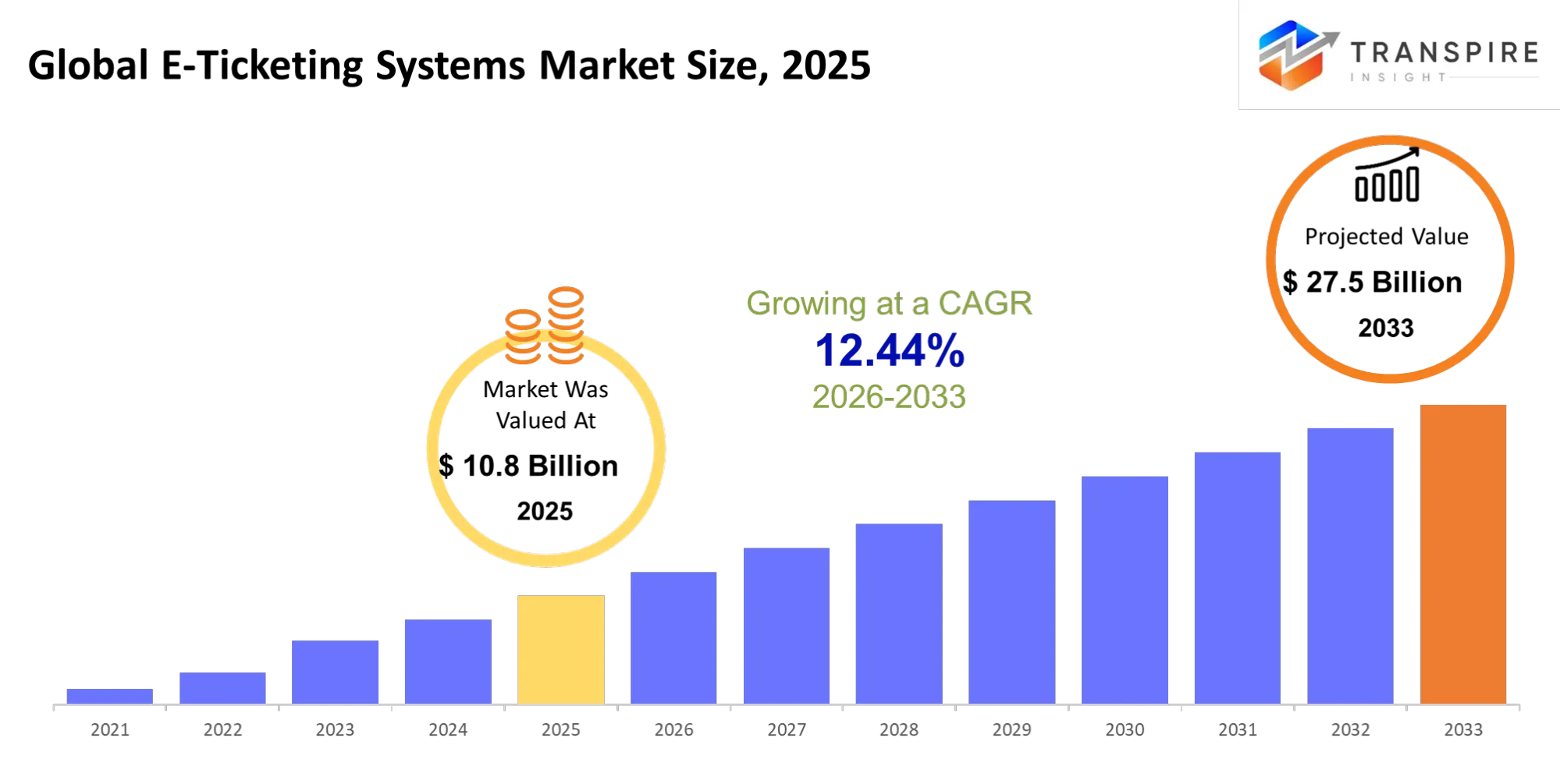
- Global E-Ticketing Systems Market Size 2025: USD 10.8 Billion
- Global E-Ticketing Systems Market Size 2033: USD 27.5 Billion
- Global E-Ticketing Systems Market CAGR: 12.44%
- Global E-Ticketing Systems Market Segments: By Type (Cloud-based E-ticketing Systems, Mobile Ticketing Solutions, Smart Card Ticketing Systems, QR Code Ticketing Systems, NFC Ticketing Platforms, AI-powered Ticketing Systems, Others); By Application (Transportation Ticketing, Entertainment & Events, Airline Ticketing, Sports Ticketing, Parking Management, Others); By End-User (Transport Authorities, Event Organizers, Airlines, Sports Organizations, Others); By Deployment (Cloud Platforms, On-premise Systems, Hybrid Ticketing Platforms, SaaS-integrated Systems, Others)
Global E-Ticketing Systems Market Summary:
The Global E-Ticketing Systems Market size is estimated at USD 10.8 Billion in 2025 and is anticipated to reach USD 27.5 Billion by 2033, growing at a CAGR of 12.44% from 2026 to 2033.
The Global E-Ticketing Systems Market is growing fast as companies ditch paper tickets for digital versions in transport, entertainment, sports, and events. In recent years, there's been a big move towards mobile-first and cloud-based ticketing. This shift lets folks book in real time and access stuff contactlessly, all while making payments easier. The push for touch-free transactions spiked after the pandemic, which got consumers into the habit of buying digital tickets and using automated entry systems. Plus, as more people get smartphones and internet access grows, more folks use digital payments. As businesses aim for better operations, reduced costs, and fraud prevention while offering customers a smoother experience, they're investing in scalable and AI-driven ticketing tech worldwide.
Global E-Ticketing Systems Market Insights:
The Global E-Ticketing Systems Market is growing beyond just digital booking into full-blown ecosystems that integrate payments, analytics, and access control. Growth is helped a lot by mobile phones, cloud tech, and people wanting smoother travel and event experiences.
- Mobile ticketing already makes up more than 60% of digital ticket sales. Companies are ramping up app ecosystems with wallet features and quick QR code checks, making buying tickets on phones super fast.
- Cloud-based services account for nearly 55% of the platforms used. Companies are really pushing scalable SaaS setups for quicker rollouts and better real-time management of tickets.
- In transport alone, e-ticketing makes up about 35-40% of market need. Transport firms use AI for bookings and automate fare collecting to make riding smoother for passengers.
- Contactless ticket validation is now used in over 65% of big transit and event places. This growth is because of stuff like NFC and QR code scanners, and self-service tech.
- In the fun world of tickets for shows and gigs, things are pretty lively too. These types of events account for about a quarter of all ticket sales. Plus, companies now use dynamic pricing and social media to really engage with fans.
- When it comes to paying for tickets, digital options rock. Over seventy percent of the time, you can swipe your card or use an app easily. People love not having headaches at checkouts anymore.
- Also, there's been a push towards subscription models for tickets. Folks get memberships and bundles, which helps the companies keep customers happy for longer.
- On top of that, AI plays a big part now. Companies analyze tons of data to figure out what prices to set and when tickets should be available.
- Lastly, in Asia-Pacific, it’s go-go growth time! Thanks to more people having smartphones, new public transport being built, and folks loving digital ways to buy tickets.
What are the Key Drivers, Restraints, and Opportunities in the Global E-Ticketing Systems Market?
Driver:
The main push behind the Global E-Ticketing Systems Market is the quick move to digital transactions and growing mobile payments. With more people using smartphones, QR codes, and cloud services, paper tickets are becoming obsolete in transport, entertainment, and events. Post-pandemic focus on contactless interactions really spurred operators to invest in automated systems for distributing and validating tickets. This switch not only boosts revenue by making bookings easier and cutting costs but also fights fraud and lets companies use dynamic pricing to get customers to buy again.
Restraint:
A big issue is integrating e-ticketing with old infrastructure in public transport and traditional venues. Operators often use outdated hardware and scattered software, making things incompatible and boosting implementation costs. Replacing this stuff needs a lot of money, time, and tech know-how, which slows down big modernization efforts.
Opportunity:
A big chance is AI and cloud-based ticketing systems that blend analytics, dynamic pricing, and personal customer interactions. Investments in smart cities and digital transit, especially in fast-growing parts of Asia-Pacific, mean there's a huge opportunity for platforms that handle lots of transactions and support multi-modal transport.
What Has the Impact of Artificial Intelligence Been on the Global E-Ticketing Systems Market?
Artificial Intelligence has really changed the Global E-Ticketing Systems Market, boosting efficiency in ticket distribution, engagement with customers, and the way ops make decisions. Now, we see AI doing more and more tasks like managing ticket inventories, giving customer service through chatbots, adjusting prices dynamically, and keeping an eye on transactions in real-time. This reduces the need for humans to do the grunt work and makes things smoother for users.
AI gets extra handy with predictions too. It looks at past buying habits, what customers like, how popular events are, and travel needs to guess future sales. This lets operators raise occupancy rates, cut down on unsold tickets, and handle surges better.
On the ops side, AI steps up fraud detection by spotting odd booking patterns and sketchy transactions right away. Plus, it helps with recommending stuff to customers, which keeps people coming back and buying again. In March 2025, many transport and event ticket sellers ramped up AI-based pricing tools. This helped them adjust costs during busy times. Then, in October 2024, several digital ticket sites added generative AI for customer service. It auto-replied to booking questions, cutting wait times and boosting efficiency.
Global E-Ticketing Systems Market Trends:
The Global E-Ticketing Systems Market is moving beyond basic digital ticket issuance into connected experience platforms that blend payments, customer engagement, analytics, and automated access. Now, market trends show more people want smooth, mobile, and personalized ticketing experiences.
- Mobile ticketing has become the standard booking method over recent years. People now heavily favor app-based purchases and immediate digital access rather than printing tickets.
- Since the pandemic, contactless validation tech like QR codes, NFC-enabled entry, and self-service systems have boomed.
- Ticketing providers are switching from on-premise setups to cloud platforms. This move speeds up deployment, lets them make real-time updates, and helps them scale easily.
- Consumer behavior now favors last-minute and real-time buying, forcing firms to use dynamic pricing and auto inventory tools.
- AI moved past simple recommendations to engagement systems that look at what customers like and don't like, offering up tailor-made deals based on that data.
- Providers need to link their ticket sales systems with payment methods, loyalty schemes, and other transport apps more than ever before.
- Companies are switching from one-off ticket sales to subscription models for access to services and perks.
- Tech advances help catch fraudsters by spotting dodgy transactions and automated bots trying to mess with the system.
- Investments in smart cities and connected transport are speeding up the move towards unified ticketing systems. These make getting around easier by linking different types of transit. Folks now often buy tickets at the last minute or on the fly, which means businesses need to use dynamic pricing and automation to keep up.
Global E-Ticketing Systems Market Segmentation
By Type
Cloud-based e-ticketing systems dominate because they cost less, scale easier, and deploy quicker across various industries. Mobile ticketing takes off as folks love using their phones for bookings and digital wallets. Smart cards still rule in big transport nets, where speedy transaction checks are key. QR codes grew popular for being cheap and simple to set up, while NFC gains ground thanks to contactless payments. The use of AI in ticketing is rising too, thanks to features like predictive analytics and dynamic pricing that enhance personalization and boost growth.
By Application
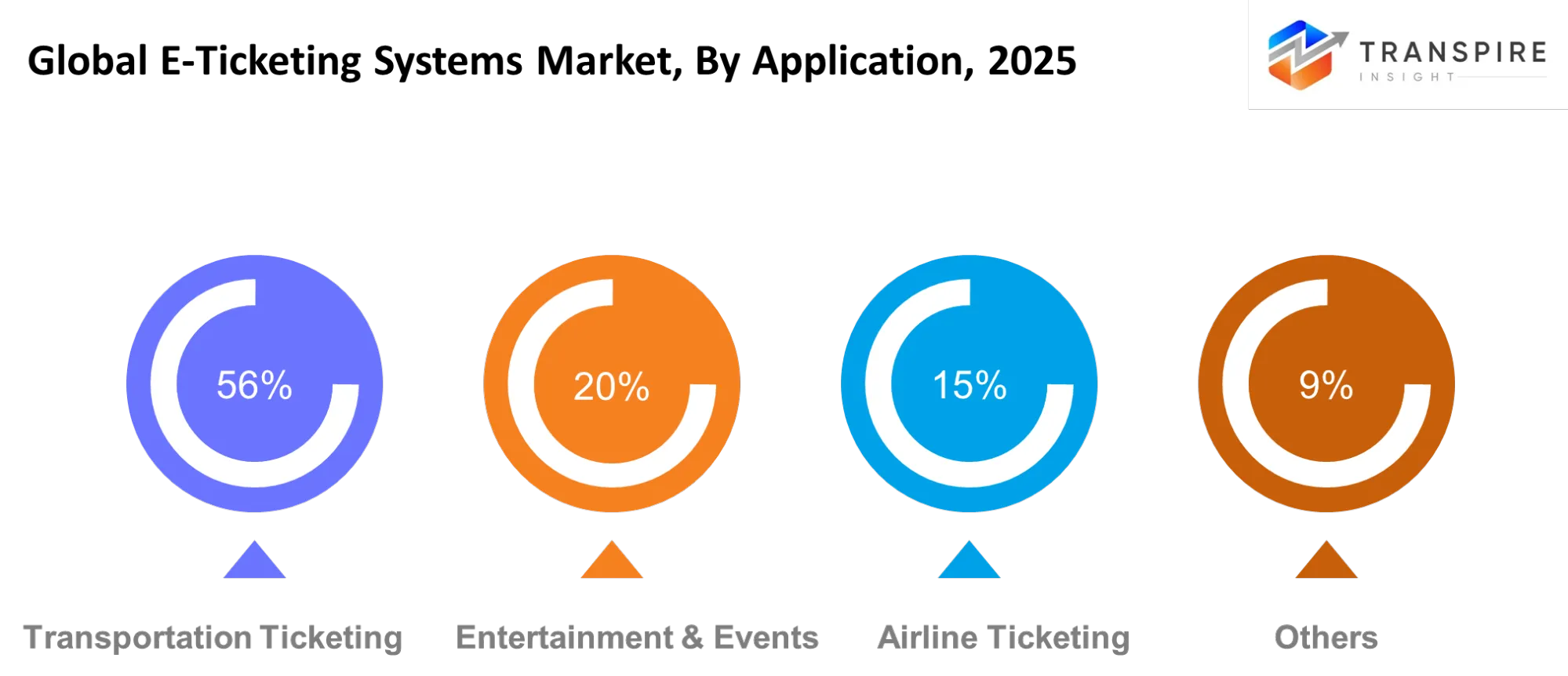
Transportation ticketing is huge, since managing public transit and automating fare collection is essential. Public transit networks need this to handle crowds smoothly. Plus, entertainment events get more high-tech with digital interactions and customized guest experiences. People love airline self-service options too, while sports venues use digital entry and reward systems to draw fans. At the same time, parking gets smarter with contactless payments and urban tech projects.
By End-User
Transport authorities have a big role because of huge digitization efforts and mobility projects. Plus, event planners now use cool ticketing systems to make things easier for everyone. Airlines keep pouring money into smooth travel experiences too. Sports groups, though, are more into tech that connects with fans digitally.
By Deployment
Cloud platforms dominate because they're flexible, remotely accessible, and easier to maintain. On-premise systems still suit those who need strict control over their infrastructure and data. Hybrid ticketing platforms are getting more notice since they blend operational flexibility with security needs. SaaS-integrated systems keep growing as businesses go for quicker setup and a subscription model.
What are the Key Use Cases Driving the Global E-Ticketing Systems Market?
The main reason the Global E-Ticketing Systems Market is growing is due to high-volume passenger management in transportation. Digital ticketing helps with quicker fare collection, automated checks, and simpler operations. As a result, transit operators can deal with lots of commuters more efficiently while making things easier for customers too.
We're seeing e-ticketing pop up more in places like stadiums, concerts, amusement parks, and on flights. It allows for touch-free entries, cool pricing strategies, and better management of how many people are on-site at any time. Companies are leaning into this tech to enhance users' experiences and speed up their processes.
Additionally, there's a rise in smart city initiatives using e-ticketing. Things like parking systems and ridesharing apps are integrating this technology. They’re also adding in AI and big data to tailor tickets to individual preferences and behaviors, linking different travel methods together into one convenient experience.
|
Report Metrics |
Details |
|
Market size value in 2025 |
USD 10.8 Billion |
|
Market size value in 2026 |
USD 12.1 Billion |
|
Revenue forecast in 2033 |
USD 27.5 Billion |
|
Growth rate |
CAGR of 12.44% from 2026 to 2033 |
|
Base year |
2025 |
|
Historical data |
2021 - 2024 |
|
Forecast period |
2026 - 2033 |
|
Report coverage |
Market size analysis, growth drivers, restraints, opportunities, competitive landscape, technology trends, AI impact, segmentation analysis, regional outlook, and strategic developments |
|
Regional scope |
North America, Europe, Asia Pacific, Latin America, Middle East & Africa |
|
Key company profiled |
Amadeus IT Group, Sabre Corporation, Conduent, Cubic Transportation Systems, Thales Group, Siemens Mobility, HID Global, Ticketer, Eventbrite, Ticketmaster, Infineon Technologies, Xerox, Scheidt & Bachmann, Masabi, INIT |
|
Customization scope |
Customized segmentation, country-level analysis, company profiling, competitive benchmarking, and additional regional analysis available. |
|
Report Segmentation |
By Type (Cloud-based E-ticketing Systems, Mobile Ticketing Solutions, Smart Card Ticketing Systems, QR Code Ticketing Systems, NFC Ticketing Platforms, AI-powered Ticketing Systems, Others); By Application (Transportation Ticketing, Entertainment & Events, Airline Ticketing, Sports Ticketing, Parking Management, Others); By End-User (Transport Authorities, Event Organizers, Airlines, Sports Organizations, Others); By Deployment (Cloud Platforms, On-premise Systems, Hybrid Ticketing Platforms, SaaS-integrated Systems, Others) |
Which Regions are Driving the Global E-Ticketing Systems Market Growth?
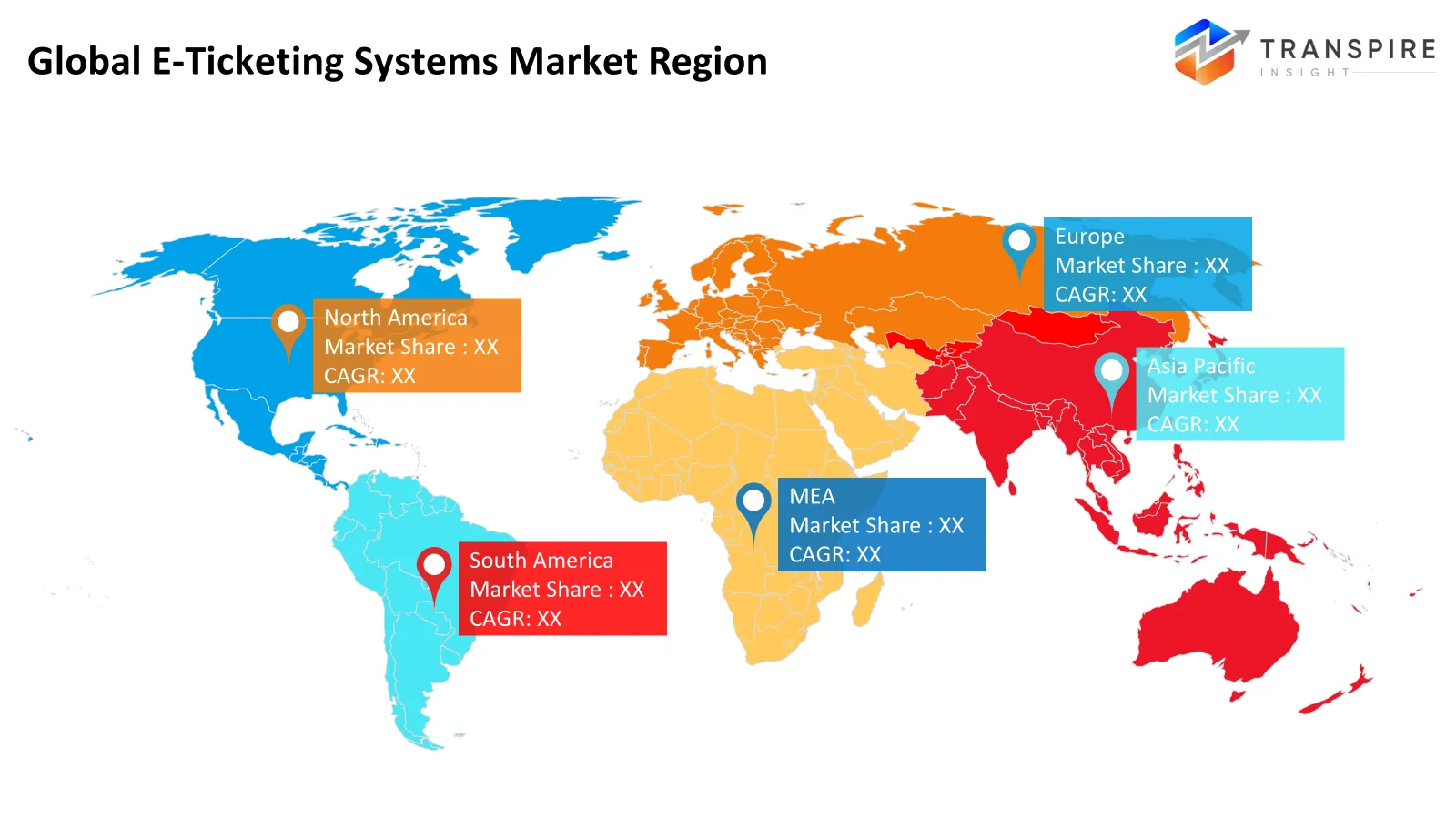
North America leads in the Global E-Ticketing Systems Market because of its solid digital setup and use of contactless payments. It also has lots of mobile services. The region's transportation and entertainment systems are pretty advanced thanks to investments in tech that boost the customer experience. Plus, efforts to modernize public transit and ramp up digital transformation keep boosting usage in both transport and event management. In March 2025, various transit groups sped up their investments in AI-powered fare collection and cloud ticketing to make passenger management way more efficient.
Europe is the second-biggest regional market, backed by solid rules, great public transit, and trusted ways to pay digitally. Unlike North America, growth there is driven more by joined-up transport plans and eco-friendly policies. Stability comes from big railway systems, clever mobility programs, and digital stuff helped by the government. In October 2024, lots of places in Europe started bigger projects for tickets that work across buses, trains, and more, all on one app or site.
Asia Pacific is becoming the fastest-growing area because of rapid urban growth, more people using smartphones, and bigger investments in smart transportation. Digital payment use and public transport going hi-tech have sped up changes in ticketing, especially in developing nations. Plus, the focus on smart cities, subway networks, and tech-driven services keeps opening up lots of new chances for more developments. In January 2025, big cities in Asia had advanced mobile and QR ticketing systems to handle the surge of commuters and boost connected transport networks.
Who are the Key Players in the Global E-Ticketing Systems Market and how do they Compete?
In the Global E-Ticketing Systems Market, companies aren't just competing on price; it's about tech skills, platform growth, payment pals, and special industry tweaks. To stand out, firms build cloud stuff, beef up mobile functions, merge analytics, and amp up customer-friendly options. The game got tougher as providers now aim for full digital experience suites, combining payments, access controls, and user interaction tools, going way beyond just selling tickets.
Ticketmaster, Amadeus, Sabre, and Conduent dominate their market by getting bigger and better connected. Ticketmaster stands out with its cool tech, like dynamic pricing and event planning tools. Amadeus and Sabre focus on deep ties within the travel world – partnering up and relying on APIs to make bookings smoother. Conduent wins with massive transport ticket systems and updates for public transit. So each has its own thing going on – tech, connections, and scale.
Other companies like Cubic Transportation Systems, Masabi, Scheidt & Bachmann, and INIT are competing by focusing on specific areas and new innovations in transit. Masabi is growing fast by offering mobile and cloud-based ticketing, whereas Cubic is more about integrated ecosystems and being able to use one ticket for different modes of transport. They're also partnering up and expanding locally while using AI to make buying tickets easier and to reach more people.
Global E-Ticketing Systems Market Companies:
- Amadeus IT Group
- Sabre Corporation
- Conduent
- Cubic Transportation Systems
- Thales Group
- Siemens Mobility
- HID Global
- Ticketer
- Eventbrite
- Ticketmaster
- Infineon Technologies
- Xerox
- Scheidt & Bachmann
- Masabi
- INIT
Recent Development News:
In February 2026, Masabi picked up Passenger Technology Group, beefing up its cloud-based mobility and ticketing setup. By melding fare collection, passenger info systems, and mobile ticketing solutions, they boosted end-to-end transit abilities, supercharging digital upgrades in the sector.
In May 2026, Ticketmaster joined forces with SM Prime to debut SM Ticketmaster in the Philippines. This plunge into a booming live entertainment scene ramped up digital ticketing for gigs, games, and other events, all while boosting their regional presence.
https://business.ticketmaster.com
In May 2026, Masabi was key in kicking off Spain's first regional account-based ticketing system, blanketing about half of Galicia's transport net. This tech rollout gave a major push to smart mobility and helped more folks jump on integrated digital payment methods.
What Strategic Insights Define the Future of the Global E-Ticketing Systems Market?
The Global E-Ticketing Systems Market's future involves integrating digital ecosystems, where ticketing becomes part of a wider customer experience rather than just a stand-alone transaction. For growth, providers need to blend payments, mobility services, analytics, personalization, and automated access management into one unified system.
A hidden risk is growing platform fragmentation. Disconnected payment systems, old infrastructure, and incompatible ticketing environments create issues with scalability and limit cross-platform interaction. As these digital ecosystems get more complex, integration problems might be a bigger hurdle than the tech not being adopted.
Connected mobility ecosystems, smart city projects, and AI-enabled ticketing systems are big opportunities for supporting diverse transport and personal digital needs. Companies should use open APIs, cloud-native setups, and cooperation-focused alliances to grab lasting value.
Smart market players need to concentrate more on building robust, scalable systems that boost customer retention, data revenue, and platform appeal rather than just growing transaction numbers. So, emphasizing ecosystem development over increasing volume is key for success.
Global E-Ticketing Systems Market Segmentation
By Type
- Cloud-based E-ticketing Systems
- Mobile Ticketing Solutions
- Smart Card Ticketing Systems
- QR Code Ticketing Systems
- NFC Ticketing Platforms
- AI-powered Ticketing Systems
- Others
By Application
- Transportation Ticketing
- Entertainment & Events
- Airline Ticketing
- Sports Ticketing
- Parking Management
- Others
By End-User
- Transport Authorities
- Event Organizers
- Airlines
- Sports Organizations
- Others
By Deployment
- Cloud Platforms
- On-premise Systems
- Hybrid Ticketing Platforms
- SaaS-integrated Systems
- Others
Regional Outlook
North America
- United States
- Canada
- Mexico
Europe
- Germany
- United Kingdom
- France
- Spain
- Italy
- Rest of Europe
Asia Pacific
- Japan
- China
- Australia & New Zealand
- South Korea
- India
- Rest of Asia Pacific
South America
- Brazil
- Argentina
- Rest of South America
Middle East & Africa
- Saudi Arabia
- United Arab Emirates
- South Africa
- Rest of the Middle East & Africa
Frequently Asked Questions
Find quick answers to common questions.
The Global E-Ticketing Systems Market size was valued at USD 10.8 Billion in 2025 and is poised to reach USD 27.5 Billion by 2033, expanding at a 12.44% CAGR from 2026 to 2033.
Key segments for the Global E-Ticketing Systems Market are By Type (Cloud-based E-ticketing Systems, Mobile Ticketing Solutions, Smart Card Ticketing Systems, QR Code Ticketing Systems, NFC Ticketing Platforms, AI-powered Ticketing Systems, Others); By Application (Transportation Ticketing, Entertainment & Events, Airline Ticketing, Sports Ticketing, Parking Management, Others); By End-User (Transport Authorities, Event Organizers, Airlines, Sports Organizations, Others); By Deployment (Cloud Platforms, On-premise Systems, Hybrid Ticketing Platforms, SaaS-integrated Systems, Others).
Growth is primarily driven by increasing smartphone use, more contactless payments, bigger digital infrastructure, the growing adoption of cloud-based ticketing, and a greater demand for smooth bookings and automated experiences.
The global market is led by major manufacturers including Amadeus IT Group, Sabre Corporation, Conduent, Cubic Transportation Systems, Thales Group, Siemens Mobility, HID Global, Ticketer, Eventbrite, Ticketmaster, Infineon Technologies, Xerox, Scheidt & Bachmann, Masabi, INIT.
North America takes up 39% of the global e-ticketing market. It's because of solid digital setups, lots of contactless payments, fancy transport networks, and growing investments in cloud and AI ticketing technologies.
The Global E-Ticketing Systems Market offers lots of commercial chances. These include expanding smart city and digital transit projects, growing use of AI-powered ticketing and dynamic pricing, increased demand for integrated mobility platforms, and big investments in cloud-based ticketing. Also, there's growth in emerging markets with fast-developing transport networks.
- Amadeus IT Group
- Sabre Corporation
- Conduent
- Cubic Transportation Systems
- Thales Group
- Siemens Mobility
- HID Global
- Ticketer
- Eventbrite
- Ticketmaster
- Infineon Technologies
- Xerox
- Scheidt & Bachmann
- Masabi
- INIT
About the Authors

Mayur Shinde
I am Mayur Shinde, a Senior Research Analyst at Transpire Insight, specializing in the Automotive & Transportation and Information & Communication Technology (ICT) Industry. My work focuses on analyzing emerging market trends, technological advancements, competitive landscapes, and industry developments to deliver accurate, data-driven insights. I am passionate about transforming complex market information into clear, actionable content that helps businesses, professionals, and decision-makers stay informed and make confident strategic decisions.

Chakradhar Khansole
Chakradhar serves as the Research Director at Transpire Insight, bringing over 8 years of experience in technology, innovation, and strategic market intelligence. He specializes in transforming complex market data into actionable business insights that enable organizations to make informed, growth-oriented decisions. Recognized for his strategic vision and analytical expertise, Chakradhar leads high-impact research initiatives, delivering comprehensive market assessments, competitive intelligence, and forward-looking industry analysis.
Recently Published Reports
-
Apr 2026
3D Optical Profiler Market
3D Optical Profiler Market Size, Share & Analysis Report By Type (Desktop 3D Optical Profiler, and Portable 3D Optical Profiler), By Technology (Confocal Technology, and White Light Interference), By End-Use Industry (Manufacturing, Research Institutions, Automotive, Aerospace and Defense, Medical Devices, and Other), and Geography (North America, Europe, Asia-Pacific, Middle East and Africa, South and Central America), 2021 - 2031
-
Apr 2026
Depth Sensor Market
Depth Sensor Market Size, Share & Analysis Report By Type (Infrared Depth Sensors, Time-of-Flight (ToF) Sensors, Stereo Vision Sensors, Structured Light Sensors, Ultrasonic Depth Sensors), By Application (Automotive, Robotics, Gaming, Consumer Electronics, Industrial Automation, Healthcare, Security & Surveillance, Others), By End Users (Automotive Manufacturers, Consumer Electronics Companies, Healthcare Providers, Industrial Companies, Security Agencies, Gaming Companies, Robotics Companies, Others), and Geography (North America, Europe, Asia-Pacific, Middle East and Africa, South and Central America), 2021 – 2031
-
Apr 2026
Digital Manufacturing Market
Digital Manufacturing Market Size, Share & Analysis Report By Component (Hardware, Software, and Services), By Technology (Robotics, 3D Printing, Internet of Things (IoT), and Others), By Application (Automotive and Transportation, Aerospace and Defense, Consumer Electronics, Industrial Machinery, and Others), By Process Type (Computer-Based Designing, Computer-Based Simulation, Computer 3D Visualization, Analytics, and Others), and Geography (North America, Europe, Asia-Pacific, Middle East and Africa, South and Central America), 2021 – 2031
-
Apr 2026
Digital Visa Services Market
Digital Visa Services Market Size, Share & Analysis Report By Type (Individual Travelers, Group Travelers), By Application (Tourism, Business Travel, Others), and Geography (North America, Europe, Asia-Pacific, Middle East and Africa, South and Central America), 2021 – 2031