

France Automated Fare Collection Market Size & Forecast:
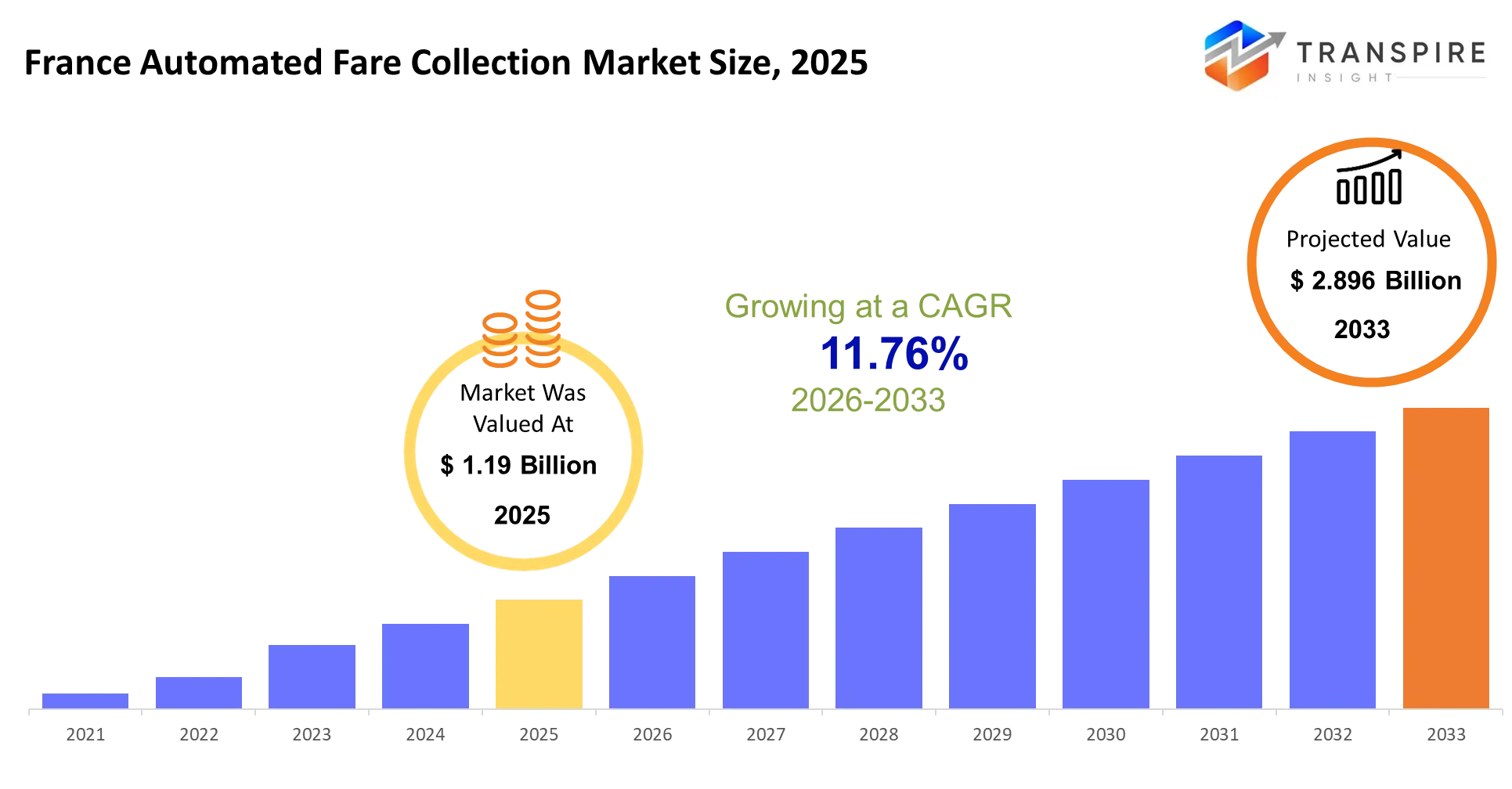
- France Automated Fare Collection Market Size 2025: USD 1.19 Billion
- France Automated Fare Collection Market Size 2033: USD 2.896 Billion
- France Automated Fare Collection Market CAGR: 11.76%
- France Automated Fare Collection Market Segments: By Type (Ticketing Machines, Smart Cards, Mobile Ticketing, Validators, Others); By Application (Public Transport, Railways, Buses, Parking Systems, Toll Collection, Others); By End-User (Transport Authorities, Government, Operators, Commuters, Others); By Technology (NFC, QR Code, RFID, Others)
To learn more about this report,  Download Free Sample Report
France Automated Fare Collection Market Summary
The France Automated Fare Collection Market was valued at USD 1.19 Billion in 2025. It is forecast to reach USD 2.896 Billion by 2033. That is a CAGR of 11.76% over the period.
The France Automated Fare Collection market underpins how millions of passengers move through transit systems each day because it enables rapid contactless payment processing together with automatic ticket validation. The system leads to better results because it decreases entryway congestion while maintaining accurate revenue data and providing operators methods to track their transportation operations in real time. The market has experienced a fundamental change during the last three years which has moved away from traditional hardware-based systems toward modern software-based account systems that use mobile devices for ticketing and open payment solutions.
The COVID-19 pandemic has accelerated this shift because transport authorities needed to reduce physical contact with customers through the implementation of touchless fare systems. Operators now allocate funds toward mobile ticketing systems, NFC-enabled payment solutions, and interoperable platforms which enable users to access multiple transportation modes. The organization transforms itself through technological advancement which enables agencies to develop efficient pricing systems and improve customer satisfaction while creating fresh income possibilities with their data-driven service approaches.
Key Market Insights
- The Automated Fare Collection Market in France sees Northern France as its leading area which controls approximately 38% of the market in 2025 because of its dense urban transit networks and its early implementation of smart infrastructure systems.
- The southern parts of France experienced the fastest growth during the period until 2033 because of smart city projects and the development of unified transportation networks which include both rail and bus systems.
- The smart card system achieves market dominance with its 34% market share in 2025 because of its existing network and the common usage pattern among commuters who use the system.
- The ticketing machines which operate at rail and metro stations currently hold the position of second largest market presence because they maintain existing systems while using hybrid payment methods.
- Mobile ticketing which operates through NFC-enabled smartphones and app-based fare systems has rapidly become the fastest-growing market segment since 2023.
- The public transport sector achieves market leadership with its 46% market share in 2025 because of its digitalization efforts which extend to metro systems, tram networks and bus routes.
- The parking and toll collection systems currently serve as new market segments which have begun to grow through the development of urban mobility platforms that use smart payment systems.
- Transport authorities control 41% of the market because they manage all aspects of infrastructure development and system maintenance.
- The commuter population has become the most rapidly growing group because they increasingly choose to use mobile wallets and digital ticketing systems which provide them with quick access to their tickets.
- The implementation of integrated ticketing systems progresses more quickly through organizations that create partnerships with local governments and public transportation authorities.
- The technology progress in NFC and QR code and cloud-based systems enables different transport modes to achieve improved system flexibility and intersystem communication.
- Regional expansion strategies target mid-sized cities that implement smart mobility frameworks because this approach strengthens the organization's competitive position.
What are the Key Drivers, Restraints, and Opportunities in the France Automated Fare Collection Market?
The France Automated Fare Collection Market exists because national smart mobility policies and post-pandemic public health priorities now drive transit systems to adopt contactless and account-based ticketing methods. The transport authorities increased their implementation of NFC-enabled payment systems and mobile ticketing services because they wanted to decrease physical contact while streamlining passenger movement. The system directly enhances revenue collection because it decreases fare evasion and allows implementation of variable pricing strategies. The system enhances user satisfaction while creating conditions that make users stay with the service, which enables higher revenue generation across various transportation systems.
The most significant restraint is the high cost and complexity of upgrading legacy infrastructure across France’s fragmented transit systems. The majority of networks continue to use old equipment, which lacks the ability to work together with present-day digital systems. The system creates a fundamental obstacle because infrastructure replacement or modification demands extended periods for both acquisition processes and approval from governmental bodies plus large financial resources. Smaller municipalities face adoption delays, which create a barrier to market expansion and prevent unified fare systems from reaching their full potential.
The major opportunity exists through the development of Mobility-as-a-Service platforms, which enable users to access centralized fare collection systems that operate across various transportation methods. Cities like Lyon and Marseille are developing interoperable systems, which provide passengers with combined access to metro, bus, bike-sharing, and parking services through their unified mobile applications. The platform generates additional income through its combined mobility subscription models, which use data analytics to enhance service delivery, so operators can achieve maximum revenue from each commuter who uses their services.
What Has the Impact of Artificial Intelligence Been on the France Automated Fare Collection Market?
AI has transformed fare collection systems across France through its ability to automate essential functions of ticketing back offices and network devices. Operators use AI technology to track validators and gates during actual operations by detecting three types of operational issues which involve multiple failed tap attempts and equipment malfunctions and potential fare evasion scenarios. Stations use computer vision systems to track passenger movement patterns which enables them to modify gate operations during busy times to decrease crowding. The systems achieve two benefits because they reduce the need for manual control while they increase operational capacity, which leads to quicker passenger boarding and improved revenue collection efficiency.
Ticketing machines and validators and networked equipment benefit from machine learning, which creates predictive maintenance systems. Predictive maintenance enables operators to handle equipment maintenance through usage pattern analysis and error log training, which identifies upcoming component failures. The solution helps maintain system availability while decreasing service outages, which proves beneficial, especially for networks that operate in crowded urban areas. AI-powered analytics enhance dynamic pricing and demand forecasting abilities, which enable agencies to create better fare systems while matching capacity with current passenger numbers.
The system faces adoption challenges because of its intricate integration requirements. Many transport networks still operate legacy infrastructure with limited data interoperability which reduces model accuracy and increases deployment costs.
Key Market Trends
- The shift from closed-loop smart cards to open-loop payments began in 2020 when transportation authorities implemented bank card and mobile wallet systems for all major urban transit networks.
- Urban commuters who are younger than 40 have adopted mobile ticketing since 2021 by using NFC-enabled smartphones to replace physical tickets.
- The operators of public transportation systems are implementing account-based ticketing because it enables them to perform fare calculations without using stored-value cards while gaining better control over pricing and customer management.
- AI-enabled analytics systems developed after 2022 to monitor passenger movements in real time while enabling cities like Paris and Lyon to modify their fare systems dynamically.
- Public-private partnerships expanded between 2021 and 2024, with firms like Thales and Cubic collaborating with municipalities to modernize aging infrastructure.
- The adoption of multimodal transport platforms has increased because major cities now use single-ticket systems that combine metro and bus and bike-sharing and parking services.
- QR code-based ticketing has gained traction as a low-cost alternative especially in smaller cities where NFC infrastructure investment remains limited.
- Cybersecurity investments have risen sharply since 2022 because the growth of digital transactions revealed security weaknesses within fare collection networks and payment systems.
- Regional transport networks have shifted to cloud-based fare management platforms which provide centralized data control and scalable operations across multiple regional networks.
- The EU regulatory requirements for seamless cross-border mobility have compelled France to adopt interoperable ticketing standards and unified digital transport systems.
France Automated Fare Collection Market Segmentation
-
By Type
The type segment maintains its balanced structure because smart cards and ticketing machines together maintain their significant market share which results from their long-term usage in metro and rail systems. Validators stand as crucial infrastructure components which support both access control and fare verification systems. The mobile ticketing segment experienced growth because people adopted smartphones and began using contactless payment methods. Operators now prefer software-based solutions which help them decrease their need for physical resources although legacy hardware continues to keep system operations stable.The type segment will develop through two main trends which involve decreasing need for hardware and increasing use of mobile-first systems. Product developers are focusing on interoperable validators and cloud-linked systems that integrate with mobile applications. Investors are directing capital toward scalable digital platforms rather than capital-intensive equipment manufacturing. Buyers such as transit agencies are expected to adopt hybrid systems that balance existing infrastructure with next-generation mobile capabilities.
-
By Application
The application segment is dominated by public transport, which accounts for the largest share due to dense urban mobility networks and high daily ridership volumes. The primary elements of the system include railways and buses, which national and regional connectivity requirements support. The expansion of parking and toll collection systems occurs because cities create unified payment systems for their mobility services. The segment expands because people want to travel smoothly between different transportation modes while using one fare system. Future trends predict that applications will develop stronger interconnectedness through platforms, which enable users to access different transportation modes from a single interface. Operators are expected to implement unified payment ecosystems that reduce friction across transit types. The evolution enables solution providers to create cross-application platforms, which manage various fare systems. Buyers achieve better operational efficiency together with additional passenger comfort from systems that operate together.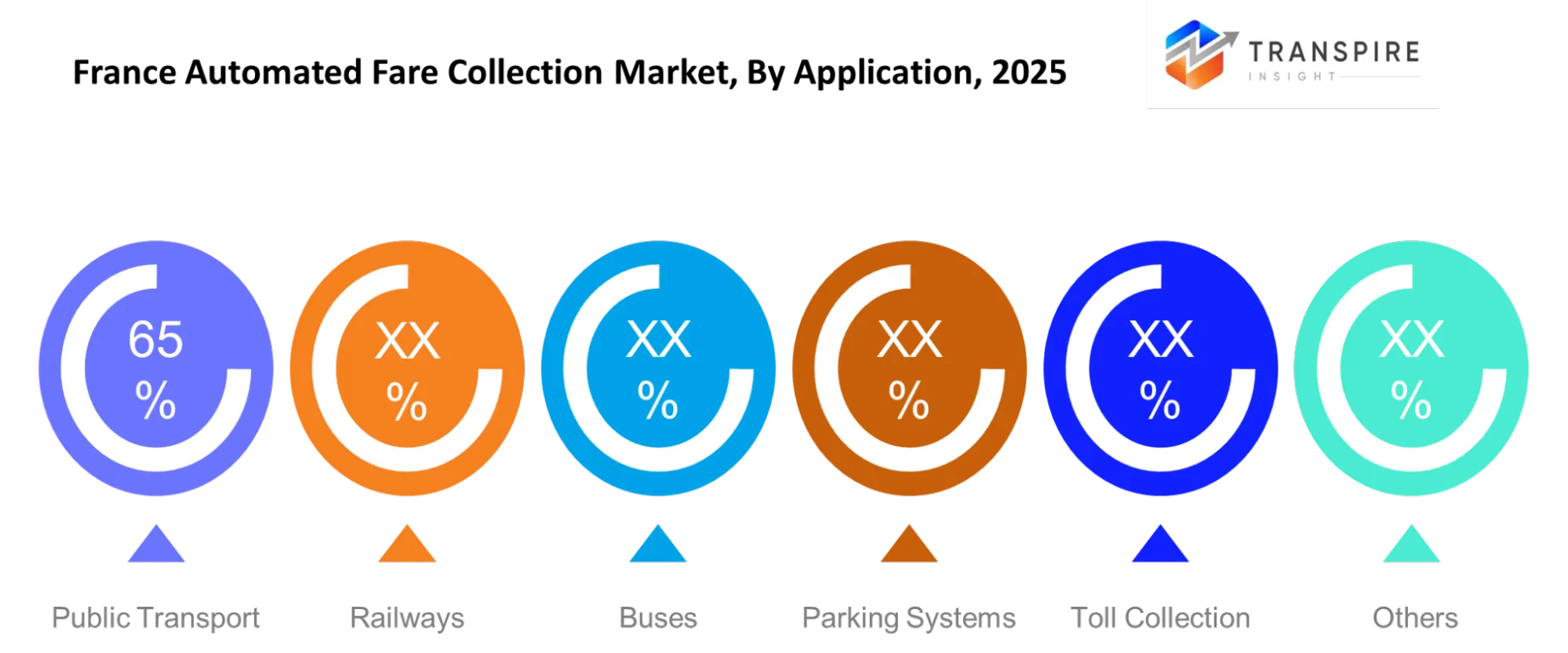
-
To learn more about this report,
Download Free Sample Report By End-User
The end-user segment is led by transport authorities, which control infrastructure investment and system deployment across urban and regional networks. Government entities maintain a significant position because they provide financial support for modernization projects and establish regulatory frameworks. The two groups of operators and commuters exist as operational groups because operators control system performance while commuters now make up the largest portion of users who use digital ticketing systems. The development process depends on two factors which include public funding and users' willingness to accept emerging payment systems. Future implications show that digital technology will enable commuters to gain more power because it changes their service requirements. The transport authorities will implement data-driven decision-making processes which will operate through their real-time analytics systems. Operators will implement sophisticated platforms to handle their intricate fare systems while enhancing operational efficiency. User-focused solutions will create business opportunities because they improve customer interaction while making payment processing more efficient.
-
By Technology
The technology segment is currently dominated by NFC which maintains its top market position because people widely use it in contactless cards and smartphones. RFID maintains support for existing systems which operate in closed-loop systems while QR codes establish themselves as a budget-friendly substitute. The industry growth occurs because businesses require payment solutions which provide security together with fast processing times and compatibility with other systems. Different technologies provide specific solutions which depend on two factors: the existing infrastructure and expenses. The technology segment will move toward future development through the integration of various technologies into complete systems. The platform developers need to create systems which will enable users to make payments using NFC and QR codes and new digital payment methods. The investors direct their attention towards technologies which have the ability to scale across various transportation systems. The buyers will choose adaptable products which support their incremental shift from outdated technologies to complete digital systems.
What are the Key Use Cases Driving the France Automated Fare Collection Market?
The primary function of automated fare collection systems exists in public transport because they manage high passenger traffic at metro stations and tram stops and bus terminals. Urban transit operators depend on contactless payments and validators because these systems help them achieve faster passenger boarding times and decreased cash handling operations and more precise revenue management. The most urban transit systems experience their highest usage because Paris requires daily passenger operations to create efficient movement between various locations.
The use cases of adjacent systems have extended to parking management and toll collection systems which municipal authorities and infrastructure operators now use. Users of integrated payment platforms can make payments for parking and road usage and transit services through a single system. The shift enables operators to achieve multimodal mobility solutions while they use different urban transport systems to create a single revenue system.
The market for Mobility-as-a-Service platforms and subscription-based travel systems represents new customer needs which businesses are developing to fulfill. The system provides users with a complete transportation solution through its digital platform which offers various transport methods and allows them to create custom travel schedules using dynamic pricing. The market for connected mobility systems shows strong potential because cities invest in these new technologies despite its current adoption rate which remains low.
|
Report Metrics |
Detail |
|
Market size value in 2025 |
USD 1.19 Billion |
|
Market size value in 2026 |
USD 1.33 Billion |
|
Revenue forecast in 2033 |
USD 2.896 Billion |
|
Growth rate |
CAGR of 11.76% from 2026 to 2033 |
|
Base year |
2025 |
|
Historical data |
2021 - 2024 |
|
Forecast period |
2026 - 2033 |
|
Report coverage |
Revenue forecast, competitive landscape, growth factors, and trends |
|
Regional scope |
France |
|
Key company profiled |
Thales, Cubic Corporation, Siemens, Indra, Scheidt & Bachmann, Xerox, Conduent, INIT, Samsung SDS, NEC, LG CNS, Huawei, Hitachi, Vix Technology, GMV |
|
Customization scope |
Free report customization (country, regional & segment scope). Avail customized purchase options to meet your exact research needs. |
|
Report Segmentation |
By Type (Ticketing Machines, Smart Cards, Mobile Ticketing, Validators, Others); By Application (Public Transport, Railways, Buses, Parking Systems, Toll Collection, Others); By End-User (Transport Authorities, Government, Operators, Commuters, Others); By Technology (NFC, QR Code, RFID, Others) |
Which Regions are Driving the France Automated Fare Collection Market Growth?
Northern France leads market growth because its urban transit systems connect multiple cities which include Paris and Lille to handle large numbers of passengers through their fare systems. The existing system for automated fare collection has developed into a complete operational system because of the strong policy backing smart mobility and the early implementation of contactless payments. Regional authorities continue to invest in integrated ticketing platforms that connect metro, bus, and suburban rail networks. The company maintains its market position through its extensive supplier network and its enduring agreements with technology vendors.
The Île-de-France region stands as a stable and consistent contributor because public funding remains steady while modernization efforts continue through established programs. The region experiences growth through system upgrades and efficiency improvements instead of expanding its northern cluster. Transport operators concentrate on delivering reliable service throughout Europe’s most used transit system while they start to roll out digital ticketing solutions. The system achieves stable revenue generation which enables ongoing enhancements to the system while preventing major system interruptions.
Southern France experiences its highest growth rate because the recent smart city projects which began in Marseille and Nice are driving development. The adoption of digital fare systems has increased due to investments that create integrated mobility platforms and build multimodal transport networks. Local governments have chosen to implement mobile ticketing systems which use QR codes as their primary solution because these options decrease infrastructure expenses and enable faster system implementation. The rapid development of the industry produces valuable prospects for technology companies and investors who aim to create flexible solutions that can grow between 2026 and 2033.
Who are the Key Players in the France Automated Fare Collection Market and How Do They Compete?
The French Automated Fare Collection Market exhibits moderate market consolidation because existing technology firms have obtained contracts for extended periods with public transportation agencies. The current market players maintain their market share through complete system integration while new companies enter the market with their cloud-based and mobile-first products. The competition between companies depends on their technological abilities which include account-based ticketing, real-time analytics, and cross-transport mode interoperability. The transit agencies prefer systems which deliver operational reliability and effective lifecycle management because these features enable them to operate at high passenger levels with minimal system interruptions.
Thales develops secure fare platforms which maintain interoperability with national transit systems, thus establishing its position as a leader in large urban transit system implementations. Cubic Corporation creates a unique market position through its account-based ticketing system which enables users to pay using both banking systems and mobile wallets. The modular system design approach developed by Indra enables operators to upgrade their systems by adding new components instead of replacing their entire network system, which results in reduced expenses over time. The companies grow their business by establishing partnerships with local transportation authorities while they transform existing systems into digital technology solutions.
Scheidt & Bachmann uses its combination of sturdy hardware and software integration capabilities to maintain an edge in hybrid environments that still use traditional legacy systems. Conduent uses data analysis to develop effective fare management systems that enable operators to enhance their pricing strategies and control passenger movement. Siemens uses its entire mobility product range to combine fare collection systems with signaling equipment and infrastructure solutions, which results in complete transportation systems.
Company List
- Thales
- Cubic Corporation
- Siemens
- Indra
- Scheidt & Bachmann
- Xerox
- Conduent
- INIT
- Samsung SDS
- NEC
- LG CNS
- Huawei
- Hitachi
- Vix Technology
- GMV
Recent Development News
In April 2026, IMV Technologies reported ongoing acquisition activity and strategic expansion in reproductive biotechnology. The move supports growth in advanced breeding technologies and strengthens its global veterinary portfolio.https://tracxn.com
What Strategic Insights Define the Future of the France Automated Fare Collection Market?
The France Automated Fare Collection Market is moving toward fully digital, account-based systems that process fare payments through cloud-based systems instead of requiring physical infrastructure. The requirement for interoperable mobility services together with the need for real-time data flow between different transport systems drives this development. Value creation will focus on software layers which support dynamic pricing and mobility subscriptions and enable users to access multiple networks during the next five to seven years.
The less noticeable danger originates from regional system fragmentation which occurs because different areas modernize their systems at different rates. The municipalities which postpone their technological upgrades will create interoperability problems which will hinder nationwide ticketing systems and decrease their network advantages. Mobility-as-a-Service platforms now provide an emerging opportunity through their subscription models which combine transport services with parking and shared mobility for mid-sized urban areas that are currently undergoing digital transformation.
Market participants should prioritize open architecture platforms that enable existing systems to work with new systems through their integration of legacy systems and future technologies. The system allows organizations to expand their operations while maintaining their current assets which enables them to generate revenue through service-based business models..
France Automated Fare Collection Market Report Segmentation
By Type
Ticketing Machines
Smart Cards
Mobile Ticketing
Validators
Others
By Application
Public Transport
Railways
Buses
Parking Systems
Toll Collection
Others
By End-User
Transport Authorities
Government
Operators
Commuters
Others
By Technology
NFC
QR Code
RFID
Others
Frequently Asked Questions
Find quick answers to common questions.
The Confirmed 2033 Market size Figure is USD 2.896 Billion.
Key Segments for the France Automated Fare Collection Market are By Type (Ticketing Machines, Smart Cards, Mobile Ticketing, Validators, Others); By Application (Public Transport, Railways, Buses, Parking Systems, Toll Collection, Others); By End-User (Transport Authorities, Government, Operators, Commuters, Others); By Technology (NFC, QR Code, RFID, Others)
Major France Automated Fare Collection Market Players are Thales, Cubic Corporation, Siemens, Indra, Scheidt & Bachmann, Xerox, Conduent, INIT, Samsung SDS, NEC, LG CNS, Huawei, Hitachi, Vix Technology, GMV.
The France Automated Fare Collection Market size is USD 1.19 Billion in 2025.
The France Automated Fare Collection Market CAGR is 11.76% from 2026 to 2033.
- Thales
- Cubic Corporation
- Siemens
- Indra
- Scheidt & Bachmann
- Xerox
- Conduent
- INIT
- Samsung SDS
- NEC
- LG CNS
- Huawei
- Hitachi
- Vix Technology
- GMV
Recently Published Reports
-
Apr 2026
3D Optical Profiler Market
3D Optical Profiler Market Size, Share & Analysis Report By Type (Desktop 3D Optical Profiler, and Portable 3D Optical Profiler), By Technology (Confocal Technology, and White Light Interference), By End-Use Industry (Manufacturing, Research Institutions, Automotive, Aerospace and Defense, Medical Devices, and Other), and Geography (North America, Europe, Asia-Pacific, Middle East and Africa, South and Central America), 2021 - 2031
-
Apr 2026
Depth Sensor Market
Depth Sensor Market Size, Share & Analysis Report By Type (Infrared Depth Sensors, Time-of-Flight (ToF) Sensors, Stereo Vision Sensors, Structured Light Sensors, Ultrasonic Depth Sensors), By Application (Automotive, Robotics, Gaming, Consumer Electronics, Industrial Automation, Healthcare, Security & Surveillance, Others), By End Users (Automotive Manufacturers, Consumer Electronics Companies, Healthcare Providers, Industrial Companies, Security Agencies, Gaming Companies, Robotics Companies, Others), and Geography (North America, Europe, Asia-Pacific, Middle East and Africa, South and Central America), 2021 – 2031
-
Apr 2026
Digital Manufacturing Market
Digital Manufacturing Market Size, Share & Analysis Report By Component (Hardware, Software, and Services), By Technology (Robotics, 3D Printing, Internet of Things (IoT), and Others), By Application (Automotive and Transportation, Aerospace and Defense, Consumer Electronics, Industrial Machinery, and Others), By Process Type (Computer-Based Designing, Computer-Based Simulation, Computer 3D Visualization, Analytics, and Others), and Geography (North America, Europe, Asia-Pacific, Middle East and Africa, South and Central America), 2021 – 2031
-
Apr 2026
Digital Visa Services Market
Digital Visa Services Market Size, Share & Analysis Report By Type (Individual Travelers, Group Travelers), By Application (Tourism, Business Travel, Others), and Geography (North America, Europe, Asia-Pacific, Middle East and Africa, South and Central America), 2021 – 2031