

Global Dental X-ray Market Size & Forecast:
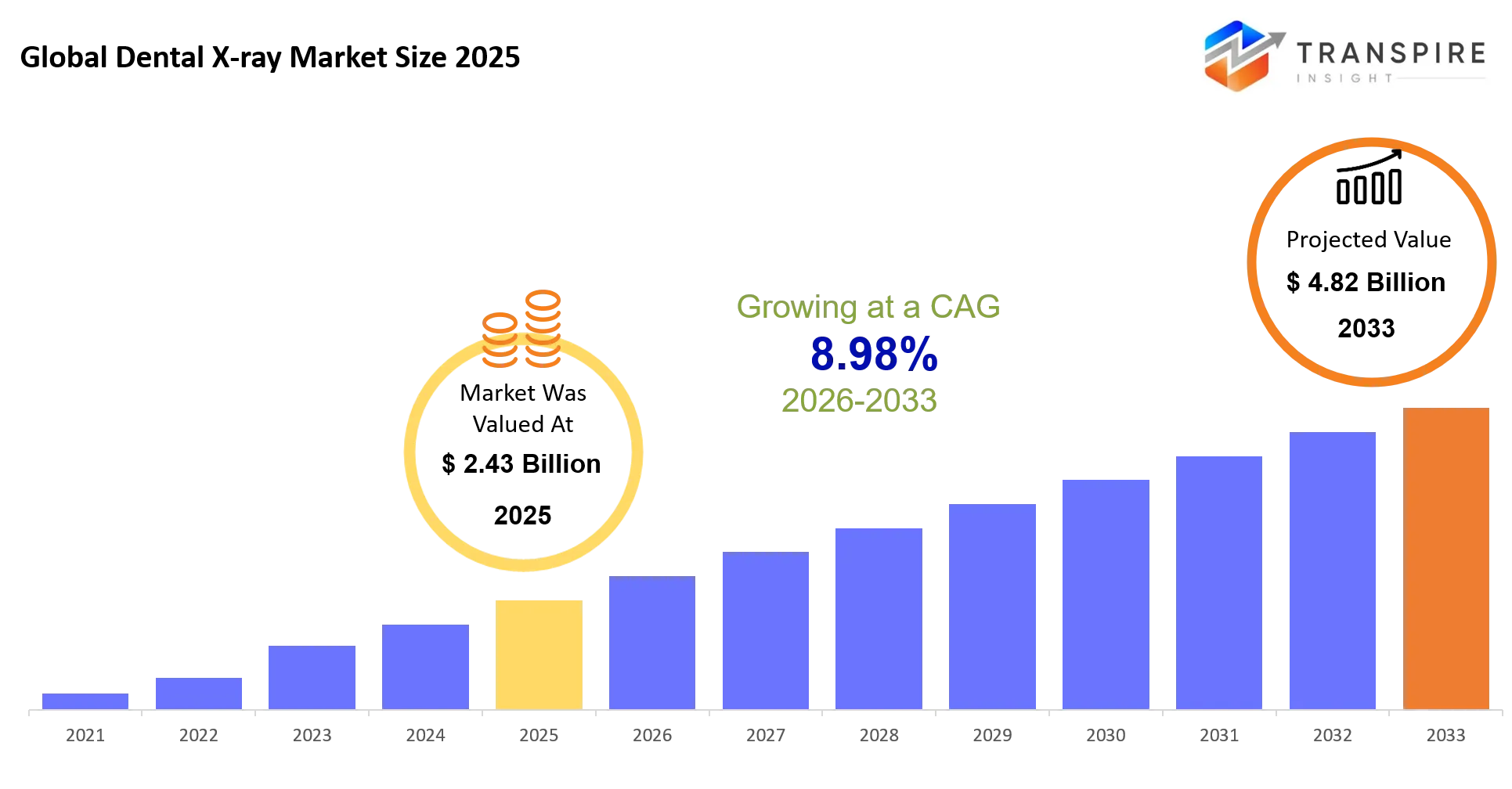
- Global Dental X-ray Market Size 2025: USD 2.43 Billion
- Global Dental X-ray Market Size 2033: USD 4.82 Billion
- Global Dental X-ray Market CAGR: 8.98%
- Global Dental X-ray Market Segments: By Product (Intraoral X-ray Systems, Extraoral X-ray Systems, CBCT Systems, Handheld Systems, Sensors, Software, Accessories, Others); By Technology (Digital, Analog, Hybrid, Others); By End User (Dental Clinics, Hospitals, Academic Institutes, Others); By Application (Diagnostics, Implantology, Orthodontics, Endodontics, Others); By Portability (Fixed, Portable, Others)
Global Dental X-ray Market Summary:
The Global Dental X-ray Market size is estimated at USD 2.43 billion in 2025 and is anticipated to reach USD 4.82 billion by 2033, growing at a CAGR of 8.98% from 2026 to 2033.
Cloud-connected, three-dimensional viewing technology now complements fully digital film, in conjunction with an increasing focus by dental practitioners on their utilization to guide diagnoses for preventive, restorative, cosmetic procedures, as well as implant surgery. There has also been considerable industry re-structuring; in recent years, 3 to 5 years, digital imaging technology and the number of CBCT units installed in practices have skyrocketed, fueled by capital investments in more modern practices and improved efficiency. Also contributing has been an increase in the popularity of cosmetic Dentistry, age-related oral conditions, and increased implantation in dentistry. The proliferation of clear aligner therapy has added impetus by demonstrating new possibilities with fully digital implant dentistry, with the ability for AI-enhanced imaging and planning. Dental practitioners’ decision processes for purchasing imaging technology have been boosted by requirements to more efficiently plan treatment and manage cases, using less radiation and more diagnostic confidence with digital and AI.
Key Global Dental X-ray Market Insights:
As imaging vendors continue to boldly marry intelligent software into more sophisticated hardware, digital transformation is giving new meaning to the term competitive advantage. AI-powered, low-dose and cloud-based imaging solutions that enhance clinical accuracy and efficiency are taking the lead in technology innovation for imaging leadership.
- Clinics are replacing conventional X-rays with integrated imaging and workflows (48%) as Dentsply Sirona continues to strengthen digital dental X-ray systems in its landscape.
- The fastest-growing are C.B.C.T. (c.b.c.t (19%), where 3-D AI imaging has improved in helping diagnose the X-rays, while various implant and orthodontic treatments increase in complexity.
- North America (36%) is the largest region for the adoption of imaging innovations due to the cloud and increasing patient record centralisation, a benefit of Carestream Dental.
- At least in Europe, Acteon and Owandy Radiology are investing in low-radiation technology as sustainability and patient safety make an impact on procurement.
- Asia Pacific is the region with the highest level of technology transition (25%), with Vatech and Genoray continuing to build cheap digital suites to quickly modernise dental practices.
- As digital technology gradually replaces traditional imaging, Envista continues to develop AI-assisted diagnostics, fostering unified treatment plans in multi-clinic networks.
- With an increase in flexibility and an increased demand for flexible chair-side diagnostics and mobile dental care services, the adoption of portable imaging is on the rise, driven by Midmark and Air Techniques.
- In the race to advance clinical productivity, Morita Dental, Yoshida Dental, Cefla, Trident and Asahi Roentgen are all setting their sights on the software-integrated ecosystem.
What are the Key Drivers, Restraints, and Opportunities in the Global Dental X-ray Market?
Driver:
The rapid adoption of digital dentistry, in addition to the increased complexity of restorative and implant treatments, is the key element to market growth. High-resolution imaging is increasingly becoming necessary for accurate diagnosis and surgical planning, and monitoring of dental procedures. This shift has been propelled by patients' heightened focus on preventive oral health, a rise in cosmetic dentistry, and investments in the latest dental offices. Clinics realise a boost in returns on investment in digital imaging equipment, as devices also offer reduced imaging time and radiation exposure and boost diagnostic confidence. Through the reduced imaging time, reduced radiation risk and increased diagnostic confidence, clinics see an improvement in returns on investment in digital imaging equipment and thereby accelerate the adoption of the technology. In March 2026, Dentsply Sirona and Siemens Healthineers obtained FDA clearance for their jointly developed MAGNETOM Free. Max Dental Edition. This milestone introduces the first-ever dental-dedicated magnetic resonance imaging (ddMRI) system validated in a clinical trial, delivering advanced soft-tissue diagnostics that allow clinics to improve diagnostic confidence during complex surgical planning.
Restraint:
Capital expenditure for sophisticated digital image processing systems, especially CBCT, software, and maintenance equipment, still constitutes a key problem. Financing these updates may be challenging at smaller clinics, particularly in developing economies, as well as considering training needs and compliance with regulations. This structural affordability dichotomy persists to inhibit technology replacement even as there is an increasing clinical need.
Opportunity:
One of the most promising possibilities is to seamlessly incorporate AI diagnostic software, cloud connectivity, and mobile imaging capabilities into everyday dental practice. Governments and private healthcare providers are investing in digital healthcare infrastructure, leading to an increase in demand for a connected imaging ecosystem. The emerging economies in the Asia-Pacific, Latin America, and the Middle East are also vying for expansion opportunities and are witnessing an increase in advanced technologies being embraced by emerging private dental chains to improve diagnosis and increase patient base.
In March 2026, Imagen Dental Partners selected Overjet as its exclusive artificial intelligence partner to deploy the Overjet Vision AI platform across its network of over 120 locations. This comprehensive deployment integrates automated clinical diagnostics and bone-level quantification tools, reducing processing times and enabling portability.
What Has the Impact of Artificial Intelligence Been on the Global Dental X-ray Market?
The impact of artificial intelligence on dental X-rays has revolutionised the way dentists acquire, analyse, and utilise dental images, thus leading to better diagnosis, enhanced workflow efficiency, and informed clinical decision-making. AI helps in the automated identification of dental caries, periodontal bone loss, periapical lesions, impact of impacted teeth, and anatomical variations from digital dental X-rays and CBCT imaging by automating image features. Predictive models provide dentists with insights to predict the progression of disease, determine prognosis and prescribe patient-centred care.
Automates the need for hand interpretation of a full suite of images, standardises the reports, reduces the variety in diagnoses found across individual practitioners, and expedites your day-to-day workflows. The software even adds value as it can be integrated into your existing management software for improved documentation, treatment planning, patient interactions, and a dramatic boost to productivity in your clinic. Even with the advent of AI technology, there remain several pitfalls to contend with, such as elevated software investment expenses, integration challenges with aged image-capturing technologies, and the requirement for ample clinical data validation, especially in smaller, growing practices. The variability found within varying image resolution, anatomy and location-specific protocols means human expertise remains integral with the growing automation in today’s modern dentistry imaging solutions.
In January 2026, Videa launched the Videa AI Leadership Council alongside a strategic partnership with the Dentist Entrepreneur Organisation (DEO). This collaborative initiative deploys ambient and applied artificial intelligence systems to automate image feature analysis.
Key Global Dental X-ray Market Trends:
Dental imaging is evolving; providers are building connected diagnostic ecosystems that value connected, rather than independent, hardware and extending clinical accuracy. Investments in technology are more directed toward workflow efficiencies, AI-driven interpretation capabilities, and patient experience in imaging, rather than just filling in for equipment.
- Clinics increasingly choose digital imaging to benefit from instant image access, enhanced safety by reduced radiation dosage and quicker diagnosis.
- Being increasingly used outside implantology into maxillofacial and endodontic treatment planning as well as orthodontics, for better and more detailed three-dimensional visualisation.
- The field of automated image interpretation and reporting through AI-powered diagnostic software programs is advancing from testing to everyday use in a clinical setting.
- Cloud-based imaging storage is surging as a local database alternative to enable secure collaboration among specialists and multi-location dental networks.
- Portable and handheld X-rays are starting to become a part of outreach programs, mobile dentistry and chair-side imaging in limited settings.
- Dentists are making imaging infrastructure more standardised between networks to increase consistency and the use of equipment.
- Clinics that provide low-dose digital imaging tend to be competitive as they offer patients a safe moment for a diagnosis vs. traditional X-ray.
- Software vendors are developing imaging build-outs that integrate radiography, patient records, treatment planning and practice management under a single roof.
Global Dental X-ray Market Segmentation
By Product:
Digital Dental X-ray Systems dominate the market with 48% share, driven by its usage in quick imaging, lower radiation and integrated workflow. CBCT Systems is the second largest segment with 19% share and the fastest growing segment with a 13.8% CAGR, fueled by its growth in Implantology, oral surgery, and Orthodontics applications. Intraoral X-ray systems are 15% share used for regular diagnosis, whereas Extraoral systems are 9% for panoramic and cephalometric dental images. Handheld Systems, sensors, Software, accessories and Other products all exhibit growth as digital ecosystem investments are rising.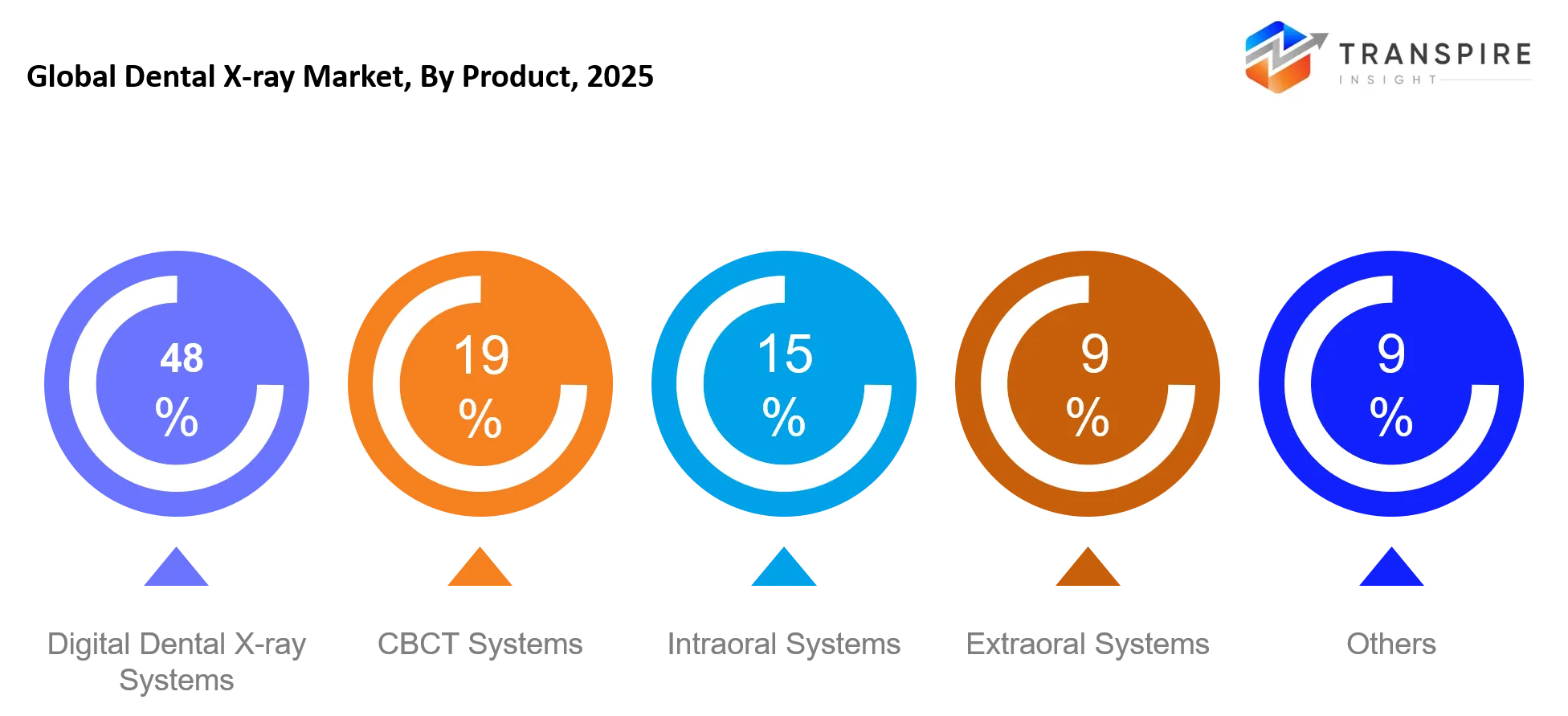
By Technology:
Digital capture technology is prevalent in practices where high image quality, rapid on-site processing, and the availability of AI-based diagnostic software are crucial. Analogue technology remains widely used for cost-driven practices, while Hybrid technology offers an approach to modernisation in those situations where the replacement of existing infrastructure is prohibitive.
By End-User:
Dental Clinics Largest revenue generator with an increase in Private Practices adopting the latest Imaging technology to ensure better treatment outcome & Patient comfort. Hospitals with multidisciplinary dental care boost demand. Others are buying for supporting community Oral Health Programs & Academic Institutes, increasing their procurement for Clinical Education & R &D.
By Application:
Diagnostics is still the biggest because routine checks require high-quality images to identify a particular disease. Implantology is the fastest-growing area, as there has to be a clear anatomical visualisation to perform operations. Orthodontics and Endodontics are both starting to use more imaging devices for treatment, and other applications have also started using digital systems.
By Portability:
Fixed solutions retain their place at the front of the imaging market, with established clinics enjoying complete imaging functions. Portable solutions are being introduced more rapidly at mobile clinics, outreach programs, and in confined spaces, whilst other formats offer unique clinical use cases, in the overall evolution to an increasingly portable, patient-centric dental imaging market.
What are the Key Use Cases Driving the Global Dental X-ray Market?
Routine diagnostic imaging is still the biggest application segment aided by Digital Dental X-ray systems, which provides improved visualisation of dental cavities, periodontal disease, infections, and abnormalities for a wide array of dentistry applications to diagnose disease with unprecedented accuracy, and enhance preventive treatment strategies.
Implant dentistry, Orthodontics, & Endodontics applications are also expanding in use as CBCT technology allows implant surgical planning and support on roots and complex head and craniofacial analyses.
Clinics and dental offices use high-tech imaging technologies. Emerging usage models incorporate AI-assisted diagnostics, portable imaging equipment, mobile clinic visits to schools and communities, and remote diagnostics using teledentistry platforms.
|
Report Metrics |
Details |
|
Market size value in 2025 |
USD 2.43 Billion |
|
Market size value in 2026 |
USD 2.64 Billion |
|
Revenue forecast in 2033 |
USD 4.82 Billion |
|
Growth rate |
CAGR of 8.98% from 2026 to 2033 |
|
Base year |
2025 |
|
Historical data |
2021 - 2024 |
|
Forecast period |
2026 - 2033 |
|
Report coverage |
Revenue forecast, competitive landscape, growth factors, and trends |
|
Regional scope |
United States; Canada; Mexico; United Kingdom; Germany; France; Italy; Spain; Denmark; Sweden; Norway; China; Japan; India; Australia; South Korea; Thailand; Brazil; Argentina; South Africa; Saudi Arabia; United Arab Emirates |
|
Key company profiled |
Dentsply Sirona, Planmeca, Carestream Dental, Vatech, Envista, Midmark, Acteon, Owandy Radiology, Cefla, Trident, Air Techniques, Genoray, Morita, Asahi Roentgen, Yoshida Dental. |
|
Customization scope |
Free report customisation (country, regional & segment scope). Avail customised purchase options to meet your exact research needs. |
|
Report Segmentation |
By Product (Intraoral X-ray Systems, Extraoral X-ray Systems, CBCT Systems, Handheld Systems, Sensors, Software, Accessories, Others); By Technology (Digital, Analog, Hybrid, Others); By End User (Dental Clinics, Hospitals, Academic Institutes, Others); By Application (Diagnostics, Implantology, Orthodontics, Endodontics, Others); By Portability (Fixed, Portable, Others) |
Which Regions are Driving the Global Dental X-ray Market Growth?
North America holds 36% of shares with respect to the global revenue of the market due to excellent dental infrastructure, penetration of digital imaging across practice, and better reimbursements for specialist dental procedures. The consistent investments from the private DSOs contribute towards faster upgradation from old to AI-supported digital dental X-ray systems and their respective infrastructure. Regulatory support in North America supports rapid approvals for novel X-ray imaging techniques. Increased adoption of cosmetic procedures, implants, and maintenance services across individuals drives the regional market. In March 2026, West Jordan Family Dentistry announced the addition of the DEXIS OP 3D LX imaging system to its commercial clinical diagnostic suite. This diagnostic rollout integrates advanced 2D/3D cone beam computed tomography (CBCT) and multi-modality X-ray technology to optimise workflows and minimise patient radiation exposure.
Europe 31% market share. Stable growth driven by entrenched public healthcare infrastructure, excellent clinical expertise, and stable dental modernisation funding. Growth is more driven by widespread standardised clinical use and radiation control mandates compared to North America. More focus on low-dose and green products for European markets. Healthy, stable replacement demand from hospitals, universities and private clinics.
In June 2026, Planmeca officially launched the Planmeca Onyx intraoral scanner across the European dental market. This product rollout provides diagnostic flexibility by capturing 3D digital impressions and integrating them directly with Planmeca’s Romexis 2D and 3D X-ray imaging software platforms.
The Asia Pacific market is approximately 25% of the global market and growing fastest at a CAGR 14.9% due to rapid urbanisation, increasing middle-class dental healthcare spends, development of several private dental chains and the ensuing increase in investments in innovative medical diagnostics imaging systems. Support for health digital transformation, government mandates to increase access to modern oral healthcare infrastructure and overall growth in emerging markets are creating a long-term value proposition for manufacturers in the lower-priced digital and portable imaging segments. In May 2026, Envista Holdings Corporation officially posted its Q1 2026 financial metrics, showcasing an accelerated 9.5% core sales growth driven heavily by expanding product pipelines from dental imaging lines like DEXIS. This commercial infrastructure expansion heavily scales the manufacturer's presence across fast-growing emerging markets in the Asia-Pacific region.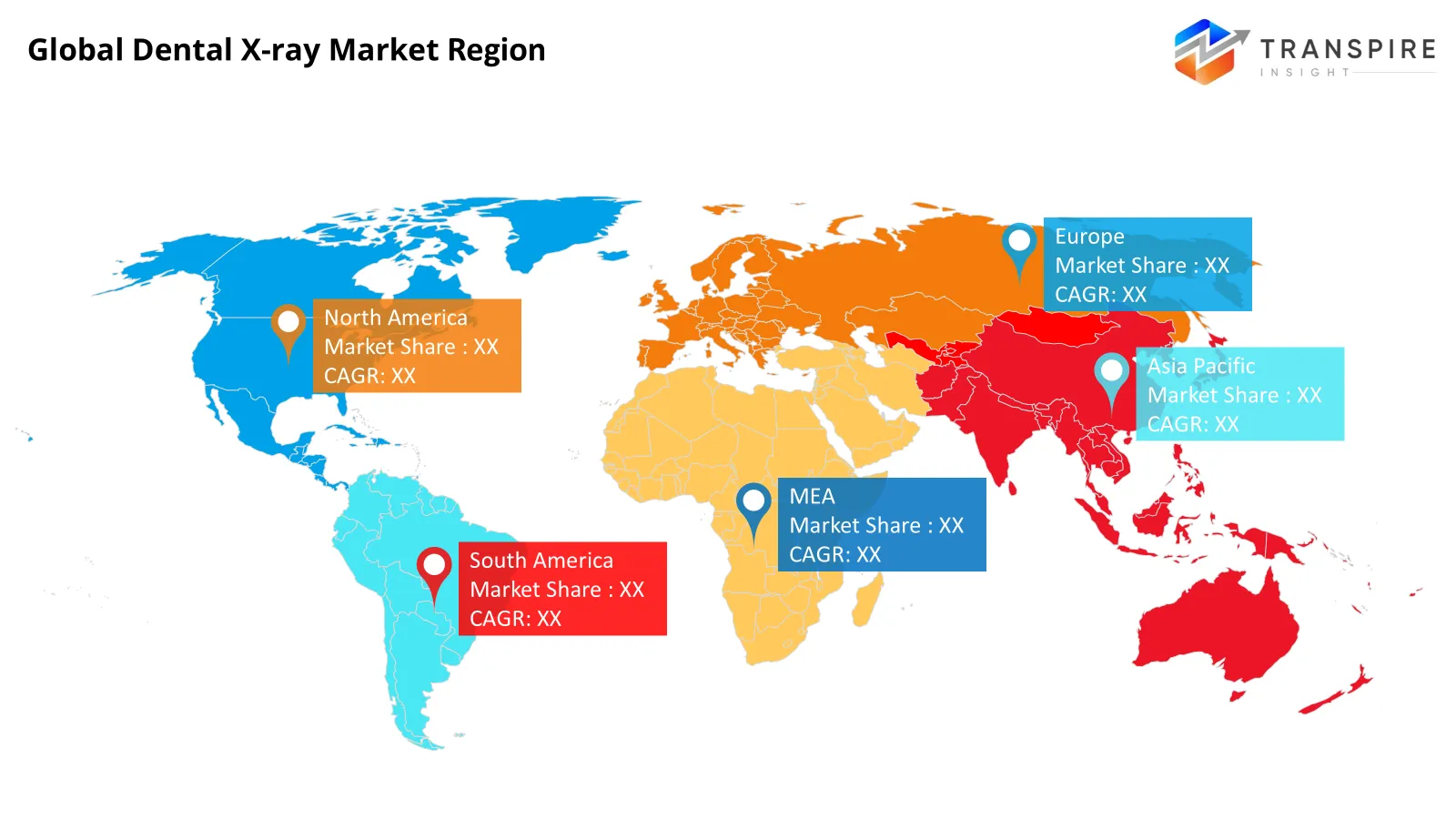
Who are the Key Players in the Global Dental X-ray Market and how do they Compete?
Competitiveness will be based on technological differentiation, end-to-end digital ecosystem, accuracy of the imaging and long-term servicing support, not price alone. Companies will increasingly differentiate through AI's software features, cloud and connectivity, workflow integration, better patient and staff safety by providing radiation sparing solutions, and the development of better distributor support within key emerging regions.
The companies Dentsply Sirona, Planmeca and Carestream Dental will increase their engagement in the CBCT segment of radiology solutions, and further expand their portfolio of fully integrated dental imaging systems incorporating 2D sensors and intelligent imaging software. Vatech is growing by offering economic 3D diagnostic solutions for smaller private dental practices, and Envista will expand through the integration of network diagnostic solutions into the implant work stream. Midmark continues targeting comfort through ergonomic design of radiology environments, while Acteon will focus on minimally invasive diagnostic innovation. The companies Owandy Radiology, Cefla, Trident, Air Techniques, Genoray, Morita, Asahi Roentgen and Yoshida Dental plan expansion by cooperation with local partners, via focus on niches and a strategy focused on software maintenance.
Key Players are:
- Dentsply Sirona
- Planmeca
- Carestream Dental
- Vatech
- Envista
- Midmark
- Acteon
- Owandy Radiology
- Cefla
- Trident
- Air Techniques
- Genoray
- Morita
- Asahi Roentgen
- Yoshida Dental
Recent Development News on the Global Dental X-ray Market
- In January 2026, Vatech announced that its dental digital X-ray production infrastructure crossed a milestone of 100,000 systems, driven by the global expansion of the Green X 21 flagship high-resolution CT imaging model. This device features a specialised 0.05mm Voxel size and an 'Endo Mode' for precise internal diagnostics, scaling up its commercial availability.
- In February 2026, Dentsply Sirona formed an expanded strategic distribution partnership with Burkhart Dental Supply. This rollout places Dentsply Sirona’s entire line of integrated digital dental imaging, X-ray technologies, and connected equipment portfolios into Burkhart’s distribution network to streamline technology adoption and clinical efficiency across North American dental networks.
https://www.dentsplysirona.com
What Strategic Insights Define the Future of the Global Dental X-ray Market?
The Dental X-ray market is rapidly progressing toward end-to-end connected digital imaging solutions incorporating all components as part of normal patient workflows, such as artificial intelligence (AI) in diagnostics, cloud-based data handling and even 3-D imaging technology. Advantage shifts from the hardware alone to intelligent software solutions that assist providers, spurring collaboration among dental equipment manufacturers to integrate interoperable digital imaging platforms that optimize workflows and patient care. However, cybersecurity and integration issues present latent dangers when systems are exposed by connecting with external health IT systems. On the flip side, the explosion of dental private facilities in developing regions of Asia-Pacific, Latin America and Africa gives rise to a lucrative market for affordable, portable, AI-assisted imaging equipment. Vendors need to invest in software-based scalable architectures, build relationships with Dental Service Organizations (DSOs), and continuously develop more advanced diagnostic technology.
Key Segmentations are:
By Product
- Intraoral X-ray Systems
- Extraoral X-ray Systems
- CBCT Systems
- Handheld Systems
- Sensors
- Software
- Accessories
- Others
By Technology
- Digital
- Analog
- Hybrid
- Others
By End User
- Dental Clinics
- Hospitals
- Academic Institutes
- Others
By Application
- Diagnostics
- Implantology
- Orthodontics
- Endodontics
- Others
By Portability
- Fixed
- Portable
- Others
Regional Outlook
North America
- United States
- Canada
- Mexico
Europe
- Germany
- United Kingdom
- France
- Spain
- Italy
- Rest of Europe
Asia Pacific
- Japan
- China
- Australia & New Zealand
- South Korea
- India
- Rest of Asia Pacific
South America
- Brazil
- Argentina
- Rest of South America
Middle East & Africa
- Saudi Arabia
- United Arab Emirates
- South Africa
- Rest of the Middle East & Africa
Frequently Asked Questions
Find quick answers to common questions.
The Global Dental X-ray Market size was valued at USD 2.43 Billion in 2025 and is poised to reach USD 4.82 Billion by 2033, expanding at a 8.98% CAGR.
Key segments for the Global Dental X-ray Market are By Product (Intraoral X-ray Systems, Extraoral X-ray Systems, CBCT Systems, Handheld Systems, Sensors, Software, Accessories, Others); By Technology (Digital, Analog, Hybrid, Others); By End User (Dental Clinics, Hospitals, Academic Institutes, Others); By Application (Diagnostics, Implantology, Orthodontics, Endodontics, Others); By Portability (Fixed, Portable, Others).
Growth is primarily driven by the rapid adoption of digital and CBCT imaging systems, rising dental implant and orthodontic procedures, AI-enabled diagnostics, and increasing investments in modern dental clinics.
The Global Dental X-ray Market is led by major manufacturers, including Dentsply Sirona, Planmeca, Carestream Dental, Vatech, Envista, Midmark, Acteon, Owandy Radiology, Cefla, Trident, Air Techniques, Genoray, Morita, Asahi Roentgen, and Yoshida Dental.
North America, holding 36% of the global market, leads through advanced dental infrastructure, high digital imaging adoption, favorable reimbursement, strong manufacturer presence, and continuous investment in AI-enabled diagnostic technologies.
Commercial opportunities include AI-integrated imaging software, portable digital X-ray systems, cloud-connected diagnostic platforms, and expansion into rapidly growing private dental networks across Asia-Pacific and other emerging markets.
- Dentsply Sirona
- Planmeca
- Carestream Dental
- Vatech
- Envista
- Midmark
- Acteon
- Owandy Radiology
- Cefla
- Trident
- Air Techniques
- Genoray
- Morita
- Asahi Roentgen
- Yoshida Dental
About the Authors

Pankaj Ghogare Patil
I am Pankaj Ghogare Patil, a Senior Research Analyst at Transpire Insight, specializing in the Pharmaceutical, Chemicals & Materials, Healthcare IT, and Biotechnology industry. My expertise lies in conducting comprehensive market research, analyzing industry trends, evaluating competitive landscapes, and translating complex data into actionable insights. At Transpire Insight, I closely follow emerging technologies, regulatory developments, and market innovations to create accurate, well-researched, and informative content that helps businesses and professionals make informed decisions. I am committed to producing credible, evidence-based articles that reflect industry best practices while making technical topics accessible and valuable for a broad audience.

Chakradhar Khansole
Chakradhar serves as the Research Director at Transpire Insight, bringing over 8 years of experience in technology, innovation, and strategic market intelligence. He specializes in transforming complex market data into actionable business insights that enable organizations to make informed, growth-oriented decisions. Recognized for his strategic vision and analytical expertise, Chakradhar leads high-impact research initiatives, delivering comprehensive market assessments, competitive intelligence, and forward-looking industry analysis.
Recently Published Reports
-
Jul 2026
Alopecia Treatment Market
Alopecia Treatment Market Size, Share & Analysis Report By Disease Type (Alopecia Areata, Cicatricial Alopecia, Traction Alopecia, Alopecia Totalis, Androgenetic Alopecia, Alopecia Universalis, and Other Disease Types), By Treatment Type (Topical Treatments, Oral Medications, Injectable Therapies, and Hair Transplantation), By Gender (Male, and Female), By Distribution Channel (Hospitals and Clinics, Retail Pharmacies, and Online Retailers), and Geography (North America, Europe, Asia-Pacific, Middle East and Africa, South and Central America), 2021 - 2031
-
Jul 2026
Medical Ultrasound Probe Market
Medical Ultrasound Probe Market Size, Share & Analysis Report By Type (Linear Type, Convex Type, Endocavitary Probe, Phased Array/Cardiac Probe, Transesophageal (TEE) Probe, and Others), By Application (Ophthalmology, Cardiology, Musculoskeletal, Oncology, Obstetrics & Gynecology, General Imaging, and Others), By End User (Hospitals & Clinics, Diagnostic Centers, Ambulatory Surgical Centers, and Others), and Geography (North America, Europe, Asia-Pacific, Middle East and Africa, South and Central America), 2021 – 2031
-
May 2026
Biosimilars Market
Biosimilars Market By Product Type (Monoclonal Antibodies, Recombinant Hormones, Erythropoietin, G-CSF, Others), By Indication (Oncology, Autoimmune Diseases, Blood Disorders, Diabetes, Others), By Manufacturing Type (In-House Manufacturing, Contract Manufacturing), By Distribution Channel (Hospital Pharmacies, Retail Pharmacies, Online Pharmacies), By Industry Analysis, Size, Share, Growth, Trends, and Forecasts 2021-2033
-
Apr 2026
Gastrointestinal Endoscopy Market
Gastrointestinal Endoscopy Market By Type (Rigid Gastrointestinal Endoscope, Flexible Gastrointestinal Endoscopes, Disposable Gastrointestinal Endoscope), By Procedure Type (Colonoscopy, Gastroscopy, Duodenoscopy, Enteroscopy, Flexible Sigmoidoscopy, Others), By Application (Diagnosis, Treatment), By End-Users (Hospitals, Ambulatory Surgical Centers, Specialty Clinics, Laboratories, Others), By Industry Analysis, Size, Share, Growth, Trends, and Forecasts 2021-2033