

Global Bio-Based Tackifier Resins Market Summary:
As per Transpire Insight Analysis, The Global Bio-Based Tackifier Resins Market size is estimated at USD 1.79 Billion in 2025 and is anticipated to reach USD 2.81 Billion by 2033, growing at a CAGR of 5.83% from 2026 to 2033.
The bio-based tackifier resins market centers on the commercial formulation of sticky - low-molecular-weight polymers harvested from natural sources like pine trees and vegetable oils to give industrial adhesives their vital "instant grab" - holding power. Over the past three to five years - supply chain shocks and volatile crude oil pricing have flattened the strategic focus of adhesive formulators toward stable, plant-derived chemical building blocks instead of traditional petroleum-based hydrocarbon resins. This structural shift is accelerated by strict corporate carbon-neutrality mandates and consumer backlash against non-recyclable packaging materials. Furthermore - a real-world trigger occurred as global shipping giants and automotive OEMs began penalizing suppliers using high-VOC, fossil-derived adhesives - forcing chemical producers to swap synthetic inputs for highly refined rosin esters and terpene architectures. Consequently, as sustainable e-commerce packaging scales and automotive interior bonding demands greener chemistry, this widespread industrial transition creates a massive commercial foundation for high-performance bio-resins.
Global Bio-Based Tackifier Resins Market Size & Forecast:
- Global Market Size 2025: USD 1.79 Billion
- Expected Market Value (2033): USD 2.81 Billion
- Forecast CAGR (2026–2033): 5.83%
- Leading Region in 2025: Asia Pacific
- Fastest Growing Region: North America
- Key Company Profiles: Kraton Corporation, Eastman Chemical, DRT (Les Dérivés Résiniques et Terpéniques), Ingevity, Arakawa Chemical, Harima Chemicals, Lawter, Foreverest Resources, Pine Chemical Group, SI Group, WestRock Chemicals, Yasuhara Chemical, Resinall, Segezha Group, Synthomer.

Key Global Bio-Based Tackifier Resins Market Insights
The bio-based tackifier resins market is moving away from unpredictable petroleum-based chemicals toward clean, plant-derived alternatives built for high-speed industrial bonding. Success in this space now comes down to excellent material compatibility - long-term heat resistance, and proving real lifecycle carbon reductions across automated production lines.
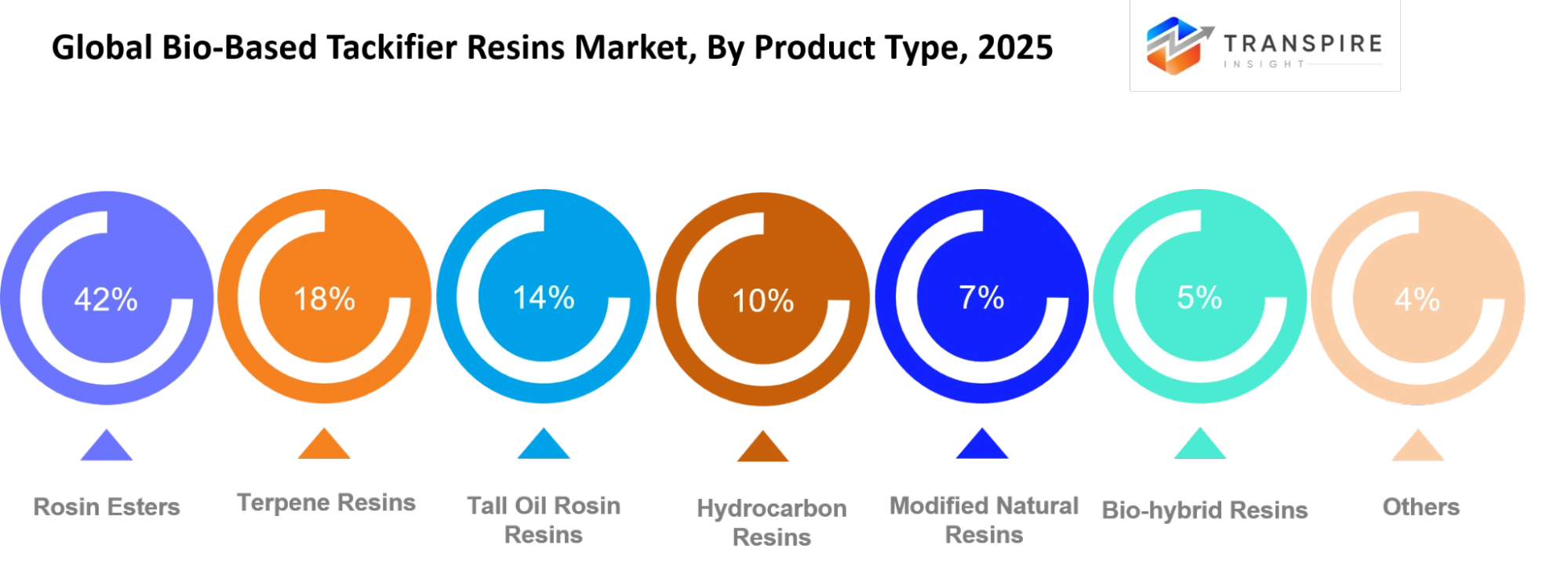
- Kraton Corporation is leading the charge in green packaging - with Rosin Esters locking down a dominant 42% market share because they blend so smoothly into standard hot-melt and acrylic adhesive lines.
- Asia Pacific drives the global market with 38% of all regional demand - as local powerhouses Arakawa Chemical and Harima Chemicals ramp up production of clear, hydrogenated rosins for the electronics and footwear industries.
- Eastman Chemical and DRT are pushing the boundaries of premium hot-melts, helping Terpene Resins capture 18% of global revenue by delivering great grip in freezing temperatures and excellent resistance to aging.
- Europe commands a solid 28% of the global volume - where companies like Lawter and Synthomer are fine-tuning low-VOC resin mixtures to keep up with strict EU chemical safety laws and recycling goals.
- Ingevity is accelerating the use of Tall Oil Rosin Resins (14%) across the automotive sector - giving car manufacturers a heat-stable interior bonding option with a much lower carbon footprint than old-school synthetics.
- North America holds a vital 25% share of total industry revenue - with WestRock Chemicals strengthening local supply contracts for pine chemicals to protect buyers from global shipping delays.
- Bio-hybrid Resins (5%) have emerged as the fastest-growing technology sector, climbing at an explosive 15.9% CAGR as SI Group builds custom bio-synthetic blends that offer perfectly predictable chemical behaviors.
- Hydrocarbon Resins (10%) and Modified Natural Resins (7%) remain vital pillars of the industry, with Resinall tweaking formulas to help adhesives grab onto rough, recycled cardboard immediately, even in humid weather.
What Are the Key Drivers, Restraints, and Opportunities in the Global Bio-Based Tackifier Resins Market?
Driver
Market growth is heavily propelled by a massive structural transition away from volatile, fossil-derived hydrocarbon formulations toward clean - plant-derived alternatives optimized for high-speed industrial bonding. Traditional petroleum-based tackifiers frequently suffer from crude oil pricing instability and heavy regulatory penalties due to volatile organic compound (VOC) emissions. This operational vulnerability triggered a widespread movement among global packaging giants and automotive OEMs to mandatorily substitute synthetic inputs with highly refined rosin esters and terpene architectures. Consequently - this deep green-chemistry integration drives immense corporate adoption because utilizing bio-based tackifiers directly lowers lifecycle carbon footprints while ensuring total compatibility with single-stream curbside recycling systems. In October 2023, Kraton Corporation highlighted its expanding portfolio of bio-based tackifiers with up to 95% ISCC PLUS-certified renewable content - designed to help adhesive manufacturers reduce carbon footprints while maintaining high-performance bonding. The company emphasized the use of pine-based tackifiers in hot-melt, water-based, and solvent-based adhesives for - packaging, labels, tapes, and flooring applications - reflecting the growing shift toward sustainable adhesive formulations and circular economy initiatives.
Restraint
Severe seasonal crop dependencies paired with complex raw material extraction frameworks act as a major structural barrier holding back mainstream market adoption over cheap synthetic alternatives. Unlike petroleum byproducts that offer constant - year-round manufacturing volume, biological feedstocks like crude tall oil (CTO) and citrus terpenes fluctuate violently in supply and pricing based on forestry harvest cycles and weather disruptions. This friction persists because refining natural resins requires intensive - multi-tier purification processes to remove strong odors and dark coloration, which spikes initial production costs and creates a steep technical hurdle for formulators aiming to maintain strict batch-to-batch structural performance consistency.
Opportunity
The most lucrative growth window lies in the development of custom-engineered, multi-functional bio-hybrid resins paired with next-generation low-temperature hot melt adhesives. Synthesizing advanced plant-based structural polymers that achieve immediate, high-shear bonds on recycled corrugated cardboards enables high-volume fulfillment centers to maintain extreme line speeds without relying on petroleum inputs. This technological pivot unlocks highly profitable contract opportunities—particularly across booming logistics corridors in North America—by allowing chemical manufacturers to help multinational consumer brands clear strict local plastic-reduction taxes and Extended Producer Responsibility (EPR) green procurement compliance metrics effortlessly.
What Has the Impact of Artificial Intelligence Been on the Global Bio-Based Tackifier Resins Market?
Artificial intelligence has completely transformed the bio-based tackifier resins market, stepping far past basic lab tracking to drive complex "inverse polymer design" platforms. Instead of relying on slow, trial-and-error chemical experimentation, research and development teams now utilize machine learning models to input targeted end-user metrics—like specific peel strength, thermal oxidative thresholds, and glass transition temperatures—and instantly receive exact raw material formulations.
This technology drives immense automation and operational improvements by dynamically adjusting the blending ratios of crude tall oils, terpene architectures, and rosin esters in real time. Furthermore, deep learning algorithms provide advanced predictive capabilities by forecasting how bio-based resins interact over time with complex recycled cardboards, completely eliminating unexpected aging embrittlement and latent bonding failures on high-speed commercial packaging lines.
However, a serious limitation remains in the "biological data accuracy gap." Because natural plant feedstocks feature massive batch-to-batch chemical variations driven by changing forest harvest climates and soil profiles, standard AI models frequently output flawed formulation instructions when handling raw materials that drift outside historical data baselines.
In March 2024 - the global Adhesive and Sealant Council (ASC) hosted a highly anticipated technical webinar focused on "Inverse Polymer Design in Non-Reactive Adhesives Using Artificial Intelligence." The industry panel demonstrated how machine learning algorithms optimize ingredient control across multi-component hot melt adhesives - mapping out predictable performance results from low-volume chemical data sets to help manufacturers bypass standard design bottlenecks and accelerate the rollout of sustainable bio-based bonding agents.
Key Market Trends
The bio-based tackifier resins market is shifting away from generic, high-emission oil derivatives toward highly specialized, plant-derived molecular networks designed for rapid industrial adherence. Driven by the explosive growth of automated e-commerce fulfillment centers and tightening corporate environmental mandates, chemical suppliers are replacing old-school synthetic raw materials with precision-engineered, bio-compatible bonding agents.
- Corporate material procurement is transitioning from traditional petroleum-derived C5 and C9 hydrocarbon feedstocks to utilize highly refined, pine-derived crude tall oils and wood rosins to ensure rapid drop-in formulation compatibility.
- Manufacturing plant setups are moving far past basic batch-mixing methods to implement state-of-the-art fractional distillation loops that automatically eliminate natural odor profiles and dark wood color variations in raw biological materials.
- High-speed packaging lines are abandoning high-temperature hot melt application grids to adopt next-generation, low-temperature bio-adhesives that drastically reduce energy draw while maintaining full bond stability.
- Automotive interior assembly is shifting from volatile, solvent-heavy spray bonding agents to deploy certified low-VOC, water-based bio-resin dispersions that dramatically improve cabin air quality.
- Circular economy initiatives are moving away from multi-material structural tapes to mandate the use of zero-plastic, fully repulpable bio-resins that melt down cleanly in municipal paper recycling streams without clogging pulper screens.
- Medical device manufacturing is transitioning from synthetic acrylic formulations to integrate high-purity, hypoallergenic terpene-phenolic resins that deliver reliable skin-contact adhesion without causing allergic irritation.
- Extreme climate shipping logistics are shifting from single-source natural rosins to implement advanced bio-hybrid composite matrices engineered to prevent adhesive embrittlement and joint separation in freezing ocean containers.
- Warehouse product labeling is moving away from permanent chemical welds to utilize smart, water-reversible bio-tackifiers that allow clean container peeling during commercial plastic recycling loops.
- Electronic assembly frameworks are abandoning standard synthetic sealants to deploy specialized, high-clarity hydrogenated bio-resins featuring superior UV resistance and exceptional thermal oxidative stability under heavy electrical loads.
Global Bio-Based Tackifier Resins Market Segmentation
By Product Type
Rosin Esters command the largest share of market capital, holding a dominant 42% of global revenue due to their excellent compatibility with diverse hot-melt and acrylic packaging formulations. Terpene Resins follow at 18%, Tall Oil Rosin Resins hold 14%, Hydrocarbon Resins capture 10%, while Modified Natural Resins account for 7%. Bio-hybrid Resins stand out as the fastest-growing design trend expanding at an explosive 15.9% CAGR, while other specialized variants round out the remaining 4% of the industry footprint. This division is shaped by the strict operational balance between physical tack performance and raw material sustainability metrics. Rosin Esters maintain their peak position because adhesive formulators systematically solve compatibility liabilities—where disparate polymers separate or lose cohesive grip over time—by blending these naturally derived, highly compatible tree rosins directly into mainstream polymer backbones. Moving forward, structural designs will pivot toward bio-synthetic composite optimization, forcing materials developers to refine advanced bio-hybrid resins that deliver predictable viscosity profiles while ensuring the overall adhesive matrices comply cleanly with strict global regulatory frameworks.
By Source
Pine Trees serve as the primary financial engine of the matrix, controlling a dominant majority of industry revenue due to the deep historical footprint of wood and gum rosin extractions and their natural affinity with global industrial adhesive formulations. Tall Oil and Citrus Feedstock follow as active secondary segments derived from valuable forestry and food waste streams, while Vegetable Oils, Biomass Feedstock, Lignocellulosic Feedstock, and Renewable Mixed Sources represent specialized alternative origins tailored for distinct chemical structures. The underlying growth logic relies on cross-industry raw material availability and natural distillation efficiency, where production lines demand bio-feedstocks that deliver stable supply lines independent of crude oil fluctuations. Pine Trees maintain this peak market position because their mature harvesting infrastructure yields predictable terpene and rosin intermediates that require less processing complexity to reach industrial purity standards. Moving forward, industry success will require the widespread adoption of next-generation biomass and lignocellulosic compounds, compelling chemical manufacturers to supply refined alternative matrices that achieve absolute batch-to-batch structural performance consistency under faster line processing speeds.
By Application
Hot Melt Adhesives function as the undisputed anchor of this matrix, capturing a commanding portion of total industry revenue, while Pressure Sensitive Adhesives stand out as the fastest-accelerating operational standard for high-throughput labeling and tapes. Sealants alongside Rubber Compounding hold a stable secondary share, primarily serving long-haul transportation and industrial building joints, while Packaging Adhesives, Construction Adhesives, and Bookbinding Adhesives form highly specialized operational niches. This distribution pattern is driven by the global corporate push for rapid thermal set times and absolute joint durability under shifting temperatures, where bio-based tackifiers provide immediate grip without compromising the adhesive's thermal stability. Hot Melt Adhesives lead because automated end-of-line packaging and manufacturing machinery explicitly require fast-setting, low-odor bonding agents that do not burn or clog small nozzle heads during high-speed production loops. Moving forward, application tech will focus heavily on low-temperature application thresholds, pushing chemical providers to deliver bio-resins that achieve full mechanical destructive bonds under lower energy outputs to prevent substrate warping.
By End User
The Packaging Industry functions as the primary driver of this market, controlling a combined majority of total industry volume due to its relentless processing scale and zero-tolerance policies for transit delamination. Automotive and Construction follow closely as critical pillars for heavy bulk transport and vehicle weight-reduction strategies, while Consumer Goods, Footwear, Furniture, and Electronics represent specialized, high-security target industries. This division is shaped by the macro transition away from high-VOC synthetic glues toward green-certified line operations where every fraction of a carbon credit counts. The Packaging Industry leads the market position because the vast expansion of sustainable e-commerce fulfillment networks has made zero-plastic, fully repulpable box closures vital to protecting corporate brands from strict environmental penalties. Moving forward - end-user strategies will focus heavily on circular economy metrics, forcing manufacturers to deploy fully integrated bio-resin solutions that break down cleanly in single-stream municipal recycling loops without leaving gummy residue on processing screens.
By Distribution Channel
Direct Sales and Chemical Distributors command the largest share of market capital, holding a dominant position in global revenue due to the complex technical loops of supplying large enterprise operations with custom bulk quantities. Adhesive Suppliers follow as a critical secondary force for mid-market formulation lines, while Online B2B Platforms, Regional Dealers, Exporters, and Wholesalers represent growing logistical touchpoints across regional trade lanes. This division persists because shipping heavy industrial drums and pallets of complex chemical resins requires sophisticated logistics management and deep regulatory compliance documentation. Direct and Distributor channels maintain their peak position because global supply networks can easily manage continuous, automated monthly restocking contracts for high-volume factories that require real-time technical troubleshooting. Moving forward, the industry will pivot sharply toward integrated IoT-driven fulfillment, enabling smart tank inventory sensors to automatically monitor resin consumption rates and auto-order replacement volumes from distributor portals before the factory floor runs out of raw material stock.
What Are the Global Key Use Cases Driving the Bio-Based Tackifier Resins Market?
The dominant utilization of rosin esters is heavily driven by sustainable hot melt industrial carton sealing to satisfy global e-commerce fulfillment networks. High-volume logistics operators integrate these plant-derived tackifiers directly into rapid assembly lines, melting the resin compound to achieve an immediate, high-shear structural fiber tear with corrugated surfaces, which systematically eliminates box pop-opens during automated high-speed warehouse distribution.
Beyond primary packaging hubs, expanding applications are highly visible across the automotive interior assembly and consumer footwear sectors. Manufacturing corporations and automotive components providers deploy low-VOC bio-resins within structural pressure-sensitive tapes, securing multi-material acoustic panels and interior trims against extreme cabin heat variations and heavy vibration without causing toxic outgassing inside passenger compartments.
Emerging operational use cases are focusing on circular economy labeling matrices and high-clarity electronics protection. Premium consumer brands utilize fully repulpable bio-hybrid configurations within removable shipping labels, allowing specialized wash-off adhesives to peel cleanly from plastic and paper containers during municipal recycling, satisfying strict extended producer responsibility frameworks without leaving sticky residue.
|
Report Metrics |
Details |
|
Market size value in 2025 |
USD 1.79 Billion |
|
Market size value in 2026 |
USD 1.89 Billion |
|
Revenue forecast in 2033 |
USD 2.81 Billion |
|
Growth rate |
CAGR of 5.83% from 2026 to 2033 |
|
Base year |
2025 |
|
Historical data |
2021 - 2024 |
|
Forecast period |
2026 - 2033 |
|
Report coverage |
Revenue forecast, competitive landscape, growth factors, and trends |
|
Regional scope |
United States; Canada; Mexico; Germany; United Kingdom; France; Italy; Spain; China; Japan; India; South Korea; Australia; Brazil; Argentina; South Africa; Saudi Arabia; United Arab Emirates |
|
Key company profiled |
Kraton Corporation, Eastman Chemical, DRT (Les Dérivés Résiniques et Terpéniques), Ingevity, Arakawa Chemical, Harima Chemicals, Lawter, Foreverest Resources, Pine Chemical Group, SI Group, WestRock Chemicals, Yasuhara Chemical, Resinall, Segezha Group, Synthomer. |
|
Customization scope |
Free report customization (country, regional & segment scope). Avail customized purchase options to meet your exact research needs. |
|
Report Segmentation |
By Product Type (Rosin Esters, Terpene Resins, Hydrocarbon Resins, Tall Oil Rosin Resins, Pine Chemical Resins, Bio-hybrid Resins, Modified Natural Resins, Others); By Source (Pine Trees, Tall Oil, Citrus Feedstock, Vegetable Oils, Biomass Feedstock, Lignocellulosic Feedstock, Renewable Mixed Sources, Others); By Application (Hot Melt Adhesives, Pressure Sensitive Adhesives, Sealants, Rubber Compounding, Packaging Adhesives, Construction Adhesives, Bookbinding Adhesives, Others); By End User (Packaging Industry, Automotive, Construction, Consumer Goods, Footwear, Furniture, Electronics, Others); By Distribution Channel (Direct Sales, Chemical Distributors, Adhesive Suppliers, Online B2B Platforms, Regional Dealers, Exporters, Wholesalers, Others). |
Which Regions are Driving the Global Bio-Based Tackifier Resins Market Growth?
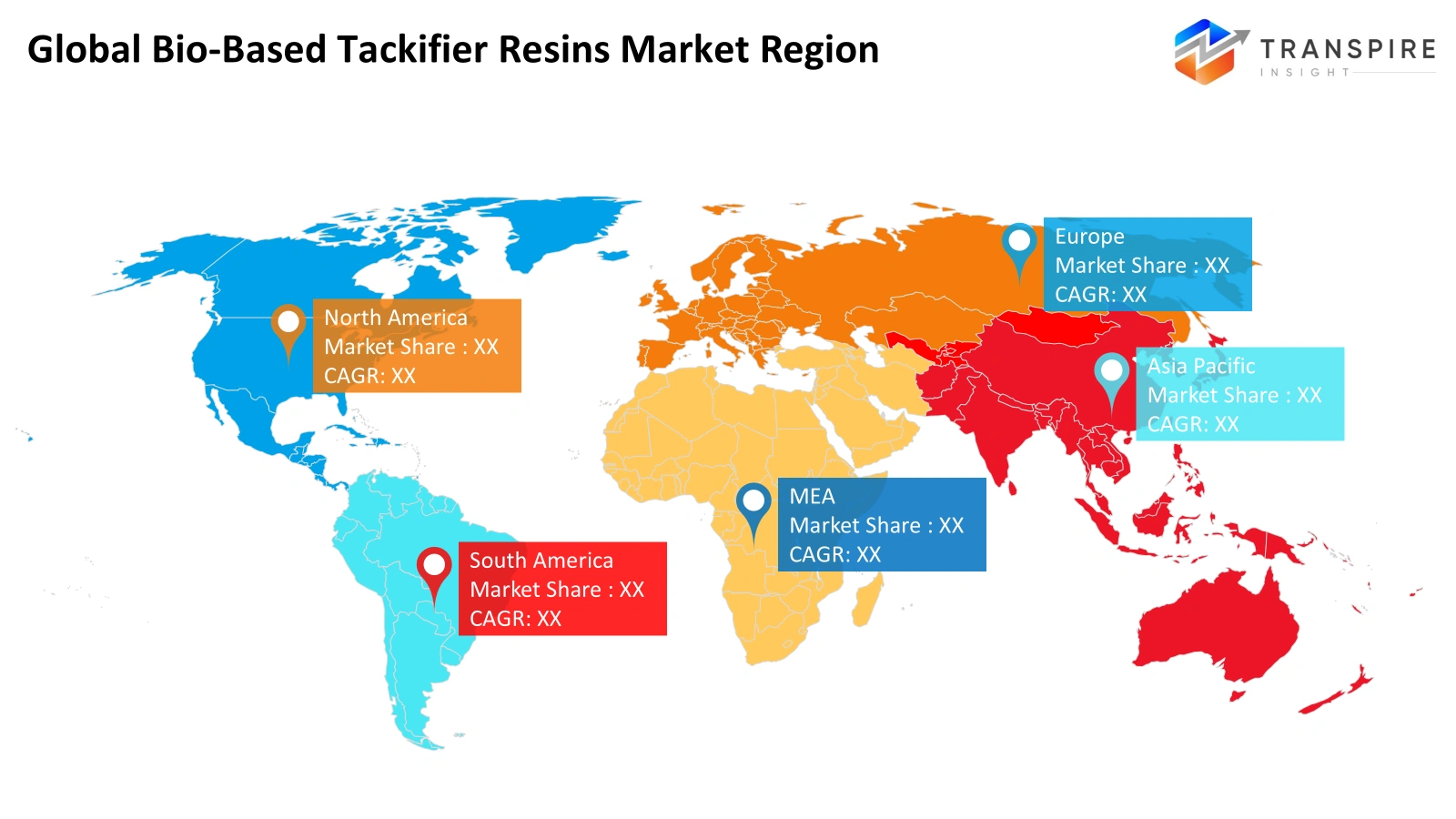
Asia Pacific maintains a commanding grip on the bio-based tackifier resins market, capturing a dominant 38% of all worldwide industry revenue. This geographic leadership is heavily driven by rapid industrial manufacturing expansions combined with high-volume electronic component and footwear assembly operations across major regional industrial corridors. The regional ecosystem is structurally supported by a dense concentration of local adhesive producers who leverage direct access to bulk biomass feedstocks to guarantee a constant supply of baseline raw materials. Consequently, transitioning away from volatile imported synthetic hydrocarbon resins toward highly refined - locally sourced natural rosins has become the standard operational choice for regional consumer goods manufacturers securing high-volume production lanes.
Europe serves as a highly stable, predictable secondary pillar for the global market, locking down an essential 28% share of total industry demand. While the Asian expansion is propelled by massive consumer manufacturing volumes and rapid assembly scaling, European adoption is shaped by rigid regional eco-design rules and aggressive zero-plastic packaging directives. This regional market stability is structurally insulated by long-term corporate sustainability transformations that prioritize absolute compliance with strict European low-emission chemical frameworks. To minimize heavy carbon-handling penalties and navigate complex eco-compliance tracking without structural errors, continental formulation networks steadily invest in advanced bio-hybrid resin dispersions that blend cleanly during recycling operations.
In May 2026, global polymer and bio-based pine chemical leader Kraton Corporation officially released its 2025 Sustainability Report, highlighting a 2% reduction in absolute greenhouse gas emissions and a Platinum EcoVadis rating for its bio-based portfolios. This comprehensive strategic layout accelerates the commercial deployment of specialized rosin ester technologies formulated to replace fossil-derived ingredients in hot-applied industrial lines. By leveraging verified product carbon footprint analytics across its downstream value chain - the corporation prepares its global manufacturing assets to satisfy tightening green compliance frameworks throughout high-density European trade centers.
North America has emerged as the fastest-growing territory globally, accelerating at a market-leading standalone CAGR of 15.1% while currently holding a 25% slice of global sales. This sudden structural shift is driven by massive corporate supply chain localization policies, strict corporate Extended Producer Responsibility (EPR) programs, and a rapid transition toward automated high-velocity packaging lines. Historically, regional fulfillment networks relied on traditional petroleum-derived hydrocarbon tackifiers to seal shipping boxes, but tightening environmental procurement benchmarks have forced the widespread integration of plant-based resins. Looking ahead, future digital infrastructure development in this booming corridor relies heavily on deploying smart, quick-wetting bio-adhesives designed to achieve immediate destructive fiber bonds on recycled corrugated cardboards at extreme line speeds.
Who Are the Key Players in the Global Bio-Based Tackifier Resins Market and How Do They Compete?
The global bio-based tackifier resins space functions as an intense industrial battleground between legacy multinational chemical conglomerates, specialized pine chemical refiners, and regional bio-resin innovators. With high-velocity packaging lines and automotive sub-assemblies prioritizing strict lifecycle carbon reductions - low-VOC outgassing, and long-term thermal stability over cheap synthetic hydrocarbon alternatives - market participants compete on three primary fronts. These include refining ultra-clear hydrogenated rosin structures - developing adaptable bio-hybrid polymer matrices - scaling dedicated B2B distribution networks across high-growth consumer packaging and industrial assembly corridors.
Kraton Corporation operates a highly sophisticated, innovation-driven product strategy, positioning its extensive pine chemical portfolio around high-performance material science and zero-carbon footprints. The vendor differentiates its market presence by engineering its flagship REvolution technology platform - which yields near-water-white rosin esters that deliver superior thermal oxidative stability without natural wood odors. The corporation actively expands its global footprint by securing long-term crude tall oil supply contracts with major paper mills and expanding high-tier enterprise agreements with international packaging networks.
Ingevity runs a highly optimized, niche-focused strategy targeted squarely at heavy-duty industrial sectors - structural rubber compounding, and automotive interior hot melts requiring extreme environmental resilience. The manufacturer differentiates its market position by offering highly specialized tall oil rosin resins that provide exceptional high-temperature shear strength and rapid fiber-tear adhesion on complex - recycled substrates. They expand their global operational footprint by upgrading production capacity at key regional chemical plants and establishing dedicated technical hubs adjacent to automotive manufacturing zones.
Company List
- Kraton Corporation
- Eastman Chemical
- DRT (Les Dérivés Résiniques et Terpéniques)
- Ingevity
- Arakawa Chemical
- Harima Chemicals
- Lawter
- Foreverest Resources
- Pine Chemical Group
- SI Group
- WestRock Chemicals
- Yasuhara Chemical
- Resinall
- Segezha Group
- Synthomer
Recent Development News
In January 2026, Kraton Corporation achieved International Sustainability - Carbon Certification (ISCC) PLUS for its manufacturing facility in Panama City - Florida. This milestone enables the specialty chemical developer to issue certified sustainability declarations with its polyterpene bio-resins - offering industrial adhesive formulators the precise tracking records needed to verify renewable content levels across global packaging channels.
Source: https://www.tyre-trends.com
In January 2026, Eastman Chemical Company signed a strategic memorandum of understanding with Kolmar Korea to co-develop high-performance - bio-based cosmetic material formulations. This collaborative rollout focuses on using tree-derived cellulose and biodegradable polymers to eliminate microplastics - providing industrial formulators with a verified framework to achieve excellent adhesion, spreadability - long-lasting material durability in premium consumer product sectors.
Source: https://www.eastman.com
In February 2026, Synthomer entered into a major cross-border partnership with Godavari Biorefineries Limited (GBL) to develop bio-based alternatives to fossil-derived monomers. Under this sustainable chemistry agreement - GBL will supply bio-based raw materials to commercialize bio-based polymers - helping international adhesive formulators decrease their Scope 3 greenhouse gas footprints and accelerate circular supply chains.
Source: https://thecsruniverse.com
What Strategic Insights Define the Future of the Global Bio-Based Tackifier Resins Market?
The global bio-based tackifier resins market is heading toward full integration within smart - automated hot-melt formulations - where plant-derived polymers are treated as highly tailored structural networks that must deliver precise molecular compatibility rather than functioning as simple, low-cost green replacements.
A critical hidden risk lies in "batch-to-batch chemical drifting." Because natural feedstocks like wood rosin and tall oil fluctuate in chemical composition based on seasonal tree harvest climates and geography - unexpected shifts in resin acid profiles can alter the glass transition temperature of the final adhesive - causing latent joint separation or nozzle clogging on high-velocity production lines.
Conversely - a major emerging opportunity is the development of ultra-clear, low-odor hydrogenated bio-resins specifically optimized for premium food-contact packaging and hypoallergenic medical-grade pressure-sensitive tapes.
Strategic recommendation - Manufacturers must invest heavily in advanced fractional distillation loops and automated machine-learning blending networks to guarantee absolute batch consistency, while certifying every product lot with transparent carbon-isotope lifecycle tracing to satisfy rigid corporate compliance audits.
Key Segmentations are:
By Product Type
- Rosin Esters
- Terpene Resins
- Hydrocarbon Resins
- Tall Oil Rosin Resins
- Pine Chemical Resins
- Bio-hybrid Resins
- Modified Natural Resins
- Others
By Source
- Pine Trees
- Tall Oil
- Citrus Feedstock
- Vegetable Oils
- Biomass Feedstock
- Lignocellulosic Feedstock
- Renewable Mixed Sources
- Others
By Application
- Hot Melt Adhesives
- Pressure Sensitive Adhesives
- Sealants
- Rubber Compounding
- Packaging Adhesives
- Construction Adhesives
- Bookbinding Adhesives
- Others
By End User
- Packaging Industry
- Automotive
- Construction
- Consumer Goods
- Footwear
- Furniture
- Electronics
- Others
By Distribution Channel
- Direct Sales
- Chemical Distributors
- Adhesive Suppliers
- Online B2B Platforms
- Regional Dealers
- Exporters
- Wholesalers
- Others
Regional Outlook
North America
- United States
- Canada
- Mexico
Europe
- Germany
- United Kingdom
- France
- Spain
- Italy
- Rest of Europe
Asia Pacific
- Japan
- China
- Australia & New Zealand
- South Korea
- India
- Rest of Asia Pacific
South America
- Brazil
- Argentina
- Rest of South America
Middle East & Africa
- Saudi Arabia
- United Arab Emirates
- South Africa
- Rest of the Middle East & Africa
Frequently Asked Questions
Find quick answers to common questions.
The global bio-based tackifier resins market size was valued at USD 1.79 Billion in 2025 and is poised to reach USD 2.81 Billion by 2033, expanding at a 5.83% CAGR.
Key segments for the global bio-based tackifier resins market are By Product Type (Rosin Esters, Terpene Resins, Hydrocarbon Resins, Tall Oil Rosin Resins, Pine Chemical Resins, Bio-hybrid Resins, Modified Natural Resins, Others); By Source (Pine Trees, Tall Oil, Citrus Feedstock, Vegetable Oils, Biomass Feedstock, Lignocellulosic Feedstock, Renewable Mixed Sources, Others); By Application (Hot Melt Adhesives, Pressure Sensitive Adhesives, Sealants, Rubber Compounding, Packaging Adhesives, Construction Adhesives, Bookbinding Adhesives, Others); By End User (Packaging Industry, Automotive, Construction, Consumer Goods, Footwear, Furniture, Electronics, Others); and By Distribution Channel (Direct Sales, Chemical Distributors, Adhesive Suppliers, Online B2B Platforms, Regional Dealers, Exporters, Wholesalers, Others).
Growth is primarily driven by a massive industrial transition away from volatile, fossil-derived hydrocarbon formulations toward clean, plant-derived alternatives to meet strict corporate Scope 3 emissions targets. This movement is further propelled by severe petrochemical supply chain volatility and intense regulatory pushback against high-VOC synthetic chemicals, forcing packaging and automotive giants to adopt eco-certified, recyclable bonding solutions.
The global market is led by major manufacturers including Kraton Corporation, Eastman Chemical, DRT (Les Dérivés Résiniques et Terpéniques), Ingevity, Arakawa Chemical, Harima Chemicals, Lawter, Foreverest Resources, Pine Chemical Group, SI Group, WestRock Chemicals, Yasuhara Chemical, Resinall, Segezha Group, and Synthomer.
Asia Pacific holds a commanding 38% share of the worldwide footprint due to rapid industrial manufacturing growth and dense electronic and footwear assembly lines. The region influences dynamics by leveraging direct, massive access to raw biomass feedstocks, allowing local producers to insulate manufacturing plants from international oil shocks and deliver high-volume, cost-effective hydrogenated rosin alternatives directly to global processing pipelines.
Highly lucrative opportunities lie in developing next-generation, low-temperature bio-hybrid hot melt adhesives that achieve immediate structural fiber tears on rough, recycled corrugated surfaces at extreme warehouse line speeds. Additionally, significant growth windows are expanding for ultra-clear, low-odor hydrogenated resins tailored for medical-grade skin contact and food-packaging applications where synthetic materials face strict structural and environmental penalties.
- Kraton Corporation
- Eastman Chemical
- DRT (Les Dérivés Résiniques et Terpéniques)
- Ingevity
- Arakawa Chemical
- Harima Chemicals
- Lawter
- Foreverest Resources
- Pine Chemical Group
- SI Group
- WestRock Chemicals
- Yasuhara Chemical
- Resinall
- Segezha Group
- Synthomer
About the Authors

Pankaj Ghogare Patil
I am Pankaj Ghogare Patil, a Senior Research Analyst at Transpire Insight, specializing in the Pharmaceutical, Chemicals & Materials, Healthcare IT, and Biotechnology industry. My expertise lies in conducting comprehensive market research, analyzing industry trends, evaluating competitive landscapes, and translating complex data into actionable insights. At Transpire Insight, I closely follow emerging technologies, regulatory developments, and market innovations to create accurate, well-researched, and informative content that helps businesses and professionals make informed decisions. I am committed to producing credible, evidence-based articles that reflect industry best practices while making technical topics accessible and valuable for a broad audience.

Chakradhar Khansole
Chakradhar serves as the Research Director at Transpire Insight, bringing over 8 years of experience in technology, innovation, and strategic market intelligence. He specializes in transforming complex market data into actionable business insights that enable organizations to make informed, growth-oriented decisions. Recognized for his strategic vision and analytical expertise, Chakradhar leads high-impact research initiatives, delivering comprehensive market assessments, competitive intelligence, and forward-looking industry analysis.
Recently Published Reports
-
May 2026
Healthcare Polymer Packaging Market
Healthcare Polymer Packaging Market Size, Share & Analysis Report By Packaging Type (Syringes, IV Bottles and Pouches, Clamshells, Blisters, Bottles & Jars, Containers, Tubes, IV Parental Packaging, Others), By Type (Regulated, Non-regulated), By Polymer Type (LDPE (Low-Density Polyethylene), HDPE (High-Density Polyethylene), Homo-polymer (Homo), Random Copolymer (Random), Block Copolymer (Block), PET, Polystyrene, Polyvinyl Chloride, Polyamide/EVOH, Others), and Geography (North America, Europe, Asia-Pacific, Middle East and Africa, South and Central America), 2021 - 2031
-
Apr 2026
Hydrophilic Tape (Waterstop) Market
Hydrophilic Tape (Waterstop) Market Size, Share & Analysis Report By Type (Bentonite-Based Hydrophilic Tape, Rubber-Based Hydrophilic Tape), By Application (Residential Buildings, Commercial Buildings, Infrastructure Projects), and Geography (North America, Europe, Asia-Pacific, Middle East and Africa, South and Central America), 2021 - 2031
-
Apr 2026
Metalens Market
Metalens Market Size, Share & Analysis Report By Type (Visible Light Metalens, and Infrared Metalens), By Application (Consumer Electronics, Automotive Electronics, Industrial, Medical, and Others), and Geography (North America, Europe, Asia-Pacific, Middle East and Africa, South and Central America), 2021 - 2031
-
Apr 2026
PBT Resin Market
PBT Resin Market Size, Share & Analysis Report By Type (Reinforced PBT Resin, Unreinforced PBT Resin), By Processing Method (Injection Molding, Extrusion, Blow Molding, Others), By End-User (Automotive, Electrical & Electronics, Consumer Appliances, Industrial Machinery, Medical Devices, Packaging, Others), and Geography (North America, Europe, Asia-Pacific, Middle East and Africa, South and Central America), 2021 - 2031