

Global Automotive Insurance Market Size & Forecast:
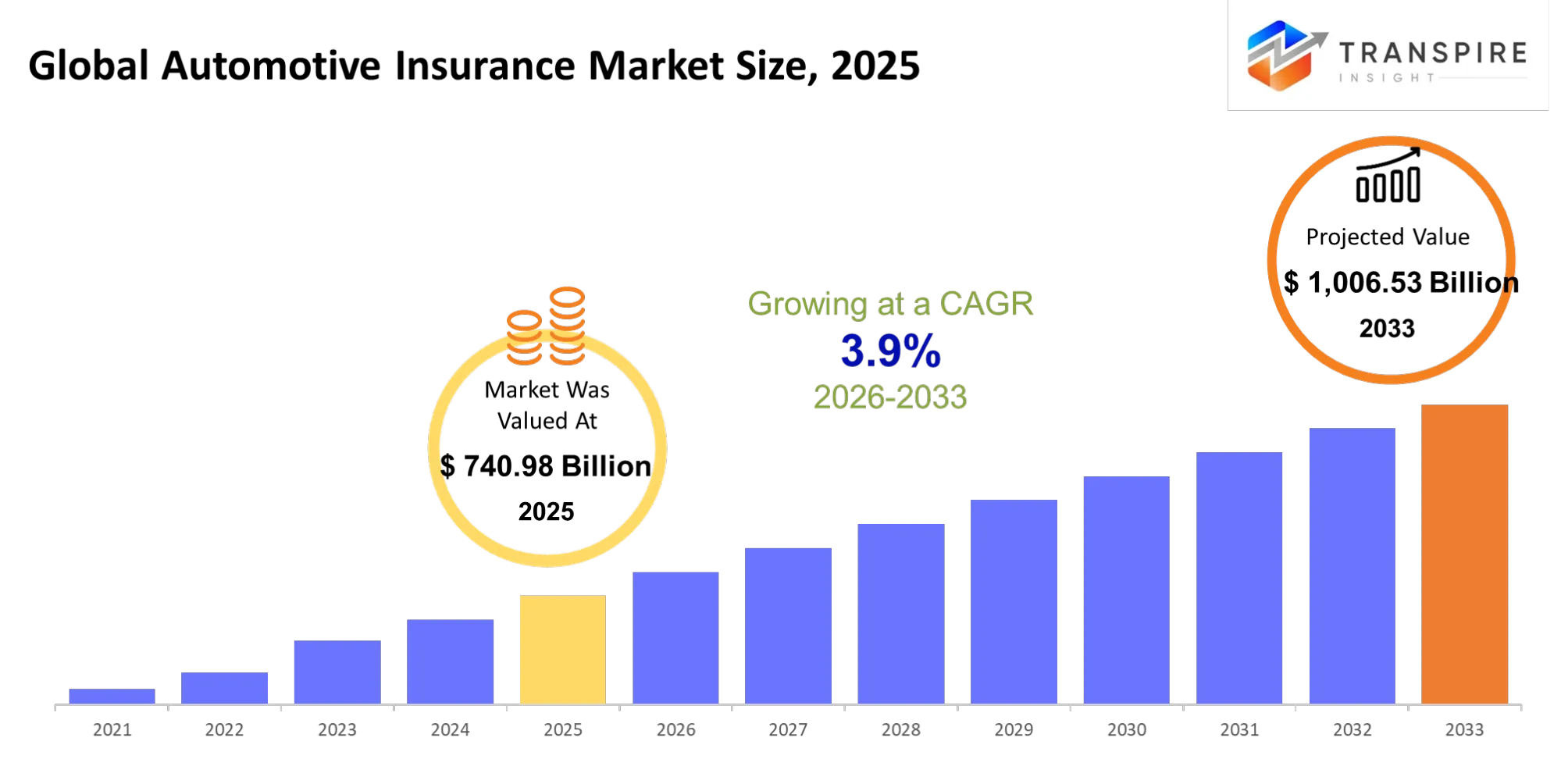
- Global Automotive Insurance Market Size 2025: USD 740.98 Billion
- Global Automotive Insurance Market Size 2033: USD 1,006.53 Billion
- Global Automotive Insurance Market CAGR: 3.9%
- Global Automotive Insurance Market Segments: By Type (Third-party Insurance, Comprehensive Insurance, Collision Insurance, Usage-based Insurance, Telematics Insurance, Electric Vehicle Insurance, Others); By Application (Passenger Vehicles, Commercial Vehicles, Electric Vehicles, Ride-sharing Vehicles, Fleet Vehicles, Others); By End-User (Individual Consumers, Fleet Operators, Ride-sharing Companies, Automotive Dealers, Others); By Distribution (Direct Sales, Insurance Brokers, Bancassurance, Online Insurance Platforms, Others)
Global Automotive Insurance Market Summary:
The Global Automotive Insurance Market size is estimated at USD 740.98 Billion in 2025 and is anticipated to reach USD 1,006.53 Billion by 2033, growing at a CAGR of 3.9% from 2026 to 2033. Think of auto insurance as a financial shield against the massive costs of car wrecks, vehicle thefts, or expensive third-party lawsuits. Over the last few years, the market has completely changed gears, moving away from one-size-fits-all annual premiums toward personalized, pay-how-you-drive models. The real tipping point happened when body shop bills went through the roof. Modern bumpers are packed with expensive radar and camera sensors, meaning a basic fender bender suddenly costs thousands to fix—all while severe highway accidents spiked. Since old-school premium formulas can't accurately predict these skyrocketing repair bills or erratic driver behavior, insurance companies are heavily adopting telematics. This setup lets careful drivers lower their bills based on real-time data, pushing tech-forward consumers to ditch legacy policies for flexible, tracking-based coverage.
Key Market Insights
The car insurance world is changing fast. Instead of just relying on old-school, flat-rate risk pools, providers are turning to live, personalized tracking because soaring body shop bills and a massive influx of connected car data make rigid pricing templates totally obsolete.
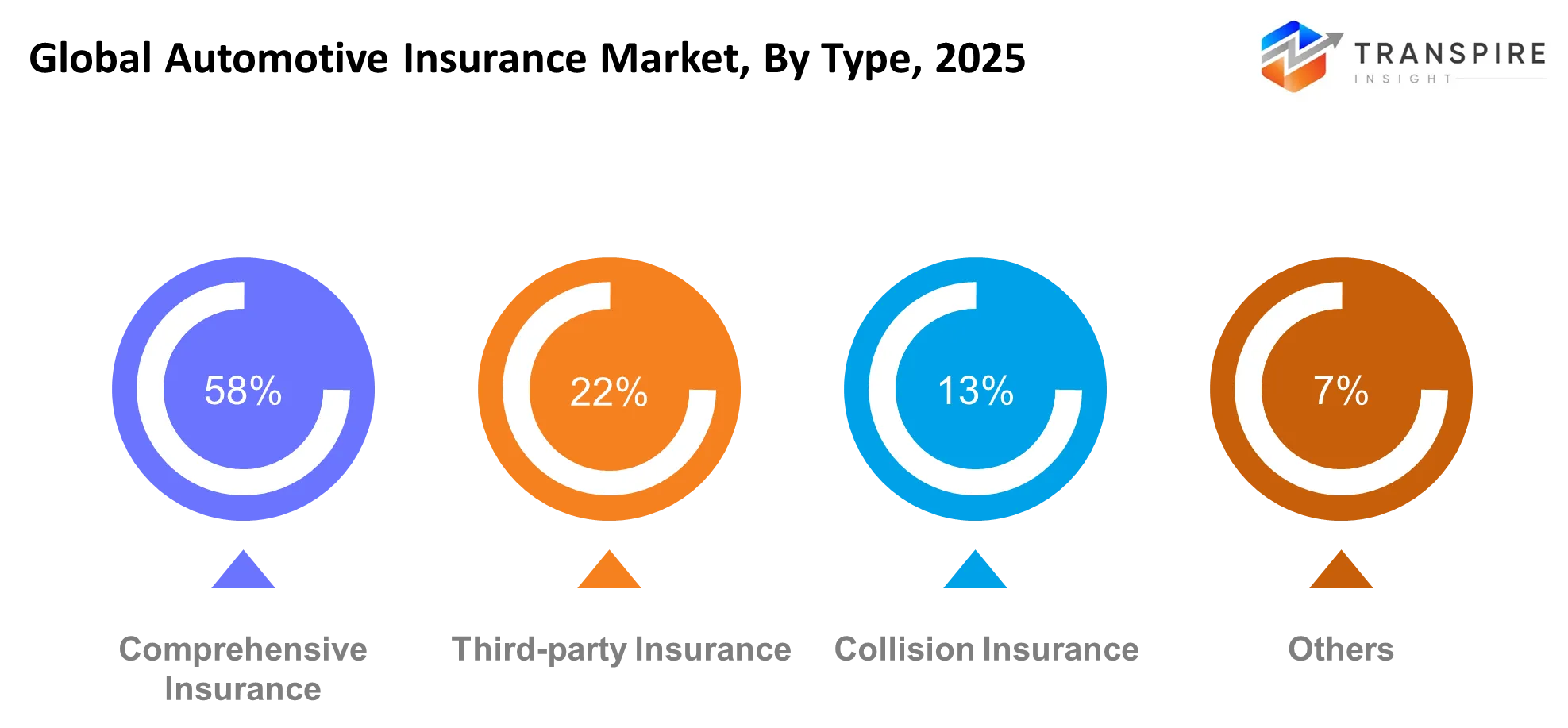
- Bad weather scares and a spike in urban theft have drivers scrambling for total protection, pushing comprehensive coverage to a massive 58% market share. To adapt to this behavioral shift, heavyweights like State Farm and Allstate are starting to pack extreme weather protections right into their standard baseline plans.
- Local drivers across North America are obsessed with getting claims paid instantly, locking down a dominant 38% slice of the global market. This swift technological movement has pushed major players like GEICO and Progressive to build AI-powered video damage appraisals directly into their mobile apps to skip garage wait times.
- Aggressive green regulations are forcing a huge consumer pivot toward electric vehicles, keeping Europe’s market share steady at 27%. In response to this trend, legacy brands like AXA and Allianz are rolling out niche policies built specifically to cover battery life degradation and public charging hazards.
- A tech-savvy, mobile-first crowd is driving an explosive 11.4% CAGR in the Asia Pacific region, which already commands 26% of global demand. This fast-paced digital culture has pushed regional companies like ICICI Lombard and HDFC ERGO to completely throw out paper forms and launch instant, smartphone-based policy buying.
- Basic liability rules rarely ever change, keeping third-party insurance steady at a 22% share of the market. To secure this highly predictable customer stream, Zurich Insurance and Liberty Mutual are using direct API connections with local transport registries to handle coverage checks automatically.
- Rising accident rates from distracted driving mean collision insurance still snags 13% of the market. Companies like Travelers and Nationwide are countering these risks by shifting deductible costs based on whether a client’s car has built-in auto-braking safety features.
- Everyday drivers are rapidly switching to pay-how-you-drive tracking just to save cash on premiums, fueling a quick 10.8% CAGR for telematics insurance. Progressive is capitalizing on this behavioral movement by trading clunky windshield dongles for quiet, background smartphone data tracking.
- High-net-worth collectors and corporate clients wanting premium protection keep the remaining 7% of total volume steady. Premium carriers like Chubb and Aviva are targeting this specific niche by creating highly tailored insurance packages for luxury vehicle restorations and high-end company fleets.
What are the Key Drivers, Restraints, and Opportunities in the Global Automotive Insurance Market?
Driver:
The massive shift toward pay-how-you-drive plans and live telematics tracking is heavily pushing the market forward. The real trigger was a brutal combination of skyrocketing vehicle repair bills—thanks to expensive radar and camera sensors buried inside modern car bumpers—and a sharp spike in severe highway wrecks. Because of this, old-school flat-rate pricing models just don't make sense anymore. Instead, insurance companies are leveraging smartphone apps and built-in vehicle telemetry to monitor how people actually handle the road. This completely changes the adoption game: safe drivers get rewarded with instant premium discounts, while insurers secure a highly profitable, data-rich revenue stream. In January - 2025, Mercedes-Benz Group AG teamed up with AXA Group to offer embedded, behavior-based coverage directly through the car's built-in infotainment dashboard across Europe. Because auto manufacturers want to lock in deeper digital relationships with car buyers, they are embedding insurance right into the native vehicle screen. It essentially cuts out traditional middleman brokers so drivers can activate tailored coverage with a single tap while sitting in the showroom.
Restraint:
Telematics-based policies face a steep uphill battle due to rising consumer pushback against round-the-clock tracking and tightening privacy laws. Many drivers are flat-out uncomfortable with an app logging their exact speed, location, and braking habits 24/7, mostly because they fear personal surveillance or a massive data breach. This isn't a minor hurdle; it is a deep structural issue for insurance companies, who find themselves stuck trying to untangle a chaotic patchwork of regional privacy laws. Navigating these fragmented rules makes launching a uniform tracking platform across different borders incredibly expensive and legally risky.
Opportunity:
The rapid global pivot toward electric vehicles (EVs) offers a massive, wide-open frontier for fresh market growth. Traditional auto insurance packages aren't geared up to handle EV-specific risks, like astronomical battery pack replacement costs, highly specialized mechanic labor rates, or unique public charging station fires. Forward-thinking providers can unlock an entirely new category of revenue by crafting custom EV policies that read real-time battery health data straight from the car’s computer to scale premium pricing on the fly.
What Has the Impact of Artificial Intelligence Been on the Global Automotive Insurance Market?
Insurance companies used to guess risk using slow demographic data, dragging out basic claims for weeks. AI changed the game entirely. Plugging machine learning and computer vision straight into the system lets providers automate early accident reporting and damage checks instantly. If you get into a minor accident, you just snap a couple of phone photos of the dent. The system calculates the repair bill right there, while checking for red flags to stop fraud.
It changes daily operations completely. Minor claims get sorted in hours instead of weeks, cutting out endless paperwork. Plus, predictive models read live data streams directly from connected cars. Insurers don't have to rely on generic tables anymore—they can spot bad driving habits immediately and tweak premium rates on the fly.
But upgrading the tech is a massive headache. A lot of old IT setups just can't handle a non-stop stream of live driving data. Because of data biases and small accuracy gaps, companies can't let machines run the whole show. They still need human eyes to double-check the complicated cases.
- In January 2025, UK insurer Hiscox showed how this works by launching an AI underwriting tool that evaluates hundreds of customer details in a flash. This slashed their approval process from three days down to a mere three minutes.
Key Market Trends:
Automotive insurance is entirely breaking away from traditional demographic guesswork in favor of continuous, live connectivity. This evolution is defined by a massive technological movement toward behavior-tracking telematics and a behavioral push for personalized, user-controlled pricing.
- Underwriters replaced generic age and zip-code profiles over time through a technological movement tracking live driving behavior via smartphone sensors, driving an industry shift toward personalized pay-how-you-drive pricing models.
- Claims adjusters evolved past slow, manual vehicle inspections over time via a technological movement utilizing smartphone photo analysis and AI computer vision, sparking an industry shift toward instant, automated damage settlement.
- Car buyers moved away from traditional third-party insurance brokers over time through a behavioral movement demanding frictionless digital transactions, forcing an industry shift toward embedded coverage built directly into the vehicle's native dashboard checkout.
- Actuaries evolved past calculating basic mechanical repair costs over time via a technological movement monitoring real-time electric vehicle battery health diagnostics, solidifying an industry shift toward specialized, high-stakes EV risk management.
- Automakers moved away from acting strictly as vehicle hardware manufacturers over time through a behavioral movement to control the entire post-purchase consumer lifecycle, driving an industry shift toward proprietary, manufacturer-branded insurance networks.
- Insurance providers replaced static annual policy reviews over time via a technological movement analyzing overnight over-the-air vehicle software updates, sparking an industry shift toward dynamically adjusted risk grading.
- Drivers replaced low-deductible safety nets over time through a behavioral movement prioritizing immediate premium savings over complete coverage, forcing an industry shift toward high-deductible, out-of-pocket repair management.
- Fleet operators moved away from manual paper logbooks and offline safety checks over time via a technological movement deploying cloud-connected telemetry systems, driving an industry shift toward real-time, behavior-monitored commercial vehicle policies.
Global Automotive Insurance Market Segmentation:
By Type
Providers sell a wide range of coverage, from basic third-party and collision insurance to comprehensive insurance packages. Right now, telematics and usage-based insurance (UBI) are completely disrupting the traditional baseline. Drivers are actively abandoning flat-rate comprehensive plans because skyrocketing vehicle repair costs have pushed standard premiums through the roof. This shift means people want policies tailored to how they actually drive, turning real-time tracking into the primary growth engine. Moving forward, old-school static policies will mostly fade into the background, forcing insurers to make continuous digital monitoring the mandatory standard for securing any competitive rate.
By Application
Coverage applies across passenger vehicles, commercial fleets, ride-sharing vehicles, and electric vehicles. While everyday passenger cars bring in the highest raw volume, the ride-sharing and gig-economy segments are driving the most aggressive structural changes. Traditional policies can't handle cars that stay on the road 24/7 with multiple shifting drivers, which spiked accident frequencies and forced a complete rethink of risk. Because of this non-stop usage, insurers are moving away from yearly flat fees for commercial applications. Soon, everything will pivot toward per-mile or hourly risk pricing that adjusts instantly depending on who is behind the wheel.
By End-User
The buyer pool spans individual consumers, automotive dealers, ride-sharing companies, and large fleet operators. Right now, commercial fleet operators are wielding the most leverage in shaping how policies are designed. These corporate buyers are facing intense pressure from rising maintenance inflation, so they refuse to buy standard, disconnected insurance packages anymore. They demand bulk policies that sync directly with their own logistics and tracking systems to cut overhead. This means insurance providers will eventually stop selling standalone corporate plans altogether, instead delivering coverage as a software API that plugs right into a company's internal fleet management dashboard.
By Distribution
Policies change hands through direct sales, traditional insurance brokers, bancassurance, and online insurance platforms. Out of all these channels, online platforms and embedded point-of-sale setups are capturing the market fast. Modern car buyers completely hate the traditional chore of calling a broker or dealing with slow direct sales paperwork after buying a vehicle. They want instant comparison and immediate activation. Consequently, legacy broker networks are losing their grip on standard consumer policies. The entire distribution landscape is shifting toward a reality where insurance is bought with a single tap on an online checkout page or directly through the car's screen before leaving the dealership.
What are the Key Use Cases Driving the Global Automotive Insurance Market?
Individual passenger vehicle owners increasingly use behavior-based tracking to actively lower their premium costs. Drivers willingly stream phone accelerometer data or native vehicle telemetry to prove safe habits, completely replacing rigid demographic profiles with personalized risk scores.
In commercial transport and the ride-sharing sector, companies deploy continuous telemetry to manage highly volatile operational liabilities. Real-time driving metrics allow fleet managers to protect high-mileage vehicles and instantly adjust active policy coverage whenever drivers swap shifts.
Emerging electric vehicle applications utilize live battery health monitoring to mitigate specialized infrastructure risks. Insurers track internal diagnostics over cellular networks to price expensive battery pack depreciation and public charging station liabilities dynamically.
|
Report Metrics |
Details |
|
Market size value in 2025 |
USD 740.98 Billion |
|
Market size value in 2026 |
USD 769.91 Billion |
|
Revenue forecast in 2033 |
USD 1,006.53 Billion |
|
Growth rate |
CAGR of 3.9% from 2026 to 2033 |
|
Base year |
2025 |
|
Historical data |
2021 - 2024 |
|
Forecast period |
2026 - 2033 |
|
Report coverage |
Revenue forecast, competitive landscape, growth factors, and trends |
|
Regional scope |
United States; Canada; Mexico; United Kingdom; Germany; France; Italy; Spain; Denmark; Sweden; Norway; China; Japan; India; Australia; South Korea; Thailand; Brazil; Argentina; South Africa; Saudi Arabia; United Arab Emirates |
|
Key company profiled |
State Farm, GEICO, Progressive, Allstate, AXA, Allianz, Zurich Insurance, Liberty Mutual, Aviva, ICICI Lombard, HDFC ERGO, Bajaj Allianz, Chubb, Nationwide, Travelers |
|
Customization scope |
Free report customization (country, regional & segment scope). Avail customized purchase options to meet your exact research needs. |
|
Report Segmentation |
By Type (Third-party Insurance, Comprehensive Insurance, Collision Insurance, Usage-based Insurance, Telematics Insurance, Electric Vehicle Insurance, Others); By Application (Passenger Vehicles, Commercial Vehicles, Electric Vehicles, Ride-sharing Vehicles, Fleet Vehicles, Others); By End-User (Individual Consumers, Fleet Operators, Ride-sharing Companies, Automotive Dealers, Others); By Distribution (Direct Sales, Insurance Brokers, Bancassurance, Online Insurance Platforms, Others) |
Which Regions are Driving the Global Automotive Insurance Market Growth?
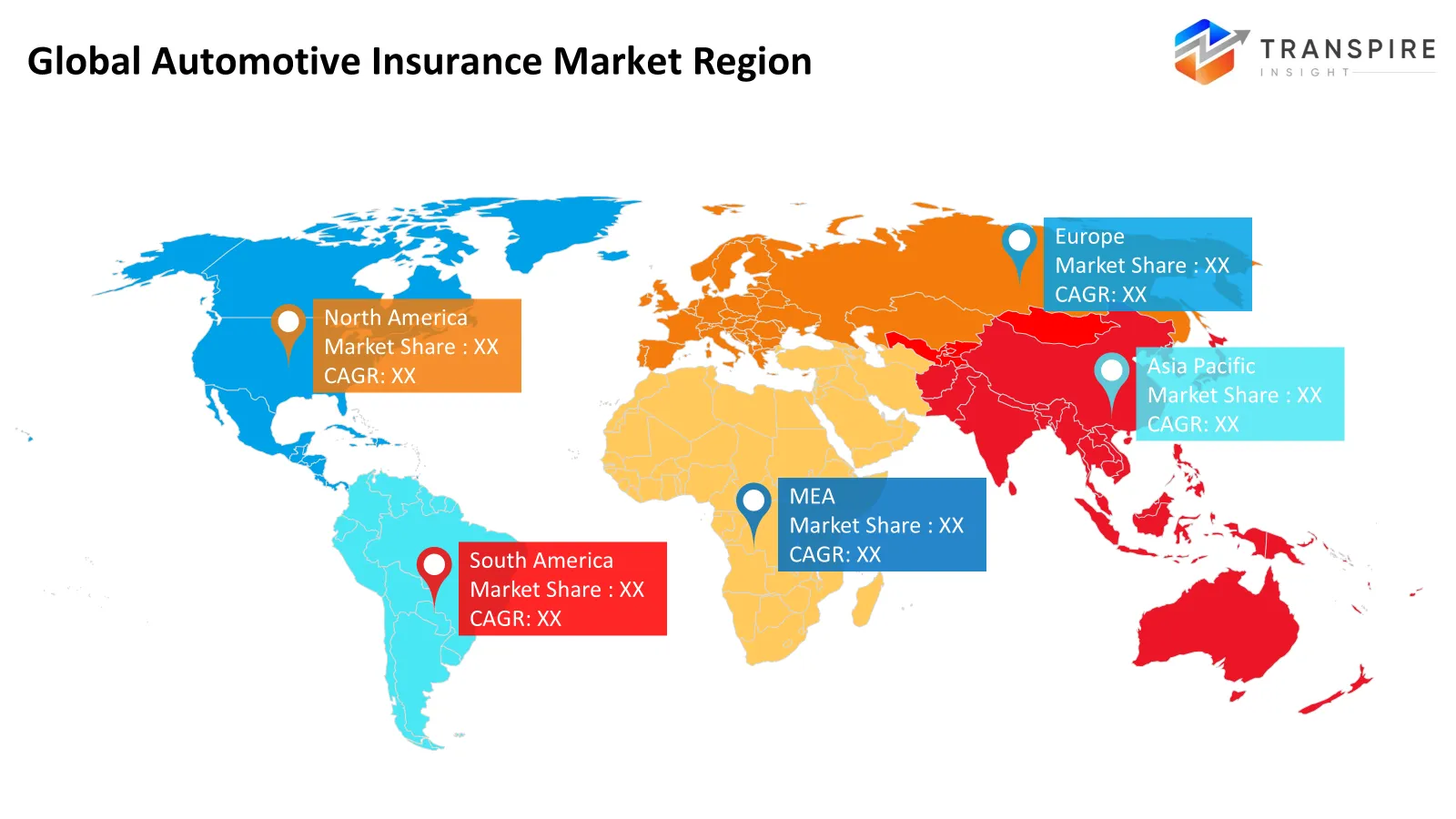
North America commands the top spot in the global car insurance market with a 38% share, mostly because vehicle ownership is incredibly high and connected-car tech is already everywhere. Local insurers are leaning heavily into usage-based plans to deal with a massive spike in collision repair bills. Instead of guessing risk, these companies track drivers using phone sensors and run damage checks through AI. This deep reliance on tech means the region stays the undisputed volume leader, generating a mountain of daily driving data that keeps custom-priced policies moving fast.
Europe takes the second-largest slot globally with a 27% share, but the market dynamics look completely different than across the Atlantic. Instead of chasing pure volume, European providers have to dance around incredibly strict data privacy laws while managing a massive, state-backed shift toward electric vehicles. Insurers have to build highly secure tracking platforms that monitor EV battery health without exposing the driver's personal identity. Because getting around these tough compliance and environmental rules is so complicated, the market remains steady and heavily favors deep-pocketed legacy companies over agile startups.
In late 2025, Allianz tackled these exact regulatory and technological hurdles head-on during its annual Allianz Motor Day, focusing specifically on how to insure autonomous vehicles under strict regional mandates. By actively partnering with vehicle manufacturers and local regulators, the company is building specialized, innovative insurance solutions that shape safety standards while remaining completely compliant with European laws.
Asia Pacific leads the global pack in growth, riding an 11.4% CAGR as a massive wave of first-time car buyers floods rapidly expanding cities. Local governments spent years pouring money into digital infrastructure, setting up the perfect foundation for seamless mobile payments and real-time tracking. This sudden structural shift opens up massive opportunities for cheap, app-based telematics that give everyday drivers and ride-sharing fleets instant access to flexible, pay-as-you-drive coverage. As cities swell and smartphone use goes deeper, the landscape is ripe for a massive boom in mobile-first, short-term insurance plans.
In November 2025, ICICI Lombard expanded its "Pay-As-You-Drive" motor insurance setup across India to target the massive wave of new car owners in crowded cities. By hooking smartphone tracking straight to vehicle odometers, the company let daily commuters pay for coverage based only on the exact kilometers they drove, making digital insurance far more affordable.
Who are the Key Players in the Global Automotive Insurance Market and how do they Compete?
The car insurance market has turned into a massive shootout between old-school volume giants and nimble, digital-first startups. Deep pockets aren't enough to win anymore. Today, the real winners are the companies that look at live vehicle data to price policies instantly, while using automated tech to erase the endless paperwork and friction out of routine claims.
Progressive bets its entire business on technological innovation. They broke away from the pack early by launching their Snapshot telematics platform. Instead of judging you based strictly on your age or zip code, they build your actual premium by tracking how you brake and accelerate every day. They are expanding fast right now by baking their software directly into mobile apps to win over younger, digital-native drivers and gig-economy ride-sharing fleets.
State Farm takes the opposite route, relying on pure scale and cost leadership. Their secret weapon is a massive hybrid network that mixes traditional neighborhood agents with fast online quoting tools. They focus their growth on locking down long-term customer loyalty across suburban areas. By heavily bundling car coverage with home insurance, they drive down overall policy costs to offer prices that smaller tech companies just can't match.
Global Automotive Insurance Market Companies:
- State Farm
- GEICO
- Progressive
- Allstate
- AXA
- Allianz
- Zurich Insurance
- Liberty Mutual
- Aviva
- ICICI Lombard
- HDFC ERGO
- Bajaj Allianz
- Chubb
- Nationwide
- Travelers
Recent Development News
In April 2026, Roadzen Inc. secured a massive claims processing contract with one of India's largest general insurers through its VehicleCare platform. This partnership integrates AI-led claims automation with a physical repair network, significantly reducing cashless repair turnaround times while generating a projected $10 million in annual revenue.
In March 2026, Relation Insurance Services successfully acquired the assets of Chinook Insurance Group to aggressively expand its specialty insurance offerings. By integrating Chinook's established capabilities into its existing framework, Relation greatly enhances its nationwide carrier relationships and scales its footprint to better support complex commercial and liability portfolios.
https://www.relationinsurance.com
What Strategic Insights Define the Future of the Global Automotive Insurance Market?
The Global Automotive Insurance Market is rapidly shifting toward a hyper-connected, software-driven ecosystem where premium pricing changes dynamically based on real-time mobility data. The future belongs to insurers that can transition from backward-looking, historical risk models to active, continuous behavior tracking.
A critical, hidden risk in this evolution is the looming threat of data-privacy backlash and regulatory intervention. As telemetry systems collect increasingly granular location and habits data, providers face massive legal vulnerabilities around consumer surveillance and bias. Conversely, a major emerging opportunity lies in the explosive demand for embedded electric vehicle (EV) coverage, where insurers can partner directly with automakers to bundle tailored risk protection into the initial digital vehicle purchase.
Strategically, traditional firms must aggressively transition away from legacy agent distribution and invest heavily in open API infrastructures to successfully embed insurance solutions at the native point of sale.
Global Automotive Insurance Market Segmentation:
By Type
- Third-party Insurance
- Comprehensive Insurance
- Collision Insurance
- Usage-based Insurance
- Telematics Insurance
- Electric Vehicle Insurance
- Others
By Application
- Passenger Vehicles
- Commercial Vehicles
- Electric Vehicles
- Ride-sharing Vehicles
- Fleet Vehicles
- Others
By End-User
- Individual Consumers
- Fleet Operators
- Ride-sharing Companies
- Automotive Dealers
- Others
By Distribution
- Direct Sales
- Insurance Brokers
- Bancassurance
- Online Insurance Platforms
- Others
Regional Outlook
North America
- United States
- Canada
- Mexico
Europe
- Germany
- United Kingdom
- France
- Spain
- Italy
- Rest of Europe
Asia Pacific
- Japan
- China
- Australia & New Zealand
- South Korea
- India
- Rest of Asia Pacific
South America
- Brazil
- Argentina
- Rest of South America
Middle East & Africa
- Saudi Arabia
- United Arab Emirates
- South Africa
- Rest of the Middle East & Africa
Frequently Asked Questions
Find quick answers to common questions.
The Global Automotive Insurance Market size was valued at USD 740.98 Billion in 2025 and is poised to reach USD 1,006.53 Billion by 2033, expanding at a 3.9% CAGR.
key segments for the Global Automotive Insurance Market are Type (Third-party Insurance, Comprehensive Insurance, Collision Insurance, Usage-based Insurance, Telematics Insurance, Electric Vehicle Insurance, Others), Application (Passenger Vehicles, Commercial Vehicles, Electric Vehicles, Ride-sharing Vehicles, Fleet Vehicles, Others), End-User (Individual Consumers, Fleet Operators, Ride-sharing Companies, Automotive Dealers, Others), and Distribution Channel (Direct Sales, Insurance Brokers, Bancassurance, Online Insurance Platforms, Others).
Growth is primarily driven by skyrocketing vehicle collision repair costs, expanding connected-car infrastructure, and a swift consumer shift toward real-time tracking, behavior-based telematics, and personalized usage-based policies.
The global market is led by major manufacturers including State Farm, GEICO, Progressive, Allstate, AXA, Allianz, Zurich Insurance, Liberty Mutual, Aviva, ICICI Lombard, HDFC ERGO, Bajaj Allianz, Chubb, Nationwide, and Travelers.
North America holds a dominating 38% share of the market. It heavily drives global dynamics due to exceptionally high vehicle ownership rates, a deeply mature connected-car telemetry network, and aggressive corporate pushes for usage-based plan adoption.
Commercial opportunities include launching embedded electric vehicle policies directly on automaker sales platforms, developing short-term micro-duration tracking APIs for ride-sharing fleets, and utilizing AI-driven automated claims processing software.
- State Farm
- GEICO
- Progressive
- Allstate
- AXA
- Allianz
- Zurich Insurance
- Liberty Mutual
- Aviva
- ICICI Lombard
- HDFC ERGO
- Bajaj Allianz
- Chubb
- Nationwide
- Travelers
About the Authors

Mayur Shinde
I am Mayur Shinde, a Senior Research Analyst at Transpire Insight, specializing in the Automotive & Transportation and Information & Communication Technology (ICT) Industry. My work focuses on analyzing emerging market trends, technological advancements, competitive landscapes, and industry developments to deliver accurate, data-driven insights. I am passionate about transforming complex market information into clear, actionable content that helps businesses, professionals, and decision-makers stay informed and make confident strategic decisions.

Chakradhar Khansole
Chakradhar serves as the Research Director at Transpire Insight, bringing over 8 years of experience in technology, innovation, and strategic market intelligence. He specializes in transforming complex market data into actionable business insights that enable organizations to make informed, growth-oriented decisions. Recognized for his strategic vision and analytical expertise, Chakradhar leads high-impact research initiatives, delivering comprehensive market assessments, competitive intelligence, and forward-looking industry analysis.
Recently Published Reports
-
Apr 2026
ATV & UTV Market
ATV & UTV Market Size, Share & Analysis Report By Type (ATV, and UTV), By Variants (Less Than 400 CC, 400 CC To 800 CC, and More Than 800 CC), and Geography (North America, Europe, Asia-Pacific, Middle East and Africa, South and Central America), 2021 - 2031
-
Apr 2026
Automotive Central Gateway Module Market
Automotive Central Gateway Module Market Size, Share & Analysis Report By Type (Ethernet Central Gateway Module, CAN Central Gateway Module, LIN Central Gateway Module, and FlexRay), By Application (Powertrain Control, Body Control, Infotainment System, Advanced Driver Assistance Systems (ADAS), and Others), By End User (Passenger Vehicles, and Commercial Vehicles), and Geography (North America, Europe, Asia-Pacific, Middle East and Africa, South and Central America), 2021 - 2031
-
Apr 2026
Automotive Engine Oil Filter Market
Automotive Engine Oil Filter Market Size, Share & Analysis Report By Filter Type (Fuel Filter, Engine Oil Filter, Hydraulic Oil Filter, and Others), By Filter Media (Cellulose, Synthetic, and Micro), By Sales Channel (OEMs, and Aftermarket), By Vehicle Type (Passenger Cars, Light Commercial Vehicles, Heavy Duty Trucks, Buses and Coaches, and Off-road Vehicles), and Geography (North America, Europe, Asia-Pacific, Middle East and Africa, South and Central America), 2021 - 2031
-
Apr 2026
Automotive Parts Aluminium Die Casting Market
Automotive Parts Aluminium Die Casting Market Size, Share & Analysis Report By Production Process (Pressure Die Casting, Vacuum Die Casting, Squeeze Die Casting, Gravity Die Casting), By Application (Body Parts, Engine Parts, Transmission Parts, Battery And Related Components, Other Application Types), and Geography (North America, Europe, Asia-Pacific, Middle East and Africa, South and Central America), 2021 - 2031
Our Clients



