
Market Summary
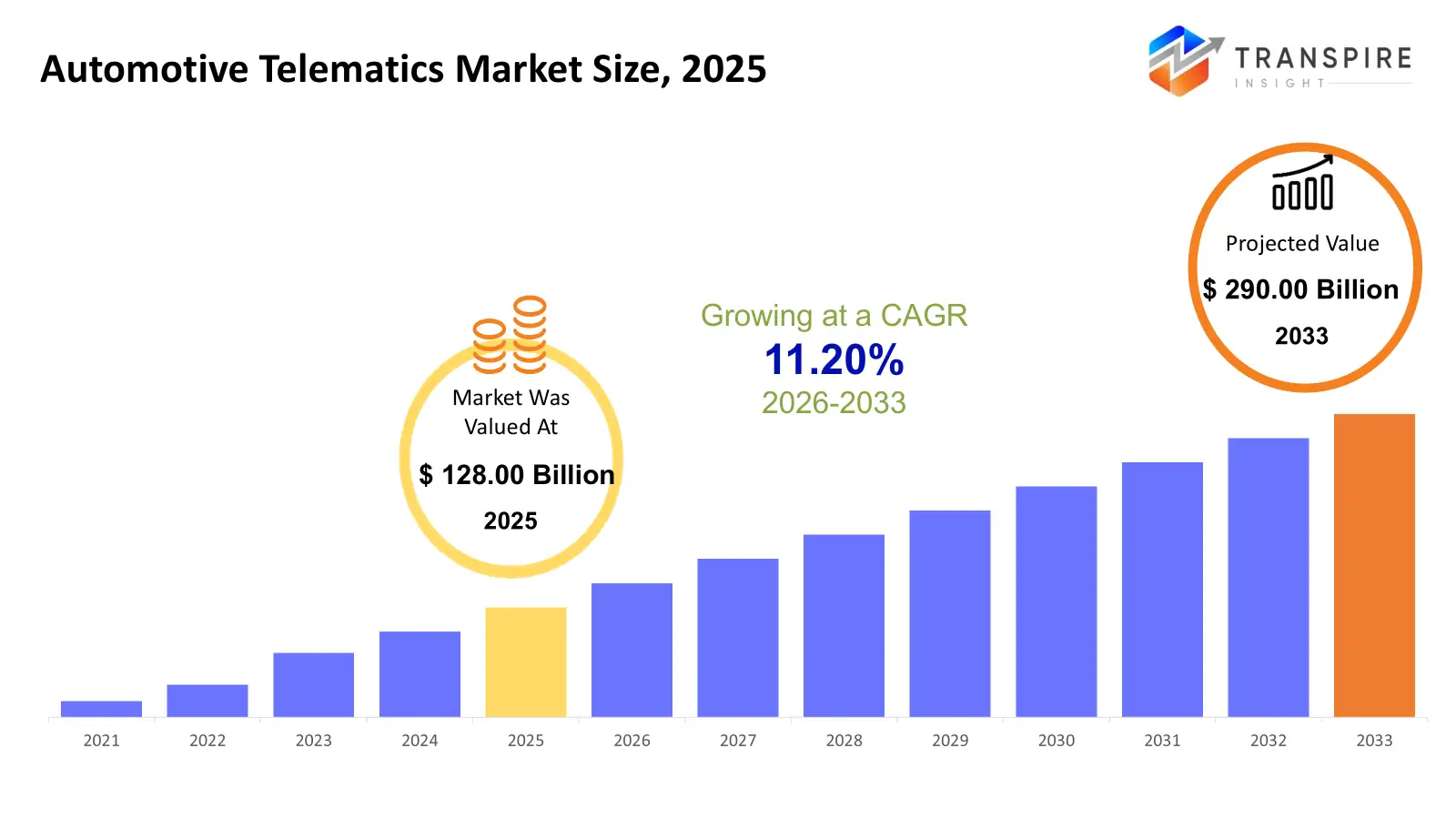
The global Automotive Telematics market size was valued at USD 128.00 billion in 2025 and is projected to reach USD 290.00 billion by 2033, growing at a CAGR of 11.20% from 2026 to 2033. The market for automotive telematics is growing steadily in terms of CAGR, driven by the increasing adoption of connected vehicle technologies and the rising requirement for data analytics of vehicle data in real-time.
Market Size & Forecast
- 2025 Market Size: USD 128.00 Billion
- 2033 Projected Market Size: USD 290.00 Billion
- CAGR (2026-2033): 11.20%
- North America: Largest Market in 2026
- Asia Pacific: Fastest Growing Market
To learn more about this report,  Download Free Sample Report
Key Market Trends Analysis
- Adoption in North America is fueled by mature connected vehicle infrastructure, strong OEM relationships, and advanced fleet management adoption, while high levels of data utilization and regulatory compliance requirements continue to drive upgrades to embedded and software-centric telematics platforms.
- The United States market shows significant traction with its large commercial fleet base, increasing insurance telematics adoption, and fast-growing adoption of connected safety features, thus creating a fertile ground for continuous innovation in hardware integration and cloud-centric telematics service delivery models.
- The region’s fast-growing automotive production base and digital mobility initiatives in Asia Pacific are fueling telematics adoption, especially with the expansion of logistics infrastructure, increasing adoption of connected cars, and government-led smart transportation initiatives that encourage the adoption of integrated telematics solutions at scale.
- Hardware continues to be a dominant area with OEMs increasingly integrating telematics control units and advanced sensor technologies directly into their platforms to ensure real-time communication, safety, and connectivity to power the next-generation autonomous and electrified mobility ecosystems.
- Passenger vehicles are continuing to drive the adoption of telematics systems due to the increasing consumer demand for connected infotainment, navigation, and safety features, with manufacturers increasingly offering telematics as a differentiator for digital user experience and long-term consumer engagement strategies.
- Fleet management services are continuing to grow rapidly, with logistics operators focusing on optimizing fleet efficiency, routes, and fuel consumption, with telematics systems facilitating informed decisions through connected vehicle technology.
- Embedded connectivity is increasingly becoming the preferred choice for manufacturers, with a focus on ensuring reliable, constant connectivity, and regulatory compliance with safety regulations, which can provide long-term scalability with connected vehicles.
So, The automotive telematics market is defined as the integration of telecommunications and informatics to facilitate data exchange among vehicles, drivers, infrastructure, and service providers. This has enabled the provision of services such as navigation, safety monitoring, fleet management, and infotainment services. Over the years, the market has developed significantly from simple tracking services to a comprehensive connected vehicle platform enabled by cloud computing and analytics. Digitalization of the transportation sector and the adoption of connected mobility services have revolutionized the automotive value chain. Car manufacturers have used telematics data to improve vehicle performance and develop digital services for their customers. On the other hand, fleet operators have used telematics services to reduce fleet operation costs, improve driver safety, and optimize supply chain management using the platform’s real-time monitoring capabilities.
Technological developments such as 5G connectivity, AI, and vehicle-to-everything communication have expanded the capabilities of the telematics platform to move beyond traditional applications. In addition, the rise of electric and autonomous driving has further increased the necessity of constant data connectivity, making the telematics platform a vital element of future automotive infrastructure and digital transportation ecosystems.
Automotive Telematics Market Segmentation
By Component
- Hardware
The hardware layer of the telematics stack includes telematics control units, GPS devices, and communication hardware. The increasing number of vehicles being equipped with electrification and connectivity solutions is motivating OEMs to deploy high-end hardware solutions. The emergence of 5G connectivity solutions is improving the efficiency of real-time data communication and vehicle-to-everything communication.
- Software
Software solutions provide the platform for data analysis, vehicle diagnostics, and user interface solutions. The increasing need to deploy predictive maintenance solutions and AI-driven solutions is motivating innovation in the software segment. Cloud-based telematics solutions are now the norm, providing the platform for software solutions.
- Services
Automotive telematics services include connectivity solutions, remote diagnostics, and remote monitoring services. The increasing number of vehicles being equipped with connectivity solutions and the emergence of regulatory mandates for vehicle safety features are motivating growth in the services segment.
By Vehicle Type
- Passenger Vehicles
Passenger vehicles lead the adoption of telematics technology due to the rising demand for infotainment, navigation, and safety features among consumers. OEMs are equipping telematics technology as standard features in the mid-range and luxury segment of the market. In addition, the rising sales of EVs also contribute to the adoption of data-based connectivity.
- Light Commercial Vehicles (LCVs)
Light commercial vehicles utilize telematics technology mainly for fleet management and route optimization. The rising e-commerce industry and the demand for last-mile delivery services have accelerated the adoption of telematics technology. Vehicle tracking also helps optimize fleet utilization.
- Heavy Commercial Vehicles (HCVs)
HCVs utilize telematics technology for regulatory compliance, driver monitoring, and predictive maintenance. The logistics and freight industry, especially the long-haul segment, relies on advanced fleet management systems.
By Application
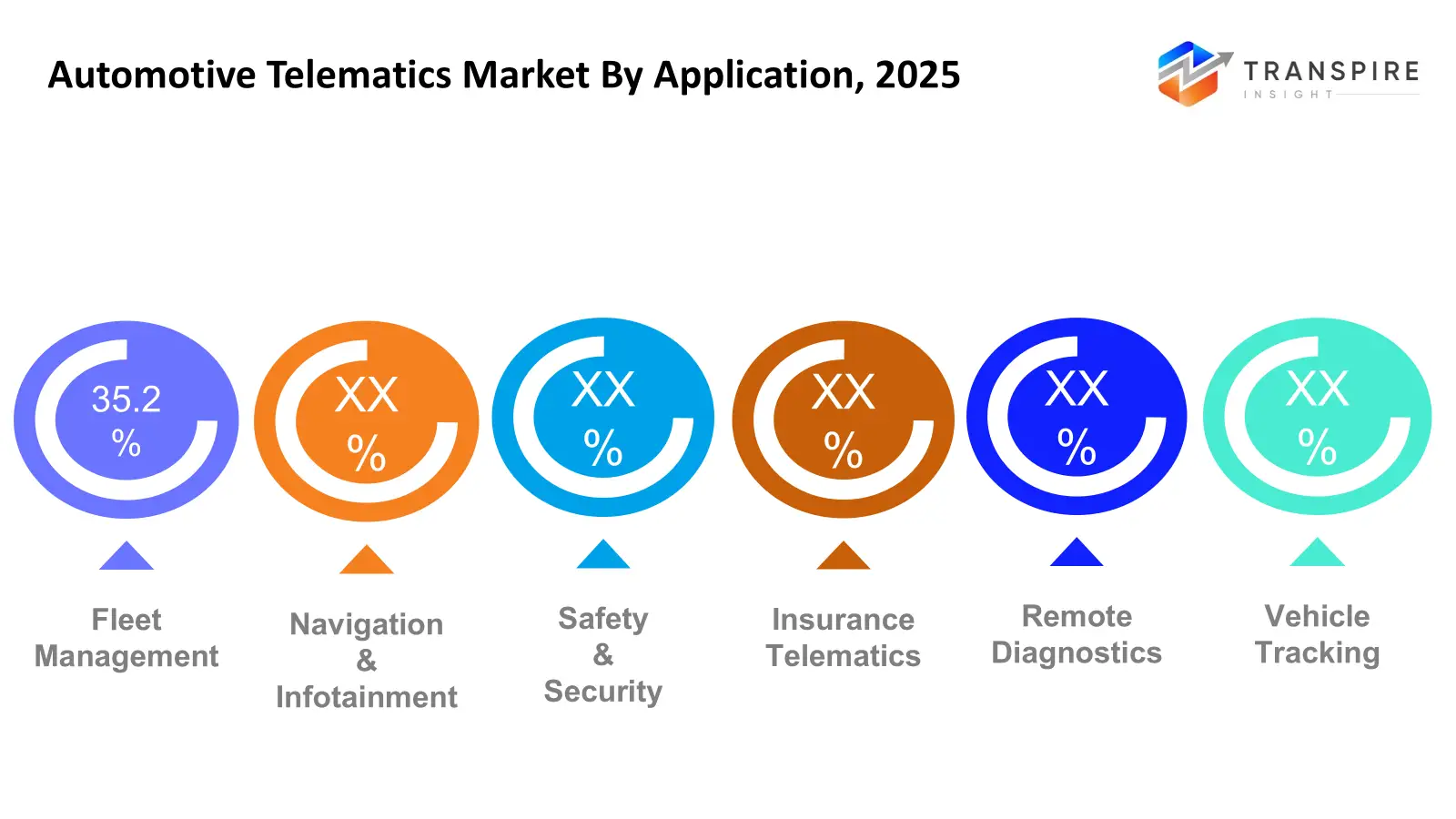
- Fleet Management
This segment continues to hold the top spot due to the digitalization of logistics and cost optimization pressures. Fleet management solutions improve efficiency using real-time tracking, fuel analysis, and route optimization. The segment is dominated by commercial fleets and transport companies.
- Navigation & Infotainment
This segment also benefits from the increasing demand from consumers for seamless connectivity and digital experiences in vehicles. The segment receives an additional boost from the competition between OEMs to provide the best connectivity solutions in high-end vehicles.
- Safety & Security
Safety solutions using telematics include eCall, stolen vehicle tracking, and driver monitoring. Regulatory mandates in developed countries drive the segment significantly. Increasing road safety awareness and insurance services also contribute to the segment's growth.
- Insurance Telematics
In the insurance telematics segment, the data analytics provided by the usage-based insurance model helps in the assessment of driver profiles. This segment has been boosted by the increasing adoption of data-based insurance services.
- Remote Diagnostics
In the segment of remote diagnostics, the predictive maintenance of vehicles and the ability to perform software updates remotely using telematics data have been a major driver. This segment has gained traction due to the EV ecosystem.
- Vehicle Tracking
In the vehicle tracking segment, the focus is on tracking and security services. This segment has a high demand due to fleet services and logistics providers.
To learn more about this report, Download Free Sample Report
By Connectivity Type
- Embedded
The telematics system installed in the vehicle is directly integrated into the vehicle's architecture. Embedded systems provide high reliability, connectivity, and compliance with regulatory safety requirements. The OEM preference for embedded systems continues to drive the growth of the market.
- Tethered
Tethered systems provide connectivity between vehicles and external devices such as smartphones. The system provides cost-effective solutions in price-sensitive markets. The lack of standalone functionality limits the deployment of high-end features.
- Integrated
Integrated systems provide the functionality of both embedded and smartphone systems. The system provides cost efficiency and functionality. The increasing demand for digital ecosystems drives the steady growth of the integrated system segment.
Regional Insights
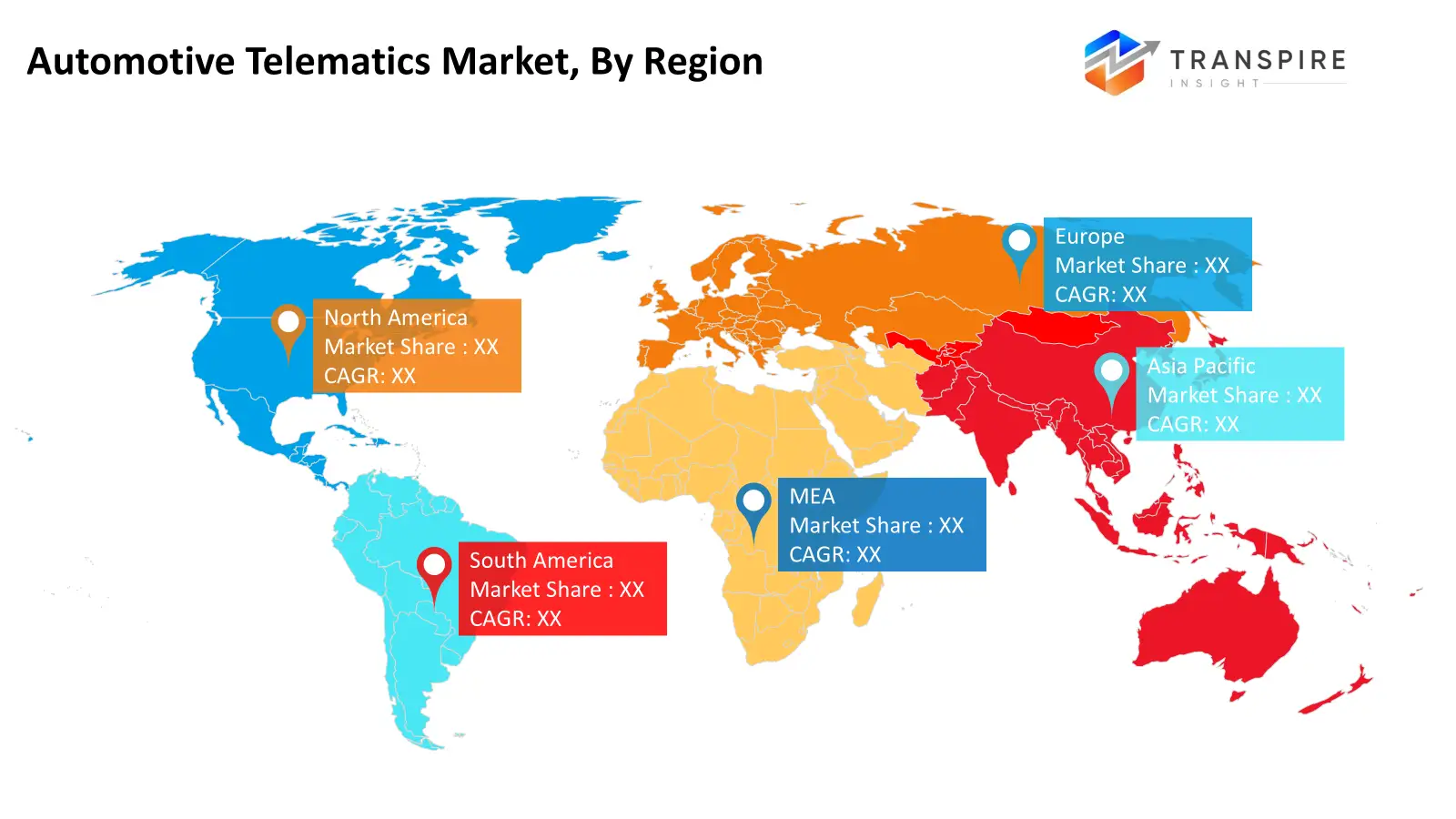
In terms of geography, North America possesses a dominant market position based on advanced automotive technologies and high adoption rates of connected fleet solutions in the United States, Canada, and Mexico. The European market reflects a steady growth trend driven by various automotive manufacturing hubs in Germany, the United Kingdom, France, Spain, and Italy, where safety and environmental regulations promote telematics adoption. The Asia Pacific market represents a rapidly growing market landscape driven by automotive production hubs in Japan and China, along with increasing adoption of connected vehicle solutions in India, South Korea, and Australia & New Zealand. The South American market, driven by Brazil and Argentina, reflects a gradual adoption rate driven by fleet modernization initiatives. The Middle East & Africa market, including countries like Saudi Arabia, United Arab Emirates, and South Africa, reflects a steady growth trend driven by increasing infrastructure investments and vehicle monitoring and safety requirements.
To learn more about this report, Download Free Sample Report
Recent Development News
- October 2025, In a press release, Teletrac Navman stated that it has won the “Vehicle Telematics Solution of the Year” category in the AutoTech Breakthrough Awards Program for 2025, which recognizes Teletrac Navman’s TN360 telematics solution and its connected capabilities for safety, AI visibility, and dash cam analytics.
- In April 2024, Marelli official press release stated, Marelli announces the launch of its ProConnect, a fully integrated cockpit and 5G telematics platform designed specifically for the China market, including an infotainment display, telematics control unit, and improved connectivity solutions with up to six displays and 12 cameras to avoid hardware redundancies.
|
Report Metrics |
Details |
|
Market size value in 2025 |
USD 128.00 Billion |
|
Market size value in 2026 |
USD 138.00 Billion |
|
Revenue forecast in 2033 |
USD 290.00 Billion |
|
Growth rate |
CAGR of 11.20% from 2026 to 2033 |
|
Base year |
2025 |
|
Historical data |
2021 – 2024 |
|
Forecast period |
2026 – 2033 |
|
Report coverage |
Revenue forecast, competitive landscape, growth factors, and trends |
|
Regional scope |
North America; Europe; Asia Pacific; Latin America; Middle East & Africa |
|
Country scope |
United States; Canada; Mexico; United Kingdom; Germany; France; Italy; Spain; Denmark; Sweden; Norway; China; Japan; India; Australia; South Korea; Thailand; Brazil; Argentina; South Africa; Saudi Arabia; United Arab Emirates |
|
Key company profiled |
Robert Bosch GmbH, Continental AG, Harman International Industries, Inc., LG Electronics Inc., Denso Corporation, TomTom International B.V., Verizon Connect, Geotab Inc., Trimble Inc., Visteon Corporation, AT&T Inc., MiX Telematics Limited, Octo Telematics S.p.A., Valeo SA, and Airbiquity Inc. |
|
Customization scope |
Free report customization (country, regional & segment scope). Avail customized purchase options to meet your exact research needs. |
|
Report Segmentation |
By Component (Hardware, Software, Services), By Vehicle Type (Passenger Vehicles, Light Commercial Vehicles (LCVs), Heavy Commercial Vehicles (HCVs)), By Application (Fleet Management, Navigation & Infotainment, Safety & Security, Insurance Telematics, Remote Diagnostics, Vehicle Tracking) and By Connectivity Type (Embedded, Tethered, Integrated) |
Key Automotive Telematics Company Insights
Harman International Industries, Inc. holds a competitive position in the automotive telematics industry with its connected vehicle platform that integrates telematics control units, infotainment solutions, cloud connectivity, and analytics platforms. The company has strong OEM relationships and global presence on various vehicle platforms, which provide scalability to connected vehicle adoption. The integration of telematics with digital cockpit and ADAS solutions helps automakers to enhance value creation for connected vehicle platforms. The investments by the company in software-defined vehicle platforms and cybersecurity solutions provide a competitive advantage to automakers who are moving towards data-driven mobility and connected vehicle monetization strategies.
Key Automotive Telematics Companies:
- Robert Bosch GmbH
- Continental AG
- Harman International Industries, Inc.
- LG Electronics Inc.
- Denso Corporation
- TomTom International B.V.
- Verizon Connect
- Geotab Inc.
- Trimble Inc.
- Visteon Corporation
- AT&T Inc.
- MiX Telematics Limited
- Octo Telematics S.p.A.
- Valeo SA
- Airbiquity Inc.
Global Automotive Telematics Market Report Segmentation
By Component
- Hardware
- Software
- Services
By Vehicle Type
- Passenger Vehicles
- Light Commercial Vehicles (LCVs)
- Heavy Commercial Vehicles (HCVs)
By Application
- Fleet Management
- Navigation & Infotainment
- Safety & Security
- Insurance Telematics
- Remote Diagnostics
- Vehicle Tracking
By Connectivity Type
- Embedded
- Tethered
- Integrated
Regional Outlook
- North America
- United States
- Canada
- Mexico
- Europe
- Germany
- United Kingdom
- France
- Spain
- Italy
- Rest of Europe
- Asia Pacific
- Japan
- China
- Australia & New Zealand
- South Korea
- India
- Rest of Asia Pacific
- South America
- Brazil
- Argentina
- Rest of South America
- Middle East & Africa
- Saudi Arabia
- United Arab Emirates
- South Africa
- Rest of the Middle East & Africa
Frequently Asked Questions
Find quick answers to common questions.
The approximate Automotive Telematics Market size for the market will be USD 290.00 billion in 2033.
Key segments for the Automotive Telematics Market By Component (Hardware, Software, Services), By Vehicle Type (Passenger Vehicles, Light Commercial Vehicles (LCVs), Heavy Commercial Vehicles (HCVs)), By Application (Fleet Management, Navigation & Infotainment, Safety & Security, Insurance Telematics, Remote Diagnostics, Vehicle Tracking) and By Connectivity Type (Embedded, Tethered, Integrated).
Major Automotive Telematics Market players are Robert Bosch GmbH, Continental AG, Harman International Industries, Inc., LG Electronics Inc., Verizon Connect.
The North America region is leading the Automotive Telematics Market.
The CAGR of the Automotive Telematics Market is 11.20%.
- Robert Bosch GmbH
- Continental AG
- Harman International Industries, Inc.
- LG Electronics Inc.
- Denso Corporation
- TomTom International B.V.
- Verizon Connect
- Geotab Inc.
- Trimble Inc.
- Visteon Corporation
- AT&T Inc.
- MiX Telematics Limited
- Octo Telematics S.p.A.
- Valeo SA
- Airbiquity Inc.
Recently Published Reports
-
Apr 2026
ATV & UTV Market
ATV & UTV Market Size, Share & Analysis Report By Type (ATV, and UTV), By Variants (Less Than 400 CC, 400 CC To 800 CC, and More Than 800 CC), and Geography (North America, Europe, Asia-Pacific, Middle East and Africa, South and Central America), 2021 - 2031
-
Apr 2026
Automotive Central Gateway Module Market
Automotive Central Gateway Module Market Size, Share & Analysis Report By Type (Ethernet Central Gateway Module, CAN Central Gateway Module, LIN Central Gateway Module, and FlexRay), By Application (Powertrain Control, Body Control, Infotainment System, Advanced Driver Assistance Systems (ADAS), and Others), By End User (Passenger Vehicles, and Commercial Vehicles), and Geography (North America, Europe, Asia-Pacific, Middle East and Africa, South and Central America), 2021 - 2031
-
Apr 2026
Automotive Engine Oil Filter Market
Automotive Engine Oil Filter Market Size, Share & Analysis Report By Filter Type (Fuel Filter, Engine Oil Filter, Hydraulic Oil Filter, and Others), By Filter Media (Cellulose, Synthetic, and Micro), By Sales Channel (OEMs, and Aftermarket), By Vehicle Type (Passenger Cars, Light Commercial Vehicles, Heavy Duty Trucks, Buses and Coaches, and Off-road Vehicles), and Geography (North America, Europe, Asia-Pacific, Middle East and Africa, South and Central America), 2021 - 2031
-
Apr 2026
Automotive Parts Aluminium Die Casting Market
Automotive Parts Aluminium Die Casting Market Size, Share & Analysis Report By Production Process (Pressure Die Casting, Vacuum Die Casting, Squeeze Die Casting, Gravity Die Casting), By Application (Body Parts, Engine Parts, Transmission Parts, Battery And Related Components, Other Application Types), and Geography (North America, Europe, Asia-Pacific, Middle East and Africa, South and Central America), 2021 - 2031
Our Clients