
Global Alpha Bisabolol Market Size & Forecast:
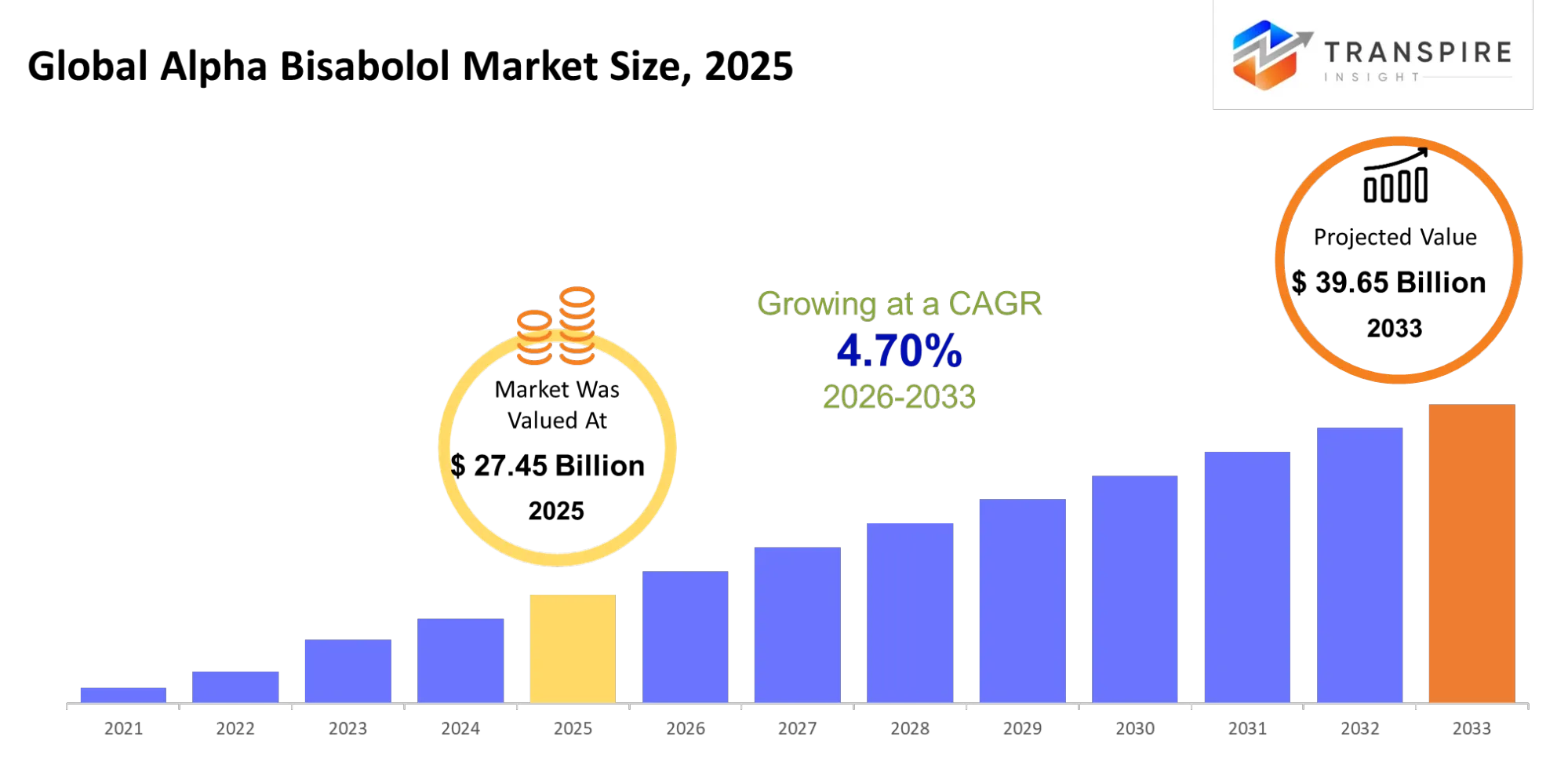
- Global Alpha Bisabolol Market Size 2025: USD 27.45 Billion
- Global Alpha Bisabolol Market Size 2033: USD 39.65 Billion
- Global Alpha Bisabolol Market CAGR: 4.70%
- Global Alpha Bisabolol Market Segments: By Type (Natural Alpha Bisabolol, Synthetic Alpha Bisabolol, Cosmetic-grade Bisabolol, Pharmaceutical-grade Bisabolol, Organic Bisabolol, High-purity Bisabolol, Others); By Application (Skincare Products, Haircare Products, Pharmaceuticals, Aromatherapy, Functional Cosmetics, Others); By End-User (Cosmetic Manufacturers, Pharmaceutical Companies, Personal Care Brands, Others); By Form (Liquid Bisabolol, Powder Bisabolol, Concentrated Extracts, Others).
To learn more about this report,  Download Free Sample Report
Global Alpha Bisabolol Market Summary:
The Global Alpha Bisabolol Market size is estimated at USD 27.45 billion in 2025 and is anticipated to reach USD 39.65 billion by 2033, growing at a CAGR of 4.70% from 2026 to 2033.
The alpha bisabolol industry is doing well. This is because people want to use organic things in the products they put on their skin. More and more people are taking care of their skin. That is why alpha-bisabolol is used in many different products.
The cosmetics industry is also getting bigger in countries that are not as rich yet, and people like products that can do more than one thing, like make them smell good and also be good for their skin.
The alpha bisabolol industry will probably keep growing because doctors and hospitals are interested in using alpha bisabolol to help people feel better when they are hurt or sick, and also to help people with mouth problems. The alpha bisabolol industry will keep getting bigger in the next few years because of all these things.
Key Market Insights:
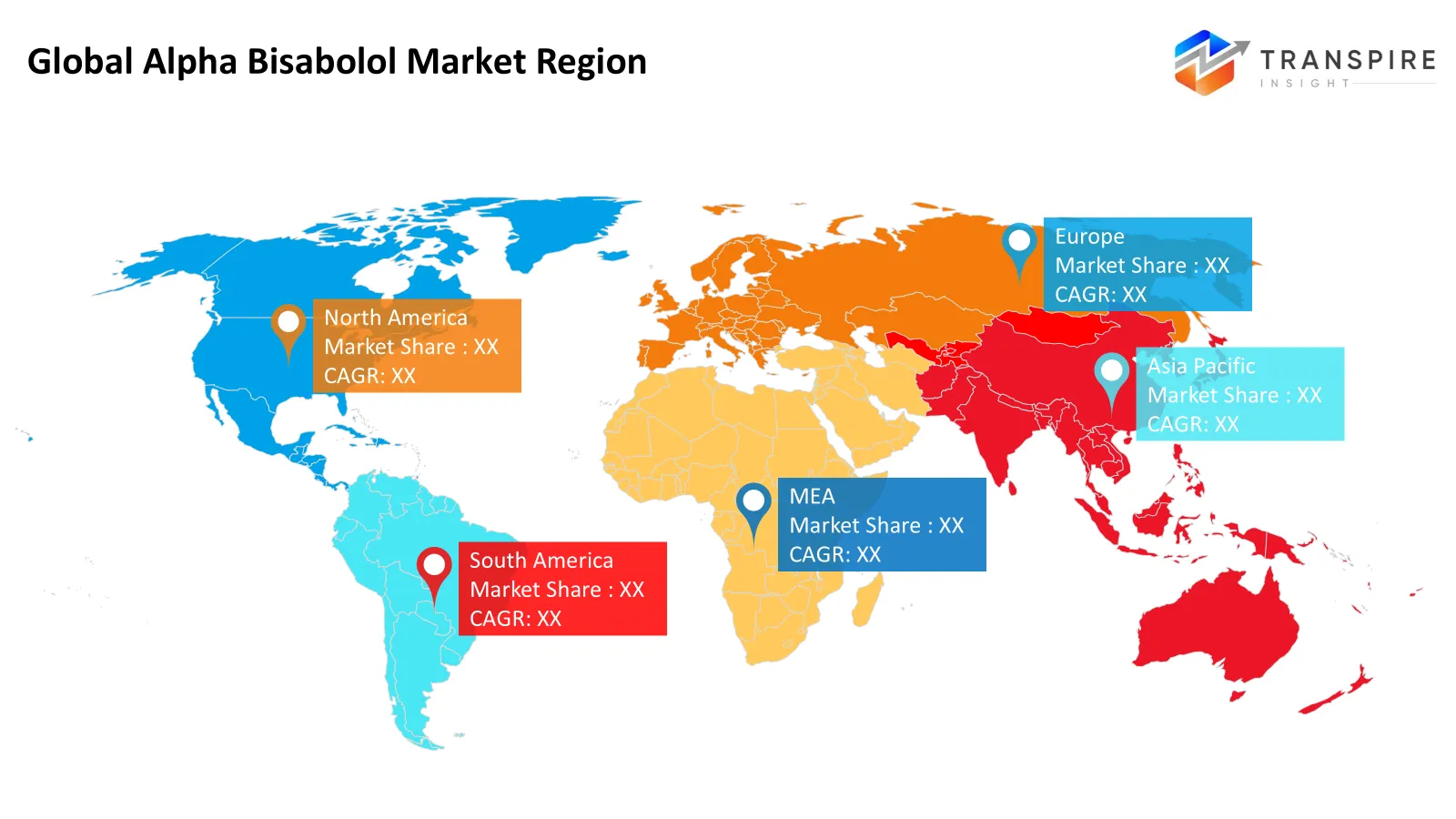
- Asia Pacific is the fastest-growing region with a CAGR of 11.4%.
- Europe is the dominating region in the Global Alpha Bisabolol Market, with a market share of 36%.
- North America has a 29% market share.
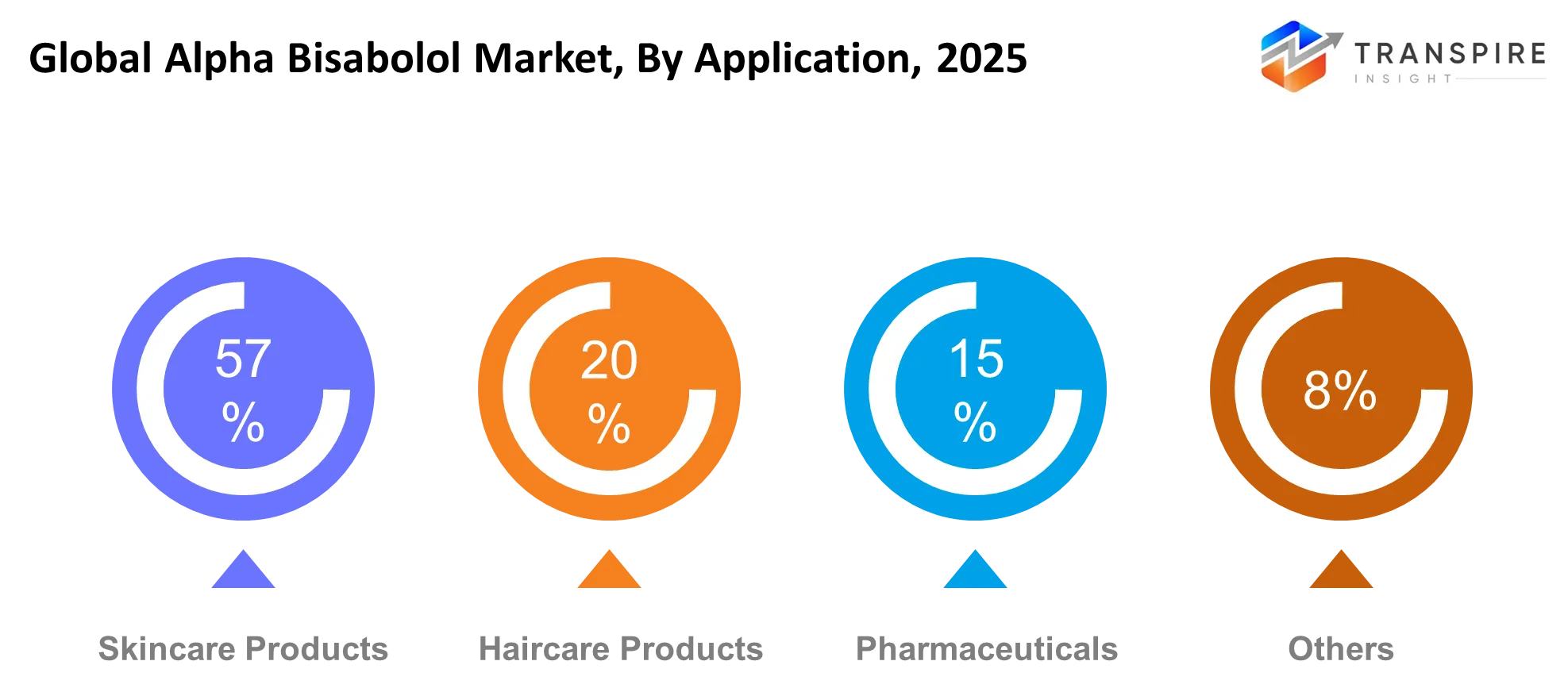
- Haircare products has 20% market share.
- Pharmaceuticals has 15% market share.
- Asia Pacific has a market share of 26%.
- ROW has a market share of 9%.
What are the Key Drivers, Restraints, and Opportunities in the Global Alpha Bisabolol Market?
Drivers
Numerous drivers are leading the market in the Global Alpha Bisabolol Market. With consumers increasingly prioritizing natural and gentle ingredients, Alpha Bisabolol's anti-inflammatory and soothing properties make it a sought-after component in products like moisturizers, serums, and sunscreens. BASF SE introduced its “Beyond Beauty: Authentic+” concept at In-Cosmetics Global 2026, highlighting Plantigenix Bisabolol, a biotechnologically produced alpha-bisabolol ingredient. The launch integrates sustainability-focused innovation and responds to growing consumer concerns about AI-generated beauty standards by promoting authentic, skin-health-driven personal care solutions. In April 2026, In April 2026, BASF SE launched its “Beyond Beauty: Authentic+” concept at In-Cosmetics Global 2026, highlighting Plantigenix™ Bisabolol, a biotechnologically produced alpha-bisabolol ingredient. The launch integrates sustainability-focused innovation and responds to growing consumer concerns about AI-generated beauty standards by promoting authentic, skin-health-driven personal care solutions.
Restraints
The Global Alpha Bisabolol Market faces growth limitations due to the restricted availability of Candeia tree raw materials and high extraction and purification costs. These challenges persist because sustainable harvesting regulations limit supply, while pharmaceutical and cosmetic industries require high-purity products, making production expensive and creating long-term structural sourcing constraints.
Opportunity
Biotechnology-based production and AI-assisted formulation development can unlock future growth in the Global Alpha Bisabolol Market. For example, European investments in fermentation-derived bisabolol and the use of machine-learning tools for ingredient optimization are improving scalability, reducing dependence on forest resources, and enabling new applications in advanced skincare and wound-care products.
What Has the Impact of Artificial Intelligence Been on the Global Alpha Bisabolol Market?
Artificial Intelligence (AI) is gradually transforming the Global Alpha Bisabolol Market by improving production efficiency, raw material management, and product development processes. Manufacturers are using AI-driven analytics to optimize extraction and purification operations, helping reduce waste, improve yield consistency, and lower production costs. Automated monitoring systems can track processing parameters in real time, allowing producers to maintain the high purity standards required for cosmetic and pharmaceutical applications.
AI is also strengthening predictive capabilities across the supply chain. Machine-learning models analyze environmental data, harvesting patterns, and raw material availability to forecast potential supply disruptions, particularly for Candeia-derived bisabolol. These insights help companies make better sourcing decisions and improve inventory planning. In April 2026, Givaudan Active Beauty and Haut.AI launched AI-powered skin analysis and SkinGPT simulation technologies at In-Cosmetics Global 2026. The platform enables personalized ingredient recommendations and predictive formulation development, helping cosmetic manufacturers optimize active ingredients such as alpha bisabolol for targeted skincare applications.
Key Market Trends:
- Fermentation-derived bisabolol is gradually replacing dependence on Candeia tree extraction.
- AI-powered formulation tools accelerating cosmetic ingredient development cycles.
- Traceability requirements are increasing the adoption of digitally monitored sourcing networks.
- Premium skincare brands are shifting toward scientifically validated active ingredients.
- Sustainable certification is becoming a key factor in supplier selection.
- Pharmaceutical companies are exploring bisabolol for advanced wound-care formulations.
- Green chemistry investments support cleaner extraction and purification processes.
- Manufacturers are increasingly adopting automated quality-control and purity-testing systems.
- Ingredient innovation is moving from natural extraction toward biotechnology platforms.
- Regional production hubs emerging in the Asia-Pacific to strengthen supply resilience.
Global Alpha Bisabolol Market Segmentation
By Type
Bisabolol Natural Alpha Bisabolol, with its high acceptance levels in premium cosmetics and personal care products, holds sway in the type segment. With consumers increasingly wanting to use plant-based ingredients, clean label products, and sustainable beauty products, manufacturers are looking for naturally derived bisabolol. Additionally, it is well-known for its beneficial effects in soothing skin, which contributes to its popularity.
The fastest growing type segment is the Organic Bisabolol with a CAGR of 10.6%. It is fuelled by the growing demand for certified organic cosmetics and environmentally friendly ingredients. Beauty companies are broadening their lines of organic products to fit the demanding requirements of certification organizations and transparency, traceability, and sustainability by consumers in beauty formulations.
The other Type Sub-Segments, including Other Synthetic Alpha Bisabolol, Cosmetic-grade Bisabolol, Pharmaceutical-grade Bisabolol, High-purity Bisabolol, and Others, are also growing in importance due to their cost-efficiency in production, medical applications, and unique high-performance formulations.
By Application
Skincare Products is the major application segment with 57% market share. The soothing, anti-inflammatory, and skin conditioning properties of alpha bisabolol make it a popular addition to moisturizers, anti-aging creams, sunscreens, and sensitive-skin products. Its position in the market remains strong, with premium skin care innovation continuing.
Functional Cosmetics are the fastest-growing application category, as consumers are more and more interested in products that offer cosmetic and therapeutic effects. Alpha bisabolol is being used in high-end formulations to aid the repair of skin, reduce redness, protect the skin barrier, and optimize skin health in the long term.
Specialized wellness, therapeutic, and personal care applications of Haircare Products, Pharmaceuticals, Aromatherapy, and others help drive the growth of the market.
To learn more about this report, Download Free Sample Report
By End-User
The end-user market is dominated by Cosmetic Manufacturers, as they are the main customers of alpha bisabolol in skin care, beauty, and personal care products. The global cosmetics industry continues to benefit from strong utilization, with constant innovations, the use of premium ingredients, and demand for sensitive-skin solutions.
Considering the growth of personal care brands, companies are more and more introducing clean label, natural, and multifunctional products to the market. Direct-to-consumer beauty brands and high-quality wellness lines are driving the growth of alpha bisabolol use in a wide range of personal-care products.
Pharmaceutical Companies and Others contribute to demand through therapeutic formulations, medicated skin care products, and specialized healthcare applications.
By Form
Liquid Bisabolol is the most popular formulation because it can be easily added to creams, lotions, serums, and emulsions. It is very compatible with cosmetic formulations, which makes its production easier and allows for even distribution of active ingredients in a variety of personal care products.
As the manufacturers are looking for higher potency ingredients in their premium products for skin care and medicine, the Concentrated Extracts segment is emerging as the fastest-growing form segment. The extracts are used for specific applications, formulation efficiency, and to reduce the amount of ingredients used while retaining the desired performance properties.
What are the Key Use Cases Driving the Global Alpha Bisabolol Market?
The key application area for the Global Alpha Bisabolol Market is its extensive application in skincare and personal care products. It is used in skin care products, such as moisturizers, serums, sunscreens, and sensitive skin products, due to its soothing, anti-inflammatory, and skin-calming properties. Consuming the product for cosmetic purposes remains a driving force for its use.
Alpha bisabolol is also used in haircare, oral care, and pharmaceutical formulations. It is used by manufacturers to increase the effectiveness of the products, decrease irritation, and increase the overall experience for the consumer in wellness products.
New applications are advanced wound-care products, dermatological products, and clean-label formulations. The growing demand for plant-based ingredients and multifunctional bioactive compounds is also fostering their application in the development of new cosmetic and health products.
Report Metrics
|
Report Metrics |
Details |
|
Market size value in 2025 |
USD 27.45 Billion |
|
Market size value in 2026 |
USD 28.74 Billion |
|
Revenue forecast in 2033 |
USD 39.65 Billion |
|
Growth rate |
CAGR of 4.70% from 2026 to 2033 |
|
Base year |
2025 |
|
Historical data |
2021 - 2024 |
|
Forecast period |
2026 - 2033 |
|
Report coverage |
Revenue forecast, competitive landscape, growth factors, and trends |
|
Regional scope |
United States; Canada; Mexico; United Kingdom; Germany; France; Italy; Spain; Denmark; Sweden; Norway; China; Japan; India; Australia; South Korea; Thailand; Brazil; Argentina; South Africa; Saudi Arabia; United Arab Emirates |
|
Key company profiled |
Symrise, BASF, Givaudan, DSM-Firmenich, Croda International, Solabia Group, Kao Corporation, Sabinsa, Lucas Meyer Cosmetics, Clariant, Indena, Provital Group, Infinitec Activos, Evonik, Beraca. |
|
Customization scope |
Free report customization (country, regional & segment scope). Avail customized purchase options to meet your exact research needs. |
|
Report Segmentation |
By Type (Natural Alpha Bisabolol, Synthetic Alpha Bisabolol, Cosmetic-grade Bisabolol, Pharmaceutical-grade Bisabolol, Organic Bisabolol, High-purity Bisabolol, Others); By Application (Skincare Products, Haircare Products, Pharmaceuticals, Aromatherapy, Functional Cosmetics, Others); By End-User (Cosmetic Manufacturers, Pharmaceutical Companies, Personal Care Brands, Others); By Form (Liquid Bisabolol, Powder Bisabolol, Concentrated Extracts, Others). |
Which Regions are Driving the Global Alpha Bisabolol Market Growth?
Europe holds the dominating position in the Global Alpha Bisabolol Market, commanding a 36% share of the global sector. This regional supremacy is primarily driven by a strong, widespread consumer preference for clean-label and sustainable cosmetics. A highly rigorous regulatory framework managed by the European Chemicals Agency enforces strict chemical safety standards, forcing manufacturers to substitute synthetic additives with natural alternatives. BASF launched Plantigenix Bisabolol at the in-cosmetics Global 2026 event in Paris, France. The biotechnology-derived, high-purity (-)-α-bisabolol was launched to meet growing European demand for sustainable and natural cosmetic ingredients while reducing dependence on traditional plant sources.
North America firmly secures the second-largest market position with a 29% market share. While Europe is heavily steered by stringent regulatory mandates, the North American market relies more on voluntary consumer-led movements and extensive corporate brand positioning. Additionally, massive, continuous research and development investments from domestic pharmaceutical companies exploring bioactive formulations maintain a highly predictable, lucrative purchasing volume. Archive Market Research published its α-Bisabolol Strategic Roadmap, highlighting strong growth in North America driven by rising demand for natural skincare ingredients and sustainable sourcing initiatives.
The Asia-Pacific region represents the fastest-growing market segment, exploding at an impressive CAGR of 11.4%. This drastic acceleration is a recent result of explosive regional urbanization and a massive influx of middle-class consumers actively adopting multi-step, premium beauty routines. The launch of Planntigenix Bisabolol supports a sustainable and high-purity bisabolol supply for the increasing Asia-Pacific skincare market. In April 2026, BASF introduced Plantigenix Bisabolol, a biotechnologically produced bisabolol ingredient, at In-Cosmetics Global 2026. The launch strengthens sustainable and high-purity bisabolol supply for the growing Asia-Pacific skincare and personal care market.
To learn more about this report, Download Free Sample Report
Who are the Key Players in the Global Alpha Bisabolol Market and how do they Compete?
The market for alpha bisabolol is competitive, with intense competition stemming from the requirement for cosmetics and pharmaceuticals to be "clean-label," meaning they are free of chemicals that might negatively impact the skin. Suppliers vie for purity, chemistry vs. natural product, and transparency of the supply chain. Chemical conglomerates, big flavor and fragrance firms, and specialized extractors of botanicals are aggressively pitching themselves on the extraction process, ranging from harvesting candeia trees to more sophisticated microbial fermentation, and securing volatile global supplies.
The innovation and cost strategy of Company Strategies BASF and Symrise is multipronged, with high-volume synthetic production coupled with sustainable natural production monitored with AI in Brazil, which makes them the dominant players in mass-market distribution. Givaudan, DSM-Firmenich, and Evonik adopt an innovation approach with a special emphasis on biotech differentiation. They learn how to master and produce bio-fermented bisabolol with a purity level of more than 99%, and they use innovative bio-encapsulation delivery systems to grow through exclusive licensing.
On the other hand, Clariant (Lucas Meyer Cosmetics), Croda, and Solabia pursue a niche approach in the area of high-quality functional skin care. They distinguish themselves by releasing clinically proven and synergistic active formulas specifically formulated for sensitive and baby products. Sabinsa, Indena, Provital, and Beraca are specialised players that rely on a niche, very local, differentiating strategy by focusing on traceable, ethical, and bio-diverse botanical extractions. They are expanding their footprints by making direct-to-brand partnerships and certifying their products with a high standard of clean labels.
Global Alpha Bisabolol Market Companies
- Symrise
- BASF
- Givaudan
- DSM-Firmenich
- Croda International
- Solabia Group
- Kao Corporation
- Sabinsa
- Lucas Meyer Cosmetics
- Clariant
- Indena
- Provital Group
- Infinitec Activos
- Evonik
- Beraca
Recent Development News
In January 2026, Shiseido introduced a mist-type suncare product developed using its VOYAGER AI-powered formulation platform. The system analyzes more than 500,000 formulation data points and generates thousands of ingredient combinations, demonstrating how AI is accelerating the development of skincare formulations that can incorporate active ingredients such as alpha bisabolol.
(Source- https://www.specialchem.com)
In April 2026, Givaudan Active Beauty partnered with Haut.AI at In-Cosmetics Global 2026 to showcase AI-powered skin analysis, SkinGPT simulations, and personalized ingredient recommendation technologies. The platform uses real-time diagnostics and generative AI to optimize active skincare ingredient selection, supporting the development of high-precision formulations containing soothing ingredients such as alpha bisabolol.
(Source- https://www.gcimagazine.com)
What Strategic Insights Define the Future of the Global Alpha Bisabolol Market?
With the Global Alpha Bisabolol Market moving away from volatile and wild-harvested plant extracts to more controlled lab-grown alternatives, this product is quickly changing. Due to both the strict clean label laws and the ESG (Environmental, Social, and Governance) requirements, microbial bio-fermentation is becoming ‘normal’ in the industry. This change helps to keep the biologically active (-)-α form, while avoiding the deforestation dangers of Brazilian candida trees.
The advanced delivery systems (liposomal encapsulation or nanocarrier micellar solutions) are high-value opportunities. Stabilisation of alpha bisabolol against oxidation, enhanced permeation through the skin, and wide new opportunities in clinical dermatology for its treatment of eczema and rosacea are all made possible by the engineering of these systems.
Ingredients companies need to embark on biotech-enabled scalability and establish multi-year relationships with mainstream dermo-cosmetics companies. Suppliers that focus on high-purity, free from farnesol, fermented grades, will be better protected from agricultural supply shocks and be able to secure premium market share.
Key Global Alpha Bisabolol Market Segmentation
By Type
- Natural Alpha Bisabolol
- Synthetic Alpha Bisabolol
- Cosmetic-grade Bisabolol
- Pharmaceutical-grade Bisabolol,
- Organic Bisabolol
- High-purity Bisabolol
- Others
By Application
- Skincare Products
- Haircare Products
- Pharmaceuticals
- Aromatherapy
- Functional Cosmetics
- Others
By End-User
- Cosmetic Manufacturers
- Pharmaceutical Companies
- Personal Care Brands
- Others
By Form
- Liquid Bisabolol
- Powder Bisabolol
- Concentrated Extracts
- Others
Regional Outlook
North America
- United States
- Canada
- Mexico
Europe
- Germany
- United Kingdom
- France
- Spain
- Italy
- Rest of Europe
Asia Pacific
- Japan
- China
- Australia & New Zealand
- South Korea
- India
- Rest of Asia Pacific
South America
- Brazil
- Argentina
- Rest of South America
Middle East & Africa
- Saudi Arabia
- United Arab Emirates
- South Africa
- Rest of the Middle East & Africa
Frequently Asked Questions
Find quick answers to common questions.
The global Global Alpha Bisabolol Market size was valued at USD 27.45 billion in 2025 and is poised to reach USD 39.65 billion by 2033, expanding at a 4.70% CAGR.
Key segments for the Global Alpha Bisabolol Market are By Type (Natural Alpha Bisabolol, Synthetic Alpha Bisabolol, Cosmetic-grade Bisabolol, Pharmaceutical-grade Bisabolol, Organic Bisabolol, High-purity Bisabolol, Others); By Application (Skincare Products, Haircare Products, Pharmaceuticals, Aromatherapy, Functional Cosmetics, Others); By End-User (Cosmetic Manufacturers, Pharmaceutical Companies, Personal Care Brands, Others); By Form (Liquid Bisabolol, Powder Bisabolol, Concentrated Extracts, Others).
The Global Alpha Bisabolol Market growth is primarily driven by rising consumer demand for natural skincare ingredients, along with increasing use of alpha bisabolol in cosmetics and personal care products due to its soothing and anti-inflammatory properties.
The global Global Alpha Bisabolol Market is led by major manufacturers Symrise, BASF, Givaudan, DSM-Firmenich, Croda International, Solabia Group, Kao Corporation, Sabinsa, Lucas Meyer Cosmetics, Clariant, Indena, Provital Group, Infinitec Activos, Evonik, and Beraca.
Europe holds 36% of the global Global Alpha Bisabolol Market, driven by strong demand for natural and sustainable cosmetic ingredients, a well-established personal care industry, strict product quality standards, and increasing consumer preference for clean-label skincare and beauty products.
Commercial opportunities in the Global Alpha Bisabolol Market include biotechnology-based production, AI-assisted ingredient optimization, expansion of advanced skincare and wound-care applications, and sustainable fermentation-derived bisabolol solutions that improve scalability while reducing dependence on natural forest resources.
- Symrise
- BASF
- Givaudan
- DSM-Firmenich
- Croda International
- Solabia Group
- Kao Corporation
- Sabinsa
- Lucas Meyer Cosmetics
- Clariant
- Indena
- Provital Group
- Infinitec Activos
- Evonik
- Beraca
About the Authors

Pankaj Ghogare Patil
I am Pankaj Ghogare Patil, a Senior Research Analyst at Transpire Insight, specializing in the Pharmaceutical, Chemicals & Materials, Healthcare IT, and Biotechnology industry. My expertise lies in conducting comprehensive market research, analyzing industry trends, evaluating competitive landscapes, and translating complex data into actionable insights. At Transpire Insight, I closely follow emerging technologies, regulatory developments, and market innovations to create accurate, well-researched, and informative content that helps businesses and professionals make informed decisions. I am committed to producing credible, evidence-based articles that reflect industry best practices while making technical topics accessible and valuable for a broad audience.

Chakradhar Khansole
Chakradhar serves as the Research Director at Transpire Insight, bringing over 8 years of experience in technology, innovation, and strategic market intelligence. He specializes in transforming complex market data into actionable business insights that enable organizations to make informed, growth-oriented decisions. Recognized for his strategic vision and analytical expertise, Chakradhar leads high-impact research initiatives, delivering comprehensive market assessments, competitive intelligence, and forward-looking industry analysis.
Recently Published Reports
-
May 2026
Healthcare Polymer Packaging Market
Healthcare Polymer Packaging Market Size, Share & Analysis Report By Packaging Type (Syringes, IV Bottles and Pouches, Clamshells, Blisters, Bottles & Jars, Containers, Tubes, IV Parental Packaging, Others), By Type (Regulated, Non-regulated), By Polymer Type (LDPE (Low-Density Polyethylene), HDPE (High-Density Polyethylene), Homo-polymer (Homo), Random Copolymer (Random), Block Copolymer (Block), PET, Polystyrene, Polyvinyl Chloride, Polyamide/EVOH, Others), and Geography (North America, Europe, Asia-Pacific, Middle East and Africa, South and Central America), 2021 - 2031
-
Apr 2026
Hydrophilic Tape (Waterstop) Market
Hydrophilic Tape (Waterstop) Market Size, Share & Analysis Report By Type (Bentonite-Based Hydrophilic Tape, Rubber-Based Hydrophilic Tape), By Application (Residential Buildings, Commercial Buildings, Infrastructure Projects), and Geography (North America, Europe, Asia-Pacific, Middle East and Africa, South and Central America), 2021 - 2031
-
Apr 2026
Metalens Market
Metalens Market Size, Share & Analysis Report By Type (Visible Light Metalens, and Infrared Metalens), By Application (Consumer Electronics, Automotive Electronics, Industrial, Medical, and Others), and Geography (North America, Europe, Asia-Pacific, Middle East and Africa, South and Central America), 2021 - 2031
-
Apr 2026
PBT Resin Market
PBT Resin Market Size, Share & Analysis Report By Type (Reinforced PBT Resin, Unreinforced PBT Resin), By Processing Method (Injection Molding, Extrusion, Blow Molding, Others), By End-User (Automotive, Electrical & Electronics, Consumer Appliances, Industrial Machinery, Medical Devices, Packaging, Others), and Geography (North America, Europe, Asia-Pacific, Middle East and Africa, South and Central America), 2021 - 2031