

Global Air Care Market Size & Forecast:
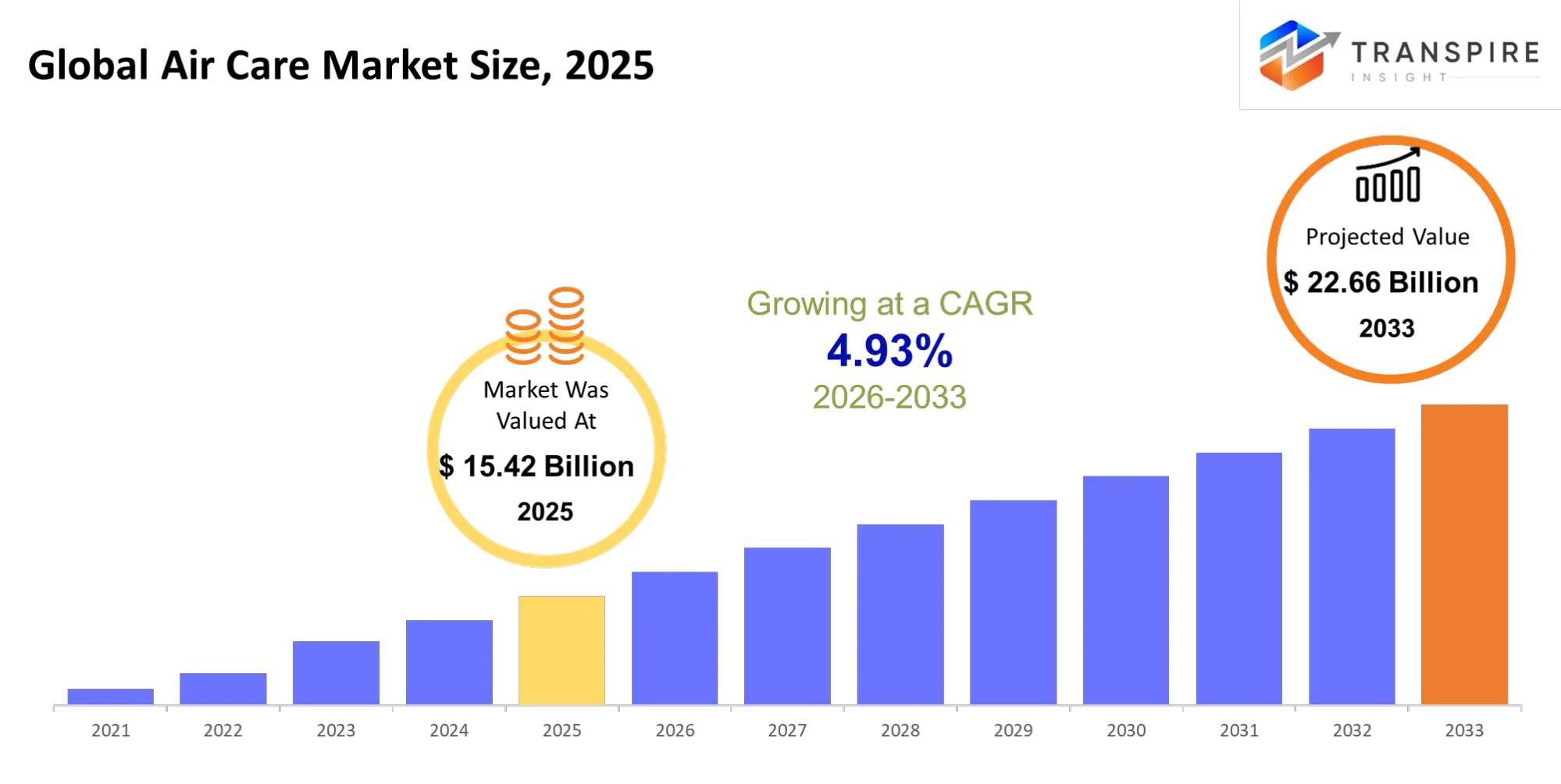
- Global Air Care Market Size 2025: USD 15.42 Bn
- Global Air Care Market Size 2033: USD 22.66 Bn
- Global Air Care Market CAGR: 4.93%
- Global Air Care Market Segments: By Type (Air Fresheners, Scented Candles, Aroma Diffusers, Odor Neutralizers, Essential Oil Air Care Products, Gel-based Air Care Products, Others); By Application (Residential Use, Commercial Spaces, Automotive Air Care, Hospitality Sector, Healthcare Facilities, Others); By End-User (Households, Offices, Hotels & Restaurants, Healthcare Providers, Others); By Distribution (Supermarkets, Online Retail, Specialty Stores, Convenience Stores, Others)
Global Air Care Market Summary
The Global Air Care Market size is estimated at USD 15.42 Billion in 2025 and is anticipated to reach USD 22.66 Billion by 2033, growing at a CAGR of 4.93% from 2026 to 2033. Beyond just covering up unpleasant odors with basic aerosol sprays, the industry now engineers ambient scents designed to actively neutralize airborne bacteria and subtly influence mood. The landscape has shifted significantly over the past few years. Extended pandemic lockdowns acted as a real-world trigger, leaving consumers highly sensitive to stuffy indoor environments. That shared experience sparked a permanent structural shift in demand. Buyers are actively stepping away from harsh synthetic chemicals, leaning heavily toward natural, essential oil-based diffusers linked to personal wellness. Because households and commercial property managers now directly associate a fresh-smelling room with actual physical hygiene and mental clarity, they are highly willing to trade up. As a result, consumers are leaving behind low-cost manual sprays in favor of automated, continuous fragrance systems that carry higher margins and require zero daily effort.
Key Market Insights
The Global Air Care Market has pretty much outgrown the old "spray and mask" approach, leaning heavily into everyday wellness. Facility managers and homeowners alike now treat indoor scent as a core part of mental focus and hygiene, passing over standard aerosols for automated, natural setups.
- North America easily controls the largest slice of the pie at 39%. You mostly see this driven by high household budgets pouring into premium, multi-room diffusers that link straight into existing smart home systems.
- Asia Pacific is expanding faster than anywhere else, hitting a 9.3% CAGR. It really comes down to a rising urban middle class wanting continuous fragrance solutions to keep their compact, modern apartments feeling fresh.
- Europe sits comfortably at 28% market share, pushed along by strict indoor air quality rules and shoppers who specifically hunt for eco-friendly labels. The Rest of the World covers the remaining 9% as retail networks slowly build out in newer territories.
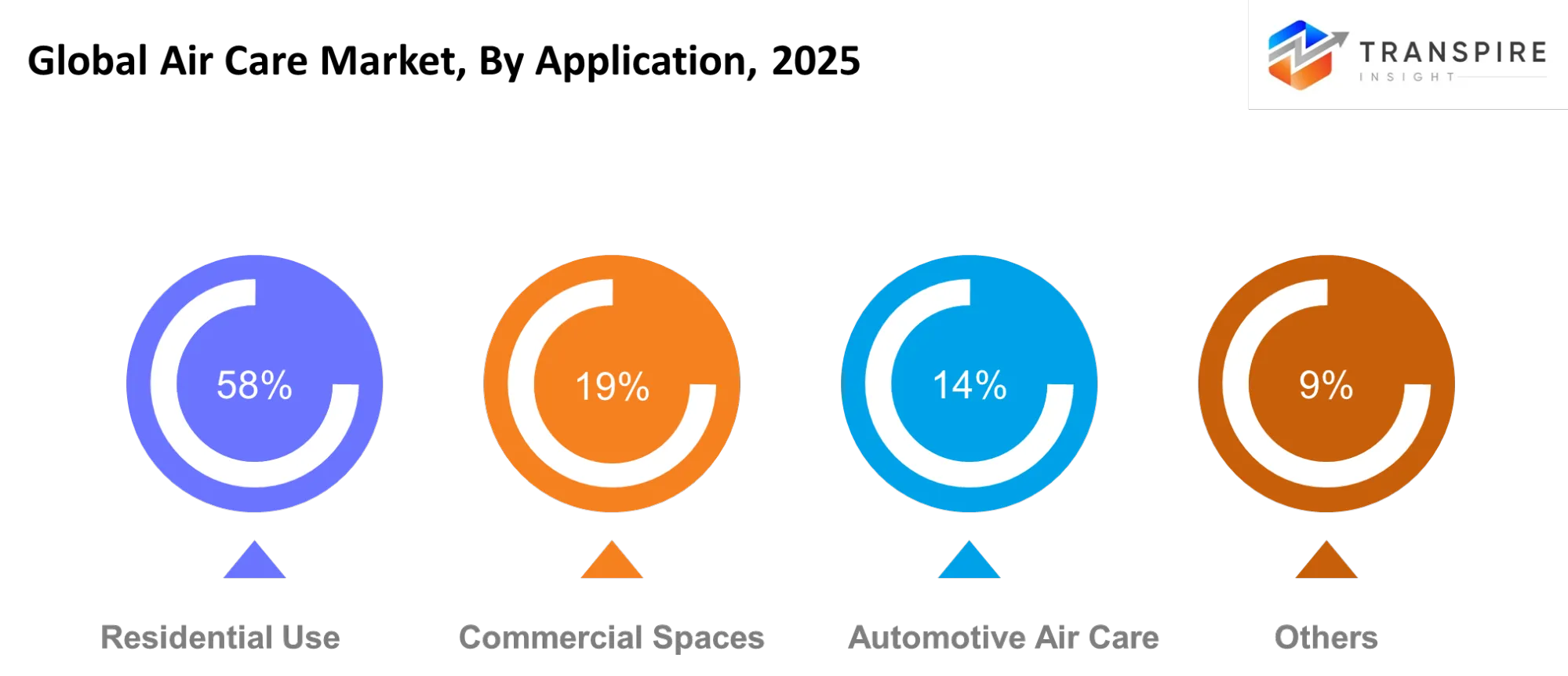
- Looking at applications, residential use eats up the majority of demand with a 58% share. People are basically rethinking their homes, treating them as personal wellness retreats rather than just a place to sleep after work.
- Essential oil products are surging ahead of other types with an 8.5% CAGR. It points to a clear behavioral swap—buyers are dropping harsh chemical sprays and grabbing plant-based aromatherapy options instead.
- Commercial spaces account for another 19%. A lot of businesses rely heavily on scent marketing now to subtly improve how visitors feel walking through hotel hallways, corporate lobbies, and retail floors.
- Automotive products hold a steady 14% slice. Commuters and ride-share drivers make up the bulk of these buyers, since they need long-lasting vent clips and gel blocks to keep those tiny cabin spaces clean day in and day out.
- Big names like SC Johnson, Procter & Gamble, and Reckitt Benckiser are throwing serious R&D money at smart-home tech. They keep rolling out automated, app-connected dispensers that let you tweak the scent strength or schedule right from your phone.
- On the higher end, players like Diptyque and Aroma360 are completely reshaping luxury expectations. By selling high-end candles and scent machines that wire straight into your HVAC, they manage to turn basic air care into actual home decor.
What are the Key Drivers, Restraints, and Opportunities in the Global Air Care Market?
Driver
The biggest factor pushing growth right now is the move away from simply covering up bad smells toward continuous, wellness-driven room scenting. Spending so much time stuck inside during the pandemic was a real wake-up call for people regarding stale indoor air. Because of that, buyers are ditching those cheap aerosol cans. Instead, they want automated, smart diffusers that keep a room smelling fresh without needing any daily attention. When manufacturers convince a user to buy this kind of premium hardware, they secure a steady stream of repeat purchases for the refill cartridges.
Restraint
Tougher environmental rules and a noticeable consumer pushback against synthetic chemicals are acting as serious speed bumps. For years, the industry leaned on cheap, petroleum-based Volatile Organic Compounds (VOCs) to keep aerosols and gels affordable. But with governments tightening indoor air quality laws and shoppers looking closely at ingredient labels, those older chemical formulas are turning into a real liability. The problem is that switching a whole supply chain over to natural, plant-based essential oils drives up production costs. This leaves brands stuck trying to figure out if they should eat the profit loss or raise prices and risk losing their budget-conscious customers.
Opportunity
Commercial scenting systems that tie directly into a building’s HVAC network are a huge, largely ignored growth area. Rather than sticking a basic plug-in on the lobby wall, the next step up involves smart diffusers wired straight into the central ventilation. By pairing this with basic occupancy sensors, these setups can actually tweak the amount of natural fragrance they push out based on how crowded a room gets. If luxury real estate developers and high-end hotels start treating these centralized scent systems as standard fixtures, it creates a highly reliable B2B pipeline for manufacturers to lock in long-term supply contracts.
What Has the Impact of Artificial Intelligence Been on the Global Air Care Market?
Artificial intelligence is pushing the air care industry way past basic wall plug-ins, shifting the focus toward responsive, sensor-based setups. Rather than just running on a standard 30-minute timer, today's smart diffusers actually read the room. They track variables like temperature and foot traffic to adjust scent release on the fly, keeping the fragrance at exactly the right level.
These connected setups also bring practical predictive tools to the table. The software learns usage habits to predict when a cartridge will run dry, triggering automated refill orders. On the commercial side, facility managers can monitor hundreds of diffusers across a hotel from one dashboard. This cuts out the grunt work of physically checking units and stops teams from wasting expensive oils.
There is a catch, though, mostly around hardware integration costs. Retrofitting an older building’s central HVAC to talk to AI-driven diffusers usually requires expensive, custom IT work, which easily prices smaller businesses out. For example, Pura recently expanded its smart diffuser platform using adaptive diffusion. By reading real-time room temperatures, the device automatically scales the fragrance release up or down, maintaining a consistent scent without burning through premium oils too fast.
Key Market Trends
The air care sector finally outgrew the old "spray and mask" model. Both homeowners and commercial property managers now treat indoor fragrance as a direct extension of wellness, aggressively swapping out synthetic aerosols for smart, clean-label systems.
- App-managed diffusers transitioned from a niche luxury to a baseline appliance since 2021. Consumers simply assume their room fragrance will sync with the same platforms running their smart lighting.
- Over the past three years, legacy suppliers quietly overhauled their core formulas. They had to pull synthetic VOCs out of production as everyday shoppers became uncompromising about using plant-derived oils.
- Between 2023 and 2025, commercial HVAC scenting breached the standard corporate market. Office buildings began installing centralized diffusers to subtly manipulate workspace mood as employees returned on-site.
- Masking stale air with heavy florals became a major consumer pain point after the pandemic. In response, R&D dollars flooded into molecular odor tech that physically breaks down airborne bacteria.
- Direct-to-consumer subscriptions locked in as the primary revenue model heading into 2026. Companies realized hardware sales matter less than capturing the automated, "set and forget" refill behavior of modern buyers.
- Plastic waste became a serious liability around late 2023. To prevent eco-conscious buyers from defecting, brands aggressively rolled out refillable glass reservoirs and biodegradable scent pods.
- The marketing playbook completely flipped over the last 24 months. Brands practically erased "bathroom odors" from their ad copy, pivoting hard into selling "better sleep" and "mental clarity."
- Automotive air care saw a structural redesign throughout 2024 and 2025. Manufacturers specifically engineered heavy-duty, slow-release vent clips to survive the high passenger turnover of gig economy drivers.
Global Air Care Market Segmentation
By Type
Aroma diffusers and essential oil products act as the main growth engines right now, with essential oils running ahead at an 8.5% CAGR. Traditional aerosol sprays still carry a ton of historical volume, but they are steadily bleeding market share. The core growth logic here ties directly back to the wellness movement and the backlash against synthetic chemicals. Shoppers simply look at standard aerosol cans as indoor pollution. Instead, they are choosing smart diffusers that pump out plant-based oils automatically, delivering continuous scent without the manual effort. Looking down the road, normal spray cans will likely get pushed entirely into budget aisles and janitorial closets. This shift forces legacy manufacturers into a corner, making them pivot away from cheap VOCs and dump their R&D into smart hardware and botanical extraction.
By Application
Residential use easily anchors the market, pulling in a 58% share of overall demand. Commercial spaces and hospitality follow right behind as high-margin buyers, while automotive air care holds a steady 14% footprint. The massive residential share makes total sense. People treat their homes differently now, buying energizing citrus profiles for the home office and relaxing lavender for the bedroom. But the real B2B money lives on the commercial side. Hotels and corporate offices lean heavily on scent marketing to subtly relax guests or keep employees focused. Moving forward, this landscape is going to split right down the middle. Manufacturers have to build totally separate ecosystems: aesthetic, app-controlled plug-ins for homes, and heavy-duty, AI-monitored HVAC setups for property managers.
By End-User
Households drive the sheer volume of retail sales, but hotels and restaurants act as the heavy hitters for long-term contracts. Offices are also popping up as a surprisingly strong growth pocket. The logic here comes down to facility managers finally realizing that ambient scent dictates brand perception. If a luxury restaurant or corporate lobby smells like cheap bathroom cleaner, the visitor experience tanks instantly. They need invisible, continuous molecular odor neutralization. This change in how businesses view fragrance completely alters the supplier playbook. Instead of just shipping out pallets of gel blocks, air care brands have to act like consulting firms. They will be expected to design custom "signature scents" for hotel chains and bake hardware maintenance directly into multi-year B2B deals.
By Distribution
Supermarkets still hold the biggest historical footprint simply because they capture impulse buys during weekly grocery runs. But online retail is grabbing the premium market share and driving the highest growth. The logic here is built completely around the refill model. You just can't easily set up a recurring subscription in a grocery aisle. Selling online lets direct-to-consumer brands sell a smart diffuser once and lock the user into an automated monthly shipping schedule for their oil pods. It guarantees revenue and stops the buyer from switching brands. Looking to the future, physical supermarket shelves will likely shrink down to stock only basic odor neutralizers. The actual profit pool shifts entirely online, where companies can track device usage data to predict exactly when someone needs their next shipment.
What are the Key Use Cases Driving the Global Air Care Market?
People use air care differently at home now. It’s less about hiding cooking odors and entirely focused on daily wellness. Buyers run smart diffusers to push specific moods—dropping eucalyptus into the home office to stay sharp, or lavender to wind down.
In the commercial sector, businesses treat ambient fragrance as a pure branding tool. Boutique hotels and high-end retail shops wire custom scents right into their air conditioning. Catching a signature scent at the door makes the visitor experience feel instantly expensive.
The gig economy created a totally new automotive use case. Ride-share drivers can't survive back-to-back passengers using cheap cardboard trees. Instead, they buy heavy-duty, molecular vent clips engineered to actually destroy bad odors fast.
|
Report Metrics |
Details |
|
Market size value in 2025 |
USD 15.42 Billion |
|
Market size value in 2026 |
USD 16.18 Billion |
|
Revenue forecast in 2033 |
USD 22.66 Billion |
|
Growth rate |
CAGR of 4.93% from 2026 to 2033 |
|
Base year |
2025 |
|
Historical data |
2021 - 2024 |
|
Forecast period |
2026 - 2033 |
|
Report coverage |
Revenue forecast, competitive landscape, growth factors, and trends |
|
Regional scope |
United States; Canada; Mexico; United Kingdom; Germany; France; Italy; Spain; Denmark; Sweden; Norway; China; Japan; India; Australia; South Korea; Thailand; Brazil; Argentina; South Africa; Saudi Arabia; United Arab Emirates |
|
Key company profiled |
SC Johnson, Reckitt Benckiser, Procter & Gamble, Henkel, Godrej Consumer Products, Air Wick, Glade, Yankee Candle, Newell Brands, Farcent Enterprise, Kobayashi Pharmaceutical, Church & Dwight, Aroma360, Diptyque, S. C. Johnson Professional. |
|
Customization scope |
Free report customization (country, regional & segment scope). Avail customized purchase options to meet your exact research needs. |
|
Report Segmentation |
By Type (Air Fresheners, Scented Candles, Aroma Diffusers, Odor Neutralizers, Essential Oil Air Care Products, Gel-based Air Care Products, Others); By Application (Residential Use, Commercial Spaces, Automotive Air Care, Hospitality Sector, Healthcare Facilities, Others); By End-User (Households, Offices, Hotels & Restaurants, Healthcare Providers, Others); By Distribution (Supermarkets, Online Retail, Specialty Stores, Convenience Stores, Others) |
Which Regions are Driving the Global Air Care Market Growth?
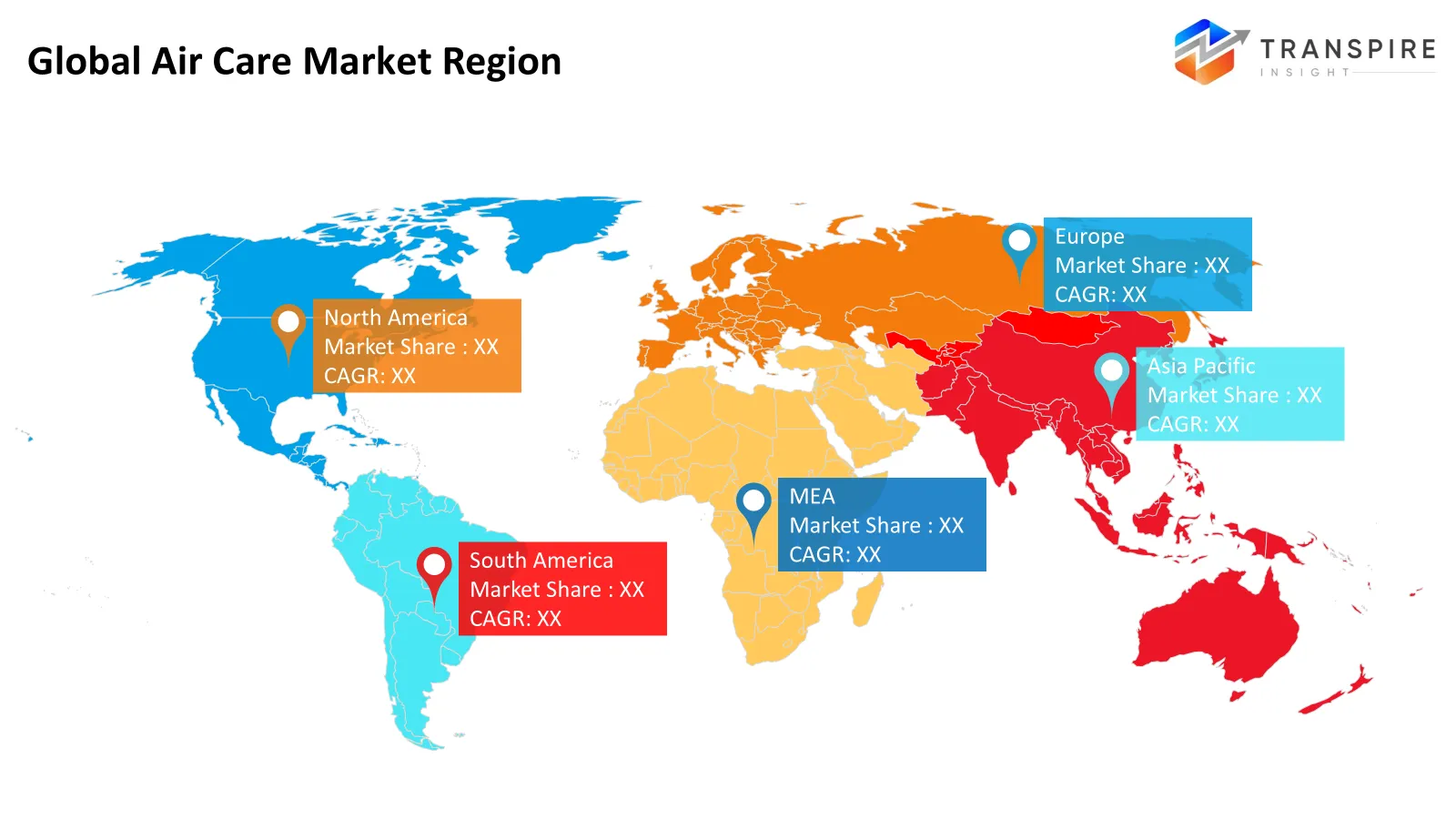
North America easily holds the top spot right now, taking up a 39% chunk of the global market. This dominance really just comes down to a buying culture that treats premium indoor fragrance as a mandatory wellness expense rather than a luxury. The retail setup here makes it incredibly easy for brands to win, especially with direct-to-consumer subscriptions dropping refill pods right on suburban doorsteps. You also have buyers actively hooking these WiFi-enabled diffusers directly into their existing smart home setups, totally automating the experience.
In October 2025, Utah-based smart fragrance company Pura partnered with lifestyle brand Studio McGee to drop exclusive, app-controlled scent cartridges. This move perfectly targets American shoppers who want to blend high-end home decor with automated fragrance tech, locking them into monthly refill subscriptions.
Europe sits in a very stable second place, grabbing a 28% slice of total demand. While American buyers chase smart home integration, European growth is almost completely dictated by aggressive environmental rules and a massive push for clean ingredient labels. Strict policies like REACH act as a stabilizing wall, forcing local suppliers to abandon synthetic chemicals and build product lines entirely around plant-based, hypoallergenic oils. On top of that, the region leans on a massive luxury hospitality sector that consistently buys up bespoke commercial scents to keep their hotel lobbies smelling premium.
In February 2026, Paris-based Diptyque expanded its exclusive lineup of electric wall diffusers across the European market. By pairing high-grade botanical extracts with minimalist hardware, they hit exactly what local buyers want—eco-friendly, aesthetic air care without the harsh aerosol chemicals.
Asia Pacific is moving faster than anywhere else, hitting an impressive 9.3% CAGR and capturing 24% of the market. Buying habits shifted hard over the last few years as a growing middle class finally ditched old-school, smoky incense for modern electric diffusers. Heavy urban air pollution also triggered a major behavioral flip, with shoppers suddenly hunting for products that actually neutralize odors and kill airborne bacteria. The real long-term money sits in the commercial real estate boom, where developers are pre-wiring centralized scent systems into new luxury malls to instantly boost brand prestige.
In March 2026, Godrej Consumer Products Limited pushed its "Godrej aer matic" line hard, rolling out automated, battery-powered room fresheners built specifically for small urban apartments. This product push perfectly targets a massive middle class that is actively trading up from cheap manual sprays to hands-free fragrance systems.
Who are the Key Players in the Global Air Care Market and how do they Compete?
Competition in air care essentially comes down to two totally different playbooks. You have giant consumer brands fighting a brutal price war in the grocery aisles. Then you have tech-focused startups just bypassing physical retail altogether, hooking buyers on smart devices and monthly refill pods.
Procter & Gamble plays the volume grocery game but uses tech to avoid racing to the bottom on price. Instead of pushing cheap masking sprays, they sell the actual chemistry behind Febreze, pitching molecular formulas that trap bad smells. To grow, they aggressively push shoppers away from basic aerosol cans and into proprietary plug-ins. Once a customer buys that wall unit, P&G guarantees themselves years of recurring refill sales.
Aroma360 takes a strict luxury niche approach, completely ignoring supermarkets. They stand out by selling cold-air diffusion hardware paired with scent profiles designed to copy five-star hotel lobbies. To expand, they took the heavy-duty HVAC scent systems they usually sell to commercial buildings and downsized them for residential living rooms. It is a smart crossover move that pulls wealthy homeowners straight into an expensive, automated monthly oil subscription.
Company List
- SC Johnson
- Reckitt Benckiser
- Procter & Gamble
- Henkel
- Godrej Consumer Products
- Air Wick
- Glade
- Yankee Candle
- Newell Brands
- Farcent Enterprise
- Kobayashi Pharmaceutical
- Church & Dwight
- Aroma360
- Diptyque
- S. C. Johnson Professional
Recent Development News
In January 2026, Yankee Candle inked a year-long deal with Reese's Book Club. The setup is pretty simple: they release a new limited-edition candle every quarter to match the club's current reading list. It is a really smart play to link ambient fragrance directly to reading and self-care. It basically guarantees repeat business from a huge, built-in audience of loyal readers. [https://www.prnewswire.com
In March 2026, Procter & Gamble rolled out "Tranquil Cyprus Coves" as the latest Febreze Scent of the Year. They actually used their AI-powered chemistry suite to design the formula. This move pushes the brand way past just masking bad smells. P&G is clearly going after buyers who want their living room to smell like a high-end vacation resort, rather than a basic cleaning product. [https://us.pg.com
In April 2026, Aroma360 hired The Brand Liaison to handle exclusive licensing for its Hotel Collection. This sets up a huge pivot for the company. They aren't just selling diffusers anymore. This deal lets them take those premium hotel scents and slap them onto entirely new product lines, jumping right into high-margin spaces like luxury car fresheners and body care. [https://www.licenseglobal.com=
What Strategic Insights Define the Future of the Global Air Care Market?
The Global Air Care Market is heading straight toward fully automated, health-driven ecosystems. In a few years, room scent will sync directly with smart home health metrics, adjusting automatically based on your daily schedule or sleep data.
But there is a major hidden risk here: subscription fatigue. Every brand right now is desperate to lock buyers into monthly refill shipments. Shoppers are getting totally burned out on managing recurring charges, meaning customer churn rates could unexpectedly spike if companies get too rigid.
The real emerging opportunity sits in hyper-personalization. The next wave of diffusers won't just pump out one pre-mixed scent. They will physically blend raw oils on the fly, reacting in real-time to biometric data like user stress levels.
To survive, brands need to drop the obsession with proprietary apps. The winning move is integrating hardware seamlessly into existing platforms like Apple HomeKit or Alexa to keep the user experience completely frictionless.
Global Air Care Market Segmentation:
By Type
- Air Fresheners
- Scented Candles
- Aroma Diffusers
- Odor Neutralizers
- Essential Oil Air Care Products
- Gel-based Air Care Products
- Others
By Application
- Residential Use
- Commercial Spaces
- Automotive Air Care
- Hospitality Sector
- Healthcare Facilities
- Others
By End-User
- Households
- Offices
- Hotels & Restaurants
- Healthcare Providers
- Others
By Distribution
- Supermarkets
- Online Retail
- Specialty Stores
- Convenience Stores
- Others
Regional Outlook
North America
- United States
- Canada
- Mexico
Europe
- Germany
- United Kingdom
- France
- Spain
- Italy
- Rest of Europe
Asia Pacific
- Japan
- China
- Australia & New Zealand
- South Korea
- India
- Rest of Asia Pacific
South America
- Brazil
- Argentina
- Rest of South America
Middle East & Africa
- Saudi Arabia
- United Arab Emirates
- South Africa
- Rest of the Middle East & Africa
Frequently Asked Questions
Find quick answers to common questions.
The Global Air Care Market size was valued at USD 15.42 Billion in 2025 and is poised to reach USD 22.66 Billion by 2033, expanding at a 4.93% CAGR.
Key segments for the Global Air Care Market are Type (Air Fresheners, Scented Candles, Aroma Diffusers, Odor Neutralizers, Essential Oil Air Care Products, Gel-based Air Care Products, Others), Application (Residential Use, Commercial Spaces, Automotive Air Care, Hospitality Sector, Healthcare Facilities, Others), End-User (Households, Offices, Hotels & Restaurants, Healthcare Providers, Others), and Distribution (Supermarkets, Online Retail, Specialty Stores, Convenience Stores, Others).
Growth is primarily driven by the rising consumer focus on indoor daily wellness, a massive shift away from synthetic chemical aerosols toward plant-based essential oils, increasing adoption of app-controlled smart diffusers, and the rapid expansion of molecular odor-neutralizing tech across both residential and commercial real estate.
The global market is led by major manufacturers including SC Johnson, Reckitt Benckiser, Procter & Gamble, Henkel, Godrej Consumer Products, Air Wick, Glade, Yankee Candle, Newell Brands, Farcent Enterprise, Kobayashi Pharmaceutical, Church & Dwight, Aroma360, Diptyque, and S. C. Johnson Professional.
North America holds a dominating 39% share of the global market. This dominance is heavily influenced by a deeply ingrained consumer culture that treats premium ambient fragrance as a mandatory wellness expense, combined with a highly advanced retail ecosystem that successfully pushes direct-to-consumer subscription models and smart home integration.
Major commercial opportunities include expanding centralized, AI-monitored HVAC scenting systems into the corporate office and luxury real estate sectors, capturing the gig economy market with heavy-duty automotive odor neutralizers, and leveraging direct-to-consumer subscription models to lock smart-device owners into automated, recurring monthly refill purchases.
- SC Johnson
- Reckitt Benckiser
- Procter & Gamble
- Henkel
- Godrej Consumer Products
- Air Wick
- Glade
- Yankee Candle
- Newell Brands
- Farcent Enterprise
- Kobayashi Pharmaceutical
- Church & Dwight
- Aroma360
- Diptyque
- S. C. Johnson Professional
About the Authors

Chetan Dhatrak
I’m Chetan Dhatrak, a Senior Research Analyst at Transpire Insight, specializing in the Consumer Goods, Foods and Beverages industry. I focus on analyzing market trends, consumer behavior, competitive landscapes, and industry developments to deliver accurate, data-driven insights. My research at Transpire Insight is built on credible sources and in-depth analysis, helping businesses and readers better understand market dynamics, emerging opportunities, and evolving consumer preferences. I’m committed to creating reliable, well-researched content that supports informed decision-making and reflects the latest developments in the consumer goods and food & beverage sectors.

Chakradhar Khansole
Chakradhar serves as the Research Director at Transpire Insight, bringing over 8 years of experience in technology, innovation, and strategic market intelligence. He specializes in transforming complex market data into actionable business insights that enable organizations to make informed, growth-oriented decisions. Recognized for his strategic vision and analytical expertise, Chakradhar leads high-impact research initiatives, delivering comprehensive market assessments, competitive intelligence, and forward-looking industry analysis.
Recently Published Reports
-
Apr 2026
Bottled Water Market
Bottled Water Market Size, Share & Analysis Report By Product Type (Still Bottled Water, Carbonated Bottled Water, Functional Bottled Water, and Others), By Packaging (PET, Cans, and Others), By Sales Channel (Supermarkets/Hypermarkets, Convenience Stores/Drug Stores, Grocery Stores/Club Stores, Foodservice, and Others) and Geography (North America, Europe, Asia-Pacific, Middle East and Africa, South and Central America), 2021 - 2032
-
Apr 2026
Color Cosmetic Packaging Market
Color Cosmetic Packaging Market Size, Share & Analysis Report By Application (Mascara Packaging, Liquid Packaging, and Liquid Face), By Type (Tubes & Bottles, Pens & Markers, Compacts & Containers, and Droppers & Pumps), and Geography (North America, Europe, Asia-Pacific, Middle East and Africa, South and Central America), 2021 - 2031
-
Apr 2026
External Microphone For Camera Market
External Microphone For Camera Market Size, Share & Analysis Report By Type (Shotgun Microphone, Lavalier Microphone, and Others), By Application (Digital Camera, Professional Video Camera, and Others), and Geography (North America, Europe, Asia-Pacific, Middle East and Africa, South and Central America), 2021 - 2031
-
Apr 2026
Foot Orthotic Insoles Market
Foot Orthotic Insoles Market Size, Share & Analysis Report By Type (Pre-fabricated, and Custom-made), By Material (Thermoplastic, Composite Carbon Fiber, and Others), By Distribution Channel (Drug Stores, Hospitals & Clinics, and Others), and Geography (North America, Europe, Asia-Pacific, Middle East and Africa, South and Central America), 2021 - 2031