

Global Aesthetic Medicine Market Size & Forecast:
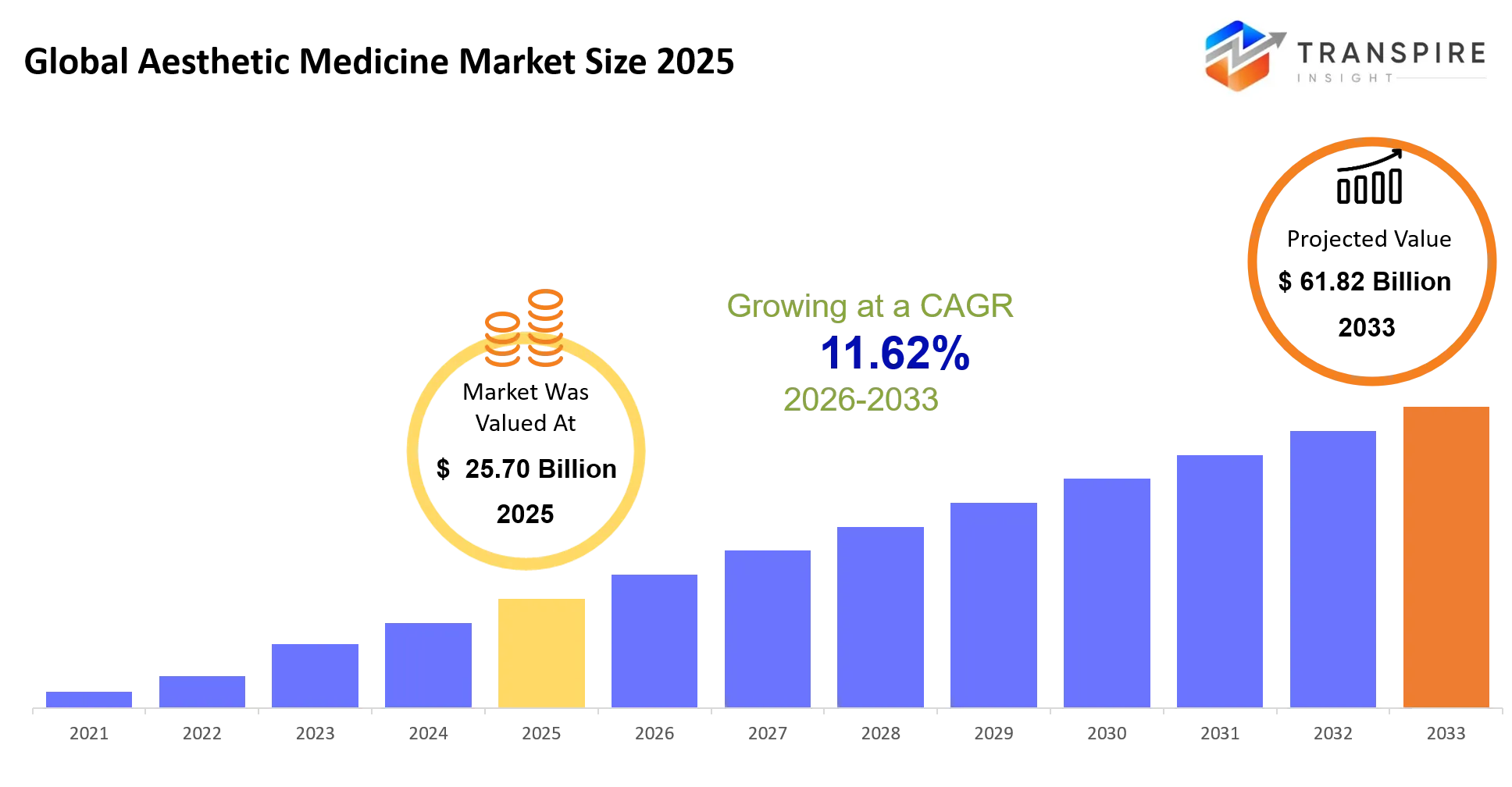
- Global Aesthetic Medicine Market Size 2025: USD 25.70 Billion
- Global Aesthetic Medicine Market Size 2033: USD 61.82 Billion
- Global Aesthetic Medicine Market CAGR: 11.62%
- Global Aesthetic Medicine Market Segments: By Type (Botulinum Toxin, Dermal Fillers, Laser Devices, Body Contouring Devices, Skin Tightening Devices, Others); By Application (Facial Aesthetics, Body Shaping, Skin Rejuvenation, Hair Removal, Tattoo Removal, Others); By End-User (Hospitals, Dermatology Clinics, Medical Spas, Beauty Centers, Others); By Procedure (Non-invasive Procedures, Minimally Invasive Procedures, Surgical Procedures, Others)
Global Aesthetic Medicine Market Summary:
As per Transpire Insight Analysis, the Global Aesthetic Medicine Market size is estimated at USD 25.70 Billion in 2025 and is anticipated to reach USD 61.82 Billion by 2033, growing at a CAGR of 11.62% from 2026 to 2033.
The Global Aesthetic Medicine Market has evolved significantly over time. It used to be about making people look better, but now it is more about helping people feel good and stay healthy. People want to look natural and not have to stay out of work for a long time to recover. This is why doctors and clinics are offering kinds of treatments.
New technology has made a difference in the past few years. Lasers, injections and machines that help shape your body are better now. They work precisely, and people are happier with the results. This means more people can get these kinds of treatments. People do not want surgery as much as they used to. They like treatments that do not cut into their skin. This is a change in the market. Companies are constantly developing new products, and people are learning more about them online and on social media. More people care about how they look, and they have money to spend on it. Clinics and hospitals are also getting equipment.
As treatments get safer and faster, more people are trying them. This is happening around the world in rich and poor countries. It is a time for clinic companies that make medical devices and doctors. The aesthetic medicine industry is. It will keep growing because people want to look and feel their best.
Key Market Insights:
The Global Aesthetic Medicine Market is going through a shift towards technology-enabled solutions that promise personalised treatments with reduced recovery time. Innovation, treatment awareness, and clinic expansion are altering the competitive landscape in the key regions.
- Facial aesthetics take up 60% of the overall demand for treatments as consumers favour treatments that reduce wrinkles, contour faces and improve skin.
- Devices that shape the body are the fastest-growing part of the industry, expected to increase at 15.9% CAGR due to demand for non-surgical procedures that reduce fat.
- The demand for procedures that improve the shape of the body takes up 14% of the market.
- Skin rejuvenation takes up 10% of the market demand with increased use of laser and other energy-based techniques.
- Hair removal procedures make up 7% of the market because of improved technologies used.
- Tattoo removal procedures take up 4% of the market due to increased need for corrections.
- Key players are investing in AI-driven imaging techniques, planning and treatment software and development of energy-based devices.
- The number of medical spas and dermatology clinics is increasing.
What are the Key Drivers, Restraints, and Opportunities in the Global Aesthetic Medicine Market?
Drivers
The growth of the market for aesthetic medicine is driven by the widespread use of minimally invasive cosmetic procedures that deliver good results within a short recovery period. The main driver of this process is the ongoing development of injectable, laser, and body contouring technologies that enhance treatment outcomes and safety. As a consequence, clinics and medical spas become appealing to a wider customer base that includes young adults who wish to prevent aesthetic problems and older clients who seek age management services. The described changes increase procedure volumes and create regular revenue streams for service providers and technology vendors.
Restraints
Although there are promising prospects for future growth, the market suffers from a number of issues associated with the high prices of advanced procedures and technologies. A significant number of advanced aesthetic procedures cannot be afforded by the majority of consumers, especially in developing countries. Moreover, complicated regulations regarding the certification of products and practitioners complicate the process of entering the market. These limitations exist due to the importance of patient safety and clinical studies in the field of aesthetic medicine.
Opportunities
A major opportunity is in the use of digital technologies, AI and personalised treatment plans. Digital platforms for facial analysis and predictive imagery have made it possible to tailor treatments to individual patients’ needs. New markets from the APAC region, Latin America, and the Middle East are seeing an increase in investments in aesthetics centres and medical tourism, opening up new channels for growth. With improving access to technologies, businesses that offer personalised non-invasive treatment plans stand to benefit.
What Has the Impact of Artificial Intelligence Been on the Global Aesthetic Medicine Market?
AI has been revolutionising the aesthetic medicine field by making improvements to treatment planning, patient analysis, and decision-making in practice. New advanced AI-enabled imaging tools can help in assessing facial characteristics, skin, and signs of ageing more effectively, thus helping the practitioner choose appropriate treatment options. The use of such tools will improve the consultation process at the clinics while increasing patients' trust in expected results.
The implementation of artificial intelligence is contributing to better clinic operations management via patient documentation, scheduling appointments, and managing treatments. Nowadays, many aesthetic clinics are implementing the use of AI-powered simulation technologies that show possible outcomes prior to the procedure being done. Such predictive tools facilitate the decision-making process and allow practitioners to align treatment expectations with patient expectations. Furthermore, with the help of AI, it becomes easier for clinics to identify trends in treatments, tailor services, and retain customers.
One of the examples of the implementation of artificial intelligence in aesthetic medicine includes the use of face analysis software powered by AI by leading aesthetic medicine clinics and device manufacturers.
Even though there are several advantages of artificial intelligence, its implementation is still restricted due to an expensive integration process, privacy problems, and the necessity for clinical validation of results. Moreover, some issues regarding image quality and patients' peculiarities may also influence the results' precision. However, since AI becomes more available and effective, it can be expected that it will gain popularity in the future.
Key Market Trends:
The global aesthetic medicine industry is now seeing a trend towards treatments using technologies that are personalised and emphasise convenience, natural results, and fast recovery times. Development of technologies used in devices and changes in consumer preferences have helped bring about changes in treatment procedures.
- The popularity of non-invasive treatment methods has increased over the last decade as patients opt for minimally invasive and less risky interventions.
- New methods for facial assessment and skin analysis using AI have become increasingly popular among practitioners in developing customised treatment programs.
- The demand for preventive treatment has grown among younger customers seeking treatment instead of correction of aesthetic issues at later stages of their lives.
- The scope of services offered by medical spas has expanded with advanced injectables, laser, and body shaping treatments.
- Combined treatment involving dermal fillers, botulinum toxins, and energy devices has become widespread in achieving overall aesthetic effects.
- Next-generation lasers and radiofrequency devices have been introduced by manufacturers offering increased accuracy, patient safety, and comfort of procedures.
- Increased awareness among consumers through social media influencers has raised the demand for facial enhancement, skin rejuvenation, and body shaping treatments.
Global Aesthetic Medicine MarketSegmentation
By Type
Market segmentation by types includes botulinum toxin, dermal fillers, laser devices, body contouring devices, skin tightening devices, and others. Among these types, botulinum toxin and dermal fillers maintain high demand because of the efficiency of facial enhancement procedures and a short recovery period. Laser devices continue to be popular for skin resurfacing, pigment reduction, and hair reduction procedures. In addition, body contouring devices have the highest growth rate, with a CAGR of 15.9%, as more customers prefer non-surgical methods of fat reduction and body shaping. Skin tightening technologies are becoming popular owing to the rising interest in anti-ageing procedures, which can bring desirable changes in appearance without surgical interventions.
By application
the global market is divided into facial aesthetics with a share of 60% owing to high demand for wrinkle reduction, facial contouring, lip enhancement, and skin enhancement procedures; body shaping with a 14% share; skin rejuvenation with a 10% share, caused by the popularity of laser-based and energy-assisted technologies; hair removal, which has 7%; tattoo removal, which accounts for 4%. Other aesthetic applications account for 5% of the global market share.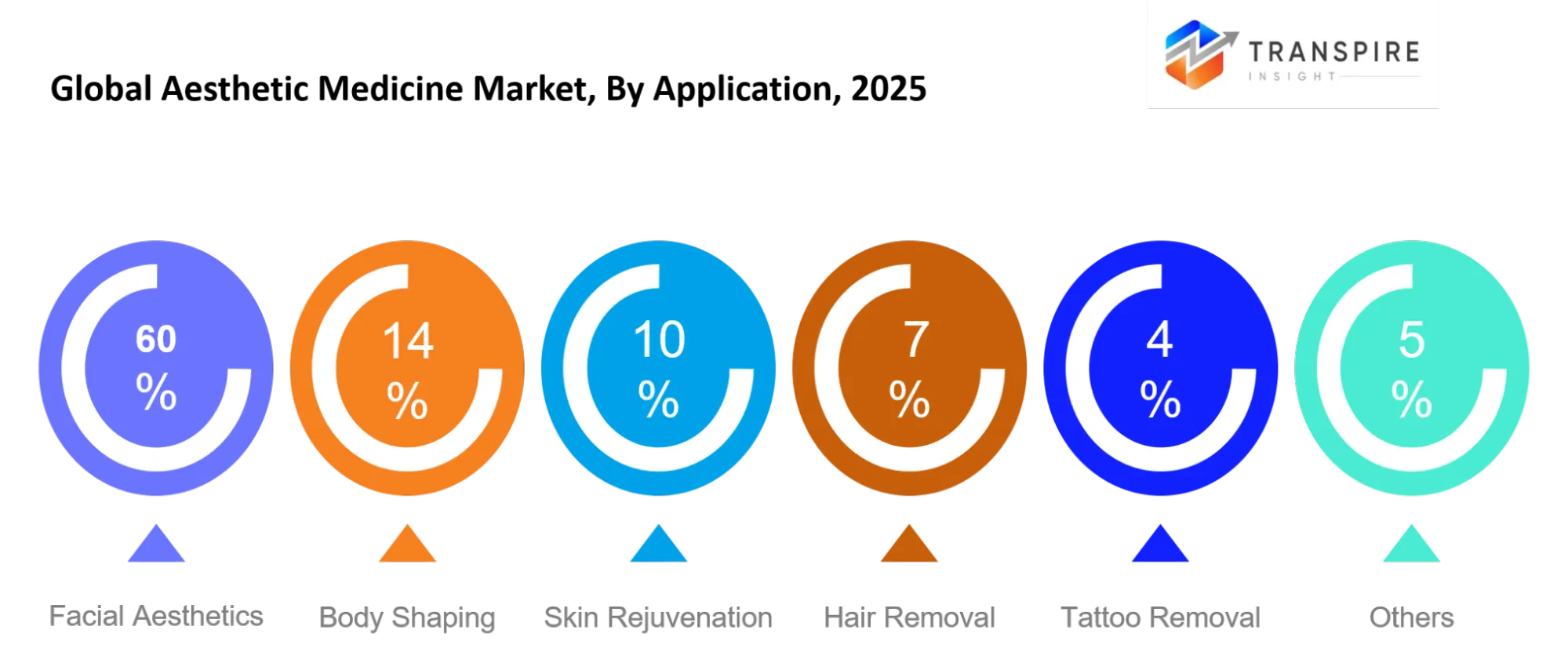
By end users
The use of end users indicates that the major players in the treatment of aesthetic conditions in the dermatology clinic and the medical spas are due to the highly specialised capabilities of these treatment facilities and their advanced technology. Hospitals remain important for complicated aesthetic procedures and treatments that require supervision. The beauty centres will grow with the development of advanced aesthetic procedures. Other health care facilities will enter the market through collaboration and technological development. The rise in the number of professional practitioners is contributing to the development of the entire sector.
By Procedure
The non-invasive procedures make up the biggest proportion because there is an increased demand from consumers for convenient, cost-effective, and quick procedures. Minimally invasive procedures, including injectables and energy-based treatments, are widely adopted due to their efficiency and safety. Surgical procedures have relevance only for patients who need long-lasting effects. Nevertheless, they do not demonstrate a higher growth rate compared to non-invasive treatments. Future developments in the market are expected to favour safe and personalised technologies, which will contribute even more to the popularity of non-invasive and minimally invasive procedures.
What are the Key Use Cases Driving the Global Aesthetic Medicine Market?
The use of aesthetic medicine to improve the face continues to dominate in the market, owing to the presence of a dominant facial aesthetics segment. More people continue to resort to treatments such as wrinkle smoothing, facial shaping, lip augmentation, and skin improvement to appear younger and to improve their confidence. The proliferation of non-invasive injectables and energy-based technologies has only served to boost the use of aesthetic medicine.
Apart from facial procedures, the use of aesthetic medicine for body shaping and skin rejuvenation has increased considerably. More patients have come to rely on body shaping, skin resurfacing, fat reduction, and body contouring procedures to achieve cosmetic effects without undergoing long recovery times. The growing use of non-surgical fat reduction, body contouring, and other procedures has increased the need for advanced laser systems and body contouring equipment. Use cases that have emerged recently include personalised treatment planning through the use of artificial intelligence, scar revision therapy, skin pigmentation correction, tattoo removal, and preventive aesthetic medicine among younger people. The increasing use of wellness-oriented cosmetic services and customised treatment procedures has led to the increasing adoption of aesthetic medicine.
|
Report Metrics |
Details |
|
Market size value in 2025 |
USD 25.70 Billion |
|
Market size value in 2026 |
USD 28.72 Billion |
|
Revenue forecast in 2033 |
USD 61.82 Billion |
|
Growth rate |
CAGR of 11.62% from 2026 to 2033 |
|
Base year |
2025 |
|
Historical data |
2021 - 2024 |
|
Forecast period |
2026 - 2033 |
|
Report coverage |
Revenue forecast, competitive landscape, growth factors, and trends |
|
Regional scope |
United States; Canada; Mexico; United Kingdom; Germany; France; Italy; Spain; Denmark; Sweden; Norway; China; Japan; India; Australia; South Korea; Thailand; Brazil; Argentina; South Africa; Saudi Arabia; United Arab Emirates |
|
Key company profiled |
Allergan Aesthetics, Galderma, Merz Pharma, Cynosure, Candela Medical, Alma Lasers, Bausch Health, Cutera, Revance Therapeutics, Evolus, Lumenis, InMode, Solta Medical, Fotona, Sinclair Pharma |
|
Customization scope |
Free report customization (country, regional & segment scope). Avail customized purchase options to meet your exact research needs. |
|
Report Segmentation |
By Type (Botulinum Toxin, Dermal Fillers, Laser Devices, Body Contouring Devices, Skin Tightening Devices, Others); By Application (Facial Aesthetics, Body Shaping, Skin Rejuvenation, Hair Removal, Tattoo Removal, Others); By End-User (Hospitals, Dermatology Clinics, Medical Spas, Beauty Centers, Others); By Procedure (Non-invasive Procedures, Minimally Invasive Procedures, Surgical Procedures, Others) |
Which Regions are Driving the Global Aesthetic Medicine Market Growth?
North America
North America dominates the global market for aesthetic medicine with 39% of the total market share. Its dominance is based on developed health care facilities, accessibility of modern aesthetic technologies, and high consumer spend on cosmetic treatments. A high level of penetration of minimally invasive techniques, together with the presence of large manufacturers of aesthetic devices and aesthetic products, contributes to further market growth. In addition, increased awareness regarding the concept of preventive aesthetic treatments and favourable reimbursement of certain medical aesthetic procedures foster market growth.In April 2025, the aesthetic capabilities at Ideal Image were improved as they acquired Candela’s GentleMax Pro Plus laser and GLX Delivery System in their clinics in the USA. This improved the availability of advanced minimally-invasive aesthetic treatments and ensured North America’s dominance in aesthetic medicine.
Europe
Europe captures 30% of the global market and remains the leader in terms of innovations and expertise in the field of aesthetic medicine. Europe's market is characterised by a well-developed network of dermatology clinics, medical spas, and other specialised centres for cosmetic treatments. In comparison with the North America market, Europe's growth is more dependent on high-quality regulation, the expertise of practitioners and increasing acceptance of advanced anti-ageing treatments. InJan 2026,Candela released the Glace System in Europe during IMCAS Paris, a facial treatment system designed to improve non-invasive aesthetic treatments. The release solidified Europe’s role as an innovation leader within the realm of aesthetic medicine.
Asia Pacific
The Asia Pacific region comprises 23% of the global market and is the fastest-growing region at a compound annual growth rate (CAGR) of 15.1%. Growing urbanisation, growing disposable incomes, and greater beauty awareness among the youth are some of the factors that have boosted the demand for aesthetic treatments. The development of medical tourism in nations like South Korea, Thailand, and India has further propelled the growth of the region. Future investments in aesthetic clinics, treatment technologies, and digital health care will present numerous opportunities in the region.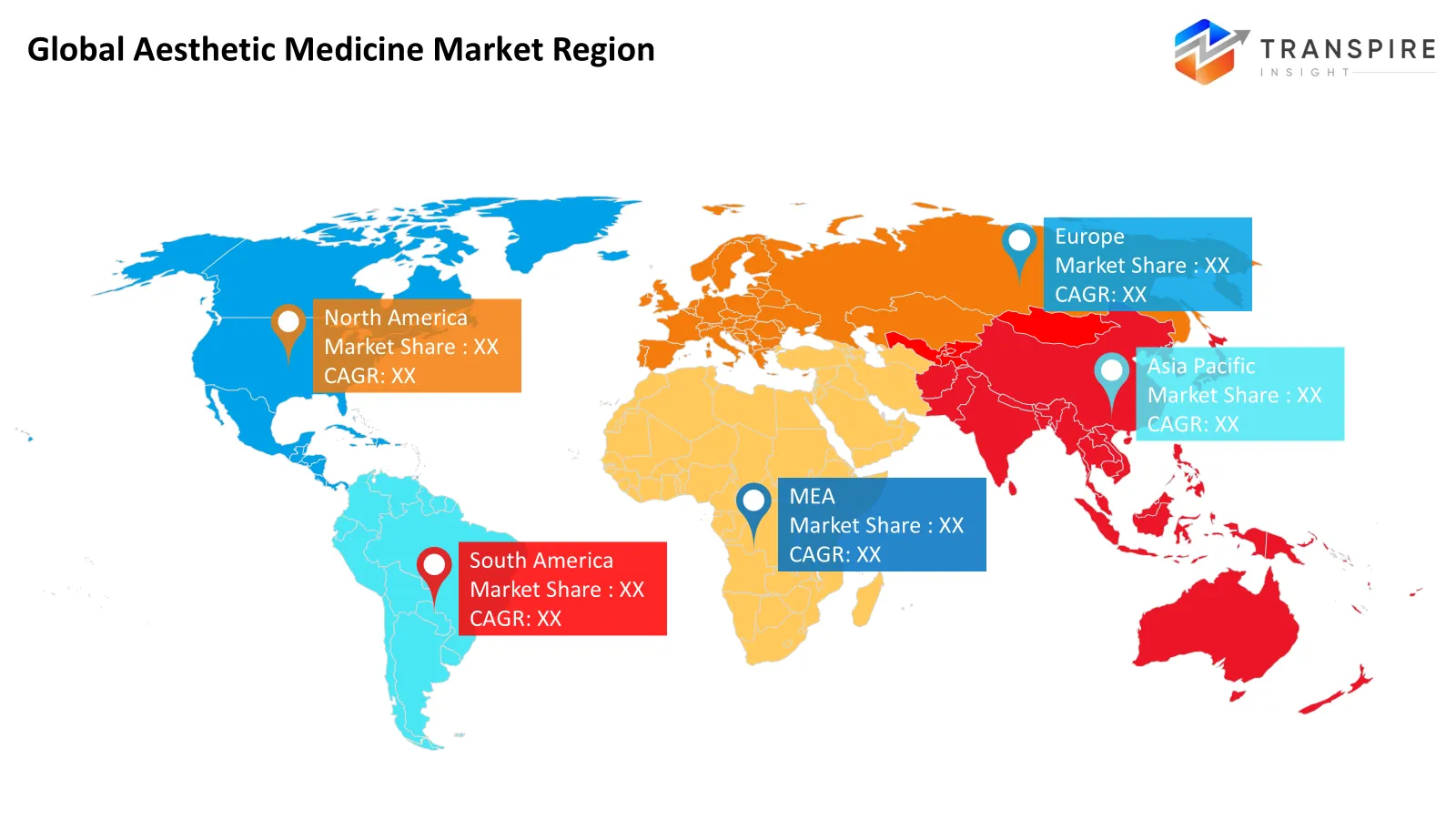
Who are the Key Players in the Global Aesthetic Medicine Marketand how do they Compete?
The competition in the Global Aesthetic Medicine Market is based on the following key points: development of innovative products, product diversification, and market expansion. The firms' efforts in the market are oriented towards innovation in injectable treatments, energy-based technologies, and digital treatment planning tools to improve their positions in the market.
AbbVie Inc. competes in facial aesthetics by producing various types of botulinum toxins and dermal fillers. The differentiation of AbbVie Inc. from other competitors is achieved because of the broad product range offered by the company and the extensive training program for physicians.
Candela Corporation specialises in the development of advanced laser and energy-based technologies which can be applied in procedures of skin rejuvenation, hair removal, and body contouring. The competitive advantage of Candela Corporation is based on the clinically proven platforms and the investment in R&D activities. Cutera Inc. and Merz Aesthetics focus on offering highly specific aesthetic products and customised treatments. These firms distinguish themselves by innovation in targeting, education for professionals, and expansion in high-growth geographies. Firms like Lumenis and Alma Lasers, on the other hand, further establish their position in the industry with advanced technology and new partnerships.
Global Aesthetic Medicine Market companies
- Candela Medical
- Alma Lasers
- Bausch Health
- Cutera
- Revance Therapeutics
- Evolus
- Lumenis
- InMode
- Solta Medical
- Fotona
- Sinclair Pharma
In February 2025, L'Oréal purchased minority shares of medical aesthetics clinic networks in China and North America. This decision was based on gaining better knowledge about the fast-growing business in the medical aesthetics industry and establishing long-term presence in the field of aesthetic medicine.
In May 2026, Aesthetic Management Partners (AMP) launched its regenerative aesthetics line and was recognised as the 'Top Medical Aesthetics Equipment 2026' by the industry. The launch helped AMP solidify its standing in the field of aesthetics and aesthetic training programs.
https://aestheticmanagementpartners.com
What Strategic Insights Define the Future of the Global Aesthetic Medicine Market?
The development of the aesthetic medicine market will be determined by the interconnection of personalised treatments, artificial intelligence, and non-invasive technologies. The consumer trend is changing towards a preference for more natural results, quicker healing periods, and personalised treatments. Thus, organisations combining diagnostics and personalisation of therapy can become more competitive.
The one unobvious threat to the success of an organisation is the growing saturation of providers of aesthetic services in developed countries. This might lead to higher competition and lower profit margins among clinics lacking technology innovation. However, at the same time, there appears to be an opportunity in the form of Asia-Pacific and other developing countries, where the rise in the level of disposable income, the development of medical tourism and an increase in knowledge about aesthetic treatments generate huge demand for such services. To achieve success and gain sustainable market shares in the long run, a company should invest in the development of online consultations, AI technologies for treatment, body contouring and skin rejuvenation.
By Type
- Botulinum Toxin
- Dermal Fillers
- Laser Devices
- Body Contouring Devices
- Skin Tightening Devices
By Application
- Facial Aesthetics
- Body Shaping
- Skin Rejuvenation
- Hair Removal
- Tattoo Removal
By End-User
- Hospitals
- Dermatology Clinics
- Medical Spas
- Beauty Centers
By Procedure
- Non-invasive Procedures
- Minimally Invasive Procedures
- Surgical Procedures
Regional Outlook
North America
- United States
- Canada
- Mexico
Europe
- Germany
- United Kingdom
- France
- Spain
- Italy
- Rest of Europe
Asia Pacific
- Japan
- China
- Australia & New Zealand
- South Korea
- India
- Rest of Asia Pacific
South America
- Brazil
- Argentina
- Rest of South America
Middle East & Africa
- Saudi Arabia
- United Arab Emirates
- South Africa
- Rest of the Middle East & Africa
Frequently Asked Questions
Find quick answers to common questions.
The Global Aesthetic Medicine Market size was valued at USD 25.70 Billion in 2025 and is poised to reach USD 61.82 Billion by 2033, expanding at a 11.62% CAGR.
Key segments for the Global Aesthetic Medicine Market are By Type (Botulinum Toxin, Dermal Fillers, Laser Devices, Body Contouring Devices, Skin Tightening Devices, Others); By Application (Facial Aesthetics, Body Shaping, Skin Rejuvenation, Hair Removal, Tattoo Removal, Others); By End-User (Hospitals, Dermatology Clinics, Medical Spas, Beauty Centers, Others); By Procedure (Non-invasive Procedures, Minimally Invasive Procedures, Surgical Procedures, Others)
Growth is primarily driven by Factors that have led to the growth in the industry, including increased demand for minimally invasive cosmetic surgery, increased awareness about cosmetic surgery procedures, advancements in technology such as surgical and non-surgical techniques, increased disposable income among individuals, an ageing population requiring anti-ageing procedures, and social media influences.
The global market is led by major manufacturers including Allergan Aesthetics, Galderma, Merz Pharma, Cynosure, Candela Medical, Alma Lasers, Bausch Health, Cutera, Revance Therapeutics, Evolus, Lumenis, InMode, Solta Medical, Fotona, Sinclair Pharma.
The North American market accounts for 39% of the worldwide aesthetic medicine market and dominates among all regions of the world. It is attributed to huge consumer expenditure on aesthetic procedures, widespread use of sophisticated aesthetic technology, the presence of key players in the industry, and rising demand for minimally invasive procedures. The region boasts developed healthcare infrastructure and a supportive reimbursement and regulation environment.
Global aesthetics medicine market presents great business prospects through the growing demand for non-invasive cosmetic treatments, an increase in medical spa services, advancement in aesthetics technology usage, an increasing number of males undergoing cosmetic treatment, and increased market penetration into developing nations where disposable incomes and beauty consciousness are growing.
- Allergan Aesthetics
- Galderma
- Merz Pharma
- Cynosure
- Candela Medical
- Alma Lasers
- Bausch Health
- Cutera
- Revance Therapeutics
- Evolus
- Lumenis
- InMode
- Solta Medical
- Fotona
- Sinclair Pharma
About the Authors

Pankaj Ghogare Patil
I am Pankaj Ghogare Patil, a Senior Research Analyst at Transpire Insight, specializing in the Pharmaceutical, Chemicals & Materials, Healthcare IT, and Biotechnology industry. My expertise lies in conducting comprehensive market research, analyzing industry trends, evaluating competitive landscapes, and translating complex data into actionable insights. At Transpire Insight, I closely follow emerging technologies, regulatory developments, and market innovations to create accurate, well-researched, and informative content that helps businesses and professionals make informed decisions. I am committed to producing credible, evidence-based articles that reflect industry best practices while making technical topics accessible and valuable for a broad audience.

Chakradhar Khansole
Chakradhar serves as the Research Director at Transpire Insight, bringing over 8 years of experience in technology, innovation, and strategic market intelligence. He specializes in transforming complex market data into actionable business insights that enable organizations to make informed, growth-oriented decisions. Recognized for his strategic vision and analytical expertise, Chakradhar leads high-impact research initiatives, delivering comprehensive market assessments, competitive intelligence, and forward-looking industry analysis.
Recently Published Reports
-
Jul 2026
Alopecia Treatment Market
Alopecia Treatment Market Size, Share & Analysis Report By Disease Type (Alopecia Areata, Cicatricial Alopecia, Traction Alopecia, Alopecia Totalis, Androgenetic Alopecia, Alopecia Universalis, and Other Disease Types), By Treatment Type (Topical Treatments, Oral Medications, Injectable Therapies, and Hair Transplantation), By Gender (Male, and Female), By Distribution Channel (Hospitals and Clinics, Retail Pharmacies, and Online Retailers), and Geography (North America, Europe, Asia-Pacific, Middle East and Africa, South and Central America), 2021 - 2031
-
Jul 2026
Medical Ultrasound Probe Market
Medical Ultrasound Probe Market Size, Share & Analysis Report By Type (Linear Type, Convex Type, Endocavitary Probe, Phased Array/Cardiac Probe, Transesophageal (TEE) Probe, and Others), By Application (Ophthalmology, Cardiology, Musculoskeletal, Oncology, Obstetrics & Gynecology, General Imaging, and Others), By End User (Hospitals & Clinics, Diagnostic Centers, Ambulatory Surgical Centers, and Others), and Geography (North America, Europe, Asia-Pacific, Middle East and Africa, South and Central America), 2021 – 2031
-
May 2026
Biosimilars Market
Biosimilars Market By Product Type (Monoclonal Antibodies, Recombinant Hormones, Erythropoietin, G-CSF, Others), By Indication (Oncology, Autoimmune Diseases, Blood Disorders, Diabetes, Others), By Manufacturing Type (In-House Manufacturing, Contract Manufacturing), By Distribution Channel (Hospital Pharmacies, Retail Pharmacies, Online Pharmacies), By Industry Analysis, Size, Share, Growth, Trends, and Forecasts 2021-2033
-
Apr 2026
Gastrointestinal Endoscopy Market
Gastrointestinal Endoscopy Market By Type (Rigid Gastrointestinal Endoscope, Flexible Gastrointestinal Endoscopes, Disposable Gastrointestinal Endoscope), By Procedure Type (Colonoscopy, Gastroscopy, Duodenoscopy, Enteroscopy, Flexible Sigmoidoscopy, Others), By Application (Diagnosis, Treatment), By End-Users (Hospitals, Ambulatory Surgical Centers, Specialty Clinics, Laboratories, Others), By Industry Analysis, Size, Share, Growth, Trends, and Forecasts 2021-2033