


Germany Precision Machining Market Size & Forecast:
- Germany Precision Machining Market Size 2025: USD 9626.2 Million
- Germany Precision Machining Market Size 2033: USD 15492.7 MillionÂ
- Germany Precision Machining Market CAGR: 6.13%
- Germany Precision Machining Market Segments: by Process (Milling, Turning, Drilling, Grinding), by Material (Metal, Plastic, Composites), by End Use Industry (Automotive, Aerospace, Medical, Electronics, Industrial Machinery).
 Â Â Â Â Â Â Â Â Â Â Â Â Â Â Â Â Â Â Â Â Â Â To learn more about this report,Â
                      To learn more about this report,  Download Free Sample Report
Germany Precision Machining Market Summary:
The Germany Precision Machining Market size was estimated at 10217.3 USD Millionin 2026 and is anticipated to reach 15492.7 USD Million by 2033, growing at a CAGR of 6.13% from 2026 to 2033.
The Germany Logistics Automation Market experiences continuous expansion because major industrial players provide support through their implementation of warehouse robots and automated storage solutions and sorting systems and intelligent software platforms. The engineering capabilities and manufacturing abilities of German logistics facilities combined with their ongoing product development efforts enable them to achieve faster and more precise operations which help them maintain cost efficiency across their distribution and fulfillment processes.
The industrial leaders Siemens AG and KUKA AG and SSI Schaefer Group develop advanced automation equipment which serves the needs of warehouses and manufacturing supply chains and e-commerce fulfillment centers. The product range consists of robotic picking systems and automated conveyors and pallet handling solutions and digital warehouse management software.
Key Market Trends & Insights:
- The Germany Precision Machining Market experiences continuous growth because of the sustained automotive manufacturing operations that exist throughout Germany. The production of engines and transmission systems and structural metal parts drives the need for precise machining services. Manufacturers increase their investments in advanced cutting tools and milling systems and high-tolerance component production facilities because electric vehicle development drives their spending.
- German industrial clusters show growth in aerospace manufacturing which creates higher demand for precisely engineered metal parts. Aircraft engine parts, turbine blades, and structural assemblies require tight tolerances and consistent finishing quality. Aerospace manufacturers depend on precision machining companies which provide long-term contracts to deliver engineering solutions that meet their strict requirements.
- German manufacturing facilities show an increasing trend toward purchasing modern CNC machines and multi-axis systems and automated machining centers. Advanced software integration enables production processes to achieve higher accuracy while decreasing material waste and increasing operational efficiency. Digital manufacturing systems receive industrial investment which enables machining service providers and component manufacturers to enhance their market competitiveness and achieve sustainable business growth.
- The entire medical device manufacturing process which operates throughout Germany requires its metal and alloy materials to meet exacting standards of precision. The production of surgical instruments along with orthopedic implants and diagnostic equipment parts demands manufacturers to achieve strict measurements and create smooth surface finishes. The rising healthcare investments require manufacturing facilities to implement specialized machining methods which can accurately produce small and complicated medical components that hold high value.
- The wider adoption of smart manufacturing methods drives machining facilities to implement robotics together with digital monitoring systems and automated quality inspection capabilities. The industrial transformation leads to enhanced production consistency together with improved operational efficiency. The strong industrial modernization efforts continue to assist the long-term development of the Germany Precision Machining Market which extends across various manufacturing industries.
Germany Precision Machining Market Segmentation
By Process Type:Â
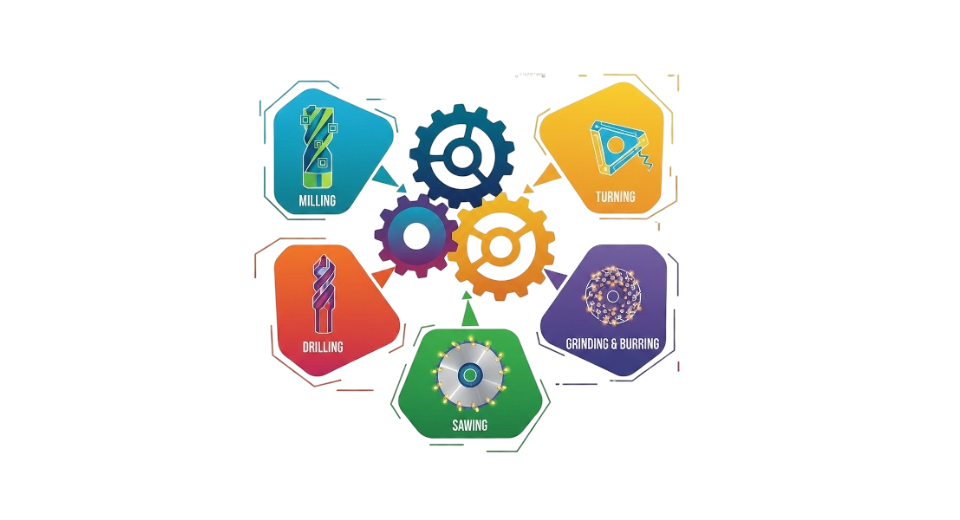
- Milling: Milling activity holds strong importance in the Germany Precision Machining Market: Milling operations involve removal of material using rotating cutting tools that shape metal or other solid materials into accurate components. Strong manufacturing culture across Germany supports heavy adoption of milling equipment. Automotive and machinery producers require high accuracy, smooth surface finish, and repeatable production, leading to steady demand for milling processes.
- Turning: Turning remains a core machining method within the Germany Precision Machining Market: Turning uses rotating workpieces with stationary cutting tools to create cylindrical parts with precise dimensions. German production facilities depend on turning for shafts, fasteners, and mechanical components. Stable industrial demand, advanced CNC turning centers, and strict quality standards maintain continuous growth of turning services.
- Drilling: Drilling operations contribute essential capability to the Germany Precision Machining Market: Drilling creates round holes required for assembly, fastening, and structural alignment in manufactured products. Manufacturing plants across automotive, aerospace, and equipment sectors require large volumes of drilled parts. High-speed drilling machines and CNC control systems support consistent hole placement and dimensional accuracy.
- Grinding: Grinding supports high-precision finishing needs in the Germany Precision Machining Market: Grinding removes very small amounts of material through abrasive wheels to achieve tight tolerances and smooth surfaces. German engineering standards emphasize dimensional stability and surface quality. Tool manufacturers, aerospace suppliers, and medical component producers depend on grinding for final finishing stages.
                        To learn more about this report, Download Free Sample Report
By Material Type:Â
- Metal: Metal machining dominates material usage across the Germany Precision Machining Market: Steel, aluminum, titanium, and other alloys remain essential for structural parts, engines, aerospace assemblies, and industrial machines. German industrial strength in automotive and engineering sectors drives constant demand for metal cutting operations. Precision machining ensures durability, strength, and exact mechanical performance.
- Plastic: Plastic materials create growing opportunities within the Germany Precision Machining Market: Engineered plastics such as nylon, polycarbonate, and PEEK allow production of lightweight and corrosion-resistant parts. Electronics devices, medical instruments, and automotive interior systems rely on plastic machining. Precision cutting allows consistent dimensions, tight tolerances, and compatibility with sensitive mechanical assemblies.
- Composites: Composite machining supports specialized production requirements in the Germany Precision Machining Market: Carbon fiber reinforced polymers and glass fiber materials provide high strength with reduced weight. Aerospace structures, advanced vehicles, and high-performance machinery frequently utilize composite components. Precision machining processes enable controlled cutting without damaging layered structures or fiber alignment.
By End User Type:Â
- Automotive: Automotive manufacturing remains a major demand driver for the Germany Precision Machining Market: Germany holds global leadership in vehicle production and engineering excellence. Engine components, transmission systems, braking assemblies, and structural parts require high-precision machining. Continuous demand for efficiency, durability, and safety standards increases dependence on advanced machining technologies.
- Aerospace: Aerospace production creates strong value for the Germany Precision Machining Market: Aircraft components demand extremely tight tolerances, lightweight materials, and flawless surface finishes. German aerospace suppliers manufacture turbine parts, structural brackets, and landing gear elements through precision machining processes. Strict certification standards and safety requirements support ongoing demand for advanced machining capability.
- Medical: Medical device manufacturing supports steady expansion of the Germany Precision Machining Market: Surgical tools, orthopedic implants, and diagnostic equipment require highly accurate machining. Stainless steel, titanium, and medical-grade plastics often undergo precision cutting to meet strict regulatory standards. German medical technology sector maintains strong focus on reliability, hygiene, and consistent dimensional accuracy.
- Electronics: Electronics manufacturing adds specialized demand to the Germany Precision Machining Market: Connectors, housings, micro components, and heat sinks require careful machining with extremely small tolerances. German electronics producers focus on reliability and precision engineering. Machining processes enable accurate shaping of metal and plastic parts used in communication devices, control systems, and industrial electronics.
- Industrial Machinery: Industrial machinery sector forms a major foundation for the Germany Precision Machining Market: German factories manufacture heavy equipment, automation systems, and mechanical tools that require durable precision components. Gears, shafts, housings, and structural parts depend on advanced machining processes. Continuous equipment development supports consistent machining demand across manufacturing industries.
Country Insights
- Germany maintains strong global recognition for advanced manufacturing and high engineering standards. The German industrial sector creates ongoing requirements for precise metal part manufacturing to meet its operational needs. The Germany Precision Machining Market expands through its connections to automotive and aerospace and machinery manufacturing sectors. The national manufacturing capacity develops through ongoing investments in CNC systems and automation and quality control technologies which also benefit export-driven industrial operations.
- The industrial framework of Germany consists of various engineering companies which are commonly referred to as Mittelstand between small and large business sizes. The companies produce specialized components which require precise measurements and base their production process on their extensive manufacturing background. Manufacturers and research institutes and technical universities work together to establish a system that enables continuous advancements in machining techniques and materials processing and production efficiency across different engineering fields.
- The machining services market maintains constant demand because automotive manufacturing, industrial equipment production, and aerospace component fabrication require high-accuracy machining services. The supply chain system establishes strong connections between raw material suppliers and machine tool producers and component manufacturers. The ongoing factory modernization process together with digital monitoring system implementation and the development of skilled technical labor ensures manufacturing operations will maintain stability while establishing the country's reputation for precision engineering work.
Recent Development News
In January 2026, global machine tool manufacturer DN Solutions completed the acquisition of German high-end machine tool producer HELLER, a company with more than a century of engineering experience. The deal will strengthen innovation in advanced machining technologies, particularly in high-precision automotive and aerospace manufacturing. The integration is expected to expand production capabilities and reinforce Germany’s role in supplying complex machine tools used in precision component manufacturing. Source: https://www.heller.biz/en/news/dn-solutions-completes-acquisition-of-german-machine-tool-manufacturer-heller
The German machine tool industry experienced a 5Þcline in orders in Q3 2025, with domestic orders dropping significantly. This reflects cyclical demand patterns and economic uncertainty affecting capital equipment purchases. Source:Â https://www.todaysmedicaldevelopments.com/news/decline-in-german-machine-tool-orders-bottoming-out/
|
Report Metrics |
Details |
|
Market size value in 2025 |
USD 9626.2 Million |
|
Market size value in 2026 |
USD 10217.3 Million |
|
Revenue forecast in 2033 |
USD 15492.7 Million |
|
Growth rate |
CAGR of 6.13% from 2026 to 2033 |
|
Base year |
2025 |
|
Historical data |
2021 - 2024 |
|
Forecast period |
2026 - 2033 |
|
Report coverage |
Revenue forecast, competitive landscape, growth factors, and trends |
|
Country scope |
Germany |
|
Key company profiled |
DMG Mori Co. Ltd., Trumpf Group, Haas Automation, Okuma Corporation, Mazak Corporation, Sandvik AB, Kennametal Inc., FANUC Corporation, Siemens AG, Bosch Rexroth, GF Machining Solutions, Hurco Companies, Doosan Machine Tools, Makino Inc., Hermle AG. |
|
Customization scope |
Free report customization (country, regional & segment scope). Avail customized purchase options to meet your exact research needs. |
|
Report Segmentation |
By Process (Milling, Turning, Drilling, Grinding), by Material (Metal, Plastic, Composites), by End Use Industry (Automotive, Aerospace, Medical, Electronics, Industrial Machinery). |
Key Germany Precision Machining Company Insights
- The German Precision Machining Market advances because of its strong industrial heritage which combines with its cutting-edge engineering capabilities and its ongoing investments in machining equipment. The production standards of well-known manufacturers DMG MORI and Trumpf and various mid-sized engineering firms rely on their precise cutting and milling and turning operations. The automotive and aerospace and industrial equipment sectors generate continuous needs for precisely machined components. German machining firms focus on durable materials, exact tolerances, and reliable delivery schedules. Research partnerships with technical institutes support ongoing improvements in machining accuracy and tool performance and digital production methods. The majority of production facilities utilize automation and robotics and quality inspection systems to achieve stable output levels while minimizing waste and downtime in component production.
- The culture of continuous improvement enables German machining companies to build their international reputation. The combination of skilled technicians and vocational training programs and the enduring engineering expertise of the company enables factories to produce consistent product quality. European buyers and North American buyers and Asian buyers continue to show high demand for precise metal components which manufacturers produce according to established industry standards. Engineering firms of all sizes depend on their core operations which include production of specialized parts and development of prototypes and their ability to manufacture precision products in small quantities. Digital monitoring systems and computer-controlled machining centers and advanced measurement equipment create a competitive advantage for the Germany Precision Machining Market by delivering precise dimension controls for all production runs. The combination of careful material handling and energy-efficient machinery and strict process control measures enables industrial operations to achieve sustainable development while building global customer trust.
Germany Precision Machining Market Companies:
- DMG Mori Co. Ltd.
- Trumpf Group
- Haas Automation
- Okuma Corporation
- Mazak Corporation
- Sandvik AB
- Kennametal Inc.
- FANUC Corporation
- Siemens AG
- Bosch Rexroth
- GF Machining Solutions
- Hurco Companies
- Doosan Machine Tools
- Makino Inc.
- Hermle AG.
Germany Precision Machining Market Segmentation
By Process
- Milling
- Turning
- Drilling
- Grinding
By Material
- Metal
- Plastic
- Composites
By End Use Industry
- Automotive
- Aerospace
- Medical
- Electronics
- Industrial Machinery





 APAC:+91 7666513636


