

Food Grade Alcohol Market Summary:
According to market research, a detailed research report on the market reflects that the ethanol segment dominates the Food Grade Alcohol Market, accounting for approximately 60% of the total share worldwide. Cargill Incorporated and Archer Daniels Midland Company (ADM) are among the leading participants in the market, supported by their extensive production capabilities, agricultural supply chains, high-purity food-grade alcohol portfolios, advanced processing technologies, and international distribution networks, making them important contributors to market development, product innovation, manufacturing expansion, and competitive growth dynamics
Market Snapshot
- Market Value (2025): USD 9.6 Billion.
- Expected Market Value (2026): USD 10.0 Billion.
- Estimated Market Value (2033): USD 13.4 Billion.
- Forecast CAGR (2026–2033): 4.27%.
- Leading Region in 2025: North America
- Second-largest Region: Europe
- Fastest Growing Region: Asia Pacific
Introduction
Food-grade alcohol is pure and high-quality ethyl alcohol (ethanol) or polyol (sugar alcohol) that is safe for human consumption. It is obtained from a variety of organic agricultural sources such as corn, sugarcane, wheat, or molasses, and is manufactured according to high standards of safety and quality for use in food, drinks, and pharmaceuticals. Food-grade alcohol has many advantages, including purity, safety, solvent efficiency, clean-label compliance, and antimicrobial activity. It is made in accordance with strict quality standards which allows it to be used safely in areas such as the food and beverage industry, pharmaceutical industry, food flavoring industry, and food processing industry. It has wonderful solvent properties which allow it to extract both water-soluble and fat-soluble ingredients. It is produced mainly from renewable agricultural products. Food-grade alcohol is made from products such as corn, sugarcane, and grains. Food-grade alcohol's antimicrobial properties also mean that it is useful in preserving food.
For instance:
North America continues to be a leading regional market for food-grade alcohol due to the availability of heavy maize feedstock, thousands of artisan distilleries, and consistent investments in high-purity extraction.

Market Highlights: -
- North America is anticipated to hold around 34% share of the Food Grade Alcohol Market over the predicted timeframe.
- Europe is expected to grow at a rapid CAGR in the Food Grade Alcohol Market by holding around 27% of the share during the forecast period.
- Asia Pacific is anticipated to hold roughly 35% share of the Food Grade Alcohol Market over the predicted timeframe.
- By product type, the Ethanol segment dominated the market and holds nearly 50 % share in 2025 and is projected to grow at a substantial CAGR during the forecast period.
- By application, the Food Processing segment dominated the market and holds nearly 55% share in 2025 and is projected to grow at a substantial CAGR during the forecast period.
- By end user, the Food Manufacturers segment dominated the market and holds nearly 35% share in 2025 and is projected to grow at a substantial CAGR during the forecast period.
- policies on feedstock and ethanol: Policies regarding the production of bioethanol and agriculture that are present all over the globe such as the biofuels system in America, CAP of the EU and India's Ethanol Blended Programme can have influence on the costs, supply and distribution of the same feedstocks like corn, molasses and grains. Policies imply changes of different nature and thus can indirectly impact the prices of bioethanol feedstock and its supply or, in other words, affect production prices in the market of bioethanol.
How is Technology Driving Growth in the Food Grade Alcohol Market?
Innovative processing technologies are playing an important role in boosting the Food Grade Alcohol Market as they improve purity, efficiency, sustainability, and consistency of products. Multi-pressure distillation is making it possible to improve ethanol concentration and use less energy. Membrane filtration is also an efficient way to get rid of impurities without much reliance on chemicals. Automated quality control systems are being used for continuous monitoring which provides the same level of safety as well as maintaining the same product specifications. Sustainable production is being pursued through enzymatic hydrolysis of raw materials and better yeast strains which allows for a more efficient fermentation process and lowering the negative impact on the environment. At the same time, food-grade alcohol allows clean-label extraction of natural tastes, herbs, and botanical components. Its antibacterial properties help to increase the lifespan of the product and cut down on the usage of synthetic preservatives when it comes to the food and drinks industry.
|
Report Metrics |
Details |
|
Market size value in 2025 |
USD 9.6 Billion |
|
Market size value in 2026 |
USD 10.0 Billion |
|
Revenue forecast in 2033 |
USD 13.4 Billion |
|
Growth rate |
CAGR of 4.27% from 2026 to 2033 |
|
Base year |
2025 |
|
Historical data |
2021 - 2024 |
|
Forecast period |
2026 - 2033 |
|
Report coverage |
Revenue forecast, competitive landscape, growth factors, and trends |
|
Regional scope |
United States; Canada; Mexico; United Kingdom; Germany; France; Italy; Spain; Denmark; Sweden; Norway; China; Japan; India; Australia; South Korea; Thailand; Brazil; Argentina; South Africa; Saudi Arabia; United Arab Emirates |
|
Key company profiled |
Cargill, Archer Daniels Midland (ADM), Green Plains, MGP Ingredients, Roquette, Cristalco, Südzucker, Wilmar International, Tereos, Grain Processing Corporation, Manildra Group, COFCO Biochemical, CropEnergies, Pure Alcohol Solutions, Biofuel Systems Group |
|
Customization scope |
Free report customization (country, regional & segment scope). Avail customized purchase options to meet your exact research needs. |
|
Report Segmentation |
By Source (Sugarcane, Corn, Wheat, Barley, Molasses, Grapes, Fruits, Others); By Product Type (Ethanol, Neutral Grain Spirit, Organic Alcohol, Denatured Alcohol, High-purity Alcohol, Specialty Alcohol, Others); By Application (Food Processing, Beverages, Pharmaceuticals, Flavors & Fragrances, Bakery, Confectionery, Nutraceuticals, Others); By Distribution Channel (Direct Sales, Industrial Distributors, Wholesale Suppliers, Online B2B, Exporters, Retail Distribution, Others); By End User (Food Manufacturers, Beverage Companies, Pharmaceutical Companies, Cosmetic Manufacturers, Restaurants, Others) |
Market Drivers
There are different key drivers contributing to the Food Grade Alcohol Market. The growing consumption of alcoholic drinks across spirits, beer products, wines, craft beverages, and ready-to-drink products keeps the need for food-grade ethanol high. In addition, consumers’ shift towards clean-label, natural, organic, and non-GMO increases the need for the use of alcohol-based solutions compliant with the new trends. The growing application for alcohol-based solutions in flavor extraction, confectionaries, baked goods, and food formulations increases the overall demand for food-grade alcohol. In the same way, the growth of the pharmaceuticals and nutraceutical sectors leads to the necessity for using alcohol with high purity for processing needs. Urbanization, rising income levels, and changes in consumption habits in Asian countries affect the demand for food-grade alcohol worldwide as well. The use of food-grade alcohol is boosting many fields worldwide, including the food, beverage, pharmaceutical, and flavor industries. It is characterized by high purity and safety, strictly meeting the requirements of food safety regulations and accepted quality standards. Moreover, it can be employed in various roles, such as an extractant, a vector, a coating agent, and a preservative. There is a growing trend toward the use of food-grade alcohol as an alternative to synthetic solvents since it responds to the need for green, organic, and clean-label products. Being an antimicrobial agent, food-grade alcohol has various benefits for controlling harmful microorganisms and maintaining product stability.
For Instance: -
Beverage production, natural flavor extraction, and pharmaceuticals are the main drivers of the worldwide food-grade alcohol market's growth. Leading local companies like NCP Alcohols are directing efforts toward sustainable production in South Africa's extra neutral alcohol (ENA) industry, which is a regional leader using maize and sugarcane feedstocks.
The need for alcoholic drinks, flavor extractions, and food preservation are the main factors driving the growth of the worldwide food grade alcohol market. Although localized import-export changes and worldwide sanctions have a significant impact on its investment landscape, Russia continues to be a significant regional contributor within the larger European and Eurasian industrial and beverage alcohol industries.
Restrain
The Food Grade Alcohol Market is facing challenges due to heavy taxation, excise tax, licensing regulations, and strict regulatory policies that increase compliance and operational costs. Cultural and religious limitations in certain regions impede market penetration. Price volatility due to raw materials, such as sugar cane, corn, and grains will make production cost uncertain while climate change and changing agricultural output increase pressure on the supply chain.
Analysis of Prices and Consumer Behaviour
The ethanol sector holds the leading position in the food-grade alcohol market with an approximate share of 74 % in 2025, due to the increasing demand from the food processing, beverage, pharmaceutical, flavors, and cosmetics sectors. In 2025, the total value of the food-grade alcohol industry was about USD 3.75 billion, with the value expected to rise up to USD 4.88 billion by 2034, resulting in a CAGR of 2.95% between 2026 and 2034. Ethanol accounts for an estimated 74% of the food-grade alcohol market primarily because of its versatile utilization in beverage, food processing, flavor extraction, and pharmaceutical industries. The demand for food-grade alcohol comes mainly from the food and beverage industry, which requires high-purity components and food-grade alcohol. The purchasing habits of industrial customers are characterized by a focus on purity, regulatory compliance, certification of quality, and stable supply, while bulk purchases and long-term agreements can help producers reduce procurement costs and ensure stable supply chains on the international market.
Who are the Key Players in the Food Grade Alcohol Market and how do they compete?
Competitiveness in the international market for food-grade alcohol is determined by companies that focus on producing pure products and operating efficiently, adhering to legal standards, innovating technologically, and developing distribution networks. Today, businesses compete not only on price but also on the basis of their production of high-quality ethanol, usage of renewable resources, sophisticated fermentation and distillation techniques, as well as consistent quality and availability of supplies, which contributes to constant product evolution.
The company Cargill has been able to strengthen its position by producing high-quality ethanol and adopting sustainable production techniques and innovative distillation technologies. The companies compete by building up their production capacity of industrial alcohol and manufacturing food-grade ethanol for beverage, food processing, pharmaceutical, and flavor industries, and they are often distinguished by quality, capacity, and international supply chain.
Top Companies in the Food Grade Alcohol Market
- Cargill
- Archer Daniels Midland (ADM)
- Green Plains
- MGP Ingredients
- Roquette
- Cristalco
- Südzucker
- Wilmar International
- Tereos
- Grain Processing Corporation
- Manildra Group
- COFCO Biochemical
- CropEnergies
- Pure Alcohol Solutions
- Biofuel Systems Group
Market Segmentation
The Food Grade Alcohol Market share is divided into five categories: By source, product, application, distribution channel and end user.
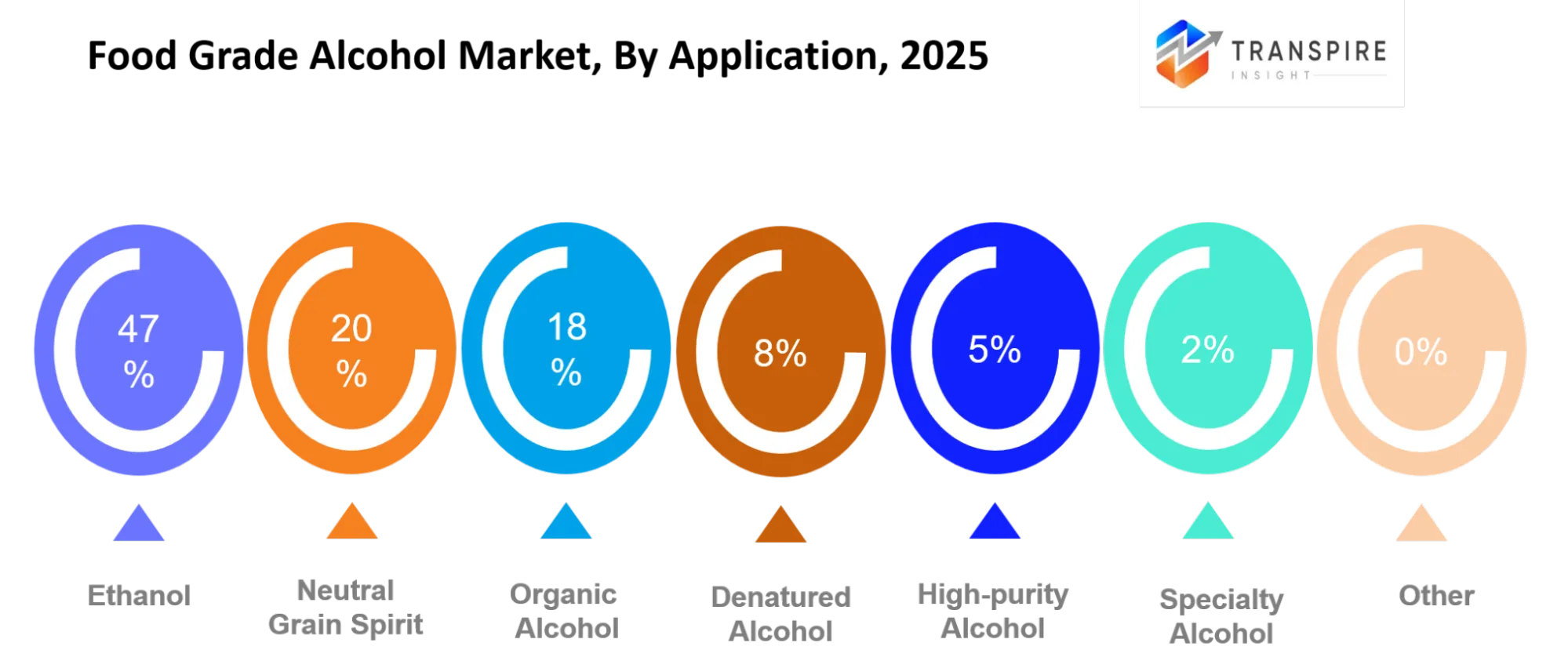
The Ethanol dominated the market, accounting for nearly 50% in 2025 and is expected to rise at a significant CAGR during the forecast period.
The Food Grade Alcohol Market is segmented by product type into Ethanol, Neutral Grain Spirit, Organic Alcohol, Denatured Alcohol, High-purity Alcohol, Specialty Alcohol, Others. Among these, the Ethanol segment dominated the market, accounting for nearly 50% in 2025 and expected to increase at a significant CAGR during the forecast period. Ethanol is at the forefront of the Food Grade Alcohol Market owing to its significant usage across various fields such as food processing, beverage production, flavor extraction, and pharmaceuticals. Ethanol enjoys a high level of purity and versatility along with regulatory acceptance and adaptability in different formulations which enhance its demand across the globe. With the rising consumption of alcoholic beverages and clean label products, the market for ethanol is likely to grow exponentially.
The Food Processing dominated the market, accounting for nearly 55% in 2025, and is expected to rise at a significant CAGR during the forecast period.
The Food Grade Alcohol Market is segmented by application into Food Processing, Beverages, Pharmaceuticals, Flavors & Fragrances, Bakery, Confectionery, Nutraceuticals, Others. Among these, the Food Processing segment dominated the market, accounting for nearly 55% in 2025 and expected to increase at a significant CAGR during the forecast period. Food processing is the driving force behind the Food Grade Alcohol Market due to its wide applications in products such as flavor extraction, preservatives, food formulations, and processing. The rising demand of processed food products, clean-label ingredients, natural flavoring solutions, and strict food safety regulations also support the growth of this segment. Increased manufacturing activities and technological advancements are likely to ensure further growth.
The Food Manufacturers dominated the market, accounting for nearly 35% in 2025 and is expected to rise at a significant CAGR during the forecast period.
The Food Grade Alcohol Market is segmented by end user into Food Manufacturers, Beverage Companies, Pharmaceutical Companies, Cosmetic Manufacturers, Restaurants, Others. Among these, the Food Manufacturers segment dominated the market, accounting for nearly 35% in 2025 and expected to increase at a significant CAGR during the forecast period. Food producers lead the Food Grade Alcohol Market as their use in flavoring, preservation, extraction, and food formulation is extremely high. The growing emphasis on processed food, clean-label ingredients, safety of products, and reliable quality of alcohol is expected to positively impact the growth of the segment.
Regional Segment Analysis of the Food Grade Alcohol Market:
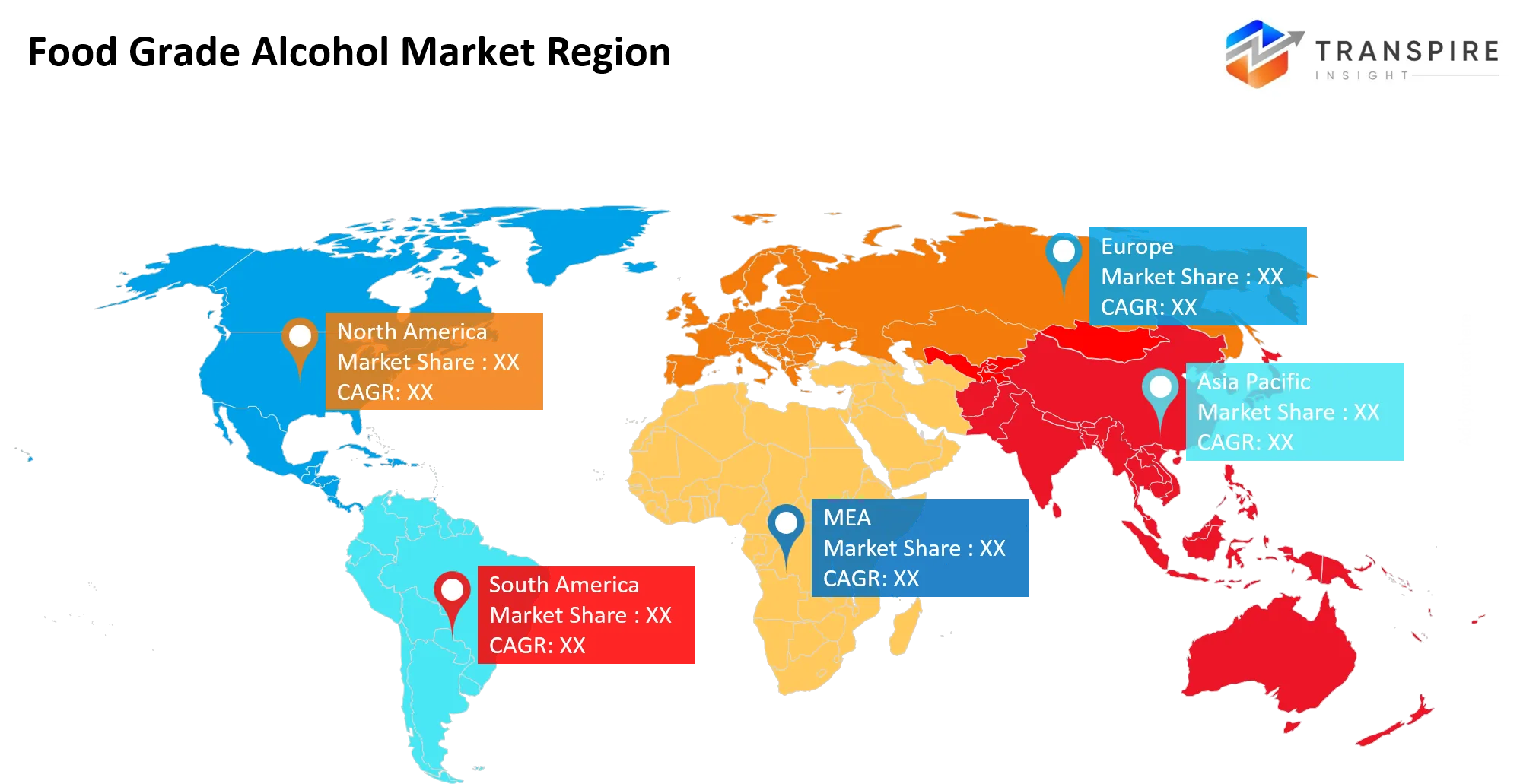
- North America (U.S., Canada, Mexico)
- Europe (Germany, France, U.K., Italy, Spain, Rest of Europe)
- Asia-Pacific (China, Japan, India, Rest of APAC)
- South America (Brazil and the Rest of South America)
- The Middle East and Africa (UAE, South Africa, Rest of MEA)
North America is the fastest-growing region in the Food Grade Alcohol Market during the period, holding around 34%share.
North America is expected to grow at a rapid CAGR in the Food Grade Alcohol Market holding around 34% share during the forecast period. The market for food-grade alcohol in North America is set for strong growth owing to high demand from food and beverage processing, flavor extraction, pharma applications, and premium alcoholic drinks. Additionally, the development of ethanol production infrastructure, growth in processing technologies and strict regulations has the potential to enhance consumer interest in food-grade alcohols and the willingness to invest in this market.
Europe is expected to grow at a rapid CAGR in theFood Grade Alcohol Market, holding around27%of the share during the forecast period.
Europe is expected to grow at a rapid CAGR in the Food Grade Alcohol Market holding around 27% share during the forecast period. Europe holds 27% market share due to its established spirit, wine, and beer industries, wide food processing base, and the need for pure ethanol in flavours extraction and specialty applications. Stringent quality regulation and sustainability measures in addition to clean label demand for food grade alcohol help advance the Food Grade Alcohol Market.
Asia Pacific is the fastest-growing region in the Food Grade Alcohol Market during the period, holding roughly35%share.
Asia Pacific is the fastest-growing region in the Food Grade Alcohol Market during the forecast period, holding roughly 35% share during the forecast period. Asia Pacific comes out as the fastest-growing region of the Food grade alcohol market, driven by the growth in food processing industries, growth in personal disposable income, rapid urbanization, and the increase in demand for alcoholic drinks and instant drinks. Strengthening of the regional food grade market is also attributed to the growing use of food grade alcohol in the pharmaceuticals, improved infrastructure for production, availability of raw materials in the form of agricultural feedstock, and change in consumer preferences.
Strategies for Market Growth in Non-Leading Regions:
Utilizing paid-effective and scalable production and processing techniques for food-grade alcoholic beverages would greatly support small and medium companies. Local production of food-grade alcohol and creation of regional plants for distillation and processing would decrease reliance on imports and assets and reduce production expenditures. Building cooperative relations with regional farmers, producers of beverages, food processing companies, pharmaceuticals, and distributors will increase market share of food-grade alcohol products. To increase the knowledge in the sphere of cultivation of raw materials, fermentation, distillation, control of quality, and standardization of products, it would be essential to establish educational programs in technical improvement. Moreover, different forms of financing, contracts for future delivery, and consequent manufacture will make food-grade alcohol goods available and contribute to expansion of their usage.
Future Market Trends for the Food Grade Alcohol Market: -
1.Demand for Clean-Label and Natural Extracts: Increased interest in organic foods and clean labels by consumers is boosting the use of food-grade ethanol as solvent in the extraction of vanilla, essential oils, and other herbal flavors.
2.Growth of Craft Beverages: The development of ready-to-drink (RTD) cocktails, flavored spirits, and low-ABV drinks is resulting in the higher demand for high purity neutral spirits to ensure uniformity in taste.
3.Shift toward Sustainability: Distillers are starting to utilize eco-friendly plant-based raw materials, such as corn, sugarcane, and agricultural waste, thus reducing the carbon footprint.
4.New Purification Technologies: Innovations introduced in modern distillation technology lead to a more effective purification process, helping suppliers maintain compliance with stricter safety regulations.
5.Expansion in Asia-Pacific: Rapid urbanization and growing disposable income of the middle class in countries like China and India are making Asia-Pacific the center for consumption and production.
Recent Development
In January 2026:
India enforced the Food Safety and Standards (Alcoholic Beverages) First Amendment Regulations of 2025, establishing formal definitions and standards for ready-to-drink alcohol beverages. The update enhances product standardization, labeling accountability, quality supervision, and regulatory transparency, which contributes to the changing safety requirements in India’s alcoholic beverage industry while also having an effect on developments of regulation across the globe.
In April 2026:
Recently IFF showcased the usage of DIAZYME® NOLO, which is a specially designed transglucosidase enzyme to enhance the flavor body of low- and no-alcohol beer while also contributing to increased efficiency in the brewing process. This advancement is indicative of the high demand for technological improvements in the field of low- and no-alcohol beverages and signifies that new product ideas and innovations are available on the Food Grade Alcohol Market.
In June 2026:
CerradinhoBio started its operations after the enlargement of its corn-ethanol facility in Chapadão do Céu located in Goiás, Brazil. With the expansion, corn-processing capacity has nearly increased to 1.2 million tonnes every year. The enlargement improves Brazil’s corn-based ethanol production infrastructure and also supports the overall Food Grade Alcohol Market through the enlargement of ethanol production capacity, supply-chain development and technological development.
This study forecasts revenue at , regional and country levels from 2020 to 2033. Transpire Insights has segmented the Food Grade Alcohol Market based on the below-mentioned segments:
Food Grade Alcohol Market, By Source
Food Grade Alcohol Market, By Product Type
- Ethanol
- Neutral Grain Spirit
- Organic Alcohol
- Denatured Alcohol
- High-purity Alcohol
- Specialty Alcohol
- Others
Food Grade Alcohol Market, By Application
- Food Processing
- Beverages
- Pharmaceuticals
- Flavors & Fragrances
- Bakery
- Confectionery
- Nutraceuticals
- Others
Food Grade Alcohol Market, By Distribution Channel
- Direct Sales
- Industrial Distributors
- Wholesale Suppliers
- Online B2B
- Exporters
- Retail Distribution
- Others
Food Grade Alcohol Market, By End User
- Food Manufacturers
- Beverage Companies
- Pharmaceutical Companies
- Cosmetic Manufacturers
- Restaurants
- Others
Food Grade Alcohol Market, By Regional Analysis
North America
- US
- Canada
- Mexico
Europe
- Germany
- UK
- France
- Italy
- Spain
- Russia
- Rest of Europe
Asia Pacific
- China
- Japan
- India
- South Korea
- Australia
- Rest of Asia Pacific
South America
- Brazil
- Argentina
- Rest of South America
Middle East & Africa
- UAE
- Saudi Arabia
- Qatar
- South Africa
- Rest of the Middle East & Africa
Frequently Asked Questions
Find quick answers to common questions.
Rising beverage consumption, clean-label demand, flavor extraction, pharmaceuticals, food processing, and increasing demand for high-purity ethanol are driving market growth.
Ethanol dominates, accounting for nearly 50% in 2025, supported by extensive applications across food processing, beverages, pharmaceuticals, and flavor extraction industries.
Food Processing dominates, accounting for nearly 55% in 2025, driven by extraction, preservation, formulation, and natural flavoring applications across food manufacturing industries
Asia Pacific is expected to grow fastest, supported by urbanization, rising incomes, expanding food processing, beverage consumption, and pharmaceutical applications.
The Food Grade Alcohol Market is projected to reach USD 13.4 billion by 2033, growing at a 4.27% CAGR.
- Cargill
- Archer Daniels Midland (ADM)
- Green Plains
- MGP Ingredients
- Roquette
- Cristalco
- Südzucker
- Wilmar International
- Tereos
- Grain Processing Corporation
- Manildra Group
- COFCO Biochemical
- CropEnergies
- Pure Alcohol Solutions
- Biofuel Systems Group
About the Authors

Chetan Dhatrak
I’m Chetan Dhatrak, a Senior Research Analyst at Transpire Insight, specializing in the Consumer Goods, Foods and Beverages industry. I focus on analyzing market trends, consumer behavior, competitive landscapes, and industry developments to deliver accurate, data-driven insights. My research at Transpire Insight is built on credible sources and in-depth analysis, helping businesses and readers better understand market dynamics, emerging opportunities, and evolving consumer preferences. I’m committed to creating reliable, well-researched content that supports informed decision-making and reflects the latest developments in the consumer goods and food & beverage sectors.

Chakradhar Khansole
Chakradhar serves as the Research Director at Transpire Insight, bringing over 8 years of experience in technology, innovation, and strategic market intelligence. He specializes in transforming complex market data into actionable business insights that enable organizations to make informed, growth-oriented decisions. Recognized for his strategic vision and analytical expertise, Chakradhar leads high-impact research initiatives, delivering comprehensive market assessments, competitive intelligence, and forward-looking industry analysis.
Recently Published Reports
-
Apr 2026
Baby Infant Formula Market
Baby Infant Formula Market Size, Share & Analysis Report By ype (Infant Milk, Follow On Milk, Specialty Baby Milk, Growing-Up Milk), By Ingredient (Carbohydrate, Fat, Protein, Minerals, Vitamins, and Others), By Product Form (Powder, Liquid, and Ready-to-feed), By Distribution Channels (Supermarket/Hypermarket, Specialty Store, Pharmacies, Online Retail, and Others), and Geography (North America, Europe, Asia-Pacific, Middle East and Africa, South and Central America), 2021 - 2031
-
Apr 2026
Edible Insects for Animal Feed Market
Edible Insects for Animal Feed Market Size, Share & Analysis Report By Type (Insect Powder, Insect Meal, Insect Bar, Insect Paste, Insect Oil, and Others), By Insect Type (Beetles, Cricket, Caterpillar, Hymenoptera, Orthoptera, Tree Bugs, and Others), By Application (Livestock, Pet Food, and Aquaculture), By Livestock Type (Poultry, Swine, and Others), and Geography (North America, Europe, Asia-Pacific, Middle East and Africa, South and Central America), 2021 - 2031
-
Apr 2026
Food Industry Disinfection and Bacterial Control Market
Food Industry Disinfection and Bacterial Control Market Size, Share & Analysis Report By Type (Chemical Disinfectants, Physical Disinfectants, and Biocides and Antimicrobials), By Application (Food Processing Equipment Surface Disinfection, Food Preparation Areas Surface Disinfection, Storage Areas Surface Disinfection, Anti-microbial Coatings Food Preservation, and Preservative Solutions Food Preservation), By End User (Meat and Poultry Processing, Dairy Processing, Seafood Processing, Bakery and Confectionery, Restaurants and Commercial Kitchens, and Food Service Providers), By Sales Channel (Online, Offline), and Geography (North America, Europe, Asia-Pacific, Middle East and Africa, South and Central America), 2021 - 2031
-
May 2026
Freeze Dried Food Market
Freeze Dried Food Market Size, Share & Analysis Report By Product Type (Fruits, Vegetables, Freeze-Dried Dairy Products, Freeze-Dried Meat and Seafood, Freeze-Dried Pet Food, and Prepared Meal), By Nature (Organic, and Conventional), By Form (Powdered, Granules, and Diced), By End Use (Breakfast Cereals, Dairy Products, Bakery & Confectionery, Nutritional Bars & Supplements, Powdered Beverages, Snacks, and Retail (Household)), and Geography (North America, Europe, Asia-Pacific, Middle East and Africa, South and Central America), 2021 - 2031