
Europe Ethylene Tetrafluoroethylene (ETFE) Market Size & Forecast:
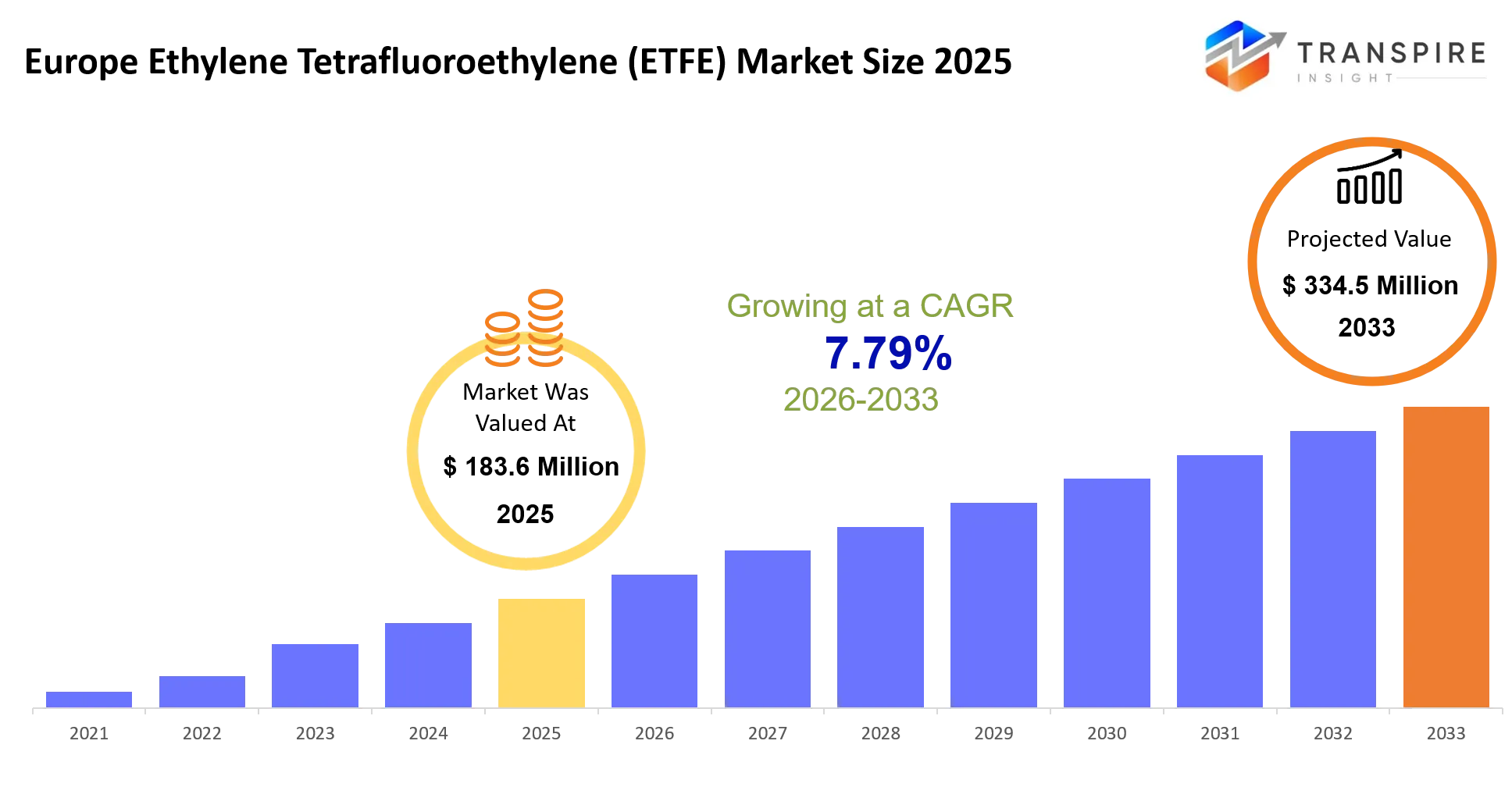
- Europe Ethylene Tetrafluoroethylene (ETFE) Market Size 2025: USD 183.6 Million
- Europe Ethylene Tetrafluoroethylene (ETFE) Market Size 2033: USD 334.5 Million
- Europe Ethylene Tetrafluoroethylene (ETFE) Market CAGR: 7.79%
- Europe Ethylene Tetrafluoroethylene (ETFE) Market Segments: By Type (Powder, Granules, Others); By Application (Construction, Electrical & Electronics, Automotive, Aerospace, Others); By Form (Films, Coatings, Sheets, Others); By End User (Industrial, Commercial, Residential, Others); By Distribution Channel (Direct Sales, Distributors, Others); By Processing Method (Extrusion, Injection Molding, Others)
Europe Ethylene Tetrafluoroethylene (ETFE) Market Summary
The Europe Ethylene Tetrafluoroethylene (ETFE) Market was valued at USD 183.6 Million in 2025. It is forecast to reach USD 334.5 Million by 2033. That is a CAGR of 7.79% over the period.
The Europe Ethylene Tetrafluoroethylene market is really important in places where regular materials have a time being strong, not too heavy and able to resist chemicals. Ethylene Tetrafluoroethylene is used a lot in building fronts, industrial linings, solar panel installations and special cable insulation. This helps the people in charge save money on maintenance and make things work better.
Ethylene Tetrafluoroethylene can handle bad weather, strong chemicals and sunlight which makes it very useful for big projects and industries.In the five years the market has changed to focus on materials that are light and good for the environment especially in commercial buildings and public projects. Europe has set rules to be more sustainable so architects and builders are using Ethylene Tetrafluoroethylene instead of heavier systems. This makes buildings stronger. Uses less energy.
At the time there were problems with getting materials after the COVID-19 pandemic and changes in the energy market, which showed that making fluoropolymers was not very strong. So manufacturers had to find ways to get materials from nearby places.All these things have made people invest more in Ethylene Tetrafluoroethylene applications and now it is used in more areas, like construction, renewable energy and industries which creates new ways to make money.
Key Market Insights
- The Europe Ethylene Tetrafluoroethylene market is doing well because people are using lightweight and durable materials when they build things and in factories.
- Buildings that use energy are becoming more popular and this is helping the Europe Ethylene Tetrafluoroethylene market because Europe Ethylene Tetrafluoroethylene is a material that is lightweight and can withstand the weather.
- Western Europe is the part of the Europe Ethylene Tetrafluoroethylene market with around forty five to fifty percent because there is a lot of construction going on and they have good factories.
- Germany is a part of the Europe Ethylene Tetrafluoroethylene market because they are spending money on new buildings and factories and on making new and interesting buildings.
- Europe Ethylene Tetrafluoroethylene films are the popular type of Europe Ethylene Tetrafluoroethylene and they are used a lot in roofs and walls and stadiums because they are around fifty five percent of the Europe Ethylene Tetrafluoroethylene market.
- Building things is the use of Europe Ethylene Tetrafluoroethylene and it is around forty percent of all the Europe Ethylene Tetrafluoroethylene used in Europe.
- Making energy from sunlight is the growing part of the Europe Ethylene Tetrafluoroethylene market because Europe Ethylene Tetrafluoroethylene helps solar panels work better and last longer.
- Factories are using Europe Ethylene Tetrafluoroethylene because it is very good at withstanding chemicals and not getting damaged.
- Companies are always trying to make Europe Ethylene Tetrafluoroethylene better by making types that are stronger and work better for the environment.
- Big companies, like AGC Inc and Daikin Industries and Chemours and Solvay and Saint-Gobain are working together. Making new things to sell more Europe Ethylene Tetrafluoroethylene and be the best.
What are the Key Drivers, Restraints, and Opportunities in the Europe Ethylene Tetrafluoroethylene (ETFE) Market?
Driver
The thing that is driving the Europe ETFE market the most is that people want to use lightweight and energy-efficient materials for construction projects. The rules for building in Europe are focused on using energy so developers are using advanced materials for the outside of buildings and roofs that let in a lot of natural light and are not too heavy. ETFE is a choice because it is lighter than glass and still works well and lasts a long time. As more big buildings like stadiums and airports use ETFE, the companies that supply it get business and make more money.
Restraint
The biggest problem is that it costs a lot to make ETFE and not many companies can do it. Making ETFE requires materials and equipment and companies have to be very careful about quality, which makes it hard for new companies to get started. This is an issue because making more ETFE would require a lot of money and time. As a result, the ETFE is often more expensive than materials like glass, so people do not always choose it, which slows down the growth of the market.
Opportunity
There is a chance for the ETFE market to grow because of all the new solar energy projects in Europe. ETFE is being used to protect panels because it lets light through and can handle bad weather and lasts a long time. As governments and investors put money into energy, especially in Germany, Spain and Italy, companies that make ETFE can make new products for the latest solar technologies and sell more ETFE. The Europe ETFE market can grow because of this and ETFE manufacturers can benefit from the expansion of energy.
What Has the Impact of Artificial Intelligence Been on the Europe Ethylene Tetrafluoroethylene (ETFE) Market?
Artificial intelligence and advanced digital technologies are changing the Europe Ethylene Tetrafluoroethylene (ETFE) market. They are making manufacturing more efficient, improving product quality and performing better. ETFE producers are using AI systems to monitor how they make ETFE. These systems watch polymerization conditions, temperature and material consistency in time. They adjust production settings automatically. This reduces waste. Improves how much ETFE is produced.
Machine learning is helping with maintenance in ETFE plants. It looks at data from reactors, extrusion lines and coating equipment. This helps find problems before they happen. It reduces downtime, makes equipment last longer and schedules maintenance better. In building and solar applications digital platforms monitor ETFE film performance. They forecast when the material will degrade. This helps with decisions about the ETFE lifecycle.The benefits are clear. Manufacturers see efficiency, lower maintenance costs and better product quality. AI also helps with planning by forecasting what materials are needed and how to produce the ETFE.
However, integrating AI systems is expensive. Many ETFE facilities have equipment that is not digitally connected. There is also data for AI models to learn from. This makes it hard to create predictive models for ETFE production.
Key Market Trends
- Since 2020 architects have started to use ETFE systems more because they want to make buildings lighter and use less energy.
- In Europe the rules about being sustainable have changed how people plan projects so now they like to use materials that're not too heavy and this has helped people start using advanced fluoropolymer solutions more.
- After 2021 people who make panels began to use ETFE films a lot because more people were investing in renewable energy in countries like Germany, Spain and Italy.
- When the pandemic caused problems with getting fluoropolymer materials from around the world manufacturers decided to get materials from closer to home.
- Since 2022 big companies like AGC, Daikin Industries and Chemours have focused on making kinds of ETFE that work really well.
- Now manufacturers use computers to watch how things are made and use intelligence to control the process, which helps them make products that are all the same and reduces waste.
- The people who buy these materials care more about saving money in the run than about how much they cost at first so they want ETFE solutions that will last a long time.
- To stand out from others companies are not just trying to make a lot of materials they are also trying to offer technical support make custom solutions and be experts, at applying ETFE in different ways.
- Companies that work with chemicals have started to use ETFE because they want to reduce the amount of maintenance they have to do.
- People are investing more in projects that use panels and want to make sustainable infrastructure, which is creating new opportunities for ETFE to be used in ways it was not used before.
Europe Ethylene Tetrafluoroethylene (ETFE) Market Segmentation
By Type
ETFE comes in powder forms. These are good for applications that need processing and material modification before making the final product. ETFE powder grades are also good for industrial uses because they can resist strong chemicals and high temperatures. Many industries use ETFE in coatings and engineered components.ETFE also comes in granules. This format is widely used because it is easy to process during molding and extrusion operations. Granules make it easy to have a material flow and reduce processing complexity. This is why many large-volume manufacturing environments use them. There are forms of ETFE that serve niche requirements. These are used when custom specifications, unique performance properties or specialized fabrication processes are needed.
By Application
Construction is an application area for ETFE. This is because ETFE is widely used in roofing, façades and transparent architectural structures. ETFE is a material for modern infrastructure projects because it can transmit light well, resist weather and last a long time. Many large commercial developments use polymer materials like ETFE to improve structural efficiency.ETFE is also used in electronics applications. This is because it is an insulator and can resist harsh operating conditions. The automotive and aerospace sectors use ETFE in components that need to be durable, lightweight and thermally stable. Other applications for ETFE are emerging as manufacturers find ways to improve product performance and operating life.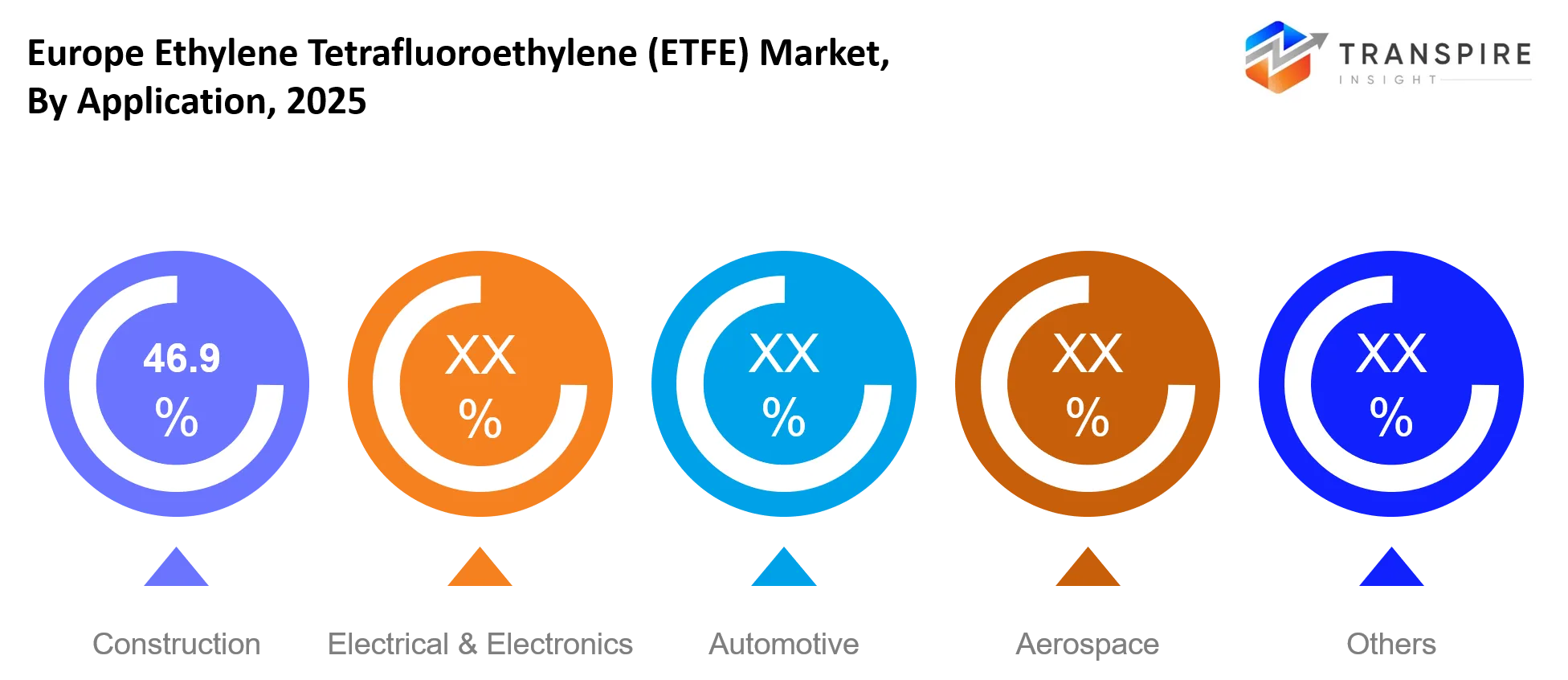
By Form
ETFE films are widely used. This is because architectural structures, photovoltaic systems and industrial applications need highly transparent materials. ETFE films can resist exposure and perform well in demanding conditions. Many sustainable infrastructure projects in Europe use ETFE films.ETFE coatings are used to protect against corrosion, chemicals and weather-related degradation in environments. ETFE sheets are used when structural strength and dimensional stability are important. There are forms of ETFE that address specialized industrial needs. These require customized material configurations and application-specific performance characteristics.
By End User
Industrial end users are a part of ETFE consumption. This is because ETFE is widely used in chemical processing, manufacturing facilities and technical applications. ETFE is a high-performance material that can resist heat, chemicals and mechanical stress. It can also last a time, which supports value creation across industrial installations.ETFE is also used in projects like shopping centers, sports venues, airports and public infrastructure developments. Residential adoption of ETFE is. Growing in premium construction applications. Other end users contribute to the demand for ETFE through projects that require advanced material performance.
By Distribution Channel
Direct sales are important for ETFE. This is because large industrial customers often need specifications, technical support and long-term supply agreements. Manufacturers and buyers work closely together to ensure product performance and project success. Large-scale projects often rely on procurement channels for efficient supply management.Distributors play a role in expanding the market reach of ETFE and improving product availability. They help smaller customers access materials without having to maintain direct supplier relationships. Other channels support purchasing arrangements based on project requirements and regional market conditions.
By Processing Method
Extrusion is a leading processing method for ETFE. This is because films, sheets and various industrial components require efficient production techniques. Extrusion supports consistent product quality and manufacturing capabilities. Technological improvements continue to enhance production efficiency and material utilization.Injection molding is used to produce components that require precise dimensions and repeatable performance characteristics. The demand for ETFE, from the electrical and industrial sectors continues to grow. Other processing methods are used for applications where unique manufacturing requirements determine the process selection.
What are the Key Use Cases Driving the Europe Ethylene Tetrafluoroethylene (ETFE) Market?
The biggest use of ETFE is in building roofs and walls for stadiums, airports and commercial buildings. These projects need materials that're very clear, not too heavy and can withstand the weather for a long time. ETFE is a choice because it helps reduce the weight on buildings and lets in natural light which is why it's often used in modern construction projects in Europe.
ETFE is also being used more in making electronic parts, where it provides good insulation and can resist heat and chemicals. Factories that process materials use ETFE coatings to protect their equipment from getting damaged by harsh chemicals, which helps them save on maintenance and make their equipment last longer.
There are also opportunities for ETFE in solar panels and greenhouses. ETFE films help solar panels let in light and last longer which supports the use of renewable energy in many European countries. People are also getting more interested in using ETFE in greenhouses because it is lightweight and clear which can help create better growing conditions and reduce maintenance costs.
|
Report Metrics |
Details |
|
Market size value in 2025 |
USD 183.6 Million |
|
Market size value in 2026 |
USD 197.9 Million |
|
Revenue forecast in 2033 |
USD 334.5 Million |
|
Growth rate |
CAGR of 7.79% from 2026 to 2033 |
|
Base year |
2025 |
|
Historical data |
2021 - 2024 |
|
Forecast period |
2026 - 2033 |
|
Report coverage |
Revenue forecast, competitive landscape, growth factors, and trends |
|
Regional scope |
Europe |
|
Key company profiled |
AGC Inc., Daikin Industries, Chemours, 3M, Solvay, Saint-Gobain, Zeus Industrial Products, Polyflon Technology, Dongyue Group, HaloPolymer, Vector Foiltec, Guarniflon, Fluorocarbon Company, Tekra, Nowofol |
|
Customization scope |
Free report customization (country, regional & segment scope). Avail customized purchase options to meet your exact research needs. |
|
Report Segmentation |
By Type (Powder, Granules, Others); By Application (Construction, Electrical & Electronics, Automotive, Aerospace, Others); By Form (Films, Coatings, Sheets, Others); By End User (Industrial, Commercial, Residential, Others); By Distribution Channel (Direct Sales, Distributors, Others); By Processing Method (Extrusion, Injection Molding, Others) |
Which Regions are Driving the Europe Ethylene Tetrafluoroethylene (ETFE) Market Growth?
Western Europe holds the leading position in the market due to strong investment in sustainable construction, advanced manufacturing capabilities, and supportive environmental policies. Countries such as Germany, France, and the United Kingdom continue to promote energy-efficient building practices that favor lightweight, durable materials. A mature network of architects, engineering firms, specialty material suppliers, and construction companies supports widespread adoption across commercial and public infrastructure projects. Strong research capabilities and established fluoropolymer processing expertise further reinforce the region’s leadership.
Northern Europe represents the second-largest regional contributor and differs from Western Europe through its focus on long-term infrastructure planning and stable industrial demand. Countries across the region maintain consistent investment in public buildings, transportation facilities, and industrial modernization projects. Steady regulatory implementation creates a predictable business environment that supports material adoption without major market fluctuations. Strong economic resilience and continuous spending on high-performance construction solutions make the region a reliable source of revenue.
Southern Europe is emerging as the fastest-growing regional market, driven by increasing investment in renewable energy and large-scale infrastructure upgrades. Recent expansion of solar power projects in countries such as Spain and Italy has created new opportunities for ETFE film applications. Government-backed development programs and modernization initiatives have accelerated the adoption of advanced construction materials across multiple sectors. This growth trajectory will create attractive opportunities for manufacturers, distributors, and investors seeking expansion between 2026 and 2033.
Who are the Key Players in the Europe Ethylene Tetrafluoroethylene (ETFE) Market and How Do They Compete?
The Europe Ethylene Tetrafluoroethylene (ETFE) market shows a moderately consolidated competitive structure where a small group of fluoropolymer producers controls high-value supply, while specialized converters and fabricators serve downstream demand. Incumbents focus on protecting long-term contracts with construction, renewable energy, and industrial clients because switching costs remain high due to material certification requirements. Competition is driven mainly by technology performance, especially optical clarity, weather resistance, and processing consistency, rather than pure price competition. New entrants face barriers linked to capital intensity, regulatory approvals, and limited access to fluoropolymer feedstock.
AGC Inc. focuses on technology innovation by enhancing ETFE film transparency and durability for architectural membranes used in large stadium and airport projects. Its advantage comes from advanced film processing expertise and integration with global glass and building material ecosystems, supported through joint development agreements with construction contractors across Europe. Daikin Industries strengthens its position through material science specialization, offering high-grade ETFE resins optimized for electrical insulation and chemical resistance applications in industrial environments. It expands through long-term supply contracts and localized technical support centers.
The Chemours Company differentiates itself through high-performance fluoropolymer portfolios that target extreme environment applications, particularly in chemical processing and energy infrastructure. It builds advantage through strict material certification standards and collaboration with engineering firms for customized ETFE solutions. Solvay focuses on specialty fluoropolymers with strong compliance credentials for European regulatory frameworks, expanding through partnerships with sustainability-driven infrastructure developers and renewable energy integrators. Saint-Gobain strengthens its position by integrating ETFE into advanced building envelope systems, expanding through architectural project collaborations and regional construction network partnerships across Europe.
Company List
- AGC Inc.
- Daikin Industries
- Chemours
- 3M
- Solvay
- Saint-Gobain
- Zeus Industrial Products
- Polyflon Technology
- Dongyue Group
- HaloPolymer
- Vector Foiltec
- Guarniflon
- Fluorocarbon Company
- Tekra
- Nowofol
Recent Development News
“In March 2026, AGC Inc. announced capacity expansion for fluoropolymer film production used in architectural ETFE applications in its European supply chain network. The expansion strengthens availability of high-performance ETFE film for façade and roofing systems, improving supply stability for large-scale construction and infrastructure projects in Europe.”https://www.agc.com
“In January 2026, Saint-Gobain entered a strategic collaboration with European architectural engineering firms to co-develop lightweight ETFE-based façade systems for energy-efficient buildings. The partnership accelerates adoption of ETFE membranes in sustainable construction, enhancing demand in Europe’s green building sector.”https://www.saint-gobain.com
“In November 2025, Vector Foiltec secured a major contract to supply ETFE cushion roofing systems for a large-scale sports and transport infrastructure project in Western Europe. The project reinforces ETFE adoption in high-transparency, lightweight architectural applications, supporting market expansion in public infrastructure construction.”https://www.vector-foiltec.com
What Strategic Insights Define the Future of the Europe Ethylene Tetrafluoroethylene (ETFE) Market?
Europe’s ETFE market is structurally advancing toward architecture-led material substitution, where demand is increasingly tied to net-zero building mandates and the shift toward ultra-lightweight, high-transparency envelope systems rather than conventional glazing or rigid fluoropolymers. Over the next 5–7 years, this trajectory will be driven by tightening EU building energy performance regulations and the acceleration of retrofit programs across transport hubs, stadiums, and large commercial infrastructure. A less obvious risk is substitution pressure from next-generation smart glass and adaptive photovoltaic façades, which could reduce ETFE’s share in premium architectural applications despite sustainability alignment. An emerging opportunity lies in modular ETFE cushion systems integrated with embedded PV or sensor-based climate control layers, still in early commercialization but gaining traction in advanced European smart-city pilots. Strategically, suppliers should move beyond material supply into integrated façade system partnerships with engineering and EPC firms, locking in specification-level adoption before smart glass ecosystems become the default design standard.
Europe Ethylene Tetrafluoroethylene (ETFE) Market Report Segmentation
-
By Type
- Powder
- Granules
- Others
-
By Application
- Construction
- Electrical & Electronics
- Automotive
- Aerospace
- Others
-
By Form
- Films
- Coatings
- Sheets
- Others
-
By End User
- Industrial
- Commercial
- Residential
- Others
-
By Distribution Channel
- Direct Sales
- Distributors
- Others
-
By Processing Method
- Extrusion
- Injection Molding
- Others
Frequently Asked Questions
Find quick answers to common questions.
The Expected Europe Ethylene Tetrafluoroethylene (ETFE) Market size for the Market will be USD 334.5 Million in 2033.
Key segments for the Europe Ethylene Tetrafluoroethylene (ETFE) Market are By Type (Powder, Granules, Others); By Application (Construction, Electrical & Electronics, Automotive, Aerospace, Others); By Form (Films, Coatings, Sheets, Others); By End User (Industrial, Commercial, Residential, Others); By Distribution Channel (Direct Sales, Distributors, Others); By Processing Method (Extrusion, Injection Molding, Others).
Major Europe Ethylene Tetrafluoroethylene (ETFE) Market players are AGC Inc., Daikin Industries, Chemours, 3M, Solvay, Saint-Gobain, Zeus Industrial Products, Polyflon Technology, Dongyue Group, HaloPolymer, Vector Foiltec, Guarniflon, Fluorocarbon Company, Tekra, Nowofol.
The Current Europe Ethylene Tetrafluoroethylene (ETFE) Market size is USD 183.6 Million in 2025.
The Europe Ethylene Tetrafluoroethylene (ETFE) Market CAGR is 7.79% from 2026 to 2033.
- AGC Inc.
- Daikin Industries
- Chemours
- 3M
- Solvay
- Saint-Gobain
- Zeus Industrial Products
- Polyflon Technology
- Dongyue Group
- HaloPolymer
- Vector Foiltec
- Guarniflon
- Fluorocarbon Company
- Tekra
- Nowofol
About the Authors

Pankaj Ghogare Patil
I am Pankaj Ghogare Patil, a Senior Research Analyst at Transpire Insight, specializing in the Pharmaceutical, Chemicals & Materials, Healthcare IT, and Biotechnology industry. My expertise lies in conducting comprehensive market research, analyzing industry trends, evaluating competitive landscapes, and translating complex data into actionable insights. At Transpire Insight, I closely follow emerging technologies, regulatory developments, and market innovations to create accurate, well-researched, and informative content that helps businesses and professionals make informed decisions. I am committed to producing credible, evidence-based articles that reflect industry best practices while making technical topics accessible and valuable for a broad audience.

Chakradhar Khansole
Chakradhar serves as the Research Director at Transpire Insight, bringing over 8 years of experience in technology, innovation, and strategic market intelligence. He specializes in transforming complex market data into actionable business insights that enable organizations to make informed, growth-oriented decisions. Recognized for his strategic vision and analytical expertise, Chakradhar leads high-impact research initiatives, delivering comprehensive market assessments, competitive intelligence, and forward-looking industry analysis.
Recently Published Reports
-
May 2026
Healthcare Polymer Packaging Market
Healthcare Polymer Packaging Market Size, Share & Analysis Report By Packaging Type (Syringes, IV Bottles and Pouches, Clamshells, Blisters, Bottles & Jars, Containers, Tubes, IV Parental Packaging, Others), By Type (Regulated, Non-regulated), By Polymer Type (LDPE (Low-Density Polyethylene), HDPE (High-Density Polyethylene), Homo-polymer (Homo), Random Copolymer (Random), Block Copolymer (Block), PET, Polystyrene, Polyvinyl Chloride, Polyamide/EVOH, Others), and Geography (North America, Europe, Asia-Pacific, Middle East and Africa, South and Central America), 2021 - 2031
-
Apr 2026
Hydrophilic Tape (Waterstop) Market
Hydrophilic Tape (Waterstop) Market Size, Share & Analysis Report By Type (Bentonite-Based Hydrophilic Tape, Rubber-Based Hydrophilic Tape), By Application (Residential Buildings, Commercial Buildings, Infrastructure Projects), and Geography (North America, Europe, Asia-Pacific, Middle East and Africa, South and Central America), 2021 - 2031
-
Apr 2026
Metalens Market
Metalens Market Size, Share & Analysis Report By Type (Visible Light Metalens, and Infrared Metalens), By Application (Consumer Electronics, Automotive Electronics, Industrial, Medical, and Others), and Geography (North America, Europe, Asia-Pacific, Middle East and Africa, South and Central America), 2021 - 2031
-
Apr 2026
PBT Resin Market
PBT Resin Market Size, Share & Analysis Report By Type (Reinforced PBT Resin, Unreinforced PBT Resin), By Processing Method (Injection Molding, Extrusion, Blow Molding, Others), By End-User (Automotive, Electrical & Electronics, Consumer Appliances, Industrial Machinery, Medical Devices, Packaging, Others), and Geography (North America, Europe, Asia-Pacific, Middle East and Africa, South and Central America), 2021 - 2031