

Europe Corn Fiber Market Size & Forecast:
- Europe Corn Fiber Market Size 2025: USD 326.4 Million
- Expected Market Value 2033: USD 572.5 Million
- Forecast CAGR: 7.25%
- Leading region in 2025: Germany
- Fastest Growing region: United Kingdom
- Key Profile: Cargill, Tate & Lyle, ADM, Roquette, Ingredion, Grain Processing Corporation, BENEO, SunOpta, Tereos, Kerry Group, DuPont, Cosucra, Südzucker, Nexira, Fiberstar
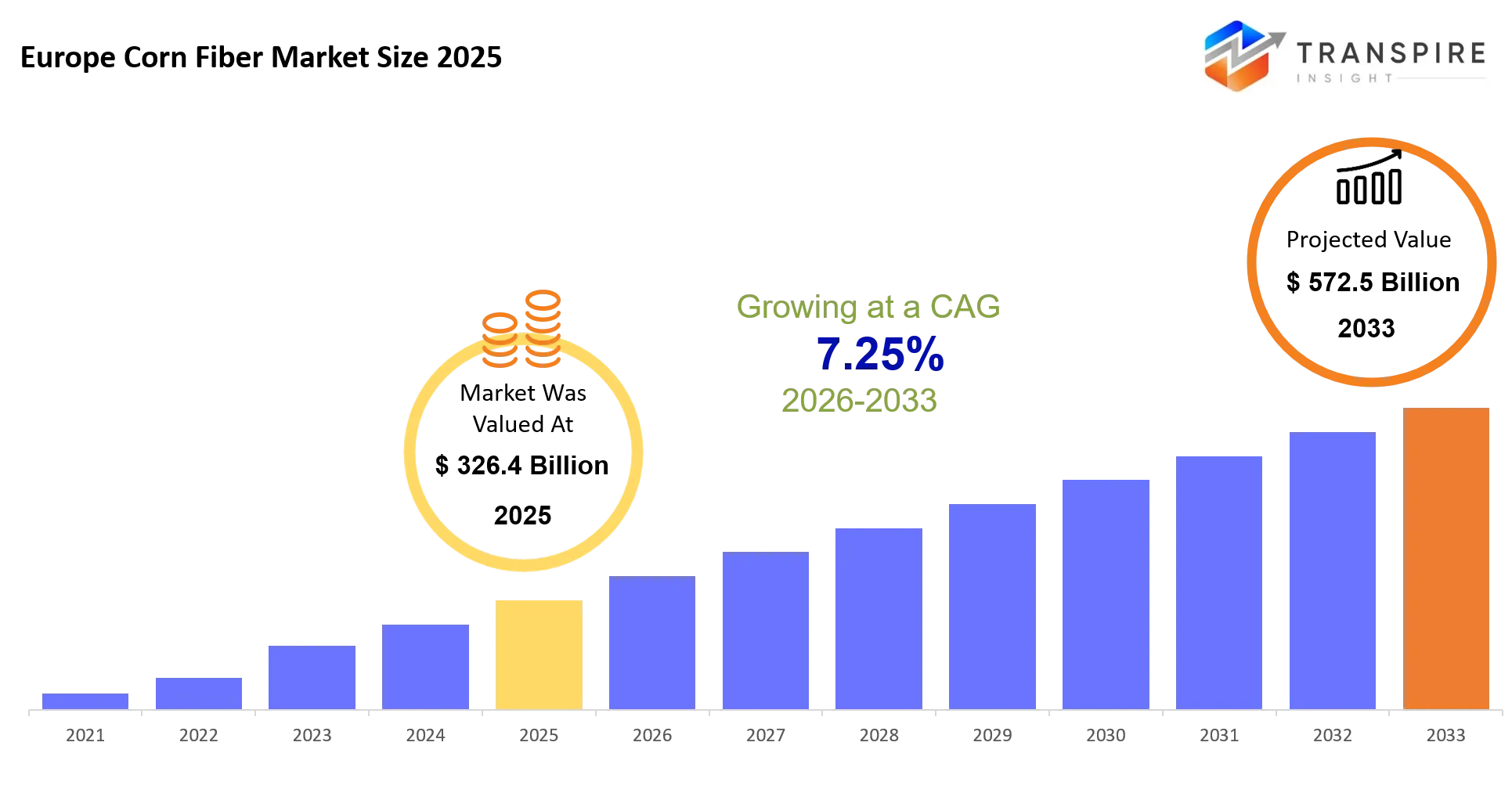
Key Market Insights
- Germany kind of dominated the Europe Corn Fiber Market, roughly 24% market share in 2025, mostly backed by its advanced food processing industry and ingredient manufacturing base— you know, the whole groundwork is already there.
- The United Kingdom, though, is projected to be the fastest-moving regional market during 2025–2033, driven by accelerated product reformulation AND functional food innovation , so it’s not just one factor.
- When you look at product type, soluble corn fiber led the segment with nearly 58% market share in 2025. This happened partly because it’s used a lot in fiber-enriched beverages, and in nutritional formulations that aim for steadier intake.
- Insoluble corn fiber stayed in the second spot, mainly because bakery manufacturers keep expanding its use in higher-fiber product development, they keep going back to it.
- Modified corn fiber ingredients are expected to grow the quickest through 2033, supported by better functionality and formulation flexibility.
- For applications, food and beverages remained the main driver with around 68% share in 2025, reflecting large-scale fiber fortification across mainstream product categories.
- Dietary supplements are forecast to show the fastest growth through 2033 too, as manufacturers keep building digestive health and metabolic wellness portfolios, it’s becoming a big focus.
- On the end-user side, food manufacturers represented the leading segment, with approximately 71% market share in 2025, supported by ongoing product reformulation work.
- Nutraceutical manufacturers are predicted to turn into the fastest growing end-user category as functional nutrition portfolios keep expanding across Europe, kind of continuously.
- On top of that , Cargill added more specialty fiber offerings, Tate & Lyle put money into fiber innovation, Roquette boosted the making of functional ingredients , Ingredion rolled out wider clean-label portfolios, ADM went further with specialty ingredient investments, and BENEO widened its nutrition-oriented product development.
What are the Key Drivers, Restraints, and Opportunities in the Europe Corn Fiber Market?
European food reformulation policies stay the strongest push driving industry growth, like for real. Front-of-pack nutrition strategies, sugar reduction programs, and fiber enrichment targets have basically nudged manufacturers to redesign their well known product lines, even when it’s a bit messy. Soluble corn fiber works pretty well here, because it helps meet the nutritional statements while still keeping taste and texture. And that combo tends to shorten the reformulation timeline, plus it supports premium pricing too. As more multinational brands lock in recipes across European markets, ingredient suppliers end up grabbing bigger contracts and more dependable repeat revenue, year after year.
Still, raw material volatility and processing costs are the biggest structural drag. Corn availability keeps swinging around due to weather variability, energy prices, and disruptions in international grain trading. If someone wants to build new processing capacity, they need heavy capital spending and multiple regulatory approvals, so fast expansion is not exactly easy. Based on Transpire Insight review of regional procurement announcements and launch schedules, the concentration of supply chains is still the main execution risk, which is kind of the whole issue. Practically speaking, it leads to delayed commercial launches, ingredient prices that move upward ,and slower penetration among cost sensitive food manufacturers.
The next growth opportunity is sort of in precision nutrition and advanced functional food development , but in a real, hands on way. Manufacturers are putting money into high-performance fiber ingredients that mix digestive well-being , with sugar reduction and better mouthfeel, like texture that actually works. As for where to launch and scale, the United Kingdom and Germany look quite appealing because of strong food innovation ecosystems and retail channels that are already in place. Firms that can deliver tailored corn fiber solutions , with proven nutritional performance will likely be set to win the premium market segments in the coming decade.
What Has the Impact of Artificial Intelligence Been on the Europe Corn Fiber Market?
Artificial intelligence and digital manufacturing technologies are, little by little, improving how corn fiber ingredients get produced and commercialized across Europe. Nowadays modern processing facilities more and more use AI- enabled monitoring systems, to squeeze better results from starch separation, fiber recovery, moisture control, and quality checks. Automated inspection platforms keep watching production parameters 24/7, so there is less manual involvement and, at the same time, it becomes easier to stay on track with regulatory compliance and maintain the same product consistency.
Machine learning models are also getting better at forecasting, basically everywhere in the ingredient value chain. Manufacturers pull in procurement records, seasonal crop expectations, customer buying habits, and inventory signals, then they try to forecast what raw material will be needed and how to schedule production, in a more rational sequence. Predictive analytics helps cut supply disruptions, and improves plant utilization too, because it can point to maintenance needs before equipment failures start. With this, downtime goes down, production efficiency goes up, and waste generation is reduced, while responses to changing customer orders become faster
Digital tools are even supporting formulation work, by looking at ingredient interactions across bakery, beverage, and nutritional uses, which can shorten development timelines for new commercial products. Still, AI adoption hits practical limits sometimes. Connecting advanced analytics with older manufacturing systems takes a lot of funding. And reliable machine learning, it depends on consistent operational data, gathered across multiple production sites. Smaller ingredient manufacturers, they often don’t have the digital backbone required to capture these efficiency benefits, at commercial scale, so the gap remains.
Key Market Trends
- After 2022 , food manufacturers kinda sped up their fiber reformulation work , and they started rolling multifunctional corn fiber into mainstream bakery, beverage , and dairy alternative lines.
- Meanwhile, European ingredient suppliers put money into regional processing capacity during 2023–2025, mainly to lessen exposure to global grain logistics hiccups that kept coming up.
- Clean-label launches too, are now more often pairing corn fiber with protein enrichment. It ends up as higher-value functional food formulations, spanning lots of categories , and generally sounding pretty “better for you” on the shelf.
- On the digital side, formulation platforms helped shorten development cycles. They basically let teams test fiber functionality faster, even across pretty complex food applications, without dragging things out.
- Ingredion also expanded its specialty ingredient capabilities. The point was to bolster its European functional nutrition portfolio, and to give customers more practical support during formulation.
- Tate & Lyle increased investment in specialty fiber innovation as well, to keep up with changing nutritional requirements across Europe.
- Retailers, in 2024–2025, grew their private-label functional food portfolios , which created more procurement openings for regional corn fiber suppliers to step in.
- At the same time, many manufacturers adopted traceable sourcing systems, mostly to meet retailer transparency expectations and to improve procurement resilience across European markets.
- And strategic collaborations between ingredient suppliers and food producers kinda helped push commercialization along faster, especially for customized fiber solutions aimed at digestive health and sugar reduction use cases.
Europe Corn Fiber Market Segmentation
By Product Type :
Soluble corn fiber kind of holds the top spot, mainly because food manufacturers really like its excellent solubility , plus the stable processing behavior, and also those digestive wellness benefits. It is used pretty widely across beverages, dairy alternatives, and nutritional products so the commercial demand stays steady and not too weirdly seasonal. Insoluble corn fiber comes next, with solid adoption in bakery goods, cereals, and snacks, where fiber enrichment matters a lot and texture improvement is still a key thing. Organic corn fiber keeps pulling more attention too, since premium food brands are expanding certified organic product lines across multiple European countries.
Conventional corn fiber is still a pretty practical choice for big scale food production, simply due to stable supply and pricing that stays competitive so high volume manufacturing keeps moving. Modified corn fiber is getting more traction as well, because it brings better functional performance, smarter moisture control, and extra flexibility when formulating processed foods. Resistant starch fiber is also growing in nutrition focused product areas, since companies want ingredients that support digestive wellness and help keep carbohydrate blends more balanced. Prebiotic fiber and other specialty variants open up even more opportunities, by supporting newer functional food development , and by making product differentiation a little easier too.
By Application :
Food and beverages are the biggest application category, but it kind of makes sense because fiber enrichment has turned into a key product development approach across mainstream packaged foods. Beverage makers, cereal producers, and snack companies keep re-working their formulas to raise nutritional quality while still holding onto a familiar flavor and texture. Dietary supplements also keep growing, since digestive wellness and preventive nutrition are getting more commercial spotlight lately. Even animal feed uses help keep demand fairly steady too, mostly by improving nutritional balance in livestock recipes.
On the pharmaceutical side, there’s extra value when fiber ingredients back specialized formulations and certain medical nutrition products. Bakery products stay on a steady path of adoption because fiber ingredients can upgrade nutritional profiles without forcing major production changes. Dairy items and functional foods keep opening up fresh commercial openings as manufacturers release premium options with added health benefits. Then there are the other applications, which still provide support in a more specialized way, by covering industrial and research requirements that don’t really go away.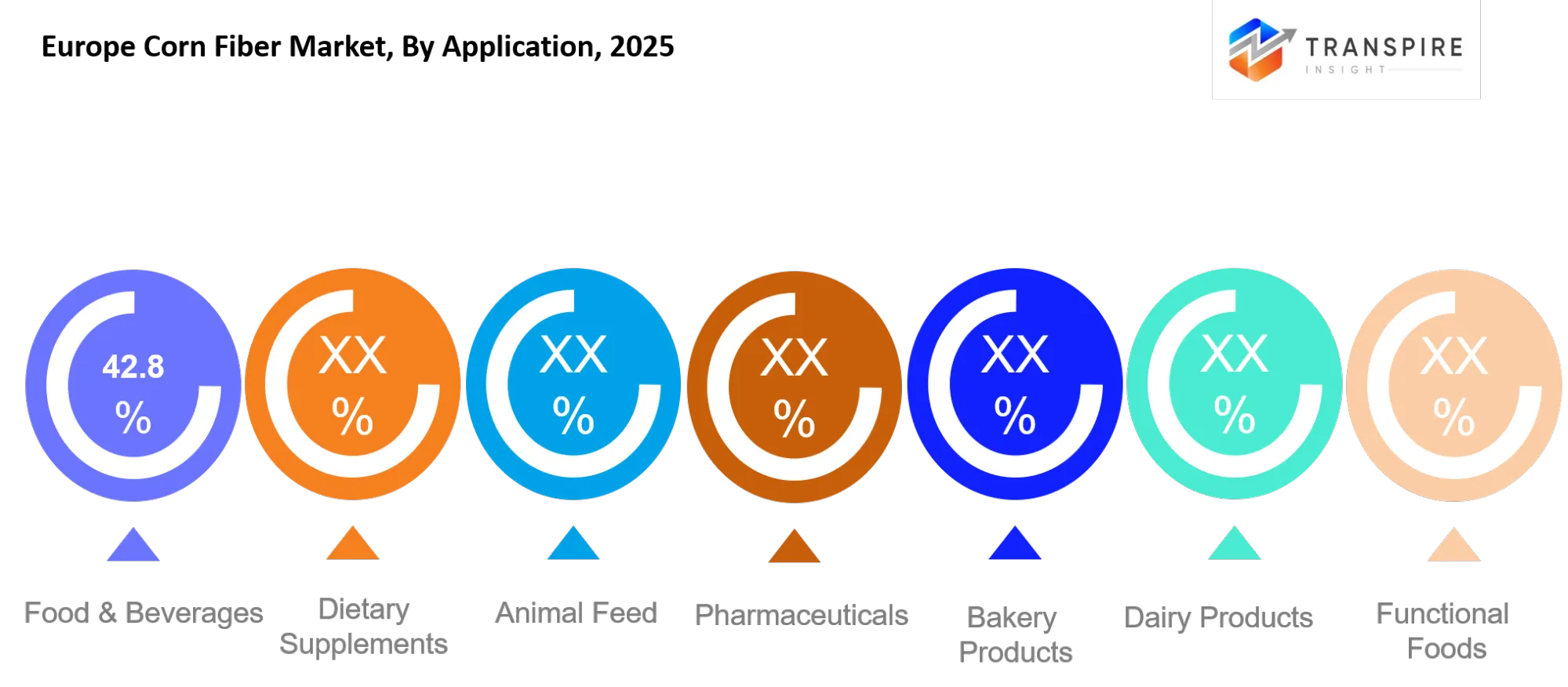
By End User :
Food manufacturers kind of account for the biggest share, mainly because those product reformulation programs keep expanding across bakery, beverage, dairy , and convenience food categories too. With steady production volumes and already established processing capabilities, they’re able to reinforce long-term ingredient procurement pretty reliably. Nutraceutical companies also count as a meaningful customer group, they’re bringing in fiber-enriched supplements aimed at digestive and metabolic health in particular. Meanwhile animal feed producers stay active as well, keeping purchasing fairly stable for balanced nutrition formulations.
Pharmaceutical companies end up buying specialized ingredients for certain health and nutrition uses, where formulation quality stays non-negotiable . Household demand keeps growing too, mostly due to broader retail availability of fiber-enriched food products. Research institutes help move things forward by assessing new ingredient performance along with processing techniques. Contract manufacturers, plus a few other end users, keep market momentum going through more flexible production services and customized formulation support.
By Form :
Powder is still the preferred form because the way it handles, gets stored, shipped, and blended seems to line up with big-scale manufacturing needs, pretty well. Its compatibility with food processing systems helps it get adopted across many industries, and honestly that matters. Granules also stay in demand where controlled flow characteristics improve production efficiency, and it’s not just theory. Liquid formats get used for a number of selected beverage and processing applications that need quicker ingredient incorporation.
Capsules and tablets help nutritional supplement manufacturers, offering convenient consumer formats with consistent dosage, which keeps things predictable. Blends keep expanding too, since customized ingredient combinations make product formulation and manufacturing easier. Concentrates are getting attention where higher functional performance backs up premium product development. Then there are other specialized forms, they keep serving niche applications that require unique processing characteristics, and that’s usually the point.
By Distribution Channel :
Direct sales lead distribution happens because big food makers usually want those longer term supply agreements , plus technical support , and an overall steady procurement relationship . When supplier partnerships are solid it helps both sides with inventory planning, and production timing goes smoother for ingredient producers and buyers too. Distributors are still relevant , they serve regional manufacturers and smaller processing companies , and they offer more flexible purchasing options, which matters a lot in practice. Meanwhile online retail keeps growing , since ingredient accessibility improves not just in business markets , but also for everyday consumers .
Supermarkets and specialty stores boost product visibility by stocking more nutrition-forward food items, in a broader way . Health stores do well with premium sales by targeting people who are looking for fiber - enriched dietary choices. Export channels keep opening up cross border chances , especially as regional production networks widen across Europe. Other distribution channels add extra room to maneuver by meeting specialized customer needs , and by catering to emerging commercial segments that are still developing .
What are the Key Use Cases Driving the Europe Corn Fiber Market?
Food and beverage manufacturing still seems to be the main, go to use case, because producers lean on corn fiber to nudge nutritional profiles upward while keeping overall product quality and processing efficiency kinda steady. Big food manufacturers, you know, buy these ingredients so they can hit fiber content targets and also help with reformulation efforts across their high volume consumer brands.
Dietary supplement producers are also catching on, mostly by rolling out digestive health products that come with extra functional value, or at least that’s how they’re positioning it. On top of that, bakery manufacturers are increasing their adoption too, since fiber ingredients help build high fiber bread, biscuits, and snack items. That fits pretty well with the changing nutritional standards, and the retail requirements that keep getting more detailed.
Meanwhile, newer applications are starting to show up in medical nutrition and in specialized functional foods that aim at targeted health benefits. Research institutes and pharmaceutical companies are looking at more advanced corn fiber formulations for clinical nutrition, while personalized nutrition brands are exploring customized ingredient solutions. If things play out, it could open up some new commercial opportunities during the forecast period.
|
Report Metrics |
Details |
|
Market size value in 2025 |
USD 326.4 Million |
|
Market size value in 2026 |
USD 350.8 Million |
|
Revenue forecast in 2033 |
USD 572.5 Million |
|
Growth rate |
CAGR of 7.25% from 2026 to 2033 |
|
Base year |
2025 |
|
Historical data |
2021 - 2024 |
|
Forecast period |
2026 - 2033 |
|
Report coverage |
Revenue forecast, competitive landscape, growth factors, and trends |
|
Regional scope |
Europe (Germany, United Kingdom, France, Italy, Spain and Rest of Europe) |
|
Key company profiled |
Cargill, Tate & Lyle, ADM, Roquette, Ingredion, Grain Processing Corporation, BENEO, SunOpta, Tereos, Kerry Group, DuPont, Cosucra, Südzucker, Nexira, Fiberstar . |
|
Customization scope |
Free report customization (country, regional & segment scope). Avail customized purchase options to meet your exact research needs. |
|
Report Segmentation |
By Product Type (Soluble Corn Fiber, Insoluble Corn Fiber, Organic Corn Fiber, Conventional Corn Fiber, Modified Corn Fiber, Resistant Starch Fiber, Prebiotic Fiber, Others); By Application (Food & Beverages, Dietary Supplements, Animal Feed, Pharmaceuticals, Bakery Products, Dairy Products, Functional Foods, Others); By End User (Food Manufacturers, Nutraceutical Companies, Animal Feed Producers, Pharmaceutical Companies, Households, Research Institutes, Contract Manufacturers, Others); By Form (Powder, Granules, Liquid, Capsules, Tablets, Blends, Concentrates, Others); By Distribution Channel (Direct Sales, Distributors, Online Retail, Supermarkets, Specialty Stores, Health Stores, Export Channels, Others) |
Which Regions are Driving the Europe Corn Fiber Market Growth?
Germany is estimated to generate around 24% of the regional revenue, so basically it becomes the main market for corn fiber across Europe. With solid food safety rules, quite advanced food processing standards, and continuous support for healthier food formulations, adoption as an ingredient stays broad. There is also a mature kind of network, ingredient suppliers, food manufacturers, research centers , and processing facilities all together, which ends up improving production efficiency and making commercial availability more reliable. If functional food innovation keeps getting funded, and manufacturing capacity continues to expand, Germany should stay in front during most of the forecast period.
France is another significant region here, mainly because long-term investment in food processing plus agricultural value addition builds a more steady commercial setting. When regulatory steps are applied in a consistent way, manufacturers can plan product development and ingredient sourcing with more confidence. Strong local food brands, combined with reliable agricultural supply chains, drive steady demand for functional ingredients across several product groups. So overall, this kind of balanced industrial setup makes France a dependable contributor to regional market revenue.
The United Kingdom is expected to see the quickest pace of growth from 2026 through 2033, since food manufacturers are pushing harder on product reformulation and functional nutrition design. Also, more spending aimed at healthier packaged foods, plus broader innovation across dietary supplements , has built up momentum in the market lately. Retail shoppers keep leaning toward fiber-enriched items, and that keeps nudging suppliers to roll out ingredient solutions with higher value across several consumer categories. In this kind of setting, there are pretty compelling openings for fresh suppliers and investors who want to expand into the premium nutrition and functional food arenas during the forecast window.
Who are the Key Players in the Europe Corn Fiber Market and How Do They Compete?
In general the competitive landscape feels kinda moderately consolidated, like not too many, but enough. There are a limited number of global ingredient manufacturers that manage a lot of production capacity while regional suppliers keep going with more specialized offerings. Most of the push is around formulation technology, ingredient functionality, production efficiency, and long term supply reliability, not just price alone. Bigger manufacturers tend to keep protecting market share via research investment and wider product portfolios. Meanwhile the specialized suppliers are more focused on niche nutritional use cases and customized ingredient options, you know tailored answers rather than generic ones.
Cargill gets stronger by using broad ingredient portfolios plus integrated agricultural sourcing , which helps them keep supply dependable and also support cost efficiency. Ingredion differentiates its position through application support, customized formulation know how, and ongoing investment in specialty fiber innovation. Tate & Lyle leans into advanced soluble fiber technologies, aimed at helping food makers improve nutritional value while not risking product quality.
Roquette keeps expanding by leaning into plant based nutrition innovation and technical collaboration with food manufacturers developing premium functional products. ADM builds its competitive edge by pairing large scale agricultural processing with specialty ingredient development, so it can produce efficiently and also provide broad customer support across European markets. Going forward , continued investment in new product development, regional production capabilities, and customer focused technical services will still be the main approach for sustaining long term competitive advantage.
Company List
Tate & Lyle
ADM
Ingredion
BENEO
SunOpta
Kerry Group
DuPont
Cosucra
Südzucker
Nexira
Fiberstar
Recent Development News
In June 2026, Tate & Lyle received Nutrastrong™ Prebiotic Verified certification for its fibre portfolio. The independent certification strengthens confidence in the company's prebiotic fiber ingredients, supporting broader adoption across functional food and nutrition products.
Source https://www.tateandlyle.com/
In June 2026, Ingredion Incorporated announced the recommended acquisition of Tate & Lyle PLC. The proposed transaction is expected to expand specialty ingredient capabilities and strengthen the combined company's position in fiber-based food ingredient solutions across Europe and other global markets. Sourcehttps://www.tateandlyle.com/
What Strategic Insights Define the Future of the Europe Corn Fiber Market?
The Europe Corn Fiber Market is likely heading toward higher-value, almost “specialty type” ingredients that blend nutritional functionality with formulation performance, instead of really going head to head mainly on production volume. And yeah, this shift is going to be pushed along by more strict nutrition standards, ongoing food reformulation efforts, and also heavier investment into functional food innovation across the European food industry.
There is a risk that is a bit less obvious though, like the kind you notice later. The concentration of corn processing capacity and how raw materials are sourced could end up magnifying supply disruptions, plus price pressure, especially when agriculture gets volatile. Still, at the same time, precision nutrition plus clinically supported functional foods looks like a meaningful opportunity. This is especially true as producers begin developing targeted fiber mixes for healthy aging, metabolic health and personalized nutrition.
Companies that start early on application research, build regional processing partnerships, and set up traceable sourcing systems will probably lock in stronger long-term competitiveness. Also, forming collaborative relationships with food manufacturers to co-create customized ingredient solutions can help companies earn steadier margins and reduce how much they get pulled into pure price based competition over the next five to seven years.
Europe Corn Fiber Market Report Segmentation
By Product Type
- Soluble Corn Fiber
- Insoluble Corn Fiber
- Organic Corn Fiber
- Conventional Corn Fiber
- Modified Corn Fiber
- Resistant Starch Fiber
- Prebiotic Fiber
By Application
- Food & Beverages
- Dietary Supplements
- Animal Feed
- Pharmaceuticals
- Bakery Products
- Dairy Products
- Functional Foods
By End User
- Food Manufacturers
- Nutraceutical Companies
- Animal Feed Producers
- Pharmaceutical Companies
- Households
- Research Institutes
- Contract Manufacturers
By Form
- Powder
- Granules
- Liquid
- Capsules
- Tablets
- Blends
- Concentrates
By Distribution Channel
- Direct Sales
- Distributors
- Online Retail
- Supermarkets
- Specialty Stores
- Health Stores
- Export Channels
Frequently Asked Questions
Find quick answers to common questions.
The Expected Europe Corn Fiber Market size for the Market will be USD 572.5 Million in 2033.
Key Segments for the Europe Corn Fiber Market are By Product Type (Soluble Corn Fiber, Insoluble Corn Fiber, Organic Corn Fiber, Conventional Corn Fiber, Modified Corn Fiber, Resistant Starch Fiber, Prebiotic Fiber, Others); By Application (Food & Beverages, Dietary Supplements, Animal Feed, Pharmaceuticals, Bakery Products, Dairy Products, Functional Foods, Others); By End User (Food Manufacturers, Nutraceutical Companies, Animal Feed Producers, Pharmaceutical Companies, Households, Research Institutes, Contract Manufacturers, Others); By Form (Powder, Granules, Liquid, Capsules, Tablets, Blends, Concentrates, Others); By Distribution Channel (Direct Sales, Distributors, Online Retail, Supermarkets, Specialty Stores, Health Stores, Export Channels, Others) .
Major Europe Corn Fiber Market players are Cargill, Tate & Lyle, ADM, Roquette, Ingredion, Grain Processing Corporation, BENEO, SunOpta, Tereos, Kerry Group, DuPont, Cosucra, Südzucker, Nexira, Fiberstar .
The Current Europe Corn Fiber Market size is USD 326.4 Million in 2025.
The Europe Corn Fiber Market CAGR is 7.25% from 2026 to 2033.
- Cargill
- Tate & Lyle
- ADM
- Roquette
- Ingredion
- Grain Processing Corporation
- BENEO
- SunOpta
- Tereos
- Kerry Group
- DuPont
- Cosucra
- Südzucker
- Nexira
- Fiberstar
About the Authors

Pankaj Ghogare Patil
I am Pankaj Ghogare Patil, a Senior Research Analyst at Transpire Insight, specializing in the Pharmaceutical, Chemicals & Materials, Healthcare IT, and Biotechnology industry. My expertise lies in conducting comprehensive market research, analyzing industry trends, evaluating competitive landscapes, and translating complex data into actionable insights. At Transpire Insight, I closely follow emerging technologies, regulatory developments, and market innovations to create accurate, well-researched, and informative content that helps businesses and professionals make informed decisions. I am committed to producing credible, evidence-based articles that reflect industry best practices while making technical topics accessible and valuable for a broad audience.

Chakradhar Khansole
Chakradhar serves as the Research Director at Transpire Insight, bringing over 8 years of experience in technology, innovation, and strategic market intelligence. He specializes in transforming complex market data into actionable business insights that enable organizations to make informed, growth-oriented decisions. Recognized for his strategic vision and analytical expertise, Chakradhar leads high-impact research initiatives, delivering comprehensive market assessments, competitive intelligence, and forward-looking industry analysis.
Recently Published Reports
-
May 2026
Healthcare Polymer Packaging Market
Healthcare Polymer Packaging Market Size, Share & Analysis Report By Packaging Type (Syringes, IV Bottles and Pouches, Clamshells, Blisters, Bottles & Jars, Containers, Tubes, IV Parental Packaging, Others), By Type (Regulated, Non-regulated), By Polymer Type (LDPE (Low-Density Polyethylene), HDPE (High-Density Polyethylene), Homo-polymer (Homo), Random Copolymer (Random), Block Copolymer (Block), PET, Polystyrene, Polyvinyl Chloride, Polyamide/EVOH, Others), and Geography (North America, Europe, Asia-Pacific, Middle East and Africa, South and Central America), 2021 - 2031
-
Apr 2026
Hydrophilic Tape (Waterstop) Market
Hydrophilic Tape (Waterstop) Market Size, Share & Analysis Report By Type (Bentonite-Based Hydrophilic Tape, Rubber-Based Hydrophilic Tape), By Application (Residential Buildings, Commercial Buildings, Infrastructure Projects), and Geography (North America, Europe, Asia-Pacific, Middle East and Africa, South and Central America), 2021 - 2031
-
Apr 2026
Metalens Market
Metalens Market Size, Share & Analysis Report By Type (Visible Light Metalens, and Infrared Metalens), By Application (Consumer Electronics, Automotive Electronics, Industrial, Medical, and Others), and Geography (North America, Europe, Asia-Pacific, Middle East and Africa, South and Central America), 2021 - 2031
-
Apr 2026
PBT Resin Market
PBT Resin Market Size, Share & Analysis Report By Type (Reinforced PBT Resin, Unreinforced PBT Resin), By Processing Method (Injection Molding, Extrusion, Blow Molding, Others), By End-User (Automotive, Electrical & Electronics, Consumer Appliances, Industrial Machinery, Medical Devices, Packaging, Others), and Geography (North America, Europe, Asia-Pacific, Middle East and Africa, South and Central America), 2021 - 2031