
South Korea Insoluble Dietary Fiber Market Size & Forecast:
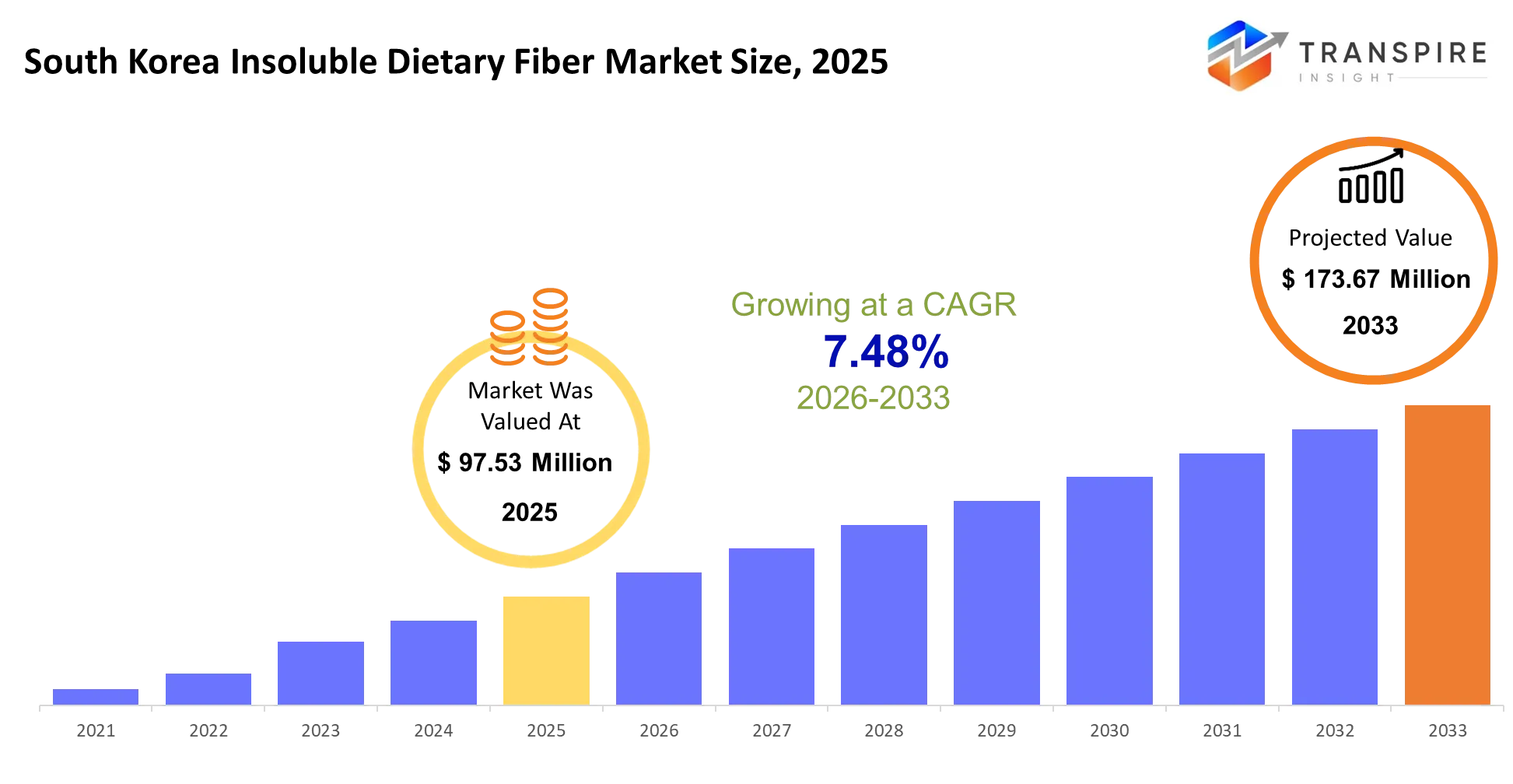
- South Korea Insoluble Dietary Fiber Market Size 2025: USD 97.53 Million
- South Korea Insoluble Dietary Fiber Market Size 2033: USD 173.67 Million
- South Korea Insoluble Dietary Fiber Market CAGR: 7.48%
- South Korea Insoluble Dietary Fiber Market Segments: By Source (Cereal Fibers, Fruit Fibers, Vegetable Fibers, Legume Fibers, Others); By Product Type (Cellulose, Hemicellulose, Lignin, Resistant Starch, Others); By Application (Functional Foods, Dietary Supplements, Animal Feed, Pharmaceuticals, Others); By Form (Powder Fiber, Granular Fiber, Liquid Fiber, Others); By End User (Food & Beverage Industry, Pharmaceutical Industry, Nutraceutical Companies, Others)
To learn more about this report,  Download Free Sample Report
South Korea Insoluble Dietary Fiber Market Summary
The South Korea Insoluble Dietary Fiber Market was valued at USD 97.53 Million in 2025. It is forecast to reach USD 173.67 Million by 2033. That is a CAGR of 7.48% over the period.
The South Korea insoluble dietary fiber market is getting really linked up to the country’s push toward preventive care, digestive well being, and functional food tweaks or reformulation. Food manufacturers are leaning on insoluble fibers from wheat bran, corn, soy, and fruit residues to support gut health claims, bring down sugar density, and even sharpen texture in bakery, dairy alternative, and nutrition products, while still keeping processing speed and efficiency. In the last few years, the market kind of moved away from basic fiber add-ons , and toward high functionality ingredients that fit clean label standards and higher protein recipes.
That shift picked up pace after the COVID-19 period, when South Korean consumers started checking digestive health and metabolic health claims more carefully, and that basically pushed retailers and food brands to grow their fortified product catalogs. Meanwhile, disruptions and swings in imported raw material supply chains made processors hunt for more regional ingredient sourcing, so they also started investing in byproduct valorization, too. So ingredient companies are ending up with better margins by selling specialized fiber blends, not just chasing bulk volume sales.
Key Market Insights
- The Seoul metropolitan region kinda dominated the South Korea Insoluble Dietary Fiber Market, with an estimated 42% share in 2025, mostly because the food processing capacity is really concentrated there.
- Meanwhile, Busan and Incheon are becoming bigger demand hubs, driven by rising imports, logistics infrastructure, and lots of processed food production activities.
- For the product side, wheat bran fiber was the clear leader, holding nearly 36% in 2025, due to its wide use across bakery and cereal applications.
- Corn-based insoluble dietary fiber sat as the second-largest segment too, backed by fairly stable industrial availability plus competitive ingredient pricing too.
- And on the application side, bakery and confectionery uses made up about 34% market share in 2025, as manufacturers pushed fiber fortification more into everyday mainstream packaged foods.
- Functional beverages came up as the fastest-growing use case segment from 2024 to 2030, mostly because of the digestive wellness “positioning” that got more attention.
- Nutritional supplements also showed notable growth, in part, because people started leaning into daily gut-health support blends, with combined dietary fibers.
- Food and beverage manufacturers stayed in front as the leading end-user segment, holding over 48% revenue share in 2025 for the South Korea insoluble dietary fiber market, so yeah that number keeps popping up.
- Nutraceutical companies are viewed as the fastest-rising end user group as well, because preventive health spend keeps increasing step by step across South Korea, little by little.
- At the same time, animal nutrition producers are putting insoluble dietary fiber ingredients into their formulas, trying to improve gut performance and feed efficiency for premium livestock products.
What are the Key Drivers, Restraints, and Opportunities in the South Korea Insoluble Dietary Fiber Market?
The main thing driving South Korea ‘s insoluble dietary fiber market is pretty much the fast reformulation of processed foods, after tighter checks on sugar intake, obesity, and metabolic health claims. Big food companies started putting insoluble fiber into bakery items, cereal mixes, protein snacks and even dairy alternatives, kind of to make nutritional labels look better while still keeping texture and shelf stability. This change really picked up more after the pandemic, when retailers gave extra shelf space to digestive health and functional food categories, and yeah it kind of stuck. Because of that, ingredient suppliers stopped living on plain commodity fiber sales only, and they started offering customized blends with better margins, so the revenue streams got stronger across the whole food processing scene.
The biggest hold back is that South Korea depends on imported agricultural raw materials for extracting higher-quality fiber, especially specialty grains and fruit derivatives. That dependence makes manufacturers deal with freight price swings, currency fluctuations, and supply that can be a bit inconsistent. To build domestic sourcing infrastructure, you need long-term investment in agricultural processing capacity, which can’t really be ramped up quickly. So production costs stay higher, and commercialization for premium fiber ingredients gets delayed, mainly for small and mid sized processors.
A serious opportunity is also showing up via upcycled food ingredient technology. South Korean firms are increasingly turning soybean residue, fruit peels, and cereal leftovers into functional insoluble fiber ingredients. Investments in circular food manufacturing and precision extraction systems are improving yield quality, and that helps suppliers aim for premium clean label positioning plus sports nutrition uses, with a higher chance of better profit.
What Has the Impact of Artificial Intelligence Been on the South Korea Insoluble Dietary Fiber Market?
Artificial intelligence and advanced digital technologies are slowly, but more and more, reshaping South Korea’s insoluble dietary fiber industry. You can see it especially in ingredient processing, quality control, and overall production efficiency… though it is not always smooth. In practice, manufacturers are rolling out AI-based vision setups and sensor-driven automation, to keep an eye on particle size uniformity, moisture levels, and fiber purity throughout extraction and milling. With these tools, manual checking takes less time, and batches tend to come out steadier, which matters a lot for functional food and nutraceutical uses where formulation accuracy is basically tied to how well the final product performs.
On top of all that, machine learning models are being used to sort of extend raw material utilization from stuff like soybean residue, cereal bran, and fruit byproducts. Predictive analytics then watch the production conditions such as temperature, pressure and drying cycles, to push extraction yields upward, while also trimming the waste output. In a way it helps get more out of the input with less leftovers, in the process.A few processing sites have noted clear, directional gains in energy efficiency and also less unplanned downtime once automated monitoring platforms were put in-line. And digital traceability systems are adding another layer too, they help with regulatory compliance by following ingredient sourcing, handling allergen controls, and confirming clean-label claims across supply networks.
Still, AI adoption has real boundaries. The integration costs can be high, and production infrastructure is often fragmented among smaller, mid-sized ingredient manufacturers. A number of facilities keep using older equipment that does not really “talk” well with advanced data analytics tools, so the wider digital shift across the market moves slower than it could.
Key Market Trends
- From 2021 thru 2025, South Korean food brands sort of bumped up fiber based product releases by more than 18% across bakery items, snacks, and even nutritional drinks, somehow.
- During 2022 and 2023, the manufacturers kind of switched away from imported bulk wheat bran, moving toward bespoke fiber blends, because freight disruptions pushed procurement prices up.
- CJ CheilJedang along with Daesang Corporation expanded their functional ingredient catalogs, aiming at higher end digestive wellness and sports nutrition uses.
- Starting in 2023, processors have been turning soybean residue and fruit peels into insoluble fiber components more often… to lift raw material utilization rates too.
- Also, clean label reformulation picked up speed after the biggest retailers got stricter about screening for packaged foods, especially for sugar levels, and for artificial additives.
- AI enabled quality monitoring, started seeing broader adoption between 2024 and 2026, this helped factories cut down on batch inconsistency, and it improved extraction performance across the production sites.
- Meanwhile, nutraceutical manufacturers increased buying high purity insoluble fiber ingredients as preventive healthcare spending grew among consumers over 40 years old.
- Regional suppliers then strengthened local sourcing partnerships after currency swings made imported ingredient costs higher, and that also hurt pricing stability for mid sized manufacturers, overall.
South Korea Insoluble Dietary Fiber Market Segmentation
By Source:
Cereal fibers kind of hold a strong position, mainly because food manufacturers widely use wheat bran, oat bran, and corn fiber in bakery products, cereals and packaged snacks. There’s consistent raw material availability and lower processing costs which really help keep stable production across large food processing facilities. Cereal-based ingredients also help with texture and shelf stability , in processed foods
Fruit fibers are getting a lot more attention, due to the use of apple, citrus, and berry residues in clean-label food products. Vegetable fibers and legume fibers support demand from nutraceutical and protein-rich food categories because these ingredients provide digestive support and a more balanced formulation. Other sources also exist like mixed plant residues and specialty agricultural byproducts, used for customized formulations
By Product Type:
Cellulose is still an important product type, because manufacturers use it in bakery fillings, nutritional products and processed foods, for texture improvement and moisture control. Hemicellulose supports food processing operations too, by improving stability and consistency in packaged products. Food processors seem to like these fibers because production methods stay commercially established
Lignin and resistant starch are getting wider commercial use in dietary supplements and nutritional applications. Resistant starch supports low-calorie and digestive health formulations, especially in meal replacements and functional snacks. Other product types include blended fiber ingredients that are developed for customized industrial applications and premium nutrition products
By Application:
Functional foods keep showing up as a major usage thing , mostly because food companies go on introducing fiber-rich bakery products, cereal options, dairy alternatives, and protein snack packs. Insoluble fiber ingredients seem to back up digestive equilibrium while also letting manufacturers refine their nutritional labeling a bit better. Even with everything, steady consumption of packaged, health-leaning foods keeps propping up this segment across urban consumer groups.
On top of that, dietary supplements and pharmaceuticals drive continued market motion, since firms keep using fiber ingredients in capsules, powders, and what they describe as digestive support items. Animal feed use is also rising, with livestock producers paying closer attention to digestive efficiency and overall feed quality. Besides that, there are other uses too, like specialty nutrition products and industrial formulations built for more specific, targeted processing needs.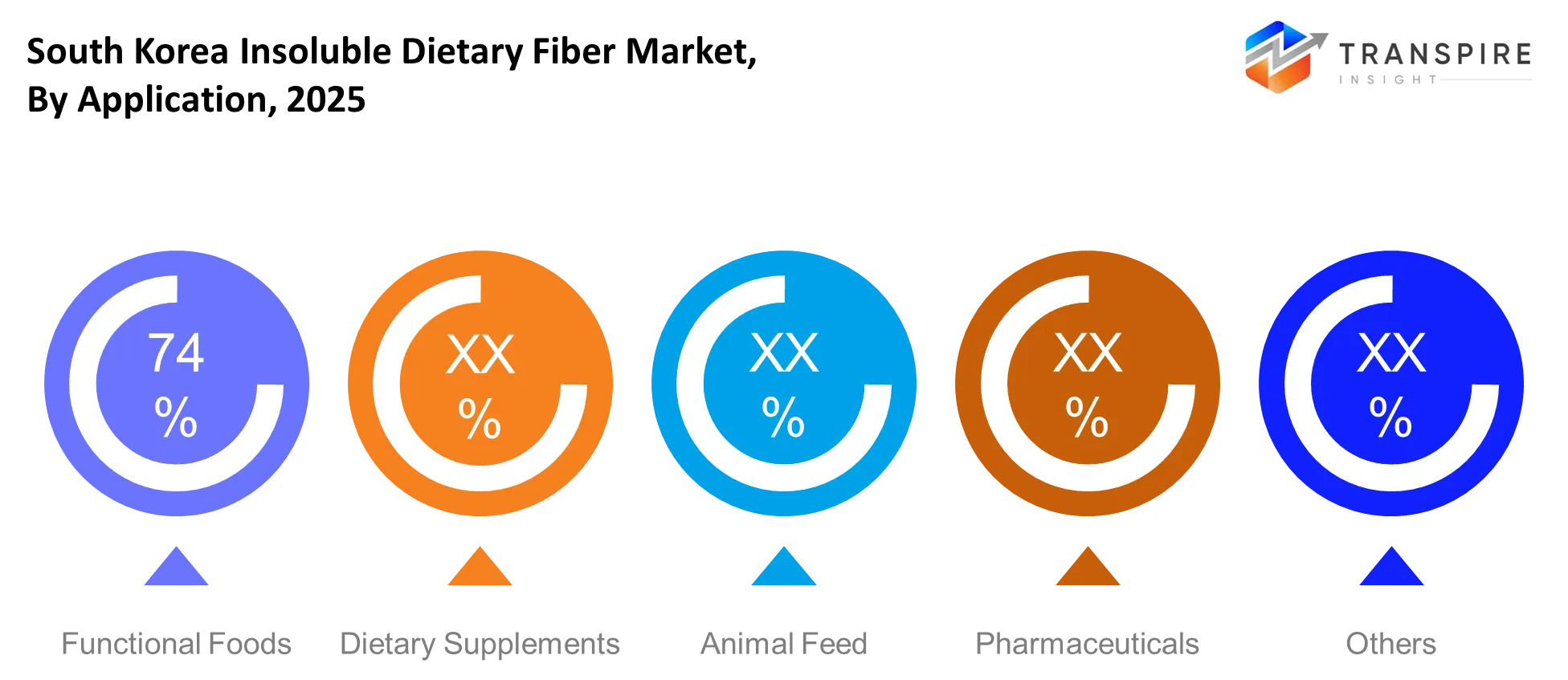
To learn more about this report, Download Free Sample Report
By Form:
Powder fiber stays widely preferred , because manufacturers can mix powdered ingredients into bakery batters, beverages, supplement bases, and various processed foods without too much fuss. Powder formats also tend to support longer shelf life and easier shipment across supply chains. Food processors keep putting money into micro-milling technologies, aiming for improved texture plus better ingredient dispersion.
Granular fiber products fit the applications where they need controlled texture and slower absorption characteristics. Liquid fiber is getting selective adoption in nutritional drinks and ready-to-drink wellness products, mainly where smoother consistency matters during processing. Other formats include customized blends, put together for industrial food production and specialized nutritional programs , depending on what’s needed.
By End User:
The food and beverage industry, honestly still feels like the biggest end user category, since packaged food manufacturers keep expanding their digestive health and clean-label lines. Fiber enrichment helps them with reformulation strategies for snacks, cereals, bakery items, and dairy alternatives, so it kinda sticks. Even big food processors seem to gain something too, like better product placement and positioning in retail channels, you know.
On the other side, pharmaceutical companies and nutraceutical manufacturers keep increasing their use of fiber ingredients in digestive support formulations and in preventive wellness products. Nutraceutical firms tend to lean into premium blends, aimed at metabolic health and a steadier gut balance. And then there are other end users too, such as specialty nutrition producers, plus contract manufacturers who supply customized ingredient solutions for commercial processing operations.
What are the Key Use Cases Driving the South Korea Insoluble Dietary Fiber Market?
In South Korea, bakery and packed food manufacturing still seems to be the main reason pushing adoption of insoluble dietary fiber ingredients. Food makers tend to throw in, for example wheat bran, cellulose, and fiber from cereals, into breads, snacks, breakfast cereals, and protein bars , all for digestive support. They market it like it improves digestion while at the same time keeping texture pretty steady and shelf life solid, which matters a lot for big retail.
On the other side, nutraceutical brands and dietary supplement manufacturers are also moving into it. They use these materials in powdered digestive support formats, meal replacements and gut health formulations, sort of the same general idea but with different delivery. At the same time functional beverage companies are adding micro-milled fiber ingredients into ready-to-drink products, mostly because people seem to want nutrition that’s easy and quick, but with added digestive benefits
Beyond that, new applications are showing up in sports nutrition and clinical nutrition. Ingredient suppliers are experimenting with more specialized insoluble fiber blends for high protein recipes and for elderly nutrition products, where digestive balance and metabolic help are getting more attention, across healthcare oriented food development programs
|
Report Metrics |
Details |
|
Market size value in 2025 |
USD 97.53 Million |
|
Market size value in 2026 |
USD 104.83 Million |
|
Revenue forecast in 2033 |
USD 173.67 Million |
|
Growth rate |
CAGR of 7.48% from 2026 to 2033 |
|
Base year |
2025 |
|
Historical data |
2021 - 2024 |
|
Forecast period |
2026 - 2033 |
|
Report coverage |
Revenue forecast, competitive landscape, growth factors, and trends |
|
Country scope |
South Korea |
|
Key company profiled |
Tate & Lyle, Ingredion, Cargill, Roquette Frères, ADM, Nexira, Cosucra, SunOpta, Fiberstar, DuPont, Kerry Group, Südzucker, Matsutani Chemical, Beneo, Grain Processing Corporation |
|
Customization scope |
Free report customization (country, regional & segment scope). Avail customized purchase options to meet your exact research needs. |
|
Report Segmentation |
By Source (Cereal Fibers, Fruit Fibers, Vegetable Fibers, Legume Fibers, Others); By Product Type (Cellulose, Hemicellulose, Lignin, Resistant Starch, Others); By Application (Functional Foods, Dietary Supplements, Animal Feed, Pharmaceuticals, Others); By Form (Powder Fiber, Granular Fiber, Liquid Fiber, Others); By End User (Food & Beverage Industry, Pharmaceutical Industry, Nutraceutical Companies, Others) |
Which Regions are Driving the South Korea Insoluble Dietary Fiber Market Growth?
The Seoul metropolitan region iis pretty much leading the South Korea insoluble dietary fiber market, mostly because that area ends up concentrating the country's biggest food processing companies, ingredient manufacturers and also research facilities. Big packaged food brands keep putting money into functional food reformulation programs that are supported by modern manufacturing infrastructure and pretty strong retail distribution networks. The region also tends to benefit from higher consumer spending on premium nutrition products, so commercialization of specialty fiber ingredients can happen a lot quicker. Universities, biotechnology firms and food innovation centers add even more muscle to product development, they help the market stay in a top position for the long run.
Meanwhile, Gyeonggi Province is the second-largest regional market, but the growth story looks a bit different from Seoul. It seems to lean more on manufacturing stability and industrial expansion than on consumer concentration. There are large scale production facilities, warehousing infrastructure, and logistics connectivity which all support dependable ingredient supply for domestic food and nutraceutical industries. Regional manufacturers keep expanding their capacity for cereal fibers and resistant starch ingredients, since contract food manufacturers have consistent processing needs. With stable industrial investment and being near major transportation corridors, revenue generation stays steadier even when imported agricultural raw material costs start to swing around.
Busan seems to be showing up as the quickest-growing regional market, mainly because port led trade activity and food import processing operations sort of expanded a lot after the supply chain disruptions in 2022 and 2023. A bunch of companies there started putting more capital into localized ingredient processing and byproduct re-use to cut down on the risk from overseas sourcing volatility. Also, the growth in functional beverage manufacturing, plus export oriented food production, really upped the need for specialized insoluble fiber ingredients. Going into the 2026–2033 period, Busan’s expansion should open doors for new ingredient suppliers, processing technology firms , and investors who care about regional manufacturing diversification, even more so than before.
Who are the Key Players in the South Korea Insoluble Dietary Fiber Market and How Do They Compete?
The competitive structure of the South Korea insoluble dietary fiber market still looks moderately fragmented, because domestic ingredient producers end up competing right next to multinational food ingredient companies that have broader processing ability. Lately, the fight seems to be more about formulation know-how, dependable raw material sourcing stability, and the capacity to provide tailored fiber blends for functional foods and nutraceutical uses. Bigger players defend their share by diversifying products and using integrated supply networks, while smaller processors are moving in with niche clean-label and upcycled fiber ingredients, kind of like a sidestep into differentiation. Sure, cost competitiveness still carries weight in bulk use cases, but premium formulations, with improved digestive functionality and better processing performance, are generating more attractive margins, for a lot of companies across the whole industry.
CJ CheilJedang leans hard into technology-led ingredient development and it benefits from solid integration spanning food manufacturing and biotechnology operations. The company stands apart through advanced fermentation and processing capabilities, and these let them create customized fiber applications for nutritional products, plus processed foods too. Daesang Corporation competes mainly on domestic manufacturing strength and relatively steady regional distribution networks, which can reduce supply delays and limit exposure to imported raw materials. They keep pushing out their functional ingredient lineup as well, to strengthen relationships with local packaged food makers and nutraceutical brands.
Roquette is big on plant based specialty ingredients and kind of builds a competitive advantage via clean label and high purity fiber formulations aimed at premium nutrition markets. Ingredion then stands out with texture optimization tools that help fiber get incorporated into beverages and protein enriched foods more evenly, without upsetting product consistency. Cargill keeps pushing harder on regional sourcing and tighter processing partnerships, so the agricultural raw materials stay available even when supply chain volatility shows up. Overall, these companies are expanding through collaborative product development agreements, more localized processing investments and very specialized formulations, for the fast growth functional food segments.
Company List
- Tate & Lyle
- Ingredion
- Cargill
- Roquette Frères
- ADM
- Nexira
- Cosucra
- SunOpta
- Fiberstar
- DuPont
- Kerry Group
- Südzucker
- Matsutani Chemical
- Beneo
- Grain Processing Corporation
Recent Development News
In March 2026, Samyang Corporation launched its high-purity crystalline dietary fiber ingredient ‘Kestose’ at Future Food-Tech San Francisco 2026. The new fructooligosaccharide-based fiber ingredient was introduced for functional foods and beverage applications, strengthening South Korea’s position in advanced dietary fiber innovation and global nutraceutical supply.
Source https://www.asiae.co.kr/
In February 2026, Cowellnex Co., Ltd. entered a joint research partnership with Metagen, Inc. to develop personalized food recommendation algorithms based on gut microbiota analysis. The collaboration is expected to support future development of customized functional food and dietary fiber solutions targeting digestive health consumers in Asia.
Source https://www.newswire.co.kr/
What Strategic Insights Define the Future of the South Korea Insoluble Dietary Fiber Market?
South Korea's insoluble dietary fiber market seems to be edging toward higher value functional ingredient specialization, not really that volume-chasing commodity style expansion, over the next five to seven years. And this move is largely pushed by tighter nutritional formulation standards, the aging population dynamic, plus the way digestive wellbeing claims are getting rolled into more regular packaged foods and also into clinical nutrition products. In general, firms that can mesh fiber performance with texture optimization, and still keep protein compatibility on point, should pull in better margins. Meanwhile suppliers that only focus on bulk ingredient sales may feel squeezed a bit.
There is also a less obvious risk though, like raw material sourcing getting concentrated into too few agricultural supply channels. If manufacturers lean heavily on imported cereal and fruit derivatives, they could end up dealing with longer pricing instability, and supply disruptions, when trade conditions shift or during climate related shocks. On the flip side, upcycled fiber extraction from soybean residue and other food processing byproducts is starting to look like a solid business opportunity, especially since South Korea is tightening circular food manufacturing policies. Market players may want to lock in localized sourcing partnerships early , and invest in precision extraction technologies sooner than later, to protect long-term pricing stability and to build a more differentiated product position.
South Korea Insoluble Dietary Fiber Market Report Segmentation
By Source
- Cereal Fibers
- Fruit Fibers
- Vegetable Fibers
- Legume Fibers
By Product Type
- Cellulose
- Hemicellulose
- Lignin
- Resistant Starch
By Application
- Functional Foods
- Dietary Supplements
- Animal Feed
- Pharmaceuticals
By Form
- Powder Fiber
- Granular Fiber
- Liquid Fiber
By End User
- Food & Beverage Industry
- Pharmaceutical Industry
- Nutraceutical Companies
Frequently Asked Questions
Find quick answers to common questions.
The South Korea Insoluble Dietary Fiber Market size is USD 173.67 Million in 2033.
Key Segments for the South Korea Insoluble Dietary Fiber Market are By Source (Cereal Fibers, Fruit Fibers, Vegetable Fibers, Legume Fibers, Others); By Product Type (Cellulose, Hemicellulose, Lignin, Resistant Starch, Others); By Application (Functional Foods, Dietary Supplements, Animal Feed, Pharmaceuticals, Others); By Form (Powder Fiber, Granular Fiber, Liquid Fiber, Others); By End User (Food & Beverage Industry, Pharmaceutical Industry, Nutraceutical Companies, Others).
Major South Korea Insoluble Dietary Fiber Market Players are Tate & Lyle, Ingredion, Cargill, Roquette Frères, ADM, Nexira, Cosucra, SunOpta, Fiberstar, DuPont, Kerry Group, Südzucker, Matsutani Chemical, Beneo, Grain Processing Corporation.
The South Korea Insoluble Dietary Fiber Market size is USD 97.53 Million in 2025.
The South Korea Insoluble Dietary Fiber Market CAGR is 7.48% from 2026 to 2033.
- Tate & Lyle
- Ingredion
- Cargill
- Roquette Frères
- ADM
- Nexira
- Cosucra
- SunOpta
- Fiberstar
- DuPont
- Kerry Group
- Südzucker
- Matsutani Chemical
- Beneo
- Grain Processing Corporation
Recently Published Reports
-
Apr 2026
Baby Infant Formula Market
Baby Infant Formula Market Size, Share & Analysis Report By ype (Infant Milk, Follow On Milk, Specialty Baby Milk, Growing-Up Milk), By Ingredient (Carbohydrate, Fat, Protein, Minerals, Vitamins, and Others), By Product Form (Powder, Liquid, and Ready-to-feed), By Distribution Channels (Supermarket/Hypermarket, Specialty Store, Pharmacies, Online Retail, and Others), and Geography (North America, Europe, Asia-Pacific, Middle East and Africa, South and Central America), 2021 - 2031
-
Apr 2026
Edible Insects for Animal Feed Market
Edible Insects for Animal Feed Market Size, Share & Analysis Report By Type (Insect Powder, Insect Meal, Insect Bar, Insect Paste, Insect Oil, and Others), By Insect Type (Beetles, Cricket, Caterpillar, Hymenoptera, Orthoptera, Tree Bugs, and Others), By Application (Livestock, Pet Food, and Aquaculture), By Livestock Type (Poultry, Swine, and Others), and Geography (North America, Europe, Asia-Pacific, Middle East and Africa, South and Central America), 2021 - 2031
-
Apr 2026
Food Industry Disinfection and Bacterial Control Market
Food Industry Disinfection and Bacterial Control Market Size, Share & Analysis Report By Type (Chemical Disinfectants, Physical Disinfectants, and Biocides and Antimicrobials), By Application (Food Processing Equipment Surface Disinfection, Food Preparation Areas Surface Disinfection, Storage Areas Surface Disinfection, Anti-microbial Coatings Food Preservation, and Preservative Solutions Food Preservation), By End User (Meat and Poultry Processing, Dairy Processing, Seafood Processing, Bakery and Confectionery, Restaurants and Commercial Kitchens, and Food Service Providers), By Sales Channel (Online, Offline), and Geography (North America, Europe, Asia-Pacific, Middle East and Africa, South and Central America), 2021 - 2031
-
May 2026
Freeze Dried Food Market
Freeze Dried Food Market Size, Share & Analysis Report By Product Type (Fruits, Vegetables, Freeze-Dried Dairy Products, Freeze-Dried Meat and Seafood, Freeze-Dried Pet Food, and Prepared Meal), By Nature (Organic, and Conventional), By Form (Powdered, Granules, and Diced), By End Use (Breakfast Cereals, Dairy Products, Bakery & Confectionery, Nutritional Bars & Supplements, Powdered Beverages, Snacks, and Retail (Household)), and Geography (North America, Europe, Asia-Pacific, Middle East and Africa, South and Central America), 2021 - 2031