

Market Summary
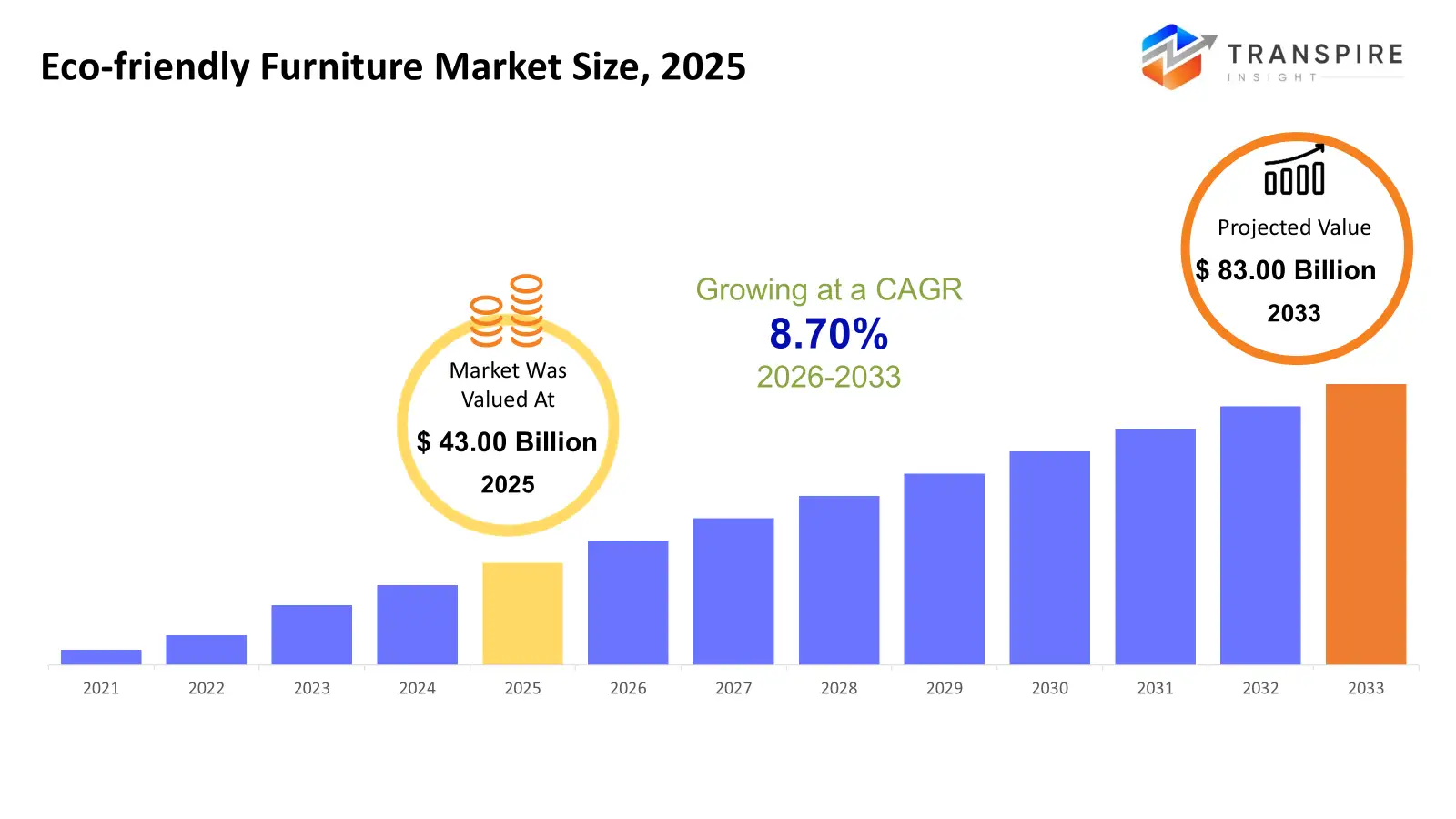
The global Eco-friendly Furniture market size was valued at USD 43.00 billion in 2025 and is projected to reach USD 83.00 billion by 2033, growing at a CAGR of 8.70% from 2026 to 2033. High awareness among consumers over sustainability in the environment along with the health benefits of using non-toxic eco-friendly furniture is one major factor constantly creating a significant demand, which in turn fuels the growth of the market. Urbanization trends along with home renovations are acting as catalysts in triggering the requirement for premium as well as mid-range green furniture.
Market Size & Forecast
- 2025 Market Size: USD 43.00 Billion
- 2033 Projected Market Size: USD 83.00 Billion
- CAGR (2026-2033): 8.70%
- North America: Largest Market in 2026
- Asia Pacific: Fastest Growing Market
To learn more about this report,  Download Free Sample Report
Key Market Trends Analysis
- North America is a mature market that is environmentally conscious and well-regulated to promote the adoption of sustainable furniture through green certifications and a high level of consumer spend
- United States takes the lead in the adoption of eco-friendly furniture because of high-end sustainability standards, combined with the rising trend of superior-quality materials in both domestic and commercial premises.
- In the Asia Pacific, there exists an environment of rampant growth with increasing urbanization, growing incomes of the middle class in countries like China and India, and increasing availability of sustainable raw materials
- Chairs and Stools are now manufactured using recycled plastic materials, bamboo, and reclaimed wood to address the demands of consumers in terms of ergonomics as well as the environment in the domestic market alongside the commercial industry
- Reclaimed wood and bamboo hold the biggest market share in the material segment because of factors such as sustainability, appeal, and high rate of renewability, whereas certified sustainable wood enjoys the largest market size in the luxury segment because of its longevity property or brand assurance
- Economy and Mid-range are bigger segments with the rise of sustainable furniture accessibility through the Internet, while Premium is proving to perform well with bespoke design and corporate procurement policies on sustainability
- The segment of end users comprising residential customers is dominating the market owing to the growing trend of the green lifestyle and home interior awareness, while the commercial segment is increasing due to ESG initiatives coupled with the expansion of hotel infrastructures
The eco-friendly furniture market involves the manufacture, distribution, and sale of furniture made from sustainable, renewable, and recycled materials with the aim of reducing environmental impact. Growing consumer awareness about climate change, indoor air quality, and chemical-free living spaces has become a key driver for the adoption of eco-friendly furniture in both residential and commercial sectors. Manufacturers are increasingly utilizing materials such as reclaimed wood, bamboo, and recycled aluminum, along with natural fibers like rattan, cane, and jute.
Market growth is further supported by rising urbanization, increasing disposable incomes, and the expanding demand for premium and mid-range furniture that combines functionality with sustainability. The corporate and hospitality sectors are also incorporating eco-friendly products to meet green building standards, thereby strengthening demand within the eco-friendly furniture market. Technological advancements in recycled material processing and innovations in multifunctional designs continue to expand product offerings. Additionally, the growth of e-commerce platforms has improved product accessibility, affordability, and consumer awareness across diverse demographics.
Market conditions also include global regulatory policies, certification norms such as FSC, and eco-labeling initiatives that promote the standardization of sustainable furniture manufacturing. Along with this, governments are encouraging the adoption of environmentally friendly manufacturing methods, and all the above factors have a positive impact on the growth of the market. Therefore, the growth factors and demand for sustainable furniture are all aligned to reap the benefits of steady CAGR growth over the years to come.
Eco-friendly Furniture Market Segmentation
By Product Type
- Chairs & Stools
Eco-friendly chairs and stools occupy a larger percentage due to their replacement demand and the recent interest in eco-friendly home and office seating solutions, as several companies are utilizing recycled plastic, bamboo, and wood to cater to the eco-friendly needs of chairs and stools.
- Tables & Desks
There is an emerging market need for sustainable tables and desks due to increased home office spaces and a shift towards green office spaces. Consumers prefer to buy products made with durable materials like reclaimed wood or FSC-certified wood. There is potential for growth due to modular and multi-functional solutions.
- Sofas & Couches
Eco-friendly sofas and couches are becoming popular due to the importance of improving the quality of the indoor environment in residential spaces. Comfortable and luxurious sofas, as well as the need for durable furniture, have been contributing factors to the increasing popularity of eco-friendly furniture.
- Beds
Sustainable beds operate due to their ability to satisfy consumers who prefer natural materials, including bamboo, reclaimed wood, and organic fabrics. The segment is further aided by heightened awareness of health, sustainability, and durability. This encourages consumers to patronize the product over its competitors based on the nature and processing of its materials.
- Cabinets & Storage Units
Eco-friendly cabinets and storage are experiencing growth owing to the rising demand for sustainable interior products within residential and commercial establishments. The use of recycled wood panels ensures environmental compliance. Owing to the increase in urbanization and space optimization, the segment is expanding further.
- Others
This product segment comprises shelves, outdoor furniture, decor, etc., made from sustainable materials. The drivers for growth include demand for fully sustainable interior ecosystems from niche segments of consumers. In addition, there is continuous growth in product offerings following innovations in recycled composites and furniture.

To learn more about this report, Download Free Sample Report
By Material Type
- Reclaimed Wood
This makes reclaimed wood one of the dominant materials, considering its very low environmental impact and strong aesthetic appeal. It minimizes deforestation and brings strength and uniqueness to furniture design. Growing consumer preference for rustic or vintage finishes strengthens demand in this segment.
- Bamboo
Bamboo is gaining popularity due to its rapid renewability and high strength-to-weight ratio. Indeed, its natural resistance to moisture and pests also makes this material quite suitable for a wide range of furniture applications. Growing adoption in Asia Pacific and eco-conscious markets supports strong growth prospects.
- Recycled Metal
Recycled metal furniture is increasingly used in commercial and industrial-style interiors for its durability and recyclability. The material contributes toward circular economy initiatives and reduces raw material consumption. Long life cycle and low maintenance requirements improve market attractiveness.
- Recycled Plastic
Plastics recycle furniture is on the rise with the improvement of plastic processing technologies. In addition, plastic waste management projects are becoming more prevalent. Although the weather-resistance benefit is apparent for indoor furniture, the cost savings benefit is evident for outdoor furniture.
- Natural Fiber
Natural fiber furniture is influenced by consumer demand for biodegradable products that are lightweight in nature. Natural fiber furniture is benefiting from rising consumer demand for attractive and environmentally friendly products used in the interior décor of homes.
- Certified Sustainable Wood
Sustainable wood certified, such as FSC wood, is currently widely accepted in the market based on the government compliances received, lasting long, along with luxury product uses. The adoption of corporate sustainability is adding momentum to the use of such wood in commercial spaces.
- Others
This segment comprises innovative material types, recycled composite material, and bio-based materials. Alternative sustainable materials have been explored in research studies, opening the door to new applications. Manufacturers use this material type to stand out in the market.
By Price Range
- Economy
Economy segment is influenced by the availability of cost-effective eco-friendly materials along with mass production technologies. Price-conscious consumers are gradually moving towards eco-friendly materials. Expansions of retail outlets along with distribution channels through the Internet facilitate volume growth.
- Mid-range
The mid-range segment accounts for a large market segment owing to varied pricing and quality factors. These consumers require durability, aesthetics, as well as sustainability, without the associated high costs. The increasing number of people in the urban middle class contributes to the market demand.
- Premium
Premium eco-friendly furniture is influenced by high-income individuals and commercial segment demands like sustainability and design. Materials are often certified to enable premium pricing to be maintained due to their high value. Strong demand exists for hospitality and luxury residences.
By End User
- Residential
The segment of residential holds the largest share of the market, thanks to growing consumer awareness levels related to leading a green lifestyle and the importance of maintaining healthy interiors at home. Activities related to renovation and long-lasting furniture add to this segment’s growth, which will be boosted by online availability as well.
- Commercial
Commercial segment uptake is growing as organizations increasingly factor sustainability into their build environments and interior decor. Offices, hotels, and retail premises are making sustainability-certified furniture a priority under ESG reporting to meet sustainability and legislative needs. Bulk buying programs and brand sustainability initiatives add to segment growth.
Regional Insights
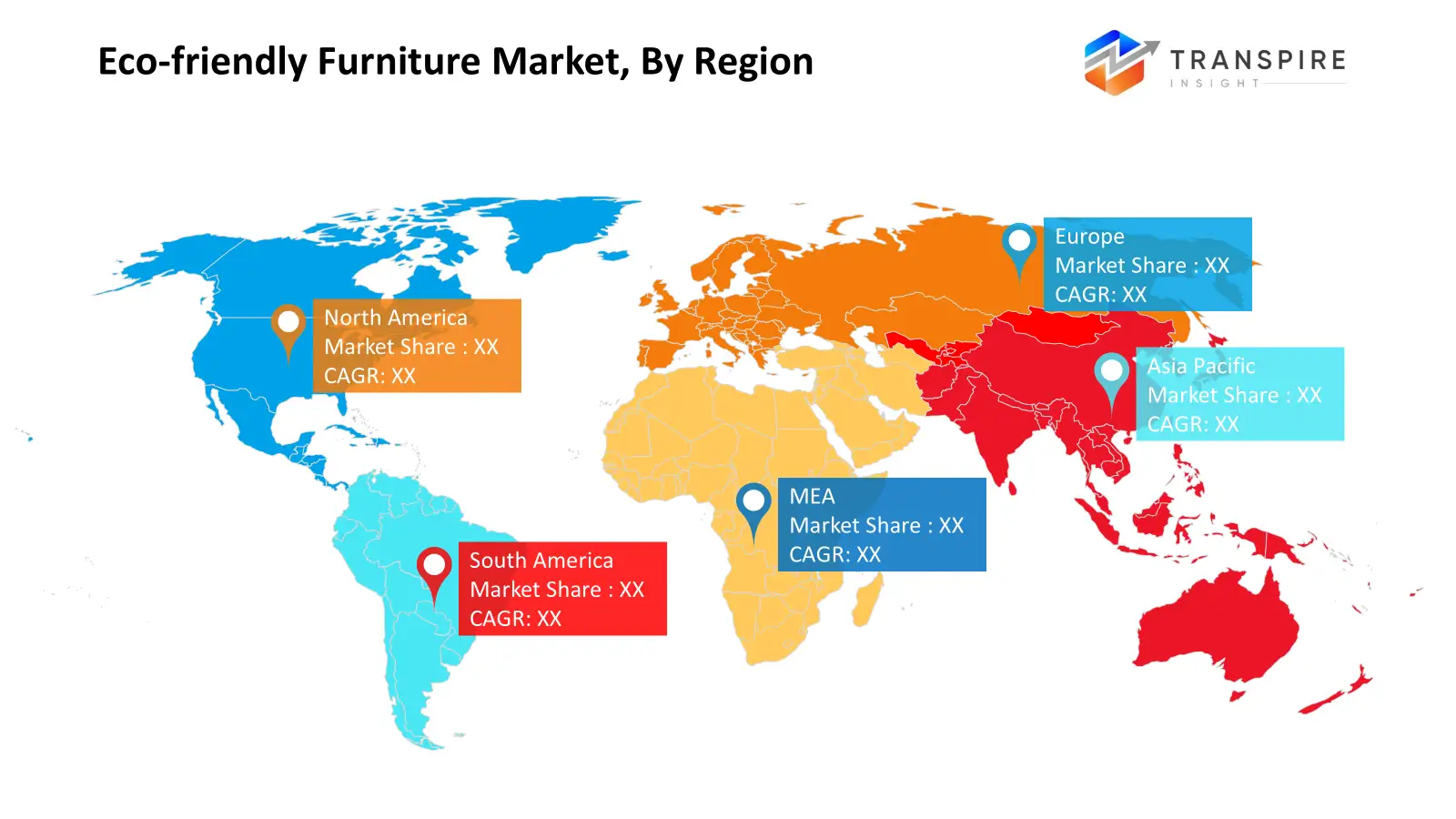
North America, led by the United States, is a mature market driven by high environmental awareness, stringent regulations, and the adoption of certified sustainable furniture across the residential and commercial sectors. Canada and Mexico also contribute by having an expanding eco-conscious consumer base and interests in the different methods of green building, thus encouraging market penetration. The European region has strict environmental regulations, circular economy policies, and a high level of consumer preference for sustainable products. Innovation and adoption are driven by the Tier-1 countries of Germany, the United Kingdom, and France, while Spain and Italy, among others in rest-of-Europe, provide opportunities through growing urbanization and awareness initiatives.
The Asia Pacific is considered a high-growth region, where major countries include Japan, China, Australia & New Zealand, South Korea and India. The factors that contribute to increasing production and consumption of the product include rapid urbanization, rising middle-class income, and ample availability of sustainable raw materials. Rest of Asia Pacific has shown growing adoption owing to government incentives and development of infrastructure. South America shows steady growth with Brazil and Argentina taking the lead due to their manufacturing prowess and the surge of eco-friendly behavior among South Americans, while the rest of South America follows suit slowly but surely.
The markets in the Middle East & Africa are growing due to increased levels of urbanization, hospitality, and luxury residential construction markets. Saudi Arabia and the UAE are at the forefront with an emphasis placed on sustainable construction and commercial developments, while South Africa and others are gradually adopting eco-friendly furniture in residential and institutional applications.
To learn more about this report, Download Free Sample Report
Recent Development News
- November 2025, Inter IKEA Group announced its financial results for FY25, reinforcing a strong performance in operations, albeit with increased emphasis on maintaining sustainability aspects. The announcement reinforced the company’s increased efforts in making the product portfolio more sustainable and affordable, evidenced by rising sales volumes of products made from recycled products and company efforts in cutting down on emission levels throughout the value chain, further reiterating the brand’s long-term eco-friendly campaign.
- In February 2025, MillerKnoll, formed from various global brands in the design industry, including Herman Miller and Knoll, has developed a comprehensive sustainable strategy to reduce carbon levels, promote sustainable material use, and adopt a circular economy approach with a vision to achieve a net-zero emission rate by 2050. MillerKnoll has released its Better World Report for 2024, outlining various commitments to sustainable environmental practices within their product offerings.
|
Report Metrics |
Details |
|
Market size value in 2025 |
USD 43.00 Billion |
|
Market size value in 2026 |
USD 46.00 Billion |
|
Revenue forecast in 2033 |
USD 83.00 Billion |
|
Growth rate |
CAGR of 8.70% from 2026 to 2033 |
|
Base year |
2025 |
|
Historical data |
2021 – 2024 |
|
Forecast period |
2026 – 2033 |
|
Report coverage |
Revenue forecast, competitive landscape, growth factors, and trends |
|
Regional scope |
North America; Europe; Asia Pacific; Latin America; Middle East & Africa |
|
Country scope |
United States; Canada; Mexico; United Kingdom; Germany; France; Italy; Spain; Denmark; Sweden; Norway; China; Japan; India; Australia; South Korea; Thailand; Brazil; Argentina; South Africa; Saudi Arabia; United Arab Emirates |
|
Key company profiled |
IKEA, Ashley Furniture Industries, Herman Miller, Steelcase, La‑Z‑Boy, West Elm, Ethan Allen, Haworth, Knoll, HNI Corporation, Urban Ladder, Godrej Interio, NATUZZI, BoConcept, and Greenington |
|
Customization scope |
Free report customization (country, regional & segment scope). Avail customized purchase options to meet your exact research needs. |
|
Report Segmentation |
By Product Type (Chairs & Stools, Tables & Desks, Sofas & Couches, Beds, Cabinets & Storage Units, Others), By Material Type (Reclaimed Wood, Bamboo, Recycled Metal, Recycled Plastic, Natural Fiber, Certified Sustainable Wood, Others), By Price Range (Economy, Mid-range, Premium) and By End User (Residential, Commercial) |
Key Eco-friendly Furniture Company Insights
IKEA dominates the market in the provision of environmentally friendly furniture owing to its vast operations globally and an entrenched core value regarding sustainability, such as integrating renewable and recycled content into conventional product ranges, as well as adopting a circular economy overall. Some of IKEA’s sustainability initiatives include promoting FSC-certified wood, enhancing take-back and recycling programs, as well as minimizing its carbon footprint in the supply chain. As a result, IKEA has successfully achieved market penetration in both emerging and developed markets due to its enabling balance between price and sustainability. IKEA’s move to invest in renewable energy and environmentally friendly furniture innovations has further strengthened its competitive edge in the provision of sustainable furniture manufacturing and supply, as well as serving as a benchmark in the field.
Key Eco-friendly Furniture Companies:
- IKEA
- Ashley Furniture Industries
- Herman Miller
- Steelcase
- La‑Z‑Boy
- West Elm
- Ethan Allen
- Haworth
- Knoll
- HNI Corporation
- Urban Ladder
- Godrej Interio
- NATUZZI
- BoConcept
- Greenington
Global Eco-friendly Furniture Market Report Segmentation
By Product Type
- Chairs & Stools
- Tables & Desks
- Sofas & Couches
- Beds
- Cabinets & Storage Units
- Others
By Material Type
- Reclaimed Wood
- Bamboo
- Recycled Metal
- Recycled Plastic
- Natural Fiber
- Certified Sustainable Wood
- Others
By Price Range
- Economy
- Mid-range
- Premium
By End User
- Residential
- Commercial
Regional Outlook
- North America
- United States
- Canada
- Mexico
- Europe
- Germany
- United Kingdom
- France
- Spain
- Italy
- Rest of Europe
- Asia Pacific
- Japan
- China
- Australia & New Zealand
- South Korea
- India
- Rest of Asia Pacific
- South America
- Brazil
- Argentina
- Rest of South America
- Middle East & Africa
- Saudi Arabia
- United Arab Emirates
- South Africa
- Rest of the Middle East & Africa
Frequently Asked Questions
Find quick answers to common questions.
The approximate Eco-friendly Furniture Market size for the market will be USD 83.00 billion in 2033.
Key segments for the Eco-friendly Furniture Market By Product Type (Chairs & Stools, Tables & Desks, Sofas & Couches, Beds, Cabinets & Storage Units, Others), By Material Type (Reclaimed Wood, Bamboo, Recycled Metal, Recycled Plastic, Natural Fiber, Certified Sustainable Wood, Others), By Price Range (Economy, Mid-range, Premium) and By End User (Residential, Commercial).
Major Eco-friendly Furniture Market players are IKEA, Ashley Furniture Industries, Herman Miller, West Elm, Greenington.
The North America region is leading the Eco-friendly Furniture Market.
The CAGR of the Eco-friendly Furniture Market is 8.70%.
- IKEA
- Ashley Furniture Industries
- Herman Miller
- Steelcase
- La‑Z‑Boy
- West Elm
- Ethan Allen
- Haworth
- Knoll
- HNI Corporation
- Urban Ladder
- Godrej Interio
- NATUZZI
- BoConcept
- Greenington
Recently Published Reports
-
Apr 2026
Bottled Water Market
Bottled Water Market Size, Share & Analysis Report By Product Type (Still Bottled Water, Carbonated Bottled Water, Functional Bottled Water, and Others), By Packaging (PET, Cans, and Others), By Sales Channel (Supermarkets/Hypermarkets, Convenience Stores/Drug Stores, Grocery Stores/Club Stores, Foodservice, and Others) and Geography (North America, Europe, Asia-Pacific, Middle East and Africa, South and Central America), 2021 - 2032
-
Apr 2026
Color Cosmetic Packaging Market
Color Cosmetic Packaging Market Size, Share & Analysis Report By Application (Mascara Packaging, Liquid Packaging, and Liquid Face), By Type (Tubes & Bottles, Pens & Markers, Compacts & Containers, and Droppers & Pumps), and Geography (North America, Europe, Asia-Pacific, Middle East and Africa, South and Central America), 2021 - 2031
-
Apr 2026
External Microphone For Camera Market
External Microphone For Camera Market Size, Share & Analysis Report By Type (Shotgun Microphone, Lavalier Microphone, and Others), By Application (Digital Camera, Professional Video Camera, and Others), and Geography (North America, Europe, Asia-Pacific, Middle East and Africa, South and Central America), 2021 - 2031
-
Apr 2026
Foot Orthotic Insoles Market
Foot Orthotic Insoles Market Size, Share & Analysis Report By Type (Pre-fabricated, and Custom-made), By Material (Thermoplastic, Composite Carbon Fiber, and Others), By Distribution Channel (Drug Stores, Hospitals & Clinics, and Others), and Geography (North America, Europe, Asia-Pacific, Middle East and Africa, South and Central America), 2021 - 2031