Market Summary
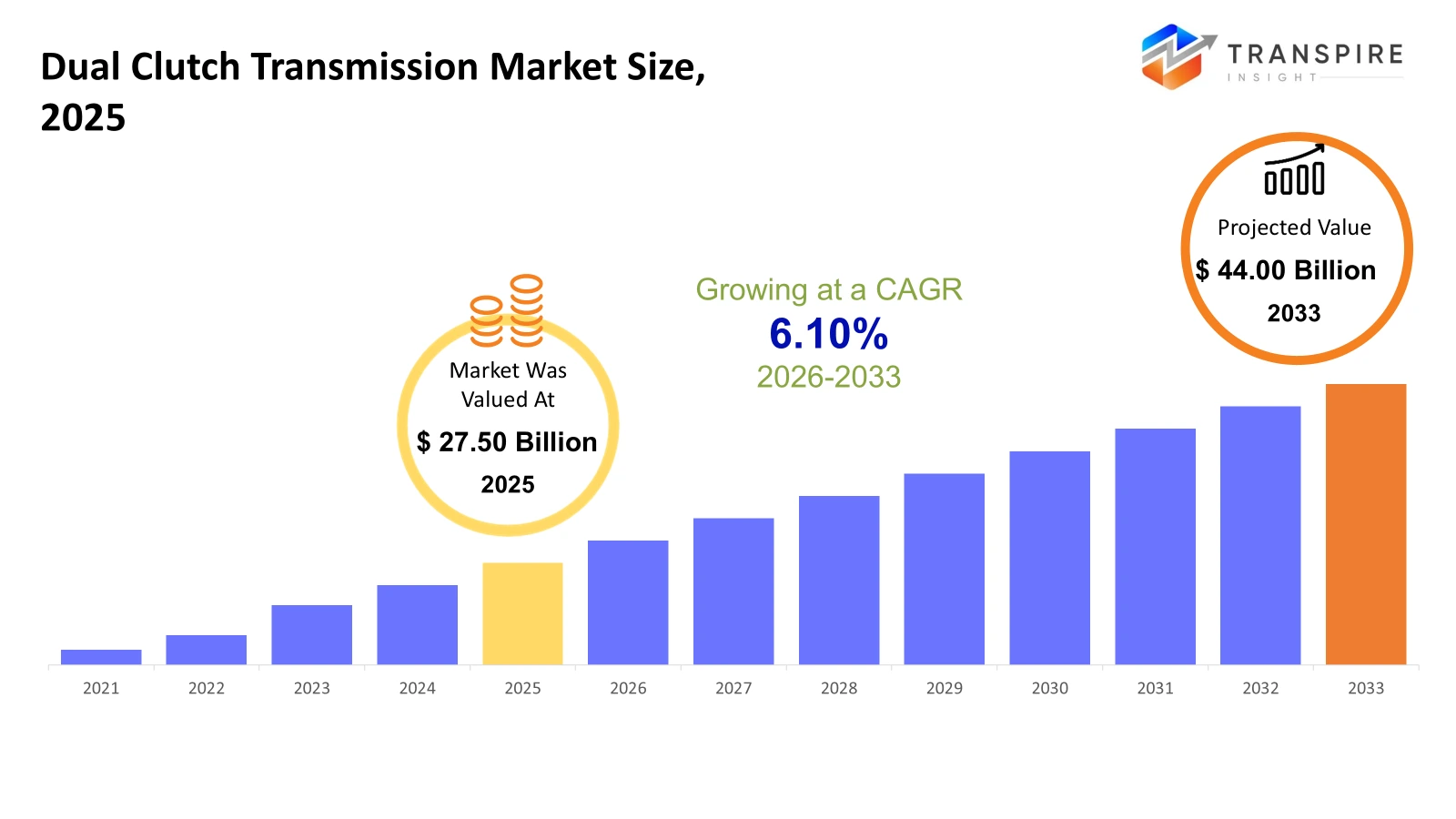
The global Dual Clutch Transmission market size was valued at USD 27.50 billion in 2025 and is projected to reach USD 44.00 billion by 2033, growing at a CAGR of 6.10% from 2026 to 2033. More people want cars that save fuel but still perform well. Faster shifting happens because power flow stays nearly uninterrupted during changes. Improved efficiency shows up at the pump, giving drivers more miles per tank than older automatics. Car makers find these traits useful when balancing comfort with cleaner emissions. That balance pushes DCT use beyond luxury models into everyday models, too.
Market Size & Forecast
- 2025 Market Size: USD 27.50 Billion
- 2033 Projected Market Size: USD 44.00 Billion
- CAGR (2026-2033): 6.10%
- North America: Largest Market in 2026
- Asia Pacific: Fastest Growing Market
To learn more about this report,  Download Free Sample Report
Key Market Trends Analysis
- The North American market share is estimated to be approximately 27% in 2026. Fuel economy matters more now, so people across North America are choosing quicker, leaner rides. Passenger models plus sport utilities see sharper uptake as habits shift under this push.
- Not far off, production lines run deep across American soil, where folks tend to favor rides that shift themselves either fully or partly. On top of that, hybrids and upscale models are quietly folding dual-clutch tech into their builds. All this keeps demand steady without much noise.
- China, India, and Japan see more cars rolling off assembly lines. With people having extra money to spend, buying vehicles becomes common. Passenger car sales climb steadily across these nations. That growth pushes the need for dual-clutch transmissions higher. Machines that shift faster start showing up in more models. Demand surges as automakers adapt to changing preferences. Technology, once rare, now spreads through showrooms.
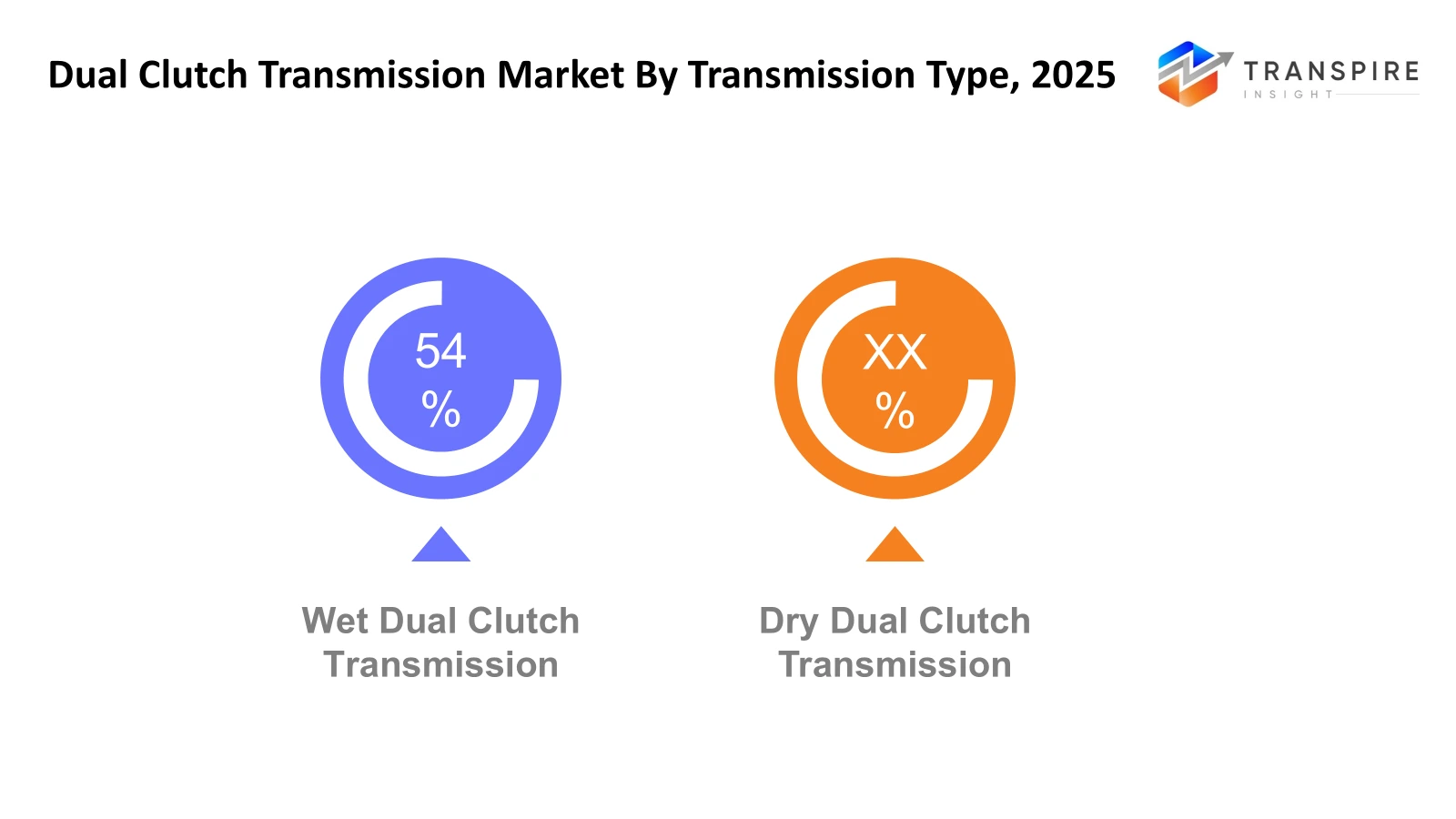
- Wet Dual Clutch Transmission shares approximately 56% in 2026. Wet dual clutch systems take the lead when it comes to transmission types. Their strength shows up clearly under heavy torque loads. Luxury models often rely on them because they last longer. Performance stays smooth even in demanding conditions. These units handle heat better than alternatives. That resilience makes a difference over time.
- Most drivers choose passenger cars, where dual-clutch tech is showing up more often even outside luxury brands. Fuel savings plus seamless gear changes help explain why it's spreading through everyday models too.
- Most cars stick with front-wheel drive because it saves money. Built right into smaller models, this setup fits well without extra expense. Its common use comes down to practicality in everyday vehicles.
- Most of these systems go straight into factories, where car makers install them during assembly to meet pollution rules while boosting efficiency. What drives this trend is the need for cleaner output without sacrificing power on newer models rolling out daily.
Because it links manual precision with automatic ease, the Dual Clutch Transmission market has expanded fast. Shifting gears becomes quicker and more fluid, which lifts overall vehicle response while cutting fuel use. Performance gains plus reduced consumption draw makers and drivers alike, especially those focused on agile, economical rides.
More people want cars that shift gears without a clutch, pushing makers to use dual-clutch transmissions more often. These gearboxes now appear even in high-end and sporty models, helping drivers feel sharper control. Because engines must burn less fuel and pollute less, manufacturers turn to this tech as one solution. Staying ahead means fitting newer cars with such systems, especially when laws tighten around emissions and efficiency.
Now, lighter parts, smarter software, and better electronics help dual-clutch transmissions spread. Durability gets a boost while systems grow simpler through fresh engineering moves. In electric cars and hybrid models alike, exact control matters, so these upgrades fit right in. Wider use follows, quietly, across more kinds of vehicles every year.
Even with steeper build expenses and trickier upkeep than old-school gearboxes, demand for dual-clutch systems keeps rising. Firms now push to trim prices, boost repair access, while crafting versions fit for distinct car types. Awareness spreads among drivers; makers funnel cash into smarter shifting tech, growth sticks around, fresh ideas keep coming. Though tougher to manage behind the scenes, progress refuses to slow down.
Dual Clutch Transmission Market Segmentation
By Transmission Type
- Dry Dual Clutch Transmission
Found often found in compact and mid-size cars because it saves money and works well with engines that are not too strong. Built without extra fluids inside, which helps keep things light and moving smoothly under normal driving conditions.
- Wet Dual Clutch Transmission
Because it handles heat well, the wet dual clutch transmission works best in powerful, heavier machines. Durable when stressed, this system suits models built for strength. Torque pushes hard, yet the design stays strong. Heat fades fast here, unlike in weaker setups. High performance demands such toughness, making this option common in robust builds.
To learn more about this report, Download Free Sample Report
By Vehicle Type
- Passenger Cars
A single car at a time feels the push of better miles per gallon when DCT steps in. Comfort grows behind the wheel, not by chance but design. Shifts glide without effort, even in heavy city crawl. Luxury models lean on this just as much as daily drivers do. Smooth motion becomes normal, not rare.
- Commercial Vehicles
Running on less fuel, these machines move people and goods while cutting costs. Buses, big rigs, others - built to last without guzzling energy. Efficiency shapes how far they go, how often they stop. Heavy loads handled with smarter engine demands. Each mile covered uses just enough power, nothing more.
By Drive Type
- Front-Wheel Drive
FWD shows up a lot in smaller, everyday vehicles - keeps things cheaper. Built that way to save room inside. Most of these models go this route just to trim expenses down.
- Rear-Wheel Drive
Not here. Power heads straight to the back, keeping things steady when speeding through curves. This setup shows up often in sporty models, also found packing muscle in larger vehicles. Balance feels more natural, especially when pushing limits on winding roads.
- All-Wheel Drive
Most SUVs now come with All-Wheel Drive, spreading power to every wheel. That setup helps when roads get tricky, especially in snow or rain. Some sports models use it too, not just for grip, but for balance while turning fast. Instead of sending force to only two wheels, the system adjusts on its own. You feel more planted through curves, less likely to slide. It works quietly in the background, never drawing attention. Power shifts where it's needed most, without any input from the driver.
By End-Users
- OEM
Most vehicles rolling off assembly lines today come with dual clutch transmissions already inside. These systems help cars go further on a single tank while delivering quicker shifts. Factories choose them because they balance speed and economy well. Built right in, they are part of how modern engines breathe easier. Their presence grows as driving demands shift toward smarter mechanics.
- Aftermarket
Replacement parts are seeing rising interest, especially when drivers tweak engines for more power. Older vehicles getting modern fixes adds to the trend. Upgrades once rare now show up more often under hoods. Tuning culture pushes change faster than factory models can follow.
Regional Insights
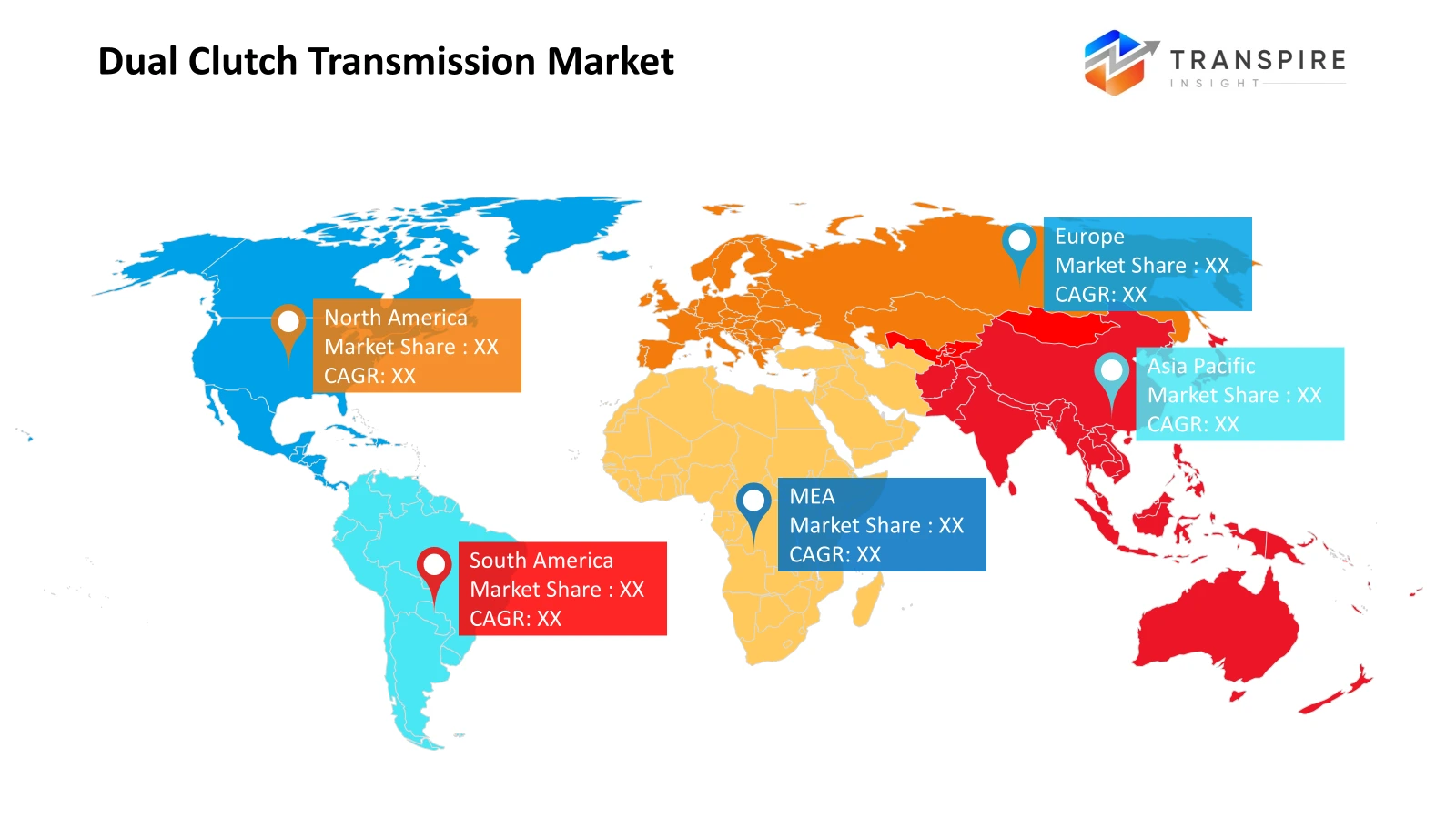
Heavy industry growth pushes Asia Pacific ahead in DCT use. Vehicle output climbs fast across the area. Fuel-saving needs shape buyer choices more each year. China, India, Japan, and South Korea fit right into this shift. Mid-tier models now carry DCTs just like high-end ones. Homegrown factory drives help spread the tech wider. Policy rewards for efficient engines add further push.
Heavy demand in North America comes from buyers who favor fast, smooth-driving machines. What pushes growth there? A solid network of modern car factories helps too. In the United States, dual-clutch transmissions are showing up more in everyday cars, larger SUV models, and sporty rides. Car companies pour money into these gearboxes main reason being better gas mileage plus cleaner exhaust output.
Over in Europe, places such as Germany, France, and the United Kingdom lead the way in using dual-clutch transmissions because more people want cars that feel luxurious and go fast. Thanks to new tech advances, tough rules on fuel economy, along with a rising interest in hybrid engines, the market keeps moving forward. While that happens, areas including Latin America and parts of Africa, plus the Middle East, begin embracing these transmission types too, helped by higher car sales and manufacturers offering models packed with better mileage and modern features.
To learn more about this report, Download Free Sample Report
Recent Development News
- May 9, 2025 – BorgWarner expands dual-clutch transmission operations in China with two new programs.
- March 13, 2025 – Tata Safari launched 1.5 L Turbo Petrol with dual-clutch auto & manual.
(Source:https://www.carlelo.com/news/tata-safari-to-get-1.5l-turbo-petrol-with-dual-clutch-auto-manual)
|
Report Metrics |
Details |
|
Market size value in 2025 |
USD 27.50 Billion |
|
Market size value in 2026 |
USD 29.00 Billion |
|
Revenue forecast in 2033 |
USD 44.00 Billion |
|
Growth rate |
CAGR of 6.10% from 2026 to 2033 |
|
Base year |
2025 |
|
Historical data |
2021 – 2024 |
|
Forecast period |
2026 – 2033 |
|
Report coverage |
Revenue forecast, competitive landscape, growth factors, and trends |
|
Regional scope |
North America; Europe; Asia Pacific; Latin America; Middle East & Africa |
|
Country scope |
United States; Canada; Mexico; United Kingdom; Germany; France; Italy; Spain; Denmark; Sweden; Norway; China; Japan; India; Australia; South Korea; Thailand; Brazil; Argentina; South Africa; Saudi Arabia; United Arab Emirates |
|
Key company profiled |
Volkswagen AG, BorgWarner Inc., ZF Friedrichshafen AG, Getrag (Magna International), Aisin Seiki Co., Ltd., Jatco Ltd., Schaeffler AG, Daimler AG, Hyundai Mobis, Ford Motor Company, Toyota Motor Corporation, Kia Corporation, Honda Motor Co., Ltd., Magneti Marelli S.p.A., General Motors Company, Mitsubishi Electric Corporation, and Continental AG |
|
Customization scope |
Free report customization (country, regional & segment scope). Avail customized purchase options to meet your exact research needs. |
|
Report Segmentation |
By Transmission Type (Dry Dual Clutch Transmission, Wet Dual Clutch Transmission), By Vehicle Type (Passenger Cars, Commercial Vehicles), By Drive Type (Front-Wheel Drive, Rear-Wheel Drive, All-Wheel Drive), By End-Users (OEM, Aftermarket) |
Key Dual Clutch Transmission Company Insights
One thing stands clear: Volkswagen AG builds cars around the world, shaping how gears shift using their own version of dual clutch tech called DSG. Not just any gearbox fits their vision; instead, quick-response transmissions go into sedans, hatchbacks, and even taller vehicles like SUVs. Because shifting matters while moving down the road, smoother transitions between gears become possible without losing momentum. Over time, engineering teams work out ways to lighten components so less energy gets wasted during operation. Even under heavy use, these systems aim to last longer thanks to constant testing and small but meaningful updates. Electronics inside adapt on the fly, adjusting timing based on how fast wheels turn or how much pressure hits the pedal. While factories spread across continents keep output high, labs stay focused on what comes next. Few brands push this far into fine-tuning automated manual setups with such consistency. Their reach spans markets where drivers expect precision paired with everyday practicality. Growth in adoption often follows wherever refined versions appear in new models rolling off assembly lines.
Key Dual Clutch Transmission Companies:
- Volkswagen AG
- BorgWarner Inc.
- ZF Friedrichshafen AG
- Getrag (Magna International)
- Aisin Seiki Co., Ltd.
- Jatco Ltd.
- Schaeffler AG
- Daimler AG
- Hyundai Mobis
- Ford Motor Company
- Toyota Motor Corporation
- Kia Corporation
- Honda Motor Co., Ltd.
- Magneti Marelli S.p.A.
- General Motors Company
- Mitsubishi Electric Corporation
- Continental AG
Global Dual Clutch Transmission Market Report Segmentation
By Transmission Type
- Dry Dual Clutch Transmission
- Wet Dual Clutch Transmission
By Vehicle Type
- Passenger Cars
- Commercial Vehicles
By Drive Type
- Front-Wheel Drive
- Rear-Wheel Drive
- All-Wheel Drive
By End-Users
- OEM
- Aftermarket
Regional Outlook
- North America
- United States
- Canada
- Mexico
- Europe
- Germany
- United Kingdom
- France
- Spain
- Italy
- Rest of Europe
- Asia Pacific
- Japan
- China
- Australia & New Zealand
- South Korea
- India
- Rest of Asia Pacific
- South America
- Brazil
- Argentina
- Rest of South America
- Middle East & Africa
- Saudi Arabia
- United Arab Emirates
- South Africa
- Rest of the Middle East & Africa
Frequently Asked Questions
Find quick answers to common questions.
The approximate Dual Clutch Transmission Market size for the market will be USD 44.00 billion in 2033.
Key segments for the Dual Clutch Transmission Market are By Transmission Type (Dry Dual Clutch Transmission, Wet Dual Clutch Transmission), By Vehicle Type (Passenger Cars, Commercial Vehicles), By Drive Type (Front-Wheel Drive, Rear-Wheel Drive, All-Wheel Drive), By End-Users (OEM, Aftermarket).
Major Dual Clutch Transmission Market players are Volkswagen AG, BorgWarner Inc., ZF Friedrichshafen AG, Getrag (Magna International), and Aisin Seiki Co., Ltd.
The North America region is leading the Dual Clutch Transmission Market.
The Dual Clutch Transmission Market CAGR is 6.10%.
- Volkswagen AG
- BorgWarner Inc.
- ZF Friedrichshafen AG
- Getrag (Magna International)
- Aisin Seiki Co., Ltd.
- Jatco Ltd.
- Schaeffler AG
- Daimler AG
- Hyundai Mobis
- Ford Motor Company
- Toyota Motor Corporation
- Kia Corporation
- Honda Motor Co., Ltd.
- Magneti Marelli S.p.A.
- General Motors Company
- Mitsubishi Electric Corporation
- Continental AG
Recently Published Reports
-
Apr 2026
ATV & UTV Market
ATV & UTV Market Size, Share & Analysis Report By Type (ATV, and UTV), By Variants (Less Than 400 CC, 400 CC To 800 CC, and More Than 800 CC), and Geography (North America, Europe, Asia-Pacific, Middle East and Africa, South and Central America), 2021 - 2031
-
Apr 2026
Automotive Central Gateway Module Market
Automotive Central Gateway Module Market Size, Share & Analysis Report By Type (Ethernet Central Gateway Module, CAN Central Gateway Module, LIN Central Gateway Module, and FlexRay), By Application (Powertrain Control, Body Control, Infotainment System, Advanced Driver Assistance Systems (ADAS), and Others), By End User (Passenger Vehicles, and Commercial Vehicles), and Geography (North America, Europe, Asia-Pacific, Middle East and Africa, South and Central America), 2021 - 2031
-
Apr 2026
Automotive Engine Oil Filter Market
Automotive Engine Oil Filter Market Size, Share & Analysis Report By Filter Type (Fuel Filter, Engine Oil Filter, Hydraulic Oil Filter, and Others), By Filter Media (Cellulose, Synthetic, and Micro), By Sales Channel (OEMs, and Aftermarket), By Vehicle Type (Passenger Cars, Light Commercial Vehicles, Heavy Duty Trucks, Buses and Coaches, and Off-road Vehicles), and Geography (North America, Europe, Asia-Pacific, Middle East and Africa, South and Central America), 2021 - 2031
-
Apr 2026
Automotive Parts Aluminium Die Casting Market
Automotive Parts Aluminium Die Casting Market Size, Share & Analysis Report By Production Process (Pressure Die Casting, Vacuum Die Casting, Squeeze Die Casting, Gravity Die Casting), By Application (Body Parts, Engine Parts, Transmission Parts, Battery And Related Components, Other Application Types), and Geography (North America, Europe, Asia-Pacific, Middle East and Africa, South and Central America), 2021 - 2031
Our Clients