
Drug Discovery Market Summary:
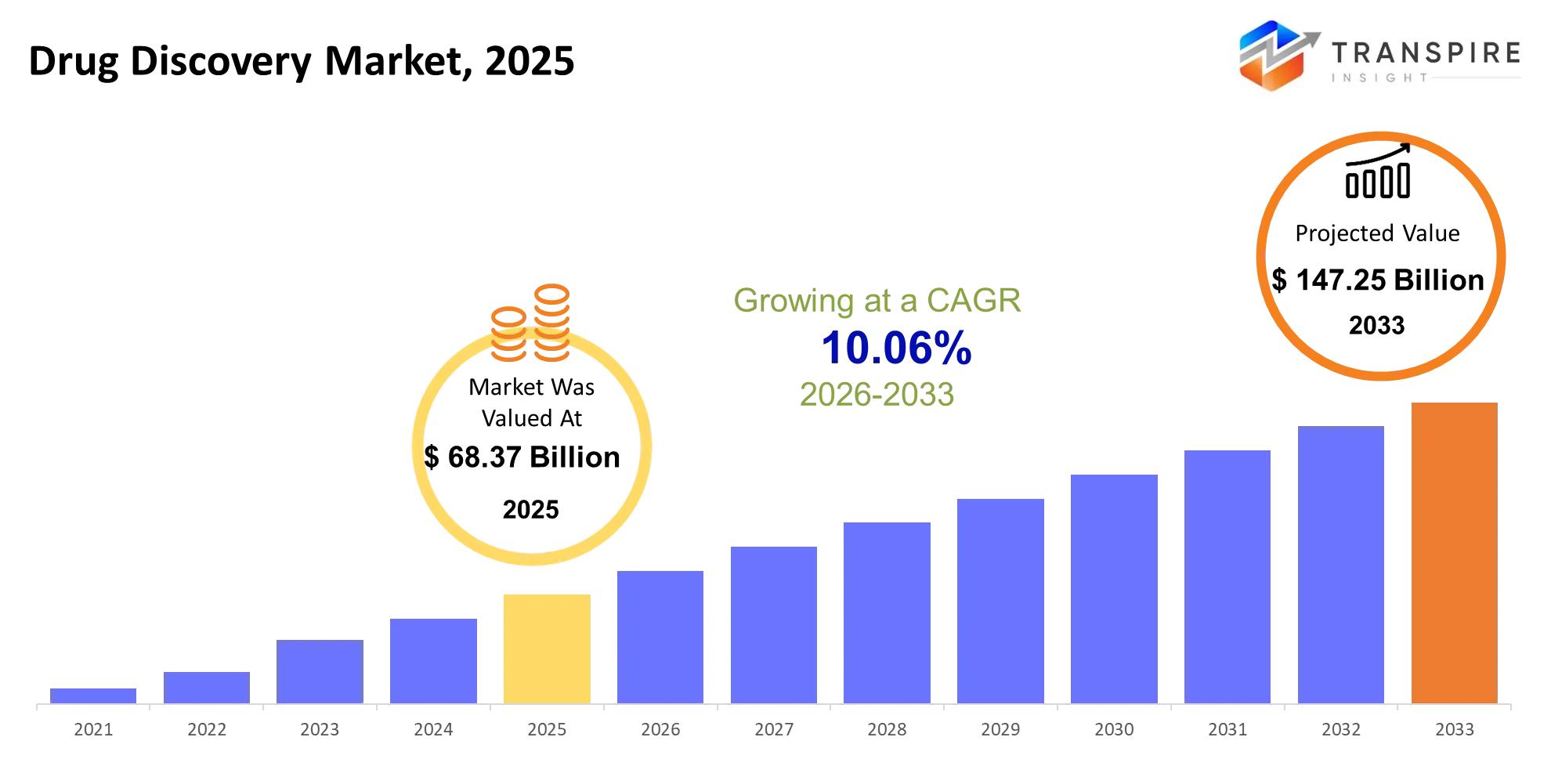
As per Transpire Insight, the Drug Discovery Market size is estimated at USD 68.37 billion in 2025 and is anticipated to reach USD 147.25 billion by 2033, growing at a CAGR of 10.06% from 2026 to 2033.
The drug discovery market helps people find, test and improve medicines before they go into clinical development. In the three to five years drug discovery has moved from mainly lab‑based work to data‑heavy models that bring together automation, genomics, computational chemistry and artificial intelligence. One big change in drug discovery is the use of AI and machine learning to pick the targets, create new molecular candidates, and make lead optimisation better. A real reason for this shift in drug discovery is the growing number of partnerships between pharmaceutical companies and AI‑focused drug discovery firms. These partnerships give scientists data sets and quicker computational screening. Growth in drug discovery follows a cause‑and‑effect cycle. Better data and digital tools cut the time needed for research. They also lower the number of candidates that need testing. This helps companies spend their research budgets carefully. Small molecules still make up a part of the drug type market. AI and machine learning are moving forward quickly as drug discovery teams use more predictive workflows.
Drug Discovery Market Size & Forecast:
- Market Size 2025: USD 68.37 Billion
- Expected Market Value (2033): USD 147.25 Billion
- Forecast CAGR (2026–2033): 10.06%
- Leading Region in 2025: North America
- Fastest Growing Region: Asia Pacific
- Key Company Profiles: Charles River Laboratories, Thermo Fisher Scientific, WuXi AppTec, Evotec, Eurofins Scientific, IQVIA, Labcorp Drug Development, Sygnature Discovery, Schrödinger, Recursion Pharmaceuticals, Exscientia, GSK, Pfizer, AstraZeneca, Novartis
Key Market Insights:
The market is moving towards technology-enabled discovery where small molecules take the maximum market share, and AI holds growing importance in early-stage research.
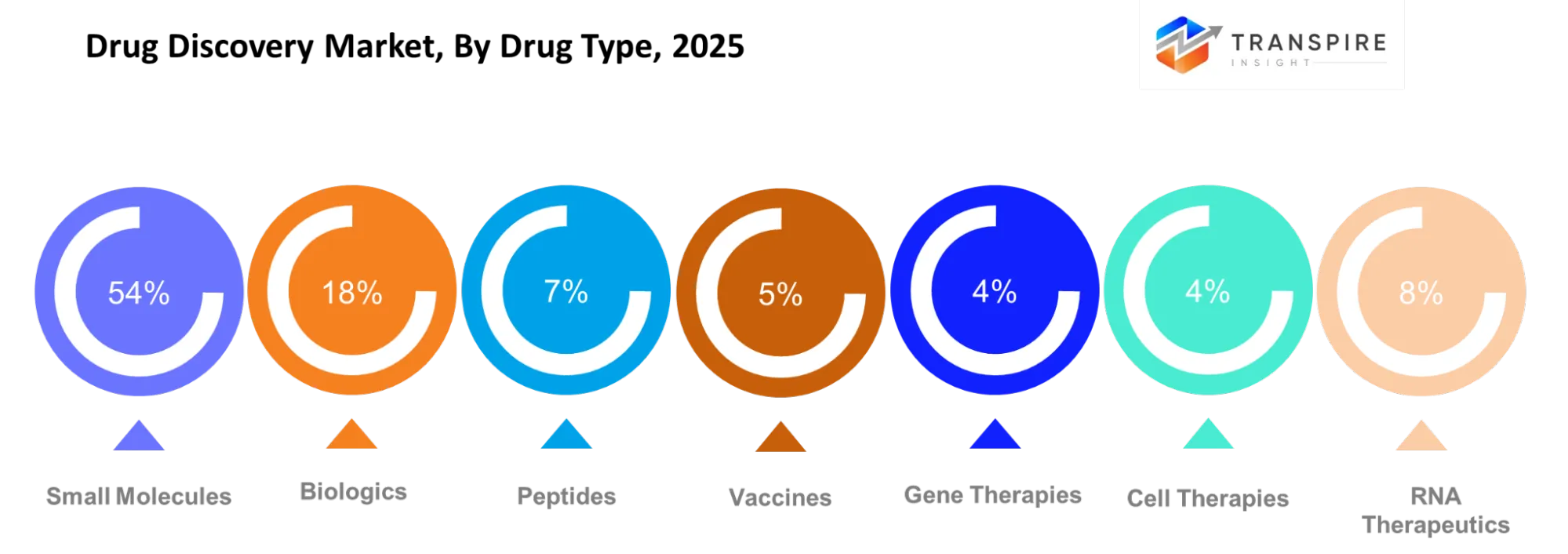
- Small molecules hold 54.20% market share, thus making them an important part of drug discovery and ensuring additional investments in screening and medicinal chemistry.
- Biologics hold a market share of 18.00%, indicating the growing importance of sophisticated medicines and biological research platforms.
- Peptides make up 7.00% market share, due to innovations in molecular structure, screening and target identification.
- Vaccines hold 5.00% market share, due to advancements in computational biology and high-throughput screening that allow researchers to screen vaccine candidates.
- Gene therapy constitutes 4.00% of the market share, providing impetus for genomics and bioinformatics research.
- RNA therapy accounts for 3.00%, gaining from increased biological knowledge and computational methods for analysing sequences and targets.
- Other drugs make up 5.30%, allowing the use of specialised approaches to drug discovery in emerging therapeutic technologies.
What are the Key Drivers, Restraints, and Opportunities in the Drug Discovery Market?
Drivers:
The growth in the international drug discovery market is fueled by the use of technologies such as artificial intelligence, machine learning, high-throughput screening, and bioinformatics. increased success rate is due to the existence of more genomics, proteomics, chemistry, and clinical data that help to identify suitable targets and choose suitable compounds. They allow saving time on duplicate research work and making drug discovery more effective.
Restraints:
The expense and difficulty of incorporating new technologies into existing drug discovery systems. This is because the predictions made by artificial intelligence technologies need to be validated using lab-based experiments, and there may be variations in datasets, lab procedures, and biological organisms. In addition, the organisation requires scientists and engineers who have specialised knowledge for the effective use of these technological platforms, making the process more expensive.
Opportunities:
Opportunity include the integration of artificial intelligence with lab automation and biological multi-modal datasets. This would enable a continuous loop to be built around computational predictions and experimental data in order to make the selection process of drug candidates more efficient. Collaboration among pharmaceutical companies, biotechnology firms, contract research organisations, and technology companies focused on artificial intelligence could further increase access to these technologies and open up more possibilities.
What Has the Impact of artificial intelligence on the Drug Discovery Market?
The use of AI in drug discovery is based on the capacity of AI tools to facilitate the work of research groups in analysing biological data, discovering targets, prioritising compounds, and designing molecules by minimising the number of experiments required. In the case of target discovery, an AI algorithm can analyse a huge amount of genomic, proteomic, imaging, and clinical data in order to detect certain connections that may be hard to detect otherwise. In terms of molecule discovery, machine learning and generative algorithms can be helpful in virtual screening and proposing compounds with desirable properties, and the predictive models can be useful to predict activity, selectivity, pharmacokinetics, or side effects of a certain compound. Thus, efficiency will be increased because of less repetitive analysis and laboratory focus on promising molecules. AI is also becoming increasingly coupled with automation, which provides design-make-test-analyse cycles in which experimental data continuously improve the accuracy of computational models. According to Recursion, their platform combines multimodal biological data, AI models, and experiments to contribute to drug discovery. AI does not exclude experimental confirmation. The accuracy depends on the quality of the dataset, biological complexity, biases of the model, and integration into the process of research.
Instance:
In June 2026, Bayer collaborated with Iambic Therapeutics in utilising the latter’s drug discovery platform that leverages the power of AI for the identification and optimisation of small molecule drug candidates. This partnership exemplifies the way AI is aiding pharma companies in discovering drugs.
https://www.bayer.com/en-us/united-states/news-and-stories/2026/advancing-drug-discovery-with-ai
Key Market Trends:
The new trend is the move from using computational approaches alone to discovery approaches that involve data, AI, automation, and validation in the lab. This is affecting drug firms in the way they allocate money for research and in the choice of drugs.
- Automated experimentation is growing, combining computational predictions and rapid laboratory experiments and analysis.
- Multimodal data is increasing in importance, as companies utilise their genomic, proteomic, imaging, chemistry, and clinical data sets.
- Predictive models are getting closer to decision-making, assisting target prioritisation, lead selection, safety evaluation, and lead optimisation.
- Quality of data is now a factor that separates competitors, since better proprietary data sets enhance model building and scientific validation.
- Outsourcing is shifting towards technology outsourcing, where CROs provide services like AI, automation, bioinformatics, and specific screening services.
Drug Discovery Market Segmentation
By Drug Type:
The most dominant drug type in the drug discovery market share is the small molecule, which holds 54.20% in the supplied segmentation. The existing drug development procedures, extensive applicability, and their ability to be screened through a high-throughput process continue to drive their market presence. Biologics constitute 18.00%, peptides constitute 7.00%, vaccines constitute 5.00%, gene therapy constitutes 4.00%, cell therapy constitutes 3.50%, and RNA therapy constitutes 3.00% in the market share. The other drugs constitute 5.30% of the market share. Looking into the future, it is expected that drug discovery will diversify its segments based on computational biology, molecular engineering, and precision medicine.
By Technology:
Technology in the process of discovering drugs, and this occurs to enhance speed and efficiency. High-throughput screening is required when there is need to assess large quantities of chemical compounds, whereas bioinformatics creates a chance to analyse complex biological data sets. However, AI and machine learning are emerging as the most rapidly growing part of this segment, with a CAGR of 14.80%. Other important components of the technology segment include molecular modelling, pharmacogenomics, combinatorial chemistry, proteomics, and genomics.
By Process:
The current processes of drug discovery are heavily reliant on good decision-making at each and every stage of early development. Specifically, target identification and target validation will help in understanding if this particular biological mechanism may be used for drug discovery, while hit discovery helps in finding the proper chemical compound to work on. Lead optimisation will improve the potency and selectivity of a particular drug before preclinical trials. Biomarker discovery is becoming increasingly crucial for precision research.
By Therapeutic Area:
Oncology is an important therapeutic area owing to the understanding of the biology of cancer and the need for targeted therapies. Similarly, there is a need for research in disease biology and therapeutic targets for cardiovascular diseases and neurology as well. Other diseases such as infectious diseases, immunology, metabolic diseases, respiratory diseases, and rare diseases are also important areas for drug discovery. The forces that drive drug discovery vary with each therapeutic area, where oncology is driven by molecular profiling and neurology by biological models.
By End User:
Pharmaceutical companies play a vital role because of their broad drug research pipeline, infrastructure, and budget. Biotech companies play an increasing role due to the fact that specialised companies can focus on particular technologies, disease mechanisms or therapeutic platforms. CROs deliver outsourced research capacity, allowing sponsors to gain access to particular expertise without building up all the facilities internally. Academic institutions and research institutes bring new basic discoveries and biological insight to the drug discovery process. Government organisations facilitate strategic and public-oriented research. Speciality labs bring specialised testing capabilities. Further market development will probably witness closer cooperation between these players.
By Mode:
The drug discovery process has become something of an integrated approach that involves research done in-house, outsourcing, collaborations, licensing, partnerships and contract research. Large pharmaceutical companies tend to keep strategic research capabilities in-house but outsource some processes that require specific technology or expertise. The biotech companies, for their part, may rely upon partnerships and contract research in order to reduce development costs and utilise advanced infrastructure. Licensing can serve as a tool for acquisition of potential compounds or technologies without the necessity of developing them from scratch. This kind of approach becomes especially important today since such things as AI, databases, automation and lab capacity are distributed among different companies.
What are the Key Use Cases Driving the Drug Discovery Market?
A use case is small-molecule discovery by means of computational screening, modelling, and optimisation of leads using artificial intelligence. This enables researchers to go through the compound library and perform experiments in the lab only with a specific group of compounds. The fields where it can be applied more extensively include biologics, peptides, vaccines, gene therapy that requires the use of such technologies as bioinformatics, genomics, proteomics, and biomarker discovery. Another use case of this technology is drug repurposing since computational systems enable connecting existing drugs with new targets. New use cases of the application of AI in drug discovery are molecule design, experiment automation, precision medicine, and multimodal analysis. These technologies are used by pharmaceutical companies and organisations conducting clinical trials. Taking into account the extensive usage of AI and machine learning in discovery, their role changes towards workflow integration.
|
Report Metrics |
Details |
|
Market size value in 2025 |
USD 68.37 Billion |
|
Market size value in 2026 |
USD 75.26 Billion |
|
Revenue forecast in 2033 |
USD 147.25 Billion |
|
Growth rate |
CAGR of 10.06% from 2026 to 2033 |
|
Base year |
2025 |
|
Historical data |
2021 - 2024 |
|
Forecast period |
2026 - 2033 |
|
Report coverage |
Revenue forecast, competitive landscape, growth factors, and trends |
|
Regional scope |
United States; Canada; Mexico; United Kingdom; Germany; France; Italy; Spain; Denmark; Sweden; Norway; China; Japan; India; Australia; South Korea; Thailand; Brazil; Argentina; South Africa; Saudi Arabia; United Arab Emirates |
|
Key company profiled |
Charles River Laboratories, Thermo Fisher Scientific, WuXi AppTec, Evotec, Eurofins Scientific, IQVIA, Labcorp Drug Development, Sygnature Discovery, Schrödinger, Recursion Pharmaceuticals, Exscientia, GSK, Pfizer, AstraZeneca, Novartis |
|
Customization scope |
Free report customization (country, regional & segment scope). Avail customized purchase options to meet your exact research needs. |
|
Report Segmentation |
Drug Type (Small Molecules, Biologics, Peptides, Vaccines, Gene Therapies, Cell Therapies, RNA Therapeutics, Other Drugs); Technology (High-Throughput Screening, Bioinformatics, AI & Machine Learning, Molecular Modeling, Pharmacogenomics, Combinatorial Chemistry, Proteomics, Genomics); Process (Target Identification, Target Validation, Hit Discovery, Lead Optimization, Preclinical Testing, Biomarker Discovery, Drug Repurposing); Therapeutic Area (Oncology, Cardiovascular Diseases, Neurology, Infectious Diseases, Immunology, Metabolic Diseases, Respiratory Diseases, Rare Diseases); End User (Pharmaceutical Companies, Biotechnology Companies, CROs, Academic Institutions, Research Institutes, Government Organizations, Specialty Laboratories); Mode (In-House Research, Outsourced Research, Collaborative Research, Licensing, Partnerships, Contract Research, Hybrid Model) |
Which Regions are Driving the Drug Discovery Market Growth?
North America:
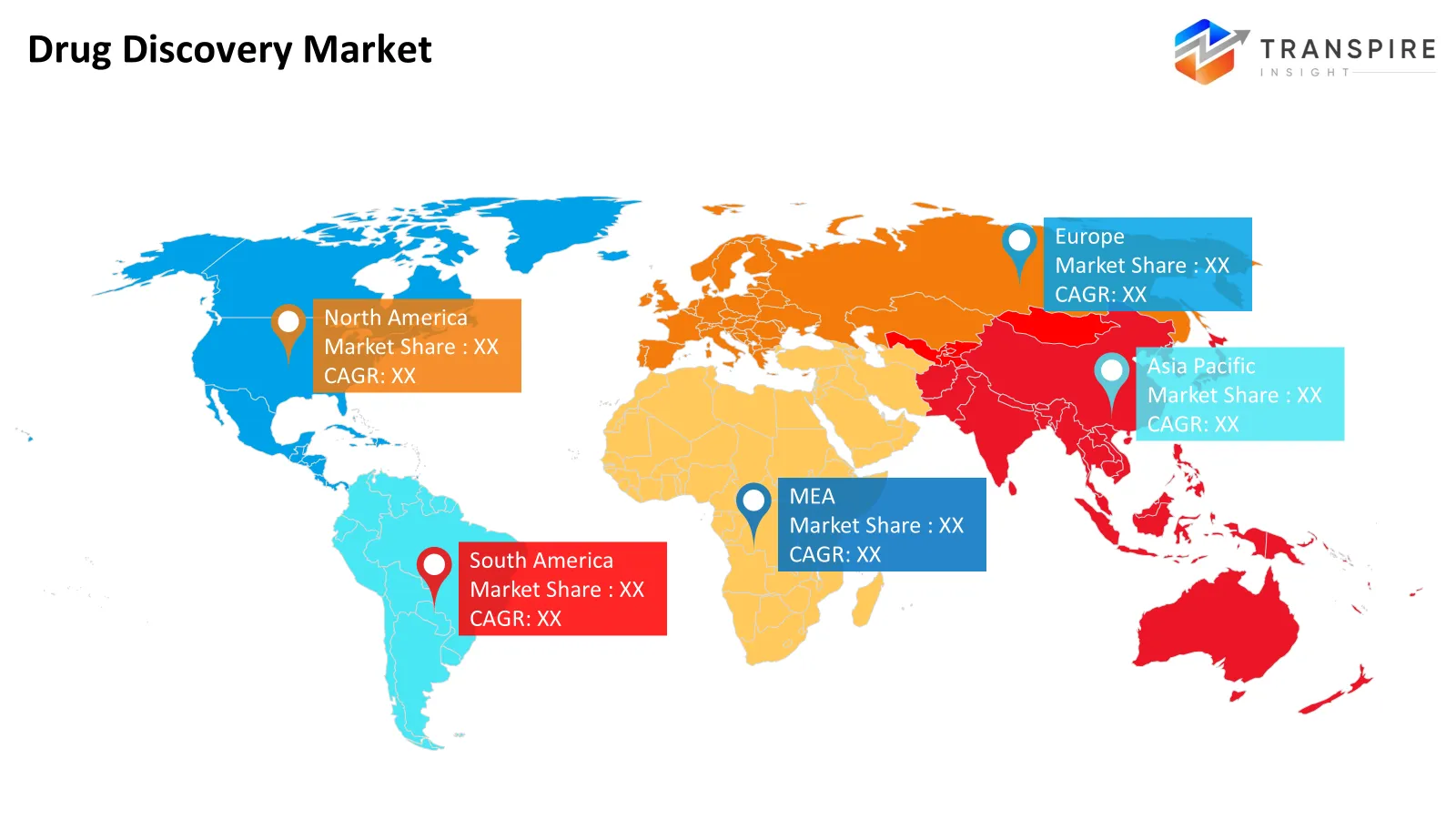
North America is the dominant player in the drug discovery market, which holds a market share of 45.30% due to the large number of pharmaceutical and biotech companies operating in the region. The region boasts a mature research environment, good laboratory facilities, abundant venture capital funding, and clinical development capabilities. All of these characteristics help pharmaceutical and biotech companies, CROs, and technology providers to work together in their drug discovery efforts. It helps the North American region to a strong position in terms of using advanced technologies such as AI, HTS, genomics, and others in drug discovery.
In January 2026, Schrödinger entered into a collaboration with Eli Lilly, whereby the TuneLab AI platform from Lilly would be made available via Schrödinger’s LiveDesign platform. This move was meant to provide participating biotechnology companies with access to AI models, physics-based calculations, and experimental data for drug discovery. This demonstrates the region’s high uptake of computational and AI-based discovery technologies.
Europe:
Europe holds a share of 28.00% of the drug discovery market; while it comes behind North America, it has a favorable research and pharmaceutical environment. Favorable research environment in Europe can be due to the presence of existing life science clusters, research capabilities, biotech firms, as well as collaboration in the area of science. Stability in the region comes through its sophisticated health care system, regulatory expertise, and investments in the field of biomedical research.
In January 2026 , AstraZeneca entered into a strategic collaboration with China-based CSPC Pharmaceuticals, which included eight programs, among which access to the AI-driven peptide drug discovery platform of CSPC. In addition, there is a clinical-ready asset and preclinical programs for obesity and type 2 diabetes that demonstrate the expansion of AI-enabled platforms used by European pharmaceutical companies in their drug discovery pipelines
Asia-Pacific:
Asia-Pacific accounts for 20.00% of the world market and has been designated as the fastest-growing region by the data provided here, having a CAGR of 11.20%. Recent growth in this region has been fueled by increasing production facilities in the region for the pharmaceutical industry, along with increased research, investment in biotechnology, and infrastructure for scientific research. Many countries in the region are increasingly becoming centres for drug discovery and are developing capabilities in genomics, biologics, and computational research.
In July 2026, Takeda announced the progress of its R&D pipeline with the approval of ORZEYFUL, which is the first approval in China for an orexin receptor agonist for narcolepsy.
https://www.takeda.com/newsroom/newsreleases/2026/takeda-reports-first-quarter-fy2026-results/
Who are the Key Players in the Drug Discovery Market and how do they compete?
Competition in the drug discovery market is driven by technology depth, research scale, expertise, and reduction of discovery timeline. The firms are differentiating themselves with high-throughput screening, laboratory services, computational platforms, AI discovery and biological and chemical data sets. Thermo Fisher Scientific is competing through research infrastructure and specialised screening. The company differentiates itself through laboratory products, screening, profiling, and research services while the infrastructure helps the firm to expand its business to pharmaceuticals and biotechnology firms. Thermo Fisher Scientific IQVIA is building its strength through life science data, analytics, technology, and AI/ML capabilities. acquisition agreement for selected Charles River discovery assets helps the firm to build its end-to-end discovery capabilities including small molecule AI platform and laboratory services.
Drug Discovery Market companies
- Charles River Laboratories
- Thermo Fisher Scientific
- WuXi AppTec
- Evotec
- Eurofins Scientific
- IQVIA
- Labcorp Drug Development
- Sygnature Discovery
- Schrödinger
- Recursion Pharmaceuticals
- Exscientia
- GSK
- Pfizer
- AstraZeneca
- Novartis
Recent Development News
- In August 2026, Recursion announced that Genentech has progressed the first neuroscience target from the collaboration into a joint early discovery program. The target has been identified and validated biologically using the neuroscience map created via Recursion's AI technology. Subsequently, the partners progressed the target through small molecule hit generation and validation. https://recursion.com/news/unlocking-the-first-neuroscience-target-for-the-recursion-and-genentech-collaboration
- In February 2025, Isomorphic Labs extended the scope of its collaboration with Novartis by adding up to three additional research programs. Initially, the collaboration centred on identifying small molecules against three challenging targets, whereas the extension added more depth to the collaboration. The development exemplifies increasing interest of pharmaceutical companies in AI-aided small molecule discovery and exploration of tough therapeutic targets with the help of external AI platforms. https://www.isomorphiclabs.com/partnerships
What Strategic Insights Define the Future of the Drug Discovery Market?
The market is moving towards integration drug discovery platforms, where AI, automation, biological data, and bench research become parts of one research cycle. The movement is aimed at achieving fast results through fast evidence generation and molecules selection, prior to entering expensive development stage. The first risk that is inherent to the situation under discussion is too great dependence on predictive ability of the AI that is working with biased or inconsistent dataset in comparison with biological reality. In this case, the illusion of certainty and expenses for verification instead of minimal expenses will arise. The biggest opportunity of this time appears in the synthesis of AI hypothesis, automation, and proprietary multimodal data. It is expected that those companies that would create the feedback mechanism for their predictive models will have the chance to develop better models and get the competitive advantage in drug discovery.
Key Segmentations are:
Drug Type
- Small Molecules
- Biologics
- Peptides
- Vaccines
- Gene Therapies
- Cell Therapies
- RNA Therapeutics
- Other Drugs
Technology
- High-Throughput Screening
- Bioinformatics
- AI & Machine Learning
- Molecular Modeling
- Pharmacogenomics
- Combinatorial Chemistry
- Proteomics
- Genomics
Process
- Target Identification
- Target Validation
- Hit Discovery
- Lead Optimization
- Preclinical Testing
- Biomarker Discovery
- Drug Repurposing
Therapeutic Area
- Oncology
- Cardiovascular Diseases
- Neurology
- Infectious Diseases
- Immunology
- Metabolic Diseases
- Respiratory Diseases
- Rare Diseases
End User
- Pharmaceutical Companies
- Biotechnology Companies
- CROs
- Academic Institutions
- Research Institutes
- Government Organizations
- Specialty Laboratories
Mode
- In-House Research
- Outsourced Research
- Collaborative Research
- Licensing
- Partnerships
- Contract Research
- Hybrid Model
By Regional Analysis
North America
- US
- Canada
- Mexico
Europe
- Germany
- UK
- France
- Italy
- Spain
- Russia
- Rest of Europe
Asia Pacific
- China
- Japan
- India
- South Korea
- Australia
- Rest of Asia Pacific
South America
- Brazil
- Argentina
- Rest of South America
Middle East & Africa
- UAE
- Saudi Arabia
- Qatar
- South Africa
- Rest of the Middle East & Africa
Frequently Asked Questions
Find quick answers to common questions.
The drug discovery market size was valued at USD 68.37 Billion in 2025 and is poised to reach USD 147.25 Billion by 2033, expanding at a 10.06% CAGR.
Key segments for the drug discovery market are Drug Type (Small Molecules, Biologics, Peptides, Vaccines, Gene Therapies, Cell Therapies, RNA Therapeutics, Other Drugs); Technology (High-Throughput Screening, Bioinformatics, AI & Machine Learning, Molecular Modeling, Pharmacogenomics, Combinatorial Chemistry, Proteomics, Genomics); Process (Target Identification, Target Validation, Hit Discovery, Lead Optimization, Preclinical Testing, Biomarker Discovery, Drug Repurposing); Therapeutic Area (Oncology, Cardiovascular Diseases, Neurology, Infectious Diseases, Immunology, Metabolic Diseases, Respiratory Diseases, Rare Diseases); End User (Pharmaceutical Companies, Biotechnology Companies, CROs, Academic Institutions, Research Institutes, Government Organizations, Specialty Laboratories); Mode (In-House Research, Outsourced Research, Collaborative Research, Licensing, Partnerships, Contract Research, Hybrid Model).
Growth is primarily driven by Increased investment in pharmaceutical research and development, growing need for innovations, use of artificial intelligence in medicine, growth of personalised medicine and increased incidence of chronic diseases.
The market is led by major manufacturers including Charles River Laboratories, Thermo Fisher Scientific, WuXi AppTec, Evotec, Eurofins Scientific, IQVIA, Labcorp Drug Development, Sygnature Discovery, Schrödinger, Recursion Pharmaceuticals, Exscientia, GSK, Pfizer, AstraZeneca, Novartis.
North America has a dominant position in the market for drug discovery with a 45.30% share, owing to the strength of its pharmaceutical and biotech sector, large funding for R&D activities, advanced technology and the presence of key research institutes and market players. Innovative treatment procedures, AI-based drug discovery and clinical testing add to the prominence of the North American market.
Opportunities in the drug discovery market include the use of artificial intelligence and machine learning, increasing demand for personalized medicine, growth in the biologics and advanced therapy sector, increasing investments in drug development alliances, and high-throughput screening and computational drug discovery technologies.
- Charles River Laboratories
- Thermo Fisher Scientific
- WuXi AppTec
- Evotec
- Eurofins Scientific
- IQVIA
- Labcorp Drug Development
- Sygnature Discovery
- Schrödinger
- Recursion Pharmaceuticals
- Exscientia
- GSK
- Pfizer
- AstraZeneca
- Novartis
About the Authors

Pankaj Ghogare Patil
I am Pankaj Ghogare Patil, a Senior Research Analyst at Transpire Insight, specializing in the Pharmaceutical, Chemicals & Materials, Healthcare IT, and Biotechnology industry. My expertise lies in conducting comprehensive market research, analyzing industry trends, evaluating competitive landscapes, and translating complex data into actionable insights. At Transpire Insight, I closely follow emerging technologies, regulatory developments, and market innovations to create accurate, well-researched, and informative content that helps businesses and professionals make informed decisions. I am committed to producing credible, evidence-based articles that reflect industry best practices while making technical topics accessible and valuable for a broad audience.

Chakradhar Khansole
Chakradhar serves as the Research Director at Transpire Insight, bringing over 8 years of experience in technology, innovation, and strategic market intelligence. He specializes in transforming complex market data into actionable business insights that enable organizations to make informed, growth-oriented decisions. Recognized for his strategic vision and analytical expertise, Chakradhar leads high-impact research initiatives, delivering comprehensive market assessments, competitive intelligence, and forward-looking industry analysis.
Recently Published Reports
-
Jul 2026
Alopecia Treatment Market
Alopecia Treatment Market Size, Share & Analysis Report By Disease Type (Alopecia Areata, Cicatricial Alopecia, Traction Alopecia, Alopecia Totalis, Androgenetic Alopecia, Alopecia Universalis, and Other Disease Types), By Treatment Type (Topical Treatments, Oral Medications, Injectable Therapies, and Hair Transplantation), By Gender (Male, and Female), By Distribution Channel (Hospitals and Clinics, Retail Pharmacies, and Online Retailers), and Geography (North America, Europe, Asia-Pacific, Middle East and Africa, South and Central America), 2021 - 2031
-
Jul 2026
Medical Ultrasound Probe Market
Medical Ultrasound Probe Market Size, Share & Analysis Report By Type (Linear Type, Convex Type, Endocavitary Probe, Phased Array/Cardiac Probe, Transesophageal (TEE) Probe, and Others), By Application (Ophthalmology, Cardiology, Musculoskeletal, Oncology, Obstetrics & Gynecology, General Imaging, and Others), By End User (Hospitals & Clinics, Diagnostic Centers, Ambulatory Surgical Centers, and Others), and Geography (North America, Europe, Asia-Pacific, Middle East and Africa, South and Central America), 2021 – 2031
-
May 2026
Biosimilars Market
Biosimilars Market By Product Type (Monoclonal Antibodies, Recombinant Hormones, Erythropoietin, G-CSF, Others), By Indication (Oncology, Autoimmune Diseases, Blood Disorders, Diabetes, Others), By Manufacturing Type (In-House Manufacturing, Contract Manufacturing), By Distribution Channel (Hospital Pharmacies, Retail Pharmacies, Online Pharmacies), By Industry Analysis, Size, Share, Growth, Trends, and Forecasts 2021-2033
-
Apr 2026
Gastrointestinal Endoscopy Market
Gastrointestinal Endoscopy Market By Type (Rigid Gastrointestinal Endoscope, Flexible Gastrointestinal Endoscopes, Disposable Gastrointestinal Endoscope), By Procedure Type (Colonoscopy, Gastroscopy, Duodenoscopy, Enteroscopy, Flexible Sigmoidoscopy, Others), By Application (Diagnosis, Treatment), By End-Users (Hospitals, Ambulatory Surgical Centers, Specialty Clinics, Laboratories, Others), By Industry Analysis, Size, Share, Growth, Trends, and Forecasts 2021-2033