

Cosmetic Products Market Summary:
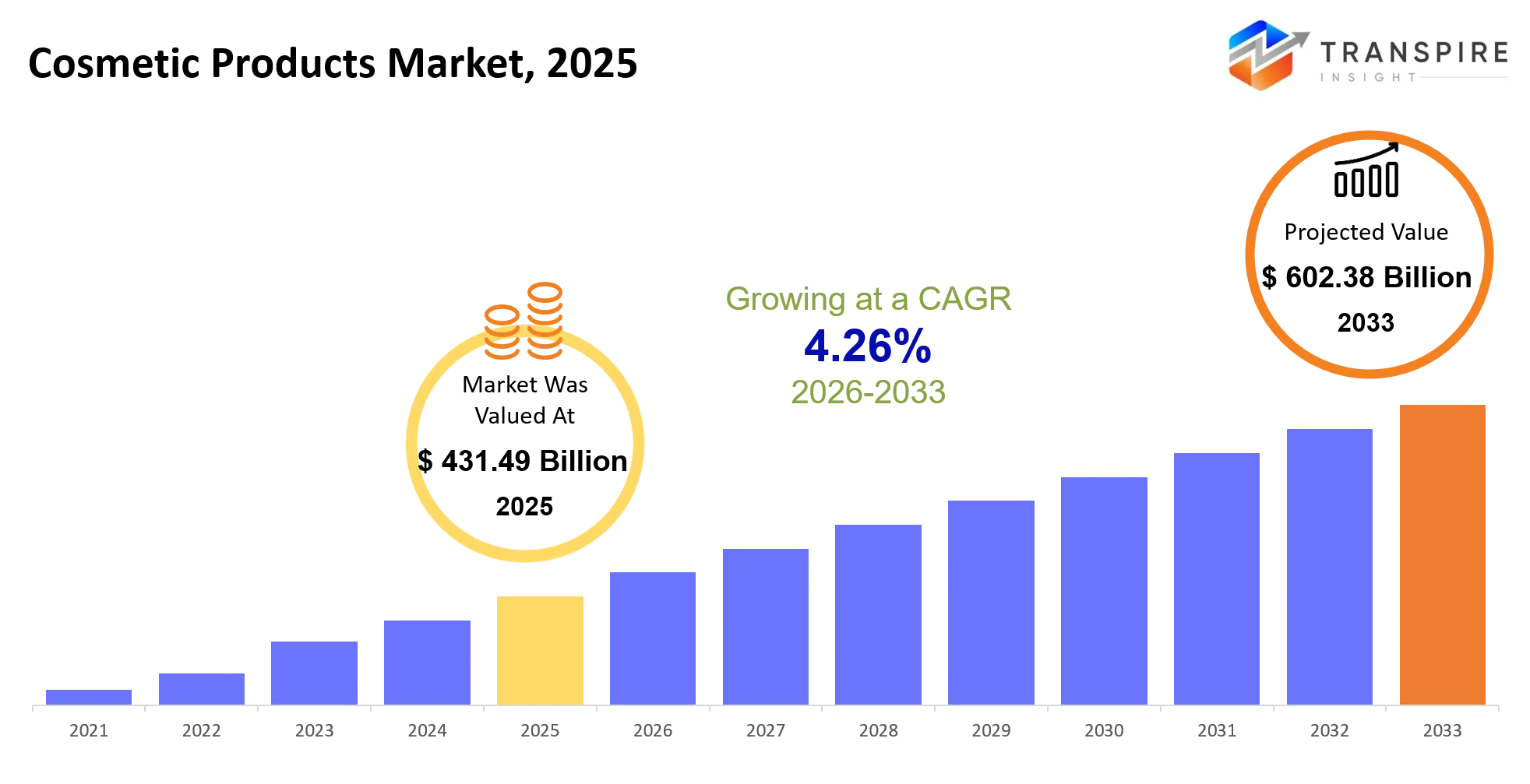
As per Transpire Insight Analysis, the Cosmetic Products Market size is estimated at USD 431.49 billion in 2025 and is anticipated to reach USD 602.38 billion by 2033, growing at a CAGR of 4.26% from 2026 to 2033.
The cosmetic products market is changing. Consumers today want products that not only improve their look but also take care of their skin. In the past three to five years, the industry has seen a clear change. People are now more interested in knowing exactly what is in their products. They want ingredient transparency. They also prefer to shop for beauty products. Digital beauty shopping has become more common. Personalised product recommendations are now a factor in buying decisions. Social media plays a role. Beauty influencers shape what people buy. Online retail platforms make it easier to find products. Customers often discover cosmetics through videos, posts and reviews. A big shift is happening in how products are made. Technology is being used more in product development. Artificial intelligence is being used to assess skin conditions. Virtual makeup trials let people see how products look before buying. These tools make shopping more convenient and accurate. The growth of beauty platforms has helped this change. The pandemic also had an impact. They are expanding their premium product lines. They are also strengthening their presence. These steps help them reach customers. They also create ways to grow revenue. All these changes are shaping the cosmetic products market. The market is adapting to needs and new ways of shopping.
Cosmetic Products Market Size & Forecast:
- Market Size 2025: USD 431.49 Billion
- Expected Market Value (2033): USD 602.38 Billion
- Forecast CAGR (2026–2033):4.26%
- Leading Region in 2025: North America
- Fastest Growing Region: Asia Pacific
- Key Company Profiles: L'Oréal, Estée Lauder, Shiseido, Coty, Unilever, Procter & Gamble, Beiersdorf, Kao, Natura &Co, Amorepacific, Revlon, e.l.f. Beauty, Chanel, LVMH, Johnson & Johnson
Key Market Insights:
The market is moving towards beauty trends, innovation, and expansion into digital retail channels. There has been an increased focus on personalised, premium, and technologically driven experiences, among others, to gain a competitive advantage in the market.
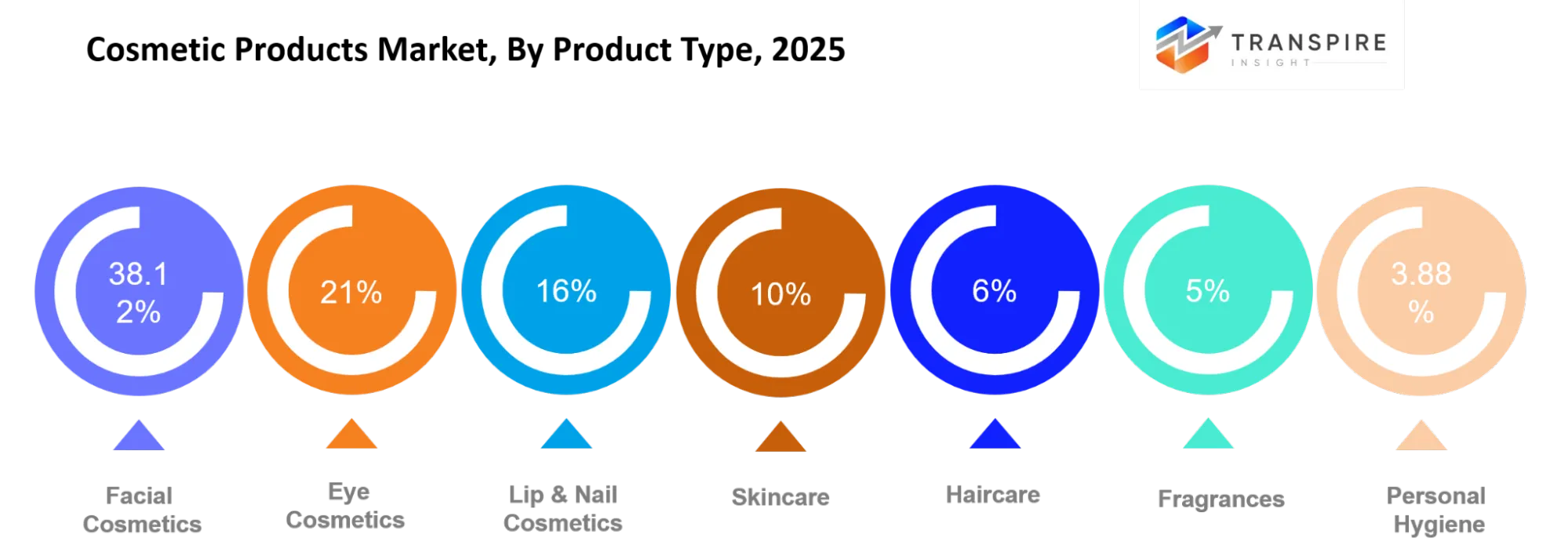
- Facial cosmetics constituted 38.12% of the market, driven by the regular use of cosmetic products and innovation by companies such as L'Oréal and Estée Lauder.
- Lip and nail cosmetics were 16.0% of the market as brands introduced shade variety, application convenience and trendy new products.
- Haircare made up 6.0% of the market as Unilever and other manufacturers developed scientific formulations for different hair treatments
- Fragrances constituted 5.0% of the market as there was a rising interest in premium fragrances, fragrance layering and personalisation of fragrances.
- Personal hygiene was 3.88% of the market, driven by innovation that provided convenience and everyday requirements.
What are the Key Drivers, Restraints, and Opportunities in the Cosmetic Products Market?
Drivers
The growth of the market is discovery of product on social media, through creator recommendations and online beauty communities. This leads to a shortened customer journey to purchase and allows companies to target a younger audience. The sales of the product increased six times more through e-commerce compared to store sales, thus highlighting digital purchase in favour of adoption. Innovation in the product, such as multifunctional make-up and ingredient-based products, leads to repurchase and luxury spending.
Restraints
The restraint to the growth is posed by high competition among brands, cost sensitivity of the customer and increasing costs related to the product ingredients, packaging and regulatory requirements. The reasons behind this continue due to the need of refreshing the products while complying with the different regulations in various regions.
Opportunities
The opportunities for growth through the use of AI include recommendations for beauty products that align with the tastes of locals, social commerce, and science-based products. For instance, companies can utilise technologies such as virtual try-on and personalised suggestions for shade or skin care to make purchases less confusing. Asia-Pacific provides an opportunity due to the growth of digital retail and regional beauty trends shaping product offerings.
|
Driver |
Relative Impact on Growth (%) |
Geographic Relevance |
Impact Timeline |
Demand Strength |
Growth Mechanism |
Key Beneficiaries |
Major Constraint |
|
Rising Demand for Skincare and Personal Care Products |
28% |
Asia Pacific, North America, Europe |
Long-term |
High |
Increasing skincare routines drive repeat product purchases. |
Skincare brands, ingredient suppliers, cosmetic manufacturers, retailers. |
Skin sensitivity concerns and intense product competition. |
|
Expansion of E-commerce and Social Commerce Channels |
24% |
Asia Pacific, North America, Latin America |
Short-term |
High |
Digital platforms accelerate product discovery and purchasing. |
Online retailers, beauty brands, influencers, digital platforms. |
Counterfeit products and high customer acquisition costs. |
|
Rising Disposable Income and Beauty Spending in Emerging Economies |
19% |
Asia Pacific, Latin America, Middle East & Africa |
Medium-term |
High |
Higher purchasing power expands consumer beauty expenditure. |
Mass-market brands, premium manufacturers, distributors, retailers. |
Price sensitivity and uneven consumer purchasing power. |
|
Technological Advancements and Product Innovation |
16% |
North America, Europe, Asia Pacific |
Long-term |
High |
AI personalization and advanced formulations improve product appeal. |
Cosmetic manufacturers, biotechnology firms, AI technology providers. |
High research costs and complex product development. |
|
Growing Preference for Sustainable and Clean Beauty Products |
13% |
Europe, North America, Asia Pacific |
Medium-term |
Medium |
Clean formulations and sustainable packaging attract conscious consumers. |
Sustainable ingredient suppliers, packaging firms, beauty brands. |
Higher production costs and limited sustainable materials. |
|
Total |
100% |
Global |
— |
— |
— |
— |
— |
What Has the Impact of Artificial Intelligence Been on the Cosmetic Products Market?
AI is used in the development of better customer experience and product development practices in this sector. The skin assessment applications enabled by the power of artificial intelligence analyse the visible characteristics of skin and suggest the appropriate cosmetic products according to individual needs. Virtual makeup applications give consumers an opportunity to choose from different colour tones and combinations of products prior to purchasing them online. Such applications facilitate product discovery and allow companies to decrease the degree of uncertainty when consumers shop online. From the perspective of product manufacturing, AI-powered analytical tools could be used by companies for identification of consumer preferences, product demand prediction, and inventory planning. Besides, AI tools can be used by research teams for efficient evaluation of the combination of ingredients and formulation. The usage of such tools faces difficulties due to high costs of advanced technology, the need for reliable consumer data, and integration with the existing business infrastructure. Besides, the accuracy of results depends on image quality, lighting, and individual skin characteristics. Nevertheless, AI is becoming an essential tool in this field.
Instance
March 2026, the company has increased its partnership with NVIDIA for the application of AI in cosmetics development. The technology is utilised to analyse ingredients, optimise formulations and create innovative skin care products. This will ensure faster innovation of products in the cosmetics industry.
Key Market Trends
The world cosmetic products market is evolving towards personalisation, ingredient disclosure and online retailing. In response to this trend, manufacturers are tailoring their products and marketing tactics to fit new customer demands.
- Beauty using artificial intelligence. Beauty companies are introducing virtual makeup try-ons and skin assessment using AI technologies.
- Influencer marketing and video clips are becoming critical platforms for the discovery and purchase of cosmetics.
- Ingredient disclosure. Consumers are becoming concerned about product ingredients, prompting brands to disclose the composition of the products.
- Multi-functionality of cosmetics. Manufacturers are producing makeup products that are both beautifying and care-giving.
- Premium beauty products. Manufacturers are expanding their premium line of products while offering affordable products for budget-conscious consumers.
- Sustainable packaging. Manufacturers are using refillable packaging, eco-friendly materials and sustainably sourced ingredients.
Cosmetic Products Market Segmentation
By Product Type
Facial Cosmetics have the highest market share of 38.12% due to continuous consumer expenditure on various products such as foundation, concealers, powder and other skin-enhancing products. Eye Cosmetics constitute 21.0% and are the fastest-growing segment with a CAGR of 4.39%, due to increasing demand for innovative mascara, eyeliners and eyeshadows. Lip and nail cosmetics constitute 16.0%, whereas Skincare constitutes 10.0% of the total market. The other segments include Hair care constituting 6.0%, Fragrance constituting 5.0% and personal hygiene constituting 3.88%.
By Category
Mass Products cater to a large number of consumers through affordability, convenience and the application of cosmetics on a daily basis. Premium & Luxury Products target those consumers who prefer advanced formulation, unique packaging and branding of cosmetic products. Professional Products are used mainly in beauty salons, by makeup artists, and by service providers. Natural & Organic Cosmetics are also trending as consumers look for the ingredients in their cosmetic products. There is an opportunity for clinical products with specific formulations.
By Ingredient Type
Conventional and synthetic ingredients continue to be relevant as they are essential for formulation stability and consistency, as well as for use at a commercial scale. Ingredients that are natural and botanical continue to garner increasing interest from manufacturers pursuing botanically based cosmetic products and ingredient transparency; certified, labelled organic formulations are important to consumers seeking certified sourcing and manufacturing methods; mineral-based ingredients remain key components in complexion and sun protection formulations, and vegan and bio-based formulations can provide opportunities to create alternatives for some animal- or petroleum-based components.
By Distribution Channel
They offer the consumer product demos, out-of-the-box advice and shade comparisons, which make the selection process an easier experience. They also offer convenience and the opportunity for price comparisons with a large range of products, as well as a real shopping environment, with product trials, recommendations and the possibility of trying new products and various product combinations. Out-of-town hypermarkets and supermarkets make it possible to buy cosmetics on the high street, as do online sources such as convenience shopping, reviews, online offers and recommendations.
By Consumer Group
Men constitute a large share of the makeup, skin care, fragrance and personal grooming markets due to their high levels of engagement in those areas. But owners and marketers of beauty products are expanding into male and unisex lines because of a broader array of grooming and beauty choices. Teen and young adults are shaping product trends through their online activity and curiosity around affordable cosmetic brands. Those of middle age are driving opportunities for tailored formulations; seniors are a growing customer segment for anti-ageing beauty and skin care products.
By Application
Personal grooming is a well-known category of cosmetics, based on regular grooming, cleaning and appearance needs. Skin care applications are becoming more interesting as there is demand for products to augment skin appearance and offer further skin care benefits. Hair care and fragrance applications are key, as these are popular everyday items – people buy hair and skin care products regularly for styling and physical appearance as well as to express personality through fragrance choices. Hygiene applications fulfil demand for routine personal hygiene products.
What are the Key Use Cases Driving the Cosmetic Products Market?
Facial cosmetics constitute one of the most prevalent use cases in the worldwide cosmetics products market, where the regular usage of foundations, concealers, powders and other products that help manage one’s skin is widespread among consumers. Facial cosmetics have demand at the mass, premium, and luxury levels. In addition to the application of facial cosmetics, the application of cosmetics in the eye area, lips, nails, hair, and as fragrances is increasing. The use of these cosmetics is supported by special shops, salons, and online sites selling particular collections. Among the emerging uses in this sphere are the application of virtual beauty test trials, customised recommendations on choosing cosmetic products, and even combined products for cosmetics and skincare use.
|
Report Metrics |
Details |
|
Market size value in 2025 |
USD 431.49 Billion |
|
Market size value in 2026 |
USD 449.87 Billion |
|
Revenue forecast in 2033 |
USD 602.38 Billion |
|
Growth rate |
CAGR of 4.26% from 2026 to 2033 |
|
Base year |
2025 |
|
Historical data |
2021 - 2024 |
|
Forecast period |
2026 - 2033 |
|
Report coverage |
Revenue forecast, competitive landscape, growth factors, and trends |
|
Regional scope |
United States; Canada; Mexico; United Kingdom; Germany; France; Italy; Spain; Denmark; Sweden; Norway; China; Japan; India; Australia; South Korea; Thailand; Brazil; Argentina; South Africa; Saudi Arabia; United Arab Emirates |
|
Key company profiled |
L'Oréal, Estée Lauder, Shiseido, Coty, Unilever, Procter & Gamble, Beiersdorf, Kao, Natura &Co, Amorepacific, Revlon, e.l.f. Beauty, Chanel, LVMH, Johnson & Johnson |
|
Customization scope |
Free report customization (country, regional & segment scope). Avail customized purchase options to meet your exact research needs. |
|
Report Segmentation |
Product Type (Facial Cosmetics, Eye Cosmetics, Lip & Nail Cosmetics, Skincare, Haircare, Fragrances, Personal Hygiene); Category (Mass Products, Premium Products, Luxury Products, Professional Products, Natural Products, Organic Products, Clinical Products); Ingredient Type (Conventional/Synthetic, Natural, Organic, Botanical, Mineral-Based, Vegan, Bio-Based); Distribution Channel (Specialty Stores, Supermarkets & Hypermarkets, Online Retail, Department Stores, Pharmacies, Direct Selling, Salons); Consumer Group (Women, Men, Unisex, Teenagers, Young Adults, Middle-Aged Adults, Seniors); Application (Personal Grooming, Skin Enhancement, Hair Care, Makeup, Fragrance, Hygiene, Professional Beauty) |
Which Regions are Driving the Cosmetic Products Market Growth?
North America
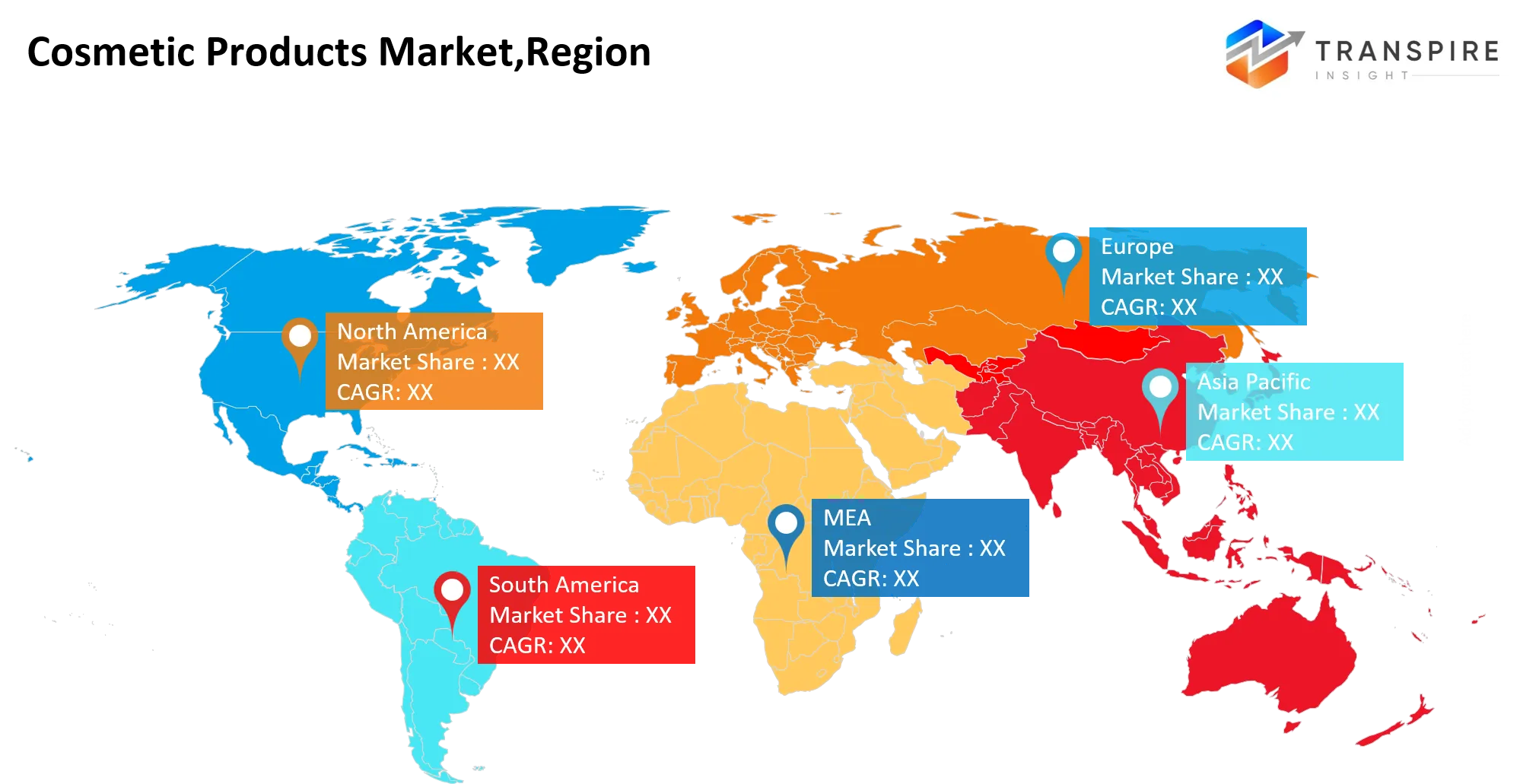
North America constitutes 33.10% of the market share due to established beauty brands, a well-established retail network and relatively high consumer expenditure on personal care products. The region gains from the presence of large corporations like L'Oréal, Estée Lauder, Coty and Procter & Gamble that consistently launch new formulations and premium collections of products. Advanced e-commerce platforms, well-established speciality retail networks and well-established beauty product distribution systems enhance the sales of the region. The increasing consumer interest in premium cosmetics, personalised beauty solutions and ingredient-based products fuels the market growth.
In July 2026, L’Oréal Paris launched its Revitalift Melasyl Dark Spot Creamy Serum in the US. This cosmetic product features Melasyl, which is a patented L’Oréal Paris ingredient used to deal with dark spots. This development shows the increasing need for scientifically backed skincare products and continuous product innovation in North America.
Europe
The European region holds a 24.5% share of the cosmetic products market owing to the established cosmetics manufacturing sector, well-established luxury beauty industry and well-established formulation expertise in the region. Countries such as France, Germany, Italy and the United Kingdom gain from the established beauty brands, fragrance manufacturers and speciality cosmetic retailers in the region. The region gains from the established product safety and ingredient compliance framework in the region, encouraging the manufacturers to develop quality formulations and products.
In June 2025, Beiersdorf AG invested €300 million to expand its production site in Poznan, Poland. As a result, Beiersdorf will be able to double its production volume to 500 million products per year. Additionally, the company will get an opportunity to create about 200 jobs. This investment contributes to strengthening cosmetics manufacturing in Europe and the supply of innovative skincare products to the international market.
Asia-Pacific
The Asia-Pacific accounts for 29.0% of the world cosmetic products market and is the fastest-growing regional market with a projected CAGR of 7.18%. The expansion is attributed to growth in urban populations, increased usage of beauty products, and rapid development of online shopping platforms in China, India, South Korea, and Southeast Asia. There is a surge in the adoption of K-beauty fads, the formulation of local variants, and the use of influencer marketing in product discovery. This is motivating cosmetic product producers to launch localised variants of their products.
In September 2026, Amorepacific has opened its first official pop-up store featuring its luxury skincare brand Sulwhasoo at Isetan Shinjuku in Japan. There are such products on offer as Concentrated Ginseng Rejuvenating Cream and First Care Activating Serum. This move enhances the position of the company in the luxury beauty market in Japan.
Who are the Key Players in the Cosmetic Products Market and how do they Compete?
Cosmetic products across the globe are under threat of competition from multinational beauty companies, speciality cosmetics producers and recently formed digital cosmetics companies. The competing players in the cosmetics products industry are L'Oréal, Estée Lauder Companies, Procter & Gamble, Unilever, Coty, Shiseido, Beiersdorf, Kao Corporation, Revlon and Chanel. Competition is due to various issues such as brand positioning, innovation of products, price structures, product differentiation and distribution channels. The strategy that has been put in place by L'Oréal is based on the company's strong research and development, wide-ranging brand offering and investment in beauty technology. The company has developed competitive strategies for premiumization, personalised beauty products and emerging markets. Estée Lauder Companies uses a luxury product positioning, prestige cosmetics and brand experience specialisation strategy. The company has developed technology-driven digital commerce capability. Unilever focuses on low-cost personal care products, scientific formulation processes, and acquisitions. Coty has used its expertise in fragrances, luxury licensing and colour cosmetics innovations.
Cosmetic Products Market companies
- L'Oréal
- Estée Lauder
- Shiseido
- Coty
- Unilever
- Procter & Gamble
- Beiersdorf
- Kao
- Natura &Co
- Amorepacific
- Revlon
- e.l.f. Beauty
- Chanel
- LVMH
- Johnson & Johnson
|
Company |
Est. Revenue Share Range |
Key Offerings |
Strategic Positioning |
Geographic Strength |
Technology Focus |
|
L'Oréal Groupe |
4.5–5.5% |
L'Oréal Paris, Maybelline, Lancôme, La Roche-Posay |
leadership through diversified beauty brands |
Europe, North America, Asia Pacific |
AI-powered beauty diagnostics and personalized skincare |
|
Unilever PLC |
1.0–1.5% |
Dove, Vaseline, Pond's, TRESemmé |
Mass-market leadership through accessible beauty products |
Asia Pacific, Europe, North America |
Skin science and sustainable formulation innovation |
|
Procter & Gamble |
1.0–1.5% |
Olay, SK-II, Pantene, Head & Shoulders |
Mass-market strength with skincare differentiation |
North America, Asia Pacific, Europe |
Advanced skincare research and haircare formulations |
|
Estée Lauder Companies |
1.0–1.5% |
Estée Lauder, Clinique, MAC, La Mer |
Premium positioning through prestige beauty brands |
North America, Asia Pacific, Europe |
Skincare biotechnology and digital personalization |
|
LVMH |
0.5–0.9% |
Dior Beauty, Guerlain, Givenchy Beauty, Benefit Cosmetics |
Luxury differentiation through exclusive beauty experiences |
Europe, Asia Pacific, North America |
Fragrance science and luxury product innovation |
|
Chanel |
0.4–0.8% |
Chanel No. 5, Coco Mademoiselle, Les Beiges, Sublimage |
Ultra-premium positioning through brand exclusivity |
Europe, Asia Pacific, North America |
Fragrance science and premium skincare research |
|
Beiersdorf AG |
0.5–0.8% |
NIVEA, Eucerin, La Prairie, Aquaphor |
Dermatological expertise and accessible skincare leadership |
Europe, North America, Asia Pacific |
Skin biology research and dermatological formulations |
|
Shiseido Company |
0.4–0.7% |
Shiseido, NARS, Clé de Peau Beauté, Anessa |
Premium Japanese beauty and skincare specialization |
Asia Pacific, North America, Europe |
Skin longevity research and UV protection technologies |
|
Coty Inc. |
0.4–0.7% |
CoverGirl, Rimmel, Kylie Cosmetics, Burberry Beauty |
Fragrance leadership and accessible color cosmetics |
Europe, North America, Asia Pacific |
Fragrance development and cosmetic formulation innovation |
|
Puig |
0.3–0.6% |
Charlotte Tilbury, Rabanne, Carolina Herrera, Jean Paul Gaultier |
Prestige fragrance and makeup brand specialization |
Europe, North America, Asia Pacific |
Fragrance innovation and digital beauty experiences |
Recent Development News
In June 2026, L'Oréal has signed an agreement to acquire a majority stake in Innovist, a digital-first personal care brand in India. This move aims to enhance L'Oréal’s position in India as well as expand the company's product range with science-backed products catering to local consumers.
In October 2025, The Estée Lauder Companies partnered with Shopify in an effort to improve its digital commerce operations to enhance a more personalised omnichannel shopping experience.
What Strategic Insights Define the Future of the Cosmetic Products Market?
The future of the worldwide cosmetic products market, an increasing reliance on product differentiation, quality formulation and consumer preference will be witnessed. Companies are expected to focus more on personalisation, ingredient information, online shopping experience and sustainable packaging. A subtle threat that might affect companies in the industry includes the rising cost of regulatory compliance across different nations for companies using new ingredients and formulations. Moreover, inconsistent consumer acceptance of premium pricing is likely to hinder the growth of premium products in the market. But one of the key opportunities for businesses is presented by the emerging markets, especially in Asia-Pacific, where there will be growth opportunities in digital native beauty brands, local formulations and access to cosmetic products among consumers.
Product Type
- Facial Cosmetics
- Eye Cosmetics
- Lip & Nail Cosmetics
- Skincare
- Haircare
- Fragrances
- Personal Hygiene
Category
- Mass Products
- Premium Products
- Luxury Products
- Professional Products
- Natural Products
- Organic Products
- Clinical Products
Ingredient Type
- Conventional/Synthetic
- Natural
- Organic
- Botanical
- Mineral-Based
- Vegan
- Bio-Based
Distribution Channel
- Specialty Stores
- Supermarkets & Hypermarkets
- Online Retail
- Department Stores
- Pharmacies
- Direct Selling
- Salons
Consumer Group
- Women
- Men
- Unisex
- Teenagers
- Young Adults
- Middle-Aged Adults
- Seniors
Application
- Personal Grooming
- Skin Enhancement
- Hair Care
- Makeup
- Fragrance
- Hygiene
- Professional Beauty
Frequently Asked Questions
Find quick answers to common questions.
The cosmetic products market size was valued at USD 431.49 billion in 2025 and is poised to reach USD 602.38 billion by 2033, expanding at a 4.26%CAGR.
Ans: Key segments for the cosmetic products market are Product Type (Facial Cosmetics, Eye Cosmetics, Lip & Nail Cosmetics, Skincare, Haircare, Fragrances, Personal Hygiene); Category (Mass Products, Premium Products, Luxury Products, Professional Products, Natural Products, Organic Products, Clinical Products); Ingredient Type (Conventional/Synthetic, Natural, Organic, Botanical, Mineral-Based, Vegan, Bio-Based); Distribution Channel (Specialty Stores, Supermarkets & Hypermarkets, Online Retail, Department Stores, Pharmacies, Direct Selling, Salons); Consumer Group (Women, Men, Unisex, Teenagers, Young Adults, Middle-Aged Adults, Seniors); Application (Personal Grooming, Skin Enhancement, Hair Care, Makeup, Fragrance, Hygiene, Professional Beauty)
Growth is primarily driven by increasing consumer spending on beauty and personal care products, rising demand for skincare and anti-ageing solutions, growing popularity of premium cosmetics, social media and influencer marketing, expanding e-commerce platforms, and increasing awareness of personal grooming and appearance.
The market is led by major manufacturers including L'Oréal, Estée Lauder, Shiseido, Coty, Unilever, Procter & Gamble, Beiersdorf, Kao, Natura &Co, Amorepacific, Revlon, e.l.f. Beauty, Chanel, LVMH, Johnson & Johnson
North America is accounts for 33.10% of the worldwide cosmetic products market, which is due to high consumer spending power on beauty and personal care products, the presence of leading cosmetic brands, growing demand for premium and organic cosmetics, efficient retail and e-commerce networks, and constant innovation in products.
The commercial opportunities in the international cosmetic products industry consist of the following trends: increased interest in organic and natural cosmetics; growth of premium and luxury beauty products; increased use of customised skincare solutions; increased online sales of beauty products; and introduction of eco-friendly cosmetic products.
- L'Oréal
- Estée Lauder
- Shiseido
- Coty
- Unilever
- Procter & Gamble
- Beiersdorf
- Kao
- Natura &Co
- Amorepacific
- Revlon
- e.l.f. Beauty
- Chanel
- LVMH
- Johnson & Johnson
About the Authors

Chetan Dhatrak
I’m Chetan Dhatrak, a Senior Research Analyst at Transpire Insight, specializing in the Consumer Goods, Foods and Beverages industry. I focus on analyzing market trends, consumer behavior, competitive landscapes, and industry developments to deliver accurate, data-driven insights. My research at Transpire Insight is built on credible sources and in-depth analysis, helping businesses and readers better understand market dynamics, emerging opportunities, and evolving consumer preferences. I’m committed to creating reliable, well-researched content that supports informed decision-making and reflects the latest developments in the consumer goods and food & beverage sectors.

Chakradhar Khansole
Chakradhar serves as the Research Director at Transpire Insight, bringing over 8 years of experience in technology, innovation, and strategic market intelligence. He specializes in transforming complex market data into actionable business insights that enable organizations to make informed, growth-oriented decisions. Recognized for his strategic vision and analytical expertise, Chakradhar leads high-impact research initiatives, delivering comprehensive market assessments, competitive intelligence, and forward-looking industry analysis.
Recently Published Reports
-
Apr 2026
Bottled Water Market
Bottled Water Market Size, Share & Analysis Report By Product Type (Still Bottled Water, Carbonated Bottled Water, Functional Bottled Water, and Others), By Packaging (PET, Cans, and Others), By Sales Channel (Supermarkets/Hypermarkets, Convenience Stores/Drug Stores, Grocery Stores/Club Stores, Foodservice, and Others) and Geography (North America, Europe, Asia-Pacific, Middle East and Africa, South and Central America), 2021 - 2032
-
Apr 2026
Color Cosmetic Packaging Market
Color Cosmetic Packaging Market Size, Share & Analysis Report By Application (Mascara Packaging, Liquid Packaging, and Liquid Face), By Type (Tubes & Bottles, Pens & Markers, Compacts & Containers, and Droppers & Pumps), and Geography (North America, Europe, Asia-Pacific, Middle East and Africa, South and Central America), 2021 - 2031
-
Apr 2026
External Microphone For Camera Market
External Microphone For Camera Market Size, Share & Analysis Report By Type (Shotgun Microphone, Lavalier Microphone, and Others), By Application (Digital Camera, Professional Video Camera, and Others), and Geography (North America, Europe, Asia-Pacific, Middle East and Africa, South and Central America), 2021 - 2031
-
Apr 2026
Foot Orthotic Insoles Market
Foot Orthotic Insoles Market Size, Share & Analysis Report By Type (Pre-fabricated, and Custom-made), By Material (Thermoplastic, Composite Carbon Fiber, and Others), By Distribution Channel (Drug Stores, Hospitals & Clinics, and Others), and Geography (North America, Europe, Asia-Pacific, Middle East and Africa, South and Central America), 2021 - 2031