

Asia Pacific Pasta & Noodles Market Size & Forecast:
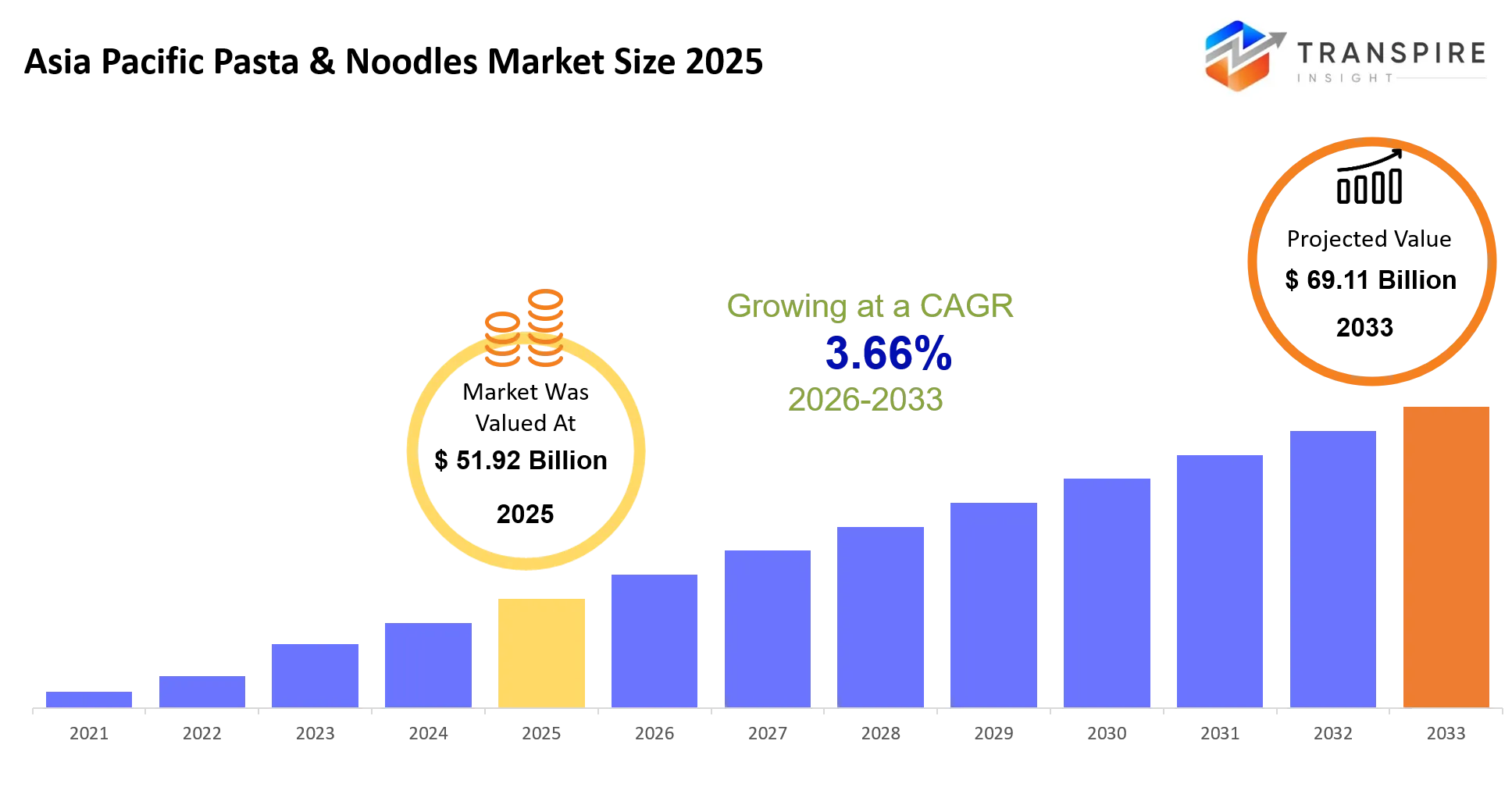
- Asia Pacific Pasta & Noodles Market Size 2025: USD 51.92 Billion
- Asia Pacific Pasta & Noodles Market Size 2033: 69.11 Billion
- Asia Pacific Pasta & Noodles Market CAGR: 3.66%
- Asia Pacific Pasta & Noodles Market Segments: By Product Type (Instant Noodles, Dry Pasta, Fresh Pasta, Udon, Ramen, Rice Noodles, Soba Noodles, Others); By Distribution Channel (Supermarkets, Convenience Stores, Online Retail, Specialty Stores, Foodservice, Others); By End User (Households, Foodservice, Hospitality, Educational Institutions, Others); By Flavor Type (Chicken, Seafood, Vegetable, Spicy, Beef, Curry, Others)
Asia Pacific Pasta & Noodles Market Summary
The Asia Pacific Pasta & Noodles Market was valued at USD 51.92 Billion in 2025. It is forecast to reach USD 69.11 billion by 2033. That is a CAGR of 3.66% over the period.
This food is good for households, restaurants and institutions. People who live in cities need meals that're easy to make because they do not have a lot of time to cook.The companies that make these products have types of noodles and pasta like instant noodles and dried pasta and ready-to-cook options. These products are good for people to eat at home. They are also good for big restaurants.
Now people have some money to spend. They want to try different types of food. The Asia Pacific Pasta & Noodles Market is getting bigger because of cities and people having money and people wanting to eat different meals. The Asia Pacific Pasta & Noodles Market is doing well because of this. People want to get a deal when they buy something. The Asia Pacific Pasta & Noodles Market gives people this deal.
Key Market Insights
- The consumption of noodles began after the year 2020. People needed to consume noodles that could give them different flavors and additional nutrients in the Asia Pacific Pasta & Noodles Market.
- People became concerned about their health conditions and therefore became conscious about the things they consumed. As a result, people desired to consume noodles with salt in them. Hence, manufacturers started producing noodles with fat content in the year 2022.
- Asia Pacific Pasta and Noodles Market is highly significant in East Asia due to the high consumption of noodles among people in China, Japan, and Korea. The Asia Pacific Pasta and Noodles Market held 42 percent share in East Asia in the year 2025.
- The region is experiencing rapid growth. This growth is expected to continue until 2030. The increase in population in the urban areas has led to an increase in demand for foods that are easily prepared and affordable. The population requires noodles that are easy to prepare at affordable prices. The Asia Pacific Pasta and Noodles Market has experienced increased popularity due to high demand for noodles.
- Instant noodles are among the most popular noodles sold in the Asia Pacific Pasta and Noodles Market. They accounted for over 55% of the Asia Pacific Pasta and Noodles Market in 2025. They are easily available and cheap. Instant noodles are part of the Asia Pacific Pasta and Noodles Market.
- The Asia Pacific Pasta and Noodles Market will experience increased growth from 2023 to 2030. Restaurants are increasingly adopting pasta and noodles. Fresh pasta has gained popularity in the Asia Pacific region.
- The majority of consumers purchase pasta and noodles in the supermarkets. Supermarkets account for 48% of the Asia Pacific Pasta and Noodles Market. It is convenient for city residents to purchase pasta and noodles due to the presence of supermarkets.
- After 2022 many restaurants started serving noodles. People like eating noodles because they're easy to make. Noodles are a food in restaurants. People eat noodles and pasta regularly.
- Most people eat pasta and noodles at home. They're easy to make at home. People have pasta and noodles every day. Household consumption makes up over 60 percent of the Asia Pacific Pasta and Noodles Market. People really like eating pasta and noodles at home.
- Big companies like Nissin Foods, Nestlé, Nongshim and Indofood make pasta and noodles. They try to make foods that people in the region really like. These companies make a lot of pasta and noodles. Pasta and noodles are their products.
What are the Key Drivers, Restraints, and Opportunities in the Asia Pacific Pasta & Noodles Market?
Driver
They are purchasing noodles and pasta which are easily prepared. The ability to purchase these products both in stores and online is also contributing towards it. It allows people to purchase them all around. They continue buying them.This is good for the companies that make them because they can sell more and make money.Instant noodles are still popular.. People with more money are starting to buy fancier pasta and noodles that are better for them. Companies are trying to make foods that people in places will like. They are making foods with flavors and in different shapes and sizes. This is helping the market to keep growing.
Restraint
One big problem is that people are getting worried about how bad instant noodles are for them. They have a lot of salt and other bad things in them. This is hard to fix because people do not want to pay money for healthier foods. If companies want to make foods they have to use better ingredients and this costs more money.The government is also putting pressure on companies to make foods. Some people are starting to not want to eat noodles anymore. Companies are trying to make versions but not many people are buying them yet. This means that companies are having trouble making money from food.
Opportunity
There is a chance for companies to make more money by selling fancier and healthier foods. People are getting money and they want to eat better. Companies are making noodles and pasta with ingredients and more flavor.In some countries like the ones in Southeast Asia and India people are getting money and they want to eat better. They want foods that taste good and are good, for them.
What Has the Impact of Artificial Intelligence Been on the Asia Pacific Pasta & Noodles Market?
These things are making food production and distribution better by making things more efficient. This is happening in places where food is made where people guess how much food will be needed and where food is sent to stores.
Artificial intelligence is being used in production lines to check the quality of food, make sure the cooking time is always the same and make sure the packaging is correct. This is very helpful in places that make a lot of noodles. Digital control systems are also helping companies make food with people, which means they can make more food without any problems. This also helps keep the food the same even in different parts of the world.Companies are using machine learning to guess how much food people will want and to make sure they have food in stock. This helps them make food when people want it whether they buy it in stores or in restaurants. These computer systems also help companies fix their machines when they are broken so they do not stop working. This means companies can make food all the time and use their resources better which saves them money and reduces waste.Because of these changes companies can send food to stores faster and more efficiently. They can also keep track of their food better which means they can sell food when people want it. Companies say they can make food consistently and guess how much food people will want more accurately which helps them respond to changes in demand.
But there is still a problem. It is very expensive to use intelligence with old equipment. Many smaller companies still use machines that do not give them good information, which means they cannot use artificial intelligence as well as bigger companies. This is slowing down the use of technologies in the Asia Pacific Pasta & Noodles Market.
Key Market Trends
- The use of noodles in meals came after the year 2020 since there was a need for flavored and nutritious noodles in the Asia Pacific Pasta & Noodles Market.
- There was a need for flavorful and nutritious noodles while in cities across Asia.
- Changes in retailing activities took place. The changes enabled the supermarkets to attract more customers.
- Between the years 2021 and 2025, there was an increase in purchasing packaged noodles at supermarkets than traditional markets.
- There was increased consciousness about the type of food consumed. It caused the need for salty food consumption.
- Noodles production firms began producing fat-based noodles after the year 2022.
- Consumers in Southeast Asia began consuming restaurant noodles after the year 2023.
- These restaurants started serving noodles to people simply because noodles were cheaper for them to make.
- Online stores that sold groceries gained popularity with people after the year 2021.
- This shift impacted the Asia Pacific Pasta & Noodles Markets noodle sales.Now people can buy noodles from companies.
- The instant noodles are now widely available, through these stores.
- Companies started making noodles with local flavors from 2023. They made noodles that were spicy, had herbs and were made from plants.
- Companies did not just compete on price anymore. They tried to make their instant noodles different and better. They used packaging and healthier ingredients from 2022.
- New digital tools helped companies make their supply chains more efficient. This meant they did not have many or too few instant noodles. They could plan production better.
- New ways of keeping noodles cold and packaging them helped keep them fresh for longer. This meant companies could sell noodles in more places even in smaller cities.
Asia Pacific Pasta & Noodles Market Segmentation
By Product Type:
People in cities are going to start eating fresh pasta and chilled noodles when they go to restaurants and cafes. This is because people in cities are willing to pay money for products that are of high quality. Dried pasta and specialty noodles will also be popular as people look for ideas for meals. Companies will make packaging so their products stay fresh for a longer time. They want to attract people who buy their products. More stores will open in cities which will make it easier for people to buy pasta and noodles. Companies will try to compete with each other by making products that people in regions like and by adding special features to their products. The instant noodles segment and the Asia Pacific Pasta & Noodles Market will keep changing as companies try to make products.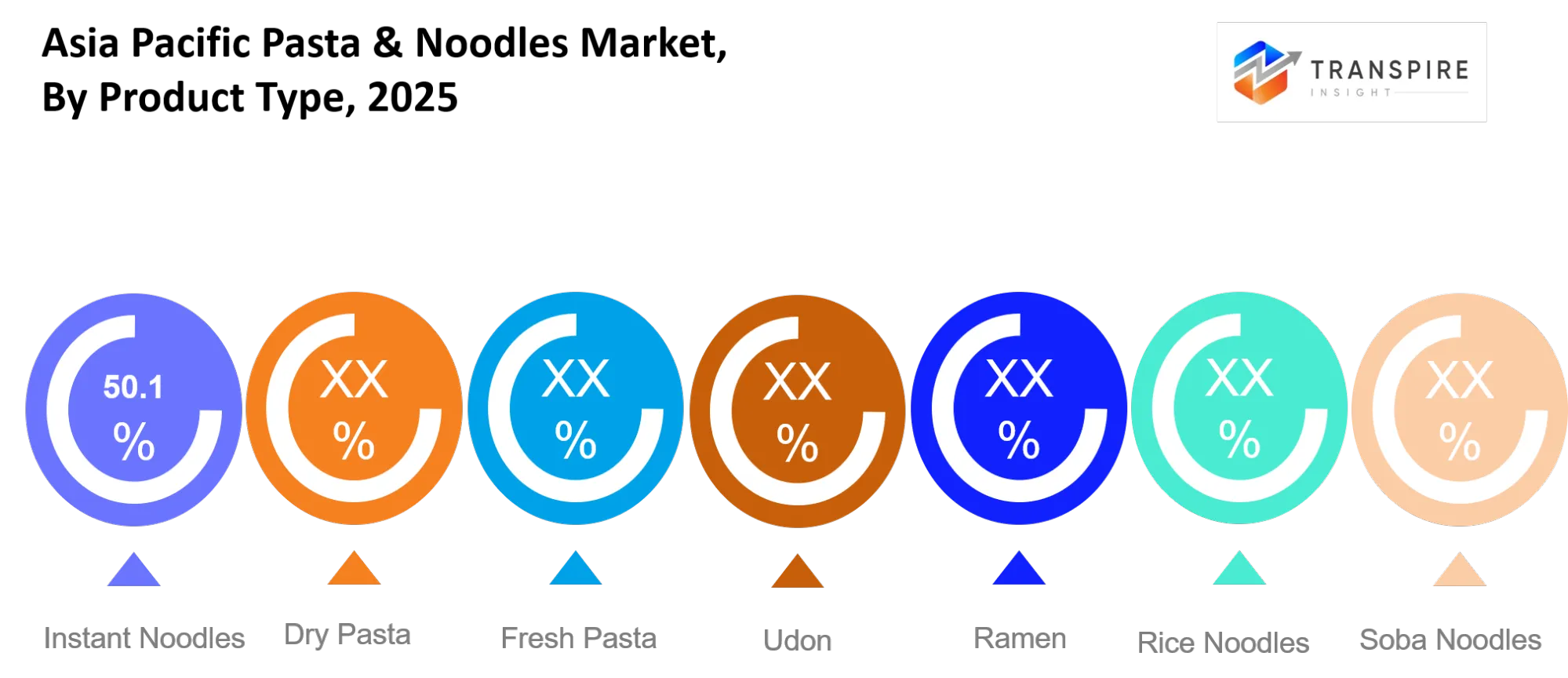
By Distribution Channel:
Supermarkets will remain the channel for buying pasta and noodles in the Asia Pacific Market. This is because organized retail is growing and supermarkets have a range of products. People trust supermarkets for quality and variety.Traditional stores will still serve people in towns and villages who're price-sensitive. Online shopping will grow fast with more people buying groceries and having them delivered. Convenience stores will be popular for needs in cities.E-commerce sites will help premium and imported noodle products reach customers. Some grocery services will offer subscriptions in cities. Retail modernization will improve the supply chain. Make products more visible.
By Cultivation Type:
Conventional farming will still dominate the Asia Pacific Pasta & Noodles Market. This is because it is cost-effective and can produce quantities. Established supply chains will ensure a supply of raw materials.However demand for clean-label products will grow in the premium segment. Companies will focus on sourcing ingredients. Hydroponic farming will support niche ingredient sourcing for specialty noodles.
By End User:
Households will remain the consumers of pasta and noodles in the Asia Pacific Market. Daily consumption and convenience needs drive this demand.The growth of the hospitality sector will increase demand for packaged food ingredients. Food processing industries will use noodles and pasta as base ingredients. Institutional buyers will support bulk demand.Urbanization will make households rely on packaged food. Expanding access will support consistent consumption across all end-user categories.
What are the Key Use Cases Driving the Asia Pacific Pasta & Noodles Market?
The Asia Pacific Pasta & Noodles Market is a place to get pasta and noodles.That is what people want when they are busy. This is especially true in cities where people buy pasta and noodles from the Asia Pacific Pasta & Noodles Market.Restaurants that serve food quickly are starting to use pasta and noodles from the Asia Pacific Pasta & Noodles Market. They put pasta and noodle dishes on their menus because it does not take a time to make pasta and noodles and they always taste the same.Hotels and institutions that serve food also buy a lot of pasta and noodles from the Asia Pacific Pasta & Noodles Market to serve at breakfast and buffets when they cater events, for travelers. This helps the Asia Pacific Pasta & Noodles Market because more people are traveling and they like to eat pasta and noodles.
Now people are starting to look for pasta and noodles that're good for them. Some people want noodles, with a lot of protein or special ingredients that will help them stay healthy. Another thing that is becoming popular is giving pasta and noodles as gifts. Some companies put their pasta and noodles in packages and sell them as gifts. The Asia Pacific Pasta & Noodles Market is going to keep growing as people start to want food that is personalized and healthier. The Asia Pacific Pasta & Noodles Market will see more of this in the future.
|
Report Metrics |
Details |
|
Market size value in 2025 |
USD 51.92 Billion |
|
Market size value in 2026 |
USD 53.75 Billion |
|
Revenue forecast in 2033 |
USD 69.11 Billion |
|
Growth rate |
CAGR of 3.66% from 2026 to 2033 |
|
Base year |
2025 |
|
Historical data |
2021 - 2024 |
|
Forecast period |
2026 - 2033 |
|
Report coverage |
Revenue forecast, competitive landscape, growth factors, and trends |
|
Regional scope |
Asia Pacific |
|
Key company profiled |
Nissin Foods, Nestle, Indofood, Nongshim, Samyang, Uni-President, Tingyi, ITC, Capital Foods, Barilla, De Cecco, CJ CheilJedang, Ottogi, Acecook, Maruchan |
|
Customization scope |
Free report customization (country, regional & segment scope). Avail customized purchase options to meet your exact research needs. |
|
Report Segmentation |
By Product Type (Instant Noodles, Dry Pasta, Fresh Pasta, Udon, Ramen, Rice Noodles, Soba Noodles, Others); By Distribution Channel (Supermarkets, Convenience Stores, Online Retail, Specialty Stores, Foodservice, Others); By End User (Households, Foodservice, Hospitality, Educational Institutions, Others); By Flavor Type (Chicken, Seafood, Vegetable, Spicy, Beef, Curry, Others) |
Which Regions are Driving the Asia Pacific Pasta & Noodles Market Growth?
The Asia Pacific Pasta & Noodles Market is led by Asia because it has a lot of people living there. People really like eating noodles and the factories that make them are very good at what they do. Countries like China, Japan and South Korea are able to make a lot of pasta and noodles because they have machines and stores to sell them in. The government also helps by making sure everyone has food and that the stores always have what people want to buy. This means that people can always find pasta and noodles in supermarkets and convenience stores no matter where they live in Asia.
Southeast Asia is also a part of the Asia Pacific Pasta & Noodles Market. People in this region like to buy pasta and noodles because they are cheap and they can afford them. Unlike in Asia, where people like to try fancy things, people in Southeast Asia prefer to buy things that are affordable and easy to find. Countries like Indonesia, Thailand and Vietnam have economies, which means people have enough money to keep buying pasta and noodles. More and more stores are opening up. People are starting to buy packaged food, which helps the market keep growing steadily.
The Asia Pacific Pasta & Noodles Market is growing fast in South Asia. This is because more people are moving to cities where they have money to spend and they are eating different types of food. Stores are getting better. It is easier for people to buy pasta and noodles. The government is also helping the factories that make pasta and noodles which means they can make better products. This is a time for new companies to join the market especially if they want to make special types of noodles that are good for people and they will probably keep growing until 2033.
Who are the Key Players in the Asia Pacific Pasta & Noodles Market and How Do They Compete?
The Asia Pacific Pasta & Noodles Market is a competitive place. Now it is fragmented which means there are a lot of companies competing with each other. Some big companies are trying to keep their share of the market. New companies are coming in and changing things. The main way companies compete is by trying to be the cheapest or by having the technology.
Companies like Nissin and Indomie are doing things differently. Nissin is focusing on making good quality noodles. They have a hold on the Japanese market. Indomie on the hand is innovating with new flavors and products. They are expanding by partnering with companies to reach more people.
Koka is another company that is specializing in niche products like noodles with unique flavors. They are different from others because they have a presence in the Singapore market. They are expanding by entering markets in Southeast Asia. These companies are able to compete because they are doing things that others are not. They have products or strongholds, in certain areas that make them stand out.
Company List
Nissin Foods
Nestle
Indofood
Nongshim
SamyangUni-President
Tingyi
ITC
Capital Foods
Barilla
De Cecco
CJ CheilJedang
Ottogi
Acecook
Maruchan
Recent Development News
In March 2025, Ajinomoto announced expansion of its Asia instant food manufacturing capacity through upgraded production lines for noodle-based convenience foods. The initiative is aimed at strengthening supply stability and meeting rising packaged noodle demand across Asian retail and foodservice channels.https://www.ajinomoto.com
In April 2025, CJ CheilJedang launched new plant-based and low-sodium instant noodle variants under its premium Korean food portfolio. The product expansion supports growing health-focused consumption trends and strengthens its competitive positioning in export-driven Asian noodle markets.https://www.cj.co.kr
In 2025, Nissin Foods expanded its regional R&D and product innovation initiatives focusing on localized flavor development for instant noodle categories across Asia. This development improves product differentiation and strengthens penetration in high-growth urban consumer markets.https://www.nissin.com
What Strategic Insights Define the Future of the Asia Pacific Pasta & Noodles Market?
The Asia Pacific Pasta & Noodles Market is structurally moving toward premiumization and health-oriented product transformation, driven by changing dietary expectations, urban lifestyle acceleration, and retail digitalization. Demand will increasingly shift from basic instant products toward fortified, low-sodium, and regionally customized offerings as consumers prioritize convenience without compromising nutrition. E-commerce expansion and data-driven demand forecasting will further shape product availability and inventory planning across major consumption hubs.
A hidden risk lies in raw material dependency, particularly wheat price volatility and supply chain disruptions linked to climate variability in key sourcing regions. This creates margin pressure for manufacturers, especially those operating in price-sensitive segments where cost absorption capacity remains limited. Another risk comes from increasing product substitution, as rice-based ready meals and fresh convenience foods gain traction among health-conscious consumers.
A key emerging opportunity is the expansion of plant-based and functional noodle formats in Southeast Asia and India, where nutritional enhancement trends are gaining momentum. Manufacturers investing in high-protein, fortified, and clean-label formulations will capture premium demand growth. The strategic recommendation is to diversify portfolios toward value-added health-focused variants while strengthening localized production networks to reduce supply volatility and improve pricing resilience across the region.
Asia Pacific Pasta & Noodles Market Report Segmentation
-
By Product Type
Instant Noodles
Fresh Noodles
Dried Pasta
Chilled Pasta
Frozen Noodles
Cup Noodles
Specialty Noodles
Others -
By Distribution Channel
Supermarkets
Hypermarkets
Convenience Stores
Online Retail
Traditional Grocery Stores
Foodservice Distribution
Specialty Stores
Others -
By Product Category
Regular Pasta & Noodles
Fortified Pasta & Noodles
Whole Grain Variants
Gluten-Free Products
Organic Products
Low-Sodium Variants
Premium Specialty Products
Others -
By End User
Households
Foodservice Operators
Quick Service Restaurants
Hotels & Hospitality
Institutional Catering
Food Processing Industry
Retail Consumers
Others
Frequently Asked Questions
Find quick answers to common questions.
The Expected Asia Pacific Pasta & Noodles Market size for the Market will be USD 69.11 Billion in 2033.
Key Segments for the Asia Pacific Pasta & Noodles Market are By Product Type (Instant Noodles, Dry Pasta, Fresh Pasta, Udon, Ramen, Rice Noodles, Soba Noodles, Others); By Distribution Channel (Supermarkets, Convenience Stores, Online Retail, Specialty Stores, Foodservice, Others); By End User (Households, Foodservice, Hospitality, Educational Institutions, Others); By Flavor Type (Chicken, Seafood, Vegetable, Spicy, Beef, Curry, Others)
Major Asia Pacific Pasta & Noodles Market Players are Nissin Foods, Nestle, Indofood, Nongshim, Samyang, Uni-President, Tingyi, ITC, Capital Foods, Barilla, De Cecco, CJ CheilJedang, Ottogi, Acecook, Maruchan.
The Current Asia Pacific Pasta & Noodles Market size is USD 51.92 Billion in 2025.
The Asia Pacific Pasta & Noodles Market CAGR is 3.66% from 2026 to 2033.
Nissin Foods
Nestle
Indofood
Nongshim
Samyang
Uni-President
Tingyi
ITC
Capital Foods
Barilla
De Cecco
CJ CheilJedang
Ottogi
Acecook
Maruchan
About the Authors

Chetan Dhatrak
I’m Chetan Dhatrak, a Senior Research Analyst at Transpire Insight, specializing in the Consumer Goods, Foods and Beverages industry. I focus on analyzing market trends, consumer behavior, competitive landscapes, and industry developments to deliver accurate, data-driven insights. My research at Transpire Insight is built on credible sources and in-depth analysis, helping businesses and readers better understand market dynamics, emerging opportunities, and evolving consumer preferences. I’m committed to creating reliable, well-researched content that supports informed decision-making and reflects the latest developments in the consumer goods and food & beverage sectors.

Chakradhar Khansole
Chakradhar serves as the Research Director at Transpire Insight, bringing over 8 years of experience in technology, innovation, and strategic market intelligence. He specializes in transforming complex market data into actionable business insights that enable organizations to make informed, growth-oriented decisions. Recognized for his strategic vision and analytical expertise, Chakradhar leads high-impact research initiatives, delivering comprehensive market assessments, competitive intelligence, and forward-looking industry analysis.
Recently Published Reports
-
Apr 2026
Baby Infant Formula Market
Baby Infant Formula Market Size, Share & Analysis Report By ype (Infant Milk, Follow On Milk, Specialty Baby Milk, Growing-Up Milk), By Ingredient (Carbohydrate, Fat, Protein, Minerals, Vitamins, and Others), By Product Form (Powder, Liquid, and Ready-to-feed), By Distribution Channels (Supermarket/Hypermarket, Specialty Store, Pharmacies, Online Retail, and Others), and Geography (North America, Europe, Asia-Pacific, Middle East and Africa, South and Central America), 2021 - 2031
-
Apr 2026
Edible Insects for Animal Feed Market
Edible Insects for Animal Feed Market Size, Share & Analysis Report By Type (Insect Powder, Insect Meal, Insect Bar, Insect Paste, Insect Oil, and Others), By Insect Type (Beetles, Cricket, Caterpillar, Hymenoptera, Orthoptera, Tree Bugs, and Others), By Application (Livestock, Pet Food, and Aquaculture), By Livestock Type (Poultry, Swine, and Others), and Geography (North America, Europe, Asia-Pacific, Middle East and Africa, South and Central America), 2021 - 2031
-
Apr 2026
Food Industry Disinfection and Bacterial Control Market
Food Industry Disinfection and Bacterial Control Market Size, Share & Analysis Report By Type (Chemical Disinfectants, Physical Disinfectants, and Biocides and Antimicrobials), By Application (Food Processing Equipment Surface Disinfection, Food Preparation Areas Surface Disinfection, Storage Areas Surface Disinfection, Anti-microbial Coatings Food Preservation, and Preservative Solutions Food Preservation), By End User (Meat and Poultry Processing, Dairy Processing, Seafood Processing, Bakery and Confectionery, Restaurants and Commercial Kitchens, and Food Service Providers), By Sales Channel (Online, Offline), and Geography (North America, Europe, Asia-Pacific, Middle East and Africa, South and Central America), 2021 - 2031
-
May 2026
Freeze Dried Food Market
Freeze Dried Food Market Size, Share & Analysis Report By Product Type (Fruits, Vegetables, Freeze-Dried Dairy Products, Freeze-Dried Meat and Seafood, Freeze-Dried Pet Food, and Prepared Meal), By Nature (Organic, and Conventional), By Form (Powdered, Granules, and Diced), By End Use (Breakfast Cereals, Dairy Products, Bakery & Confectionery, Nutritional Bars & Supplements, Powdered Beverages, Snacks, and Retail (Household)), and Geography (North America, Europe, Asia-Pacific, Middle East and Africa, South and Central America), 2021 - 2031