

United States Whole Grain Foods Market Size & Forecast:
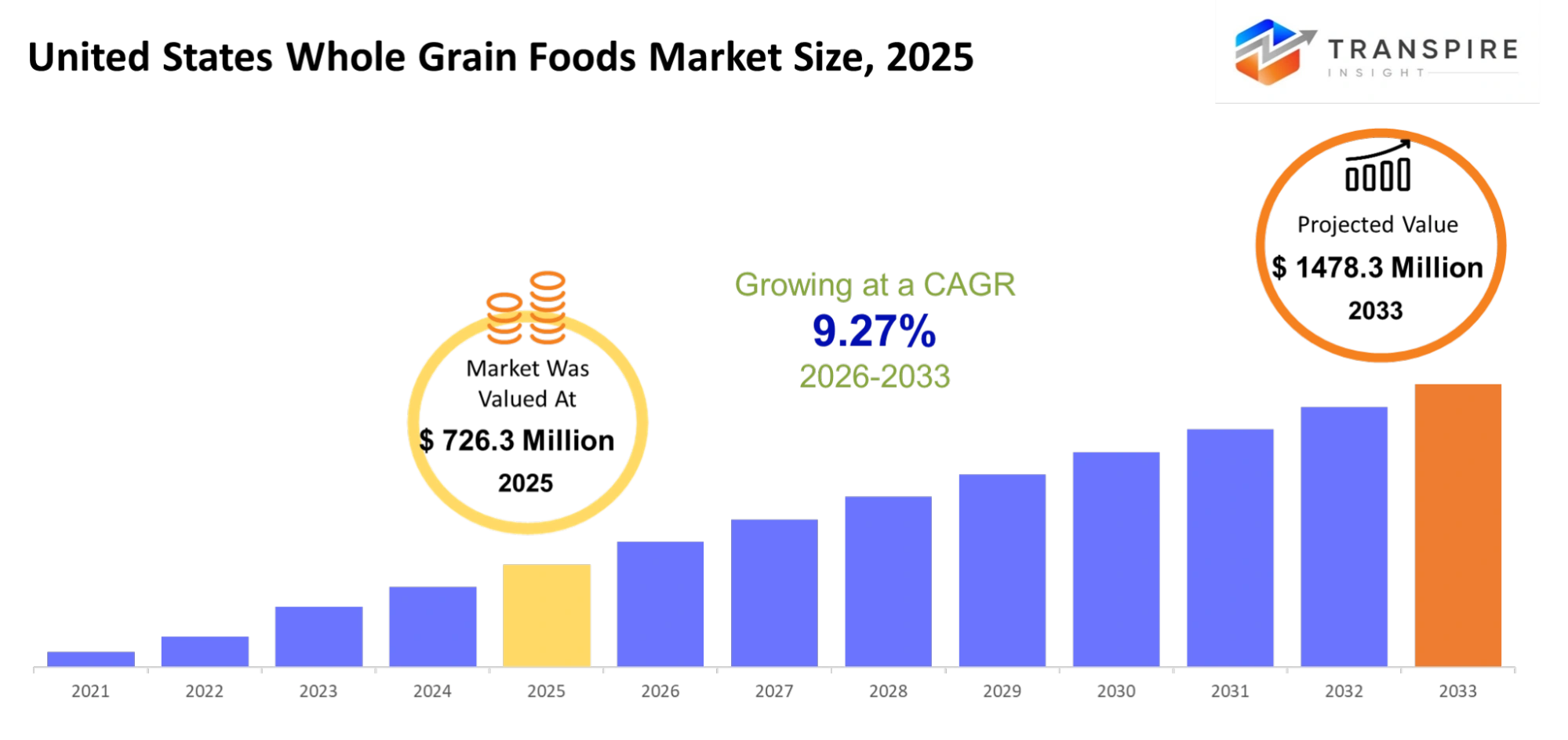
- United States Whole Grain Foods Market Size 2025: USD 726.3 Million
- United States Whole Grain Foods Market Size 2033: USD 1478.3 Million
- United States Whole Grain Foods Market CAGR: 9.27%
- United States Whole Grain Foods Market Segments:By Product (Bread, Cereals, Pasta, Snacks, Flour, Bakery Products, Ready Meals), By Grain Type (Wheat, Oats, Barley, Quinoa, Brown Rice, Corn, Millet), By Distribution (Supermarkets, Online, Specialty Stores, Convenience Stores, D2C, Wholesale, Retail Chains), By Application (Breakfast, Snacks, Meals, Health Foods, Diet Foods, Functional Foods, Organic Foods), By End-User (Consumers, Retailers, Food Companies, Restaurants, Institutions, Health-conscious, Athletes).
To learn more about this report,  Download Free Sample Report
United States Whole Grain Foods Market Summary:
The United States Whole Grain Foods Market size is estimated at USD 726.3 million in 2025 and is anticipated to reach USD 1478.3 million by 2033, growing at a CAGR of 9.27% from 2026 to 2033. The market for whole grain foods in the US continues to see growth on a consistent basis due to consumers having more knowledge about health and nutrition-related information. Whole grain foods are becoming popular among consumers due to the fact that they are sources of dietary fibers that help maintain healthy hearts and also aid in controlling body weight. Consumers need fast and nutritious foods such as whole grain foods and meals as they have no time due to being occupied by their various engagements.
Key Market Trends & Insights:
- The dietary awareness of consumers has increased because they now select whole grains which provide dietary fiber and essential vitamins and health advantages that extend into the future. The rising health problems of obesity and heart diseases and digestive health issues have created this new trend.
- Shoppers are actively searching for products which display their ingredients through straightforward and understandable ingredient lists. People now trust and prefer organic non-GMO whole grain foods which contain no artificial additives more than any other type of food.
- The demand for whole grain products which require no cooking and can be consumed anywhere has increased because people live active lives. People now consider granola bars and instant oats and whole grain snacks as essential items which they need to have in their homes.
- Food companies use innovative flavors and packaging designs to make their whole grain products more attractive to customers. The introduction of whole grain pasta and multigrain baked goods has created new options which consumers can choose.
- Shoppers can find whole grain products at supermarkets and specialty stores and online shopping websites. The easy product availability helps customers make first-time purchases which they will continue to buy again.
- Whole grain consumption receives support from popular dietary systems which include plant-based eating and balanced nutrition programs. People view whole grains as a perfect match for their contemporary lifestyle patterns.
- Environmental effects have become an important consideration for many consumers when they select their food products. Brands which offer sustainable product sourcing and environmentally friendly packaging for whole grain items are building customer interest and brand loyalty.
United States Whole Grain Foods Market Segmentation
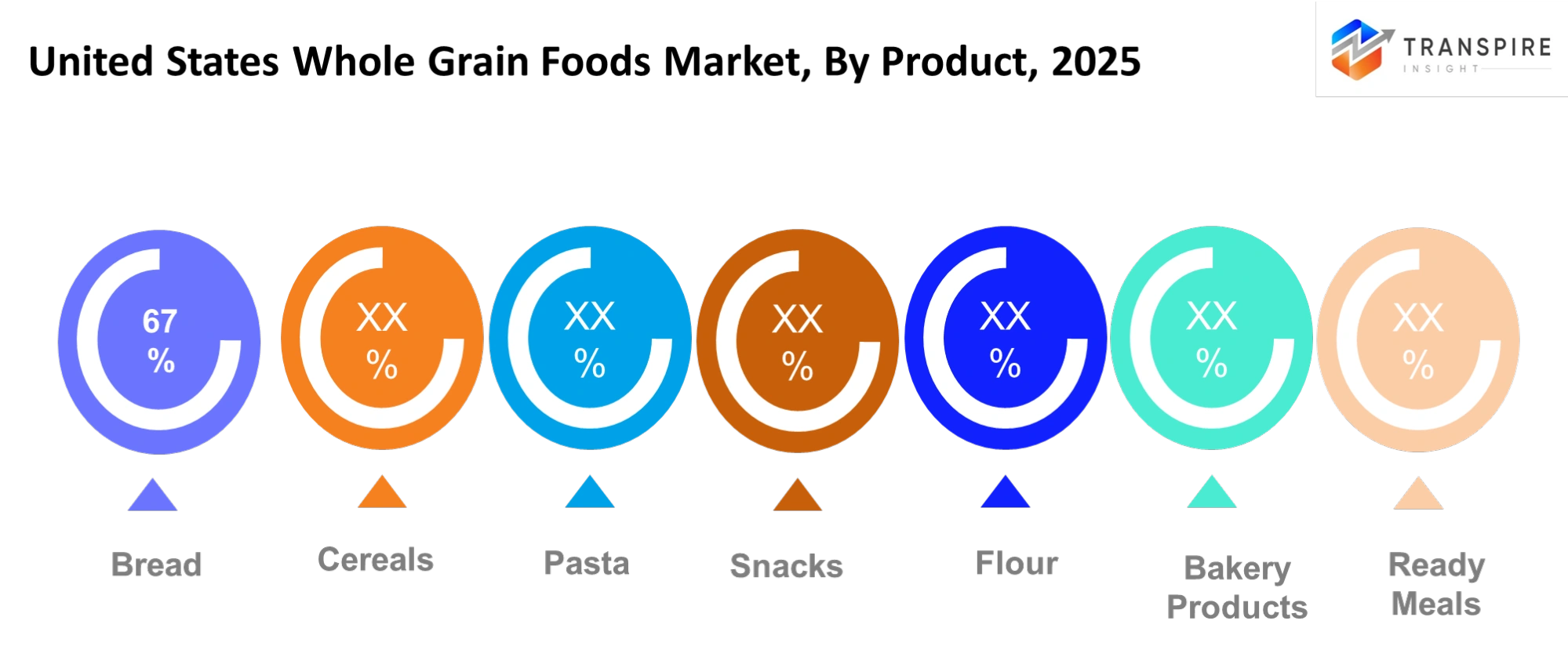
By Product
- Bread: U.S. households use whole grain bread as their daily bread because they recognize its high fiber content and nutritional advantages. Consumers now choose multigrain and artisan bread because these products provide enjoyable flavors together with health advantages. The market now offers preservative-free products which enable customers to use whole grain bread as a reliable option for creating balanced meals.
- Cereals: Busy consumers who need quick nutritious breakfasts find whole grain cereals to be the most convenient choice. The cereals which combine vitamins with minerals attract both families and health-conscious consumers. Customers now prefer low-sugar organic products because they want to establish healthier morning routines.
- Pasta: Whole grain pasta serves as a healthier choice which consumers prefer over traditional refined pasta products. The product delivers improved fiber content which preserves its original taste and texture. Whole grain pasta has become popular among consumers who want to maintain healthy eating standards because more brands now offer better taste through their new product designs which include various pasta shapes and ingredient combinations.
- Snacks: People increasingly choose whole grain snacks which include crackers chips and bars as their preferred snacks for quick eating. They provide a healthy option for snacks that maintains their delicious flavor. The snack market now attracts younger consumers and professionals who seek quick nutritious options through its new flavor and packaging developments.
- Flour: Home cooks use whole grain flour as their primary ingredient because people now prefer to make healthful meals at home. The product enables users to create dishes which contain high nutritional content for both meals and baked goods. People are trying out various types of grain flours which include wheat and millet and oat to enhance their cooking experience.
- Bakery Products: The demand for whole grain bakery products which include muffins and cookies and rolls is rising. The products which combine indulgent taste with nutritional content attract a wide range of customers. Bakers create products that people can eat every day by reducing sugar and using natural ingredients.
- Ready Meals: Time-pressed consumers are choosing whole grain-based ready meals which offer them convenience. The meals provide convenient options which maintain nutritional value and suit contemporary living patterns. The rising supply of frozen and microwaveable products is increasing their popularity among urban families.
To learn more about this report, Download Free Sample Report
By Grain Type
- Wheat: Wheat serves as the main whole grain used in American cooking because it functions as the essential component of bread products and pasta dishes and many baked goods. The product maintains its market presence because customers recognize its multiple uses while customers prefer whole wheat products due to their higher fiber content and vital nutrients.
- Oats: People value oats because they provide heart health advantages and multiple uses. People who want healthy breakfast options with minimal preparation choose oats because they are found in both oatmeal and granola products. The ability of oats to assist with cholesterol control has increased their acceptance among consumers.
- Barley: People are beginning to pay attention to barley because it contains high dietary fiber content which assists people in maintaining healthy digestion. The ingredient barley appears more frequently in soups and salads and specialty dishes, although it exists in smaller amounts than wheat and oats. People who want to improve their health now use barley as a dietary addition because it offers different health benefits.
- Quinoa: Quinoa functions as a superior whole grain because it contains both high protein levels and gluten-free properties. The product has reached its highest popularity among people who follow healthy diets and plant-based eating methods. The product has become popular because people use it to make salads and bowls and complete meals.
- Brown Rice: People choose brown rice because it provides better health benefits than white rice through its higher fiber content and greater nutritional value. The standard ingredient has become a common element which chefs use in their cooking from different worldwide culinary traditions. Families prefer this food item because its basic cooking method and popular taste make it easy to prepare.
- Corn: Producers make tortillas and snacks and cereals from whole grain corn. The product contains no gluten and people eat it throughout various parts of the world. The product serves as a vital ingredient in the market for whole grain products because it combines multiple uses with low cost.
- Millet: The nutritional value of millet together with its gluten-free characteristics have started to attract more attention. The grain remains uncommon in the United States but health-oriented customers are starting to embrace it. The product is now being used in various snack foods and porridge recipes and as a substitute for traditional grains because people are becoming more aware of its benefits.
By Distribution
- Supermarkets: Supermarkets control distribution channels because they sell multiple whole grain products from their stores. Consumers select these stores because they provide easy access to products which customers need to compare. The combination of regular discounts and product display throughout the store boosts both spontaneous buying and ongoing customer purchasing.
- Online: Online platforms are becoming popular as a distribution method for whole grain products. Customers benefit from these platforms because they provide easy shopping options which include a larger product range and access to uncommon items. The delivery of subscription products to customers homes creates new ways for companies to build customer relationships while increasing customer loyalty.
- Specialty Stores: Specialty stores dedicated their operations to selling whole grain products which meet organic and natural and premium quality standards. The store attracts customers who want to buy health products which offer distinctive features and superior quality. The store provides a complete shopping experience through its customized services and specially selected products.
- Convenience Stores: Convenience stores provide customers with quick shopping options because they sell whole grain snacks and meals which need no cooking. Customers who lead busy lives choose these stores because they can easily reach them. Customers want healthier options for their quick meals even though stores have a limited selection of items.
- D2C (Direct-to-Consumer): D2C channels enable brands to establish direct connections with their customers through the delivery of unique products which include customized customer experiences. The business model establishes customer loyalty while customers develop trust in the brand. D2C serves as a marketing tool which emerging brands use to showcase their product quality and business transparency.
- Wholesale: Wholesale distribution enables companies like restaurants and educational institutions to buy products in bulk. The system provides businesses with dependable product delivery while helping them reduce operating expenses. The entire industry uses this distribution method to increase product availability from whole grain producers to various business sectors.
- Retail Chains: Large retail chains offer constant access to whole grain foods which they sell at prices that compete with other retailers. The company operates as a major market player because its supply chain partnerships and brand alliances support its business operations. The company uses its marketing campaigns and product positioning to steer customer purchasing decisions.
By Application
- Breakfast: Breakfast foods commonly use whole grains which appear in cereals and oats and breads. The breakfast foods provide energy and nutrition which lasts throughout the morning. The segment experiences growth because more people learn about healthy breakfast practices.
- Snacks: Customers now prefer whole grain snacks because they provide a better choice than standard processed snacks. The product delivers health benefits with tasty flavor which makes it appropriate for people from all age groups. The product receives high demand from both working professionals and younger customers.
- Meals: Restaurants now use whole grains in their main dishes as a substitute for refined grains. The ingredient appears in various dishes which include rice bowls and pasta and salads. People need the food because it provides necessary nutrients which help them achieve complete dietary balance.
- Health Foods: Whole grains serve as a major component in health foods because they contain high nutrient levels. The ingredient commonly appears in products which aim to support wellness and prevent health problems. Consumers believe these items function as necessary components for their general health maintenance.
- Diet Foods: The food industry uses whole grains to create diet-specific products which help people control their weight and track their calorie intake. The product encourages people to feel full while it helps them develop healthy eating patterns. The food is a standard element in organized weight loss programs.
- Functional Foods: The food industry creates functional foods which contain whole grains to deliver extra health advantages. The products have the potential to enhance heart function and digestive processes and energy levels. The rising demand for functional nutrition has created a positive effect on this market segment.
- Organic Foods: Consumers who want to avoid chemical products now choose organic whole-grain products which provide natural alternatives. The products match clean eating patterns that people who care about the environment now follow. Customers usually pay higher prices because they believe the products offer better quality and safety.
By End-User
- Consumers: The largest end-user group consists of individual consumers who create purchasing demand through their daily buying activities. The market trends trace their origin to their expanding nutritional and wellness awareness. Different age groups and different lifestyles create distinct patterns of preference.
- Retailers: Retailers assume an essential function which determines how products become accessible to customers while maintaining product visibility. They shape customer behavior through their promotional activities and product display methods and their established pricing frameworks. Their partnerships with brands help expand the reach of whole grain products.
- Food Companies: Food manufacturers create various products which include whole grain ingredients. The company uses innovation and quality and branding to create products which attract customers. The company plays an essential role which controls product development and market expansion.
- Restaurants: Restaurants now serve whole grain dishes to accommodate the shifting tastes of their customers. Health-conscious customers can choose from whole grain breads and grain-based bowls which this menu provides. Urban areas show a higher level of this trend than other regions.
- Institutions: Organizations which include educational institutions and clinics and business dining facilities now serve whole grain products. Organizations serve healthier meals which they developed for large audiences. Government guidelines and nutrition programs often support this shift.
- Health-conscious: People who focus on their health search for whole grain products because these products offer nutritional advantages. Consumers show willingness to buy new products which they consider to be worth their higher expense. The segment creates a major impact which leads to both new product development and market expansion.
- Athletes: Athletes and fitness enthusiasts use whole grains as their main source of energy during workouts. Endurance and recovery processes depend on these foods which serve as essential components of sports nutrition. Demand is rising among customers who most need performance-driven solutions.
Country Insights
The United States' whole grain foods market reflects a strong shift toward healthier and more mindful eating habits across the country. People now want to eat food that provides health benefits, which has resulted in a greater demand for products that contain high levels of fibre, vitamins, and natural components. The urban population demonstrates high usage of whole grain products because their fast-paced existence enables them to access various whole grain products through supermarkets and online sites. The rural population is beginning to adopt these foods because people become more aware of their existence. The government's dietary guidelines, together with health campaigns for whole grain consumption, create a positive impact on market growth. The growing demand for organic and clean-label products drives consumer buying behaviour throughout the country. Food companies create new products which meet changing consumer preferences while preserving their nutritional content. The market experiences consistent growth because people are becoming more health-conscious, products are becoming easier to obtain, and companies are creating new products for customers.
Recent Development News
In January 2026, the Biggest Food Trends of 2026, From Fibermaxxing to Cabbage-Core: Growing interest in gut health is pushing consumers toward fibre-rich foods like oats and whole grains. This is encouraging brands to innovate healthier grain-based products.
In January 2026, Gut health drives fiber-rich food demand: Whole grains are being positioned as essential for digestive health, influencing product marketing and innovation strategies.
|
Report Metrics |
Details |
|
Market size value in 2025 |
USD 726.3 Million |
|
Market size value in 2026 |
USD 794.7 Million |
|
Revenue forecast in 2033 |
USD 1478.3 Million |
|
Growth rate |
CAGR of 9.27% from 2026 to 2033 |
|
Base year |
2025 |
|
Historical data |
2021 – 2024 |
|
Forecast period |
2026 – 2033 |
|
Report coverage |
Revenue forecast, competitive landscape, growth factors, and trends |
|
Country scope |
United States |
|
Key company profiled |
General Mills, Kellogg, Nestle, PepsiCo, Conagra Brands, Mondelez, Bob’s Red Mill, Nature’s Path, Quaker Oats, Post Holdings, Hain Celestial, Bimbo Bakeries, Flowers Foods, Associated British Foods, Cargill |
|
Customization scope |
Free report customization (country, regional & segment scope). Avail customized purchase options to meet your exact research needs. |
|
Report Segmentation |
By Product (Bread, Cereals, Pasta, Snacks, Flour, Bakery Products, Ready Meals), By Grain Type (Wheat, Oats, Barley, Quinoa, Brown Rice, Corn, Millet), By Distribution (Supermarkets, Online, Specialty Stores, Convenience Stores, D2C, Wholesale, Retail Chains), By Application (Breakfast, Snacks, Meals, Health Foods, Diet Foods, Functional Foods, Organic Foods), By End-User (Consumers, Retailers, Food Companies, Restaurants, Institutions, Health-conscious, Athletes). |
Key United States Industrial Coating Company Insights
Established food companies and health-focused brands compete with each other to create the United States whole grain foods market. The major companies in the industry develop new products which include various whole grain items that provide customers with both delicious and nutritious meal options. Most businesses today use clean-label ingredients while implementing sustainable sourcing methods to meet their customers' evolving needs. The smaller brands establish their presence in the market by focusing on niche markets which include organic and gluten-free products. The companies build their market position through strategic partnerships which they use with digital marketing and direct-to-consumer distribution methods to create permanent customer connections.
Company List
- General Mills
- Kellogg
- Nestle
- PepsiCo
- Conagra Brands
- Mondelez
- Bob’s Red Mill
- Nature’s Path
- Quaker Oats
- Post Holdings
- Hain Celestial
- Bimbo Bakeries
- Flowers Foods
- Associated British Foods
- Cargill
United States Whole Grain Foods Market Report Segmentation
By Product
- Bread
- Cereals
- Pasta
- Snacks
- Flour
- Bakery Products
- Ready Meals
By Grain Type
- Wheat
- Oats
- Barley
- Quinoa
- Brown Rice
- Corn
- Millet
By Distribution
- Supermarkets
- Online
- Specialty Stores
- Convenience Stores
- D2C
- Wholesale
- Retail Chains
By Application
- Breakfast
- Snacks
- Meals
- Health Foods
- Diet Foods
- Functional Foods
- Organic Foods
By End-User
- Consumers
- Retailers
- Food Companies
- Restaurants
- Institutions
- Health-conscious
- Athletes
Frequently Asked Questions
Find quick answers to common questions.
The approximate United States Whole Grain Foods Market size for the market will be USD 1478.3 Million in 2033.
The key segments of the United States Whole Grain Foods Market are By Product (Bread, Cereals, Pasta, Snacks, Flour, Bakery Products, Ready Meals), By Grain Type (Wheat, Oats, Barley, Quinoa, Brown Rice, Corn, Millet), By Distribution (Supermarkets, Online, Specialty Stores, Convenience Stores, D2C, Wholesale, Retail Chains), By Application (Breakfast, Snacks, Meals, Health Foods, Diet Foods, Functional Foods, Organic Foods), By End-User (Consumers, Retailers, Food Companies, Restaurants, Institutions, Health-conscious, Athletes).
Major players in the United States Whole Grain Foods Market are General Mills, Kellogg, Nestle, PepsiCo, Conagra Brands, Mondelez, Bob’s Red Mill, Nature’s Path, Quaker Oats, Post Holdings, Hain Celestial, Bimbo Bakeries, Flowers Foods, Associated British Foods, Cargill.
The current market size of the United States Whole Grain Foods Market is USD 726.3 Million in 2025.
The United States Whole Grain Foods Market CAGR is 9.27%.
- General Mills
- Kellogg
- Nestle
- PepsiCo
- Conagra Brands
- Mondelez
- Bob’s Red Mill
- Nature’s Path
- Quaker Oats
- Post Holdings
- Hain Celestial
- Bimbo Bakeries
- Flowers Foods
- Associated British Foods
- Cargill
Recently Published Reports
-
Apr 2026
Baby Infant Formula Market
Baby Infant Formula Market Size, Share & Analysis Report By ype (Infant Milk, Follow On Milk, Specialty Baby Milk, Growing-Up Milk), By Ingredient (Carbohydrate, Fat, Protein, Minerals, Vitamins, and Others), By Product Form (Powder, Liquid, and Ready-to-feed), By Distribution Channels (Supermarket/Hypermarket, Specialty Store, Pharmacies, Online Retail, and Others), and Geography (North America, Europe, Asia-Pacific, Middle East and Africa, South and Central America), 2021 - 2031
-
Apr 2026
Edible Insects for Animal Feed Market
Edible Insects for Animal Feed Market Size, Share & Analysis Report By Type (Insect Powder, Insect Meal, Insect Bar, Insect Paste, Insect Oil, and Others), By Insect Type (Beetles, Cricket, Caterpillar, Hymenoptera, Orthoptera, Tree Bugs, and Others), By Application (Livestock, Pet Food, and Aquaculture), By Livestock Type (Poultry, Swine, and Others), and Geography (North America, Europe, Asia-Pacific, Middle East and Africa, South and Central America), 2021 - 2031
-
Apr 2026
Food Industry Disinfection and Bacterial Control Market
Food Industry Disinfection and Bacterial Control Market Size, Share & Analysis Report By Type (Chemical Disinfectants, Physical Disinfectants, and Biocides and Antimicrobials), By Application (Food Processing Equipment Surface Disinfection, Food Preparation Areas Surface Disinfection, Storage Areas Surface Disinfection, Anti-microbial Coatings Food Preservation, and Preservative Solutions Food Preservation), By End User (Meat and Poultry Processing, Dairy Processing, Seafood Processing, Bakery and Confectionery, Restaurants and Commercial Kitchens, and Food Service Providers), By Sales Channel (Online, Offline), and Geography (North America, Europe, Asia-Pacific, Middle East and Africa, South and Central America), 2021 - 2031
-
May 2026
Freeze Dried Food Market
Freeze Dried Food Market Size, Share & Analysis Report By Product Type (Fruits, Vegetables, Freeze-Dried Dairy Products, Freeze-Dried Meat and Seafood, Freeze-Dried Pet Food, and Prepared Meal), By Nature (Organic, and Conventional), By Form (Powdered, Granules, and Diced), By End Use (Breakfast Cereals, Dairy Products, Bakery & Confectionery, Nutritional Bars & Supplements, Powdered Beverages, Snacks, and Retail (Household)), and Geography (North America, Europe, Asia-Pacific, Middle East and Africa, South and Central America), 2021 - 2031