

Asia Pacific Gluten-free Products Market Size & Forecast:
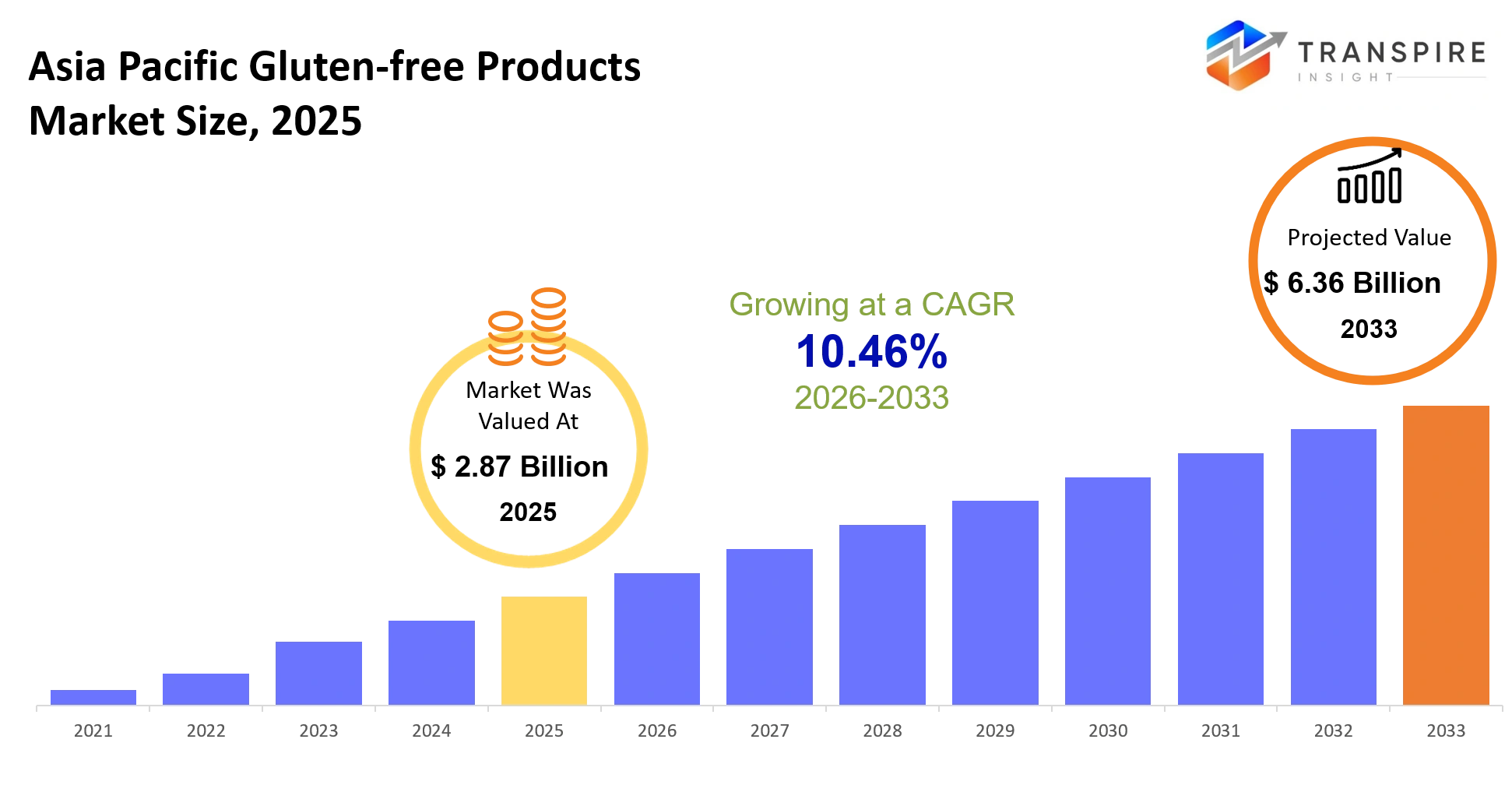
- Asia Pacific Gluten-free Products Market Size 2025: USD 2.87 Billion
- Asia Pacific Gluten-free Products Market Size 2033: USD 6.36 Billion
- Asia Pacific Gluten-free Products Market CAGR: 10.46%
- Asia Pacific Gluten-free Products Market Segments:By Product Type (Bakery Products, Pasta, Snacks, Breakfast Cereals, Flour Mixes, Confectionery, Beverages, Others); By Ingredient Type (Rice Flour, Corn Flour, Almond Flour, Coconut Flour, Sorghum Flour, Millet Flour, Quinoa Flour, Others); By Distribution Channel (Supermarkets, Health Food Stores, Online Retail, Pharmacies, Specialty Stores, Convenience Stores, Hypermarkets, Others); By End User (Celiac Patients, Health-Conscious Consumers, Athletes, Children, Elderly Consumers, Vegan Consumers, Weight Management Users, Others)
Asia Pacific Gluten-free Products Market Summary
The Asia Pacific Gluten-free Products Market was valued at USD 2.87 billion in 2025. It is forecast to reach USD 6.36 billion by 2033. That is a CAGR of 10.46% over the period.
The Asia Pacific Gluten-free Products Market is helping people with food and nutrition problems by giving them food options. This is for people with disease gluten intolerance and other digestive health issues. Food makers, stores and restaurants use gluten- food to help customers who want special nutrition, cleaner ingredients and different meal options. This has changed free products from a small health category to a big part of the food market.In the few years big food companies started making gluten-free products a main part of their business. They used to think of these products as special. Now they are part of their main products. The COVID-19 pandemic made people want packaged food buy groceries online and eat healthy. When people had time they looked at ingredients and nutrition so stores made more space for gluten-free products and companies made new products.
Now we can see that when there are gluten-free products more people buy them. New manufacturing technologies have made it easier to make these products. They are better quality. This means companies can charge money and sell to more people. This is happening with bakery, snack, cereal and ready-to-eat food products, in the Asia Pacific Gluten-free Products Market. The Asia Pacific Gluten-free Products Market is getting bigger. Making more money.
Key Market Insights
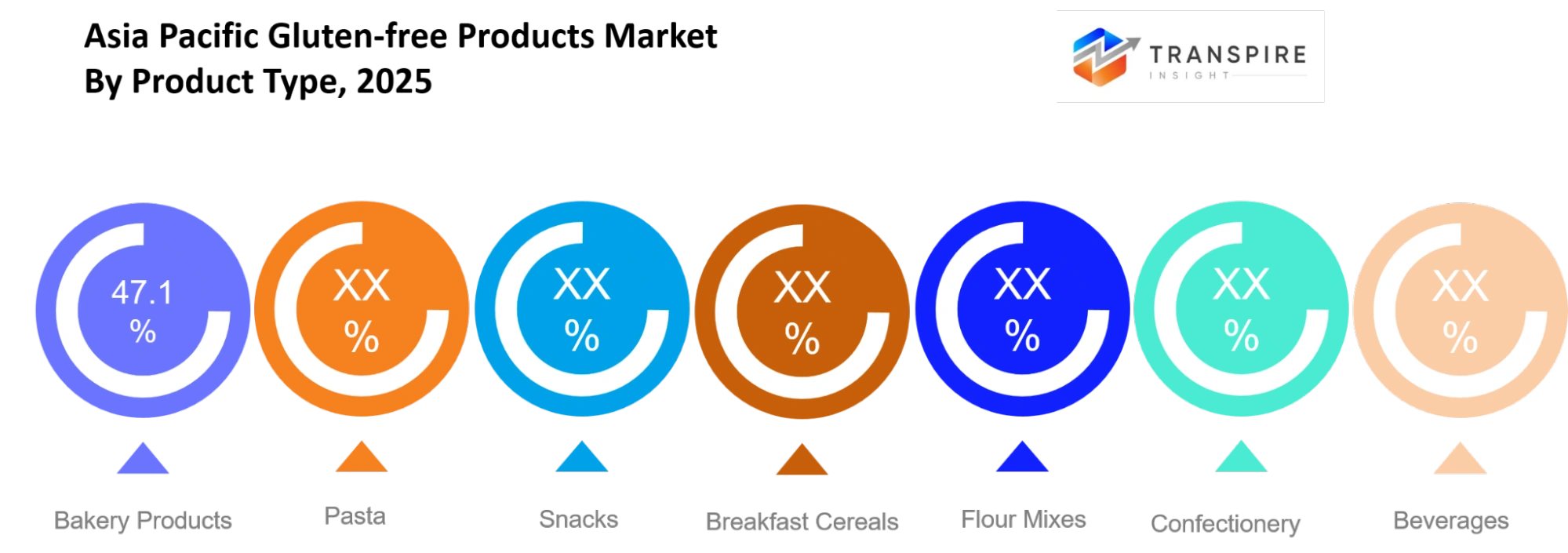
- The Asia Pacific Gluten-free Products Market had bakery products. These products made up 35 percent of the market in 2025. Companies worked hard to make these gluten-free bakery products taste and feel better.
- East Asia made up over 40 percent of the money made in the region in 2025. This is because they have stores and people like to buy high-end food.
- South Asia is growing fast. More stores are selling gluten- products. This growth will continue until 2033.
- Breakfast cereals are the popular type of gluten-free food. Between 2022 and 2025 companies made cereals with nutrients and protein.
- Ready-to-eat gluten-free meals are becoming very popular. This is because people are busy and want food thats easy to eat.
- In 2025 people who care about their health bought the gluten-free products. They bought more than people who need these products because they are sick.
- Fitness enthusiasts started buying gluten- foods after 2021. They liked foods with protein and special powers.
- Companies like Nestlé, General Mills, Kelloggs and Conagra Brands made gluten- products. They also improved their products to make them better.
- Dr. Schär and Orgran are doing well because they have certificates, for their gluten- products. They have products and sell them in many stores.
- Buying food online helped small companies sell their gluten- products. This happened between 2020 and 2025. Now these small companies can compete with food companies. The Asia Pacific Gluten-free Products Market is growing. It will keep growing. The Asia Pacific Gluten-free Products Market will have gluten-free products and more companies selling them.
What are the Key Drivers, Restraints, and Opportunities in the Asia Pacific Gluten-free Products Market?
Drivers
The main thing that is helping the Asia Pacific Gluten-free Products Market to grow is that people are now eating gluten- food as part of their regular diet not just because they have to. New ways of making food have made gluten-free products taste better longer and feel better in your mouth so they are almost as good as regular food. Big food companies are now making gluten- food part of their main products not just something they make for people with health problems. This means more people can buy gluten- food and companies can sell more of it which is good for the Asia Pacific Gluten-free Products Market.
Restraints
The biggest problem with the Asia Pacific Gluten-free Products Market is that it costs more to make gluten- food. Companies have to use ingredients have separate lines to make the food be very careful not to get gluten in the food and get special certificates. All of these things make it more expensive to make gluten- food than regular food. These problems will not be fixed quickly because companies have to spend a lot of money on ways of getting ingredients making food and making sure the food is good. So gluten-free food is still more expensive which means some people do not want to buy it and that hurts the Asia Pacific Gluten-free Products Market.
Opportunity
There is a chance for the Asia Pacific Gluten-free Products Market to grow with food that is gluten-free and also good for you. Some companies are making food with grains, like millet, sorghum, quinoa and protein from plants. They are also making food that's healthier and has fewer bad ingredients. If companies spend money on ways of making these foods the Asia Pacific Gluten-free Products Market could grow a lot in the next ten years. The Asia Pacific Gluten-free Products Market will be helped by these foods and the Asia Pacific Gluten-free Products Market will become a big part of the food industry.
What Has the Impact of Artificial Intelligence Been on the Asia Pacific Gluten-free Products Market?
The gluten-free products industry is changing because of intelligence and new digital technologies. These things are helping to make manufacturing more precise. It is easier to track ingredients and develop new products. Food manufacturers are using systems that have intelligence to check the quality of their products. These systems use computer vision to look at the materials find any contamination and make sure the packaging is correct.
These systems help food manufacturers make sure their products are gluten-free and they can reduce waste and make their operations more consistent. They also have systems to manage their inventory, which helps them buy ingredients and plan their stock better. This helps them save money on storage. Makes sure they do not run out of ingredients.There are also computer models that can predict what will happen in the future by looking at how ingredients work, production data and what consumers buy. These models help food manufacturers predict how much of a product they will sell plan their production and find out if any equipment needs to be fixed before it breaks. The gluten-free products industry uses these models to make bakery, snack and cereal products. They can predict how ingredients will work together and make the products taste and feel better.
This can help food manufacturers make products faster and make their operations more efficient. It also helps them follow the rules and make sure their products are quality. One problem is that it can be very expensive to use intelligence in manufacturing especially for small food manufacturers. It is also hard to get data to make predictions, about new products.. If food manufacturers keep investing in new technologies they will be able to make their operations more efficient and sell more products in the long term. The gluten-free products industry will keep changing because of intelligence and digital technologies.
Key Market Trends
- Since 2021 big brands like Nestlé and General Mills have been making gluten-free foods. They are not just making specialty foods anymore they are also making free snacks and cereals that everyone can buy.
- People are using grains like millet, sorghum and quinoa more often now. This started happening between 2022 and 2025 when food makers began to use ingredients.
- Online grocery stores have been helping people find gluten- products more easily. Since 2020 it has become 40% easier to find these products and this has changed the way people buy food in cities.
- Food companies are not just making food for people with health issues anymore. Now they are making food for people who really care about their health and fitness. This is great for people who like to exercise and take care of themselves.
- After 2021 food companies started making products with ingredients and easier to read labels. This is because stores want to sell food that shows what is in it and how good it is for you.
- Food companies are using computers to help them make products. This helps them make food faster. Makes sure that things like bread and cookies taste the same every time. Food companies are using computers to make food that's consistent. Food companies are making food that people will like. That is good, for people who care about their health and fitness and food.
- Stores are now selling their gluten-free products and this is making it harder for name-brand products to compete. It is also making these products cheaper.
- It is becoming more important for foods to have a label that says they are gluten-free. This is because stores and consumers want to make sure that the foods they buy are good quality.
- Companies like Dr. Schär, Orgran and Well & Good are selling their products in stores now. They are making it easier for people to buy their products by selling them in supermarkets and specialty stores.
- People can now buy gluten- meals that are ready to eat and these meals are becoming very popular. This started happening in 2022. It is because people want food that is easy to make and good, for them.
Asia Pacific Gluten-free Products Market Segmentation
By Product Type
Bakery products are still really important. People eat bread, cakes and cookies every day. Companies making these products try to make them taste better and last longer. They want to make these products for everyone, not people who have to eat them for health reasons. You can find these products in stores. This helps them become more popular in cities and towns.Pasta and breakfast cereals are also getting attention. Companies are making them with kinds of grains that are better for you. Snacks and sweets are another area where companies can grow. People like to eat on the go. Flour mixes are helpful for people who like to bake at home.Companies are also making free drinks. This helps them reach customers.
By Ingredient Type
Rice flour is widely used. It does not have a taste and can be used in many different foods. Corn flour is also popular. It is cheap. Works well in products. Companies try to use ingredients to make their products stand out and be healthier.They combine types of flour to get the texture and nutrients. Almond flour and coconut flour are popular in high-end products. They have a lot of protein. Sorghum flour and millet flour are also getting more popular. People are interested in grains and foods that're rich in nutrients.Quinoa flour is used in high-end products. It has a lot of protein. Is good for you. Companies will continue to research and develop ingredients. They want to make their products and still meet dietary needs.
By Distribution Channel
Supermarkets are still a place where people buy these products. They have a lot of space to display different brands. Big stores also contribute to sales. They have a selection of products. Often have promotions.Health food stores are still important. They have products and staff who know a lot about them. Having a presence in stores helps companies make their products more visible. It encourages people to try them.You can also buy these products online. This has changed the way people shop. It makes it easier to find niche products and new brands. Specialty stores are still popular. They have. High-end products.Pharmacies are also important. People need to buy products for health reasons. Convenience stores are starting to carry more of these products. People want to be able to buy food thats easy to take with them.
By End User
People with disease are still a group of consumers. They have to eat gluten- food to stay healthy. People who care about their health are also starting to eat these products every day. More and more people are starting to eat gluten- food. They do not have a reason to do so.Companies are making products to meet dietary needs and preferences. Athletes often choose products that're easy to digest. They have the nutrients to help them perform well. Children and older adults also benefit from products that are made for them. They meet their dietary needs.People who follow a vegan diet often buy gluten- products. They want to eat plant-based food. People who are trying to manage their weight are also buying these products. They are low, in gluten. Made with grains.
What are the Key Use Cases Driving the Asia Pacific Gluten-free Products Market?
The main reason people use gluten- food is for medical reasons like when they have celiac disease or other problems with gluten. Doctors, dietitians and nutrition programs say that people should eat food that is certified gluten-free so they do not get sick. Can have good digestion for a long time. This is the reason why a lot of people buy gluten- food because they need to buy it all the time to stay healthy.There are reasons why people use gluten-free food like when athletes want to feel good when they are training or competing. Some people also want to eat food every day so they choose gluten-free options. This is why food companies are making gluten-free products and stores are selling them too.
Now some food companies are making gluten-free food that has extra protein or ingredients that are good for your stomach. They are also making food that is labeled as "clean" so people know what they are eating. Some websites and apps can even tell you what food to eat based on your needs, which could help people and people who want to stay healthy. Gluten-free food is becoming more popular. Companies are making more of it like gluten-free food that is also good, for your health. Gluten-free food is used by people who want to eat healthy and by people who need to eat gluten- food for medical reasons.
|
Report Metrics |
Details |
|
Market size value in 2025 |
USD 2.87 Billion |
|
Market size value in 2026 |
USD 3.17 Billion |
|
Revenue forecast in 2033 |
USD 6.36 Billion |
|
Growth rate |
CAGR of 10.46% from 2026 to 2033 |
|
Base year |
2025 |
|
Historical data |
2021 - 2024 |
|
Forecast period |
2026 - 2033 |
|
Report coverage |
Revenue forecast, competitive landscape, growth factors, and trends |
|
Regional scope |
Asia Pacific |
|
Key company profiled |
Nestlé, General Mills, Kellogg's, Conagra Brands, Dr. Schär, Hain Celestial, Freedom Foods, Bob's Red Mill, Quaker Oats, Enjoy Life Foods, Amy's Kitchen, Genius Foods, Orgran, Well & Good, Glutino |
|
Customization scope |
Free report customization (country, regional & segment scope). Avail customized purchase options to meet your exact research needs. |
|
Report Segmentation |
By Product Type (Bakery Products, Pasta, Snacks, Breakfast Cereals, Flour Mixes, Confectionery, Beverages, Others); By Ingredient Type (Rice Flour, Corn Flour, Almond Flour, Coconut Flour, Sorghum Flour, Millet Flour, Quinoa Flour, Others); By Distribution Channel (Supermarkets, Health Food Stores, Online Retail, Pharmacies, Specialty Stores, Convenience Stores, Hypermarkets, Others); By End User (Celiac Patients, Health-Conscious Consumers, Athletes, Children, Elderly Consumers, Vegan Consumers, Weight Management Users, Others) |
Which Regions are Driving the Asia Pacific Gluten-free Products Market Growth?
East Asia holds the dominant position in the regional market due to advanced food manufacturing capabilities, mature retail infrastructure, and well-established product certification systems. Strong consumer spending on premium packaged foods supports broad product availability across supermarkets, specialty stores, and online channels. Large-scale investments in food innovation enable manufacturers to introduce new formulations with improved taste and nutritional value. A robust ecosystem of ingredient suppliers, food processors, retailers, and certification bodies sustains long-term market leadership.
Oceania represents the second-largest contributor and differs from the leading region through strong regulatory consistency and stable consumer purchasing behavior. Food safety standards and transparent labeling frameworks provide confidence for both manufacturers and consumers. Long-standing adoption of specialized dietary products supports predictable demand patterns across multiple retail channels. This stability creates reliable revenue streams and encourages continued investment in product development and distribution networks.
South Asia is emerging as the fastest-growing region due to expanding modern retail networks and greater availability of specialized food products. Growth has accelerated as domestic food manufacturers increase investments in alternative grain processing and premium health-focused product lines. E-commerce platforms have also improved product accessibility in previously underserved markets. This momentum creates attractive opportunities for new entrants, ingredient suppliers, and investors seeking exposure to high-growth nutrition segments between 2026 and 2033.
Who are the Key Players in the Asia Pacific Gluten-free Products Market and How Do They Compete?
The competitive landscape remains moderately fragmented, with multinational food companies competing alongside specialized gluten-free brands. Competition centers on product quality, ingredient innovation, certification credibility, distribution reach, and pricing strategy rather than simple scale advantages. Established companies continue defending market share through portfolio expansion and stronger retail placement, while niche brands attract consumers seeking premium formulations and dietary-specific products. Online retail growth has also lowered entry barriers, allowing emerging brands to reach targeted consumer groups without extensive physical distribution networks.
Nestlé focuses on broad product diversification and leverages extensive retail relationships to place gluten-free offerings across multiple food categories. General Mills differentiates through continuous product innovation and strong recognition in breakfast cereals and snack foods, helping maintain consumer loyalty. Kellogg's expands gluten-free selections within mainstream packaged food portfolios, allowing access to both specialty and mass-market consumers. These companies strengthen competitive positioning through new product launches and strategic expansion across high-growth retail channels.
Dr. Schär follows a niche specialization strategy centered on medically trusted gluten-free products supported by rigorous certification standards. Orgran differentiates through a dedicated gluten-free portfolio and strong expertise in allergen-friendly food manufacturing. Hain Celestial emphasizes clean-label ingredients and natural food positioning, attracting consumers seeking both dietary compliance and broader wellness benefits. Regional expansion, distribution partnerships, and investments in alternative grain formulations help these companies strengthen visibility and create differentiation in an increasingly competitive environment.
Company List
- Nestlé
- General Mills
- Kellogg's
- Conagra Brands
- Dr. Schär
- Hain Celestial
- Freedom Foods
- Bob's Red Mill
- Quaker Oats
- Enjoy Life Foods
- Amy's Kitchen
- Genius Foods
- Orgran
- Well & Good
- Glutino
Recent Development News
In March 2026, Dr. Schär completed acquisition of Semper. The acquisition strengthened Dr. Schär’s position in specialized nutrition and expanded its gluten-free product portfolio across key international markets.https://www.esmmagazine.com
In January 2026, Cheez-It launched Original Gluten Free Crackers. The launch marked the brand’s first gluten-free product and expanded mainstream snack options for consumers following gluten-free diets, supporting broader category adoption.https://www.prnewswire.com
In September 2025, Dr. Schär launched its new gluten-free pita. The product expanded the company’s bakery portfolio and strengthened retail presence through a versatile gluten-free bread offering designed for everyday consumption.https://cibuslink.it
What Strategic Insights Define the Future of the Asia Pacific Gluten-free Products Market?
The Asia Pacific Gluten-free Products Market is moving toward a broader nutrition-focused food category rather than remaining a niche segment tied primarily to medical dietary needs. Over the next five to seven years, growth will be driven by product premiumization, alternative grain innovation, and the integration of gluten-free formulations into mainstream packaged foods. Manufacturers that successfully improve taste, texture, and nutritional value while maintaining competitive pricing will capture a larger share of future demand.
A less visible risk lies in the concentration of supply chains for specialty ingredients such as almond flour, quinoa flour, and certain certified gluten-free raw materials. Disruptions caused by climate variability, agricultural output fluctuations, or trade restrictions could increase production costs and compress margins, particularly for smaller brands with limited sourcing flexibility.
An emerging opportunity is the development of precision nutrition products that combine gluten-free formulations with functional benefits such as gut health, protein enrichment, and metabolic wellness support. This trend is gaining traction among younger consumers through digital health ecosystems and personalized nutrition platforms. Market participants should invest in alternative grain sourcing partnerships and data-driven product development programs to build differentiated portfolios and strengthen long-term resilience.
Asia Pacific Gluten-free Products Market Report Segmentation
By Product Type
- Bakery Products
- Pasta
- Snacks
- Breakfast Cereals
- Flour Mixes
- Confectionery
- Beverages
- Others
By Ingredient Type
- Rice Flour
- Corn Flour
- Almond Flour
- Coconut Flour
- Sorghum Flour
- Millet Flour
- Quinoa Flour
- Others
By Distribution Channel
- Supermarkets
- Health Food Stores
- Online Retail
- Pharmacies
- Specialty Stores
- Convenience Stores
- Hypermarkets
- Others
By End User
- Celiac Patients
- Health-Conscious Consumers
- Athletes
- Children
- Elderly Consumers
- Vegan Consumers
- Weight Management Users
- Others
Frequently Asked Questions
Find quick answers to common questions.
The expected Asia Pacific Gluten-free Products Market size for the market will be USD 6.36 Billion in 2033.
Key segments for the Asia Pacific Gluten-free Products Market are By Product Type (Bakery Products, Pasta, Snacks, Breakfast Cereals, Flour Mixes, Confectionery, Beverages, Others); By Ingredient Type (Rice Flour, Corn Flour, Almond Flour, Coconut Flour, Sorghum Flour, Millet Flour, Quinoa Flour, Others); By Distribution Channel (Supermarkets, Health Food Stores, Online Retail, Pharmacies, Specialty Stores, Convenience Stores, Hypermarkets, Others); By End User (Celiac Patients, Health-Conscious Consumers, Athletes, Children, Elderly Consumers, Vegan Consumers, Weight Management Users, Others).
Major Asia Pacific Gluten-free Products Market players are Nestlé, General Mills, Kellogg's, Conagra Brands, Dr. Schär, Hain Celestial, Freedom Foods, Bob's Red Mill, Quaker Oats, Enjoy Life Foods, Amy's Kitchen, Genius Foods, Orgran, Well & Good, Glutino.
The Asia Pacific Gluten-free Products Market size is USD 2.87 Billion in 2025.
The Asia Pacific Gluten-free Products Market CAGR is 10.46% from 2026 to 2033.
- Nestlé
- General Mills
- Kellogg's
- Conagra Brands
- Dr. Schär
- Hain Celestial
- Freedom Foods
- Bob's Red Mill
- Quaker Oats
- Enjoy Life Foods
- Amy's Kitchen
- Genius Foods
- Orgran
- Well & Good
- Glutino
About the Authors

Chetan Dhatrak
I’m Chetan Dhatrak, a Senior Research Analyst at Transpire Insight, specializing in the Consumer Goods, Foods and Beverages industry. I focus on analyzing market trends, consumer behavior, competitive landscapes, and industry developments to deliver accurate, data-driven insights. My research at Transpire Insight is built on credible sources and in-depth analysis, helping businesses and readers better understand market dynamics, emerging opportunities, and evolving consumer preferences. I’m committed to creating reliable, well-researched content that supports informed decision-making and reflects the latest developments in the consumer goods and food & beverage sectors.

Chakradhar Khansole
Chakradhar serves as the Research Director at Transpire Insight, bringing over 8 years of experience in technology, innovation, and strategic market intelligence. He specializes in transforming complex market data into actionable business insights that enable organizations to make informed, growth-oriented decisions. Recognized for his strategic vision and analytical expertise, Chakradhar leads high-impact research initiatives, delivering comprehensive market assessments, competitive intelligence, and forward-looking industry analysis.
Recently Published Reports
-
Apr 2026
Baby Infant Formula Market
Baby Infant Formula Market Size, Share & Analysis Report By ype (Infant Milk, Follow On Milk, Specialty Baby Milk, Growing-Up Milk), By Ingredient (Carbohydrate, Fat, Protein, Minerals, Vitamins, and Others), By Product Form (Powder, Liquid, and Ready-to-feed), By Distribution Channels (Supermarket/Hypermarket, Specialty Store, Pharmacies, Online Retail, and Others), and Geography (North America, Europe, Asia-Pacific, Middle East and Africa, South and Central America), 2021 - 2031
-
Apr 2026
Edible Insects for Animal Feed Market
Edible Insects for Animal Feed Market Size, Share & Analysis Report By Type (Insect Powder, Insect Meal, Insect Bar, Insect Paste, Insect Oil, and Others), By Insect Type (Beetles, Cricket, Caterpillar, Hymenoptera, Orthoptera, Tree Bugs, and Others), By Application (Livestock, Pet Food, and Aquaculture), By Livestock Type (Poultry, Swine, and Others), and Geography (North America, Europe, Asia-Pacific, Middle East and Africa, South and Central America), 2021 - 2031
-
Apr 2026
Food Industry Disinfection and Bacterial Control Market
Food Industry Disinfection and Bacterial Control Market Size, Share & Analysis Report By Type (Chemical Disinfectants, Physical Disinfectants, and Biocides and Antimicrobials), By Application (Food Processing Equipment Surface Disinfection, Food Preparation Areas Surface Disinfection, Storage Areas Surface Disinfection, Anti-microbial Coatings Food Preservation, and Preservative Solutions Food Preservation), By End User (Meat and Poultry Processing, Dairy Processing, Seafood Processing, Bakery and Confectionery, Restaurants and Commercial Kitchens, and Food Service Providers), By Sales Channel (Online, Offline), and Geography (North America, Europe, Asia-Pacific, Middle East and Africa, South and Central America), 2021 - 2031
-
May 2026
Freeze Dried Food Market
Freeze Dried Food Market Size, Share & Analysis Report By Product Type (Fruits, Vegetables, Freeze-Dried Dairy Products, Freeze-Dried Meat and Seafood, Freeze-Dried Pet Food, and Prepared Meal), By Nature (Organic, and Conventional), By Form (Powdered, Granules, and Diced), By End Use (Breakfast Cereals, Dairy Products, Bakery & Confectionery, Nutritional Bars & Supplements, Powdered Beverages, Snacks, and Retail (Household)), and Geography (North America, Europe, Asia-Pacific, Middle East and Africa, South and Central America), 2021 - 2031