
Asia Pacific Fraud Detection And Prevention Market Size & Forecast:
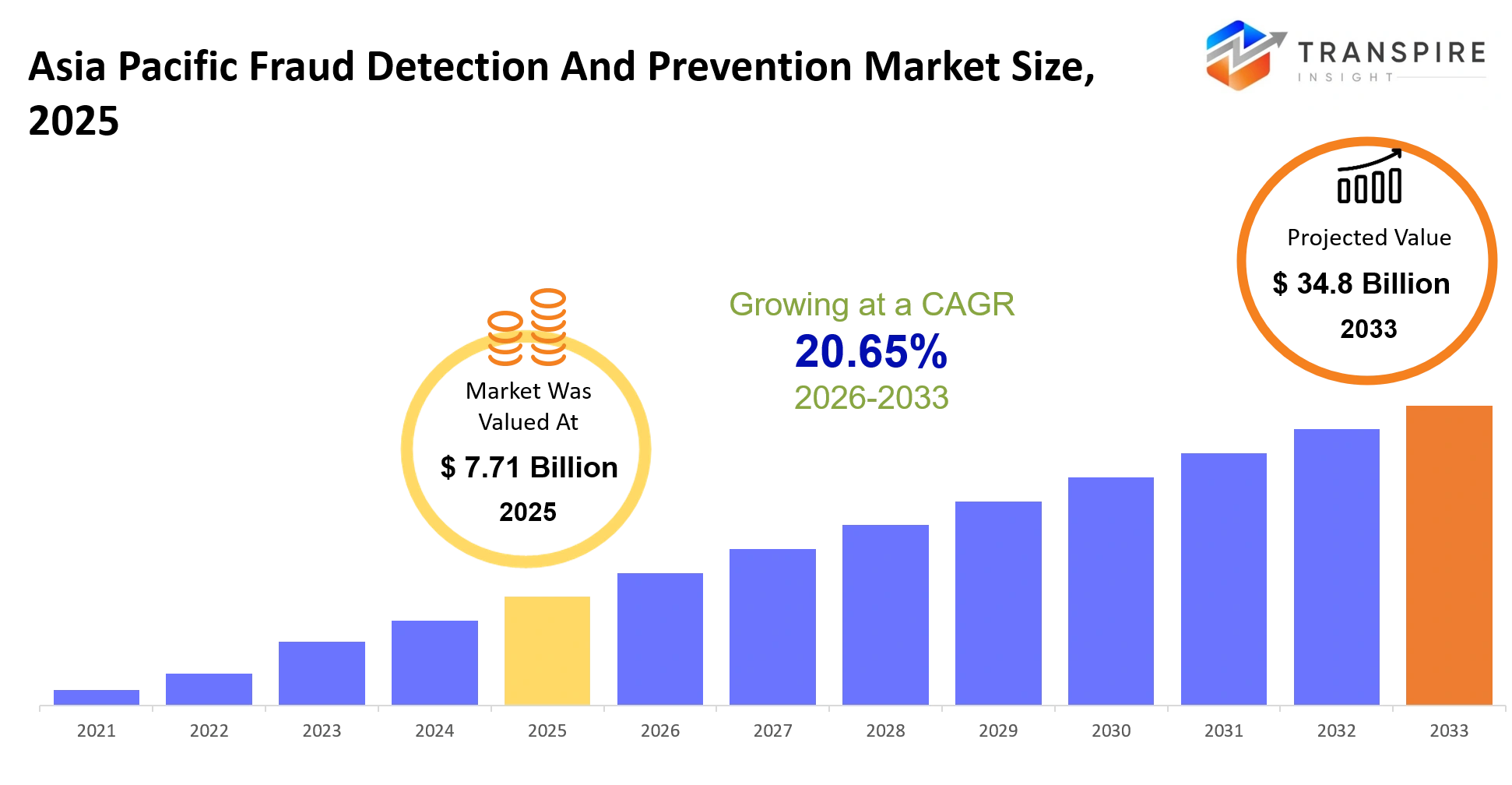
- Asia Pacific Fraud Detection And Prevention Market Size 2025: USD 7.71 Billion
- Asia Pacific Fraud Detection And Prevention Market Size 2033: USD 34.8 Billion
- Asia Pacific Fraud Detection And Prevention Market CAGR: 20.65%
- Asia Pacific Fraud Detection And Prevention Market Segments: By Solution (Fraud Analytics, Authentication, Governance, Risk & Compliance, Monitoring Tools, Others); By Deployment (Cloud, On-Premise, Hybrid, Others); By Application (Payment Fraud, Identity Theft, Insurance Fraud, Cyber Fraud, AML, Others); By End User (BFSI, Retail, Healthcare, Government, Telecom, Others).
Asia Pacific Fraud Detection And Prevention Market Summary
The Asia Pacific Fraud Detection And Prevention Market was valued at USD 7.71 Billion in 2025. It is forecast to reach USD 34.8 Billion by 2033. That is a CAGR of 20.65% over the period.
The Asia Pacific Fraud Detection and Prevention Market helps banks, retailers and online platforms spot activities before they cause financial losses. These solutions look at transactions, user behavior and device data in time to stop fraud. They want to prevent account takeovers and identity theft while keeping customer experiences smooth.In the five years the market changed a lot. It moved from rule-based systems to using artificial intelligence and machine learning to detect fraud. This change happened fast because of digital payments, mobile banking and online shopping in the region. The COVID-19 pandemic also played a role as more transactions went online giving cybercriminals chances to attack.
Now the market is growing because companies need to manage fraud risks without stopping customers. As transactions increase and fraud techniques get more complex companies are investing in tools that analyze data in time. They are also using biometrics and automated platforms to make decisions. This shift is leading to software adoption and stronger long-term investments in fraud prevention. The Asia Pacific Fraud Detection and Prevention Market is growing.
Key Market Insights
- The Asia Pacific Fraud Detection And Prevention Market is mostly controlled by East Asia, which will have more than 40 percent of the market in 2025. This is because East Asia has good digital payment systems.
- South Asia is the region that is growing the fastest in the Asia Pacific Fraud Detection And Prevention Market. This is happening because financial technology is expanding quickly and more people are using mobile transactions.
- The biggest part of the Asia Pacific Fraud Detection And Prevention Market is fraud analytics and monitoring solutions. These solutions will have more than 35 percent of the total revenue in 2025.
- Identity verification and authentication solutions are the biggest part of the market. This is because companies have to follow rules and make sure their customers are real.
- The growing part of the market is AI-powered fraud detection platforms. These platforms are getting more popular because they use machine learning and can find threats in time.
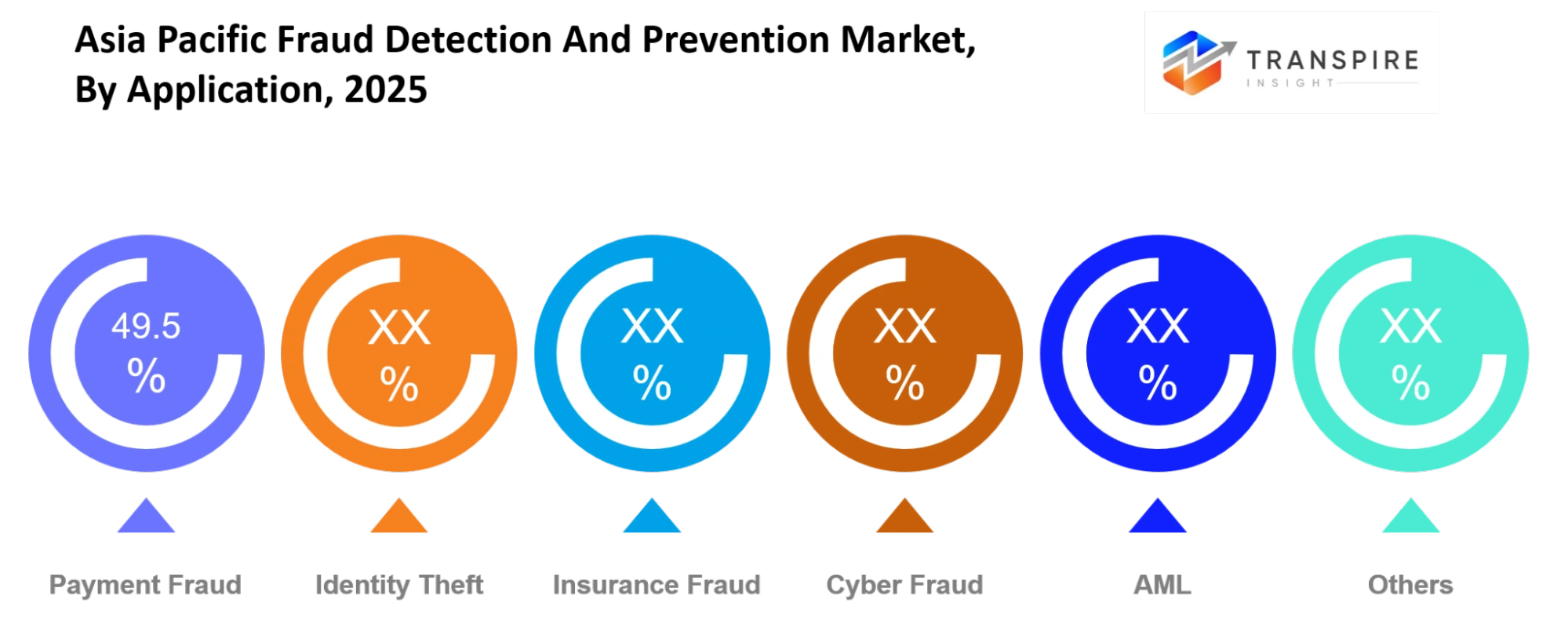
- The main use of the Asia Pacific Fraud Detection And Prevention Market is to detect payment fraud. This will have more than 30 percent of the market because more and more people are using digital transactions.
- Account takeover prevention and behavioral biometrics are growing quickly. This is because hackers are getting more and more sophisticated.
- The biggest users of the Asia Pacific Fraud Detection And Prevention Market are banks and other financial institutions. They will have more than 45 percent of the market because they have to follow many rules and keep their transactions safe.
- The growing users of the market are e-commerce and fintech companies. This is because they are more likely to be targeted by fraudsters.
- Companies like SAS, FICO, NICE Actimize, IBM, Oracle and Feedzai are working hard to innovate and expand their services. They are using intelligence, cloud-based systems and partnering with other companies to stay ahead of the competition and catch new opportunities in fraud prevention.
What are the Key Drivers, Restraints, and Opportunities in the Asia Pacific Fraud Detection And Prevention Market?
Driver
The main thing that is helping the Asia Pacific Fraud Detection and Prevention Market grow is that more people are using payments, mobile banking and online shopping. This means that banks and stores are dealing with a lot more transactions than they were a few years ago which gives people who want to commit fraud more chances to do so. The old systems that were used to stop fraud are not very good at finding patterns so companies are starting to use artificial intelligence, machine learning and real-time analytics to help them.This change in technology is having an effect on how much money is being made in the market because companies are spending more on software and tools to help them stop fraud. Being able to find fraud helps companies lose less money and makes their customers trust them more. So companies are starting to make stopping fraud a part of their work instead of just having it as a separate security tool.
Restraint
The biggest problem is that there are a lot of rules and laws about data and security in the Asia Pacific area. Banks and other companies that work in different countries have to follow all of these different rules, which can be very hard. This makes it hard for them to stop fraud because they have to follow many different laws.This problem is not easy to fix. It makes it more expensive and takes longer to put fraud prevention systems in place. Companies that sell fraud prevention tools often have to make versions for each country, which makes it harder for them to sell their products to more people. This means that the market is not growing as fast as it could be and it is harder for companies to expand.
Opportunity
There is a chance for companies that use artificial intelligence to help with identity and security. These tools can look at how people behave when they are using their accounts. They can find suspicious activity more easily. Banks and other companies are starting to use these tools because the people who commit fraud are getting smarter.The fact that more people are using banking and online payments in South Asia and Southeast Asia is making it a good time for companies that can help with identity verification. Many people are using these services for the time being and they need to be sure that they are safe. Companies that invest in these tools will be able to grow and help stop fraud.
What Has the Impact of Artificial Intelligence Been on the Asia Pacific Fraud Detection And Prevention Market?
Artificial intelligence and advanced digital technologies are changing how fraud detection and prevention work in banking, e-commerce, telecommunications and digital payments in Asia Pacific. Many organizations now use AI platforms to automate tasks like monitoring transactions, scoring customer risk, verifying identities and managing cases. These systems analyze transaction behavior, device details, location data and user patterns to find activity right away. This automation helps reduce the workload of investigations so fraud teams can focus on high-risk cases.
AI and machine learning are used for predicting fraud, preventing account takeovers, assessing payment risks and monitoring for money laundering. These models learn from fraud cases and new attack methods to spot unusual activity before it causes financial losses. Banks and financial institutions see accuracy in detecting fraud, faster investigations, fewer false alarms and improved compliance with regulations. Real-time data analysis also cuts costs by reducing manual reviews and improving resource use.
However using AI still has a challenge. Many organizations have data spread across platforms and areas. This can make data quality inconsistent. Limit access to good training data, which can make AI models less accurate, more complex to implement and slower to deploy across large organizations.
Key Market Trends
- Since 2021 banks have moved away from using the old fraud rules and started using machine learning models. This has helped them find fraud accurately and reduce the number of false investigations.
- After 2020 the number of payments really took off. This led to investment in systems that can monitor transactions in real time. The reason for this is that people trying to commit fraud are getting more clever and trying often.
- Between 2022 and 2025 the people in charge of making rules tightened up the requirements for protecting data and stopping money laundering. This meant that companies had to adopt technology to comply with these rules.
- Behavioral biometrics has become a way to authenticate people since 2023. This means we do not have to rely much on passwords and old ways of verifying who someone is.
- More and more financial institutions are using cloud-based systems to fight fraud. They are moving away from using systems that are based on their premises. This helps them to scale up and respond quickly.
- E-commerce platforms are investing more in technologies that prevent people from taking over accounts. This is because fraud with transactions is becoming a bigger risk.
- Companies like SAS, FICO, IBM and Feedzai are working hard to develop products that use intelligence to fight fraud. They want to make their predictive fraud intelligence capabilities stronger.
- After 2024 cross-channel fraud detection started to gain attention. Organizations want to be able to see what is happening across all their channels, including banking, mobile and retail transactions.
- Solutions for verifying identities are starting to use types of data and digital tools to help with the process of onboarding. This is to support the growing fintech ecosystems.
- The way companies prevent fraud is changing. They are moving towards models that involve monitoring. This allows them to find threats before they result in financial losses. Fraud prevention strategies are becoming more proactive. Companies are using fraud prevention strategies to stay one step ahead of fraud.
Asia Pacific Fraud Detection And Prevention Market Segmentation
By Solution:
Fraud Analytics, Authentication, Governance, Risk & Compliance Monitoring Tools, Others: This segment is about the tech used to spot, assess and stop fake activities in digital and financial areas.Fraud analytics solutions help companies look at lots of transaction data and find patterns before they lose money.Authentication tech makes it harder for the wrong people to get in by checking who people are and making login processes secure.Governance, risk and compliance solutions help companies follow rules and be transparent about what they're doing.Monitoring tools keep an eye on transactions what users do and how systems behave so companies can respond fast to threats.More investment in intelligence, machine learning and real-time analytics will make these solutions better at stopping fraud in many industries.
By Deployment:
Cloud, On-Premise, Hybrid Others: How companies deploy solutions depends on what they need and how secure they want to be. What rules they have to follow.Cloud-based solutions are great because they can grow with the company are easy to set up and make it easy to use analytics.Many companies choose cloud deployment to be more flexible and have infrastructure worries.Some institutions still choose on-premise deployments because they handle sensitive info or have to follow strict rules.Hybrid models are also popular because they balance control, security and scalability.As companies keep transforming they'll use more flexible deployment strategies.
By Application:
Payment Fraud, Identity Theft, Insurance Fraud, Cyber Fraud, AML, Others: There are areas where these solutions are used and they're all important because fake activities are getting more sophisticated and digital.Payment fraud is a deal because there are so many transactions happening in banking, retail and digital commerce.Identity theft prevention is also crucial as more people sign up for things online and create accounts remotely.Solutions to detect insurance fraud help companies find claims and reduce losses.Cyber fraud and anti-money laundering solutions help manage risk and follow rules.Better analytics and automated monitoring will make these areas stronger, in the years to come.
By End User:
BFSI, Retail, Healthcare, Government, Telecom, Others: Different end-users are adopting these solutions because they need to manage risk and secure transactions.Banks and financial institutions rely heavily on fraud prevention tech because they do a lot of transactions and have to follow rules.Retailers use these solutions to protect transactions and customer accounts.Healthcare providers are investing more in protecting identities and data as digital records grow.Government agencies use fraud detection platforms to keep services honest and reduce financial misconduct.Telecom companies are adopting monitoring systems to stop subscription fraud, account misuse and unauthorized access.
What are the Key Use Cases Driving the Asia Pacific Fraud Detection And Prevention Market?
The main reason people use this is to stop payment fraud in banks, financial services and online payment systems. It helps these places watch what is happening with transactions in time so they can find weird behavior before someone takes money they should not have. There are a lot of transactions happening. The rules are very strict so this is the main reason people are using this technology.There are ways this is being used and it is getting bigger in stores and phone companies. More and more online shopping companies are using systems to find fraud so people do not take over accounts, make purchases or get money back when they should not. Phone companies are using these systems to find people who are getting subscriptions they should not have getting into accounts they should not be in, and using identities.
New ways this is being used are coming out like looking at how people behave and using intelligence to figure out who someone really is. These new ways look at what people do, how they use their devices and how they prove who they are to make sure it is really them. Since more people are using services to sign up for things and get financial help from home, these new ways will probably become very popular and create a lot of opportunities.
|
Report Metrics |
Details |
|
Market size value in 2025 |
USD 7.71 Billion |
|
Market size value in 2026 |
USD 9.35 Billion |
|
Revenue forecast in 2033 |
USD 34.8 Billion |
|
Growth rate |
CAGR of 20.65% from 2026 to 2033 |
|
Base year |
2025 |
|
Historical data |
2021 - 2024 |
|
Forecast period |
2026 - 2033 |
|
Report coverage |
Revenue forecast, competitive landscape, growth factors, and trends |
|
Regional scope |
Asia Pacific |
|
Key company profiled |
SAS, FICO, NICE Actimize, IBM, Oracle, Experian, LexisNexis, ACI Worldwide, SAP, Fiserv, TransUnion, Equifax, Microsoft, Feedzai, Riskified. |
|
Customization scope |
Free report customization (country, regional & segment scope). Avail customized purchase options to meet your exact research needs. |
|
Report Segmentation |
By Solution (Fraud Analytics, Authentication, Governance, Risk & Compliance, Monitoring Tools, Others); By Deployment (Cloud, On-Premise, Hybrid, Others); By Application (Payment Fraud, Identity Theft, Insurance Fraud, Cyber Fraud, AML, Others); By End User (BFSI, Retail, Healthcare, Government, Telecom, Others). |
Which Regions are Driving the Asia Pacific Fraud Detection And Prevention Market Growth?
East Asia is the leader when it comes to payments. This is because they have good digital payment systems, banks that work well and rules that help keep people's money safe. The banks and other financial companies in East Asia spend a lot of money on things like intelligence looking at data in real time and keeping their systems safe from hackers. They do this because they want to stop people from committing fraud, which is getting more and more complicated. East Asia also has a lot of companies that make technology and people there use digital payments a lot. This creates a demand for systems that can help prevent fraud. The companies that make technology, the banks and the people who make the rules all work together to help East Asia stay the leader.
The biggest market is in Southeast Asia.. The way the market is growing is different from how it is growing in East Asia. More and more people are shopping online. This helps the market grow. There are also companies making financial technology and the government is helping people get access to banking services. The rules and laws are getting better which makes companies feel more confident about spending money on systems that can help prevent fraud. The internet and other digital systems are getting better and more people are using them to make transactions. This helps the region make money for the industry.
South Asia is growing fast. This is because more and more people are using payments and online banking services are becoming more popular. The government has started some initiatives that help people use digital payments and this has made it necessary for banks and other financial companies to get better at stopping fraud. The banks and companies that make technology are spending more money on things like artificial intelligence and monitoring risks. This creates opportunities for companies that make technology and for investors who want to make money between 2026 and 2033. South Asia and digital payments are really taking off. The demand for payments and online banking services is increasing. This means that South Asia and fraud prevention are becoming more important.
Who are the Key Players in the Asia Pacific Fraud Detection And Prevention Market and How Do They Compete?
The competition in this field is not too spread out with known companies that do analytics and risk management competing with companies that specialize in artificial intelligence. What these companies can do with technology is now the way they compete, especially when it comes to catching fraud in real time, understanding how people behave and making decisions automatically. Big companies that have been around for a while are keeping their share of the market by offering a lot of products and working closely with banks and payment systems while newer companies are focusing on using the cloud and getting things up and running faster. The companies that can reduce alarms catch fraud more accurately and help with changing rules and regulations are the ones that are doing well.
SAS is different from companies because it has advanced analytics and machine learning capabilities that help banks and other financial institutions process a lot of transactions very precisely. FICO is good at helping companies make decisions based on predictions and score how likely something is to be fraudulent so companies can look at risk in time across many different channels. NICE Actimize is specialized in stopping crimes and it combines tools to stop money laundering, catch fraud and comply with rules all in one platform. These companies are getting bigger by adding artificial intelligence using the cloud and working more closely with digital banking systems.
Feedzai has a strategy that's all about using artificial intelligence to prevent fraud and it uses real time analysis of behavior to catch complex fraud patterns in payment networks. Riskified is focused on stopping fraud in online shopping. It is different because it has technology that helps merchants approve transactions and reduce chargebacks while also increasing sales. IBM is getting stronger by offering security tools that work on different cloud systems and advanced tools to understand threats. These companies are investing in intelligence partnering with other companies and expanding into new markets, which is helping them compete better and find new opportunities for growth.
Company List
- Oracle
- Experian
- LexisNexis Risk Solutions
- ACI Worldwide
- SAP
- Fiserv
- TransUnion
- Equifax
- Microsoft
- Feedzai
- Riskified
Recent Development News
In April 2025, NICE Actimize launched X-Sight ActOne with Agentic AI capabilities. The platform automates financial crime investigation workflows using machine learning, natural language processing, and generative AI, helping financial institutions improve fraud detection efficiency and compliance operations.
Source: https://www.nice.com
In July 2025, Aberdeen Group selected NICE Actimize X-Sight AML Solutions to modernize its financial crime operations. The implementation strengthens anti-money laundering monitoring and fraud detection capabilities through advanced analytics and automated investigation tools.
Source: https://www.niceactimize.com
What Strategic Insights Define the Future of the Asia Pacific Fraud Detection And Prevention Market?
The Asia Pacific market for detecting and preventing fraud is shifting towards using intelligence to manage risks on its own. This change is driven by the complexity of systems, where mobile payments, online banking and e-commerce create a huge number of transactions that traditional systems can't handle.Over the five to seven years preventing fraud will become a part of customer onboarding, processing payments and managing identities rather than a separate security function.There is a risk in relying on an artificial intelligence models and data providers. If many companies depend on the models it could lead to a lack of transparency in making decisions about fraud and create problems if these models stop working well or if regulations change suddenly.A new opportunity is using biometrics and continuous verification of identities in the growing fintech sector in South and Southeast Asia.To take advantage of this companies should invest in platforms that combine analyzing transactions, understanding behavior and following regulations. This will help companies grow reduce mistakes and stay competitive in the run.
The Asia Pacific Fraud Detection and Prevention Market will see fraud prevention integrated into customer onboarding, payment processing and identity management workflows.Organisations should prioritize investment in fraud and identity platforms that combine transaction analytics, behavioural intelligence and regulatory compliance capabilities. This approach will improve scalability reduce positives and strengthen long-term competitive positioning, in the Asia Pacific Fraud Detection and Prevention Market.
Asia Pacific Fraud Detection And Prevention Market Report Segmentation
By Solution
- Fraud Analytics
- Authentication
- Governance, Risk & Compliance
- Monitoring Tools
- Others
By Deployment
- Cloud
- On-Premise
- Hybrid
- Others
By Application
- Payment Fraud
- Identity Theft
- Insurance Fraud
- Cyber Fraud
- Anti-Money Laundering (AML)
- Others
By End User
- BFSI
- Retail
- Healthcare
- Government
- Telecom
- Others
Frequently Asked Questions
Find quick answers to common questions.
The expected Asia Pacific Fraud Detection And Prevention Market size for the market will be USD 34.8 Billion in 2033.
Key segments for the Asia Pacific Fraud Detection And Prevention Market are By Solution (Fraud Analytics, Authentication, Governance, Risk & Compliance, Monitoring Tools, Others); By Deployment (Cloud, On-Premise, Hybrid, Others); By Application (Payment Fraud, Identity Theft, Insurance Fraud, Cyber Fraud, AML, Others); By End User (BFSI, Retail, Healthcare, Government, Telecom, Others).
Major Asia Pacific Fraud Detection And Prevention Market players are SAS, FICO, NICE Actimize, IBM, Oracle, Experian, LexisNexis, ACI Worldwide, SAP, Fiserv, TransUnion, Equifax, Microsoft, Feedzai, Riskified.
The Asia Pacific Fraud Detection And Prevention Market size is USD 7.71 Billion in 2025.
The Asia Pacific Fraud Detection And Prevention Market CAGR is 20.65% from 2026 to 2033.
- SAS
- FICO
- NICE Actimize
- IBM
- Oracle
- Experian
- LexisNexis Risk Solutions
- ACI Worldwide
- SAP
- Fiserv
- TransUnion
- Equifax
- Microsoft
- Feedzai
- Riskified
About the Authors

Mayur Shinde
I am Mayur Shinde, a Senior Research Analyst at Transpire Insight, specializing in the Automotive & Transportation and Information & Communication Technology (ICT) Industry. My work focuses on analyzing emerging market trends, technological advancements, competitive landscapes, and industry developments to deliver accurate, data-driven insights. I am passionate about transforming complex market information into clear, actionable content that helps businesses, professionals, and decision-makers stay informed and make confident strategic decisions.

Chakradhar Khansole
Chakradhar serves as the Research Director at Transpire Insight, bringing over 8 years of experience in technology, innovation, and strategic market intelligence. He specializes in transforming complex market data into actionable business insights that enable organizations to make informed, growth-oriented decisions. Recognized for his strategic vision and analytical expertise, Chakradhar leads high-impact research initiatives, delivering comprehensive market assessments, competitive intelligence, and forward-looking industry analysis.
Recently Published Reports
-
Apr 2026
3D Optical Profiler Market
3D Optical Profiler Market Size, Share & Analysis Report By Type (Desktop 3D Optical Profiler, and Portable 3D Optical Profiler), By Technology (Confocal Technology, and White Light Interference), By End-Use Industry (Manufacturing, Research Institutions, Automotive, Aerospace and Defense, Medical Devices, and Other), and Geography (North America, Europe, Asia-Pacific, Middle East and Africa, South and Central America), 2021 - 2031
-
Apr 2026
Depth Sensor Market
Depth Sensor Market Size, Share & Analysis Report By Type (Infrared Depth Sensors, Time-of-Flight (ToF) Sensors, Stereo Vision Sensors, Structured Light Sensors, Ultrasonic Depth Sensors), By Application (Automotive, Robotics, Gaming, Consumer Electronics, Industrial Automation, Healthcare, Security & Surveillance, Others), By End Users (Automotive Manufacturers, Consumer Electronics Companies, Healthcare Providers, Industrial Companies, Security Agencies, Gaming Companies, Robotics Companies, Others), and Geography (North America, Europe, Asia-Pacific, Middle East and Africa, South and Central America), 2021 – 2031
-
Apr 2026
Digital Manufacturing Market
Digital Manufacturing Market Size, Share & Analysis Report By Component (Hardware, Software, and Services), By Technology (Robotics, 3D Printing, Internet of Things (IoT), and Others), By Application (Automotive and Transportation, Aerospace and Defense, Consumer Electronics, Industrial Machinery, and Others), By Process Type (Computer-Based Designing, Computer-Based Simulation, Computer 3D Visualization, Analytics, and Others), and Geography (North America, Europe, Asia-Pacific, Middle East and Africa, South and Central America), 2021 – 2031
-
Apr 2026
Digital Visa Services Market
Digital Visa Services Market Size, Share & Analysis Report By Type (Individual Travelers, Group Travelers), By Application (Tourism, Business Travel, Others), and Geography (North America, Europe, Asia-Pacific, Middle East and Africa, South and Central America), 2021 – 2031