
United Kingdom Cyber Security Market Size & Forecast:
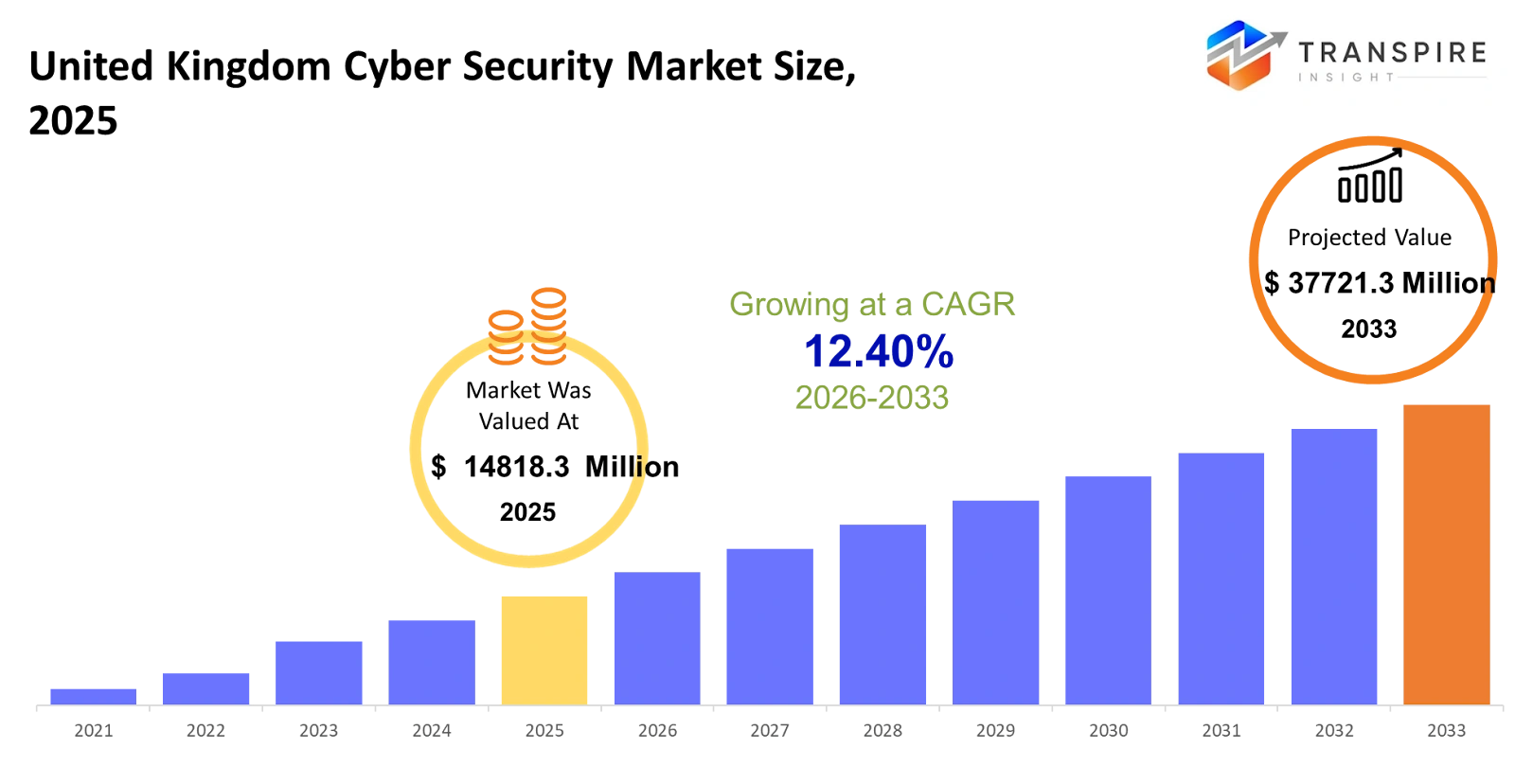
- United Kingdom Cyber Security Market Size 2025: USD 14818.3 Million
- United Kingdom Cyber Security Market Size 2033: USD 37721.3 Million
- United Kingdom Cyber Security Market CAGR: 12.40%
- United Kingdom Cyber Security Market Segments: By Component (Solutions, Services), By Deployment (Cloud, On-Premise), By Security Type (Network Security, Endpoint Security, Application Security, Cloud Security), By End-User (BFSI, Government, Healthcare, Retail, IT & Telecom).
To learn more about this report,  Download Free Sample Report
United Kingdom Cyber Security Market Summary:
The United Kingdom Cyber Security Market size is estimated at USD 14818.3 Million in 2025 and is anticipated to reach USD 37721.3 Million by 2033, growing at a CAGR of 12.40% from 2026 to 2033. The UK government together with the National Cyber Security Centre (NCSC) and other organizations makes substantial financial investments to enhance national cyber protection systems while they back technological development and encourage businesses to adopt cybersecurity measures.
The market experiences its primary growth drivers through two main factors which include the rising number of sophisticated cyberattacks and the growth of cloud computing and the increasing adoption of remote work and hybrid work models. The banking and financial services industry together with the healthcare sector and retail businesses and critical infrastructure systems dedicate substantial resources to implement advanced security measures that include AI-powered threat detection and zero-trust security systems. Small and medium-sized businesses now begin to implement cybersecurity solutions which large enterprises currently dominate through spending The industry faces two main obstacles which include the shortage of qualified experts and the need to address developing security threats..
Key Market Trends & Insights:
- Rising Cyber Threats Driving Demand The increasing frequency of ransomware attacks and phishing attacks and advanced persistent threats requires UK organizations to build stronger cybersecurity systems and spend money on systems which detect threats and respond to them.
- The Shift Toward Cloud Security Solutions The rapid adoption of cloud computing and hybrid work models requires businesses to establish cloud security measures which protect their data and control access to their systems and build protected cloud infrastructure.
- The Adoption of AI and Automation Companies use artificial intelligence and machine learning for real-time threat detection and predictive analytics and automated incident response because these technologies help them work more efficiently while reducing the chances of human mistakes.
- The Growth of Managed Security Services MSS Organizations, particularly SMEs, have turned to managed security service providers for security operations because there is a shortage of cybersecurity experts who can provide affordable protection with professional knowledge.
- The Implementation of Zero-Trust Architecture Organizations apply zero-trust security models which require both users and systems to prove their identity before gaining access to systems in order to establish better access control measures and stronger security against all types of attacks, both from inside and outside their networks.
United Kingdom Cyber Security Market Segmentation
By Component
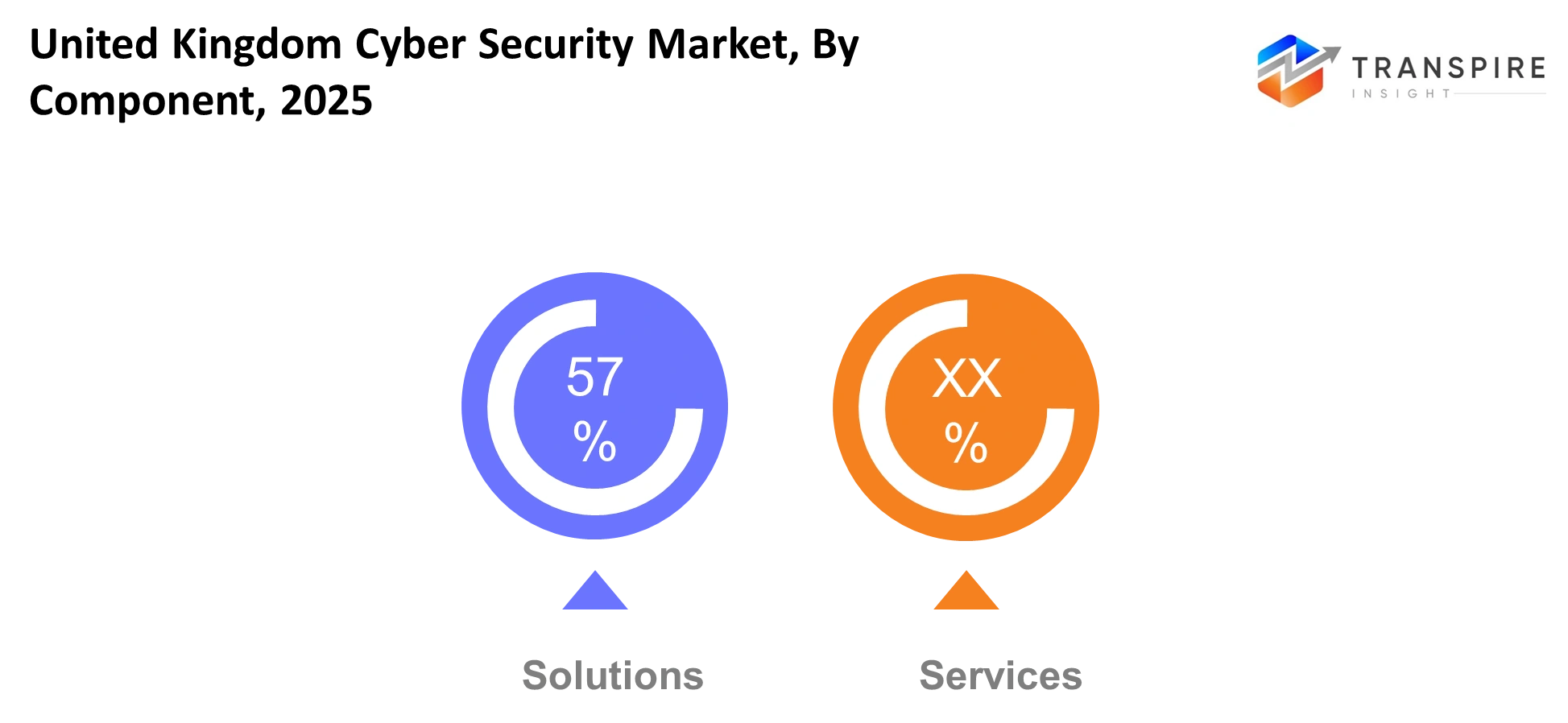
- Solutions: Cybersecurity solutions use software and platforms which perform three functions. The solutions include firewalls and intrusion detection systems and antivirus and encryption and identity management tools. Enterprises are adopting integrated security solutions which use artificial intelligence because of increasing cyberattacks and regulatory compliance needs.
- Services: Organizations use cybersecurity services which provide consulting and integration and support and managed security solutions. Organizations use these services to build security plans which help them track threats and handle emergencies. The growing shortage of skilled professionals in the UK is accelerating demand for outsourced managed security services among both large enterprises and SMEs.
To learn more about this report, Download Free Sample Report
By Deployment
- On-Premise:Cloud-based cybersecurity solutions have become more popular because organizations are increasingly using cloud computing and remote work setups. The solutions provide companies with two essential benefits which include their ability to expand service delivery and their capability to track security threats in real time. Organizations select cloud services for their operational benefits that reduce expenses while making software updates simpler to perform when they move essential business operations to cloud computing environments.
- On-Premise:On-premise cybersecurity solutions operate through organized IT systems which allow organizations to manage their security operations and control their data handling processes. The system sees extensive use by government bodies and major corporations which manage confidential data. The high initial expenses of on-premise solutions still maintain their value for businesses which need to protect their data and follow strict regulations.
By Security Type
- Network Security:The primary goal of network security is to defend IT networks against three types of threats which include unauthorized access and cyberattacks and data breaches. The system consists of four main components which are firewalls and VPNs and intrusion detection systems and network monitoring tools. The vital role of network security maintains its importance because organizations need to protect their digital systems during times of increased digital connectivity and Internet of Things development.
- Endpoint Security:Cybersecurity threats target endpoint devices which include laptops and smartphones and servers according to their definition. The remote work trend has shifted focus onto endpoints which now serve as primary attack vectors. Organizations are implementing advanced endpoint protection solutions which utilize AI and behavioral analytics to identify and stop malware attacks and ransomware threats and unauthorized system access.
- Application Security:Application security protects software and applications from security threats which emerge during their development and implementation phases. The system uses three main security measures which include code testing and patch management and web application firewalls. Organizations need to maintain secure application environments because their digital application usage has increased together with their need for API access which creates data breach threats.
- Cloud Security:The purpose of cloud security is to shield cloud-based systems from cyber attacks which target cloud-based data and applications and infrastructure. The system uses three key security components which include identity management and data encryption and threat detection tools. UK organizations are increasing their spending on cloud security solutions because they need to comply with regulations while protecting data and sustaining operational activities during cloud adoption.
By End-User
- BFSI (Banking, Financial Services, and Insurance): The BFSI sector adopts cybersecurity solutions because financial institutions handle sensitive data. The institutions allocate substantial resources to advanced security systems which encompass fraud detection and encryption technologies as their primary method of meeting regulatory requirements while safeguarding digital transactions and maintaining customer confidence.
- Government :Government agencies need effective cybersecurity systems which will safeguard essential national infrastructure and protected information and their public services. Organizations in the public sector have responded to rising cyber threats by establishing dedicated resources for advanced security solutions and threat intelligence and incident response systems which protect national security and safeguard their sensitive information.
- Healthcare :The healthcare sector is increasingly adopting cybersecurity solutions to protect patient data and medical systems from cyberattacks. The sector faces significant dangers because digital health records and connected devices are becoming more widespread. Strong security measures are essential to ensure data privacy, regulatory compliance, and uninterrupted healthcare services.
- Retail: Retail companies are investing in cybersecurity to protect customer data, payment systems, and online platforms. The increasing popularity of e-commerce and digital payments has made organizations more exposed to cyberattacks. Retailers use sophisticated cybersecurity systems to secure transactions, stop data breaches, and build customer confidence.
- IT & Telecom : The IT and telecom sector controls digital infrastructure which makes it a primary target for cyber attacks. Businesses spend large amounts of money on cybersecurity to safeguard their networks and data centers and communication networks. The demand for secure connections and data protection services continues to grow.
Country Insights
The United Kingdom maintains its status as a top cybersecurity nation because of its effective government programs and its modern digital systems and the National Cyber Security Centre (NCSC) and other organizations. The country has established a strong cybersecurity framework because it has more than 1000 cybersecurity companies that create substantial economic value. The UK government maintains its cybersecurity position through ongoing financial support and new security programs and the establishment of regional cybersecurity centers.
The increasing cyber threats that target both businesses and public institutions have created a greater need for advanced security solutions which important sectors like BFSI and healthcare and government organizations require. Organizations are forced to spend money on effective cybersecurity solutions because of the strict regulatory frameworks which include data protection laws and compliance requirements. The UK cybersecurity market experiences strong growth because people understand cyber risks and digital transformation occurs quickly and new technologies emerge.
Recent Development News
- Stricter Cyber Regulations Introduced (2026) The UK financial regulator established new requirements which companies must follow to report cybersecurity incidents while proving their ability to withstand cyberattacks and maintain operational transparency during such incidents.
- The UK government is advancing a new Cyber Security and Resilience Bill 202526 which will strengthen national cyber defenses through expanded regulatory authority and mandatory compliance requirements for critical sectors.
|
Report Metrics |
Details |
|
Market size value in 2025 |
USD 14818.3 Million |
|
Market size value in 2026 |
USD 16641.5 Million |
|
Revenue forecast in 2033 |
USD 37721.3 Million |
|
Growth rate |
CAGR of 12.40% from 2026 to 2033 |
|
Base year |
2025 |
|
Historical data |
2021 – 2024 |
|
Forecast period |
2026 – 2033 |
|
Report coverage |
Revenue forecast, competitive landscape, growth factors, and trends |
|
Country scope |
United Kingdom |
|
Key company profiled |
Cisco Systems Inc., Palo Alto Networks Inc., Fortinet Inc., Check Point Software Technologies Ltd., IBM Corporation, Microsoft Corporation, Broadcom Inc. (Symantec), CrowdStrike Holdings Inc., Trend Micro Incorporated, McAfee Corp., FireEye Inc., Sophos Group plc, Kaspersky Lab, RSA Security LLC, Zscaler Inc. |
|
Customization scope |
Free report customization (country, regional & segment scope). Avail customized purchase options to meet your exact research needs. |
|
Report Segmentation |
By Component (Solutions, Services), By Deployment (Cloud, On-Premise), By Security Type (Network Security, Endpoint Security, Application Security, Cloud Security), By End-User (BFSI, Government, Healthcare, Retail, IT & Telecom). |
Key United Kingdom Cyber Security Markets Company Insights
The United Kingdom cybersecurity market operates as a competitive field, which major global technology companies including Cisco Systems Inc. Palo Alto Networks Inc. Fortinet Inc. Check Point Software Technologies Ltd., and IBM Corporation. The companies provide complete security solutions which include network security and cloud security and endpoint protection and AI-driven threat intelligence. Their strong presence in the UK market results from enterprise demand and government contracts and the increasing investments which support advanced cybersecurity solutions development.
These key players are continuously focusing on innovation, partnerships, and platform-based security approaches to strengthen their market position. For example Palo Alto Networks and Fortinet develop security solutions which use AI technology and operate on cloud platforms while IBM focuses on AI-based security operations and strategic partnerships. Cisco and Check Point continue to enhance integrated security architectures to address evolving cyber threats. The market competition develops through technological progress and corporate mergers and the rising requirement of integrated cybersecurity solutions which can scale across various sectors.
Company List
- Cisco Systems Inc.
- Palo Alto Networks Inc.
- Fortinet Inc.
- Check Point Software Technologies Ltd.
- IBM Corporation
- Microsoft Corporation
- Broadcom Inc. (Symantec)
- CrowdStrike Holdings Inc.
- Trend Micro Incorporated
- McAfee Corp.
- FireEye Inc.
- Sophos Group plc
- Kaspersky Lab
- RSA Security LLC
- Zscaler Inc.
United Kingdom Cyber Security Market Report Segmentation
By Component
- Solutions
- Services
- By Deployment
- Cloud
- On-Premise
By Security Type
- Network Security
- Endpoint Security
- Application Security
- Cloud Security
By End-User
- BFSI
- Government
- Healthcare
- Retail
- IT & Telecom
Frequently Asked Questions
Find quick answers to common questions.
The approximate United Kingdom Cyber Security Market size for the market will be USD 37721.3 Million in 2033.
Key segments for the United Kingdom Cyber Security Market are By Component (Solutions, Services), By Deployment (Cloud, On-Premise), By Security Type (Network Security, Endpoint Security, Application Security, Cloud Security), By End-User (BFSI, Government, Healthcare, Retail, IT & Telecom).
Major United Kingdom Cyber Security Market players are Cisco Systems Inc., Palo Alto Networks Inc., Fortinet Inc., Check Point Software Technologies Ltd., IBM Corporation, Microsoft Corporation, Broadcom Inc. (Symantec), CrowdStrike Holdings Inc., Trend Micro Incorporated, McAfee Corp., FireEye Inc., Sophos Group plc, Kaspersky Lab, RSA Security LLC, Zscaler Inc.
The United Kingdom Cyber Security Market size is USD 14818.3 Million in 2025.
The United Kingdom Cyber Security Market CAGR is 12.40%.
- Cisco Systems Inc.
- Palo Alto Networks Inc.
- Fortinet Inc.
- Check Point Software Technologies Ltd.
- IBM Corporation
- Microsoft Corporation
- Broadcom Inc. (Symantec)
- CrowdStrike Holdings Inc.
- Trend Micro Incorporated
- McAfee Corp.
- FireEye Inc.
- Sophos Group plc
- Kaspersky Lab
- RSA Security LLC
- Zscaler Inc.
Recently Published Reports
-
Apr 2026
3D Optical Profiler Market
3D Optical Profiler Market Size, Share & Analysis Report By Type (Desktop 3D Optical Profiler, and Portable 3D Optical Profiler), By Technology (Confocal Technology, and White Light Interference), By End-Use Industry (Manufacturing, Research Institutions, Automotive, Aerospace and Defense, Medical Devices, and Other), and Geography (North America, Europe, Asia-Pacific, Middle East and Africa, South and Central America), 2021 - 2031
-
Apr 2026
Depth Sensor Market
Depth Sensor Market Size, Share & Analysis Report By Type (Infrared Depth Sensors, Time-of-Flight (ToF) Sensors, Stereo Vision Sensors, Structured Light Sensors, Ultrasonic Depth Sensors), By Application (Automotive, Robotics, Gaming, Consumer Electronics, Industrial Automation, Healthcare, Security & Surveillance, Others), By End Users (Automotive Manufacturers, Consumer Electronics Companies, Healthcare Providers, Industrial Companies, Security Agencies, Gaming Companies, Robotics Companies, Others), and Geography (North America, Europe, Asia-Pacific, Middle East and Africa, South and Central America), 2021 – 2031
-
Apr 2026
Digital Manufacturing Market
Digital Manufacturing Market Size, Share & Analysis Report By Component (Hardware, Software, and Services), By Technology (Robotics, 3D Printing, Internet of Things (IoT), and Others), By Application (Automotive and Transportation, Aerospace and Defense, Consumer Electronics, Industrial Machinery, and Others), By Process Type (Computer-Based Designing, Computer-Based Simulation, Computer 3D Visualization, Analytics, and Others), and Geography (North America, Europe, Asia-Pacific, Middle East and Africa, South and Central America), 2021 – 2031
-
Apr 2026
Digital Visa Services Market
Digital Visa Services Market Size, Share & Analysis Report By Type (Individual Travelers, Group Travelers), By Application (Tourism, Business Travel, Others), and Geography (North America, Europe, Asia-Pacific, Middle East and Africa, South and Central America), 2021 – 2031