
Asia Pacific Fashion Technology Market Size & Forecast:
- Asia Pacific Fashion Technology Market Size 2025: USD 54.9 Billion
- Asia Pacific Fashion Technology Market Size 2033: USD 103.9 Billion
- Asia Pacific Fashion Technology Market CAGR: 8.26%
- Asia Pacific Fashion Technology Market Segments:By Technology (AI & Analytics, AR/VR, Smart Wearables, 3D Design Software, Blockchain, IoT, Others); By Application (E-commerce Fashion, Virtual Try-On, Supply Chain Management, Personalized Styling, Smart Clothing, Others); By Deployment (Cloud, On-Premise, Hybrid, Others); By End User (Fashion Brands, Retailers, Designers, Consumers, Others).
Asia Pacific Fashion Technology Market Summary
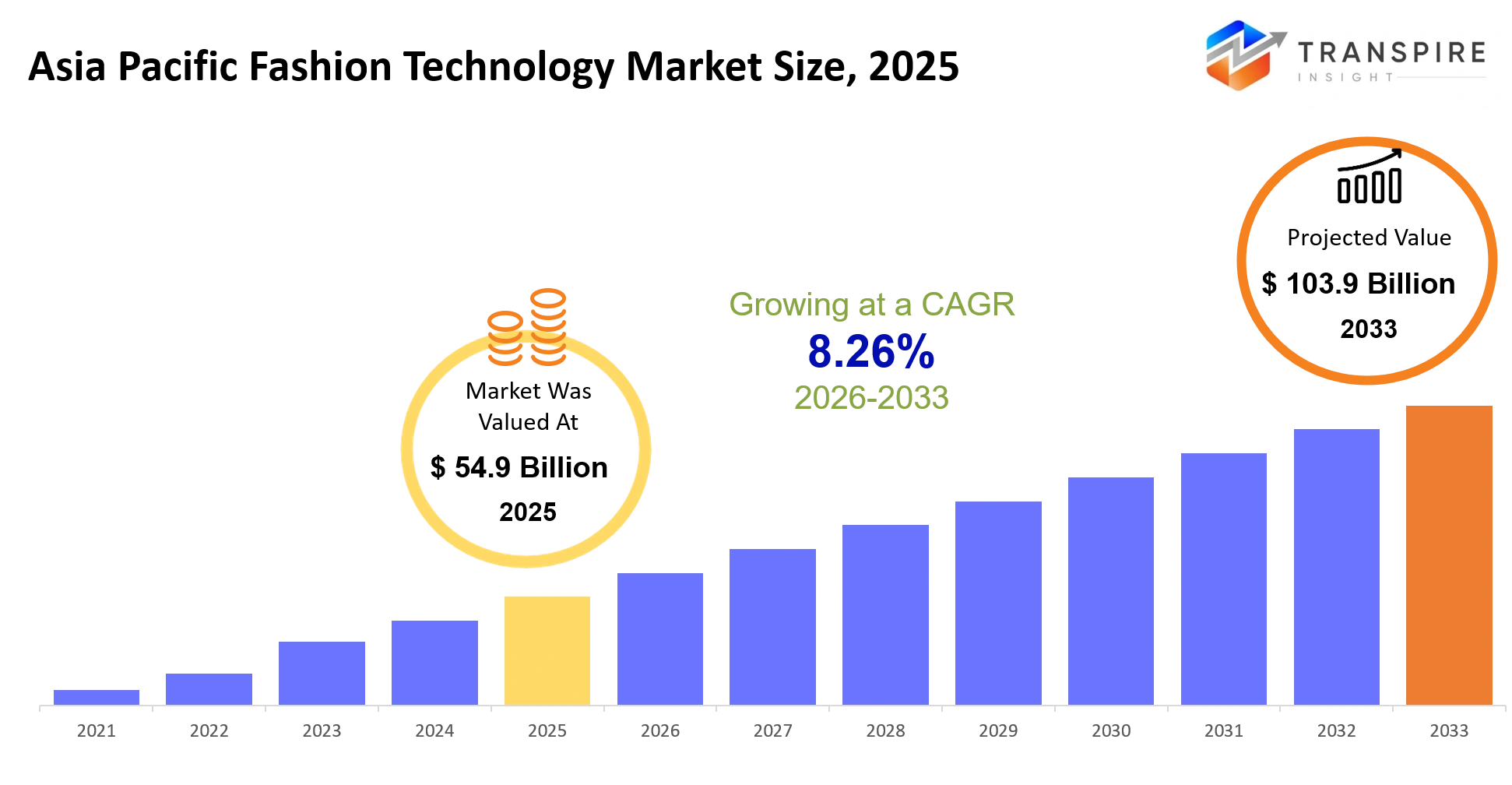
The Asia Pacific Fashion Technology Market was valued at USD 54.9 Billion in 2025. It is forecast to reach USD 103.9 Billion by 2033. That is a CAGR of 8.26% over the period.
The Asia Pacific Fashion Technology Market helps clothing companies like apparel brands and retailers and manufacturers. It makes the process of making clothes and selling them better. Fashion technology makes it possible for companies to make clothes faster, know what customers want and keep track of their stock. This is really important for fashion companies because people's tastes change quickly and they need to keep up.
In the five years the market has changed a lot. Companies used to design and sell clothes in a way but now they use computers and artificial intelligence to make decisions. The COVID-19 pandemic caused a lot of problems for clothing companies so they had to start using tools to work together and make plans.Now companies are trying to get clothes to customers and make sure they have the right clothes in stock. Brands are using intelligence and special design tools to make better predictions and save money. The Asia Pacific Fashion Technology Market is growing because companies are seeing benefits from using technology so they are spending more money on it to make their businesses better.
Key Market Insights
- The Asia Pacific Fashion Technology Market is changing the way clothes are designed, made and sold. This change is happening because of technologies like Artificial Intelligence (AI) 3D design software and online shopping platforms.
- In 2025 East Asia was part of the Asia Pacific Fashion Technology Market. This was because East Asia has fashion manufacturing and advanced retail technology.
- Southeast Asia will grow the fastest in the Asia Pacific Fashion Technology Market by 2030. This growth is happening because more people are shopping online and retailers are investing in technologies.
- Software for fashion design and product development was the part of the market in 2025. This was because more fashion brands are using prototyping solutions.
- Retail technology platforms were the biggest part of the market. These platforms help fashion brands connect with customers and sell to them through channels.
- powered analytics and predictive forecasting solutions will grow the fastest. These solutions help fashion brands make predictions and decisions.
- Product design and development remained the application segment. It made up a part of the Asia Pacific Fashion Technology Market revenue.
- Supply chain optimization grew the fastest. It helps fashion companies see what they have in stock and reduce waste.
- In 2025 apparel brands made up the part of the market. Online fashion retailers will grow the fastest by 2030.
- Companies like Adobe, CLO Virtual Fashion, Browzwear, Shopify, SAP and Oracle are working on products, partnerships and expanding to new areas. They want to be leaders in the Asia Pacific Fashion Technology Market.
- The Asia Pacific Fashion Technology Market is growing because fashion brands want to get products to market and have better control over their inventory. By using AI 3D design platforms and online retail technologies fashion brands can make predictions, reduce costs and make more money. This makes them want to spend more on technology across the fashion industry.
What are the Key Drivers, Restraints, and Opportunities in the Asia Pacific Fashion Technology Market?
Driver
The thing that is really driving the Asia Pacific Fashion Technology Market is that people are moving towards making products and using artificial intelligence to sell their products. Fashion brands have to deal with trends that come and go quickly and they have to launch their collections fast while also keeping an eye on their inventory costs. This became a problem after there were issues with the supply chain that showed how inefficient the old ways of designing and finding suppliers were. So now brands are using software that lets them design things in 3D, make samples and use special tools to predict what people will want to buy. These technologies help get products made faster, reduce the cost of making samples and make it easier to figure out what people will want to buy which means brands can make money and spend more on technology.
Restraint
The biggest problem is that the fashion industry in this region is over the place. A lot of manufacturers, suppliers and retailers are still using systems that do not work well with new digital platforms. To fix this they need to spend a lot of money training their workers and change the way they do things. This is not something that can be fixed quickly because it involves a lot of people and companies around the world. As a result it is taking a time to get new technologies in place people do not have access to all the information they need and it is taking a long time to see any returns on investment, which means the market is not growing as fast as it could be and companies are not making as much money as they could be.
Opportunity
There is a chance for growth, in the use of artificial intelligence that can generate new things and virtual commerce technologies. Now it is possible for fashion brands to use intelligence to help with design, make digital models of people and let people try on clothes virtually. As online shopping becomes more popular in Southeast Asia and other places, companies can use these technologies to make shopping more personal, get people to buy more and find ways to make money online. The Asia Pacific Fashion Technology Market and fashion brands can really benefit from this.
What Has the Impact of Artificial Intelligence Been on the Asia Pacific Fashion Technology Market?
The Asia Pacific Fashion Technology Market is really changing because of intelligence and advanced digital technologies. These technologies are helping people make decisions when it comes to designing clothes, selling them, making them and getting them to stores. Fashion brands are using intelligence to look at trends, suggest products, plan how many items to make and talk to customers.
There are tools that can look at what people like, what they do in the media and how well things have sold in the past to help make new products faster and with less work. Stores are also using systems to manage how many items they have in stock and these systems can change how often they order more based on how many people are buying things right now.The way companies guess what will happen in the future is getting better because of machine learning models. Companies use these models to figure out how things they will sell, how much to charge for them and if they will run out of stock before it happens. These models can look at a lot of information about products. How people buy them to make better guesses and not have too many extra items. This helps brands sell things without having to lower prices as much and make new products faster.
When it comes to making and selling things digital fashion platforms are helping get products to stores faster, use the items in stock better and spend less money on making samples by using virtual prototypes and 3D designs. However one big problem is that it costs a lot to use intelligence with the old technology systems that many companies still use. A lot of fashion companies still have systems that do not work well together so it is hard to use artificial intelligence in a big way because it takes a lot of time and money.
Key Market Trends
- Since 2020 major apparel brands have started using 3D design platforms of physical sampling, which has reduced development cycles by up to 50% with the help of fashion technology.
- AI-powered demand forecasting has become a tool for fashion brands moving from pilot projects to being used across the whole company between 2021 and 2025 improving inventory planning accuracy with fashion technology.
- Fashion retailers are moving away from merchandising models and towards real-time assortment optimization driven by consumer behavior analytics and fashion technology.
- Virtual try-on technologies have become popular after 2022 as brands sought online conversion rates and lower product return volumes with the help of fashion technology.
- Companies like Adobe, CLO Virtual Fashion and Browzwear are working with apparel manufacturers to make digital product creation faster and more efficient with fashion technology.
- Supply chain problems during 2020–2022 made brands invest heavily in end-to-end visibility platforms and predictive sourcing tools with fashion technology.
- Cloud-based fashion technology platforms are replacing on-premise systems enabling collaboration across geographically distributed design and sourcing teams with fashion technology.
- Sustainability targets have pushed manufacturers to reduce physical sample production, increasing adoption of twins and virtual prototyping solutions with fashion technology.
- Generative AI has become an area of investment in 2024 and 2025 supporting automated design concepts and personalized shopping experiences with fashion technology.
- Competitive differentiation depends on data-driven decision making with leading brands using machine learning to optimize pricing and inventory allocation, with fashion technology and Asia Pacific Fashion Technology Market.
Asia Pacific Fashion Technology Market Segmentation
By Technology
The fashion industry uses Artificial Intelligence and Analytics to make decisions. This helps with designing products, buying and selling merchandise planning inventory and talking to customers. Data helps fashion companies make guesses about what will sell, set prices and get rid of extra products. More and more companies are using technology, which means they need better analytics tools.
Augmented Reality and Virtual Reality make shopping fun. You can try on clothes virtually, see products in 3D and shop in an interactive way. Smart clothes and wearables combine fashion and technology so you can track your health and activities. Designing clothes in 3D reduces the need for samples and speeds up production.Blockchain helps us know where products come from and if they are real. Internet of Things technology helps track inventory, shipping and sales in time. New technologies keep coming out to help the fashion industry innovate work efficiently and collaborate online.
By Application
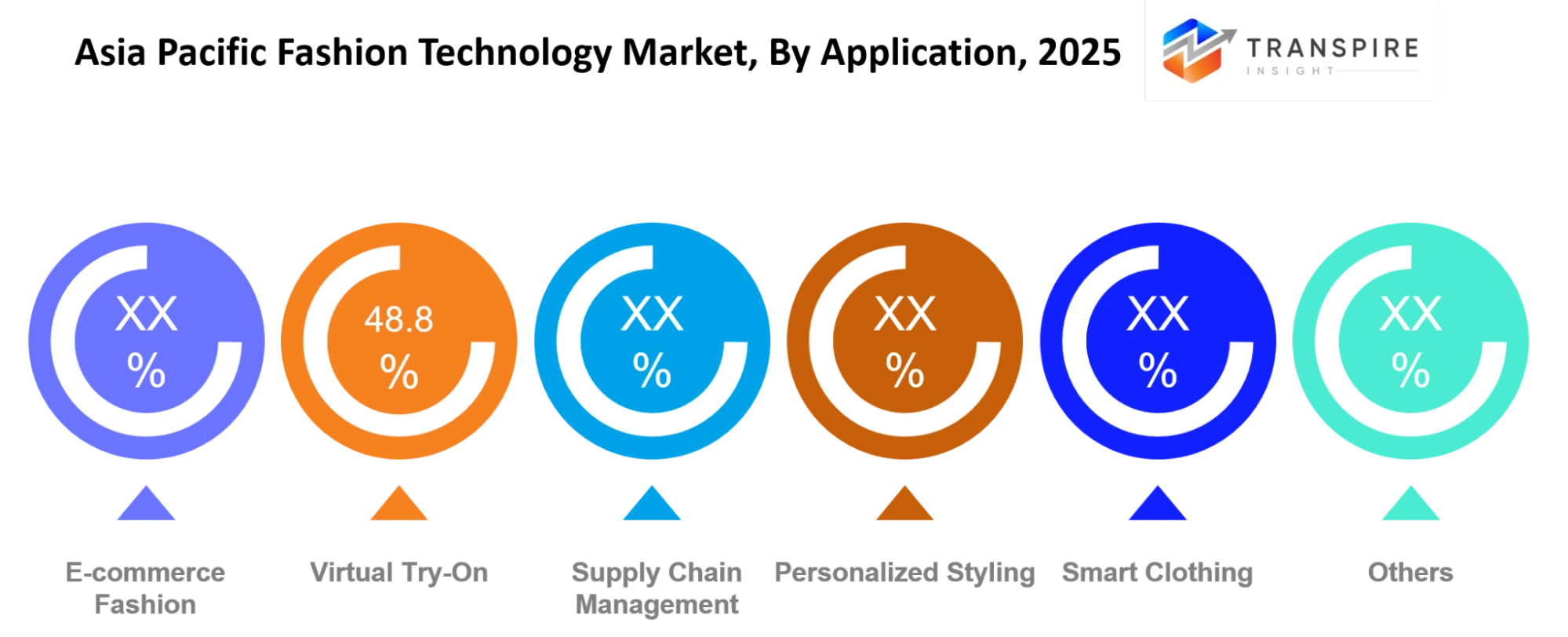
Online shopping is a part of the fashion industry. Digital platforms help people buy clothes and advanced technology makes shopping easier and more personalized. More people are shopping online which creates opportunities for fashion solutions.You can try on clothes before buying them which helps you feel more confident and reduces returns. Supply chain management helps companies track their products from start to finish. This means they can respond faster and work efficiently.Some platforms use customer data and Artificial Intelligence to recommend clothes that fit your style. Smart clothes have sensors and digital features that make them more useful. New applications are coming out as more fashion companies use technology.
By Deployment
Many fashion companies use cloud technology because it is flexible and does not require a lot of infrastructure. Cloud platforms help companies work together to store data, analyze information and access software from anywhere. As companies do online they are more likely to use cloud technology.Some companies prefer to keep their technology in house so they can control their information and systems. This is especially true for companies that need to keep their data safe. They like to have control over their systems and make sure they work well.Hybrid deployment combines the benefits of technology with the control of in-house systems. This creates a technology environment that is flexible and secure. Other deployment methods meet the needs of different companies.
By End User
Fashion brands are users of technology. They invest in product development, digital merchandising and customer engagement. Technology helps them work efficiently, launch new products faster and compete in the market. Digital tools help them make decisions.Retailers use technology to manage inventory, make shopping more fun and sell products online and in stores. Designers use tools to design clothes, create prototypes and analyze data. This helps them reduce costs and work productively.
Consumers benefit from recommendations, virtual shopping and features that help them discover new products. Digital innovations make shopping more convenient and engaging. Other users, like manufacturers and suppliers also use technology to meet their needs.
What are the Key Use Cases Driving the Asia Pacific Fashion Technology Market?
The main reason fashion brands adopt technology solutions is for product development and e-commerce optimization.Fashion brands use AI-powered analytics, 3D design software and cloud-based platforms to make design cycles shorter improve inventory planning and respond faster to changing consumer trends with fashion technology solutions.This use of fashion technology solutions directly affects sales performance, operational efficiency and product launch timelines which's why it is in high demand.Some fashion brands are also using try-on solutions and personalized styling platforms.These fashion technology applications help improve customer engagement with fashion products increase conversion rates and reduce product returns for fashion businesses.Retailers are using augmented reality tools and recommendation engines to create shopping experiences and strengthen customer retention with fashion technology.New use cases for fashion technology include AI-assisted fashion design and smart clothing with connected sensors.Fashion companies are exploring AI-generated design concepts to accelerate processes and reduce development costs with fashion technology solutions.Fashion technology also has potential in apparel applications as technology advances create opportunities for connected garments that combine fashion, functionality and real-time data capabilities, with fashion technology.
|
Report Metrics |
Details |
|
Market size value in 2025 |
USD 54.9 Billion |
|
Market size value in 2026 |
USD 59.6 Billion |
|
Revenue forecast in 2033 |
USD 103.9 Billion |
|
Growth rate |
CAGR of 8.26% from 2026 to 2033 |
|
Base year |
2025 |
|
Historical data |
2021 - 2024 |
|
Forecast period |
2026 - 2033 |
|
Report coverage |
Revenue forecast, competitive landscape, growth factors, and trends |
|
Regional scope |
Asia Pacific |
|
Key company profiled |
Adobe, CLO Virtual Fashion, Browzwear, Shopify, SAP, Oracle, Meta, Google, Microsoft, Zara, H&M, Nike, Adidas, Stitch Fix, Farfetch. |
|
Customization scope |
Free report customization (country, regional & segment scope). Avail customized purchase options to meet your exact research needs. |
|
Report Segmentation |
By Technology (AI & Analytics, AR/VR, Smart Wearables, 3D Design Software, Blockchain, IoT, Others); By Application (E-commerce Fashion, Virtual Try-On, Supply Chain Management, Personalized Styling, Smart Clothing, Others); By Deployment (Cloud, On-Premise, Hybrid, Others); By End User (Fashion Brands, Retailers, Designers, Consumers, Others). |
Which Regions are Driving the Asia Pacific Fashion Technology Market Growth?
The Asia Pacific Fashion Technology Market is led by East Asia because it has a lot of clothing factories, internet and big fashion stores. Big fashion brands in East Asia use intelligence, special design software and data analysis to make their design and production processes better. They are also spending a lot of money on automation and digital transformation to support the use of technology in the fashion business. East Asia has a system of technology companies, fashion companies, online stores and manufacturing partners that helps it stay ahead and keep innovating.
Oceania is a contributor to the market but it is different from East Asia. The market in Oceania is growing because of its retail stores, a lot of people shopping online and fashion retailers spending money on technology. Businesses in Oceania focus on making customers happy keeping track of inventory and making sure they can sell things online and in stores. This approach creates a demand for fashion technology and helps the market stay stable in the long term.
Southeast Asia is going to grow fast because more people are shopping online. The use of smartphones and investment in technology are changing the way fashion businesses work. Fashion brands in Southeast Asia are using cloud-based solutions, shopping and artificial intelligence to attract new customers. This is an opportunity for technology companies, platform providers and investors who want to be part of the growing digital fashion market in Southeast Asia between 2026 and 2033. The Asia Pacific Fashion Technology Market is really exciting. Southeast Asia is going to be a big part of it. The fashion technology market in Southeast Asia is expected to be really strong. The Asia Pacific Fashion Technology Market is going to keep growing.
Who are the Key Players in the Asia Pacific Fashion Technology Market and How Do They Compete?
The Asia Pacific Fashion Technology Market is pretty competitive. Companies in this market compete on how good their technology is, how well their platforms work together and how efficient their digital workflows are. It is not about the price. Big software companies are competing with companies that specialize in fashion technology. These smaller companies are really good at solving problems that fashion companies have when it comes to design, selling products and running their stores.Companies in this market are trying to stand out by using intelligence, making 3D pictures connecting to the cloud and analyzing data. The market is always changing because fashion companies want to make products faster and have control over their supply chains.
Adobe is a company that focuses on making technology especially for creative design software managing digital assets and making content using artificial intelligence. They make all these different parts work together which is really helpful for fashion companies that want a digital system. CLO Virtual Fashion is different because they have advanced technology that lets designers make and change products virtually before they are made in real life. Browzwear does something but they focus more on helping designers, manufacturers and suppliers work together online.
Shopify is a company that competes by having a commerce system that helps fashion retailers sell products online, talk to customers and manage all their sales channels from one place. SAP and Oracle are companies that make software for businesses and they help fashion companies with things like planning inventory, tracking their supply chains, analyzing data and managing their businesses. These companies are always growing by working with companies making their cloud services better and investing in artificial intelligence to help fashion businesses work more efficiently and change to digital systems faster. The Asia Pacific Fashion Technology Market is really important for these companies. Fashion technology is a part of this market. Companies, like Adobe, CLO Virtual Fashion and Shopify are all part of the Asia Pacific Fashion Technology Market.
Company List
- Shopify
- Oracle
- Meta
- Microsoft
- Zara
- H&M
- Nike
- Adidas
- Stitch Fix
- Farfetch
Recent Development News
In March 2026, CLO Virtual Fashion entered a partnership with SHIMA SEIKI through the CLO Ecosystem Partnership Program (EPP). The collaboration connects CLO's digital garment design technology with SHIMA SEIKI's knitwear production ecosystem, creating a seamless digital-to-production workflow that improves efficiency for fashion manufacturers and designers.
Source: https://www.theinterline.com
In April 2026, CLO Virtual Fashion launched a global 3D design contest with Vivienne Westwood, powered by Epic Games' MetaHuman and Unreal Engine technologies. The initiative promotes advanced digital garment creation and strengthens adoption of 3D fashion design tools across the global fashion technology ecosystem.
Source: https://www.prnewswire.com
In March 2026, Adobe announced a strategic partnership with NVIDIA to develop next-generation Firefly AI models and cloud-based creative workflows. The collaboration expands AI-powered content creation, digital design, and 3D visualization capabilities that support fashion brands pursuing faster product development and personalized customer experiences.
Source: https://news.adobe.com
What Strategic Insights Define the Future of the Asia Pacific Fashion Technology Market?
The Asia Pacific Fashion Technology Market is moving toward a fully digital and data-driven operating model where artificial intelligence, 3D product development, cloud collaboration, and predictive analytics become integrated across the entire fashion value chain. The underlying force driving this transition is the need to reduce product development timelines while improving inventory precision and customer personalization. Over the next five to seven years, competitive advantage will increasingly depend on how effectively companies convert data into faster commercial decisions rather than on manufacturing scale alone.
A less visible risk lies in market concentration around a limited number of software ecosystems and cloud platforms. As brands become more dependent on a small group of technology providers, switching costs, integration complexity, and vendor dependency could create operational and financial challenges.
One emerging opportunity is the use of generative AI for digital product creation and hyper-personalized fashion experiences, particularly in rapidly digitizing Southeast Asian retail markets. Companies and investors should prioritize interoperable platforms and strategic partnerships that connect design, sourcing, manufacturing, and retail functions, creating scalable digital ecosystems capable of supporting long-term growth and innovation.
Asia Pacific Fashion Technology Market Report Segmentation
By Technology
- AI & Analytics
- AR/VR
- Smart Wearables
- 3D Design Software
- Blockchain
- IoT
- Others
By Application
- E-commerce Fashion
- Virtual Try-On
- Supply Chain Management
- Personalized Styling
- Smart Clothing
- Others
By Deployment
- Cloud
- On-Premise
- Hybrid
- Others
By End User
- Fashion Brands
- Retailers
- Designers
- Consumers
- Others
Frequently Asked Questions
Find quick answers to common questions.
The expected Asia Pacific Fashion Technology Market size for the market will be USD 103.9 Billion in 2033.
Key segments for the Asia Pacific Fashion Technology Market are By Technology (AI & Analytics, AR/VR, Smart Wearables, 3D Design Software, Blockchain, IoT, Others); By Application (E-commerce Fashion, Virtual Try-On, Supply Chain Management, Personalized Styling, Smart Clothing, Others); By Deployment (Cloud, On-Premise, Hybrid, Others); By End User (Fashion Brands, Retailers, Designers, Consumers, Others).
Major Asia Pacific Fashion Technology Market players are Adobe, CLO Virtual Fashion, Browzwear, Shopify, SAP, Oracle, Meta, Google, Microsoft, Zara, H&M, Nike, Adidas, Stitch Fix, Farfetch.
The Asia Pacific Fashion Technology Market size is USD 54.9 Billion in 2025.
The Asia Pacific Fashion Technology Market CAGR is 8.26% from 2026 to 2033.
- Adobe
- CLO Virtual Fashion
- Browzwear
- Shopify
- SAP
- Oracle
- Meta
- Microsoft
- Zara
- H&M
- Nike
- Adidas
- Stitch Fix
- Farfetch
About the Authors

Mayur Shinde
I am Mayur Shinde, a Senior Research Analyst at Transpire Insight, specializing in the Automotive & Transportation and Information & Communication Technology (ICT) Industry. My work focuses on analyzing emerging market trends, technological advancements, competitive landscapes, and industry developments to deliver accurate, data-driven insights. I am passionate about transforming complex market information into clear, actionable content that helps businesses, professionals, and decision-makers stay informed and make confident strategic decisions.

Chakradhar Khansole
Chakradhar serves as the Research Director at Transpire Insight, bringing over 8 years of experience in technology, innovation, and strategic market intelligence. He specializes in transforming complex market data into actionable business insights that enable organizations to make informed, growth-oriented decisions. Recognized for his strategic vision and analytical expertise, Chakradhar leads high-impact research initiatives, delivering comprehensive market assessments, competitive intelligence, and forward-looking industry analysis.
Recently Published Reports
-
Apr 2026
3D Optical Profiler Market
3D Optical Profiler Market Size, Share & Analysis Report By Type (Desktop 3D Optical Profiler, and Portable 3D Optical Profiler), By Technology (Confocal Technology, and White Light Interference), By End-Use Industry (Manufacturing, Research Institutions, Automotive, Aerospace and Defense, Medical Devices, and Other), and Geography (North America, Europe, Asia-Pacific, Middle East and Africa, South and Central America), 2021 - 2031
-
Apr 2026
Depth Sensor Market
Depth Sensor Market Size, Share & Analysis Report By Type (Infrared Depth Sensors, Time-of-Flight (ToF) Sensors, Stereo Vision Sensors, Structured Light Sensors, Ultrasonic Depth Sensors), By Application (Automotive, Robotics, Gaming, Consumer Electronics, Industrial Automation, Healthcare, Security & Surveillance, Others), By End Users (Automotive Manufacturers, Consumer Electronics Companies, Healthcare Providers, Industrial Companies, Security Agencies, Gaming Companies, Robotics Companies, Others), and Geography (North America, Europe, Asia-Pacific, Middle East and Africa, South and Central America), 2021 – 2031
-
Apr 2026
Digital Manufacturing Market
Digital Manufacturing Market Size, Share & Analysis Report By Component (Hardware, Software, and Services), By Technology (Robotics, 3D Printing, Internet of Things (IoT), and Others), By Application (Automotive and Transportation, Aerospace and Defense, Consumer Electronics, Industrial Machinery, and Others), By Process Type (Computer-Based Designing, Computer-Based Simulation, Computer 3D Visualization, Analytics, and Others), and Geography (North America, Europe, Asia-Pacific, Middle East and Africa, South and Central America), 2021 – 2031
-
Apr 2026
Digital Visa Services Market
Digital Visa Services Market Size, Share & Analysis Report By Type (Individual Travelers, Group Travelers), By Application (Tourism, Business Travel, Others), and Geography (North America, Europe, Asia-Pacific, Middle East and Africa, South and Central America), 2021 – 2031