
Japan Fashion Technology Market Size & Forecast:
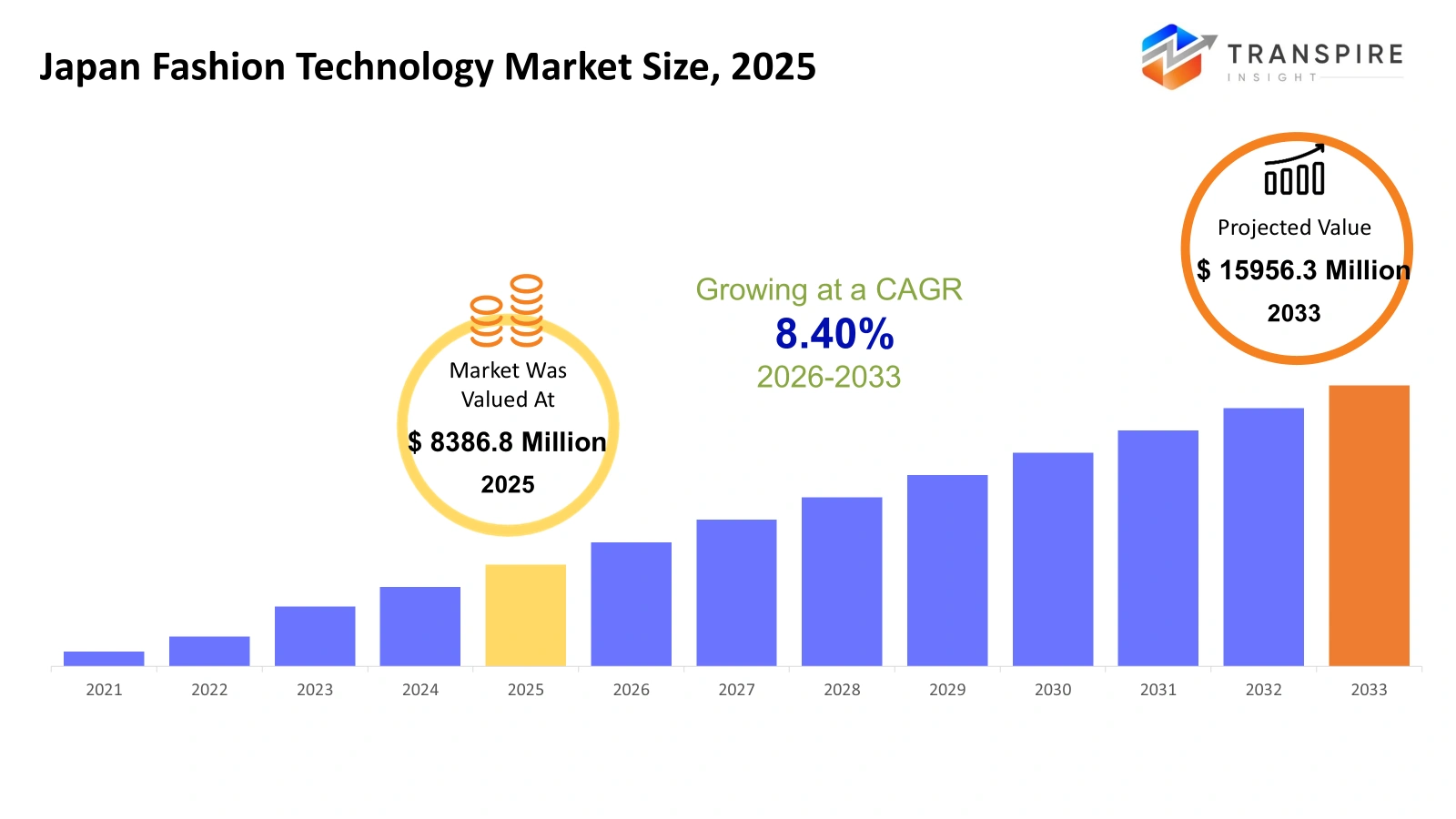
- Japan Fashion Technology Market Size 2025: USD 8386.8 Million
- Japan Fashion Technology Market Size 2033: USD 15956.3 Million
- Japan Fashion Technology Market CAGR: 8.40%
- Japan Fashion Technology Market Segments:By Technology Type (Wearable Technology, Smart Textiles, AR/VR in Fashion, AI in Fashion), By Application (Apparel Retail, Fashion Design, Supply Chain Management).
To learn more about this report,  Download Free Sample Report
Japan Fashion Technology Market Summary:
The Japan Fashion Technology market size is estimated at USD 8386.8 million in 2025 and is anticipated to reach USD 15956.3 million by 2033, growing at a CAGR of 8.40% from 2026 to 2033. The fashion technology industry in Japan is developing rapidly through its combination of traditional practices and modern technological advancements. The brand uses AI-based design systems together with intelligent fabric systems and digital fitting technologies to create a new way for customers to interact with their fashion products. Consumer preferences have shifted, which has driven the development of technology that focuses on sustainability through its use of environmentally safe materials and its implementation of digital supply chain systems. The joint projects between technology companies and fashion brands create new innovative ideas. Japan has emerged as a world leader in fashion technology because its market now operates through personalised solutions, efficient processes, and sustainable practices.
Key Market Trends & Insights:
- Designers are increasingly using AI tools to predict fashion trends while they develop new collections. The process from idea creation to product availability is completed faster because this solution enhances creative work.
- Wearers of innovative fabrics with temperature control and health monitoring capabilities are showing increasing interest in these textiles. These fabrics enable users to maintain their daily activities while obtaining useful traits.
- Augmented reality is transforming online shopping by allowing customers to “try before they buy". This method helps customers choose products better and leads to fewer product returns.
- Companies improve their supply chain operations through digital tools which enhance their operational visibility and productivity. The process helps companies to minimise waste while they meet customer demands faster.
- Fashion designers combine their art with technology through the development of smartwatches and smart clothing. Through product design improvements and their connection to everyday life, the products serve better user needs.
- Brands use customer data to create personal recommendations and experiences for their clients. The approach establishes stronger ties between brands and their customers while it boosts customer loyalty to the brand.
- The fashion industry is experiencing innovative advancements through partnerships between technology firms and fashion designers. The joint work between these two parties creates new concepts which change the methods used to design and experience fashion.
Japan Fashion Technology Market Segmentation
By Technology Type
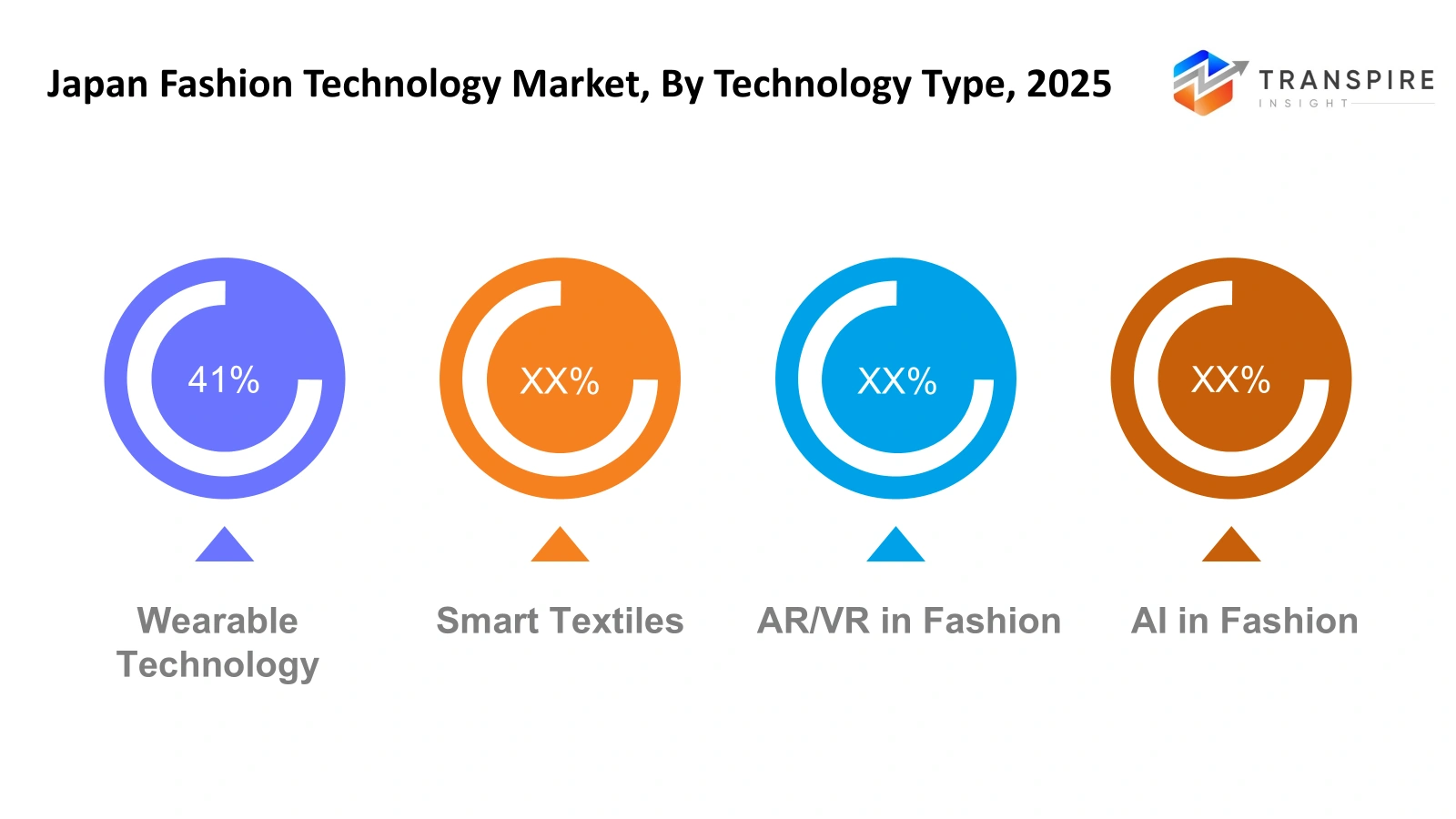
- Wearable Technology: Japan’s fashion industry uses wearable technology to create products that combine fashionable design and practical functions. Consumers now prefer smartwatches and fitness-integrated clothing because these products deliver health-tracking functionalities and convenience. Japanese brands create fashion-forward tech products through their commitment to producing sleek designs, which enable users to wear tech-enabled items as fashion accessories instead of clunky devices.
- Smart Textiles: Smart textiles introduce new fabric possibilities to Japan through their ability to manage body temperature and handle moisture and perform biometric body measurements. The advanced materials are becoming popular among people who want both casual clothing and athletic performance gear. Technology enhances clothing through its implementations, while designers maintain aesthetic appeal through their fashion designs.
- AR/VR in Fashion: Augmented and virtual reality change Japanese fashion consumer interactions with their clothes. Virtual try-ons and immersive shopping experiences are making online purchases much less boring and unreliable at the present time. Retailers use these tools to create interactive customer experiences which connect their digital and physical stores.
- AI in Fashion: Artificial intelligence is essential for developing Japan's fashion industry. AI assists brands by predicting future fashion trends and streamlining their inventory management processes. Designers use AI to generate design concepts and create physical products, which enable them to maintain their artistic vision while working in a rapidly evolving market.
To learn more about this report, Download Free Sample Report
By Application
- Apparel Retail: Fashion technology improves customer shopping experiences through both digital and physical store environments in apparel retail. Retailers now implement smart mirrors, along with personalised product suggestions and frictionless payment solutions. Japanese retailers create shopping experiences which combine customer convenience with customer engagement to deliver delightful shopping experiences that customers will remember.
- Fashion Design: Japanese designers use technology to explore new creative possibilities that weren't accessible before. Digital tools enable teams to create prototypes at higher speeds and create 3D models while working together in real time. Designers now have more time to create their work because the new process saves time and material waste while supporting sustainable practices from today's environmental requirements.
- Supply Chain Management: Fashion technology establishes improved operational efficiency together with enhanced visibility for supply chain operations throughout Japan. Brands use data analytics together with automated systems to monitor their inventory levels while making predictions about future demand and eliminating operational delays. The system improvements lead to increased resource efficiency with reduced expenses while creating an agile system which can swiftly adjust to new market developments.
Country Insights
The fashion technology market in Japan demonstrates how the nation maintains its traditional artistic heritage while developing its advanced technological solutions. Japanese customers display a strong willingness to adopt new technologies, which motivates businesses to test their AI-powered design systems and virtual fitting solutions and intelligent textile materials. The urban area of Tokyo serves as a fashion trend centre, which now shows the rapid development of digital clothing experiences and technology-based retail spaces. People in the Japanese society value high-quality products that follow a minimalist design approach and focus on precise details, which influences the fashion industry to adopt technological solutions.
Companies are currently increasing their focus on sustainability through tests of environmentally friendly materials and production techniques which use resources in an efficient manner. Local brands most frequently collaborate with technology companies to create products which enhance both their operational capabilities and their visual appeal. The wearable technology market in Japan develops new products that meet the needs of the aging population through comfortable health monitoring devices. The market develops through three main forces, which include innovative products and customer knowledge and the cultural appreciation of traditional and contemporary design elements.
Recent Development News
AI Meets Traditional Kimono Weaving in Kyoto: Japan is blending heritage with innovation as artisans adopt AI tools to modernise centuries-old textile design. This reflects how technology is preserving cultural fashion while adding new creative dimensions.
Air-Conditioned Clothing Gains Global Attention: Originally developed in Japan, fan-powered garments are evolving into a fashion-tech trend. These designs combine comfort and innovation, especially for extreme climates.
|
Report Metrics |
Details |
|
Market size value in 2025 |
USD 8386.8 Million |
|
Market size value in 2026 |
USD 9074.7 Million |
|
Revenue forecast in 2033 |
USD 15956.3 Million |
|
Growth rate |
CAGR of 8.40% from 2026 to 2033 |
|
Base year |
2025 |
|
Historical data |
2021 – 2024 |
|
Forecast period |
2026 – 2033 |
|
Report coverage |
Revenue forecast, competitive landscape, growth factors, and trends |
|
Country scope |
Japan |
|
Key company profiled |
Nike Inc., Adidas AG, Under Armour Inc., Levi Strauss & Co., Ralph Lauren Corporation, Samsung Electronics Co. Ltd., Apple Inc., Google LLC, Huawei Technologies Co. Ltd., Sony Group Corporation, Garmin Ltd., Fitbit Inc., HTC Corporation, Microsoft Corporation, Xiaomi Corporation. |
|
Customization scope |
Free report customization (country, regional & segment scope). Avail customized purchase options to meet your exact research needs. |
|
Report Segmentation |
By Technology Type (Wearable Technology, Smart Textiles, AR/VR in Fashion, AI in Fashion), By Application (Apparel Retail, Fashion Design, Supply Chain Management). |
Key Japan Fashion Technology Company Insights
The fashion technology market in Japan operates through a combination of established fashion brands and emerging technology-based companies. The main companies are developing artificial intelligence and intelligent textile and virtual shopping technologies to maintain their market position in rapidly changing business environments. Many companies are implementing sustainable practices by using environmentally friendly materials and digital technologies throughout their business operations. The fashion industry is witnessing a rise in partnerships between fashion brands and technology companies which create innovative concepts and distinct shopping experiences for customers. Japanese companies focus on three key areas: product development, maintaining high standards, and customising services to satisfy emerging customer needs.
Company List
- Nike Inc.
- Adidas AG
- Under Armour Inc.
- Levi Strauss & Co.
- Ralph Lauren Corporation
- Samsung Electronics Co. Ltd.
- Apple Inc.
- Google LLC
- Huawei Technologies Co. Ltd.
- Sony Group Corporation
- Garmin Ltd.
- Fitbit Inc.
- HTC Corporation
- Microsoft Corporation
- Xiaomi Corporation
Japan Fashion Technology Market Report Segmentation
By Technology Type
- Wearable Technology
- Smart Textiles
- AR/VR in Fashion
- AI in Fashion
By Application
- Apparel Retail
- Fashion Design
- Supply Chain Management
Frequently Asked Questions
Find quick answers to common questions.
The approximate Japan Fashion Technology Market size for the Market will be USD 15956.3 million in 2033.
The key segments of the Japan Fashion Technology Market are By Technology Type (Wearable Technology, Smart Textiles, AR/VR in Fashion, AI in Fashion), By Application (Apparel Retail, Fashion Design, Supply Chain Management).
Major players in the Japan Fashion Technology Market are Nike Inc., Adidas AG, Under Armour Inc., Levi Strauss & Co., Ralph Lauren Corporation, Samsung Electronics Co. Ltd., Apple Inc., Google LLC, Huawei Technologies Co. Ltd., Sony Group Corporation, Garmin Ltd., Fitbit Inc., HTC Corporation, Microsoft Corporation, Xiaomi Corporation.
The current Market size of the Japan Fashion Technology Market is USD 8386.8 million in 2025.
The Japan Fashion Technology Market CAGR is 8.40%.
- Nike Inc.
- Adidas AG
- Under Armour Inc.
- Levi Strauss & Co.
- Ralph Lauren Corporation
- Samsung Electronics Co. Ltd.
- Apple Inc.
- Google LLC
- Huawei Technologies Co. Ltd.
- Sony Group Corporation
- Garmin Ltd.
- Fitbit Inc.
- HTC Corporation
- Microsoft Corporation
- Xiaomi Corporation
Recently Published Reports
-
Apr 2026
Bottled Water Market
Bottled Water Market Size, Share & Analysis Report By Product Type (Still Bottled Water, Carbonated Bottled Water, Functional Bottled Water, and Others), By Packaging (PET, Cans, and Others), By Sales Channel (Supermarkets/Hypermarkets, Convenience Stores/Drug Stores, Grocery Stores/Club Stores, Foodservice, and Others) and Geography (North America, Europe, Asia-Pacific, Middle East and Africa, South and Central America), 2021 - 2032
-
Apr 2026
Color Cosmetic Packaging Market
Color Cosmetic Packaging Market Size, Share & Analysis Report By Application (Mascara Packaging, Liquid Packaging, and Liquid Face), By Type (Tubes & Bottles, Pens & Markers, Compacts & Containers, and Droppers & Pumps), and Geography (North America, Europe, Asia-Pacific, Middle East and Africa, South and Central America), 2021 - 2031
-
Apr 2026
External Microphone For Camera Market
External Microphone For Camera Market Size, Share & Analysis Report By Type (Shotgun Microphone, Lavalier Microphone, and Others), By Application (Digital Camera, Professional Video Camera, and Others), and Geography (North America, Europe, Asia-Pacific, Middle East and Africa, South and Central America), 2021 - 2031
-
Apr 2026
Foot Orthotic Insoles Market
Foot Orthotic Insoles Market Size, Share & Analysis Report By Type (Pre-fabricated, and Custom-made), By Material (Thermoplastic, Composite Carbon Fiber, and Others), By Distribution Channel (Drug Stores, Hospitals & Clinics, and Others), and Geography (North America, Europe, Asia-Pacific, Middle East and Africa, South and Central America), 2021 - 2031