
Asia Pacific Bath Bomb Market Size & Forecast:
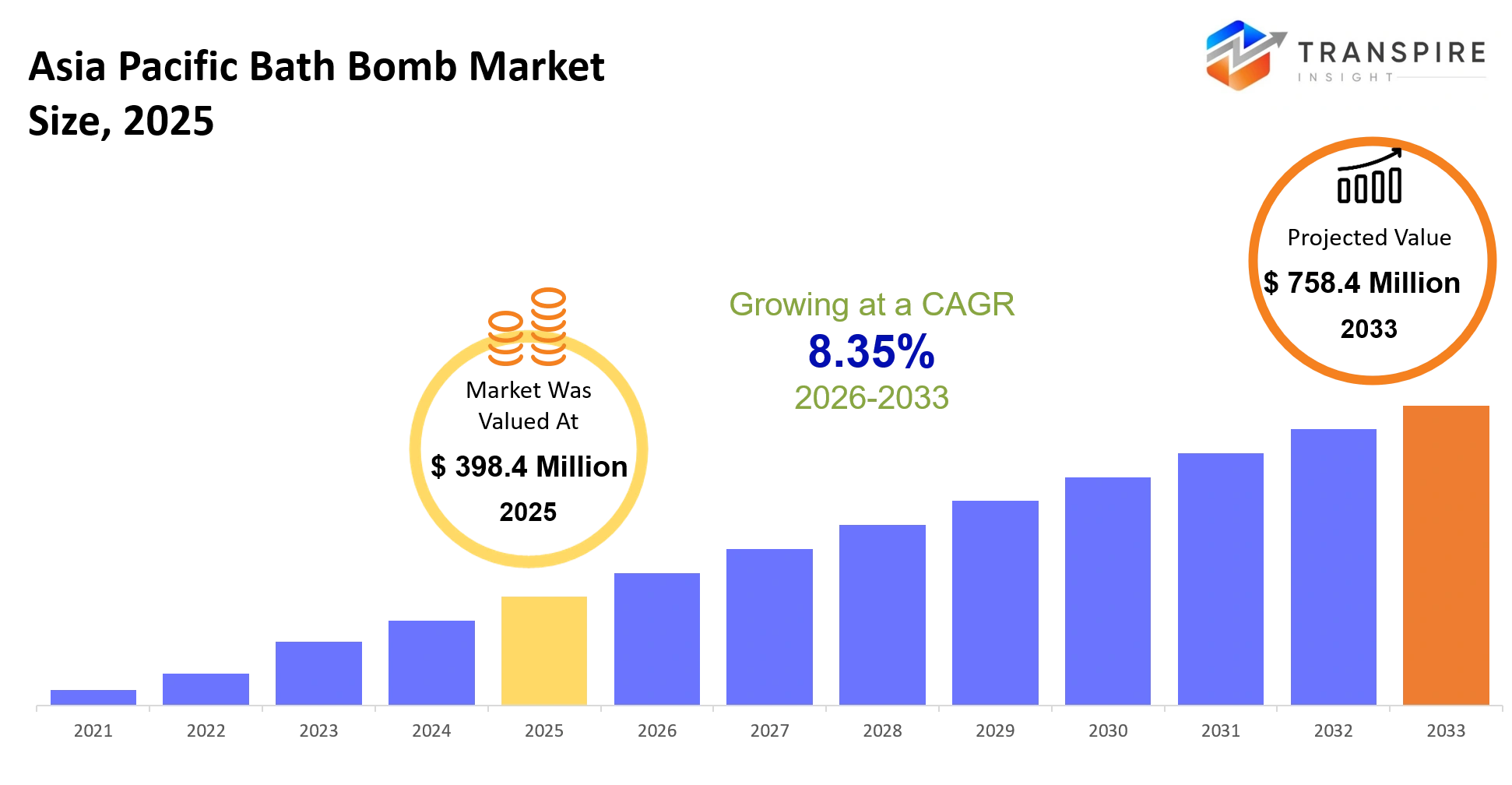
- Asia Pacific Bath Bomb Market Size 2025: USD 398.4 Million
- Asia Pacific Bath Bomb Market Size 2033: USD 758.4 Million
- Asia Pacific Bath Bomb Market CAGR: 8.35%
- Asia Pacific Bath Bomb Market Segments: By Product Type (Moisturizing Bath Bombs, Aromatherapy Bath Bombs, Organic Bath Bombs, CBD Bath Bombs, Glitter Bath Bombs, Vegan Bath Bombs, Luxury Bath Bombs, Others); By Fragrance (Lavender, Citrus, Rose, Mint, Vanilla, Ocean Breeze, Herbal Blends, Others); By Distribution Channel (Online Retail, Specialty Stores, Supermarkets, Pharmacies, Beauty Stores, Gift Shops, Wellness Stores, Others); By End User (Women, Men, Teenagers, Wellness Enthusiasts, Spa Users, Gift Buyers, Beauty Consumers, Others)
Asia Pacific Bath Bomb Market Summary
The Asia Pacific Bath Bomb Market was valued at USD 398.4 Million in 2025. It is forecast to reach USD 758.4 Million by 2033. That is a CAGR of 8.35% over the period.
The bath bomb has transformed from a novelty well-being product to a value-adding self-care product that has the ability to turn a plain bath into a holistic sensory experience via fragrance, skin conditioning components, and aromatherapy benefits. Within Asia Pacific, it offers consumers a way to ease stress and obtain value premium personal care without significant cost to services such as the spa. A structural transformation toward natural ingredients, vegan formulations and visually appealing products effective for social commerce has reshaped the market in recent years. This transformation was largely induced by the pandemic, which saw spending shift away from salons and trips toward self care in the home. The move away from simple personal hygiene towards a lifestyle ritual and the desire for a more holistic experience has led brands to increase product varieties and to introduce premium offers with elevated average selling prices and new income sources in online retail, specialist stores and gifts.
Key Market Insights
- Asia-Pacific Bath Bomb Market is dominated by the East Asia region accounting for nearly 45% of the market share backed by considerable beauty expenditure, developed retail infrastructure.
- South Asia is expected to witness the fastest growth in its regional market during the forecast period attributed to significant rise in the pace of urbanization and developing digital commerce ecosystem.
- Japan, South Korea, China and India represent the largest revenue contributing countries during the forecast period owing to innovation in wellness and personal care products.
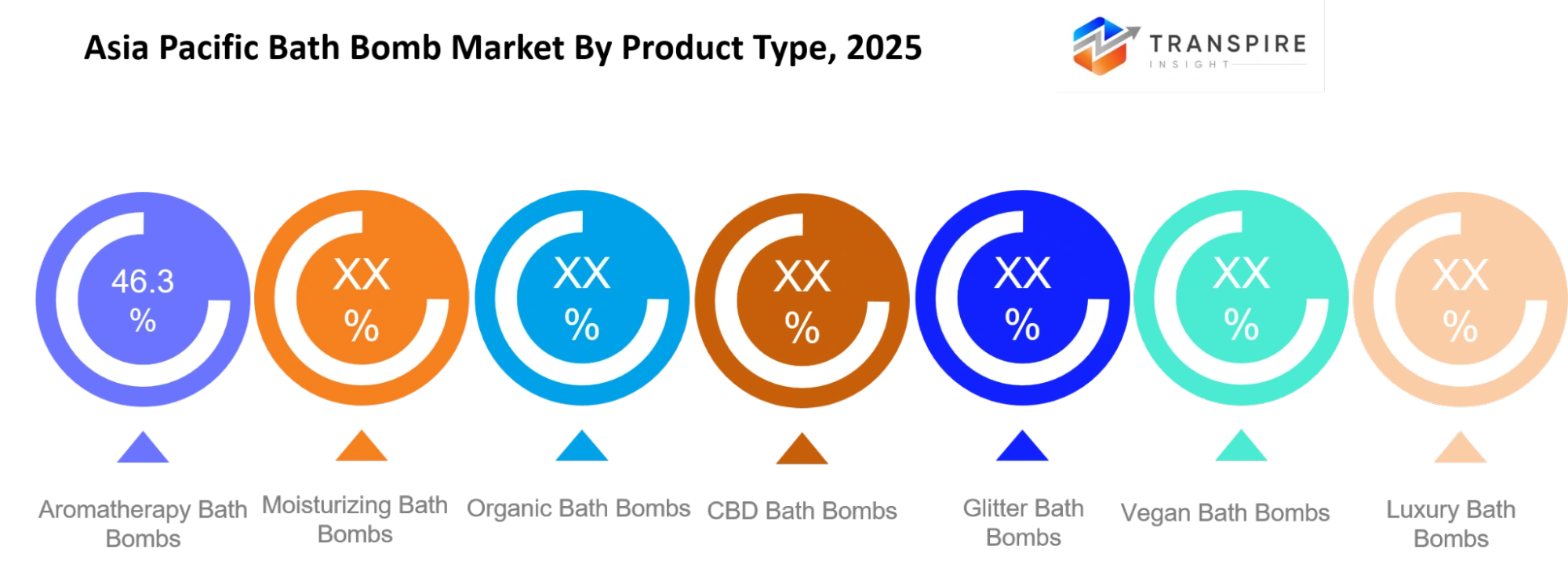
- Organic and Natural bath bombs hold the largest share with over 40% share owing to demand for natural formulations.
- Fragrance based bath bombs is the second largest segment due to presence in every price segment and wide availability.
- Customized and luxury bath bombs are expected to record fastest growth over the years to 2030 owing to increasing premium spending in the wellness sector.
- Personal usage accounts for majority share with nearly 70% owing to bath products being a daily wellness regimen.
- Gifting and Specialty is anticipated to be the fastest growing application segment in view of innovative premium packaging and seasonal products launched into the market.
- Females account for the majority end user segment with over 60% market share due to established skin care and wellness buying patterns.
- Men are expected to witness a growing category segment in view of the increasing spending over grooming and self care in the region.
What are the Key Drivers, Restraints, and Opportunities in the Asia Pacific Bath Bomb Market?
The single biggest market driver is the shift from bathing to beauty rituals. Increased interest after the pandemic saw discretionary spending re-prioritized away from trips and salon services, and toward home pampering solutions. Brands followed suit, developing bath bombs infused with natural essential oils, botanical extracts and skin conditioning ingredients that offer aromatherapy and skincare benefits. This strategy is resulting in higher average selling prices and higher purchase frequency, allowing manufacturers to capitalize on an additional revenue stream and increase sales across online, specialty, and prestige retailers.
The single biggest restraint is the lack of a unified supply chain for natural ingredients and specialty fragrances. Natural ingredients and specialty colorants can be vulnerable to volatile agricultural supplies and a lack of access to international supplies. This constraint is structural as there is an investment period of years required to cycle through growing and crop diversification plans. The end result is that costs are higher, price points are pressed down and launch of new products is delayed. This problem disproportionately affects smaller brands who may lack the power to secure the necessary ingredient supply.
The largest opportunity revolves around customization of wellness products with digital commerce and data-driven insights into consumer behavior. Markets such as India and Southeast Asia show strong market opportunities, fueled by an expansion in beauty e-commerce platforms and a growing emphasis on premium wellness. It is anticipated that companies that are able to combine personalization with clean ingredient positioning will capture the next wave of market growth.
What Has the Impact of Artificial Intelligence Been on the Asia Pacific Bath Bomb Market?
AI is incrementally disrupting the Asia Pacific Bath Bomb Market through increased operational efficiency, demand prediction and customer experience enhancements. Brands are increasingly employing AI-driven analysis to forecast demand patterns by leveraging patterns in search trends, social media conversations, seasonal purchases, etc. Such trends aid the brands in streamlining their production processes, reducing wastage, and efficiently managing stock levels across e-commerce and physical channels.
AI algorithms are also aiding the production processes through material sourcing and quality assessment. Machine learning-driven vision systems are being deployed to ascertain the uniformity of composition, shade accuracy, and package defect detection. The implementation of such systems reduces manufacturing mistakes, ensures uniformity and consistency in production batches and helps bring down operational expenditure. Furthermore, AI driven recommendation engines help in increased sales, through suggested fragrance varieties, components and wellness product bundles based on the consumer's preference, hence leading to an increase in the rate of sale and repeat purchase.
However, the adoption of AI differs by manufacturer type in the regional bathing products sector. Startups are struggling with the elevated cost of implementing the AI systems, and in accessing adequate consumer data. The integration of AI with conventional manufacturing set ups also necessitates high levels of skilled labor, consequently slowing down the adoption rate of such advanced technologies across emerging markets.
Key Market Trends
- After 2020, customers lessened their utilization of salon bath treatments and chose to purchase more products for self-care to use at home and made bath treatments a daily habit of their self-care routine.
- The demand for natural & vegan bath bombs has soared and customers desire products free from parabens, synthetics, sulfates & fragrances in their personal care items.
- Social commerce has altered consumption patterns, with the development of social shopping facilitated by beauty influencers and short-video apps and the influence over consumers younger than 35 in product exploration.
- Bulk manufacturing is changing into smaller series and customized lines; this has led to increased brand loyalty and repeat purchases.
- The sales of green packaged goods increased greatly in and after 2021, with many brands cutting back on their use of plastics by increasing their use of recyclable or bio-degradable wraps.
- In the upper end of bath bombs, more and more products that incorporate essential oils and skincare treatments in their formulas grabbed a larger portion of the market, driven by a need for multi-tasking wellness products.
- Supply chain structures have diversified since 2020 after the pandemic, and the trend of utilizing more localized suppliers to reduce cost and strengthen the supply chain gained more traction.
- Regional brands intensified rivalry with online first strategies and global players such as Lush expanded the product line in the premium sector.
- Purchases made for gifts turned into daily rituals and seasonal or festive launch programs now lead to regular opportunities for selling, not just special occasions.
- AI and predictive analysis are introduced in the product development stage with the aim of foreseeing trends and shortening the development phase by up to 20% while optimizing inventories.
Asia Pacific Bath Bomb Market Segmentation
By Product Type :
The moisturisers contain shea butter, cocoa butter or other oils, to leave skin soft after bathing, while the aromatherapy ones contain essential oils and extracts that will help set a more relaxing tone for the bath. Organic bath bombs are all natural and tend to be bought by those looking for more natural cosmetics.
CBD bath bombs are designed as unique products for wellness bathings that utilize ingredients known to promote wellness benefits. Glitter bath bombs incorporate something a lot of customers are keen for as part of gift items and novelty products. Vegan bath bombs contain absolutely no ingredients of animal origin, and are particularly sought after by customers with environmentally-friendly lifestyles. High-quality bath bombs are typically formulated using luxury ingredients and have good packaging, along with luxurious fragrances. While the others category refers to specialized and bespoke products, the remaining two groups of bath bombs have many common features with those described.
By Fragrance :
Lavender is one of the best known types of scent category due to its association with relaxation and stress-relief. Citrus scents offer a refreshing and invigorating bathing experience, whereas rose scents were preferred by consumers for their floral and relaxing properties. Mint fragrances were another favorite option as they are known for their cool and refreshing characteristics.
Vanilla scents were chosen for their warm and cozy characteristics that most people adore. Ocean Breeze products offer a clear and refreshing bathing experience. Herbal blends are combinations of multiple botanicals for a unique bathing experience. The other category refers to fruity, seasonal and customized scents that allow brand differentiation and address diverse consumer tastes and markets.
By Distribution Channel :
The emergence of the online retail sector has become a significant distribution channel as a result of ease of use, access to a wider variety of products and direct contact with the end user. A specialty store can be defined as a store that sells carefully selected personal care, and wellness products for a more focused approach to purchasing. The presence of supermarkets helps consumers find bath bombs along with other household commodities at more accessible price points.
Pharmacies are witnessing an upward trend in sales of skin-centric wellness bath products. The beauty sector thrives by selling premium and branded bath products in its dedicated personal care department. Gift shops are largely dependent on occasions such as festivals and festive seasons, while wellness stores appeal to those consumers seeking relaxing and self-care related products. 'Others' as a category represents departments in large retail stores (department stores), and independent small stores where the reach of products may span across city and rural areas.
By End User :
Women comprise one of the major user segments due to higher interest levels and spending habits associated with personal care, beauty and wellness regimes. Men, who are steadily gaining interest in personal care categories, have emerged as one of the emerging consumer segments, driving product differentiation. Teenagers and younger generations have also emerged as a significant market segment because of attraction to flashy, bright packaging, quirky scents, and products advertised through social media.
Wellness seekers are on the look out for products that provide an aspect of relaxation and help in relieving stress as part of a daily ritual. Spa goers look for premium formulations which will enable them to recreate a professional spa like environment at home. Gift buyers are likely to contribute heavily during festivals, celebrations and special occasions. Beauty consumers are inclined towards the product that would provide a combination of good fragrance, cosmetic benefit and a visually pleasing experience. 'Others' as a segment includes occasional consumers and consumers that use the products out of recreation and necessity.
What are the Key Use Cases Driving the Asia Pacific Bath Bomb Market?
The predominant application in the Asia Pacific Bath Bomb Market is home-based wellbeing. The use of bath bombs to achieve the sensation of a luxury spa at home, which has the fragrance, moisturizing and de-stressing effects in one product. This application accounts for the highest volume as longer working hours and busy urban lifestyle have induced the rise of home-based spa, and that it is widely applied to achieve a regular wellness regimen at home.
The secondary application of bath bombs in the market is high-value gifting and beauty focused application. Consumers are more inclined to choose bath bombs as a premium gift, especially as the seasonal gift pack and personalized products are becoming prevalent, while the beauty consumers would prefer the formulations that provide both the moisturizing and aromatherapy functions, and the pleasure to their bathing time.
Emerging applications such as custom-made bath bombs for personalized fragrances, and products withfunctionalingredients such asprobioticsandadaptogenicbotanicals are being seen in the market although these applications were still in their infancy in the present. However, it is estimated to be popular in the future as well, as the demand for high-end wellness products will be ever growing in the Asia Pacific.
|
Report Metrics |
Details |
|
Market size value in 2025 |
USD 398.4 Million |
|
Market size value in 2026 |
USD 432.7 Million |
|
Revenue forecast in 2033 |
USD 758.4 Million |
|
Growth rate |
CAGR of 8.35% from 2026 to 2033 |
|
Base year |
2025 |
|
Historical data |
2021 - 2024 |
|
Forecast period |
2026 - 2033 |
|
Report coverage |
Revenue forecast, competitive landscape, growth factors, and trends |
|
Regional scope |
Asia Pacific (India, China, Japan, Australia, South Korea, Rest of Asia Pacific) |
|
Key company profiled |
Lush, Da Bomb Bath Fizzers, LifeAround2Angels, Musee Bath, Village Naturals, Body & Earth, Purelis, Bathorium, Rocky Mountain Soap, The Body Shop, Himalaya, Forest Essentials, Soulflower, Khadi, Biotique |
|
Customization scope |
Free report customization (country, regional & segment scope). Avail customized purchase options to meet your exact research needs. |
|
Report Segmentation |
By Product Type (Moisturizing Bath Bombs, Aromatherapy Bath Bombs, Organic Bath Bombs, CBD Bath Bombs, Glitter Bath Bombs, Vegan Bath Bombs, Luxury Bath Bombs, Others); By Fragrance (Lavender, Citrus, Rose, Mint, Vanilla, Ocean Breeze, Herbal Blends, Others); By Distribution Channel (Online Retail, Specialty Stores, Supermarkets, Pharmacies, Beauty Stores, Gift Shops, Wellness Stores, Others); By End User (Women, Men, Teenagers, Wellness Enthusiasts, Spa Users, Gift Buyers, Beauty Consumers, Others) |
Which Regions are Driving the Asia Pacific Bath Bomb Market Growth?
East Asia is the leader in the Asia Pacific Bath Bomb Market, benefiting from its well-developed beauty sectors in China, Japan and South Korea. The strong purchasing power on luxury personal care items, well-developed retail system and the widely followed health trends have been helping East Asia achieve stable growth of consumer demand. Domestic manufacturers in the region enjoy a favorable supply of fragrances, essential oils and packaging materials which helps to develop products at a shorter notice and lower price. Efficient e-commerce systems and vigorous social media marketing will continue to strengthen East Asia's position and accelerate product development.
The second largest regional market in the Asia Pacific is Southeast Asia, however, its growth factors differ from East Asia. Countries in the region, especially Thailand, Malaysia and Singapore have achieved stable economic growth, expanding middle class population and have achieved steady progress in beauty and wellness retail networks. Local consumer habits in Southeast Asia show preferences on affordable premium products for both skin care and relaxation. Thus a healthy demand scenario exists in Southeast Asia. The constant growth in specialty stores and e-marketplaces guarantees stable market revenue from the Southeast Asia region.
South Asia is identified as the fastest growing region, mainly propelled by India where people's lifestyle changes at an unprecedented rate. Over the past few years, online shopping for beauty products has seen huge development while local manufacturers have launched customized, affordable range of bath bomb collections that target young buyers. Spending on wellness products is on the rise and global beauty trends are popular throughout urban and semi-urban markets. Such growth momentum will promise ample opportunities for all the manufactures, retailers and investors with long-term perspective in mind, until 2033.
Who are the Key Players in the Asia Pacific Bath Bomb Market and How Do They Compete?
Moderate fragmentation defines the competition in the Asia Pacific Bath Bomb Market where both global wellness brands, regional beauty brands and individual manufacturers vie for market position. Key competitive aspects include unique features of the bath bombs, quality of the ingredients used, the unique blends and variety of fragrances offered and the brand image; Price is a lesser concern. While global brands focus on consolidating their existing market share through luxury image, new market entrants differentiate themselves by using clean formulations, personalized products, and direct to consumer model to engage more quickly to rapidly shifting consumer trends.
Lush utilizes hand crafted products, ethical ingredients, and emphasis on sustainability as its primary competitive strategy. In the year 2021, Lush made itself different by introducing limited-edition lines and package-free bath bombs, targeting a wide range of environmentally conscious buyers. Da Bomb Bath Fizzers relies on imaginative, novelty and creative product designs, where each product contains a hidden toy or trinket inside each bath bomb, making them distinct in the gifting and novelty category. Online retail expansions and extended product range have also given brand enhanced presence in the multiple countries in the Asia Pacific region.
Musee Bath offers a range of deluxe bath and body products which merge wellness benefits and an attractive package, making it very appealing to gift shoppers and lifestyle conscious consumers. LifeAround2Angels is known for a vast selection of fragrance variations and an economical product range and gift sets that cater to a large and diverse base of consumers. The brand plans further expansion in the market via e-commerce channels and by exploring the business opportunities of distribution partners in respective regions.
Company List
- Lush
- Da Bomb Bath Fizzers
- LifeAround2Angels
- Musee Bath
- Village Naturals
- Body & Earth
- Purelis
- Bathorium
- Rocky Mountain Soap
- The Body Shop
- Himalaya
- Forest Essentials
- Soulflower
- Khadi
- Biotique
Recent Development News
In May 2026, Lush launched the exclusive 'Hats Aff' bath bomb at its Glasgow City store. The product was co-created with the local store team and demonstrates how brands are using location-specific launches to strengthen customer engagement and drive premium bath product sales. Source https://weare.lush.com/
In November 2025, Lush entered a licensing partnership with Bilberry Brands to re-enter the Indian market. The agreement marked Lush's return to India after nearly two decades and created a new growth platform for bath bombs and personal care sales across major urban markets. Sourcehttps://www.reuters.com/
What Strategic Insights Define the Future of the Asia Pacific Bath Bomb Market?
Asia Pacific Bath Bomb Market, it appears, is making the shift towards a holistic wellness ecosystem; bath bombs may be poised to transition from stand-alone bath products to products that inter-weave personal care, aroma and customisation. Driven by altered consumer lifestyles, expanded digital commerce channels and a rising adoption of wellness-oriented beauty routines both in developing and developed economies, consumer spending on bath products that fuse together clean ingredients and personal experiences are likely to increase over the next five to seven years.
An unseen risk is the level of concentration among its raw material supply sources; specialty botanical extracts, natural colorants and essential oils are heavily influenced by agricultural productivity and trade patterns worldwide making it a sensitive category to climate change, prices and product shortages.
A new opportunity lies in microbiome-friendly and functional bath product development especially in South Asia due to the fast evolving premium wellness segments. Companies should invest now in local sourcing relationships and data-driven product development to create stable supply chains and to develop differentiation before intense competition emerges.
Asia Pacific Bath Bomb Market Report Segmentation
By Product Type
- Moisturizing Bath Bombs
- Aromatherapy Bath Bombs
- Organic Bath Bombs
- CBD Bath Bombs
- Glitter Bath Bombs
- Vegan Bath Bombs
- Luxury Bath Bombs
By Fragrance
- Lavender
- Citrus
- Rose
- Mint
- Vanilla
- Ocean Breeze
- Herbal Blends
By Distribution Channel
- Online Retail
- Specialty Stores
- Supermarkets
- Pharmacies
- Beauty Stores
- Gift Shops
- Wellness Stores
By End User
- Women
- Men
- Teenagers
- Wellness Enthusiasts
- Spa Users
- Gift Buyers
- Beauty Consumers
Frequently Asked Questions
Find quick answers to common questions.
The Asia Pacific Bath Bomb Market size is USD 758.4 Million in 2033.
Key segments for the Asia Pacific Bath Bomb Market are By Product Type (Moisturizing Bath Bombs, Aromatherapy Bath Bombs, Organic Bath Bombs, CBD Bath Bombs, Glitter Bath Bombs, Vegan Bath Bombs, Luxury Bath Bombs, Others); By Fragrance (Lavender, Citrus, Rose, Mint, Vanilla, Ocean Breeze, Herbal Blends, Others); By Distribution Channel (Online Retail, Specialty Stores, Supermarkets, Pharmacies, Beauty Stores, Gift Shops, Wellness Stores, Others); By End User (Women, Men, Teenagers, Wellness Enthusiasts, Spa Users, Gift Buyers, Beauty Consumers, Others).
Major Asia Pacific Bath Bomb Market players are Lush, Da Bomb Bath Fizzers, LifeAround2Angels, Musee Bath, Village Naturals, Body & Earth, Purelis, Bathorium, Rocky Mountain Soap, The Body Shop, Himalaya, Forest Essentials, Soulflower, Khadi, Biotique.
The Asia Pacific Bath Bomb Market size is USD 398.4 Million in 2025.
The Asia Pacific Bath Bomb Market CAGR is 8.35% from 2026 to 2033.
- Lush
- Da Bomb Bath Fizzers
- LifeAround2Angels
- Musee Bath
- Village Naturals
- Body & Earth
- Purelis
- Bathorium
- Rocky Mountain Soap
- The Body Shop
- Himalaya
- Forest Essentials
- Soulflower
- Khadi
- Biotique
About the Authors

Chetan Dhatrak
I’m Chetan Dhatrak, a Senior Research Analyst at Transpire Insight, specializing in the Consumer Goods, Foods and Beverages industry. I focus on analyzing market trends, consumer behavior, competitive landscapes, and industry developments to deliver accurate, data-driven insights. My research at Transpire Insight is built on credible sources and in-depth analysis, helping businesses and readers better understand market dynamics, emerging opportunities, and evolving consumer preferences. I’m committed to creating reliable, well-researched content that supports informed decision-making and reflects the latest developments in the consumer goods and food & beverage sectors.

Chakradhar Khansole
Chakradhar serves as the Research Director at Transpire Insight, bringing over 8 years of experience in technology, innovation, and strategic market intelligence. He specializes in transforming complex market data into actionable business insights that enable organizations to make informed, growth-oriented decisions. Recognized for his strategic vision and analytical expertise, Chakradhar leads high-impact research initiatives, delivering comprehensive market assessments, competitive intelligence, and forward-looking industry analysis.
Recently Published Reports
-
Apr 2026
Bottled Water Market
Bottled Water Market Size, Share & Analysis Report By Product Type (Still Bottled Water, Carbonated Bottled Water, Functional Bottled Water, and Others), By Packaging (PET, Cans, and Others), By Sales Channel (Supermarkets/Hypermarkets, Convenience Stores/Drug Stores, Grocery Stores/Club Stores, Foodservice, and Others) and Geography (North America, Europe, Asia-Pacific, Middle East and Africa, South and Central America), 2021 - 2032
-
Apr 2026
Color Cosmetic Packaging Market
Color Cosmetic Packaging Market Size, Share & Analysis Report By Application (Mascara Packaging, Liquid Packaging, and Liquid Face), By Type (Tubes & Bottles, Pens & Markers, Compacts & Containers, and Droppers & Pumps), and Geography (North America, Europe, Asia-Pacific, Middle East and Africa, South and Central America), 2021 - 2031
-
Apr 2026
External Microphone For Camera Market
External Microphone For Camera Market Size, Share & Analysis Report By Type (Shotgun Microphone, Lavalier Microphone, and Others), By Application (Digital Camera, Professional Video Camera, and Others), and Geography (North America, Europe, Asia-Pacific, Middle East and Africa, South and Central America), 2021 - 2031
-
Apr 2026
Foot Orthotic Insoles Market
Foot Orthotic Insoles Market Size, Share & Analysis Report By Type (Pre-fabricated, and Custom-made), By Material (Thermoplastic, Composite Carbon Fiber, and Others), By Distribution Channel (Drug Stores, Hospitals & Clinics, and Others), and Geography (North America, Europe, Asia-Pacific, Middle East and Africa, South and Central America), 2021 - 2031