
South Korea Vegan Cosmetics Market Size & Forecast:
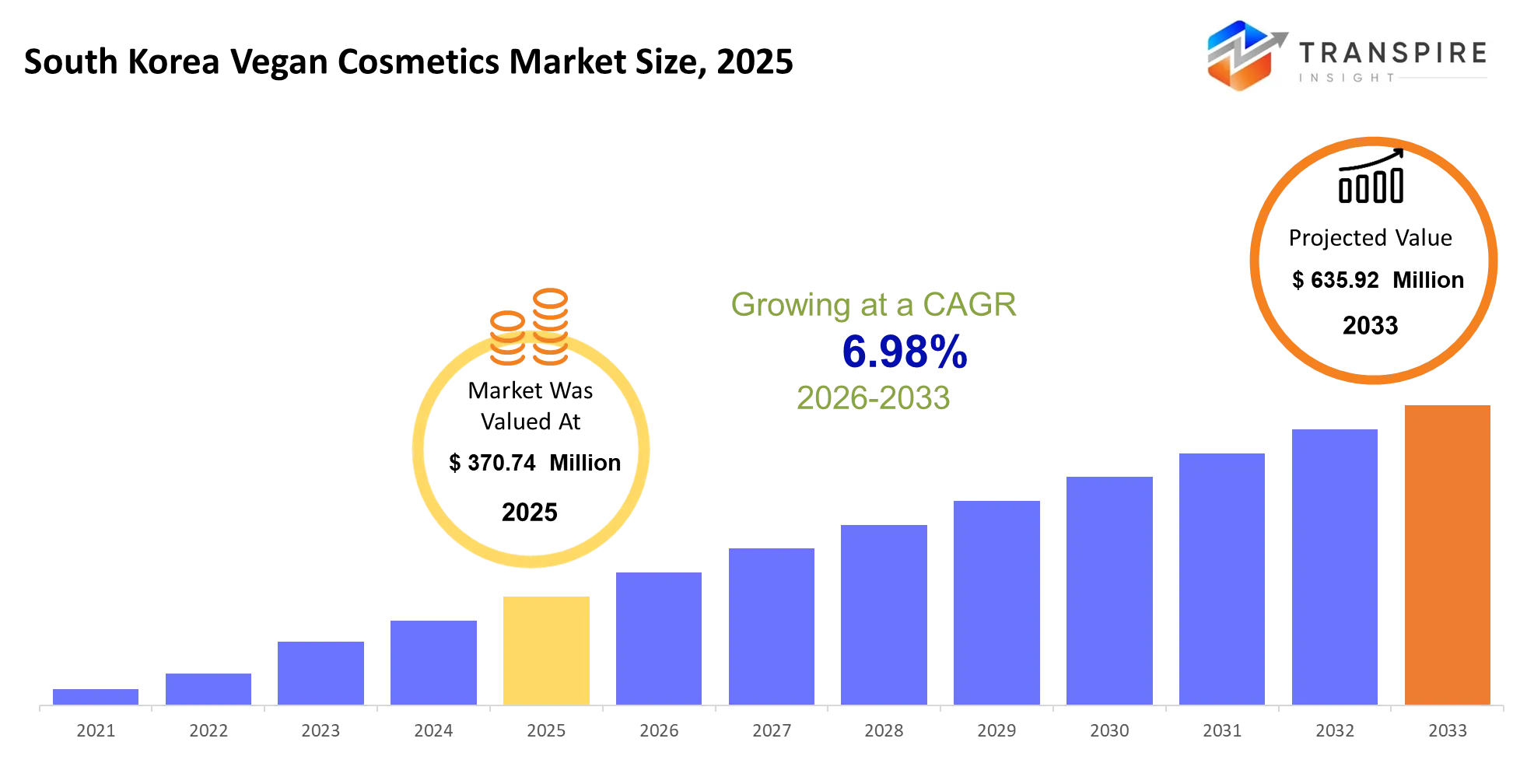
- South Korea Vegan Cosmetics Market Size 2025: USD 370.74 Million
- South Korea Vegan Cosmetics Market Size 2033: USD 635.92 Million
- South Korea Vegan Cosmetics Market CAGR: 6.98%
- South Korea Vegan Cosmetics Market Segments: By Product Type (Skincare Products, Haircare Products, Makeup Products, Fragrances, Bath & Body Products, Others); By Ingredient Type (Plant-based Ingredients, Organic Ingredients, Cruelty-free Ingredients, Natural Oils, Herbal Extracts, Others); By Distribution Channel (Online Retail, Specialty Beauty Stores, Supermarkets, Brand Outlets, Others); By End User (Women, Men, Teenagers, Unisex Consumers, Others)
To learn more about this report,  Download Free Sample Report
South Korea Vegan Cosmetics Market Summary
The South Korea Vegan Cosmetics Market was valued at USD 370.74 Million in 2025. It is forecast to reach USD 635.92 Million by 2033. That is a CAGR of 6.98% over the period.
In South Korea, the Vegan Cosmetics Market takes on a big, kind of key role in letting beauty brands swap out animal-derived inputs and older testing approaches with plant-based, cruelty-free formulations that fit tighter retail expectations and this changing way shoppers decide what to buy. In real usage, vegan cosmetics help producers stand out with more premium skincare, makeup, and everyday personal care items, while also dealing with ingredient transparency worries ,especially when the products are sold through online stores and specialty boutiques. Over roughly the last five years, it kinda looks like the market shifted from a more niche moral angle into something broader and more mainstream, like when the bigger Korean beauty companies started weaving certified vegan product lines straight into their main catalogs.
The momentum, honestly, really kicked in once international retailers and e-commerce platforms started enforcing stricter clean-label and cruelty-free sourcing requirements , mostly after the pandemic era supply chain problems, and also a whole lot more attention on how ingredients are traced . Because of that, many brands have increased spending on botanical activities , some use biotech-derived components and they also lean on certification collaborations. Overall, this is widening shelf presence, lifting export appeal, and pushing more higher-margin categories across skincare as well as color cosmetics.
Key Market Insights
- After 2021 the South Korea Vegan Cosmetics market sort of shifted toward certified skincare products, and by 2025 vegan-certified facial care was still contributing nearly 38% of new premium skincare launches, it kinda feels like that segment just kept pulling ahead
- In 2025 the Seoul metropolitan region clearly led the South Korea Vegan Cosmetics Market, bringing in about 45% of organized vegan beauty retail revenue, mainly because the premium retail networks are dense and already well-established
- Busan and Incheon also popped up as the quickest-growing regional hubs, with online vegan beauty sales rising more than 9% each year through 2033 and not slowing down
- Vegan skincare stayed the biggest product slice in 2025, holding over 50% market share, supported by repeat buying and that ongoing strong demand for higher-margin anti-aging options
- Then vegan makeup became the second-largest category, reaching nearly 27% of category revenue, as younger shoppers leaned into cruelty-free lip , cushion, and base cosmetics like it was everyday
- For vegan haircare, growth is forecast to be the fastest through 2033, and sulfate-free botanical formulations are gaining attention across salon channels and premium scalp-care spaces
- E-commerce platforms basically owned distribution channels, with more than 60% market share in 2025, helped by mobile commerce, influencer marketing, and subscription based product discovery models
- Meanwhile department stores and specialty beauty retailers expanded vegan-exclusive shelf space by roughly 20% between 2022 and 2025, so brands could boost premium customer stickiness and retention
- Amorepacific, LG Household & Health Care, Innisfree, and Klairs pushed innovation harder using plant-derived formulations, vegan certification partnerships, plus heavier investments in sustainable packaging
- And on the global side beauty brands increased expansion in South Korea, by funding biotechnology-derived cosmetic inputs, AI-enabled personalization tools, and cross-border “clean beauty” co-operation that seems to move quicker each year
What are the Key Drivers, Restraints, and Opportunities in the South Korea Vegan Cosmetics Market?
The main thing pushing the South Korea Vegan Cosmetics Market forward is, kinda the structural change in Korea’s beauty export setup . Big retailers and foreign distributors are asking for certified vegan, cruelty free labeling more and more before they even onboard better skincare products into global e-commerce spots and specialty beauty stores. This trend got stronger after 2020, when ingredient traceability and “ethical sourcing” started to sit higher up on the procurement list across North America, and Europe too. In response, Korean beauty producers began adjusting their formulas , using plant sourced collagen alternatives, fermented components, and biotechnology driven activities. With those upgrades brands could ask for higher price points, tighten export margins, and also end up with a more confident position in overseas clean beauty shelves.
The strongest drag on growth is still the cost and the sheer complexity of reworking older, existing product lines. Switching away from animal-derived ingredients, while keeping the texture steady, protecting the shelf life, and preserving efficacy, means heavy R&D spending and repeated dermatological testing. A lot of smaller domestic brands find it hard to carry certification workload, sourcing logistics, and formulation expenses at the same time. So it becomes a sort of structural hurdle , which slows commercialization schedules and makes products less available in mid-priced retail channels , reducing market penetration.
A real opening is now forming around biotechnology enabled vegan ingredients. South Korean ingredient teams are putting money into lab fermented collagen, bio based peptides, and precision fermentation methods that can basically match the premium cosmetic results without using animal inputs. If companies scale these capabilities properly, they can lower formulation costs while also improving consistency and meeting export requirements more smoothly.
What Has the Impact of Artificial Intelligence Been on the South Korea Vegan Cosmetics Market?
Artificial intelligence and advanced digital tech are sort of reshaping the South Korea Vegan Cosmetics Market , in a practical sense, by rushing along formulation work, sharpening consumer targeting, and making the manufacturing side more efficient. It’s almost like everything gets smoother, quicker, and a bit more precise than before. Korean beauty brands are more and more leaning on AI based skin analysis platforms, sort of matching people with vegan skincare products according to hydration ranges, sensitivity patterns, and ingredient fit. These recommendation systems tend to lift conversion rates across online beauty sites, and at the same time they cut down the number of product returns. On the factory side, manufacturers are also using machine learning models to foresee ingredient stability, fine-tune botanical formulation pairings, and shorten product testing loops. As a result, the release timing for vegan certified skincare and color cosmetics becomes faster, while laboratory costs are reduced too.
At the same time, AI enabled demand forecasting systems are giving brands better inventory control across e-commerce and retail. Predictive analytics tools look at buying behavior, seasonal beauty momentum, and social commerce engagement, so production schedules can be adjusted and excess stock doesn’t pile up as much. Several Korean cosmetic manufacturers are even folding automated quality inspection into packaging and filling lines, which improves output consistency and reduces material losses, in a cleaner manner.
Still, AI adoption doesn’t just glide forward without friction. It hits limitations because ingredient databases are fragmented, and the performance data for newer plant derived compounds isn’t always consistent. Smaller cosmetic companies often don’t have the technical setup, or the proprietary datasets, needed to train formulation models that are truly accurate and consumer behavior models too, so the wider industry rollout stays slower.
Key Market Trends
- Between 2021 and 2025, Korean beauty brands kinda moved away from just one-product vegan drops, and into whole certified skincare ranges, you know, and the certified vegan SKUs went up by around 35% in premium retail channels, even if it was not perfectly linear.
- Precision-fermented cosmetic ingredients started getting way more attention once ingredient traceability became a must-have, then biotechnology-derived actives showed up in roughly 18% of the new vegan formulation launches in 2025, which is… pretty notable.
- Online beauty platforms also pushed vegan-only campaigns harder, and that helped direct consumer vegan cosmetics end up making more than 60% of the category revenue in 2025, not just a little, like clearly.
- Meanwhile retailers expanded the shelf space for vegan items by about 20% from 2022 to 2025, because those premium clean beauty categories were showing better repeat buying behavior compared with conventional skincare, so yeah.
- Domestic manufacturers in Korea leaned less on imported animal-derived ingredients too, via local biotechnology collaborations and plant-based active development programs that were backed by Korean ingredient suppliers and their sourcing networks.
- Also influencer-led social commerce really changed how people discover products, especially for consumers aged 18–34 buying vegan lip products and those minimalist skincare solutions, it sort of shifted the whole decision rhythm.
- Korean exporters then chased European vegan certifications more often, and export-oriented product launches that were certified rose by around 25% between 2021 and 2025, so, more paperwork but also more access.
- Refillable plus recyclable cosmetic packaging adoption took off after 2022, with sustainable packaging integration being added across premium vegan skincare and personal care collections, and it kept spreading.
- Even indie beauty brands started using AI-driven consumer analytics to spot underserved skincare niches, which reduced new product development timelines, and also boosted the performance of targeted online campaign stuff.
South Korea Vegan Cosmetics Market Segmentation
By Product Type
Skincare Products hold the dominant position because customers seem to really, favor vegan- certified facial cleansers, moisturizers, serums, and anti aging formulations, kind of like it fits what people want day to day. Premium skincare routines still feel very embedded in Korean beauty culture so brands can keep strong repeat purchases and also keep the premium pricing structure. Makeup Products are basically the second-largest segment because cruelty-free lip products, foundations, and cushion cosmetics are getting more attention, especially with influencer led commerce and social media marketing. Haircare Products keep growing steadily too, since sulfate free and botanical based scalp care solutions are being adopted more and more across salons as well as premium retail channels. Fragrances, Bath & Body Products, and the other categories keep a smaller but stable presence, nothing too dramatic.
Skincare Products keep picking up speed thanks to biotechnology derived ingredients, microbiome centered formulations, and AI powered skin analysis systems that help improve personalization. Makeup Products do well with quick product launch cycles, plus online retail strategies that are visually driven, they target younger demographic groups pretty directly. Haircare Products are expected to show the fastest expansion during the forecast period because scalp wellness trends are getting stronger , and that means more demand for plant based treatment systems and herbal cleansing formulations. Fragrances and Bath & Body Products are likely to shift toward refillable packaging formats and a more minimalist ingredient narrative, which opens doors for niche premium beauty developers and sustainable packaging suppliers.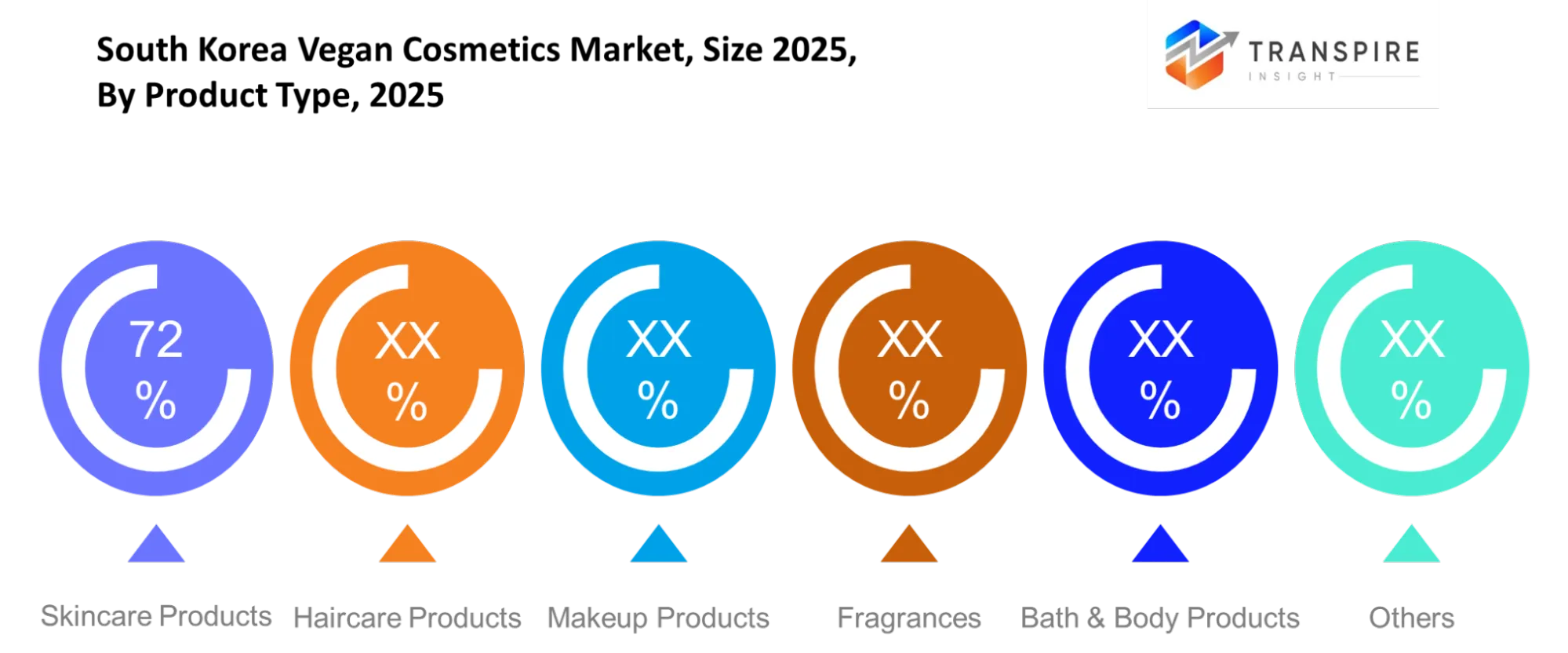
To learn more about this report, Download Free Sample Report
By Ingredient Type
Plant based ingredients kinda hold the leading spot because Korean cosmetic manufacturers are gradually swapping out animal-derived compounds with botanical actives, fermented extracts, and biotechnology based alternatives, so it feels pretty much inevitable, honestly. Cruelty-free inputs still land as the second-largest segment too, partly since certification standards become even more important for export focused beauty brands that want North American and European retail networks. Natural oils and herbal extracts stay relevant for a long time , mostly because consumers already know these botanical skincare traditions. Meanwhile Organic ingredients and a couple other ingredient categories remain a bit more niche, because certification costs and sourcing limits make broader rollout hard to pull off in practice.
Plant-based ingredients keep pushing ahead due to better precision fermentation, lab-developed collagen substitutes, and bio-engineered peptides that improve formulation consistency and scalability. Cruelty-free ingredients also gain traction when global retailers tighten ethical sourcing expectations and clean label compliance, and buyers notice that. Natural oils and herbal extracts help premium skincare positioning by bringing hydration, barrier repair, and sensitive-skin compatibility that connects to older Korean beauty formulation habits. During the forecast period, biotechnology-enabled plant-based ingredients are expected to pull in the strongest investment activity, as manufacturers prioritize export competitiveness, formulation stability, and long-term raw material diversification.
By Distribution Channel
Online Retail kind of dominates the distribution landscape because mobile-first beauty buying habits, plus influencer led commerce, are still changing how people find products , especially among younger consumer groups. Specialty Beauty Stores sit in the second-largest slice though, largely due to demand for curated high end skincare moments and fairly direct product guidance. Brand Outlets keep steady traction too, by leaning on loyalty fueled purchases and limited-time product drops, while Supermarkets and other channels stay more secondary because vegan cosmetics still need that premium framing, along with digital engagement, to really move.
Online Retail keeps pushing ahead, using subscription style skincare programs, AI based suggestion engines, and faster fulfillment systems that raise repeat purchase conversion. Specialty Beauty Stores, meanwhile, do well as shoppers ask for ingredient clarity , hands on testing, and tailored skincare consultation. Brand Outlets are also tightening things up by adding digital skin analysis tools, and connecting them to loyalty ecosystems , which helps retention with premium buyers. Over the forecast period, Online Retail is expected to hold the quickest growth path since live commerce, social shopping , and cross-border e-commerce platforms keep reinforcing direct-to-consumer beauty distribution models.
By End User
Women still hold the dominant position, because premium skincare , anti-aging products, and those multifunctional cosmetic routines keep churning out the highest purchasing frequency across vegan beauty categories. Teenagers sit in the second-largest segment too, mostly as social media beauty trends and cruelty-free cosmetic framing strongly steer younger buyers who are just entering the skincare and makeup market. Men keep climbing in participation via minimalist grooming and scalp-care product adoption, while Unisex Consumers (and a few other small related groups) gather a bit more momentum over time thanks to gender-neutral branding and simpler skincare product positioning.
Women are the main driver behind category expansion, with especially high engagement around premium facial care systems, ingredient-centered skincare education, and more personalized cosmetic routines. Teenagers help the market grow fast, because digital shopping platforms and influencer-led beauty efforts encourage experimentation with vegan lip products, cleansers and that lighter, easy-to-wear kind of skincare solution. Men are increasingly choosing plant-based grooming products that are tied to scalp wellness, hydration, and sensitive-skin compatibility. Through the forecast period, Unisex Consumers are expected to expand in a steady way as cosmetic companies move toward inclusive branding tactics, neutral packaging formats, and multifunctional skincare formulations built to appeal to a wider demographic range.
What are the Key Use Cases Driving the South Korea Vegan Cosmetics Market?
In the South Korea Vegan Cosmetics Market the dominant sort of use case is premium face care, especially moisturizers, serums, cleansers, and anti aging options. This area creates the most demand because people tend to link ingredient purity, skin sensitivity handling, and clean label messaging with everyday routines . Premium pricing plus strong repurchase momentum really helps revenue in this slice.
Other expanding applications show up in vegan color cosmetics and haircare goods, typically carried by online beauty retailers, and also by specialty cosmetic chains. Younger consumers are coming to like cruelty free lip products, foundations , and sulfate free hair treatments, all pushed through influencer led commerce spaces. At the same time professional salons are starting to adopt plant based formulas to stand out with upgraded service packages.
More emerging use cases involve biotechnology derived vegan dermaceuticals and skincare that feels microbiome friendly. Korean cosmetic innovators are experimenting with fermented vegan actives, lab developed collagen substitutes , and personalized skincare systems meant for sensitive skin needs and post treatment recovery use.
|
Report Metrics |
Details |
|
Market size value in 2025 |
USD 370.74 Million |
|
Market size value in 2026 |
USD 396.61 Million |
|
Revenue forecast in 2033 |
USD 635.92 Million |
|
Growth rate |
CAGR of 6.98% from 2026 to 2033 |
|
Base year |
2025 |
|
Historical data |
2021 - 2024 |
|
Forecast period |
2026 - 2033 |
|
Report coverage |
Revenue forecast, competitive landscape, growth factors, and trends |
|
Regional scope |
South Korea |
|
Key company profiled |
Amorepacific, LG Household & Health Care, Innisfree, The Face Shop, Klairs, COSRX, Purito, Dear Dahlia, Dr. Jart+, Tonymoly, Nature Republic, e.l.f. Beauty, Lush, Pacifica Beauty, The Body Shop . |
|
Customization scope |
Free report customization (country, regional & segment scope). Avail customized purchase options to meet your exact research needs. |
|
Report Segmentation |
By Product Type (Skincare Products, Haircare Products, Makeup Products, Fragrances, Bath & Body Products, Others); By Ingredient Type (Plant-based Ingredients, Organic Ingredients, Cruelty-free Ingredients, Natural Oils, Herbal Extracts, Others); By Distribution Channel (Online Retail, Specialty Beauty Stores, Supermarkets, Brand Outlets, Others); By End User (Women, Men, Teenagers, Unisex Consumers, Others) |
Which Regions are Driving the South Korea Vegan Cosmetics Market Growth?
The Seoul metro region still feels like the major driver of the South Korea Vegan Cosmetics Market, mostly because it stacks up premium beauty retailers, cosmetic R&D centers, and digitally connected distribution routes, pretty much in one place. Seoul really taps into the strongest beauty retail setup in the country, with flagship shops, influencer led commerce ecosystems, and also advanced fulfillment operations that let brands roll out new items quickly. Big cosmetic players run innovation labs and marketing headquarters there, so vegan certified skincare and makeup products can hit commercialization timelines faster.
Busan is also important, it’s basically the second most influential regional market, but it plays a different role. Its pull is more about export logistics and manufacturing stability, not the same level of premium retail concentration. The city’s port systems and industrial supply chain networks help with sourcing, packaging, and international shipping of Korean vegan cosmetics, especially toward Southeast Asia and Japan. While Seoul leans on trend driven beauty momentum, Busan gives manufacturers operational steadiness through lower logistics expenses and consistent industrial spending. More and more regional producers in Busan keep leaning into larger production scale and OEM collaborations, which builds a dependable income stream for export oriented vegan skincare and personal care lines.
Incheon is moving faster than the others right now, mainly because of quick growth in e-commerce logistics, airport linked trade infrastructure, and cross border beauty exports. Around 2023, new investments in smart fulfillment centers, plus more digital retail distribution networks, improved delivery performance for online vegan cosmetic brands, in a noticeable way.
Who are the Key Players in the South Korea Vegan Cosmetics Market and How Do They Compete?
Competition in the South Korea Vegan Cosmetics Market stays fairly fragmented, with big beauty conglomerates still trading blows next to digitally native indie brands and certified vegan specialists. Larger players are trying to keep their standing via formulation novelty, broader retail presence, and biotechnology spending, while smaller labels often shake things up using narrow niche framing and quicker product rollout cycles. Lately the main fight is less about mass-market prices and more about ingredient clarity, certification trustworthiness, skin care that feels more tailored, and packaging that’s clearly sustainable—kind of a lived-through differentiation, not just a slogan. Also, export readiness and how well brands perform on digital commerce are now increasingly important, especially for premium skincare and color cosmetics.
Amorepacific leans into advanced skincare research, AI assisted personalization tools, and pretty heavy investment in sustainable packaging systems. They sort of separate themselves with premium vegan-certified skincare lines and with biotech partnerships aimed at plant-derived active ingredients. For 2026, they expanded their AI collaboration with Amazon Web Services, to strengthen personalized beauty product development and consumer analytics capabilities.
LG Household & Health Care plays a multi-brand diversification game, pushing sustainable formulation growth across skincare and makeup categories. Their advantage tends to come from blending vegan beauty ideas into more mainstream cosmetic brands, while also keeping wide retail access across department stores and online commerce channels. Klairs and Purito, meanwhile, compete using minimalist ingredient approaches, cruelty-free positioning, and strong engagement inside international skincare communities.
Company List
- Amorepacific
• LG Household & Health Care
• Innisfree
• The Face Shop
• Klairs
• COSRX
• Purito
• Dear Dahlia
• Dr. Jart+
• Tonymoly
• Nature Republic
• e.l.f. Beauty
• Lush
• Pacifica Beauty
• The Body Shop
Recent Development News
In March 2026, Amorepacific entered a partnership with Viol Medical and signed an MOU on beauty and medical devices. The collaboration combines skincare expertise with energy-based device technology to accelerate AI-enabled home beauty solutions and premium personalized skincare expansion.http://www.prnewswire.co.uk
In May 2026, Amazon Web Services expanded its strategic AI partnership with Amorepacific. The initiative increased AI integration across product development, customer analytics, and personalized beauty platforms for brands including Sulwhasoo, Laneige, and Hera, supporting next-generation clean beauty commercialization.http://en.sedaily.com
What Strategic Insights Define the Future of the South Korea Vegan Cosmetics Market?
The South Korea Vegan Cosmetics Market is kind of moving, structurally, toward biotechnology led premiumization. So basically product differentiation will rely way less on branding only, and more on ingredients that are proven scientifically , and still plant based. At the same time AI enabled personalization will matter more and sustainability performance becomes this real deciding factor too. Over the next five to seven years, precision fermentation, bio engineered collagen alternatives, and advanced skin diagnostic systems are expected to change how Korean beauty firms compete for global export markets.
That said, there’s one not so obvious risk—market concentration is growing around a small circle of dominant export focused conglomerates. If that keeps happening, innovation diversity could shrink, and smaller vegan brands may get squeezed by pricing pressure plus distribution limits. Another emerging issue has to do with keeping stable supplies of certified botanical raw materials, especially as worldwide clean beauty demand keeps increasing.
On the opportunity side, there’s room for microbiome friendly vegan dermaceuticals aimed at sensitive skin and also post treatment recovery segments. This could be especially strong across North America and Europe. If companies want to enter, they should focus on proprietary ingredient partnerships and put money in early, into vegan and sustainability certifications that are globally recognized, because that can support long term export competitiveness.
South Korea Vegan Cosmetics Market Report Segmentation
By Product Type
- Skincare Products
- Haircare Products
- Makeup Products
- Fragrances
- Bath & Body Products
- Others
By Ingredient Type
- Plant-based Ingredients
- Organic Ingredients
- Cruelty-free Ingredients
- Natural Oils
- Herbal Extracts
- Others
By Distribution Channel
- Online Retail
- Specialty Beauty Stores
- Supermarkets
- Brand Outlets
- Others
By End User
- Women
- Men
- Teenagers
- Unisex Consumers
- Others
Frequently Asked Questions
Find quick answers to common questions.
The Estimated South Korea Vegan Cosmetics Market size for the Market will be USD 635.92 Million in 2033.
Key Segments for the South Korea Vegan Cosmetics Market are By Product Type (Skincare Products, Haircare Products, Makeup Products, Fragrances, Bath & Body Products, Others); By Ingredient Type (Plant-based Ingredients, Organic Ingredients, Cruelty-free Ingredients, Natural Oils, Herbal Extracts, Others); By Distribution Channel (Online Retail, Specialty Beauty Stores, Supermarkets, Brand Outlets, Others); By End User (Women, Men, Teenagers, Unisex Consumers, Others).
Major South Korea Vegan Cosmetics Market players are Amorepacific, LG Household & Health Care, Innisfree, The Face Shop, Klairs, COSRX, Purito, Dear Dahlia, Dr. Jart+, Tonymoly, Nature Republic, e.l.f. Beauty, Lush, Pacifica Beauty, The Body Shop.
The Current South Korea Vegan Cosmetics Market size is USD 370.74 Million in 2025.
The South Korea Vegan Cosmetics Market CAGR is 6.98% from 2026 to 2033.
• Amorepacific
• LG Household & Health Care
• Innisfree
• The Face Shop
• Klairs
• COSRX
• Purito
• Dear Dahlia
• Dr. Jart+
• Tonymoly
• Nature Republic
• e.l.f. Beauty
• Lush
• Pacifica Beauty
• The Body Shop
Recently Published Reports
-
Apr 2026
Bottled Water Market
Bottled Water Market Size, Share & Analysis Report By Product Type (Still Bottled Water, Carbonated Bottled Water, Functional Bottled Water, and Others), By Packaging (PET, Cans, and Others), By Sales Channel (Supermarkets/Hypermarkets, Convenience Stores/Drug Stores, Grocery Stores/Club Stores, Foodservice, and Others) and Geography (North America, Europe, Asia-Pacific, Middle East and Africa, South and Central America), 2021 - 2032
-
Apr 2026
Color Cosmetic Packaging Market
Color Cosmetic Packaging Market Size, Share & Analysis Report By Application (Mascara Packaging, Liquid Packaging, and Liquid Face), By Type (Tubes & Bottles, Pens & Markers, Compacts & Containers, and Droppers & Pumps), and Geography (North America, Europe, Asia-Pacific, Middle East and Africa, South and Central America), 2021 - 2031
-
Apr 2026
External Microphone For Camera Market
External Microphone For Camera Market Size, Share & Analysis Report By Type (Shotgun Microphone, Lavalier Microphone, and Others), By Application (Digital Camera, Professional Video Camera, and Others), and Geography (North America, Europe, Asia-Pacific, Middle East and Africa, South and Central America), 2021 - 2031
-
Apr 2026
Foot Orthotic Insoles Market
Foot Orthotic Insoles Market Size, Share & Analysis Report By Type (Pre-fabricated, and Custom-made), By Material (Thermoplastic, Composite Carbon Fiber, and Others), By Distribution Channel (Drug Stores, Hospitals & Clinics, and Others), and Geography (North America, Europe, Asia-Pacific, Middle East and Africa, South and Central America), 2021 - 2031