

Asia Pacific Automotive Engine Market Size & Forecast:
- Asia Pacific Automotive Engine Market Size 2025: USD 17.27 Billion
- Asia Pacific Automotive Engine Market Size 2033: USD 24.15 Billion
- Asia Pacific Automotive Engine Market CAGR: 4.28%
- Asia Pacific Automotive Engine Market Segments: By Engine Type (Gasoline Engines, Diesel Engines, Hybrid Engines, Electric Range Extender Engines, Turbocharged Engines, Naturally Aspirated Engines, Hydrogen Engines, Others); By Vehicle Type (Passenger Cars, LCVs, HCVs, SUVs, Buses, Sports Cars, EVs, Others); By Component (Cylinder Block, Pistons, Crankshaft, Valves, Fuel Injection Systems, Turbochargers, ECU, Others); By End User (OEMs, Aftermarket, Fleet Operators, Performance Vehicle Manufacturers, Commercial Operators, Government Fleets, Others).
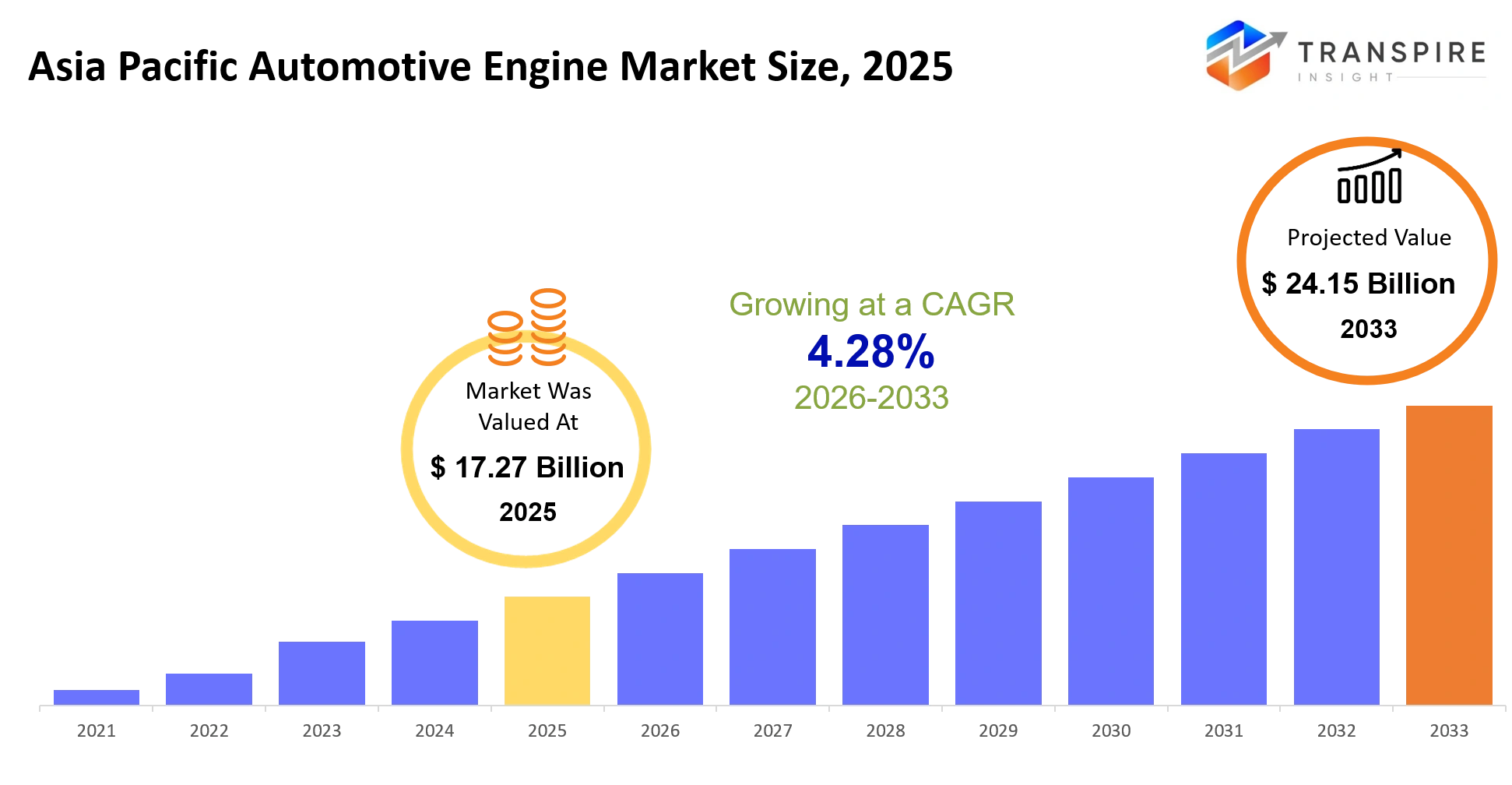
Asia Pacific Automotive Engine Market Summary
The Asia Pacific Automotive Engine Market was valued at USD 17.27 Billion in 2025. It is forecast to reach USD 24.15 Billion by 2033. That is a CAGR of 4.28% over the period.
The Asia Pacific Automotive Engine Market provides the power systems that make it possible for passenger vehicles, commercial trucks, buses, construction equipment and off-highway machinery to work across transportation and industrial networks. The Asia Pacific Automotive Engine Market is very important for vehicle performance, fuel economy, load-carrying capability. How well the vehicles operate. For people who run fleets, logistics providers and vehicle manufacturers the technology used in the Asia Pacific Automotive Engine Market directly affects the costs of operating following emissions rules and using their assets.
Over the five years the Asia Pacific Automotive Engine Market has changed in a big way. It is now moving towards powertrains that're more efficient and produce fewer emissions. These powertrains use things like turbocharging, advanced fuel injection systems, hybrid integration and making engines smaller. One big reason for this change was the introduction of rules about vehicle emissions in many regional markets. This made companies invest more in combustion technologies and fuel-efficient engine platforms. When the pandemic happened it disrupted supply chains, which encouraged manufacturers to make things and come up with better plans for getting the parts they need.
The Asia Pacific Automotive Engine Market is still growing because people keep needing transportation infrastructure and fleets are being modernized. As manufacturers make engines that meet the emission standards and are more fuel-efficient, people who operate vehicles can save money on expenses and reduce the risks of not following the rules. This helps companies keep adopting technology and creates new ways for engine manufacturers and component suppliers to make money. The Asia Pacific Automotive Engine Market is doing well because of all these things.
Key Market Insights
- The Asia Pacific Automotive Engine Market was led by East Asia in 2025 because this region has a lot of factories that make vehicles.
- South Asia will probably be the region that grows the fastest until 2033. This is because more commercial vehicles are being made and roads are being built.
- Most vehicles used combustion engines in 2025 and this is because these engines are used in a lot of cars and trucks.
- The second used engines were hybrid-compatible engine systems and this is because companies that make vehicles want to make sure their cars do not make too much pollution but still work well.
- Turbocharged and downsized engines will probably become more popular until the forecast period is over. This is because they help vehicles use less fuel.
- The use of engines in vehicles is growing fast and this is because more things are being transported and built.
- Toyota, Hyundai, Honda, Tata Motors, Cummins and Bosch are still putting money into making combustion technologies, hybrid integration and efficiency optimization for the Asia Pacific Automotive Engine Market.
- Companies that make engines are using materials and technologies to make their products better and this includes using materials that are not heavy electronic control systems and high-pressure fuel injection technologies for the Asia Pacific Automotive Engine Market.
- The Asia Pacific Automotive Engine Market is changing because companies that make vehicles and companies that supply parts are working together
- This is helping to make products expand to new regions and follow the rules that are in place to reduce pollution.
What are the Key Drivers, Restraints, and Opportunities in the Asia Pacific Automotive Engine Market?
Driver
The main thing that is making the Asia Pacific Automotive Engine Market grow is that governments are making rules about vehicle emissions and fuel efficiency. They want to reduce the things that cars release into the air and make them use less fuel. Because of this, car companies have to redesign their engines. They are starting to use things like turbocharged engines, better fuel injection systems and hybrid-compatible powertrains. If companies make engines that follow these rules they can still sell their cars.. People who own lots of cars can save money on fuel and other costs. This means that companies can make money.
Restraint
The biggest problem is that electric cars are becoming really popular in some countries. This is a deal because electric cars do not need the kind of engines that most cars use. So companies that make engines have to keep making them better and cleaner. They might not sell as many in the future. This can make it hard for them to decide what to invest in.. It can also mean that they will not make as much money from their traditional engine business.
Opportunity
There is a chance for companies to make hybrid engines for cars and trucks. Some people need cars that're better for the environment but they cannot always charge them. So companies can make engines that use less fuel and release fewer bad things into the air. They can also make engines that use different kinds of fuel. Countries where lots of things are being transported are going to need these kinds of engines. This means that companies can make money by selling them. The Asia Pacific Automotive Engine Market is going to be a place for companies that make these new engines.
What Has the Impact of Artificial Intelligence Been on the Asia Pacific Automotive Engine Market?
Automotive engine development is changing because of intelligence and new digital technologies. Engine manufacturers are using intelligence to control engine systems. This means they can automatically adjust how the engine runs based on the conditions it is operating in.Engine manufacturers use intelligence to automate things like engine calibration and fuel injection. Connected vehicle platforms are also used to collect data from sensors on the vehicles. This allows people who manage fleets of vehicles to keep an eye on how the engines are doing, how much fuel they are using and if they are meeting emissions rules in real time. These automated systems make it so people do not have to do much manual checking and they can keep a better eye on things across all the vehicles.
Artificial intelligence is also being used to help predict when maintenance will be needed and to make engines run better. Machine learning models look at things like temperature patterns, vibration data and fuel efficiency trends. They can use this information to figure out if an engine is going to have a problem before it actually happens. This helps manufacturers meet rules about emissions and makes engines more efficient. Because of this, people who manage fleets can reduce the amount of time vehicles are not working, make parts longer, save money on maintenance and get better fuel economy.
New digital tools are helping to speed up the process of developing and testing products. For example digital twins and simulation platforms are being used. However it is still very expensive to add intelligence to old manufacturing systems and vehicle platforms. Many companies are having trouble getting all their data to match up making sure their systems are compatible and getting data to use to train machine learning models. Artificial intelligence and digital technologies are important for engine development and manufacturing.
Key Market Trends
- Since 2020 car makers have been using engines with turbochargers more often. These engines give performance and have lower emissions.
- From 2021 to 2025 stricter rules on emissions made manufacturers spend more on fuel injection and exhaust technologies.
- Engines that can work with cars became more popular. Car makers had to balance making cars that meet emission rules with what customers want. Cars that can go further.
- Companies that own vehicles are looking for engines that use less fuel. This is because the cost of fuel can greatly affect how much money they make.
- Companies like Toyota, Hyundai, Honda and Tata Motors are investing more in developing car engines. This helps them stay competitive in the changing car market.
- Companies that make engines are using materials and electronic systems to make engines use less fuel and weigh less.
- Between 2020 and 2022 problems with getting parts led to local production of engine parts and working with different suppliers.
- Artificial intelligence and data analysis are now being used more in developing engines, fixing problems and maintaining vehicle fleets.
- More companies are looking for engines that can use types of fuel. This is because they want to reduce emissions without switching to vehicles.
- Companies like Bosch, Denso, Cummins and Continental are working together more on electronics, for engines making engines efficient and new engine technologies.
Asia Pacific Automotive Engine Market Segmentation
By Engine Type
Gasoline engines are still really popular in cars because they work well, do not cost much to buy at first and there are many places to fill them up with gas. Diesel engines are still used a lot in trucks and buses because they can pull heavy loads and use less fuel. Hybrid engines are getting more popular because companies are trying to make cars that pollute less and use fuel.Electric range extender engines are getting attention from some car makers because they can help cars go further without needing to be charged. Turbocharged engines are replacing engines because they are smaller and use less fuel but still work just as well. Naturally aspirated engines are still used in some cars because they are simple and reliable.Hydrogen engines are an area that some companies are investing in because they want to make cars that use different kinds of fuel. Other types of engines are also being developed because companies are trying to make cars that're more efficient, pollute less and have better performance.
By Vehicle Type
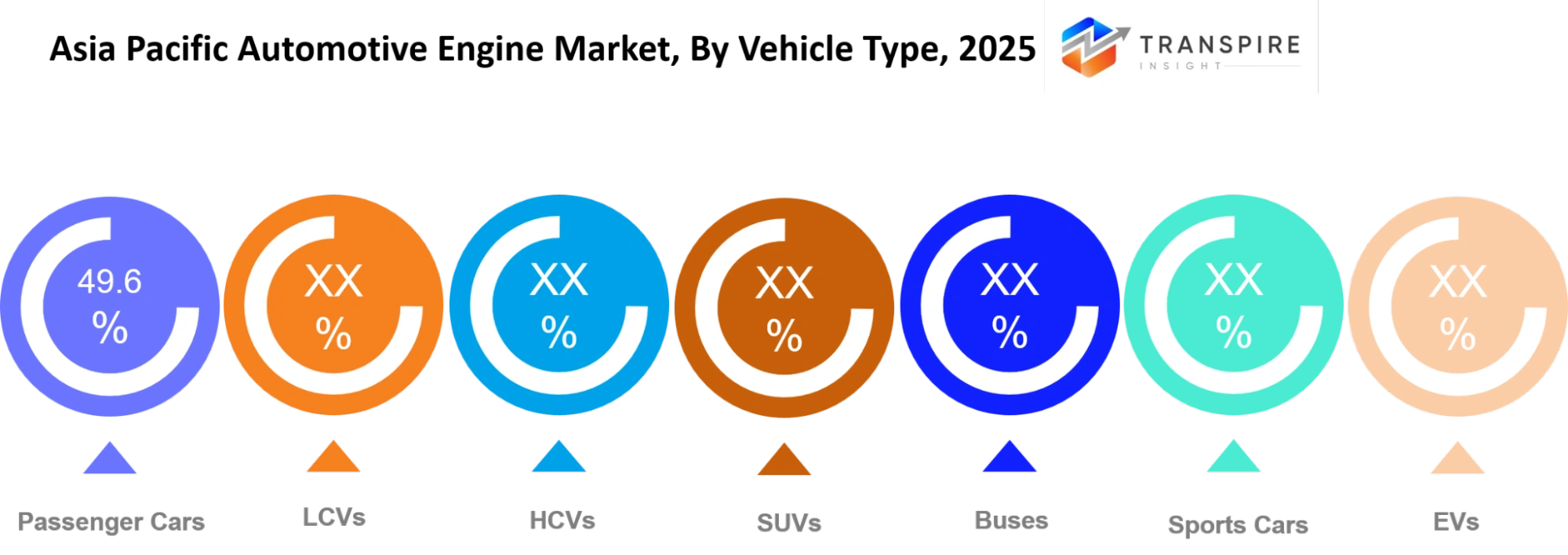
Most engines are used in cars because so many cars are made and people buy them. Light commercial vehicles like vans and small trucks are used for deliveries and other jobs. Big trucks need engines that can handle heavy loads.SUVs are popular because they are comfortable, can handle types of roads and have good performance. Buses need engines that can handle long trips. Sports cars have engines that make them fast and fun to drive.Electric vehicles need engines that can help them go further without needing to be charged. Other types of vehicles like motorcycles and boats also need engines.
By Component
The cylinder block is the part of the engine and holds all the other parts together. Pistons are important because they help turn the energy from gas into movement. Crankshafts help transfer power from the engine to the wheels.Valves control how much air and fuel go into the engine and help it work well. Fuel injection systems are getting better because companies want to make cars that use fuel and pollute less. Turbochargers help make engines more powerful and efficient.Electronic control units help the engine work and make sure it meets safety and environmental rules. Other parts like filters and belts help the engine last longer and work better.
By End User
Car makers need engines to put in their new cars. They want engines that are efficient, do not pollute too much and have good performance. They make deals with engine makers to get a supply of engines.People who own cars also need engines and parts to replace ones or fix their cars. Companies that have fleets of cars and trucks want engines that use less fuel and are reliable. Some companies make cars that are fast and powerful.Government agencies are also looking for environmentally friendly engines for their vehicles. Other companies and organizations need engines for their vehicles too.
What are the Key Use Cases Driving the Asia Pacific Automotive Engine Market?
Passenger transportation is still the reason why engines are in high demand in the automotive industry.Car makers keep adding engine technologies to passenger cars and SUVs to make them use less fuel, meet tough emission rules and keep them performing well.This area uses a lot of engines. Makes a lot of money because many vehicles are made and replaced often.Commercial transportation is becoming an area where engines are used especially for companies that own fleets do logistics and provide light commercial vehicles.These companies need engines that're tough and use less fuel for moving goods delivering things and construction work.Public transportation companies also want engines that meet emission rules.There are also areas where engines are used, like in hydrogen-powered engines and electric systems that help extend the range of electric vehicles for special commercial and long-distance transportation.These technologies are still new. Are getting attention as governments and manufacturers look for ways to make transportation less polluting.More investment in fuels and hybrid vehicles is expected to create new chances, over the next few years.
|
Report Metrics |
Details |
|
Market size value in 2025 |
USD 17.27 Billion |
|
Market size value in 2026 |
USD 18.01 Billion |
|
Revenue forecast in 2033 |
USD 24.15 Billion |
|
Growth rate |
CAGR of 4.28% from 2026 to 2033 |
|
Base year |
2025 |
|
Historical data |
2021 - 2024 |
|
Forecast period |
2026 - 2033 |
|
Report coverage |
Revenue forecast, competitive landscape, growth factors, and trends |
|
Regional scope |
Asia Pacific |
|
Key company profiled |
Toyota, Hyundai, Honda, Nissan, Suzuki, Tata Motors, Mahindra, Mitsubishi Motors, Cummins, Bosch, Denso, Aisin, Continental, Isuzu, Volvo. |
|
Customization scope |
Free report customization (country, regional & segment scope). Avail customized purchase options to meet your exact research needs. |
|
Report Segmentation |
By Engine Type (Gasoline Engines, Diesel Engines, Hybrid Engines, Electric Range Extender Engines, Turbocharged Engines, Naturally Aspirated Engines, Hydrogen Engines, Others); By Vehicle Type (Passenger Cars, LCVs, HCVs, SUVs, Buses, Sports Cars, EVs, Others); By Component (Cylinder Block, Pistons, Crankshaft, Valves, Fuel Injection Systems, Turbochargers, ECU, Others); By End User (OEMs, Aftermarket, Fleet Operators, Performance Vehicle Manufacturers, Commercial Operators, Government Fleets, Others). |
Which Regions are Driving the Asia Pacific Automotive Engine Market Growth?
The automotive engine market is really big in East Asia. This is because East Asia has a lot of factories that make vehicles, it has industrial capabilities and it has a strong network of suppliers. Big car companies have factories in East Asia and they are supported by companies that make components and people who are good at engineering. The rules about vehicle emissions are very strict so companies are always trying to make engines that use fuel and produce fewer emissions. Because East Asia has a lot of factories, can do a lot of research and has a network of suppliers it is still the leader in this market.
South Asia is the biggest market for automotive engines. It is different from East Asia because it relies on people in the country buying vehicles and using more commercial transportation. The economy in South Asia is growing steadily. Roads and other infrastructure are being built. More people are buying vehicles. This means that there is a demand for engines. Companies that have fleets of vehicles are getting bigger to meet the needs of logistics, construction and public transportation. These things make it possible for companies to make money and invest in the industry for a long time.
Southeast Asia is going to grow fast until 2033. This is because factories that make vehicles are getting bigger and governments are helping industries grow. Recently companies have invested in factories and supply chains in Southeast Asia, which has made the region more competitive. More people in Southeast Asia want to buy vehicles and use transportation, which is creating new opportunities for companies that make engines and components. This is going to attract investment and help companies that want to grow between 2026 and 2033. The automotive engine market in Southeast Asia is going to be very exciting.
Who are the Key Players in the Asia Pacific Automotive Engine Market and How Do They Compete?
The car industry is pretty competitive with car makers and special part suppliers making a lot of the engines and leading the way in new tech. They compete on making cars that use fuel, follow emission rules, last long, combine hybrid tech and make a lot of cars. Not just on price. Big companies are working hard to keep their market share by improving engines and investing in new powertrain tech.
At the time new rules and the move to hybrid cars are making companies form new partnerships and create new products. Toyota is really focused on tech especially with hybrid engines and advanced combustion systems that make cars efficient and powerful. Honda stands out with its efficient engine designs and its expertise in making engines reliable. Hyundai keeps improving its engines by investing in alternative-fuel technology, which helps it compete more effectively in the passenger-car market. These companies keep growing by doing research making their factories better and creating cleaner engines. Cummins is a deal in commercial and heavy-duty truck engines, where lasting long using less fuel and being reliable really matter. Bosch is known for its fuel systems, engine electronics and tech that helps cars follow emission rules. Denso is strong, with its engine parts and tech that helps engines work more efficiently. Car makers and tech suppliers are working together more to speed up ideas make development faster and get into new engine areas.
Company List
- Honda
- Tata Motors
- Mahindra
- Mitsubishi Motors
- Cummins
- Bosch
- Denso
- Aisin
- Continental
- Isuzu
- Volvo
Recent Development News
In March 2025, Toyota Motor Corporation launched its next-generation hybrid engine platform. The platform integrates AI-based thermal management technology to improve fuel efficiency and emissions performance, strengthening hybrid powertrain competitiveness amid tightening regulatory standards.
Source: https://www.linkedin.com
In February 2025, Mazda Motor Corporation announced an investment of approximately USD 148 million to support electric compact SUV production in Thailand. The investment strengthens regional powertrain manufacturing capabilities and accelerates development of advanced propulsion technologies across the automotive value chain.
Source: https://www.marknteladvisors.com
In January 2026, Renault expanded manufacturing operations through local production of the new Duster SUV at its Chennai facility. The expansion increases localized sourcing opportunities for powertrain and engine component suppliers while strengthening regional automotive production capacity.
Source: https://www.marknteladvisors.com
What Strategic Insights Define the Future of the Asia Pacific Automotive Engine Market?
The Asia Pacific Automotive Engine Market is moving into a phase. In this phase advanced internal combustion engines, hybrid powertrains and alternative fuel technologies will work together.
Over the next five to seven years the main thing that will shape the market is the need to reduce emissions and meet practical transportation needs. This is especially true for vehicles and areas where charging infrastructure is limited. Engine makers will focus on making engines more efficient, integrating technology and making engines work with low-carbon fuels.There is a risk that not many suppliers will have the technology for engine parts and electronic control systems. If there are problems with supply, licensing or shortages it could cause delays. Affect production and profits even if people still want to buy vehicles.
One new opportunity is making engines that can use hydrogen for heavy-duty transportation and industry. This is still early. If governments support it and invest in hydrogen infrastructure it could take off soon. Companies should work together on systems, alternative fuels and digital engine management technologies to stay competitive and prepare for future changes.Market participants should focus on partnerships involving systems and alternative fuels. They must also prioritize engine management technologies. This will help them to strengthen their competitiveness. It will also help to reduce their exposure to regulatory and technology shifts.
Asia Pacific Automotive Engine Market Report Segmentation
By Engine Type
- Gasoline Engines
- Diesel Engines
- Hybrid Engines
- Electric Range Extender Engines
- Turbocharged Engines
- Naturally Aspirated Engines
- Hydrogen Engines
- Others
By Vehicle Type
- Passenger Cars
- LCVs
- HCVs
- SUVs
- Buses
- Sports Cars
- EVs
- Others
By Component
- Cylinder Block
- Pistons
- Crankshaft
- Valves
- Fuel Injection Systems
- Turbochargers
- ECU
- Others
By End User
- OEMs
- Aftermarket
- Fleet Operators
- Performance Vehicle Manufacturers
- Commercial Operators
- Government Fleets
- Others
Frequently Asked Questions
Find quick answers to common questions.
The expected Asia Pacific Automotive Engine Market size for the market will be USD 24.15 Billion in 2033.
Key segments for the Asia Pacific Automotive Engine Market are By Engine Type (Gasoline Engines, Diesel Engines, Hybrid Engines, Electric Range Extender Engines, Turbocharged Engines, Naturally Aspirated Engines, Hydrogen Engines, Others); By Vehicle Type (Passenger Cars, LCVs, HCVs, SUVs, Buses, Sports Cars, EVs, Others); By Component (Cylinder Block, Pistons, Crankshaft, Valves, Fuel Injection Systems, Turbochargers, ECU, Others); By End User (OEMs, Aftermarket, Fleet Operators, Performance Vehicle Manufacturers, Commercial Operators, Government Fleets, Others).
Major Asia Pacific Automotive Engine Market players are Toyota, Hyundai, Honda, Nissan, Suzuki, Tata Motors, Mahindra, Mitsubishi Motors, Cummins, Bosch, Denso, Aisin, Continental, Isuzu, Volvo.
The Asia Pacific Automotive Engine Market size is USD 17.27 Billion in 2025.
The Asia Pacific Automotive Engine Market CAGR is 4.28% from 2026 to 2033.
- Toyota
- Hyundai
- Honda
- Nissan
- Suzuki
- Tata Motors
- Mahindra
- Mitsubishi Motors
- Cummins
- Bosch
- Denso
- Aisin
- Continental
- Isuzu
- Volvo
About the Authors

Mayur Shinde
I am Mayur Shinde, a Senior Research Analyst at Transpire Insight, specializing in the Automotive & Transportation and Information & Communication Technology (ICT) Industry. My work focuses on analyzing emerging market trends, technological advancements, competitive landscapes, and industry developments to deliver accurate, data-driven insights. I am passionate about transforming complex market information into clear, actionable content that helps businesses, professionals, and decision-makers stay informed and make confident strategic decisions.

Chakradhar Khansole
Chakradhar serves as the Research Director at Transpire Insight, bringing over 8 years of experience in technology, innovation, and strategic market intelligence. He specializes in transforming complex market data into actionable business insights that enable organizations to make informed, growth-oriented decisions. Recognized for his strategic vision and analytical expertise, Chakradhar leads high-impact research initiatives, delivering comprehensive market assessments, competitive intelligence, and forward-looking industry analysis.
Recently Published Reports
-
Apr 2026
ATV & UTV Market
ATV & UTV Market Size, Share & Analysis Report By Type (ATV, and UTV), By Variants (Less Than 400 CC, 400 CC To 800 CC, and More Than 800 CC), and Geography (North America, Europe, Asia-Pacific, Middle East and Africa, South and Central America), 2021 - 2031
-
Apr 2026
Automotive Central Gateway Module Market
Automotive Central Gateway Module Market Size, Share & Analysis Report By Type (Ethernet Central Gateway Module, CAN Central Gateway Module, LIN Central Gateway Module, and FlexRay), By Application (Powertrain Control, Body Control, Infotainment System, Advanced Driver Assistance Systems (ADAS), and Others), By End User (Passenger Vehicles, and Commercial Vehicles), and Geography (North America, Europe, Asia-Pacific, Middle East and Africa, South and Central America), 2021 - 2031
-
Apr 2026
Automotive Engine Oil Filter Market
Automotive Engine Oil Filter Market Size, Share & Analysis Report By Filter Type (Fuel Filter, Engine Oil Filter, Hydraulic Oil Filter, and Others), By Filter Media (Cellulose, Synthetic, and Micro), By Sales Channel (OEMs, and Aftermarket), By Vehicle Type (Passenger Cars, Light Commercial Vehicles, Heavy Duty Trucks, Buses and Coaches, and Off-road Vehicles), and Geography (North America, Europe, Asia-Pacific, Middle East and Africa, South and Central America), 2021 - 2031
-
Apr 2026
Automotive Parts Aluminium Die Casting Market
Automotive Parts Aluminium Die Casting Market Size, Share & Analysis Report By Production Process (Pressure Die Casting, Vacuum Die Casting, Squeeze Die Casting, Gravity Die Casting), By Application (Body Parts, Engine Parts, Transmission Parts, Battery And Related Components, Other Application Types), and Geography (North America, Europe, Asia-Pacific, Middle East and Africa, South and Central America), 2021 - 2031
Our Clients



