
Jan 01, 2026
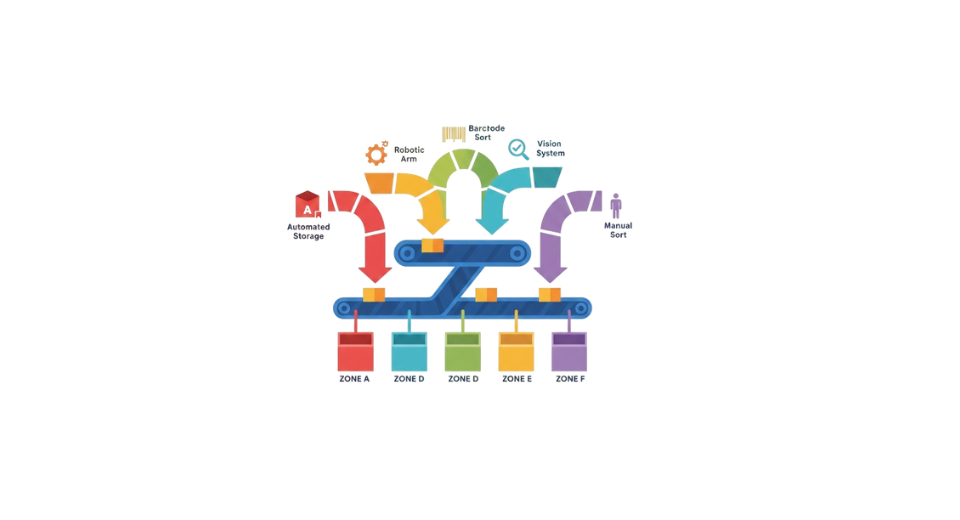
The report “Warehousing Sorting Systems Market By Product Type (Automated Sorting Systems, Semi-Automated Sorting Systems, Manual Sorting Systems), By Technology(Conveyor-Based Sorting Systems, Tilt Tray Sorters, Cross Belt Sorters, Push Tray, Others), By Application (Order Fulfillment, Parcel & Package Sorting, Returns Management, Inventory Management), By End-Users (E-Commerce & Retail, Logistics and Third Party Warehousing, Manufacturing, Food & Beverages, Pharmaceutical & Healthcare)” is expected to reach USD 5.51 billion by 2033, registering a CAGR of 7.23% from 2026 to 2033, according to a new report by Transpire Insight.
The warehousing sorting systems marketplace is experiencing high growth globally, which is generated by the growing automation of warehouses and delivery centres to enhance the accuracy and efficiency of operations. Sorting systems are major elements of contemporary material handling activities, which help in the speedy and precise handling of parcels, cartons, and goods in large facilities. Automation, robotics, sensors, and software integration have also contributed greatly to the speed of the systems, flexibility, and scalability, and these solutions are critical in high-volume warehousing settings.
Demand-wise, the quick growth of e-commerce, omnichannel retailing, and third-party logistics (3PL) services is a driving force of growth in the market. Increased order quantities, the want of a same-day delivery approach, and labor crises are compelling warehouse operators to implement automated and semi- automated sortation systems to avoid the reliance on manual labor and the prevalence of errors. Also, heightened parcel processing under courier, express, and postal has only enhanced the speed of demand in high-speed sorting technology like cross-belt and tilt-tray sorters.
In terms of region, the North American and European regions control the warehousing sorting systems market because of the early adoption of automation in the warehouse, associated expensive labor force, and the good representation of e-commerce and logistics players. In the meantime, the region of Asia-Pacific is becoming the fastest developing one, as it is backed by the rapid process of industrialization, the development of online trading systems, and the rise of investments into smart warehouses in countries like China, India, and Japan. Altogether, the market perspective is quite optimistic, and the development of AI-based sorting, the modular system structure, and the incorporation into warehouse management systems (WMS) is likely to have an impact on future evolution.
The Automated Sorting System segment is projected to witness the highest CAGR in the Warehousing Sorting Systems market during the forecast period.
According to Transpire Insight, the warehousing sorting systems market will see the highest growth from automated sorting systems during the forecast period due to the rapid growth in warehouse automation and smart logistics. The increase in e-commerce orders and omnichannel retailers, combined with higher labor costs and a shortage of labor, is prompting warehouse operators to invest in fully automated sorting systems. The benefits of automated sorting systems include increased throughput, improved accuracy, reduced manual intervention, and faster order processing, all critical to the success of modern distribution and fulfillment centers.
As technology continues to evolve, so do automated sorting systems; robotics, artificial intelligence, machine vision, and WMS integration are all enhancing the speed, efficiency, and flexibility of automated sorting systems. With the ability to grow their operations, support multiple different types of products, and offer immediate and next-day delivery, automated sorting systems are becoming increasingly popular among companies looking for improved operational efficiency and lower long-term costs. As a result, automated sorting is expected to grow faster than semi-automated or manual sorting, thus establishing this segment as the fastest-growing category within the warehousing sorting systems market.
The Cross-Belt Sorters segment is projected to witness the highest CAGR in the Warehousing Sorting Systems market during the forecast period.
A surge in need for speed and precision pushes cross-belt sorters ahead in warehouse tech growth. These systems handle parcels, boxes, clothes, and even oddly shaped items without slowing down. Fast turnaround becomes essential when running big distribution hubs. E-commerce platforms lean on them heavily. Courier networks find it hard to match. Third-party logistics teams choose these units because mistakes drop off. Flexibility gives an edge over older models. Growth follows where performance delivers.
Still, new tech upgrades like plug-in parts, smarter engines, fewer power draws, smoother links to storage software, and robotic helpers are pushing cross-belt sorters to handle more work at lower expense. Because they move large amounts quickly, make fewer mistakes, and adjust to rising orders, they fit tight turnarounds like shipping today or tomorrow. With storage hubs upgrading fast due to shifting supply needs, this kind of sorter is likely to grow faster than others now on hand.
The Parcel and Package Sorting segment is projected to witness the highest CAGR in the Warehousing Sorting Systems market during the forecast period.
Sorting packages and parcels should grow fastest in warehouse systems over the coming years. E-commerce booming globally plays a big role, along with courier, express, and postal operations expanding fast. More tiny deliveries now move through networks daily. Speed matters more - same-day promises push companies to act quicker. Cross-border trade climbs too, adding pressure on hubs handling goods. Accuracy becomes critical when volume surges without warning. Distribution spots must adapt swiftly, choosing systems that handle loads efficiently. High-speed sorting tools gain importance under these conditions. Expectations shift constantly, nudging upgrades behind the scenes.
Now machines sort more packages when demand spikes, thanks to upgrades paid for by shipping companies. Software links sorting gear to storage controls, live updates, and number-crunching tools that speed things up. Growth here outpaces every other part of warehouse automation, simply because it works so well under pressure.
The E-Commerce & Retail segment is projected to witness the highest CAGR in the market during the forecast period.
Online shopping keeps growing, so warehouses now sort goods faster than before. Because people want orders quickly and without mistakes, stores turn to machines that move boxes smartly. More items mean more complexity, pushing companies to upgrade how they handle packages. Speed matters more every day, making automation a practical choice instead of just an option. Handling countless products forces firms to rethink old ways of working inside distribution centers.
Now comes a change where packages arrive quicker, pushing warehouses to act faster. Labor gets pricier while fewer workers show up for shifts, nudging companies toward machines that sort at speed. These smart setups link directly into stock tracking tools, giving live updates without delays. Orders move more smoothly when the software talks straight to sorting arms. Around the world, online shopping grows, dragging warehouse tech along with it. Speed becomes normal, not special. This part of logistics climbs faster than any other using such gear.
The North America region is projected to witness the highest CAGR in the Warehousing Sorting Systems market during the forecast period.
According to Transpire Insight, Growth in North America’s warehouse sorting sector looks set to pick up pace over the coming years. A well-built logistics network sits at the core. Online shopping already reaches deep into daily life here. That pushes companies to move fast. Automation in storage spaces is not new; it caught on early. The United States leads because big online sellers operate there. So do major shipping firms and vast store supply chains. Speed matters now more than ever. Getting orders right and quickly keeps deliveries tight, like one day or even sooner. Paying workers more has become harder. Finding enough hands for busy hubs gets tougher, too. These pressures make machines a practical path forward. Factories are not the only places being automated anymore. Warehouses are joining fast. Sorting tasks once done by people increasingly fall to smart systems. Efficiency gains speak louder than tradition these days. Change creeps in quietly until it becomes standard. Expect more of this quiet shift ahead.
One reason North America stays ahead is steady spending on smarter storage tech, including AI-powered sorting tools plus automated systems tied into warehouse software. Because companies there prioritize getting more done with fewer mistakes while watching their returns closely, they keep adopting newer ways to sort goods quickly. Think cross-belt setups or conveyor models that adapt easily. Even as shipping routes grow tangled and customers demand faster drops, this part of the world keeps shaping how warehouses move items. Its mix of fresh ideas and solid earnings makes it central to growth in global sorting hardware. Revenue here doesn’t slow, even when elsewhere it does.
Key Players
Top companies include Armstrong Ltd, Atmos Systems, Beumer Group, Craftsman Storage Systems, Dematic, Falcon Autotech, Fortna, Interroll, Daifuku CO. Ltd, Murata Machinery, TGW Logistics, Gebhardt Intralogistics, Suzhou Apollo, Numina Group, Smartlog Group, Precision Warehouse Design, and others.
Drop us an email at:
Call us on:
+91 7666513636

 inquiry@transpireinsight.com
 APAC:+91 7666513636
 Address





