
Feb 17, 2026
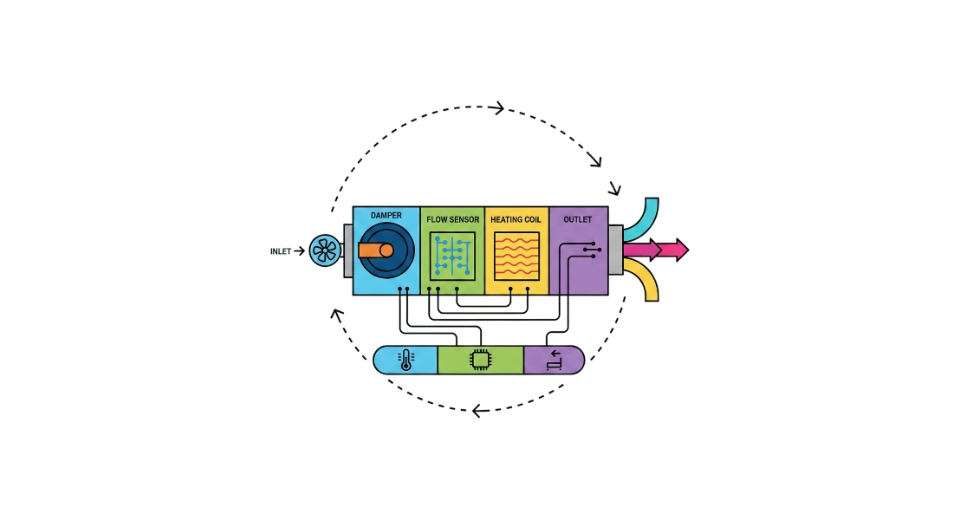
The report “Variable Air Volume Box Market By Type (Single Duct Variable Air Volume Box, Fan Powered Variable Air Volume Box, Induction Variable Air Volume Box), By Component (Damper, Actuator, Controller, Sensors, Airflow Measuring Station), By Application (Commercial Buildings, Industrial Facilities, Residential Buildings, Institutional Buildings) and By End User (Offices, Healthcare Facilities, Educational Institutions, Retail Spaces, Hospitality)” is expected to reach USD 5.60 billion by 2033, registering a CAGR of 8.80% from 2026 to 2033, according to a new report by Transpire Insight.
The Variable Air Volume Box Marketplace function as a vital segment of the HVAC industry as it pertains to variable air volume systems that offer efficient control of temperature/airflow within a building(s) through multiple zones in commercial/institutional/industrial buildings. As they adjust the volume of air delivered based on real-time thermal requirements, they allow for precise temperature control. Consequently, variable air volume boxes provide for more efficient use of energy and occupant comfort. The demand for variable air volume boxes has been increasing in all new construction projects and retrofit projects due to the growth of intelligent HVAC infrastructures/building automation systems globally. Market growth is closely correlated with the increased emphasis by governmental agencies and industry-wide on the reduction of energy consumption and the use of sustainable building products/practices. Additionally, energy conservation standards promote the use of new technologies to enhance the management of airflow. Variable air volume boxes provide a method for reducing energy usage by minimizing excessive airflow (when it is not needed) while still maintaining the stability of the indoor environment; therefore, they are an invaluable addition to current day HVAC design philosophies.
Technological improvements have changed today's competition in the marketplace. The introduction of smart controllers and sensors into nearly all types of buildings as well as digital monitoring capabilities have allowed building managers to optimize their systems so that they will operate more efficiently, control the use of energy more effectively, and produce a greater level of operational reliability. As commercial properties continue to become increasingly digitized, we are experiencing an even greater increase in demand for systems that can be used to provide centralized management of commercial properties.
More so, the expansion of commercial real estate development, as well as the modernization of older facilities, has helped fuel the long-term growth of this marketplace. The need for operational efficiency, reduced life-cycle cost and improved indoor air quality are the main reasons that facility owners are implementing variable air volume systems into their buildings. Therefore, the demand for these systems will increase throughout office buildings, healthcare facilities, schools, and retail stores.
The Single Duct Variable Air Volume Box segment is projected to witness the highest CAGR in the Variable Air Volume Box during the forecast period.
According to Transpire Insight, Single duct variable air volume boxes are the most prominent type segment, owing to their ease of operation, cost-effectiveness, and adaptability to conventional HVAC systems. These systems are commonly used in commercial buildings where there is a need for constant control over airflow and energy efficiency without complicating the system. The capability to control air volume according to zone requirements enables building managers to optimize energy consumption while ensuring a constant indoor environment. As organizations continue to emphasize the need to minimize operational costs and achieve energy efficiency goals, single duct systems remain the preferred choice in large-scale applications.
In addition, the type segment enjoys widespread usage in renovation projects where the need to upgrade existing HVAC infrastructure is given greater priority than replacing the entire system. The ease of installation and maintenance friendliness of single duct systems make them a preferred choice for facility managers who require hassle-free system performance. Advances in control solutions and compatibility with building automation systems further improve their attractiveness, ensuring continued dominance in the type segment.
The Controller segment is projected to witness the highest CAGR in the Variable Air Volume Box during the forecast period.
Controllers currently represent the largest market share in the component market, as they are the functional heart of variable air volume systems. The growing need for automated airflow control and energy efficiency is driving the adoption of sophisticated controllers that can monitor and adjust their performance in real time. The ability to integrate with building management systems enables the centralized control of airflow, temperature, and energy use, allowing building managers to optimize efficiency and minimize operating expenses. The trend towards smart buildings is also propelling the market for programmable and network-capable controllers.
Moreover, advances in digital communication technology and data analysis are also improving the functionality of controllers. Contemporary controllers can provide predictive maintenance, error detection, and performance optimization, which are gaining importance in large commercial and institutional buildings. As energy management and sustainability reporting become increasingly important across various industries controllers are becoming an essential part of the solution set for meeting the growing requirements of environmental and operational regulations.
The Construction segment is projected to witness the highest CAGR in the Variable Air Volume Box during the forecast period.
According to Transpire Insight, The construction segment is the dominant segment in the Variable Air Volume Box market, and the focus on sustainable construction and energy efficiency in buildings across the globe is only increasing in importance. This is because the Variable Air Volume Box provides the architect or builder with the opportunity to provide high insulation performance without compromising interior space, which is critical in the construction environment.
Moreover, the construction segment also benefits from the long-term cost savings that result from the improved efficiency in the use of heating and cooling systems in buildings. This makes the case stronger for the adoption of Variable Air Volume Boxs, and with the increasing pace of urbanization and construction activities across the globe, the construction segment is likely to remain the dominant segment in the market.
The Offices segment is projected to witness the highest CAGR in the Variable Air Volume Box during the forecast period.
Offices are the most prominent end-user segment, as working environments demand dynamic temperature control and stable indoor climate conditions for enhanced productivity. Variable air volume systems enable zone-wise control of airflow, which helps in effective management of variable occupancy rates, typical of contemporary office space designs. This feature helps in achieving energy savings along with optimal environmental conditions, making VAV systems the most sought-after solution in office infrastructure.
The rising demand for smart offices and hybrid workspaces is also contributing to the rising demand for these systems. Organizations are increasingly spending on HVAC system upgrades to enhance energy efficiency and meet sustainability goals. The ability to interface with building automation systems enables real-time monitoring and dynamic control, which helps facility managers optimize system efficiency. With office buildings increasingly focusing on occupant well-being and cost-effectiveness, the demand for advanced airflow control solutions remains robust.
The North America region is projected to witness the highest CAGR in the Variable Air Volume Box during the forecast period.
North America is currently the foremost regional market because of early adoption of cutting-edge HVAC solutions and favorable government policies that promote energy efficiency. The presence of well-developed commercial infrastructure and awareness about the need to optimize operational costs has fueled investments in airflow solution systems. Retrofitting projects in existing commercial infrastructure have also fueled demand, especially with the need to meet changing energy efficiency norms.
The region is also characterized by robust innovation and widespread adoption of building automation systems. The convergence of intelligent systems and energy management solutions is fueling the adoption of variable air volume systems in offices, healthcare facilities, and educational institutions. Ongoing investments in smart building projects will ensure that the region retains its dominant position in the market.
Key Players
The top 15 players in the Variable Air Volume Box market include Johnson Controls International plc, Carrier Global Corporation, Trane Technologies plc, Daikin Industries, Ltd., Honeywell International Inc., Siemens AG, TROX GmbH, Systemair AB, Price Industries Limited, Nailor Industries, Inc., Titus HVAC, Krueger-HVAC, Lennox International Inc., Swegon Group AB, and FläktGroup Holding GmbH.
Drop us an email at:
Call us on:
+91 7666513636

 inquiry@transpireinsight.com
 APAC:+91 7666513636
 Address





