
Jan 12, 2026
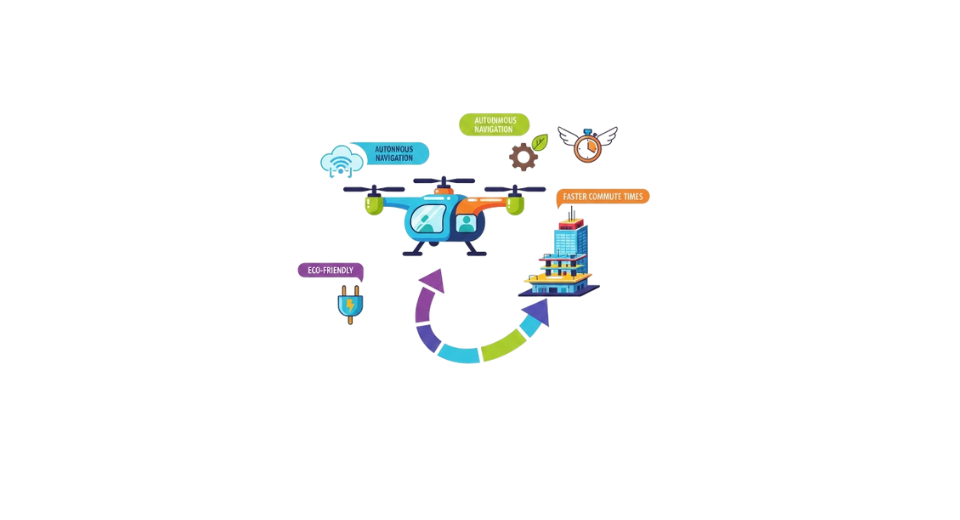
The report “Urban Air Mobility Market By Component By Component (Hardware, Software), By Vehicle Type (Air Taxis, Air Metros & Air Shuttles, Personal Air Vehicles, Cargo Air Vehicles, Air Ambulances & Medical Emergency Vehicles and Last-Mile Delivery Vehicles), By Operation(Remotely Piloted, Fully Autonomous, Hybrid), By Range((Intracity (Below 100 km), Intercity (Above 100 km)), By Application (Passenger Transport and Freighter), By End Use (E-Commerce, Commercial Ridesharing Operators, Private Operators, Medical Emergency Organizations, Others)” is expected to reach USD 29.85 billion by 2033, registering a CAGR of 28.50% from 2026 to 2033, according to a new report by Transpire Insight.
The market for Urban Air Mobility (UAM), a new kind of contemporary transportation intended to transport people and commodities by air both within and between cities, is rapidly growing on a global scale. UAM, which is based on autonomous flight technologies, electric vertical takeoff and landing (eVTOL) aircraft, and specially designed infrastructure like vertiports and digital air traffic systems, is becoming more popular as cities look for ways to alleviate increasing traffic and mobility issues. Aerial mobility is increasingly seen as a useful addition to current transportation systems as urban populations grow and ground networks encounter capacity constraints.
The need for more resilient urban logistics networks, greener mobility options, and quicker point-to-point travel is influencing market demand. To get ready for commercial operations, governments, local governments, and private businesses are investing in infrastructure development, pilot programs, and regulatory frameworks. With real-world trials and early deployments occurring in a number of major cities, passenger air taxis and cargo-focused aerial vehicles are progressing beyond idea stages.
Market momentum is still supported by technological advancements. UAM aircraft are becoming more dependable and efficient thanks to advancements in electric propulsion, battery performance, lightweight materials, and flight control technologies. Simultaneously, operators are planning safe and scalable operations in busy urban contexts with the use of digital tools for navigation, fleet management, and airspace coordination.
By the early 2030s, it is anticipated that the Urban Air Mobility business will have developed from a small number of early services into a transportation sector that is profitable. UAM is expected to become more significant in urban passenger transport, logistics, and emergency response as aircraft certification develops and public trust rises, especially in areas actively investing in smart mobility infrastructure.
The Hardware segment is projected to witness the highest CAGR in the Urban Air Mobility market during the forecast period.
According to Transpire Insight, Hardware, which includes vital components including airframes, propulsion systems, batteries, and structural parts, is the foundation of the Urban Air Mobility ecosystem. Aircraft range, payload, and overall performance are directly impacted by manufacturers' efforts to reduce weight while increasing strength and energy efficiency. All development initiatives continue to prioritize investments in cutting-edge materials and modular designs.
Demand for dependable, certified hardware is rising as the business approaches commercial scale. Performance is becoming less significant than standardization and manufacturability, especially as businesses get ready to increase production volumes. Hardware innovation is essential to both regulatory approval and long-term market growth since it supports safety standards.
The Air Taxis segment is projected to witness the highest CAGR in the Urban Air Mobility market during the forecast period.
The most prominent and commercially promising segment of the UAM sector is generally considered to be air taxis. Because they drastically cut down on travel times in crowded areas, they provide a strong value proposition for brief urban visits. They are simpler to include into current mobility ecosystems due to their interoperability with ride-sharing services and established route layouts.
Development in this sector is being accelerated by strong interest from investors, aircraft manufacturers, and mobility service providers. Air taxis are getting closer to regular commercial operation because to ongoing certification processes, demonstration flights, and infrastructure planning. As services spread throughout major cities, it is anticipated that air taxis will eventually contribute significantly to UAM's earnings.
The Autonomous segment is projected to witness the highest CAGR in the Urban Air Mobility market during the forecast period.
According to Transpire Insight, One important long-term objective for the urban air mobility market is autonomous flight. Autonomous operations can enable higher service frequencies and drastically reduce operating costs by lowering or eliminating the requirement for onboard pilots. The technology is gradually getting closer to commercial ready thanks to developments in artificial intelligence, sensors, and flight control software.
As a practical step toward complete autonomy, many operators are currently implementing hybrid or remotely piloted models. Regulators and passengers can gain confidence in autonomous aircraft systems thanks to this staged approach. It is anticipated that autonomous operations would enable UAM services to reach their full scaling potential as safety records and laws develop.
The Intracity segment is projected to witness the highest CAGR in the Urban Air Mobility market during the forecast period.
Nowadays, the majority of UAM deployment tactics are based on intracity activities. Shorter flying distances enable operators to launch services within city limits faster by lowering energy consumption and simplifying infrastructure planning. These routes specifically address the difficulties associated with daily travel in crowded urban settings.
Intracity UAM services are especially useful in cities with heavy traffic and few options for ground transportation growth. Intracity routes are anticipated to be the main entry point for wider UAM usage as vertiport networks grow and use rates rise.
The Passenger Transport segment is projected to witness the highest CAGR in the Urban Air Mobility market during the forecast period.
According to Transpire Insight, The primary goal of commercial UAM development is still passenger transportation. Mobility providers and consumers alike continue to be very interested in the prospect of quicker, direct transit between cities. Access is made easier and UAM is positioned as a component of a more comprehensive, integrated mobility experience through integration with current ride-hailing systems.
Although premium users may be served by early services, accessibility is anticipated to progressively increase due to advances in efficiency and scale. Passenger transportation is probably going to continue to be the UAM market's most lucrative use in the long run.
The segment is projected to witness the highest CAGR in the Urban Air Mobility marketCommercial Ridesharing Operators during the forecast period.
The UAM environment is being shaped more and more by commercial ridesharing services. These operators are in a good position to launch aerial services in addition to ground-based options since they have established customer networks, digital booking platforms, and expertise in managing urban mobility.
Their participation facilitates client uptake and operational coordination, which speeds up market entry. It is anticipated that strategic alliances between ridesharing companies and UAM developers would be a major factor in service expansion and market penetration.
The North America region is projected to witness the highest CAGR in the Urban Air Mobility market during the forecast period.
In the global market for urban air mobility, North America is the most developed and significant region. Through a combination of robust aerospace capabilities, vigorous private investment, and early regulatory engagement, the United States in particular is spearheading early commercialization. The region is at the vanguard of practical deployment as major U.S. cities are already assessing air taxi corridors, vertiport locations, and integration with current transportation networks.
North America's position is further strengthened by the presence of top UAM developers, reputable aircraft manufacturers, and technology suppliers. In order to provide a more straightforward road to market access, regulatory organizations are collaborating closely with industry participants to establish certification processes, operational standards, and safety frameworks. Here, pilot projects, test flights, and infrastructure development activities are developing more quickly than in any other area.
Key Players
The top 15 players in the Urban Air Mobility market include Joby Aviation, Archer Aviation, Lilium GmbH, Embraer through Eve Air Mobility, Volocopter GmbH, EHang Holdings, Airbus SE, Boeing, SkyDrive Inc., Kitty Hawk, Hyundai Urban Air Mobility, Safran S.A., Honeywell International, Ascendance Flight Technologies, and XTI Aircraft, all contributing to aircraft development, systems integration, and the advancement of next-generation urban aviation services.
Drop us an email at:
Call us on:
+91 7666513636

 inquiry@transpireinsight.com
 APAC:+91 7666513636
 Address





