
Mar 10, 2026
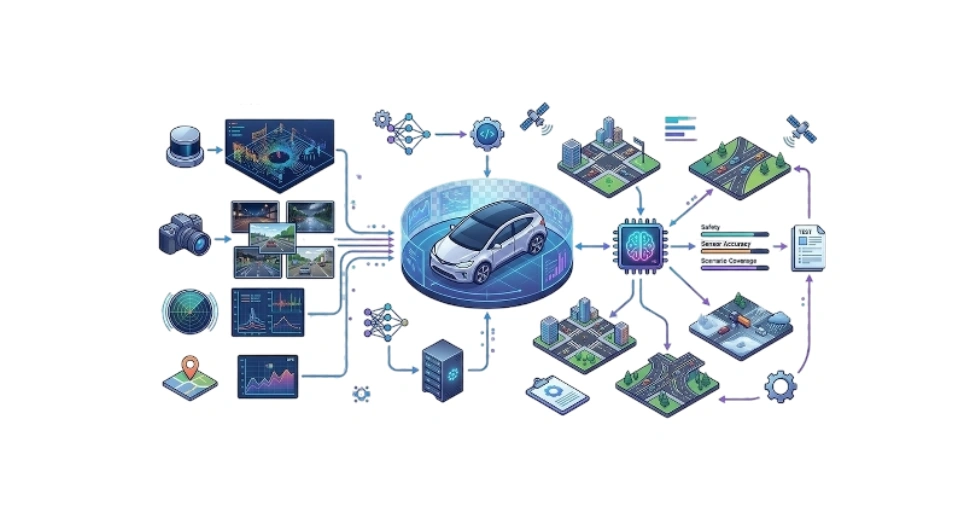
The report “Automotive AI Simulation and Synthetic Data Generation Market By Component (Software, Services), By Deployment Mode (Cloud-Based, On-Premises), By Technology (Simulation Platforms, Synthetic Data Generation, Digital Twin Technology, AI-Based Scenario Generation), By End-Users (Automotive OEMs, Tier1 Suppliers, Technology Companies, Autonomous Vehicle Developers)” is expected to reach USD 9.20 billion by 2033, registering a CAGR of 3.90% from 2026 to 2033, according to a new report by Transpire Insight.
With cars learning to drive themselves, demand climbs for smart simulations that mimic real roads. Because gathering actual street data takes so long and costs too much, teams now build digital worlds instead. Realistic scenes pop up inside computers, giving AI plenty of practice without leaving the lab. Instead of waiting months for rare road moments, engineers generate them on demand. As ADAS gets smarter, these virtual tests keep pace with new challenges. Hard-to-find edge cases appear easily in simulated storms, fog, or sudden obstacles. Training never stops, even when vehicles stay parked. Through code, not concrete miles, progress rolls forward.
Not just growing demand, but rising software intricacy inside cars pushes the market forward. Instead of waiting for real crashes, companies now build digital environments where sensors learn to spot obstacles better. These virtual tests cover edge cases like fog at midnight or a child chasing a ball that rarely happen on roads. With synthetic scenes replacing some road miles, engineers verify responses safely, behind screens. Safety improves not because rules changed, but because unseen trials run faster and deeper than physical ones ever could.
Now coming into sharper focus, improvements in artificial intelligence blend smoothly with machine learning and cloud systems to strengthen how simulations run. Instead of relying only on real-world tests, car makers turn toward complex virtual environments that speed up design work while cutting expenses tied to physical trials. Because regulations demand higher safety standards, these digital tools help satisfy legal demands without constant road testing. With self-driving features and smart transportation gaining ground, simulated scenarios built by algorithms play a quiet but vital role behind new vehicle creation.
The Software segment is projected to witness the highest CAGR in the Automotive AI Simulation and Synthetic Data Generation market during the forecast period.
According to Transpire Insight, Software should grow fastest in the Automotive AI Simulation and Synthetic Data Generation market over the coming years because it supports virtual tests, scene modeling, and artificial data production for self-driving tech. Thanks to software tools, car makers can build, teach, and check AI systems inside digital worlds. This boosts how well sensors interpret surroundings, enhances choices made by algorithms, and strengthens full operations. Such programs deliver adjustable, wide-reaching features that speed up building intelligent functions, at the same time cutting back on lengthy physical data gathering.
On top of that, more firms now rely on cloud systems along with smart simulation tools, pushing the need for stronger software even higher. Car makers and tech developers alike put money into sim tools improving how safe vehicles are, boosting efficiency, and cutting down the time it takes to bring new models out. With fresh progress popping up in AI, learning algorithms, and virtual model tech, software becomes tougher to ignore when crafting simulations or generating fake but realistic test data, giving it extra momentum through the years ahead.
The Cloud-Based segment is projected to witness the highest CAGR in the Automotive AI Simulation and Synthetic Data Generation market during the forecast period.
Despite rising demand across sectors, the Cloud-Based portion stands out in Automotive AI Simulation and Synthetic Data Generation, expected to grow fastest through the forecast window. Scalable processing strength comes from remote servers, making massive simulations possible even for smaller teams. Instead of building expensive local systems, firms tap into cloud resources to handle intense computational tasks. Running advanced scenarios becomes easier when access scales with need, especially during peak development phases. Training intelligent driving models benefits greatly under such setups, where speed matters just as much as volume. With less money spent on physical hardware, budgets shift toward innovation rather than maintenance. Efficiency climbs because workloads adapt quickly, matching real-time project demands. Growth here ties closely to how easily companies can iterate on designs using virtual environments.
Cloud setups let different teams reach simulations instantly, work together smoothly, yet roll out updates quickly, no matter where they are. While car makers lean into these systems, tech firms plus self-driving startups also shift toward online platforms - boosting test depth while sharpening how well AI learns. Even so, stuffing smart algorithms, learning models, and heavy-duty processing power into virtual spaces pushes cloud usage up, quietly reshaping what dominates the marketplace.
The Simulation Platforms segment is projected to witness the highest CAGR in the Automotive AI Simulation and Synthetic Data Generation market during the forecast period.
According to Transpire Insight, Growth looks likely in the simulation platform sector over the coming years, thanks to rising needs for digital trials, forecasting models, and fine-tuning operations in many fields. With these tools, companies can mirror actual conditions inside a computer setting so teams tweak designs, spot flaws, and improve workflows while skipping expensive, risky hardware builds. Industries like aviation, car production, medical tech, factory work, and circuit design lean on them heavily, simply because getting things right matters too much to leave to chance.
Today, machines that learn are merging into testing systems, which boosts their reach while lifting precision. As this happens, firms start relying on virtual models not just to speed up design work but to spend less during daily operations too. Driven by a move into smarter factories, digital shifts push these tools further into workflows where they quietly reshape how fast teams respond. Accuracy climbs when cloud power joins in, opening doors once locked by old limits. One outcome stands clear: better choices emerge without extra effort simply because data flows more smoothly now.
The Automotive OEM segment is projected to witness the highest CAGR in the Automotive AI Simulation and Synthetic Data Generation market during the forecast period.
Growth looks likely in the auto manufacturer sector over the coming years. Rising use of smart digital design tech pushes better car building, shaping, and output speed. Instead of traditional methods, companies now run tests on virtual models using simulation software. These simulations check how parts and whole systems behave when pushed through realistic scenarios. Flaws show up early, making fixes easier before production begins. Safety improves because stress points get spotted ahead of real-world use. Aerodynamic tweaks happen faster when tested digitally first. Electric versions gain longer range as battery setups are fine-tuned without hardware changes. Fewer actual test cars must be built, cutting costs across the board. Time from idea to showroom shortens as virtual steps replace slow physical loops.
On top of that, carmakers are turning more to simulation tools because electric cars, self-driving features, and smart vehicle networks keep growing fast. Since these systems involve tricky parts like power control, motion behavior, heat handling, or safety aids for drivers, testing them in virtual space makes things easier. With pressure to meet rules, save money, and stay ahead, firms rely heavily on digital models to refine designs early. That way, flaws show up sooner, quality goes up, and moving into future transport gets less bumpy overall.
The North America region is projected to witness the highest CAGR in the Automotive AI Simulation and Synthetic Data Generation market during the forecast period.
Growth in North America's Automotive AI Simulation and Synthetic Data Generation market looks likely over the coming years. Home to major carmakers, tech firms, and innovators in self-driving systems, the region has solid groundwork. With more funding flowing into driverless tech, electric cars, and smart transport powered by artificial intelligence, demand rises. Simulation software and synthetic data tools are seeing wider use because of this shift. Testing automated driving logic inside digital settings helps cut expenses while lifting safety standards. Progress moves faster when real-world trials are partly replaced by virtual ones. Innovation gains speed without sacrificing reliability.
On top of that, fast tech systems power the area, backed by widespread cloud use along with solid investment in testing and discovery work. Car makers and tech players across North America keep weaving AI-powered sim tools into their workflows, tweaking how vehicles perform, smoothing out checks, while meeting legal rules, too. Teaming up more often, auto brands link arms with coders and artificial intelligence specialists, quietly pushing growth forward. With attention locked on self-driving features, electric shifts, and digital upgrades, the region holds steady as a central spot where car simulations and made-up test data take shape.
Key Players
Top companies include NVIDIA Corporation, Microsoft Corporation, Intel Corporation, Alphabet Inc., Amazon Web Services Inc., Ansys Inc., Siemens AG, dSPACE GmbH, Cognata Ltd., Applied Intuition Inc., Foretellix Ltd., MSC Software Corporation, Altair Engineering Inc., Dassault Systèmes SE, Hexagon AB, MathWorks Inc., and Synopsys Inc.
Drop us an email at:
Call us on:
+91 7666513636

 inquiry@transpireinsight.com
 APAC:+91 7666513636
 Address





