
Jan 13, 2026
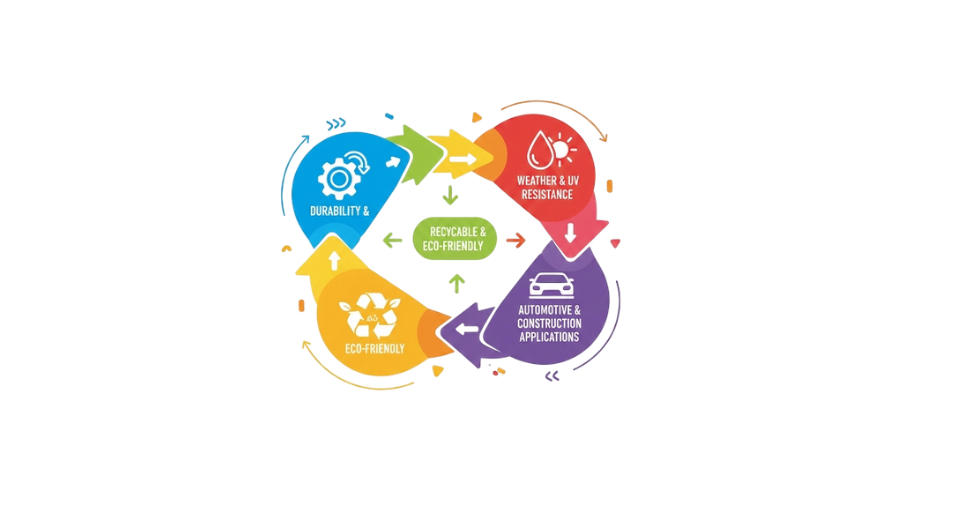
The report “Thermoplastic Polyolefin Market By Type (Compounded TPO, In-Situ TPO), By Application (Automotive, Building & Construction, Wire & Cables, Consumer Goods, Others), By End-Use Industry (Automotive & Transportation, Construction, Electrical & Electronics, Industrial & Consumer Products), and By Processing Method (Injection Molding, Extrusion, Thermoforming).” is expected to reach USD 42.30 billion by 2033, registering a CAGR of 9.80%from 2026 to 2033, according to a new report by Transpire Insight.
The Thermoplastic Polyolefin (TPO) market is becoming more important in the polymer biz because it's so versatile, cheap, and performs well in many industries. TPO mixes the give of elastomers with the easy processing of thermoplastics, so it's a great choice when you need something strong, light, and recyclable. The market is helped by improvements in polymer mixing and because more people are okay with using TPO instead of regular plastics, rubber, and metals.
The auto industry is a big reason why TPO is in demand. Car companies want lighter materials to save gas, cut emissions, and follow new rules. TPO is common in car parts inside and out because it can take a beating, can be designed in many ways. Also, it doesn't cost too much. The building industry is also using more TPO in roofing, insulation, and waterproofing because there's more money being spent on construction. The focus is on saving energy and using materials that last.
From a regional perspective, North America and Europe represent mature markets with stable demand supported by automotive production and construction activity, while Asia Pacific is emerging as the fastest-growing region due to rapid industrialization, expanding vehicle manufacturing, and infrastructure development. More demand comes from wires and cables, electronics, and things people buy. TPO is good because it can handle heat, resist chemicals, and last a long time. Ways of processing it, like injection molding, make it even more flexible, allowing for efficient production and changes across different uses. New ideas in TPO mixes are also making it better.
The Compounded TPO segment is projected to witness the highest CAGR in the Thermoplastic Polyolefin market during the forecast period.
According to Transpire Insight, Compounded TPO is the biggest part of the Thermoplastic Polyolefin market because it can be made to have specific mechanical, thermal, and appearance traits for different uses. Unlike in-situ TPO, the compounded types let companies control how stiff, impact-resistant, UV stable, and colorful the material is. That makes them good for tough car and building jobs. This freedom lets manufacturers and industrial users meet tough rules for performance and lastingness while keeping costs down. The growing need for light, recyclable, strong polymers has also made compounded TPO more popular in many fields.
Looking at the market, compounded TPO does well because it fits with trends for being sustainable and lightweight, mostly in car making. More money is being put into better compounding tech and new materials, which is making products more consistent and allowing recycled stuff to be added without hurting how they work. This has made compounded TPO more competitive with other polymers. Plus, compounded TPO can be made in large amounts, which helps it stay in front and makes it a top choice for long-term industrial and business uses.
The Automotive segment is projected to witness the highest CAGR in the Thermoplastic Polyolefin market during the forecast period.
The car industry is still the biggest user of Thermoplastic Polyolefin because they're trying to make cars lighter, save gas, and meet rules. TPO is popular for bumpers, dashboards, and interior parts because it's strong, easy to shape, and looks good. It helps car companies make lighter cars that still work well, which cuts down on pollution. So, it's a key material for today's cars.
As car production gets back on track and more people buy electric cars, TPO use is growing. Electric car makers use TPO for light body parts and interiors to make up for the heavy batteries and drive farther. Plus, TPO can be recycled, which fits with what big car companies are doing to be more environmentally friendly. All of this means the car industry will keep using lots of TPO, keeping it the top market for this material.
The Automotive & Transportation segment is projected to witness the highest CAGR in the Thermoplastic Polyolefin market during the forecast period.
According to Transpire Insight, The auto and transport industry is the biggest user of Thermoplastic Polyolefin because there's always a need for strong, light, and cheap materials in cars, trucks, and public transit. TPO holds up well against chemicals, weather, and wear and tear, which makes it great for transportation. More city living and shipping are also leading to more trucks being made, which boosts the need for TPO parts.
Looking at it closely, this industry is helped by ongoing, basic things instead of just quick ups and downs in demand. Rules to cut carbon emissions, plus what people want in terms of safety and how long things last, push a switch to TPO. Also, car companies are using the same materials for different vehicle models more. This helps keep sales steady and makes supplier relationships last. Because of all this, the auto and transport part of the TPO market keeps growing steadily and brings in the most money.
The Injection Molding segment is projected to witness the highest CAGR in the Thermoplastic Polyolefin market during the forecast period.
Because it's efficient, precise, and good for making lots of stuff, injection molding is the top way to process Thermoplastic Polyolefin. The method lets you make complex, accurate parts with quality that stays the same, which is why it works so well for cars and things people buy. Injection molding also lets you be flexible with designs, so companies can combine different jobs into one part, saving time putting things together and cutting costs overall.
Looking at the market, injection molding works great with compounded TPO materials, which helps get the best action in different uses. Better molding tech, like machines that run themselves and save power, are also making things more productive and cheaper. The need for custom, strong TPO parts is growing, so injection molding is still the go-to way to process them. It stays on top and helps production grow in both old and markets.
The Asia Pacific region is projected to witness the highest CAGR in the Thermoplastic Polyolefin market during the forecast period.
The Asia-Pacific area is the main growth spot in the global Thermoplastic Polyolefin (TPO) market. This is because of quick factory growth, more car production, and big building projects in countries like China, India, Japan, and South Korea. The area has a good manufacturing setup, can make things cheaply, and has more local need for strong, light polymer stuff.
More people are buying cars because cities are growing and people are earning more, which keeps the need for TPO high for car parts inside and outside. At the same time, the building business is using more TPO for roofs, insulation, and to keep water out because it lasts long, handles weather well, and doesn't cost much to keep up. All this makes Asia-Pacific very important for growing the world market.
Looking closely, Asia-Pacific leads because it's good at both making and selling TPO. It has raw materials nearby, makes more compounds, and has many manufacturers from the area and the world, which makes the supply chain work well and keeps prices low. Governments in the area are also making rules to protect the environment and save energy, so they want to use materials like TPO that can be recycled and work well. Also, there's more money being spent on making electric cars and smart buildings, which is making new materials like TPO more popular. These things together help TPO stay in demand, so Asia-Pacific will likely keep growing the world market for it.
Key Players
LyondellBasell Industries N.V., ExxonMobil Corporation, Borealis AG, Dow Inc., Mitsui Chemicals, Inc., Sumitomo Chemical Co., Ltd., Braskem S.A., INEOS Group Holdings S.A., Chevron Phillips Chemical Company LLC, PolyOne Corporation, Arkema S.A., BASF SE, LG Chem Ltd., Sinopec Group, and Reliance Industries Limited.
Drop us an email at:
Call us on:
+91 7666513636

 inquiry@transpireinsight.com
 APAC:+91 7666513636
 Address





