
Jan 27, 2026
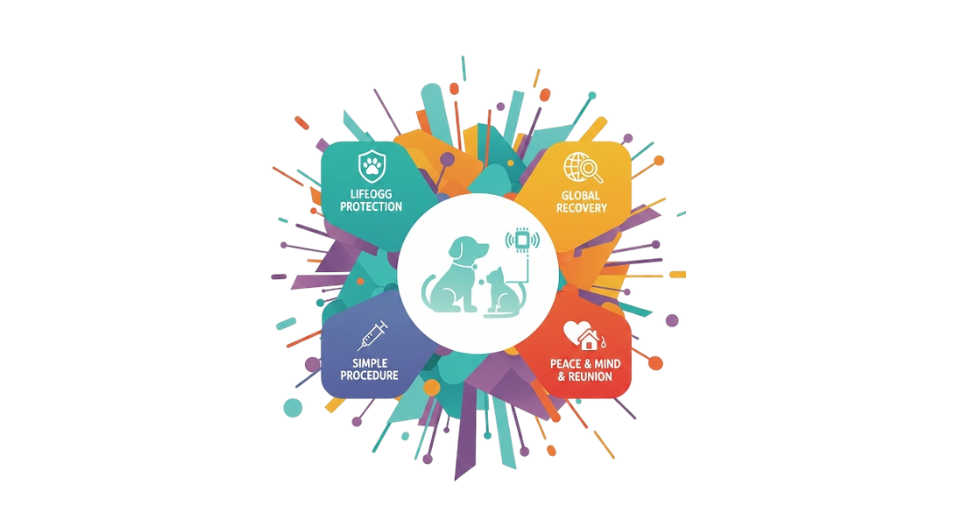
The report “Pet Microchips Market By Product Type (RFID Pet Microchips, GPS-Enabled Pet Microchips, Biometric-Integrated Microchips, Others (Hybrid & Advanced Identification Chips)), By Technology (Low-Frequency (LF) Microchips, High-Frequency (HF) Microchips, Ultra-High Frequency (UHF) Microchips), By Application (Pet Identification & Tracking, Veterinary Information Storage, Ownership Verification, Lost & Found Recovery, Regulatory & Compliance Identification) and By End User (Veterinary Clinics & Hospitals, Animal Shelters & Rescue Organizations, Pet Owners, Research & Breeding Centers)” is expected to reach USD 2.35 billion by 2033, registering a CAGR of 13.00% from 2026 to 2033, according to a new report by Transpire Insight.
Global Pet Microchips Market is observed to be expanding on a regular basis with an increased focus on permanent pet identification, a rise in pet ownership, and enforcement of animal welfare legislation. Pet microchip technology is being increasingly used to provide animals with a secure means of association with a data bank containing information on ownership and health status. Microchip technology is becoming more vital with a rise in pet movement as a result of increased urbanization. Pet microchipping services are highly backed by government regulations and municipal laws that seek to address the management of stray animals and the monitoring of immunization recoverability. Pet clinics, as well as animal shelters and rescue centers, remain instrumental in this trend through the provision of implantation services and raising awareness among pet owners about the relevance of the product. Moreover, the pet microchipping services market is further backed by the developing partnership between pet clinics and digital pet registries, which help enhance the recoverability of the provided services.
Technological advancements in microchips have led to improvements in their durability, scanning capabilities, and international compatibility. Although RFID-based tracking solutions have remained at the forefront owing to factors such as affordability, increasing adoption of these solutions, and governmental acceptance, those equipped with GPS technology and identification solutions are slowly picking up. This is enhancing the value proposition of microchips. Overall, the Pet Microchips Market has favorable scope for growth, driven by the rise of awareness, expansion of the veterinary infrastructure sector, and increased regulatory compliance and conformity to achieve the common objective of animal welfare across the globe.
The RFID Pet Microchips segment is projected to witness the highest CAGR in the Pet Microchips during the forecast period.
According to Transpire Insight, The RFID pet microchip business segment leads the pack as the most developed and widely used type of technology. Its sheer market dominance is largely due to the cost efficiency, lifespan, as well as high compatibility with standardized scanning devices used in various shelters and clinics. Government regulations in various countries, including North America and Europe, mainly favor the use of RFID-based solutions.
In terms of installation and use, RFID microchips are known for their reliability and low maintenance needs. The idea of linking these with pet registration databases nationwide and region-wise makes them extremely effective for lost and found cases. With awareness programs focusing so heavily on permanent identification techniques, RFID microchips are likely to hold the top spot even after the emergence of newer and technologically advanced devices.
The Low-Frequency (LF) Microchips segment is projected to witness the highest CAGR in the Pet Microchips during the forecast period.
The low-frequency microchips lead in the technology category owing to their strong capabilities in biological environments and high level of conformity to international ISO standards. In addition, the LF microchips ensure a strong level of accuracy in the scanning process with minimal interference from animal tissues. They are the most appropriate for use in veterinary identification and are highly compatible with existing scanning devices.
The scalability of LF technology also supports mass implementation of the technology in various government-sponsored identification schemes. In terms of cost-effectiveness, LF technology is also acceptable. The greater the frequency, the more the data. LF technology remains number one even with the added advantages of higher frequencies.
The Pet Identification & Tracking segment is projected to witness the highest CAGR in the Pet Microchips during the forecast period.
According to Transpire Insight, Pet identification tracking remains the largest application area, which is driven by the increasing number of lost pets, as well as awareness about recovery benefits. This is because microchipping greatly enhances the rates of recovery through permanent identification, which cannot be removed or altered. Municipal regulations positively influence pet adoption in several regions, amid increasing animal welfare.
This application also stands to benefit from the trend of the digitalization of pet records, which allows the association of identifying information, ownership, and medical history. Animal shelters and veterinarians encourage the microchipping of pets as a preventive measure, thus guaranteeing a steady client base. As the trend of pet ownership spreads across the globe, this identifying and tracking function will constitute the main driving force in the growth of the microchip market.
The Veterinary Clinics & Hospitals segment is projected to witness the highest CAGR in the Pet Microchips during the forecast period.
The veterinary clinics and hospitals segment has the highest market share due to their importance in the implantation, registration, and education process. They act as the primary points of contact between the pet owners and the medical staff, thus allowing for the highest rate of adoption of the product during the normal pet health checks and vaccinations. Expenditure on veterinary products will continue to rise.
In addition, clinics serve as intermediaries between pet owners and registry platforms, thus facilitating the enhancement of the accuracy of the recovered data. Technological upgrade of veterinary infrastructures, which involves digital management of medical records, is also improving the integration of pet microchip information in the healthcare system, thus serving as the foundation for sustainable growth of the market in the future.
The North America region is projected to witness the highest CAGR in the Pet Microchips during the forecast period.
North America is the primary regional market for pet microchips, driven by high ownership rates for companion animals and greater awareness regarding animal welfare and responsible pet ownership. This region has strong, established veterinary infrastructure, with microchipping services being widely available along with good access to centralized pet registries. The presence of regulatory mandates on the mandatory microchipping of dogs and cats across several U.S. states and Canadian municipalities supplements the consistent demand. Animal shelters and rescue organizations are also promoting microchipping to increase the recovery rates of pets and to diminish stray populations. Such initiatives, in turn, reinforce the market penetration not just across cities but also major suburban areas.
The United States continues to be the major contributor toward regional growth because of its fully developed digital registry systems and the integration of microchip data with veterinary healthcare records. High disposable income levels also facilitate higher adoptions of identification technologies, including high-end offerings. Continuous public awareness campaigns, partnerships within veterinary networks and manufacturers of microchips, and stringent enforcement of compliance regulations are likely to keep the leading position of North America in the global pet microchips market during the forecast period as well.
Key Players
The top 15 players in the Pet Microchips market include Merck & Co., Inc., Pethealth Inc., HomeAgain, Datamars SA, Allflex USA, Inc., AVID Identification Systems, Inc., Bayer AG, Trovan Ltd., Virbac, Animalcare Ltd., Microchip4Solutions Inc., PeddyMark Ltd., EIDAP Inc., Micro-ID, Ltd., and PetLink.
Drop us an email at:
Call us on:
+91 7666513636

 inquiry@transpireinsight.com
 APAC:+91 7666513636
 Address





