
Jan 26, 2026
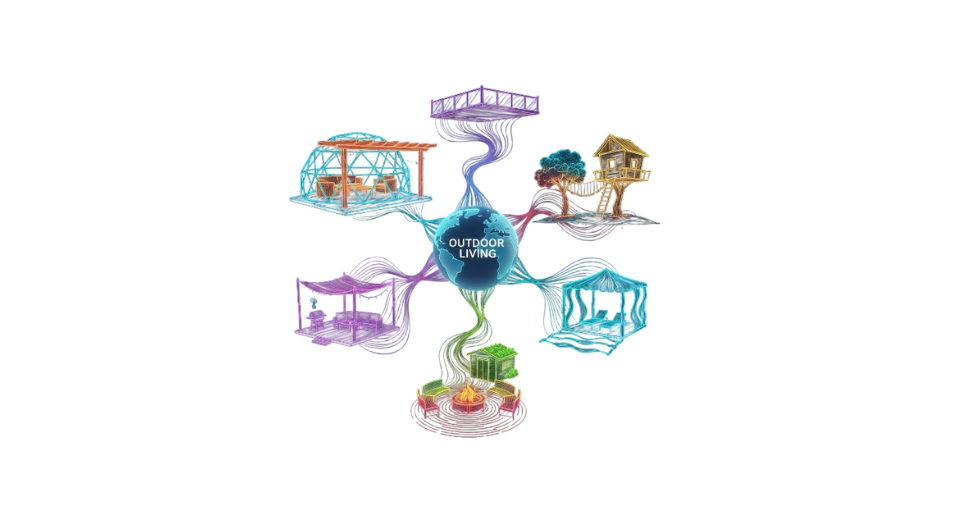
The report “Outdoor Living Structures Market By Product Type (Pergolas, Gazebos / Pavilions, Shade Sails, Sunrooms / Patio Covers, Outdoor Kitchens, Greenhouses, Arbors, Decks & Patios, Others), By Material (Wood, Metal / Steel / Aluminum, Fabric & Shade Materials, Glass, Composite & Others, Vinyl), By End Use (Residential, Commercial, Hospitality)” is expected to reach USD 12.9 billion by 2033, registering a CAGR of 7.80% from 2026 to 2033, according to a new report by Transpire Insight.
With an increase in functional yet enhanced outdoor living spaces, thus providing additional living volume, structures such as pergolas, gazebos, patios, etc., incorporated in property designs, offer an expanding outdoor living structures market with significant potential for growth. This is an outcome of an increase in renovation activity in properties, an increase in discretionary spend, along with an increase in social or recreational outdoor lifestyles. Furthermore, this demand also gets a push from the hospitality and commercial industries since dining areas, recreational areas with shading, etc., are now becoming imperative features for engaging with customers. Restaurants, resorts, etc., are all vying to construct structures with weather resistance and customization becoming crucial factors in the purchase decisions made by clients/hotel management.
Material technology has contributed greatly to market development, with manufacturers paying close attention to composite materials, aluminum, and treated wood to optimize longevity, appearance, and ease of maintenance. Improved prefabricated construction has equally contributed to faster installation rates, which has resulted in increasing adoption rates, especially in mid-range and premium consumer markets. In terms of geography, the drive for the segment will come from urbanization, housing, and the construction of tourist infrastructure, which bodes well for the overall expansion of the established 'developed' economies, which in aggregate, create a picture of stability for the category within the broader construction/renovation paradigm.
The Pergolas segment is projected to witness the highest CAGR in the Outdoor Living Structures market during the forecast period.
According to Transpire Insight, Pergolas signify the leading segment associated with outdoor living structures from a functional and market-oriented perspective. The flexibility and adaptability associated with its design allow it to specifically meet various architectural needs and purposes, especially as a leading segment in the market field of outdoor living structures. These structures specifically provide necessary shade and related amenity through an “open air” type and function, meeting diverse needs and purposes across diverse applications, ranging from patios to gardens and related environments to resorts and hospitality-driven solutions as well as various restaurants and related user bases and needs. The existing compatibility across wood, aluminum, and other diverse composite structures allows this segment to specifically meet and address diverse needs and purposes from a functional and market-oriented perspective and provides a necessary diversification towards a high-demand field and market.
The move of growth of pergolas is further supported by the prospects of customization and integration that are seen in recent times, such as adjustable louvers, roofs, canopies, lighting, and various weather-resistant coverings, all of which enable an enhanced customer experience of outdoor environments, including homes, where the usage of such is being driven by an increase in budgets related to such renovations, including the need for wellness-based outdoor environments. Pergolas enable businesses to increase customer seating, host events, enrich brand environments, including a number of returns-related aspects, encouraging its use, along with a rise in the use of sustainable resources, incorporating a need to avoid high maintenance requirements, thus enabling it to remain at the pinnacle of its growth in the industry.
The Metal / Steel / Aluminum segment is projected to witness the highest CAGR in the Outdoor Living Structures market during the forecast period.
The materials used for outdoor living structures, which hold the largest market segment for the outdoor building industry, are metals and aluminum, owing to their high strength properties, corrosion resistance, and long-lasting nature. Among the materials used for outdoor living structures, aluminum is the most popularly used for building pergolas, sunrooms, or gazebos, owing to its light-weight properties while maintaining the strength required for the structure’s stability. Its un-decomposable nature makes it suitable for installation in extreme weather conditions, thereby increasing the popularity of metal materials for outdoor living structures, which represents the largest segment of the market for outdoor building materials globally. Its modern look is an advantage due to its popularity with contemporary architecture trends within the broader field of building materials. This makes it the winner for the market segment it addresses.
The adoption of aluminum and other metals can also be linked to lower maintenance costs. Unlike wood, metals do not have to be stained, painted, or changed frequently, which makes them attractive in terms of lower installation costs in commercial and residential units in the future. The introduction of modular construction systems can also contribute to its popularity, as it can be extended or changed quickly. The harsh nature of some climates can only be met by structures made of metal, which makes it a strong commercial material despite having to compete with aluminum in terms of market popularity, which has to be dominated by its own segment.
The Residential segment is projected to witness the highest CAGR in the Outdoor Living Structures market during the forecast period.
According to Transpire Insight, The residential segment dominates the outdoor living structures market due to an increasing number of investments in outdoor living spaces by homeowners that are functional and well-designated for pleasing aesthetics. The outdoor living structures are no longer just outside space but an extension of indoor living areas that feature various aspects of functional areas for activities such as relaxation, entertainment, and wellness functions. The outdoor living structures market growth in the residential segment increases in accordance with an expanding suburban housing sector, high disposable income levels, and an ever-increasing impact from home and lifestyle improvements.
Additionally, demand for residential segment products is also fueled by changing human consumption patterns, including remote work, entertainment, and work-related demands. People are also increasingly adopting products that suit their homes by requiring little or zero maintenance. Out-buildings are likely to be built through modular forms to ensure efficiency. Various forms of customization are likely to unlock new demand for residential segment products. This brings all these factors together to ensure that demand for products in this segment remains very crucial for driving forward-looking growth. This segment, therefore, remains at the heart of demand for global outdoor living structures.
The North America region is projected to witness the highest CAGR in the Outdoor Living Structures market during the forecast period.
North America stands out as a prominent segment within the global landscape for outdoor living structures thanks to a strong profile that encompasses a high standard of disposable income coupled with a mature homeowner improvement scene. The segment’s growth essentially comes from the fact that it is dominated by a single contributor: the US. The US fuels this segment thanks to consistent renovation demand for residential spaces. Over time, various property owners demand premium quality living structures that are customizable for various outdoor improvements, including a pergola, a residential patio, a sunroom, or a residential outdoor kitchen. Therefore, this means that a developed network for their distribution means that this segment has a strong position for dominance
The commercial as well as hospitality segments also add support to market expansion in terms of North America, whereby structures are increasingly utilized in various kinds of dining companies, as well as different kinds of hospitality or recreation facilities, to improve or augment customer experiences, as well as efficiency in terms of operational benefits. In addition, there are various kinds of sophisticated or modular structures made of modern materials, including aluminum, composites, as well as coatings, that are most commonly utilized in this area, as they are easier to maintain compared to others. These factors can sustain North America’s market potency as well as establish it as most lucrative in terms of overall global market areas concerning outdoor structures.
Key Players
The top 15 players in the Outdoor Living Structures market include Trex Company, Inc., Home Depot, Inc., Lowe’s Companies, Inc., Yardistry Limited, StruXure Outdoor, Inc., SunSetter Products LP, Renson Group, Palram Industries Ltd., Corradi Srl, Simpson Strong-Tie Company Inc., Duralife Decking & Railing, Azenco Groupe, Barrette Outdoor Living, Gloster Furniture GmbH, and KE Outdoor Design.
Drop us an email at:
Call us on:
+91 7666513636

 inquiry@transpireinsight.com
 APAC:+91 7666513636
 Address





