
Feb 18, 2026
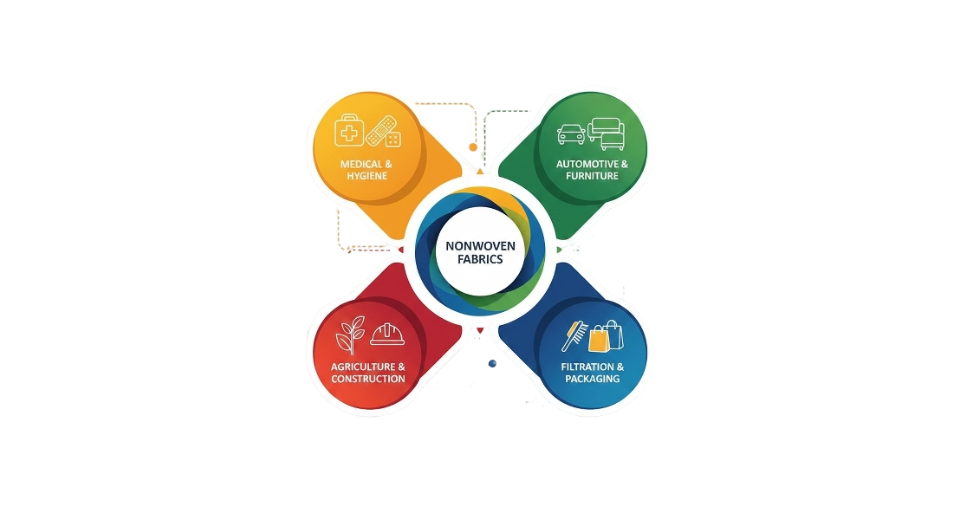
The report “Nonwoven Fabrics Market By Type (Spunbond Nonwoven Fabrics, Meltblown Nonwoven Fabrics, Spunlace Nonwoven Fabrics, Airlaid Nonwoven Fabrics, Needlepunch Nonwoven Fabrics), By Application (Hygiene Products, Medical & Healthcare, Automotive, Construction & Geotextiles, Filtration, Agriculture, Packaging, Others), By Material (Polypropylene (PP), Polyester (PET), Polyethylene (PE), Polyamide (PA) / Nylon, Rayon / Viscose, Others) and By End-Use Industry (Transportation, Manufacturing, Healthcare, Electronics, Construction, Oil & Gas, Power Generation)” is expected to reach USD 86.00 billion by 2033, registering a CAGR of 6.60% from 2026 to 2033, according to a new report by Transpire Insight.
The nonwoven fabrics market has experienced substantial growth due to increasing demand in the hygiene, medical, industrial, and construction industries. Engineered fabrics made using mechanical, thermal, or chemical bonding techniques possess versatility, strength, and lightness, making them the best alternatives to traditional textiles in various industries. Growing awareness about hygiene practices, advancements in the medical sector, and industrialization have also contributed to the increased adoption of nonwoven fabrics. Innovations in material science, especially in polypropylene, polyester, and biodegradable materials, have allowed manufacturers to develop customized nonwoven fabrics with particular properties like filtration capability, absorbency, and strength. Nonwoven fabrics are widely used in the production of disposable hygiene products, medical clothing, automotive interior materials, geotextiles, and filtration systems because of their cost-effectiveness, versatility, and compliance with regulations.
Sustainability has become a prominent area of interest, with manufacturers using recyclable, biodegradable, and eco-friendly fibers in nonwoven production. This is in line with global regulations and consumer demand for sustainable products. Moreover, the growing need for e-commerce packaging, urbanization, and investments in infrastructure projects have contributed to the steady growth of the market, especially in the emerging markets. The market is also driven by innovations in functional properties such as antimicrobial, water-repellent, and flame-retardant nonwovens. Manufacturers are using technological advancements to cater to the growing needs of various industries, including the healthcare, automotive, construction, and industrial sectors, thereby increasing their global presence in the market.
The Spunbond Nonwoven Fabrics segment is projected to witness the highest CAGR in the Nonwoven Fabrics during the forecast period.
According to Transpire Insight, Spunbond nonwoven fabrics currently dominate the type segment because of their superior tensile strength, durability, and economy of production. Made from continuous filaments, these fabrics possess inherent strength and lightness, making them ideal for widespread use in hygiene products, medical disposables, and filtration. Scalability of production enables the production of large quantities to meet the growing demand for single-use medical and hygiene products. Their suitability also extends to automotive interiors and industrial uses, where strength and dimensional stability are essential.
In addition, innovations in spunbond technology, such as composite structures and multi-layer constructions, continue to improve their barrier properties and functionality. The addition of meltblown layers in SMS fabrics enables advanced filtration and absorbency capabilities, further fueling their use in surgical masks, protective clothing, and advanced hygiene applications. Industry participants continue to invest in capacity expansion and the establishment of local production facilities, especially in the Asia Pacific region, to tap the growing demand from the healthcare, hygiene, and industrial segments, sustaining high growth rates for spunbond fabrics worldwide.
The Hygiene Products segment is projected to witness the highest CAGR in the Nonwoven Fabrics during the forecast period.
Hygiene products continue to be the leading application area for nonwoven materials, including diapers, sanitary products, and adult incontinence products. The properties of softness, absorbency, and skin friendliness continue to drive the demand for nonwoven materials over conventional materials. Demographic trends, including aging populations in developed countries and an increase in birth rates in developing nations, continue to drive the demand for personal hygiene products, thereby propelling the market.
The development of biodegradable and eco-friendly nonwoven hygiene products is one of the major trends in the market, allowing manufacturers to meet environmental regulations and consumer demands. The development of new materials continues to provide improved fluid management, softness, and barrier properties, thereby improving product performance. The dominance of nonwoven materials in the hygiene market is expected to continue.
The Polypropylene (PP) segment is projected to witness the highest CAGR in the Nonwoven Fabrics during the forecast period.
According to Transpire Insight, Polypropylene leads the material type category because of its cost-effectiveness, resistance to chemicals, and processing ease. The use of PP nonwovens in the medical, hygiene, and industrial fields is common because of its lightweight properties, strength, and barrier properties. The versatility of PP nonwovens in spunbond, meltblown, and composite fabrics makes it easy for manufacturers to cater to the requirements of various applications efficiently.
Moreover, PP nonwovens also facilitate sustainable projects because of the increasing use of recycling and energy-efficient production processes. Improvements in fiber technology and multi-layer nonwovens improve the performance properties of filtration efficiency and absorbency, making them popular in the medical, hygiene, and industrial fields. The flexibility of PP fabrics makes them the key drivers for market development worldwide, especially in high-growth markets like North America and Asia Pacific.
The Healthcare & Hygiene segment is projected to witness the highest CAGR in the Nonwoven Fabrics during the forecast period.
Healthcare & Hygiene is the leading end-use segment in the nonwoven fabrics market, fueled by the growing demand for disposable healthcare products, infection control, and personal hygiene solutions. Hospitals, medical centers, and home healthcare facilities are major users of nonwoven fabrics for surgical garments, masks, drapes, wipes, diapers, and incontinence products. The material’s lightweight properties, barrier properties, absorbency, and economic viability make it an ideal candidate for high-volume disposable applications. Increasing global healthcare spending, aging populations in developed countries, and growing access to healthcare in emerging nations are expected to continue fueling steady demand growth.
In addition, growing concerns about sanitation and regulatory requirements have further solidified the use of high-performance nonwovens in healthcare settings. Breakthroughs in antimicrobial technologies, breathable barrier nonwovens, and biodegradable hygiene materials are revolutionizing innovation in product development. Suppliers are increasingly prioritizing sustainable, skin-friendly, and high-absorbency materials to address evolving consumer and institutional demands. The rise of telemedicine, outpatient services, and home healthcare is also fueling demand for convenient and disposable hygiene products, ensuring that healthcare & hygiene remains the leading end-use segment worldwide.
The North America region is projected to witness the highest CAGR in the Nonwoven Fabrics during the forecast period.
North America continues to be a mature and high-demand market for nonwoven fabrics, due to the strict standards of hygiene, advanced healthcare infrastructure, and sustainable packaging practices. The United States is the biggest contributor to the market, where demand is driven by medical disposables, industrial filtration, and personal care products. Technological advancements in meltblown and spunbond nonwoven fabrics, with high regulatory compliance, also drive the market.
Moreover, the strong sustainability and eco-friendly trend in the region has encouraged manufacturers to develop recyclable and biodegradable nonwoven fabrics. Industrial applications in the automotive, construction, and filtration sectors also drive the market. Collaborations, mergers, and expansions have improved the region's presence in the market, ensuring that North America remains a prominent driver of the global nonwoven fabric market.
Key Players
The top 15 players in the Nonwoven Fabrics market include Berry Global Inc., Freudenberg Group, Ahlstrom?Munksjö, Kimberly?Clark Worldwide, Inc., Fitesa S.A., DuPont de Nemours Inc., Toray Industries, Inc., Suominen Corporation, Johns Manville, Avgol (Indorama Ventures), Fibertex Nonwovens, Sandler AG, Lydall Inc., Asahi Kasei Corporation, and Mogul Co., Ltd.
Drop us an email at:
Call us on:
+91 7666513636

 inquiry@transpireinsight.com
 APAC:+91 7666513636
 Address





