
Feb 20, 2026
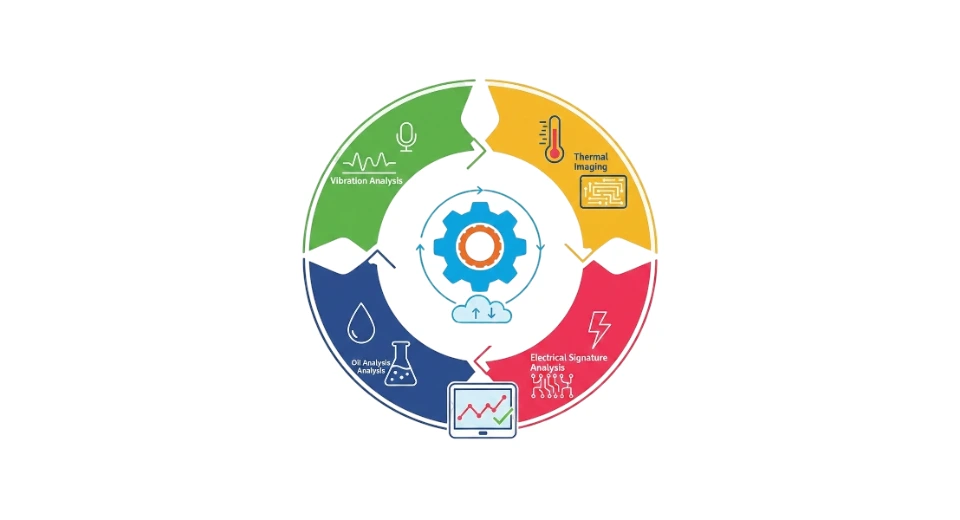
The report “Machine Condition Monitoring Market By Offering (Hardware, Software, Services); By Monitoring Technique (Vibration Monitoring, Oil Analysis, Thermography, Ultrasound Monitoring, Motor Current Analysis); By Monitoring Process (Online/Continuous Monitoring, Portable/Periodic Monitoring); By End-Use Industry (Oil & Gas, Power Generation, Manufacturing, Automotive, Metals & Mining, Chemicals)” is expected to reach USD 11.50 billion by 2033, registering a CAGR of 17.10% from 2026 to 2033, according to a new report by Transpire Insight.
The market for keeping tabs on machine health is booming as industries shift to predicting when maintenance is needed to boost how well things run. These systems keep an eye on vibration, temp, and lubrication using sensors and software. The point is to catch issues early, cut down on downtime, and stretch the life of equipment. Industries are moving away from fixing things after they fail and trying to guess when they will fail, making condition monitoring a must in energy, manufacturing, car making, and chemical businesses.
The market is growing because more people are using Industry 4.0 tech, automation, IoT, and AI. Real-time monitoring and data insights help companies do better, cut costs, and stay safe and meet standards. More and more, companies depend on cloud platforms and software to handle assets in different places without issues. The need for solutions that can be scaled and accessed remotely is very high in industries with expensive or risky equipment, like oil & gas, power generation, and heavy manufacturing.
North America is in first place right now because they were quick to start using predictive maintenance, have good tech already, and have strict rules. The US and Canada are the biggest users of live monitoring. Mexico is getting into the game as they update their factories. Europe is growing at a normal rate. Germany, the UK, and France are the main ones using it in factories and energy. Spain, Italy, and other countries in Europe are helping by using it for specific things and upgrading stuff.
Asia Pacific is growing really fast because China, India, Japan, and South Korea are expanding their factories. Governments are also helping by building more infrastructure. Other places like Australia, New Zealand, and the rest of Asia Pacific are starting to use monitoring as their factories get better. South America and the Middle East & Africa are growing slowly. Brazil, Argentina, Saudi Arabia, the UAE, and South Africa are starting to use predictive maintenance to make things more reliable and run better. generally, better sensors, data analysis software, and cloud use are helping the market grow in the long run.
The Hardware segment is projected to witness the highest CAGR in the Machine Condition Monitoring market during the forecast period.
According to Transpire Insight, Because it's key to getting real-time data from machines, hardware is the biggest part of what's offered. Things like sensors and data units create the base of systems that watch how things are doing. They give measurements that are needed to predict when something needs fixing. Industries like oil, gas, power and manufacturing really depend on these hardware pieces to catch when equipment starts to fail. How well these devices work really decides how good the whole monitoring system is. So, investing in hardware has become very important for companies.
The rise in automation and smart factories is just increasing how much hardware is needed. Connecting to the internet and cloud systems needs advanced sensors that can send data all the time. Lots of hardware is also made to watch many things at once, like shake, heat, and flow, giving a full view of how equipment is running. As industries grow and use machines that are more involved, the need for hardware that can handle more information keeps going up. This keeps hardware at the top of the market.
The Vibration Monitoring segment is projected to witness the highest CAGR in the Machine Condition Monitoring market during the forecast period.
Vibration monitoring is a top method for spotting problems early in spinning equipment. It gives you real-time info on things like balance issues, alignment problems, and bearing wear, all of which can cause unexpected shutdowns. It’s cheap and reliable, making it a good fit for industries where keeping machines running is super important. When you hook it up with analysis tools, vibration monitoring lets you plan maintenance ahead of time. This cuts costs and makes things run smoother. It’s now common in places like power plants, oil fields, and factories where machine uptime equals money.
Also, vibration monitoring helps you keep an eye on equipment health over the long haul by watching how things change over time. Good sensors plus online analysis and AI help find weird stuff and predict problems before they happen, lowering the chance of big breakdowns. Vibration monitoring is used in many places, which shows how well it works. Since industries are putting more money into systems that foresee problems, vibration monitoring is becoming increasingly popular because it’s accurate, reliable, and works well with other systems.
The Online / Continuous Monitoring segment is projected to witness the highest CAGR in the Machine Condition Monitoring market during the forecast period.
According to Transpire Insight, Real-time asset performance visibility is making online or continuous monitoring the go-to. It lets industries spot problems right away, so they can jump in and stop expensive downtime. When you hook it up with IoT, you can pull data from tons of machines and spots, then check it all out in one place. This makes it easier to call the shots. Sectors that can't afford interruptions, like energy, oil, gas, and big factories, all get a big boost from this since keeping things running is a must for safety and making money. Being able to send out alerts and predict what will happen helps keep things reliable and running smoothly in big plants.
What's also pushing continuous monitoring forward is the move to Industry 4.0 and smart factories. With cloud systems, AI for figuring out what's wrong, and digital twins, industries can keep tabs on how machines are doing from far away. They can also fix maintenance times and plan how to use resources the best way. Continuous monitoring cuts back on manual checks, keeps mistakes down, and makes sure everyone's following the rules. Since keeping things running, being green, and not wasting money are bigger deals now, online monitoring is still the top pick for companies that want the latest in asset management.
The Oil & Gas segment is projected to witness the highest CAGR in the Machine Condition Monitoring market during the forecast period.
According to Transpire Insight, Oil and gas is a huge sector because its equipment and work are expensive and risky. Stuff like pumps, compressors, turbines, and pipelines need constant checks to avoid shutdowns, money loss, and environmental damage. Condition monitoring helps predict when things will break, spot problems early, and get more use out of equipment. This is super important for all operations.
Companies are investing more in combined hardware, software, and services to keep things running smoothly, meet safety rules, and make production better. Because there's so much money at risk and things are so complicated, oil and gas is pushing growth in the condition monitoring market. The sector is also going digital and using remote monitoring to handle assets spread out in tough places. Platforms on the cloud and AI analytics help folks look at tons of data from different spots, make better decisions, and lower risks. Combining vibration checks, oil analysis, and online monitoring means everything gets covered. As energy needs increase and upkeep gets pricier, oil and gas is still the leader in using fancy condition monitoring, keeping its spot as the top industry in the market.
The North America region is projected to witness the highest CAGR in the Machine Condition Monitoring market during the forecast period.
North America is ahead in the machine condition monitoring market worldwide. It's got a techy industrial sector and got into predictive maintenance early. The US and Canada really help out here, thanks to all their factories, energy stuff, and oil & gas work. They really need to keep an eye on things to make sure everything keeps running smoothly. This area has good rules, strong safety rules, and spends a lot on automation. This whole thing encourages investing in fancy monitoring setups. Factories are using IoT sensors, AI analytics, and cloud stuff more and more to get the most out of their machines and cut down on surprise breakdowns. This makes the market even stronger.
North America is also doing well because there are many big solution companies and research places working on new sensors, data systems, and prediction software. Monitoring and vibration checks are popular because they're good at spotting problems early. There's also serious investing happening in digital twin tech and Industry 4.0 stuff which allows predictive maintenance on a scale. Strong infrastructure, tech use, and focus on keeping operations stable means North America will stay the top dog in the market.
Key Players
The top 15 players in the Machine Condition Monitoring market include Emerson Electric Co., General Electric, Honeywell International Inc., National Instruments Corporation, SKF Group, Wilcoxon Sensing Technologies, Parker Hannifin Corporation, Rockwell Automation Inc., Schaeffler Technologies AG, Siemens AG, ABB Ltd., Azima DLI, ALS Limited, Fluke Corporation, Brüel & Kjær Vibro GmbH.
Drop us an email at:
Call us on:
+91 7666513636

 inquiry@transpireinsight.com
 APAC:+91 7666513636
 Address





