
Jan 22, 2026
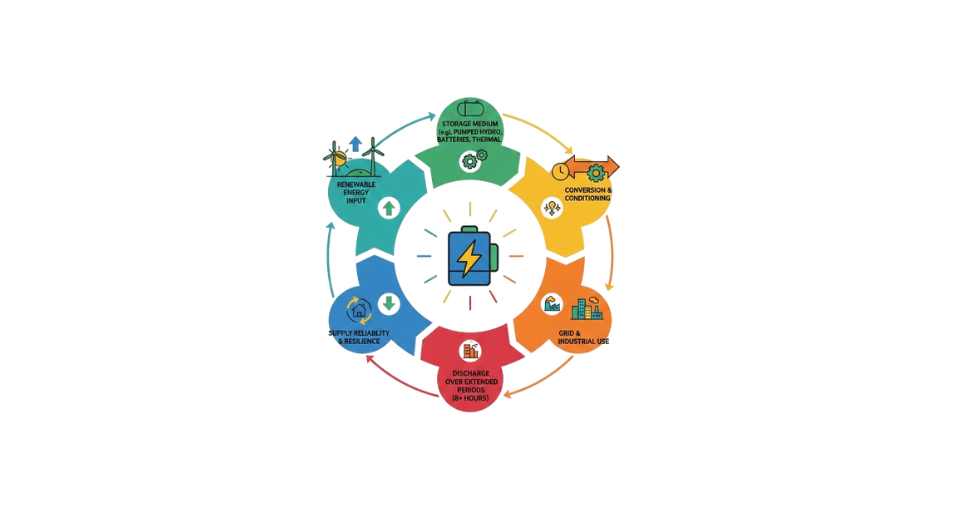
The report “Long-Duration Energy Storage Market By Technology Type (Pumped Hydro Storage Air Energy, Liquid Air Energy Storage, Flow Batteries, Thermal Energy Storage, Hydrogen Energy Storage), By Duration(8-12 Hours, 24-72 Hours, More Than 72 Hours), By Application (Grid Energy Storage, Renewable Energy Integration, Peak Shaving & Load Shifting, Backup Power & Resilience, Microgrids ), By End-Users (Utility-Own, Third Party Owned, Public-Private Partnerships)” is expected to reach USD 19.35 billion by 2033, registering a CAGR of 23.10% from 2026 to 2033, according to a new report by Transpire Insight.
Storing energy for longer periods now plays a key role in shifting how the world powers itself, especially as renewables take up more space on electrical networks. Instead of just holding charge for a few hours, these technologies keep power ready over extended stretches, sometimes even multiple days, balancing out gaps when sunshine or wind falls short. When sunlight fades or breezes stop, such setups step in quietly, keeping supply steady without calling on gas-fired backup stations. They help avoid carbon-heavy options while making the whole system tougher and less reliant on old-style generators.
Fresh ideas keep shaping how to store power, mixing old methods with new ones. Pumped hydro still leads because it works at large sizes and lasts for decades across many places. Now other options like squeezing air, turning water into ice, or using special liquids inside tanks pull interest where land or space causes problems. Scientists tweak designs so they waste less energy, cost less money, take up less room, and last longer between charges. Some need mountains; others fit underground, behind walls, near cities without wide open fields.
Facing more storms and shifting power needs, steady storage solutions matter now more than ever. Grid managers find them useful when smoothing supply gaps or adding wind and solar into daily operations. Instead of relying only on quick fixes, planners turn to extended backup to meet climate goals without disruption. Power agencies plus public funds back these projects to keep lights on during outages. In cities or remote spots alike, such systems help form flexible networks that handle stress better. Over time, they could reshape how energy flows under pressure.
The Pumped Hydro Storage segment is projected to witness the highest CAGR in the Long-Duration Energy Storage market during the forecast period.
According to Transpire Insight, fueled by a need for reliable supply, pumped hydro stands out among long-duration solutions because it lasts decades while keeping losses low. With wind and solar feeding more electricity into grids, operators lean on this method to smooth output, stabilize voltage, and sometimes cover entire evenings or longer. When sunlight fades or winds calm, stored water steps in, ready to generate power again hours later. Built right, these systems handle shifts lasting half a day or much beyond.
Fresh funding for stronger power grids and safer energy supplies now pushes forward both new pumped water storage plans and improvements to current sites. By using smarter designs like isolated loop setups or turning old lakes and mining pits into storage spots, projects can fit better into different landscapes while harming nature less. Backed by steady policies, lasting infrastructure, and lower costs per unit stored over time, this method stands out as a major force shaping extended electricity storage progress in the years ahead.
The 24-72 Hours segment is projected to witness the highest CAGR in the Long-Duration Energy Storage market during the forecast period.
A stretch of two to three days stands out as a growing part of energy storage when sunlight and wind aren’t available for several days straight. Because grids face lulls in solar or wind across consecutive days, along with spikes in usage lasting more than one day, this window fits naturally into real-world demands. Unlike options that store power just briefly or for weeks on end, holding charge through roughly a single week strikes a balance between usefulness and expense for providers.
Some newer ways to store power, like flow batteries, heat-based systems, and next-gen compressed air setups, work well for storing energy over a day or more. These options grow easily in size, adapt quickly, yet do not need special land features like older hydropower plants do. With solar and wind spreading wider, keeping lights on becomes harder when nature doesn’t cooperate. So grids now lean toward stable, steady supply sources. That middle window of holding charge for one to three days begins drawing serious interest. Money flows there faster as planners bet on steadier networks ahead. Expect that stretch of time between two dozen and seventy-two hours to dominate new projects soon.
The Grid Energy Storage segment is projected to witness the highest CAGR in the Long-Duration Energy Storage market during the forecast period.
According to Transpire Insight, Power companies are turning more toward large-scale battery systems simply because they help manage electricity flow when the sun and wind aren’t delivering steady output. Instead of building new wires or plants, these storage setups stretch the life of current equipment by handling peaks without strain. Over time, storing energy for many hours becomes critical as renewables take up bigger shares of the grid. Rather than short bursts, what matters now is maintaining supply through entire evenings or cloudy stretches. One key role such systems play lies in stabilizing voltage shifts before they cause wider issues. Because sunlight fades and winds pause, having reserves ready for ten-plus-hour drains makes operations far smoother behind the scenes.
Facing stronger storms and tighter climate goals, power systems now lean more heavily on storage that lasts longer. Instead of only handling brief demand spikes, these technologies help keep supply steady day after day. Utilities are including them in long-range plans because they perform well when needed most. Supportive policies also play a part in their rising use across regions.
The Utility Owned segment is projected to witness the highest CAGR in the Long-Duration Energy Storage market during the forecast period.
With more power providers stepping up investments, ownership of long-duration storage systems could rise sharply over time. Because they run the grid, these companies find it easier to balance wind and solar inputs when they hold the batteries themselves. Instead of relying on outside operators, utilities can schedule discharges across days while meeting infrastructure goals. Over months or years, having direct access may simplify compliance and improve response during high-demand periods.
Ownership by utilities helps recover costs via controlled asset models, allowing big storage efforts to become realistic while reducing financial exposure. With officials focusing on stronger grids, cleaner power, and stable supply, these companies can roll out extended energy storage widely, fueling steady expansion of utility-led setups over the years ahead.
The North America region is projected to witness the highest CAGR in the Long-Duration Energy Storage market during the forecast period.
Even as renewables spread faster than before, North America keeps pulling ahead in long-duration energy storage growth. With more wind and solar feeding into aging power systems, stability becomes harder to maintain. Instead of relying on old methods, utilities choose extended storage to balance supply swings. When storms hit or demand spikes, these systems help avoid breakdowns. Grid managers now treat longer-term storage as a practical response to climate pressures. Growth here ties closely to how much clean energy flows through wires each day.
Pushed by firm policies and upgrades to power networks, the shift speeds up. In North America, fresh funding for green setups adds fuel. The United States stands out due to efforts run by utilities and early tests of new storage methods. Rules that back innovation play a role, too. Together, these moves place the region at the center of extended-power storage growth ahead.
Key Players
Top companies include Form Energy, Highview Power, Energy Vault, Energy Dome, ESS Inc., VFlow Tech, Vionx Energy, Invinity Energy Systems, Fluence Energy, Siemens Energy, Linde, Air Liquide, Wärtsilä, Tesla Energy, CATL, Hydrostor, and BASF.
Drop us an email at:
Call us on:
+91 7666513636

 inquiry@transpireinsight.com
 APAC:+91 7666513636
 Address





