
Dec 30, 2025
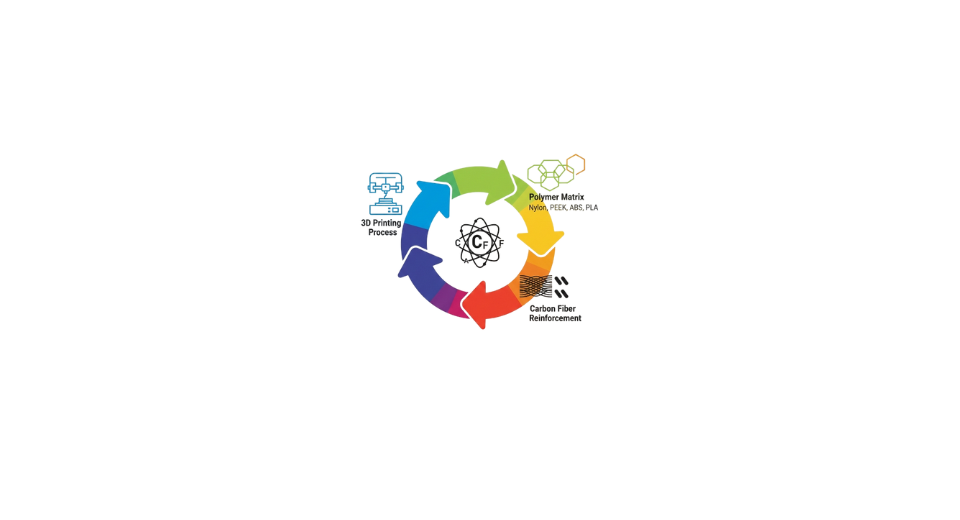
The Carbon Fiber Reinforced 3D Printing Polymers Market By Polymer Type (Thermoplastic, Thermosetting), By Fiber Type(Short Carbon Fiber, Long Continuous Fiber, Hybrid Fiber), By Formulation (Filaments, Pellets, Resins, Powder), By 3D Printing Technology (Fused Deposition Modeling Selective Laser Sintering, Stereolithography, Continuous Fiber Fabrication), By End-Users (Aerospace and Defense, Industrial & Manufacturing, Electronics & Electrical, Medical & Dental, Consumer Goods, Energy)" is expected to reach USD 1,010.20 million by 2033, registering a CAGR of 8.85% from 2026 to 2033, according to a new report by Transpire Insight.
A growing need for parts that are tough but light. These materials show up more now because they last longer under stress. Strength jumps when fibers join the mix during printing. Stiffness improves, too, and heat does less damage as a result. Not every plastic behaves the same way, though. Thermoplastics lead simply they handle heat better and can be reused later. Machines already set up for common methods work fine with them. FDM stays popular, so these plastics fit right in without changes.
Carbon fibers mixed into plastic strands dominate today's 3D printing materials, mainly because they work well without costing too much. These spool-fed plastics hold the largest share, thanks to widespread use in both factory machines and home devices. Pellets, though less common now, are slowly becoming more popular for large-scale production runs. Printing layer by layer using heated nozzles stays on top, supported by long-standing development, wide material choices, and the ability to build intricate shapes with strong composite plastics.
Flying machines and military gear push most of the need, turning to carbon fiber 3D printed plastics for parts that weigh less but hold up well, along with tools and quick-to-make replacements. Factories come right after, relying on these materials for guides, clamps, and special equipment that cuts delays and expenses. Across regions, North America and Europe stay ahead because they have solid networks in aircraft, cars, and 3D printing tech. Meanwhile, Asia-Pacific is gaining speed fast, boosted by the growing industry and funding poured into next-gen production methods.
The Thermoplastic segment is projected to witness the highest CAGR in the Carbon Fiber Reinforced 3D Printing Polymers market during the forecast period.
According to Transpire Insight, faster growth is expected in the thermoplastic part of the carbon fiber-filled 3D printing plastics market over the coming years. This comes down to how smoothly it works with common 3D building methods. Materials, including nylon, ABS, and polycarbonate, along with stronger types such as PEEK and PEKK, gain solid toughness, heat resistance, and reuse potential when mixed with carbon fibers. Because they handle stress well and fit neatly into FDM systems and similar production techniques, these materials are spreading quickly through various uses.
A growing need for tough yet light parts that do not cost too much across aviation, car making, and factory work. This shift leans toward using carbon fiber mixed with melted plastics instead of older types that harden for good. Since these materials can be reshaped later, joined by heat, made faster, and leave behind less scrap, they fit how today’s factories aim to run cleaner and smarter. New tweaks in plastic blends plus better printing machines keep opening doors for stronger real-world uses, giving this group of materials solid momentum ahead. Not bad for something built layer by layer.
The Short Carbon Fiber segment is projected to witness the highest CAGR in the Carbon Fiber Reinforced 3D Printing Polymers market during the forecast period.
Cost keeps pulling interest toward short carbon fibers in 3D printed materials, especially since they work well in everyday printing methods. Stiffness jumps up when these tiny fibers mix into plastics, plus strength gets a boost without losing shape during prints. Printing layer by layer stays smooth, thanks to how easily the material flows through standard FDM machines. That method still shows up more than others on factory floors and design studios alike.
Not only is there rising interest in functional prototypes, tooling, jigs, and lightweight structural components, but also a noticeable shift toward short carbon fiber composites. Because these materials deliver solid performance without high costs, companies now see them as alternatives to metals or basic plastics. Improvements in how fibers spread through the matrix, along with smoother surfaces and better layer bonding, keep pushing capabilities forward. This steady progress fuels expansion in the short carbon fiber market throughout the projected years.
The Formulation segment is projected to witness the highest CAGR in the Carbon Fiber Reinforced 3D Printing Polymers market during the forecast period.
According to Transpire Insight, they work smoothly with many common 3D printers. Expect more demand ahead, especially for those made into flexible strands. Handling stays straightforward, feed rates stay steady, no surprises mid-print. Strength goes up, parts hold shape better, and bending issues fade when swapping regular plastic threads for carbon-blended ones. What holds things together matters just as much as how fast you build.
Filament demand climbs as industries adopt 3D printing for tools, aircraft parts, and custom goods, fueling the need for consistent, large-scale materials. New filament types emerge with finer fiber spread, denser carbon content, and stronger layer adhesion to match tough standards. Progress continues while setup costs drop and more printers go live worldwide. Growth looks steady ahead. Expect the mix of fresh advances and wider access to keep momentum strong.
The Fused Deposition Modeling segment is projected to witness the highest CAGR in the Carbon Fiber Reinforced 3D Printing Polymers market during the forecast period.
Fused Deposition Modeling is expected to grow fast in the carbon-filled 3D polymer space over the coming years due to broad use, affordable operation, and flexible materials. This method works especially well with plastic strands mixed with carbon threads, allowing sturdy yet light parts without heavy spending on startup or running expenses. Because it builds intricate shapes using almost every bit of material, many companies rely on it for both large-scale and specialized jobs.
Fiber-filled plastics gain traction as industries lean on FDM for real-world parts, not just models. Because machines now handle tougher conditions, stronger materials fit into high-stakes production roles. Printers evolve hotter chambers, finer control, opening doors once closed to composite filaments. From factory tools to aircraft components, the shift grows steady, quiet, and wide-reaching. Growth is not sudden; it builds through daily use in demanding settings.
The Aerospace & Defense segment is projected to witness the highest CAGR in the Carbon Fiber Reinforced 3D Printing Polymers market during the forecast period.
Expect a noticeable rise in demand from aerospace and defense for carbon fiber-filled 3D printed plastics over the coming years. This push comes as manufacturers prioritize lighter materials that still deliver solid performance while cutting down on fuel use. Parts made with these advanced polymers manage to stay tough yet light, even when shaped into intricate forms. Such traits make them well-suited for drone parts, cabin fixtures, support frames, and military hardware, places where every ounce counts without sacrificing strength.
One reason more companies choose additive methods lies in faster prototype creation, simpler tool production, plus approved final components across aviation and military fields. Cutting wait periods, minimizing assembly steps while enabling immediate output, fits how these industries manage operations and logistics networks. Progress in testing materials, setting norms, and funding high-end fabrication systems boosts the potential for carbon-filled 3D printed plastics serving aircraft and defense hardware alike.
The North America region is projected to witness the highest CAGR in the Carbon Fiber Reinforced 3D Printing Polymers market during the forecast period.
Expect steady gains across North America in the market for carbon fiber reinforced 3D printed plastics through the coming years. Growth comes as new manufacturing methods catch on fast, backed by heavy spending on innovation. Aerospace firms here lean into these materials just as much as defense contractors do. Lightweight parts made with them help vehicles burn less fuel while cutting how much it takes to build things. Factories find they can shape complex designs more freely than before. Even carmakers are shifting toward using such composites regularly now.
Big 3D printing firms set up shop early. Government backing plays a role, too. Factories already in place make scaling easier. New materials keep emerging, slowly changing what machines can build. Industrial FDM units run more often now. Systems that lay down fiber continuously gain traction. Demand spikes when parts are needed fast, especially in aerospace, healthcare, and auto. These shifts feed into steady regional expansion. Outlook stays firm through the coming years.
Key Players
Top companies include Markforged Inc., 3DXTECH, Stratasys, BASF SE, Owens Corning, Polymaker, Colorfabb, Matter-Hackers, Prusa Research, eSUN 3D Printing, Toray Industries, Hexcel, SGL Carbon, Anisoprint, Desktop Metal, CRP Technology, and others.
Drop us an email at:
Call us on:
+91 7666513636

 inquiry@transpireinsight.com
 APAC:+91 7666513636
 Address





