
Feb 13, 2026
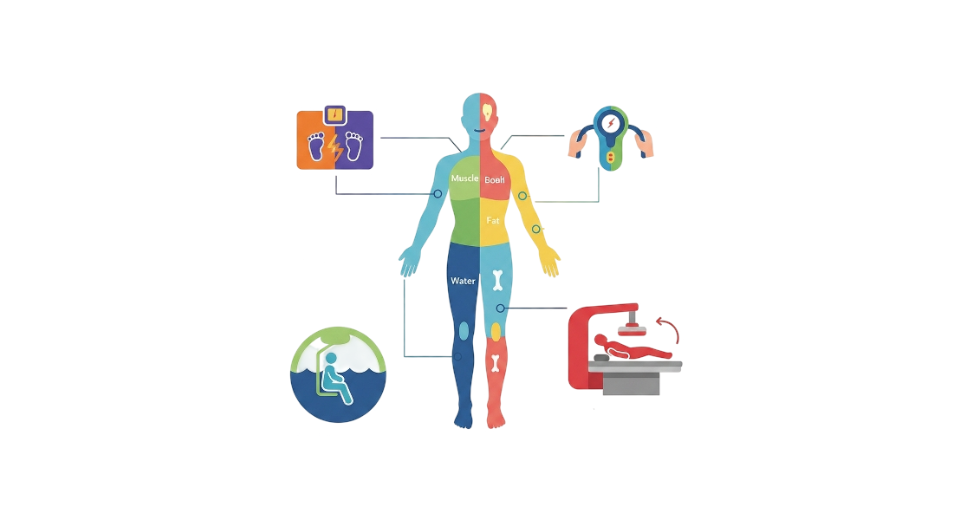
The report “Body Composition Analyzers Market By Product Type (Bioimpedance Analyzer (BIA), Dual-Energy X-ray Absorptiometry (DEXA), Skinfold Calipers, Air Displacement Plethysmography (ADP), Hydrostatic Weighing Equipment, Others), By Application (Segmental Body Measurement, Whole-Body Measurement), By Modality( Portable, Fixed) and By End User (Hospitals, Fitness Clubs & Wellness Centers, Academic & Research Institutes, Home Users, Others)” is expected to reach USD 2.80 billion by 2033, registering a CAGR of 11.40% from 2026 to 2033, according to a new report by Transpire Insight.
The global Body Composition Analyzers Market is expanding rapidly because of improved health literacy, growing rates of obesity and metabolic diseases, and changes in consumer behavior favoring preventive healthcare. Body composition analyzers, including fat, muscle mass, bone density, and water content, are used in hospitals, gyms, research centers, as well as in homes to obtain detailed information beyond just measuring weight. Increasing focus on personal health monitoring and wellness has fueled constant demand for improved body composition technology. Additionally, technological changes have impacted the market, especially with regard to bioelectrical impedance analysis devices, which are becoming more portable, precise, and technology-enabled. For instance, technological advancements such as multi-frequency segmental analysis, including mobile application integration and cloud-based reporting, have improved the functionality of these devices. With these developments, the role of body composition analysis is growing with regard to preventive care, sports, and rehabilitation.
Similarly, consumer interest in home-based health monitoring and connected fitness devices is fueling growth in these products. This is driven by the availability of affordable and accessible devices that allow users to monitor body composition as part of lifestyle solutions. Additionally, professional-grade analyzers continue to gain traction in hospitals and research institutions due to their high accuracy, reliability, and comprehensive analysis capabilities. Overall, the Body Composition Analyzers Market has tremendous growth potential in the global arena, with factors such as health and wellness, along with advances in technology, creating opportunities. Emerging markets are also showing tremendous potential as these nations are becoming more open to investing in health, and also because of the increase in the number of people in the middle class who are aware of health and wellness trends.
The Bioimpedance Analyzer (BIA) segment is projected to witness the highest CAGR in the Body Composition Analyzers during the forecast period.
According to Transpire Insight, Bioimpedance analyzers, on one hand, have managed to capture the largest market share based on their cost-effectiveness, ease of application, especially for home users, and non-invasiveness. The equipment has been able to establish itself as a standard tool for various health institutions, fitness facilities, and wellness programs. The technology has continued to improve with advances in technology, such as the incorporation of multifrequency segmental BIA, which has upgraded its accuracy for various applications. The ease of using these tools with mobile applications is also another important factor for users.
The leadership of BIA segment is further evidenced by the rising incidence of lifestyle disorders such as obesity and cardiac problems. Healthcare experts use BI technology to create exercise and diet plans, whereas fitness enthusiasts use portable devices as self-monitoring tools. The combined attributes of affordability, reliability, and ease of use make BIA devices global market favorites. Therefore, BIA segment would sustain its high growth rate during the forecast period.
The Whole-Body Measurement segment is projected to witness the highest CAGR in the Body Composition Analyzers during the forecast period.
Whole body measurement still tops the demand list of applications due to the evaluation of total body fat, muscles, water content, and bone density, which include a comprehensive overview of an individual's health. Hospitals, fitness clubs, as well as research institutions, prefer whole body analyzers due to the ease of interpretation of results, as well as preventive health screenings. The importance of this segment is emphasized by the rising demand from clinical/fitness applications, including obesity treatment, preventive/clinical applications, as well as sports performance.
However, the expansion of the whole body measurement segment is fueled by enhanced health consciousness among consumers and medical practitioners. The fact that advanced technology is employed in the product analyzers enables the provision of faster analysis, as well as analytics, which is vital for lifestyle interventions, rehabilitation, and scientific research. The position of the whole body measurement segment is a clear indication of the need for detailed, accurate, and standardized data on body composition.
The Portable segment is projected to witness the highest CAGR in the Body Composition Analyzers during the forecast period.
According to Transpire Insight, Portable body composition analyzers are seen to be rapidly gaining traction owing to an increase in demand for user-friendly, compact devices that can be used in point-of-care settings, as well as areas like home use and fitness activities. The devices allow for ease of use, as well as their light weight, making it easier for individuals to obtain information regarding personal health, as well as fitness activities.
The growth of the portable segment can be attributed to the increased move towards preventive healthcare and the growth of digital health. More and more consumers prefer devices that allow for continuous monitoring without the need to visit healthcare professionals, while fitness centers also benefit from the portability of these devices to improve customer engagement. These factors will ensure that the portable segment will continue to drive growth in the overall market.
The Hospitals & Clinics segment is projected to witness the highest CAGR in the Body Composition Analyzers during the forecast period.
The end-user segment of hospitals is the largest due to growing adoption of body composition metrics for clinical evaluation, obesity management, chronic condition monitoring, and nutritional assessment programs. Use of analyzers in a hospital setting, whether inpatient or outpatient, provides better health outcomes for patients as it enables personalization of health plans.
The growth of the hospital segment can also be related to the need for measurement solutions, which are both precise and possess accuracy. For instance, medical-grade analyzers, such as DEXA or professional BIA, can offer valuable insights. This growth can also be related to the increase in healthcare expenditure, preventive care, and hospital infrastructure development, especially in emerging nations.
The North America region is projected to witness the highest CAGR in the Body Composition Analyzers during the forecast period.
North America has managed to remain at the top of the Body Composition Analyzers Market due to enhanced healthcare facilities, increased awareness of preventive health habits, and extensive use of fitness and wellness technology. The United States, as a major contributor, benefits from enhanced obesity management strategies, use of digital technology, and an elevated number of hospitals, clinics, and fitness clubs using body composition analyzers. Consumer interest in home monitoring systems and mobile technology-integrated devices is another factor contributing to regional market success.
The dominance of the area is further supported by the presence of key manufacturers such as InBody, GE HealthCare, and Tanita, which provide a wide range of professional and consumer scales. A growing health consciousness among the population, along with government-sponsored health and wellness programs, and inclusion of body composition measurement in preventive health measures and research programs, will only enhance the position of North America. Moreover, the early adoption of the latest technological innovations by the North American market is a benchmark for the world.
Key Players
The top 15 players in the Body Composition Analyzers market include InBody Co., Ltd., Tanita Corporation, OMRON Corporation, seca GmbH & Co. KG, GE HealthCare Technologies Inc., Hologic, Inc., Bodystat Ltd., COSMED Srl, RJL Systems, Inc., Maltron International Ltd., Beurer GmbH, Withings SA, DMS Imaging SA, Jawon Medical Co., Ltd., and Akern S.r.l.
Drop us an email at:
Call us on:
+91 7666513636

 inquiry@transpireinsight.com
 APAC:+91 7666513636
 Address





