
Feb 19, 2026
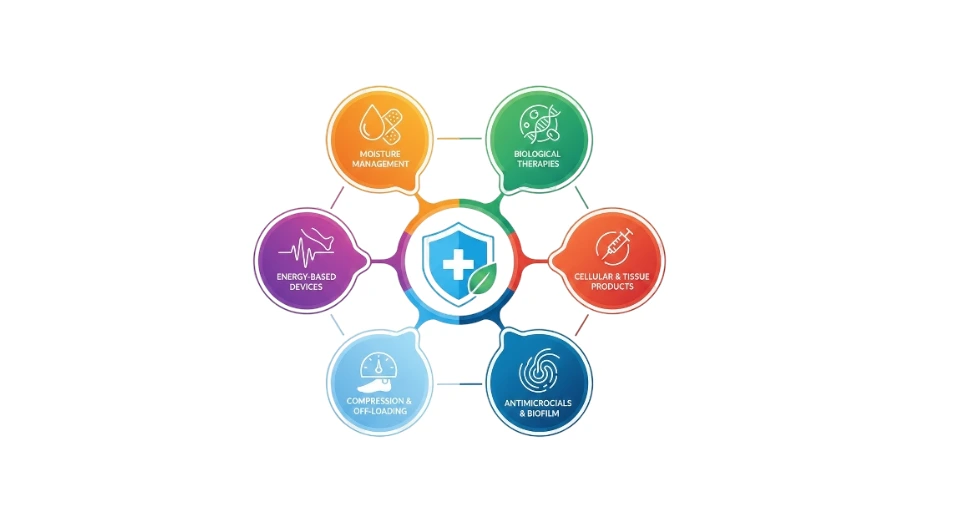
The report “Advanced Wound Care Market By Product Type: Moist Dressings (Foam, Hydrocolloid, Alginate, Hydrogel), Biological/Skin Substitutes, Negative Pressure Wound Therapy (NPWT) Devices, Other Advanced Products (Topical Agents, Debridement Devices); By Wound Type: Chronic Wounds (Diabetic Foot Ulcers, Pressure Ulcers, Venous Leg Ulcers), Acute Wounds (Surgical, Trauma, Burns); By End-User: Hospitals, Wound Care Clinics/Ambulatory Centers, Home Healthcare” is expected to reach USD 21.40 billion by 2033, registering a CAGR of 10.00% from 2026 to 2033, according to a new report by Transpire Insight.
The Advanced Wound Care Market around the world has gotten really big in the few years. This is because healthcare systems everywhere are trying to do a job of taking care of wounds. Advanced Wound Care is about the things that help wounds heal, like special bandages and machines. These things are, for wounds that will not heal on their own and for wounds that happen suddenly. Some of the things that Advanced Wound Care has are special dressings that keep the wound moist, like foam and hydrocolloid. Advanced Wound Care also has skin substitute products. There are also machines that use pressure to help the wound heal, which is called negative pressure wound therapy or NPWT devices.
Advanced Wound Care has things too like creams that you put on the wound and tools that help remove dead skin. These products are being used more and more in hospitals, wound care centers and home healthcare settings. The reason is that they help people get faster. They also lower the chance of getting an infection and make the health of the patient better. The products do a lot of good for outcomes. Patient outcomes are very important. These products really help with that. The market for wound care is really growing because more and more people are getting sick with things like diabetes pressure ulcers and venous leg ulcers. This is especially true for people in many parts of the world. When people have wounds, they need to see doctors and nurses a lot and they need special care.
North America is still the market for this. This is because North America has a healthcare system people get money back for medical expenses and many people know about advanced ways to treat wounds. The United States is the leader in North America. This is because many doctors use these wound care methods and there are many ways to get these products to people who need them. Europe is also growing steadily. This is because countries like Germany and the United Kingdom have rules in place for how to treat wounds. North America and advanced wound care are very common, in these places. Advanced wound care is getting more popular in Europe. The Asia Pacific region is really taking off. It is the fastest growing region. This is because people are spending a lot of money on healthcare in the Asia Pacific. Also, more and more people in the Asia Pacific are getting wounds. The governments of countries, like China, Japan and India are also helping the Asia Pacific region by making rules. The Asia Pacific is growing fast because of all these things.
Looking ahead, the market is expected to maintain steady growth as emerging economies enhance healthcare access and awareness of specialized wound management increases. Ongoing technological advancements, broader adoption of NPWT and biologic therapies, and expansion of home healthcare services present considerable opportunities. However, cost barriers and variable reimbursement policies in certain regions may temper growth, underscoring the need for continued innovation and policy support.
The Moist Dressings segment is projected to witness the highest CAGR in the Advanced Wound Care market during the forecast period.
According to Transpire Insight, Moist dressings are the choice for wound care because they really work. They help wounds heal faster and keep the amount of moisture. This means they reduce the risk of infection which's a big deal. Moist dressings also help get rid of tissue and make patients feel more comfortable. That is why doctors and nurses like to use them for all kinds of wounds whether they are new or have been around for a while. They like to use foam, hydrocolloid, alginate and hydrogel dressings because they're good for many things and have been proven to work. Moist dressings, like these are used a lot in wound care because they are so useful. Advanced wound care solutions are easy to get. They do not cost a lot of money. This is why hospitals and clinics use them. People also use them at home to take care of their wounds. Advanced wound care solutions are always in demand because of this.
The growth of the wound care market is really supported by the fact that more and more people are getting chronic diseases like diabetes and pressure ulcers. These diseases need wound care. Hospitals and clinics really like to use dressings because they are easy to put on you do not have to change them as often and they work well with other advanced treatments like NPWT. The market for wound care is also getting bigger because caregivers and patients are becoming more aware of the benefits especially in places, like emerging markets where people are starting to use modern wound care instead of old methods. Companies are always working on products and ideas which means that moist dressings will keep helping the advanced wound care market grow. The advanced wound care market will keep growing because of dressings.
The Chronic Wounds segment is projected to witness the highest CAGR in the Advanced Wound Care market during the forecast period.
Chronic wounds are the area where these products are used because more and more people around the world have diabetes, pressure ulcers and venous leg ulcers. These health problems affect people a lot so they need special care all the time. Chronic wounds usually need to be treated for a time and checked on often which is why we really need advanced wound care products. Doctors and nurses want things that help wounds heal faster reduce the risk of infection and prevent problems. That is why a lot of hospitals and clinics are using things like dressings, special vacuum devices and biological skin substitutes to help people, with chronic wounds. Chronic wounds are a problem. They need a lot of treatment. That means people have to buy a lot of products to deal with them. This is especially true in North America and Europe. So because of wounds the market, for these products is really big and companies can make a lot of money from them. Chronic wounds are the reason why people keep buying these products over again.
The growth of this segment is also helped by technology like special dressings that stop germs and manmade skin that helps people heal from bad foot ulcers and pressure sores. More and more hospitals are learning about the ways to take care of wounds and they are getting help to pay for it in places, like the United States and Europe. This makes it easier for people to get the help they need. Also, people can now get care for bad wounds at home which means that more people can get the treatment they need without having to stay in the hospital. This means that diabetic foot ulcers and pressure injuries can get the care they need from wound care. As healthcare systems globally aim to reduce hospitalization and complication rates, chronic wound management remains a critical market driver.
The Hospitals segment is projected to witness the highest CAGR in the Advanced Wound Care market during the forecast period.
According to Transpire Insight, Hospitals are the ones that take care of the patients with wounds. They have a lot of patients with wounds and long-term wounds. Hospitals have the things they need to take care of wounds like the right equipment and staff who know what they are doing. They also have to follow a lot of rules. Hospitals are usually the first to try things, like special vacuum devices for wounds manmade skin and special bandages that fight infection. They do this because these things have been shown to work and help patients get better.
Furthermore, hospitals play a pivotal role in influencing adoption trends in other end-use segments. Clinical validation and successful outcomes in hospitals increase confidence among wound care clinics, ambulatory centers, and home healthcare providers, expanding overall market penetration. Hospitals also benefit from structured insurance reimbursements and government healthcare programs, enabling the procurement of advanced yet costlier products. With increasing surgical procedures and an aging patient population requiring specialized wound management, hospitals are expected to remain the backbone of global advanced wound care consumption, driving continued market expansion.
The North America region is projected to witness the highest CAGR in the Advanced Wound Care market during the forecast period.
North America is the market for these products. This is because North America has good healthcare systems a lot of people have chronic wounds and the government helps pay for treatments. The United States is a leader in this area because it has a set up system for getting these products to people the government supports their use and many doctors and nurses know about them.
In North America people can now get healthcare services at home which is really helpful. When patients leave the hospital, they can still get the treatment they need at home. This means that more people are using wound care services and they need to keep using them the demand, for these services keeps going up. Wound care services are becoming more popular. People are using them more often because of this. Combined, these factors make North America a dominant market, serving as a benchmark for adoption trends in Europe, Asia Pacific, and other regions.
Key Players
The top 15 players in the Advanced Wound Care market include 3M Company, Smith & Nephew plc, Mölnlycke Health Care AB, ConvaTec Group plc, Coloplast A/S, Medline Industries, Inc., Integra LifeSciences Holdings Corporation, Organogenesis Holdings Inc., Hollister Incorporated, B. Braun Melsungen AG, PAUL HARTMANN AG, Cardinal Health, Inc., MiMedx Group, Inc., Urgo Medical, Nitto Denko Corporation.
Drop us an email at:
Call us on:
+91 7666513636

 inquiry@transpireinsight.com
 APAC:+91 7666513636
 Address





