
Women Activewear Market Summary:
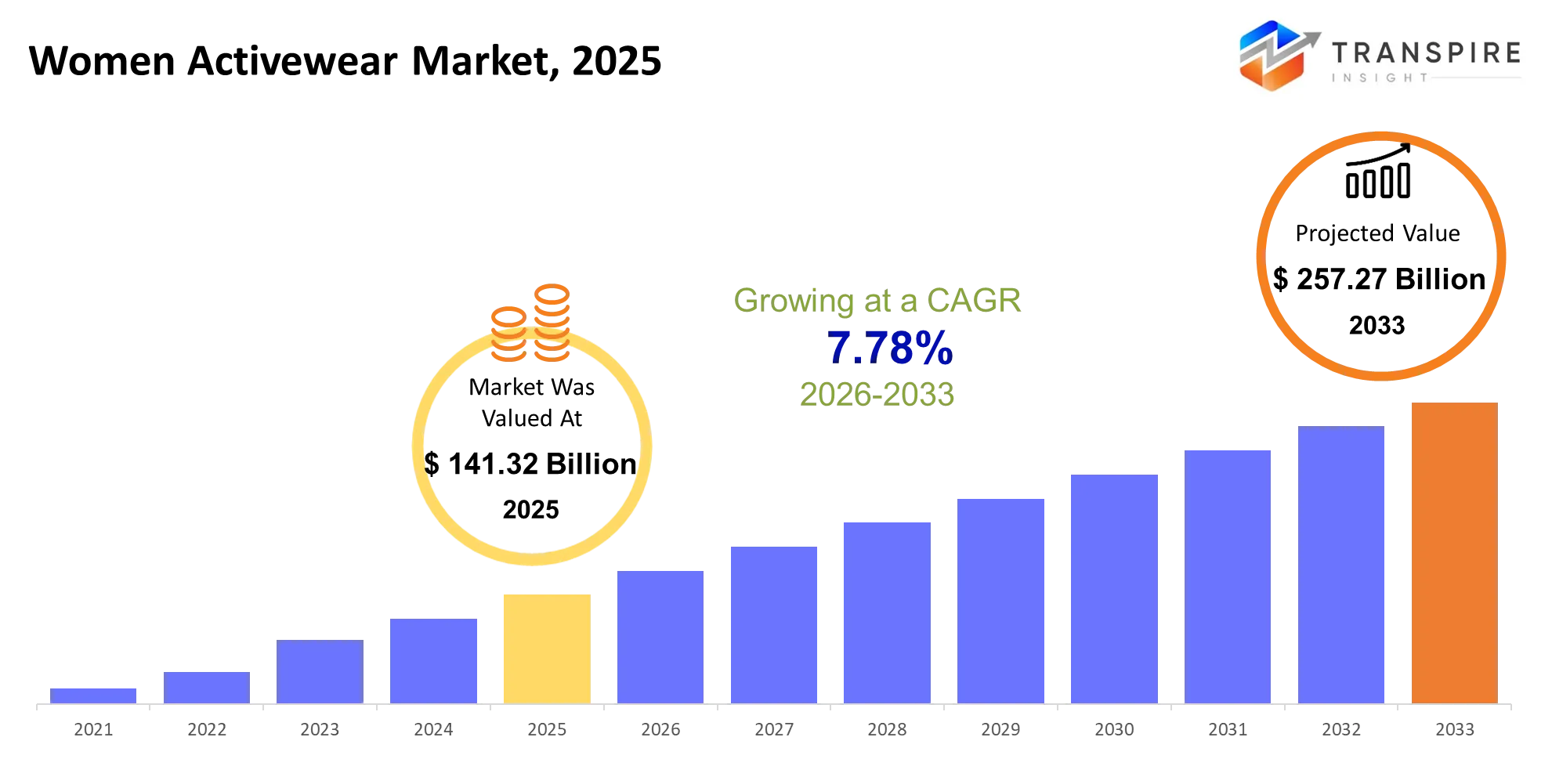
As per Transpire Insight, the Women Activewear Market size is estimated at USD 141.32 billion in 2025 and is anticipated to reach USD 257.27 billion by 2033, growing at a CAGR of 7.78% from 2026 to 2033.
The women's activewear market worldwide is changing because people want clothes that do well during workouts, feel comfortable, last long and look good every day. Leggings, sports bras and flexible tops are now worn often for gym workouts, yoga, running, travel and everyday outfits. In the past three to five years, the women's activewear market has moved past old sportswear and moved toward athleisure lines that work for many activities without needing to change clothes many times. Online shopping, fitness groups on social media and brands that sell directly to customers have also changed how people find and buy women's activewear. A big change in the women's activewear market is the shift toward recycled fabrics and responsible production, helped by a growing interest in eco‑friendly clothing. As more women join sports and fitness, brands in the women's activewear market are making designs for activities, offering bigger sizes and using better fabric technology. All these changes help the women activewear market grow by making products more useful, reaching customers and making people buy again.
Women Activewear Market Size & Forecast:
- Market Size 2025: USD 141.32 Billion
- Expected Market Value (2033): USD 257.27 Billion
- Forecast CAGR (2026–2033): 7.78%
- Leading Region in 2025: North America
- Fastest Growing Region: Asia Pacific
- Key Company Profiles: Nike, Adidas, Lululemon, Puma, Under Armour, Gymshark, Athleta, Fabletics, Alo Yoga, ASICS, Reebok, New Balance, Sweaty Betty, Outdoor Voices, Columbia Sportswear
Key Market Insights:
The market is moving towards fashion, functionality of fabric and the product itself, as well as inclusivity of designs.
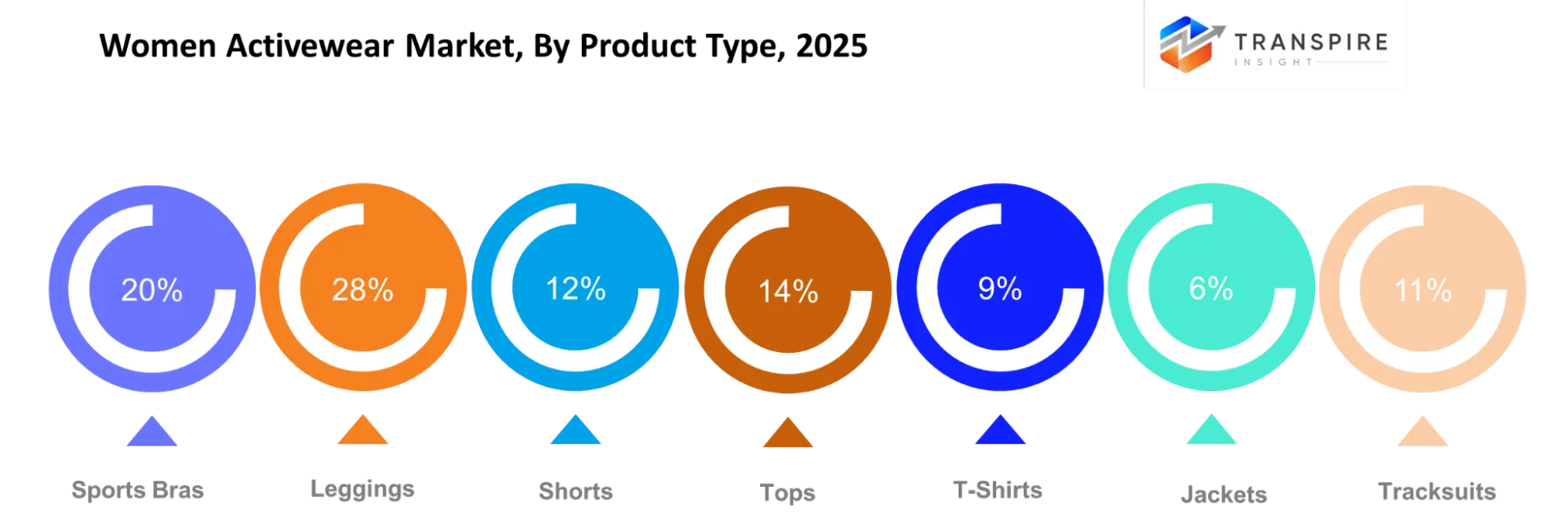
- Leggings constitute 28.5% of the product category and prompt manufacturers such as Nike, Lululemon, and Adidas to manufacture functional and versatile products.
- Sports bras represent 20.0% of the product category and prompt manufacturing companies to come up with innovations regarding the product's adaptability and breathability of fabrics.
- Tops form 14.0% of the market share due to the demand for fitness apparel and its combination with casual clothing.
- Shorts take 12.0% of the market due to the significance of these items while performing physical exercises and in warm conditions.
- T-shirts form 9.0% of the product category, prompting brands to manufacture fashionable products for casual as well as fitness purposes.
- Jackets take 6.5% of the market share owing to the significance of layering and weather resistance.
What are the Key Drivers, Restraints, and Opportunities in the women's activewear market?
Drivers:
Fitness classes, female sports, and athleisure have resulted in consumers buying clothes that can be worn not only while engaging in exercises but also when outside the gym. The growing influence of the online communities created by female athletes and other fitness practitioners has brought about the development of items like sports bras, leggings, sweat-wicking material, and different sizes. This could make it more accessible in the future.
Restraints:
Issues may arise in terms of cost, particularly in terms of producing higher-quality activewear using better fabrics or sustainable products. Issues such as production costs, inventory management, changing trends, and cheaper competition may impact profitability. Fit variety and reduced availability of sizes may lead to some consumers not buying new clothing. These are all issues that need to be considered by brands that want to produce quality affordable regularly updated collections within different countries.
Opportunities:
Growth opportunities available are sustainable materials, digital retailing and Asia Pacific growth. Brands that use recycled polyester, sustainable manufacturing and sourcing will be able to meet the needs of the "green consumer". Technologies such as virtual try-on and product recommendations can increase conversions online and reduce returns due to size. Brands that are affordable and sustainable will win consumer loyalty.
|
Driver |
Relative Impact on Growth (%) |
Geographic Relevance |
Impact Timeline |
Demand Strength |
Growth Mechanism (5–10 words) |
Key Beneficiaries (5–10 words) |
Major Constraint (5–10 words) |
|
Rising fitness awareness and women's participation in sports |
28% |
North America, Europe, Asia-Pacific |
Short-term (≤2 years) |
High |
Expands purchases of workout-specific apparel and sports bras |
Sportswear brands, apparel manufacturers, fitness-focused retailers |
Unequal sports participation and limited household spending power |
|
Growing athleisure adoption and everyday activewear fashion |
24% |
North America, Europe, Asia-Pacific |
Short-term (≤2 years) |
High |
Blends functional sportswear with everyday fashion preferences |
Athleisure brands, fashion retailers, online apparel platforms |
Rapidly changing fashion trends and intense price competition |
|
Expansion of e-commerce and social media-driven purchasing |
19% |
North America, Asia-Pacific, Europe |
Short-term (≤2 years) |
High |
Improves product discovery through influencers and digital storefronts |
Direct-to-consumer brands, online retailers, digital marketing platforms |
High customer acquisition costs and online product return rates |
|
Innovation in performance fabrics and inclusive product design |
16% |
North America, Europe, Asia-Pacific |
Medium-term (2–4 years) |
High |
Enhances moisture management, stretch, comfort, and fit |
Technical textile suppliers, apparel innovators, premium sportswear brands |
High development costs and complex material sourcing |
|
Demand for sustainable materials and responsible manufacturing |
13% |
Europe, North America, Asia-Pacific |
Long-term (≥4 years) |
Medium |
Encourages recycled fabrics and lower-impact production processes |
Sustainable textile producers, certified manufacturers, eco-conscious brands |
Higher material costs and inconsistent sustainability verification |
|
Total |
100% |
— |
— |
— |
— |
— |
— |
What Has the Impact of Artificial Intelligence Been on the Women Activewear Market?
Artificial intelligence supports women's activewear brands in making product development, personalisation, and inventory management easy. Artificial intelligence technology helps retail companies analyse browsing activity, purchase history, seasonality, and client reviews to identify preferred colours, preferred fit, preferred fabrics, and preferred products. Demand forecasting using artificial intelligence will help companies predict product demand across different regions and distribution channels in advance. This way, they will be able to prepare themselves for increased demand without any limitations due to having too much inventory. In manufacturing processes, the use of artificial intelligence in detection and inspection will help identify stitching problems, fabric problems, and other quality problems in manufacturing. But the use of artificial intelligence in manufacturing comes at the cost of software costs, data costs, employee training costs, and integration of AI into existing systems. Incorrect client data and incorrect data models will result in wrong predictions and recommendations. Women activewear brands that employ artificial intelligence in their operations will be able to increase the efficiency of the production process while not ignoring fit, comfort, and quality.
Instance:
In July 2026, THG Ingenuity unveiled an AI-enabled virtual try-on feature that enables customers to see how clothes look on them through their own images prior to making a purchase. It enables women to select activewear that suits them well.
Key Market Trends:
Market trends are shifting towards performance apparel that will not only work in the gym but also be versatile in daily wear. Retailers are using digital technology, inclusion, and fabric innovation to respond to their changing needs.
- Activewear has developed from sports apparel to training apparel, meaning that manufacturers must come up with versatile apparel that will work for sports and travel too.
- Product development has moved from functional apparel to specialised apparel that will offer more support and compression for training and more flexibility for yoga and mobility.
- Sustainable materials and less harmful production are becoming popular among manufacturers who seek alternative solutions to material sourcing and environmental issues.
- Digital shopping has become increasingly important in the discovery process, which means that retailers need to work on product pictures, sizing, customer reviews, and recommendations.
- Inclusion and body-conscious design have become more popular because companies want to address various body types and needs.
- Branding strategy in the form of coordinated sets has become popular because consumers can create outfits that include leggings, sports bras, tops, and jackets.
Women Activewear Market Segmentation
By product type:
Leggings have the highest market share at 28.5%, due to their adaptability to gym training, yoga, running, and casual wear. Sports bras have 20.0%, which are boosted by the demand for comfortable support and specific activities' sports bras. Tops make up 14.0%, while shorts are 12.0%, catering to consumers who like lightweight clothing for training and outdoor exercises. T-shirts account for 9.0%, jackets are 6.5%, while tracksuits and other products are each 5.0%. Future product development will focus on better fit, fabric performance, and coordinated designs.
By activity:
Yoga facilitates the need for flexible clothing that ensures free movement, while running and gym training need moisture control and durability. Activities like cycling and hiking give chances to create activity-specific clothing that provides more comfort and protection from the weather. Tennis and swimming need certain design clothing for certain movement and environment, while other activities widen the market scope. Consumers indulge in different forms of exercises, and thus companies can use this chance to introduce collections that can suit more than one activity.
By material:
Polyester and nylon continue to be attractive options for their durability, light weight and moisture movement. For consumers seeking a soft feel and comfort for everyday wear, cotton is the choice, and for garments that require form-fitting stretch fabric, spandex is preferred. Recycled fibres and other sustainable fibres have a place in certain apparel segments, provided they perform and are priced competitively with traditional raw materials. Merino wool offers some performance capabilities for certain outdoor and temperature-managed environments. The overall mix will depend on the ability of manufacturers to strike a successful balance of comfort, durability, price and environmental sustainability.
By distribution channel:
The e-commerce channel offers customers the ability to compare design, fit, price, reviews, and fit across many brands. The store channel allows customers to check the fit, fabric, and features of products in person, as well as prices and brand selection. Sports stores provide access to active customers, while department stores and supermarkets can afford to give access to a wider set of products. Discount stores appeal to more price-sensitive customers, and other channels exist as well. An integrated online–offline strategy can improve product discovery, availability, and retention.
By price range:
These lower price groups focus on the typical shopper who is looking for low price and simple functionality in a product. Mid-price range offerings can also provide quality, style and affordable pricing. Upscale and luxury products can focus on unique styling, branding, fabric innovation and premium pricing. Performance and professional categories target the consumer with more specific athletic needs. These categories offer manufacturers an opportunity to appeal to varying levels of purchase desire and willingness to pay, although differentiation is key to premium pricing.
By consumer age:
consumers below the age of 18 need comfortable clothes appropriate for school sports and recreation. The 18-24 age group consumers will need fashionable clothes, discovery through social media and workout clothes, while the 25-34 age group consumers may need products that have performance, convenience and also style. The 35-44 and 45-54 consumers form an opportunity for consumers who may need fit, support, sturdiness and comfort. The consumers of 55-64 age group and above the age of 65 may need designs that help them walk, stretch, and do light exercises.
What are the Key Use Cases Driving the women's activewear market?
Leggings and sports bras are very essential when it comes to the everyday use of sport. They assist in exercising in the gym, doing yoga, stretching, and even workout at home. The practicality of these pieces of cloth is a result of the flexibility, comfort, and construction of the same.There are also other activities such as running, hiking, cycling, tennis, and others that call for light and breathable clothing. This creates an opportunity for short pants, moisture-wicking tops, jackets, and sport bras to be designed to meet their respective needs in terms of temperature control and movements.The newer applications include work to workout clothes, traveling, recovery exercises, and low impact exercises for older customers. There is also sustainable fabric that presents itself in an environmentally conscious customer market.
|
Report Metrics |
Details |
|
Market size value in 2025 |
USD 141.32 Billion |
|
Market size value in 2026 |
USD152.31 Billion |
|
Revenue forecast in 2033 |
USD 257.27 Billion |
|
Growth rate |
CAGR of 7.78% from 2026 to 2033 |
|
Base year |
2025 |
|
Historical data |
2021 - 2024 |
|
Forecast period |
2026 - 2033 |
|
Report coverage |
Revenue forecast, competitive landscape, growth factors, and trends |
|
Regional scope |
United States; Canada; Mexico; United Kingdom; Germany; France; Italy; Spain; Denmark; Sweden; Norway; China; Japan; India; Australia; South Korea; Thailand; Brazil; Argentina; South Africa; Saudi Arabia; United Arab Emirates |
|
Key company profiled |
Nike, Adidas, Lululemon, Puma, Under Armour, Gymshark, Athleta, Fabletics, Alo Yoga, ASICS, Reebok, New Balance, Sweaty Betty, Outdoor Voices, Columbia Sportswear |
|
Customization scope |
Free report customization (country, regional & segment scope). Avail customized purchase options to meet your exact research needs. |
|
Report Segmentation |
Product Type (Sports Bras, Leggings, Shorts, Tops, T-Shirts, Jackets, Tracksuits, Others)Activity (Yoga, Running, Gym & Training, Cycling, Hiking, Tennis, Swimming, Others)Material (Polyester, Nylon, Cotton, Spandex, Recycled Fabrics, Merino Wool, Sustainable Fabrics, Others)Distribution Channel (Specialty Stores, Supermarkets, Department Stores, Brand Stores, E-commerce, Sports Stores, Discount Stores, Others)Price Range (Mass, Mid-Range, Premium, Luxury, Performance, Value, Professional, Others)Consumer Age (Under 18, 18–24, 25–34, 35–44, 45–54, 55–64, Above 65, Others) |
Which Regions are Driving the Women Activewear Market Growth?
North America:
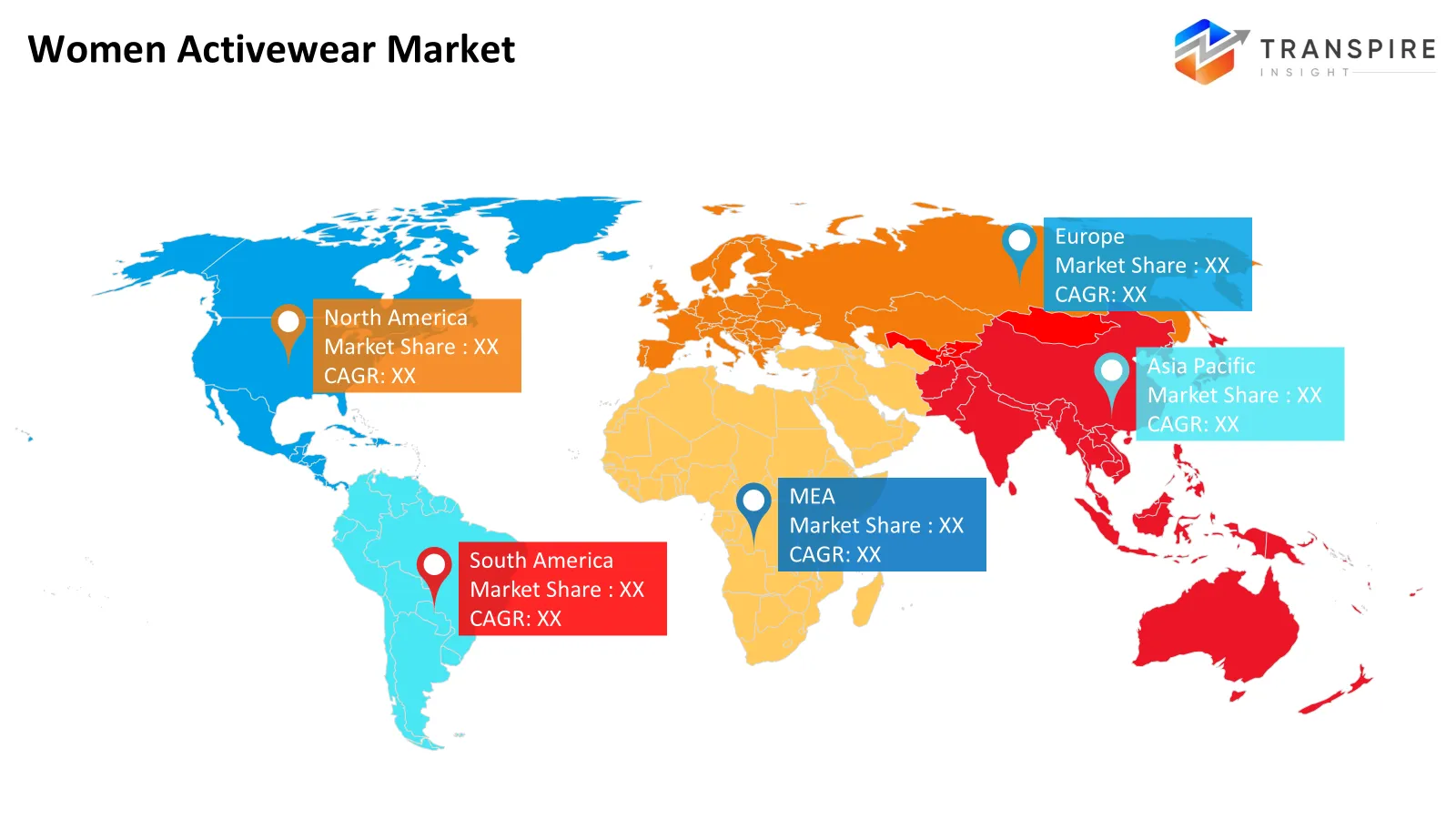
North America leads the world activewear market with a 36.5% market share owing to the existence of sportswear brands, structured retail chains, and easy availability of e-commerce options. The popularity of fitness culture and athleisure wear trend encourage customers to buy activewear for their workouts as well as casual clothing. Through proper marketing and product innovations along with direct consumer distribution channel, the companies are able to introduce new lines of activewear and reach out to their target audience.
In February 2025,Nike and SKIMS launched NikeSKIMS, an activewear line for women that combines athletic apparel with trendy and form-fitting designs, meeting the market's need for athletic clothing that is both practical and fashionable.
https://about.nike.com/en/newsroom/releases/nikeskims-official-announcement
Europe:
The Europe region has a market share of 28.0% of the worldwide women’s activewear market because of the existence of structured retail channels as well as consumers who have a preference for functional yet aesthetically beautiful clothes. Fashionable regions such as Europe make it necessary for companies to design products that will be both functional as well as fashionable. Issues of sustainability and sustainable sourcing may affect the choice of materials as well as the positioning of the product.
In July 2026,adidas launched its Originals Sport range, featuring its iconic style along with training apparel such as leggings, sports bras, and tank tops.
Asia-Pacific:
The Asia-Pacific region accounts for 25.0% of the total worldwide women's activewear market. The Asia-Pacific region has been growing at the highest rate globally and holds the potential to grow at a CAGR of 9.4%. There are new chances coming along from the participation of individuals in the sports and fitness activities, greater availability of e-commerce services, urban culture of the region, and growing interest in wearing sportswear products.
In March 2026, Lululemon announced a 29% increase in revenue in mainland China in fiscal year 2025, which showed the potential of premium activewear brands in the region.
https://www.sec.gov/Archives/edgar/data/1397187/000139718726000020/lulu-20260201.htm
Who are the Key Players in the women's activewear market and how do they Compete?
Competition in the international women's activewear industry is influenced by brand image, product functionality, price, distribution, and the capacity to react to changing fashion trends. Some of the key players in the industry include Nike, Adidas, Lululemon, Puma, Under Armour, ASICS, New Balance, Athleta, Fabletics, and Gymshark. Different firms employ varied strategies ranging from sportswear focus to premium studio clothing lines, affordable pricing or a direct-to-consumer sales model. Nike utilises the firm’s expertise in sports science and partnerships with athletes as well as performance-driven product innovation for the purpose of improving the company's women’s apparel lineup. Athleta distinguishes itself with fitness and lifestyle wear for women, and Fabletics with digital selling approach, rapid product releases, and fashion-forward clothes at affordable prices. On the other hand, Gymshark depends on fitness community interactions as well as online sales for brand development, while ASICS and New Balance capitalise on the performance heritage of the brands. Expanding through e-commerce channels, physical stores, international distribution networks, and collaborations is essential for attracting new customers.
Women Activewear Market Companies
- Nike
- Adidas
- Lululemon
- Puma
- Under Armour
- Gymshark
- Athleta
- Fabletics
- Alo Yoga
- ASICS
- Reebok
- New Balance
- Sweaty Betty
- Outdoor Voices
- Columbia Sportswear
|
Company |
Est. Revenue Share Range |
Key Offerings |
Strategic Positioning |
Geographic Strength |
Technology Focus |
|
Nike, Inc. |
Estimated 5–9% |
Sports bras, leggings, training tops, running apparel |
scale, performance innovation, brand-led differentiation |
North America, Europe, Asia Pacific |
Dri-FIT moisture management and advanced performance fabrics |
|
lululemon athletica inc. |
Estimated 3–6% |
Yoga leggings, sports bras, running apparel, training tops |
Premium pricing, technical fabrics, lifestyle-focused brand loyalty |
North America, Asia Pacific, Europe |
Four-way stretch fabrics, sweat-wicking materials, ergonomic fit |
|
adidas AG |
Estimated 3–6% |
Training tights, sports bras, running apparel, tracksuits |
sportswear portfolio, performance-led and lifestyle diversification |
Europe, North America, Asia Pacific |
AEROREADY moisture management and CLIMACOOL ventilation |
|
PUMA SE |
Estimated 1–3% |
Training leggings, sports bras, running tops, performance shorts |
Fashion-sport crossover and accessible performance apparel |
Europe, Asia Pacific, North America |
dryCELL sweat control and lightweight functional textiles |
|
Under Armour, Inc. |
Estimated 1–3% |
Compression leggings, sports bras, training shirts, running apparel |
Technical training apparel and performance-driven differentiation |
North America, Europe, Asia Pacific |
HeatGear moisture management and stretch-compression fabrics |
|
Gap Inc. (Athleta) |
Estimated 0.5–2% |
Yoga tights, sports bras, training tops, outdoor activewear |
Women-focused assortment, inclusive sizing, lifestyle versatility |
North America, Asia Pacific |
Stretch textiles, quick-drying fabrics, fit-focused product design |
|
Gymshark Ltd. |
Estimated 0.5–2% |
Seamless leggings, sports bras, gym tops, training shorts |
Digital-first branding, fitness communities, direct-to-consumer sales |
Europe, North America, Asia Pacific |
Seamless knitting, sculpting fits, digital customer engagement |
|
Alo Yoga |
Estimated 0.5–2% |
Yoga leggings, sports bras, matching sets, studio-to-street apparel |
Premium athleisure, fashion-led styling, influencer-driven brand building |
North America, Asia Pacific, Europe |
Four-way stretch fabrics, sculpting construction, technical comfort textiles |
|
Fabletics |
Estimated 0.5–2% |
Leggings, sports bras, matching sets, training tops |
Value-oriented fashion, membership-led sales, frequent collection refreshes |
North America, Europe |
Personalized digital shopping, fit-focused design, flexible performance fabrics |
|
ASICS Corporation |
Estimated 0.3–1.5% |
Women's running tights, sports bras, running tops, training apparel |
Running specialization, sport-specific functionality, technical product credibility |
Asia Pacific, Europe, North America |
Breathable textiles, moisture management, movement-focused garment construction |
Recent Development News
- In January 2026, Adidas and Entire Studios launched their 26-piece apparel collection. This collection blends the sportswear of Adidas with the design perspective of Entire Studios, expanding the concept of activewear into regular wear. https://news.adidas.com/partnerships/adidas-and-entire-studios-introduce-a-new-expression-of-modern-sport-style--built-for-movement/s/167c4b9b-c8b5-4f0d-a373-65bcfd0b495d
- In September 2025, NikeSKIMS released its first line designed for women athletes. The collection was made up of seven collections and 58 silhouettes, bringing together the performance technology of Nike and the body-friendly design approach of SKIMS. https://about.nike.com/en/newsroom/releases/nikeskims-first-collection-official-film-images
What Strategic Insights Define the Future of the Women's Activewear Market?
The future of the international activewear market for women is going to be defined by the brands’ ability to merge the performance, wearability, and sustainability aspects. At present, leggings represent of all sales. However, brands may diversify their sources of revenue by offering various products for running, training, outdoor activities, and light exercises. A provides a great option to expand the business and sell activewear thanks to local product offerings, digital distribution, and affordable prices.
The underestimation of the threat of overproduction due to fast fashion trends and the inaccuracy of the forecasts can be mentioned among the unnoticed risks. Overproduced items may lead to discounts, reduced profits, and the generation of unnecessary material waste. Sustainable fabrics and inventory planning using artificial intelligence technologies may be considered as possible solutions, which are cost-effective enough to implement. Brands need to focus on quality fit, durable materials, inclusiveness, and clear information about the origin of the fabric.
Key Segmentations are:
Product Type
- Sports Bras
- Leggings
- Shorts
- Tops
- T-Shirts
- Jackets
- Tracksuits
- Others
Activity
- Yoga
- Running
- Gym & Training
- Cycling
- Hiking
- Tennis
- Swimming
- Others
Material
- Polyester
- Nylon
- Cotton
- Spandex
- Recycled Fabrics
- Merino Wool
- Sustainable Fabrics
- Others
Distribution Channel
- Specialty Stores
- Supermarkets
- Department Stores
- Brand Stores
- E-commerce
- Sports Stores
- Discount Stores
- Others
Price Range
- Mass
- Mid-Range
- Premium
- Luxury
- Performance
- Value
- Professional
- Others
Consumer Age
- Under 18
- 18–24
- 25–34
- 35–44
- 45–54
- 55–64
- Above 65
- Others
By Regional Analysis
North America
- US
- Canada
- Mexico
Europe
- Germany
- UK
- France
- Italy
- Spain
- Russia
- Rest of Europe
Asia Pacific
- China
- Japan
- India
- South Korea
- Australia
- Rest of Asia Pacific
South America
- Brazil
- Argentina
- Rest of South America
Middle East & Africa
- UAE
- Saudi Arabia
- Qatar
- South Africa
- Rest of the Middle East & Africa
Frequently Asked Questions
Find quick answers to common questions.
The women's activewear market size was valued at USD 141.32 Billion in 2025 and is poised to reach USD 257.27 Billion by 2033, expanding at a 7.78% CAGR.
Key segments for the women's activewear market are Product Type (Sports Bras, Leggings, Shorts, Tops, T-Shirts, Jackets, Tracksuits, Others)Activity (Yoga, Running, Gym & Training, Cycling, Hiking, Tennis, Swimming, Others)Material (Polyester, Nylon, Cotton, Spandex, Recycled Fabrics, Merino Wool, Sustainable Fabrics, Others)Distribution Channel (Specialty Stores, Supermarkets, Department Stores, Brand Stores, E-commerce, Sports Stores, Discount Stores, Others)Price Range (Mass, Mid-Range, Premium, Luxury, Performance, Value, Professional, Others)Consumer Age (Under 18, 18–24, 25–34, 35–44, 45–54, 55–64, Above 65, Others).
Growth is primarily driven by increasing health and fitness awareness, increasing participation in sports and gym activities, growing popularity of athleisure fashion, rising demand for comfortable and stylish clothing, and the expansion of e-commerce platforms.
The market is led by major manufacturers including Nike, Adidas, Lululemon, Puma, Under Armour, Gymshark, Athleta, Fabletics, Alo Yoga, ASICS, Reebok, New Balance, Sweaty Betty, Outdoor Voices, Columbia Sportswear.
North America has a 36.5% market share in the women’s activewear market due to high fitness consciousness, increased sports participation, higher consumer spending power, and increased demand for comfortable and fashionable apparel. The availability of premium brands in activewear and the rapid development of e-commerce has helped boost the market share of the region.
The commercial opportunities in the international market for women’s activewear products comprise increasing demand for sustainability and recycling of fabrics, the popularity of athleisure, online sales channel expansion, inclusivity in size offering, and increased demand for premium, fashionable, and functional activewear products.
- Nike
- Adidas
- Lululemon
- Puma
- Under Armour
- Gymshark
- Athleta
- Fabletics
- Alo Yoga
- ASICS
- Reebok
- New Balance
- Sweaty Betty
- Outdoor Voices
- Columbia Sportswear
About the Authors

Chetan Dhatrak
I’m Chetan Dhatrak, a Senior Research Analyst at Transpire Insight, specializing in the Consumer Goods, Foods and Beverages industry. I focus on analyzing market trends, consumer behavior, competitive landscapes, and industry developments to deliver accurate, data-driven insights. My research at Transpire Insight is built on credible sources and in-depth analysis, helping businesses and readers better understand market dynamics, emerging opportunities, and evolving consumer preferences. I’m committed to creating reliable, well-researched content that supports informed decision-making and reflects the latest developments in the consumer goods and food & beverage sectors.

Chakradhar Khansole
Chakradhar serves as the Research Director at Transpire Insight, bringing over 8 years of experience in technology, innovation, and strategic market intelligence. He specializes in transforming complex market data into actionable business insights that enable organizations to make informed, growth-oriented decisions. Recognized for his strategic vision and analytical expertise, Chakradhar leads high-impact research initiatives, delivering comprehensive market assessments, competitive intelligence, and forward-looking industry analysis.
Recently Published Reports
-
Apr 2026
Bottled Water Market
Bottled Water Market Size, Share & Analysis Report By Product Type (Still Bottled Water, Carbonated Bottled Water, Functional Bottled Water, and Others), By Packaging (PET, Cans, and Others), By Sales Channel (Supermarkets/Hypermarkets, Convenience Stores/Drug Stores, Grocery Stores/Club Stores, Foodservice, and Others) and Geography (North America, Europe, Asia-Pacific, Middle East and Africa, South and Central America), 2021 - 2032
-
Apr 2026
Color Cosmetic Packaging Market
Color Cosmetic Packaging Market Size, Share & Analysis Report By Application (Mascara Packaging, Liquid Packaging, and Liquid Face), By Type (Tubes & Bottles, Pens & Markers, Compacts & Containers, and Droppers & Pumps), and Geography (North America, Europe, Asia-Pacific, Middle East and Africa, South and Central America), 2021 - 2031
-
Apr 2026
External Microphone For Camera Market
External Microphone For Camera Market Size, Share & Analysis Report By Type (Shotgun Microphone, Lavalier Microphone, and Others), By Application (Digital Camera, Professional Video Camera, and Others), and Geography (North America, Europe, Asia-Pacific, Middle East and Africa, South and Central America), 2021 - 2031
-
Apr 2026
Foot Orthotic Insoles Market
Foot Orthotic Insoles Market Size, Share & Analysis Report By Type (Pre-fabricated, and Custom-made), By Material (Thermoplastic, Composite Carbon Fiber, and Others), By Distribution Channel (Drug Stores, Hospitals & Clinics, and Others), and Geography (North America, Europe, Asia-Pacific, Middle East and Africa, South and Central America), 2021 - 2031