
Germany E-commerce Market Size & Forecast:
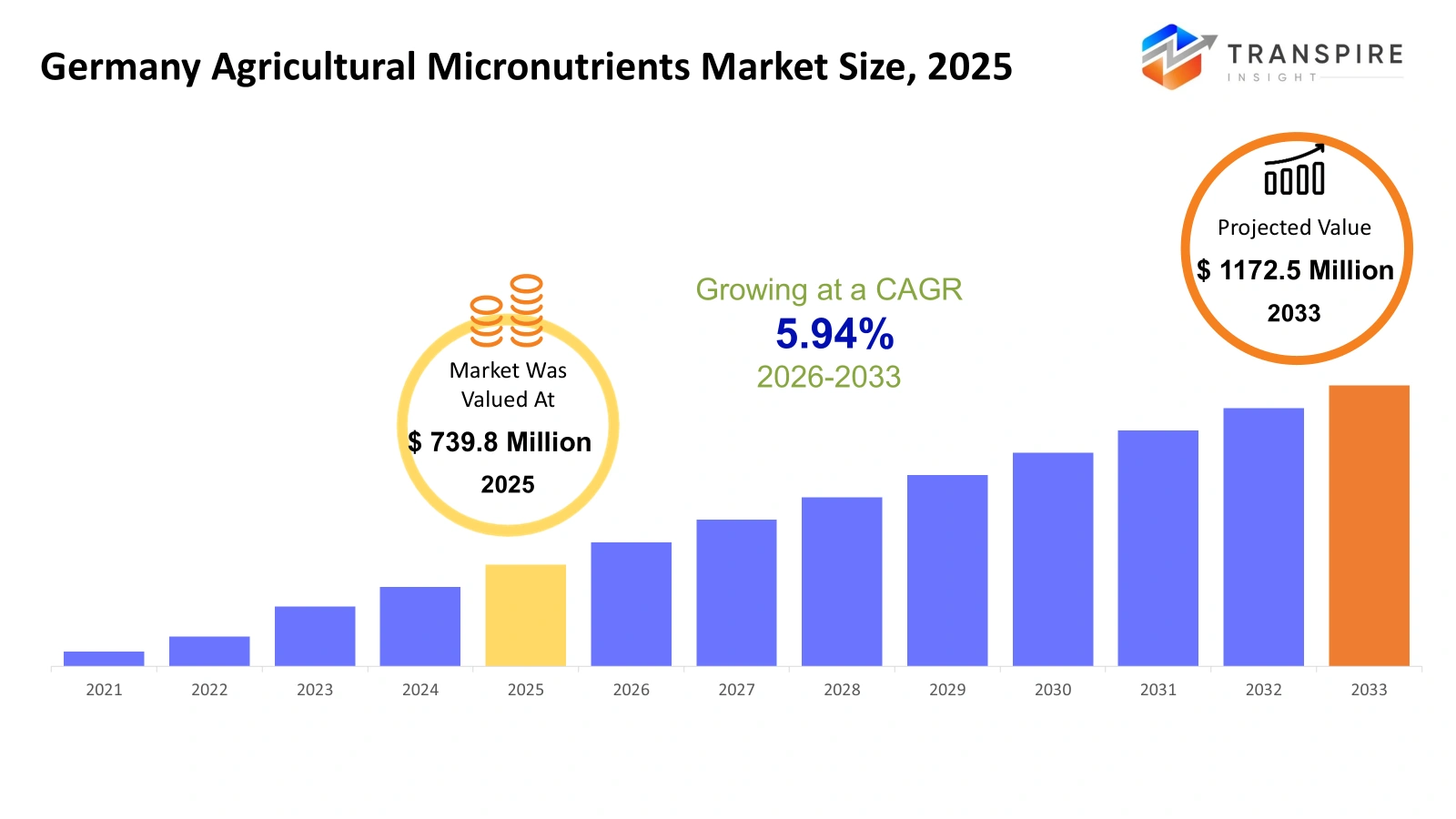
- Germany E-commerce Market Size 2025:USD 1146.99 Million
- Germany E-commerce Market Size 2033: USD 5089.4 Million
- Germany E-commerce Market CAGR: 20.50%
- Germany E-commerce MarketSegments: By Product Category Electronics, Fashion, Food & Beverages, Furniture, Personal Care, By Business Model B2C, B2B, C2C, Platform Type Marketplace, Direct-to-Consumer Websites.
To learn more about this report,  Download Free Sample Report
Germany E-commerce Market Summary:
The Germany E-commerce Market size is estimated at USD 1146.99 Million 2025 and is anticipated to reach USD 5089.4 Million by 2033, growing at a CAGR of 20.50% from 2026 to 2033. The E-commerce market in Germany will shape product distribution from sellers to homes throughout the nation. The E-commerce market in Germany will show strong consumer demand for fast delivery services and accessible price information and trustworthy return procedures. Online shopping experiences will be enhanced through retailer implementation of modern delivery systems and automated warehouse systems and data-based product suggestion systems. The purchase process will continue to depend on mobile shopping apps and digital wallet solutions and secure payment systems. Platform operations and seller responsibility will follow data protection rules and consumer rights regulations. German shoppers will expect convenience, clear product information, and dependable delivery timelines while choosing online purchasing channels.
Key Market Trends & Insights:
- The Germany E-commerce market will experience distinct changes because digital retail platforms will introduce new services and create simpler methods for customers to buy products online. The retail sector will start to depend more on automated warehouse systems and intelligent product recommendation technology and improved delivery system management. The development of delivery management software and secure payment systems and mobile commerce solutions will shape the operation of online retail marketplaces throughout international digital commerce systems.
- German online retail businesses will concentrate their efforts on digital storefronts which deliver complete product details together with easy purchasing systems. Customers will make trustworthy purchasing choices based on high-quality product images and customer review systems and accurate stock availability information. Retail management teams will use these tools to keep their products visible throughout the entire period which includes holiday sales and marketing activities and regular online shopping times.
- The market will start to pay more attention to digital payment systems because secure financial technology platforms enable customers to make their online purchases through secure transaction processing. Secure order processing will use encrypted payment verification together with fraud detection software and multi-layer authentication systems. The system will ensure dependable transaction processing through its ability to connect with digital wallets and online banking systems on both desktop websites and mobile shopping applications.
- Another visible trend will appear in logistics improvements that support faster order fulfillment and consistent delivery reliability. Distribution centers will introduce automated sorting technology, improved package tracking, and route optimization tools to support efficient shipment management. Urban delivery hubs and regional warehouses will assist retailers in maintaining reliable order distribution across cities and surrounding regions.
- Policy discussion within European digital trade frameworks will also influence operational direction. Regulatory standards related to consumer data protection, online taxation rules, and cross-border e-commerce policies will guide responsible platform management. Structured compliance procedures will help maintain safe digital commerce practices while aligning with broader European digital market regulations.
Germany E-commerce Market Segmentation
Product Category
- Electronics: Demand for electronics through online platforms in Germany remains high as users prefer to compare features and prices before purchasing the product. Business value comes from premium pricing, upgrade cycles, and service offers that help maintain a regular cash flow.
- Fashion: Online activities for fashion products in Germany are dynamic and respond to changing trends and seasonal releases. Business value comes from regular purchases, high inventory turnover, and promotional offers that keep customer interest active.
- Food & Beverages: Online grocery shopping activities in Germany are increasing due to the rise of online grocery shopping. Business value comes from regular purchases, demand for essential products, and timely deliveries that help maintain a regular income stream.
- Furniture: Online furniture shopping activities in Germany are increasing due to the availability of tools for understanding the size and design of the furniture. Business value comes from regular purchases, customization options, and timely deliveries that add to the overall purchase value.
- Personal Care: Personal care products available through online stores in Germany are regular purchases due to their daily usage. Business value comes from regular purchases, brand recognition, and timely supply orders.
Business Model
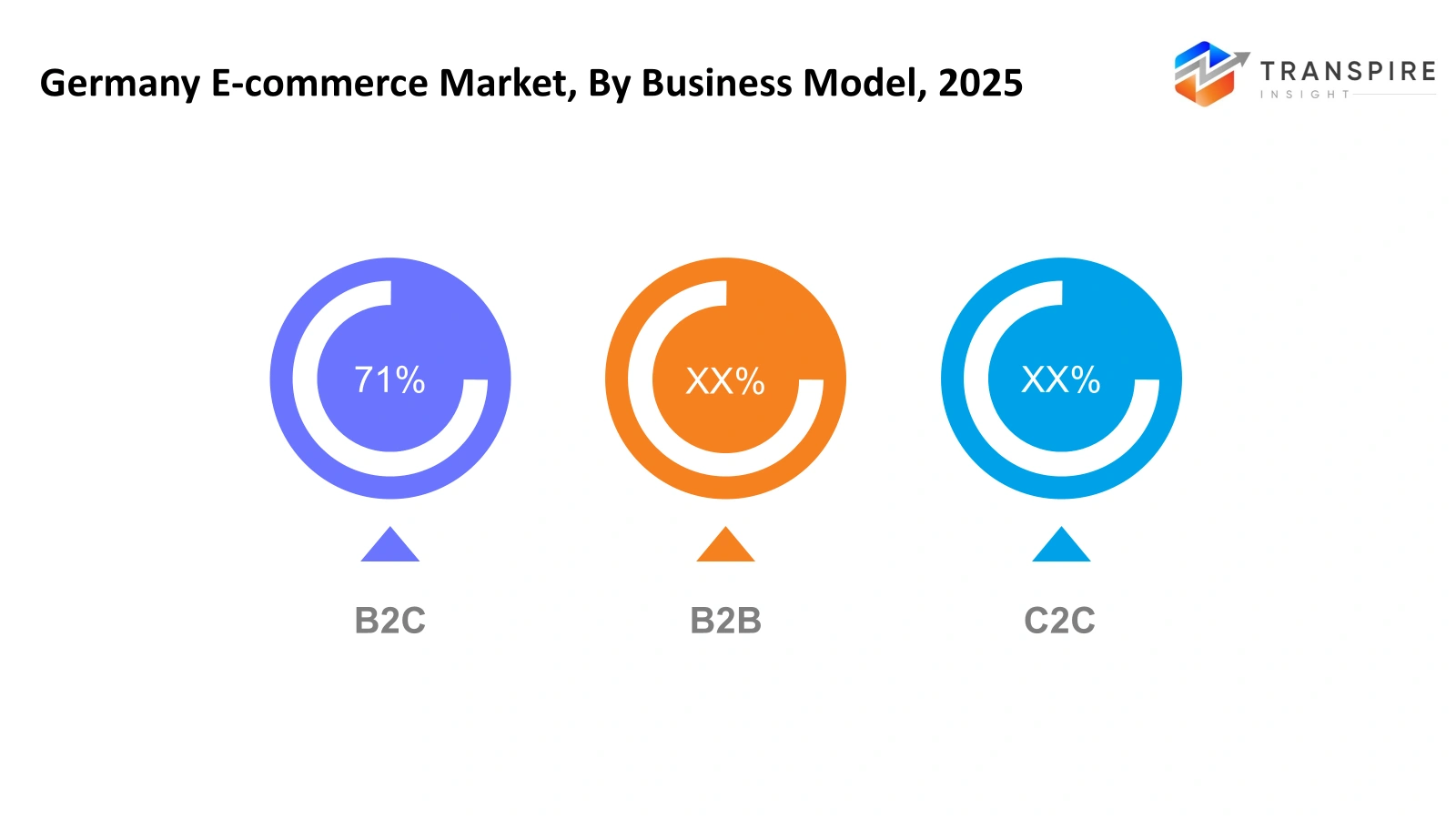
- B2C: Direct sales to consumers across Germany create a significant online segment where businesses reach the end user. Business value is built by setting prices, receiving direct feedback, and providing offers to enhance sales performance.
- B2B: Business transactions across Germany facilitate bulk purchases and supply requirements between businesses. Business value is built by the sheer volume of orders, stable business deals, and consistent demand to ensure revenue generation.
- C2C: Selling activities by individuals across various platforms in Germany enable consumers to sell products. Business value is built by charging service fees, providing a wider range of products, and enhancing the number of participants.
To learn more about this report, Download Free Sample Report
Platform Type
- Marketplace: Multi-seller websites across Germany attract consumers based on the variety of products offered and the pricing structure. Business value is realized by earning commissions, having high traffic, and improving efficiencies due to shared logistics.
- Direct-to-Consumer Websites: Websites operated by brands across Germany facilitate a direct relationship between the seller and the buyer. Business value is created by improving margin management, providing access to consumers’ data, and offering exclusive products to enhance the brand connection.
Country Insights
Germany holds a strong position in the European digital retail industry because of reliable internet infrastructure, secure payment systems, and a population comfortable with online purchasing. The German e-commerce market will achieve effective operations through its advanced logistics networks and organized consumer protection systems and its retailers' use of modern retail technologies. Digital retailers will maintain high service standards as buyers expect quick delivery, transparent pricing, and dependable return procedures. Germany's central European location will enable cross-border online trade because retailers can use organized distribution channels together with regional fulfillment centers to deliver products to nearby countries.
Active online retail activities will occur in Northern Germany because its strong port cities and logistics hubs enable fast product distribution. The Hamburg area together with its surrounding regions will handle various imported goods which enter national supply chains before reaching their destination to online customers. Retailers can achieve continuous inventory flow and consistent shipment times through their use of warehouses and delivery centers which are positioned near coastal transport routes in northern consumer markets.
Southern Germany will show strong digital purchasing activity supported by technology-focused cities and high household purchasing capacity. The urban centers of Munich and Stuttgart will become operational bases for multiple online retail companies together with technology startups and distribution hubs which will enhance digital commerce development. Retailers can operate efficient last-mile delivery systems through their well-developed transport networks and organized courier systems which help them maintain product availability throughout southern consumer markets.
Recent Development News
Recent developments in Germany e-commerce market show continuous improvement in digital retail platforms and logistics operations. Retail companies will introduce faster delivery systems, warehouse automation, and improved order tracking technology to meet customer expectations for convenient online purchasing. Expansion of international marketplace platforms will also increase product availability and pricing competition across online retail websites operating in Germany.
Technology adoption will remain an important focus as online retailers strengthen secure payment systems, mobile shopping applications, and data protection measures. Regulatory guidelines related to consumer privacy and digital transactions will guide responsible platform operations. Retail companies will also improve product recommendation systems and digital marketing strategies to maintain strong customer engagement within Germany e-commerce market.
|
Report Metrics |
Details |
|
Market size value in 2025 |
USD 1146.99 Million |
|
Market size value in 2026 |
USD 1379.8 Million |
|
Revenue forecast in 2033 |
USD 5089.4 Million |
|
Growth rate |
CAGR of 20.50% from 2026 to 2033 |
|
Base year |
2025 |
|
Historical data |
2021 – 2024 |
|
Forecast period |
2026 – 2033 |
|
Report coverage |
Revenue forecast, competitive landscape, growth factors, and trends |
|
Country scope |
Germany |
|
Key company profiled |
Amazon, eBay, Otto Group, Zalando, MediaMarktSaturn, Alibaba Group, Rakuten, Kaufland.de, About You, Shopify, Wayfair, ASOS, Shein, Wish, Etsy. |
|
Customization scope |
Free report customization (country, regional & segment scope). Avail customized purchase options to meet your exact research needs. |
|
Report Segmentation |
By Product Category (Electronics, Fashion, Food & Beverages, Furniture, Personal Care), By Business Model (B2C, B2B, C2C), Platform Type (Marketplace, Direct-to-Consumer Websites,) |
Key Germany E-commerce Market Company Insights
The digital retail industry in Germany maintains strong technological capability, allowing companies connected with germany e-commerce market to build advanced online platforms, secure payment systems, and efficient logistics networks. Online retailers will maintain strict operational standards that support secure transactions, accurate product listings, and reliable delivery services. Platform performance will remain important to handle high website traffic and smooth order processing during large promotional sales events and seasonal shopping periods.
Germany also benefits from technology hubs and logistics centers that support software development teams, digital payment providers, and distribution service companies working within germany e-commerce market. Cooperation between technology firms and retail platforms will strengthen website reliability and improve customer experience tools. Cross-border online trade within Europe will also support business activity as buyers choose German online stores for dependable product quality, clear return policies, and organized delivery networks.
Germany E-commerce Market Companies
- Amazon,
- eBay,
- Otto Group,
- Zalando,
- MediaMarktSaturn,
- Alibaba Group,
- Rakuten,
- Kaufland.de,
- About You,
- Shopify,
- Wayfair,
- ASOS,
- Shein,
- Wish,
- Etsy
Germany E-commerce Market Segmentation
Product Category
- Electronics
- Fashion
- Food & Beverages
- Furniture
- Personal Care
Business Model
- B2C
- B2B
- C2C
Platform Type
- Marketplace
- Direct-to-Consumer Website
Frequently Asked Questions
Find quick answers to common questions.
The approximate German E-commerce market size for the market will be USD 5,089.4 Mn in 2033.
Germany E-commerce Market are By Product Category (Electronics, Fashion, Food & Beverages, Furniture, Personal Care), By Business Model (B2C, B2B, C2C), By Platform Type (Marketplace, Direct-to-Consumer Websites).
Major German E-commerce market players are Amazon, eBay, Otto Group, Zalando, MediaMarktSaturn, Alibaba Group, Rakuten, Kaufland.de, About You, Shopify, Wayfair, ASOS, Shein, Wish, Etsy.
The German E-commerce market size is USD 1,146.99 Mn in 2025.
The German E-commerce market CAGR is 11.50% from 2026 to 2033.
- Amazon,
- eBay,
- Otto Group,
- Zalando,
- MediaMarktSaturn,
- Alibaba Group,
- Rakuten,
- Kaufland.de,
- About You,
- Shopify,
- Wayfair,
- ASOS,
- Shein,
- Wish,
- Etsy
Recently Published Reports
-
Apr 2026
3D Optical Profiler Market
3D Optical Profiler Market Size, Share & Analysis Report By Type (Desktop 3D Optical Profiler, and Portable 3D Optical Profiler), By Technology (Confocal Technology, and White Light Interference), By End-Use Industry (Manufacturing, Research Institutions, Automotive, Aerospace and Defense, Medical Devices, and Other), and Geography (North America, Europe, Asia-Pacific, Middle East and Africa, South and Central America), 2021 - 2031
-
Apr 2026
Depth Sensor Market
Depth Sensor Market Size, Share & Analysis Report By Type (Infrared Depth Sensors, Time-of-Flight (ToF) Sensors, Stereo Vision Sensors, Structured Light Sensors, Ultrasonic Depth Sensors), By Application (Automotive, Robotics, Gaming, Consumer Electronics, Industrial Automation, Healthcare, Security & Surveillance, Others), By End Users (Automotive Manufacturers, Consumer Electronics Companies, Healthcare Providers, Industrial Companies, Security Agencies, Gaming Companies, Robotics Companies, Others), and Geography (North America, Europe, Asia-Pacific, Middle East and Africa, South and Central America), 2021 – 2031
-
Apr 2026
Digital Manufacturing Market
Digital Manufacturing Market Size, Share & Analysis Report By Component (Hardware, Software, and Services), By Technology (Robotics, 3D Printing, Internet of Things (IoT), and Others), By Application (Automotive and Transportation, Aerospace and Defense, Consumer Electronics, Industrial Machinery, and Others), By Process Type (Computer-Based Designing, Computer-Based Simulation, Computer 3D Visualization, Analytics, and Others), and Geography (North America, Europe, Asia-Pacific, Middle East and Africa, South and Central America), 2021 – 2031
-
Apr 2026
Digital Visa Services Market
Digital Visa Services Market Size, Share & Analysis Report By Type (Individual Travelers, Group Travelers), By Application (Tourism, Business Travel, Others), and Geography (North America, Europe, Asia-Pacific, Middle East and Africa, South and Central America), 2021 – 2031