
Veterinary Endoscopy Market Summary:
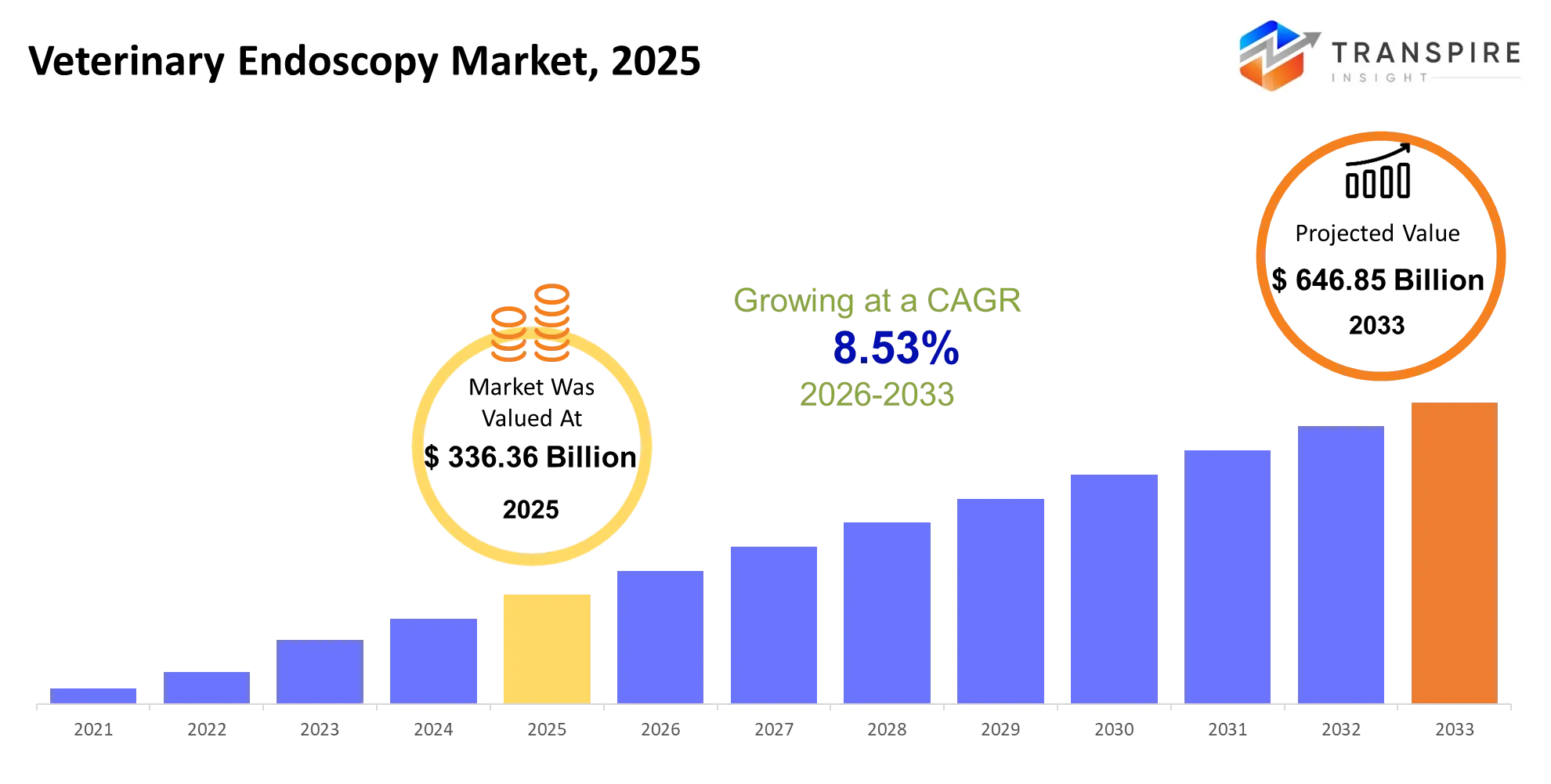
As per the Transpire Insight, The Veterinary Endoscopy Market size is estimated at USD 336.36 billion in 2025 and is anticipated to reach USD 646.85 billion by 2033, growing at a CAGR of 8.53% from 2026 to 2033.
The worldwide veterinary endoscopy market offers imaging-enabled instruments to help veterinarians examine internal body parts, collect biopsies, retrieve objects swallowed, and undertake other select procedures without the need for large incisions. In the past 3-5 years, vendors have shifted their focus from fibre-optic viewing equipment to digital flexible video systems with high-definition imaging, recording, and sharing of images. A relatively down-to-earth driver has been more gastrointestinal emergencies among companion animals, including foreign body ingestion, where endoscopy can eliminate open surgery, circumvent a lengthy hospital stay and preserve clinic volume. That changes the buying argument: hospitals pay not just for diagnosis but to turn a single full anaesthesia into biopsy, retrieval and treatment. Accordingly, pet-care spending and pet owners' desire for less-pain, faster-recovery procedures are upping the acceptance of endoscopic procedures, and advanced imaging makes their application in respiratory, urological, joint and abdominal care more feasible.
Veterinary Endoscopy Market Size & Forecast:
- Market Size 2025: USD 336.36 Billion
- Expected Market Value (2033): USD 646.85 Billion
- Forecast CAGR (2026–2033): 8.53%
- Leading Region in 2025: North America
- Fastest Growing Region: Asia Pacific
- Key Company Profiles: KARL STORZ, Olympus, FUJIFILM, Stryker, Richard Wolf, Arthrex, HOYA, Vimex Endoscopy, Eickemeyer, Biovision Veterinary Endoscopy, Dr. Fritz, EndoMed Systems, SonoScape, Mindray, Medtronic.
Key Veterinary Endoscopy Market Insights:
Veterinary endoscopy is moving from a diagnostic-only referral purchase to a platform that enables intervention, image documentation, and enhanced value speciality care. The key to competitive advantage is not just camera resolution but scope durability, digital visualization, workflow fit, and service coverage.
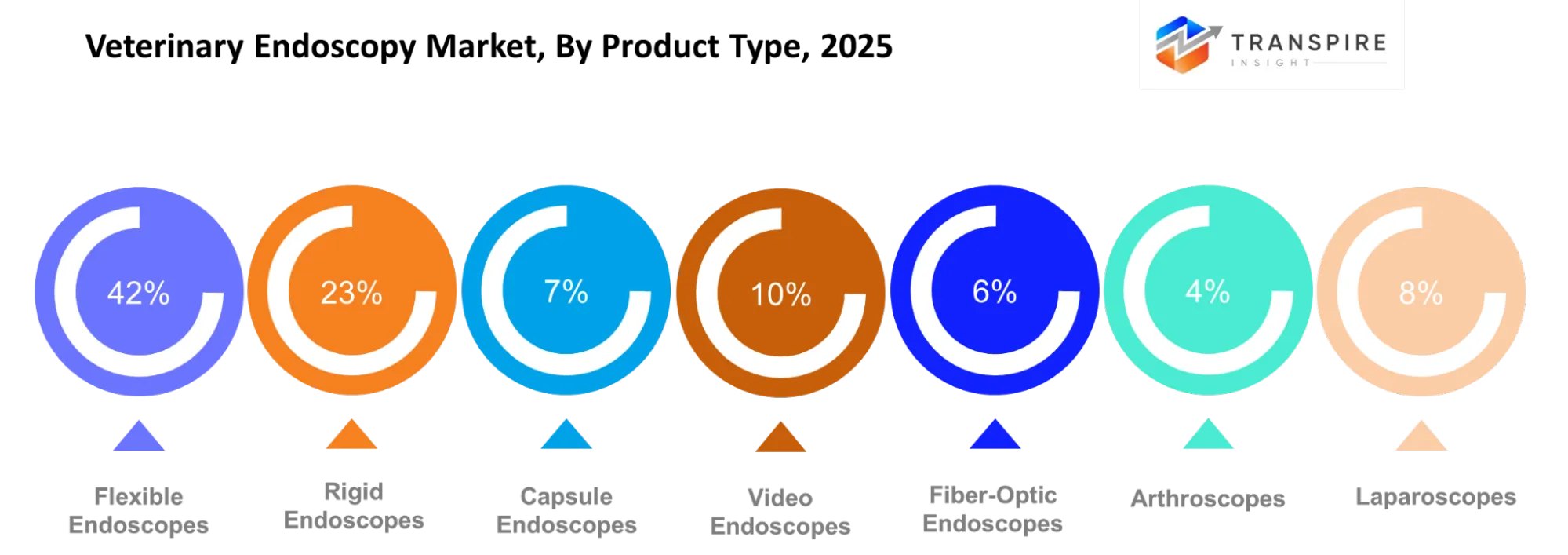
- 42.30% of flexible endoscopes are in use, while Olympus continues to expand the HD video platforms, driving clinics toward recorded GI exams and collaboration with specialists.
- Precision arthroscopy and laparoscopy, extending minimally invasive surgical workflows, are achieved with rigid endoscopes, which Karl Storz supports, accounting for 23.00%.
- Video endoscopes make up 10.00%, and FUJIFILM's imaging legacy continues to drive the need for more precise lesion documentation and the remote review of cases.
- Capsule endoscopes account for 7.00%, and wireless visualisation is gradually decreasing the need for invasive exploration in selected gastrointestinal cases.
- Fibre-optic systems have a retention rate of 6.00%, and Eickemeyer's HD and semi-disposable EickView range offer practice upgrades that are cost-conscious.
- Laparoscopes account for 5.00%; Richard Wolf's surgical endoscopy focus is in line with the growing abdominal and reproductive procedures.
- Arthroscopes account for 4.00%, and Biovision's 1.2 mm NeedleView allows for standing evaluation of equine joints and earlier orthopaedic decision-making.
- Accessories generate 2.70%; recurring revenue is generated around installed systems, both for reusable instruments and for single-use components.
- Veterinary surgery that is minimally invasive is expanding at 8.70% CAGR; Stryker's integrated visualization and arthroscopy technologies support high throughput, standardised procedures.
What are the Key Drivers, Restraints, and Opportunities in the Veterinary Endoscopy Market?
Driver:
The migration from open surgery to minimally invasive diagnostics and intervention is the principal growth engine. Flexible scopes allow clinicians to inspect curved gastrointestinal and respiratory pathways, retrieve foreign bodies, and obtain tissue samples with less trauma than exploratory surgery. The trigger is a combination of higher companion-animal treatment expectations and the clinical need to manage vomiting, airway disease, and foreign-body cases quickly. Revenue rises because one platform supports repeatable, high-frequency procedures and creates pull-through demand for graspers, biopsy forceps, light sources, sterilization, repairs, and clinician training. Gastrointestinal work remains the most established use area, while therapeutic procedures are gaining momentum as practices use endoscopy beyond inspection alone.
Restraint:
Capital investment remains a barrier as well. Endoscopy is a capital-intensive process that involves acquiring scopes, video processors, accessories, cleaning and disinfection systems, anaesthesia equipment, access to maintenance and disinfection specialists, and operational staff and training. For small clinics, such a wide array of usage and several endoscopes may not be cost-effective to meet the return on investment. Anatomical differences among body sizes and species in veterinary medicine prevent using human-device workflows, maintaining a training and accuracy gap.
Opportunity:
Portable systems, AI-assisted imaging, and integrated endoscopy-laparoscopy platforms can lower adoption barriers by reducing equipment complexity and improving workflow efficiency. MediCapture’s 2026 aiScope pilot demonstrates this shift, enabling real-time object detection, image classification, and video analysis directly on the imaging system without requiring an external PC or GPU. Expansion across veterinary universities, mobile services, and regional clinics could broaden access to advanced endoscopy, while simultaneously creating demand for training, digital documentation, data capture, and AI-supported clinical workflows.
What Has the Impact of Artificial Intelligence Been on the Veterinary Endoscopy Market?
AI is helping to evolve veterinary endoscopy from a task of recorded video collection to a future of assisted interpretation and more consistent documentation. Computer-vision models can assist in screening captured endoscopic frames by recognising anatomy, alerting users to points of interest, and highlighting patterns indicative of inflammation, ulcers, polyps, neoplastic tissue, or foreign matter. The models can both support in-procedure inspection to help the endoscopist focus on appropriate sites, as well as assist post-procedure documentation via image tagging and automated report generation.
Exploring the predictive value of accumulated endoscopic videos, histopathology, history, and spatiotemporal localisation offers a pathway to quantification of lesion risk, identification of cases needing biopsy or referral, and measurements of response to therapy over time. It may also enable remote review of selected footage to increase access to specialist experience at more facilities. Predictive ability will depend on ample training data that represents the wide breed, size, age, sex, anatomy, and disease variability seen in small animal practice, in addition to clean equipment and efficient integration with existing software - and it cannot replace the experience of a skilled endoscopist.
In January 2026, MediCapture Inc. launched its aiScope™ software pilot for veterinary sciences to execute real-time Vision AI models locally on medical video recorders and imaging systems.
https://medicapture.com/medicapture-launches-aiscope-pilot-for-veterinary-sciences-at-vmx-2026/
Key Veterinary Endoscopy Market Trends:
Veterinary endoscopy is evolving from a diagnostic tool to an intervention platform, and providers are competing on the quality of the images, workflow integration, and breadth of procedures. The biggest transformation is from exploratory surgery to repeatable, less traumatic procedures that enhance recovery and boost clinical productivity.
- The flexible video scopes are replacing fibre-optic systems, offering better imaging, recording, and digital consultation processes.
- Mucosal visualisation is enhanced with HD imaging, narrow band illumination and enhanced lighting, which helps to support earlier lesion assessment.
- Flexible scopes are still essential as many rigid scopes cannot accommodate curved anatomy in the GI, airway and urogenital tract.
- Endoscopy is becoming a tool for biopsy, dilation, resection and removal of foreign bodies in a single anaesthetic.
- The market is expanding beyond the core GI care into orthopaedic and abdominal intervention with laparoscopy, arthroscopy and thoracoscopy.
- Advanced equipment is being standardised across networks, and utilization/referral capture by corporate veterinary hospitals is being increased.
- AI-based annotation is becoming more popular to highlight suspicious areas, to standardise reporting and to aid less experienced operators.
- Capsule and wireless techniques are emerging as relevant options for those areas where the scope is not easily accessible or repeated visualisation is desirable.
Veterinary Endoscopy Market Segmentation
Product Type:
Market share for flexible endoscopes is 42.30%, owing to their manoeuvrability, great access through the GI and respiratory tracts, and removal of foreign bodies in diverse body regions. Rigid endoscopes have 23.00%, supported by their robust visualisation in rhinoscopy, otoscopy, arthroscopy, and laparoscopy. Video endoscopes have 10.00%, with a trend towards digital image capture. Capsule endoscopes currently have 7.00% of the market share and may permit access to less accessible regions of the GI tract. Fibre-optic endoscopes share 6.00%, with laparoscopes at 5.00%, arthroscopes at 4.00%, and accessories at 2.70%; with future growth contingent upon procedure-specific instrumentation and platform integration of accessories and systems.
Animal Type:
Dogs and Cats remain the principal users as companion-animal hospitals increasingly invest in advanced diagnostics, endoscopy, and minimally invasive treatment. Horses require specialised and longer instruments because respiratory and gastrointestinal examinations involve larger anatomy and deeper access. Cattle and Swine create opportunities through herd-health applications, while Sheep & Goats support targeted diagnostic procedures. Birds and Exotic Animals represent smaller but specialised niches, where anatomical complexity and limited access increase the value of flexible, purpose-designed systems and trained operators.
Application:
Gastrointestinal and Respiratory applications form the practical core because endoscopy enables direct visualisation, biopsy, foreign-body removal, and airway assessment with limited tissue disruption. Urology is expanding through minimally invasive examination and intervention, while Arthroscopy and Laparoscopy support surgical applications requiring precise visualisation. Rhinoscopy and Otoscopy benefit from compact imaging systems suited to anatomically restricted areas. Reproductive applications remain specialised but provide additional utilisation opportunities. Broader application coverage allows veterinary facilities to improve equipment utilisation across multiple departments.
Procedure:
Diagnostic Endoscopy anchors adoption because direct visualisation can shorten diagnostic pathways and reduce reliance on exploratory procedures. Biopsy and Foreign Body Removal extend endoscopy from observation into targeted intervention, increasing procedure value. Therapeutic Procedures create additional utilisation as clinicians perform treatments during the same session. Imaging supports documentation, consultation, and longitudinal case review, while Minimally Invasive Surgery expands the role of endoscopic platforms in operative care. This progression encourages hospitals to invest in multifunctional systems rather than single-purpose equipment.
End User:
Veterinary Hospitals and Speciality Hospitals lead adoption because they maintain higher procedure volumes, specialist expertise, anaesthesia facilities, and capital budgets for advanced imaging. Veterinary Clinics represent the next expansion layer as portable and easier-to-operate systems reduce infrastructure requirements. Diagnostic Centres can broaden access by concentrating specialised imaging capabilities and serving multiple practices. Research Institutes and Academic Institutions also support adoption through clinical studies, training, and technology validation. Animal Farms remain a targeted opportunity where portable systems can support selected herd-health examinations.
Technology:
HD and 4K Imaging underpin technology upgrades by improving visualisation, documentation, and clinical review. Digital Endoscopy strengthens recording and data sharing, while 3D Endoscopy can improve depth perception for complex procedures. Wireless systems offer greater flexibility where mobility and rapid deployment matter. AI-Assisted Endoscopy introduces automated image analysis, detection, and workflow support, although clinical validation remains important. Disposable Endoscopy may gain traction where reprocessing capacity is limited. Future systems will increasingly connect imaging, documentation, training, analytics, and workflow management.
What are the Key Use Cases Driving the Veterinary Endoscopy Market?
The primary application is gastrointestinal endoscopy, accounting for a 42.30% segment of flexible endoscopes, for direct visualisation of foreign object retrieval, mucosa inspection, biopsy and focused intervention, resulting in the employment of less exploratory surgical procedures when deemed necessary for diagnosis and exploration in canine and feline patients.
Expanding application portfolio includes respiratory examination, rhinoscopy, otoscopy, urology, arthroscopy and laparoscopy, which expand utilisation as medical centres can use the imaging platform across multiple disciplines. Moving forward, applications include AI-assisted imaging, portable endoscopy, digital case review, and minimally invasive surgery.
An 8.70% CAGR for minimally invasive veterinary surgery underscores the industry transition toward smaller insertions, distally focused visualisation, and faster recovery, which opens potential for integrated platform and training solutions.
|
Report Metrics |
Details |
|
Market size value in 2025 |
USD 336.36 Billion |
|
Market size value in 2026 |
USD 364.78 Billion |
|
Revenue forecast in 2033 |
USD 646.85 Billion |
|
Growth rate |
CAGR of 8.53% from 2026 to 2033 |
|
Base year |
2025 |
|
Historical data |
2021 - 2024 |
|
Forecast period |
2026 - 2033 |
|
Report coverage |
Revenue forecast, competitive landscape, growth factors, and trends |
|
Regional scope |
United States; Canada; Mexico; United Kingdom; Germany; France; Italy; Spain; Denmark; Sweden; Norway; China; Japan; India; Australia; South Korea; Thailand; Brazil; Argentina; South Africa; Saudi Arabia; United Arab Emirates |
|
Key companies profiled |
KARL STORZ, Olympus, FUJIFILM, Stryker, Richard Wolf, Arthrex, HOYA, Vimex Endoscopy, Eickemeyer, Biovision Veterinary Endoscopy, Dr. Fritz, EndoMed Systems, SonoScape, Mindray, Medtronic |
|
Customization scope |
Free report customization (country, regional & segment scope). Available customized purchase options to meet your exact research needs. |
|
Report Segmentation |
Product Type (Flexible Endoscopes, Rigid Endoscopes, Capsule Endoscopes, Video Endoscopes, Fiber-Optic Endoscopes, Arthroscopes, Laparoscopes, Accessories); Animal Type (Dogs, Cats, Horses, Cattle, Swine, Sheep & Goats, Birds, Exotic Animals); Application (Gastrointestinal, Respiratory, Urology, Arthroscopy, Laparoscopy, Rhinoscopy, Otoscopy, Reproductive); Procedure (Diagnostic Endoscopy, Surgical Endoscopy, Biopsy, Foreign Body Removal, Therapeutic Procedures, Minimally Invasive Surgery, Imaging); End User (Veterinary Hospitals, Veterinary Clinics, Specialty Hospitals, Research Institutes, Academic Institutions, Animal Farms, Diagnostic Centers); Technology (HD Imaging, 4K Imaging, 3D Endoscopy, Wireless Endoscopy, Digital Endoscopy, AI-Assisted Endoscopy, Disposable Endoscopy). |
Which Regions are Driving the Veterinary Endoscopy Market Growth?
North America accounts for the largest share of 41.20% of the veterinary endoscopy market, due to considerable investments in companion animal care and a high number of referral and speciality hospitals. The region's advantage is attributed to its mature infrastructure in anaesthesia, imaging, sterilisation, and surgical disciplines, and the use of endoscopies by hospitals for gastroenterology, respiratory, orthopaedic, and abdominal care. The advantages of this region include a well-established tutorial system for veterinarians and a comparatively higher level of owner acceptance of elective and minimally invasive procedures. Animal devices are controlled by the FDA in this region, but veterinarians have freedom of use with legally marketed devices.
In April 2026, Shenzhen SOAIM Technology launched its revolutionary pet endoscope at the 2026 International Pet Health Expo. This product introduction aimed to redefine the standards of pet healthcare by expanding access to precision veterinary diagnostic tools.
Europe takes a 29.00% share, mainly due to the long-standing small-animal referral system, equine practice, and a necessity for premium-quality diagnostic documentation. Adoption, unlike North America, is not driven by the number of corporate hospitals but by specialist veterinary networks, university hospitals, and the spread of equipment across borders. Recovery within the European region is planned around high infection-control standards, the adoption of the veterinary surgeon, and the continual need for replacement digital visualization systems. Investment is also driven by the requirement for long-lasting, well-maintained equipment, encouraging several rounds of maintenance/refurbishment.
In August 2026, OR Technology launched its next-generation Amadeo V mini III digital X-ray imaging system. This system enhances small-animal clinical workflows and delivers highly precise digital radiography to meet the region's rising standards for advanced diagnostic documentation.
Asia Pacific market share is 21.00% with a CAGR of 8.30%. This region has seen increased momentum in growth driven by increased urban pet ownership, better disposable income, and overall investment in premium veterinary clinics in China, India, Southeast Asia, Japan, and South Korea. Recent reforms to address the regulation of veterinary medicine in China and India are providing opportunities for platform approvals and technology partnerships.
Ongoing opportunities in Asia Pacific include portable video systems, clinician training and scalable referral networks to bring specialist-grade procedures beyond larger cities. Latin America market share is 5.00%, while the Middle East and Africa share is 3.80% and has experienced growth in urban companion-animal and equine-care centers.
In July 2026,Unicharm Corporation entered the Indian pet care market to launch specialised hygiene and wellness offerings. This expansion accelerates regional product availability and meets rising urban consumer demand.
https://www.unicharm.co.jp/en/company/news/2026/0702-01.html
Who are the Key Players in the Veterinary Endoscopy Market, and how do they compete?
Competition occurs among human endoscopy players and major veterinary specialists, with an attempt to have high-end imaging ecosystems as well as more accessible, purpose-built systems for practice. These include providers of high-quality optics and digital imaging, hospital relationships, service, and technology transfer from human medicine such as KARL STORZ, Olympus, FUJIFILM, HOYA, Richard Wolf, Stryker, Medtronic, SonoScape, and Mindray. Stryker, for arthroscopy, leverages well-integrated visualization, fluid management, and resection tech; Arthrex for orthopedic and minimally-invasive joint-care workflows; and specialists in veterinary applications, offering workflow specialization and less-complex systems such as Eickemeyer with bundled Eick View systems, HD video scopes, semi-disposable solutions, and widespread access to veterinary equipment distribution to enable general practice upgrades; Biovision with modular diagnostic and surgical systems, needle arthroscopy, mobile systems, and standing equine applications, with Canadian operations offering regional support; and Vimex Endoscopy, Dr. Fritz, and Endo Med Systems with niche procedure requirements, factory-end repairs, accessories, and a training-oriented sales approach. Hence, players are focusing on penetrating installed bases; those that supply economically viable ownership, knowledge to clinicians, on-demand repairs, and disposable-compatible workflows are more likely to build repeat users.
Key players are:
- KARL STORZ
- Olympus
- FUJIFILM
- Stryker
- Richard Wolf
- Arthrex
- HOYA
- Vimex Endoscopy
- Eickemeyer
- Biovision Veterinary Endoscopy
- Dr. Fritz
- EndoMed Systems
- SonoScape
- Mindray
- Medtronic
Recent Development News
- In April 2026, VetOvation partnered with All Star Veterinary Clinic to install its Veterinary Endoscopy System. The deployment enabled the clinic to provide minimally invasive diagnostic and therapeutic endoscopic procedures in-house, supported by endoscopy instruments, image and video capture, hands-on training, and technical support, expanding access to advanced veterinary procedures. https://vetovation.com/products/flexible-endoscopy-system/
- In January 2026, MediCapture launched aiScope™ for veterinary science as a pilot at VMX 2026. The AI-enabled imaging software brings real-time image detection, classification, and video analysis directly to veterinary endoscopy and surgical imaging systems, supporting more efficient clinical training, data collection, and future AI-assisted diagnostic workflows. https://www.prnewswire.com/news-releases/medicapture-launches-aiscope-pilot-for-veterinary-sciences-at-vmx-2026-302661515.html
- In September 2026, Zigly Pet Care acquired Prolife Speciality Vet Clinic, an established veterinary hospital providing specialised diagnostics and advanced endoscopy services. This strategic acquisition expands the company's healthcare infrastructure network and accelerates the integration of full-scale medical ecosystems within the regional pet care market. https://yourstory.com/2026/09/startup-news-and-updates-daily-roundup-september-30-2026
What Strategic Insights Define the Future of the Veterinary Endoscopy Market?
Market evolution is taking endoscopy towards integrated, procedure-based platforms, where HD or 4K imagery, data capture, accessories, and post-procedure reporting are all acquired as part of the same workflow, rather than as disparate hardware offerings. This evolution has a hidden risk of underutilization: a clinic might invest in a more capable setup, but will not generate revenue or offset the cost without personnel training, available anaesthesia beds, biocide protocols, and a sufficient referral volume to make investing in it worthwhile. There is no better emerging opportunity than a multi-tiered offering combining portable video endoscopy, semi-disposable endoscopes, teleconsultation and AI-guided lesion analysis. This model can lower the barriers to entry for general practices and translate complex modalities into remote interpretation by specialists. AI-assisted lesion review and single-use accessories are expected to be an area of development, but their success will require validated data specific to veterinary users and conditions.
Key Segmentations are:
Product Type
- Flexible Endoscopes
- Rigid Endoscopes
- Capsule Endoscopes
- Video Endoscopes
- Fiber-Optic Endoscopes
- Arthroscopes
- Laparoscopes
- Accessories
Animal Type
- Dogs
- Cats
- Horses
- Cattle
- Swine
- Sheep & Goats
- Birds
- Exotic Animals
Application
- Gastrointestinal
- Respiratory
- Urology
- Arthroscopy
- Laparoscopy
- Rhinoscopy
- Otoscopy
- Reproductive
Procedure
- Diagnostic Endoscopy
- Surgical Endoscopy
- Biopsy
- Foreign Body Removal
- Therapeutic Procedures
- Minimally Invasive Surgery
- Imaging
End User
- Veterinary Hospitals
- Veterinary Clinics
- Speciality Hospitals
- Research Institutes
- Academic Institutions
- Animal Farms
- Diagnostic Centres
Technology
- HD Imaging
- 4K Imaging
- 3D Endoscopy
- Wireless Endoscopy
- Digital Endoscopy
- AI-Assisted Endoscopy
- Disposable Endoscopy
By Regional Analysis
North America
- US
- Canada
- Mexico
Europe
- Germany
- UK
- France
- Italy
- Spain
- Russia
- Rest of Europe
Asia Pacific
- China
- Japan
- India
- South Korea
- Australia
- Rest of Asia Pacific
South America
- Brazil
- Argentina
- Rest of South America
Middle East & Africa
- UAE
- Saudi Arabia
- Qatar
- South Africa
- Rest of the Middle East & Africa
Frequently Asked Questions
Find quick answers to common questions.
The veterinary endoscopy market size was valued at USD 336.36 billion in 2025 and is poised to reach USD 646.85 billion by 2033, expanding at an 8.53% CAGR.
Key segments for the veterinary endoscopy market are Product Type (Flexible Endoscopes, Rigid Endoscopes, Capsule Endoscopes, Video Endoscopes, Fiber-Optic Endoscopes, Arthroscopes, Laparoscopes, Accessories); Animal Type (Dogs, Cats, Horses, Cattle, Swine, Sheep & Goats, Birds, Exotic Animals); Application (Gastrointestinal, Respiratory, Urology, Arthroscopy, Laparoscopy, Rhinoscopy, Otoscopy, Reproductive); Procedure (Diagnostic Endoscopy, Surgical Endoscopy, Biopsy, Foreign Body Removal, Therapeutic Procedures, Minimally Invasive Surgery, Imaging); End User (Veterinary Hospitals, Veterinary Clinics, Specialty Hospitals, Research Institutes, Academic Institutions, Animal Farms, Diagnostic Centers); Technology (HD Imaging, 4K Imaging, 3D Endoscopy, Wireless Endoscopy, Digital Endoscopy, AI-Assisted Endoscopy, Disposable Endoscopy).
Growth is primarily driven by adoption of minimally invasive procedures, advances in HD and 4K imaging, rising in-house endoscopy capabilities, expansion of companion-animal speciality care, portable systems, and AI-assisted image analysis.
The veterinary endoscopy market is led by major manufacturers, including KARL STORZ, Olympus, FUJIFILM, Stryker, Richard Wolf, Arthrex, HOYA, Vimex Endoscopy, Eickemeyer, Biovision Veterinary Endoscopy, Dr. Fritz, EndoMed Systems, SonoScape, Mindray, and Medtronic.
North America holds 41.20% of the market and maintains dominance through advanced veterinary hospitals, specialist infrastructure, established referral networks, higher-value companion-animal procedures, and strong adoption of minimally invasive and digital imaging technologies.
Commercial opportunities include portable endoscopy systems, AI-assisted imaging, integrated endoscopy-laparoscopy platforms, veterinary university training, mobile services, and expansion across regional clinics in Asia Pacific.
- KARL STORZ
- Olympus
- FUJIFILM
- Stryker
- Richard Wolf
- Arthrex
- HOYA
- Vimex Endoscopy
- Eickemeyer
- Biovision Veterinary Endoscopy
- Dr. Fritz
- EndoMed Systems
- SonoScape
- Mindray
- Medtronic
About the Authors

Pankaj Ghogare Patil
I am Pankaj Ghogare Patil, a Senior Research Analyst at Transpire Insight, specializing in the Pharmaceutical, Chemicals & Materials, Healthcare IT, and Biotechnology industry. My expertise lies in conducting comprehensive market research, analyzing industry trends, evaluating competitive landscapes, and translating complex data into actionable insights. At Transpire Insight, I closely follow emerging technologies, regulatory developments, and market innovations to create accurate, well-researched, and informative content that helps businesses and professionals make informed decisions. I am committed to producing credible, evidence-based articles that reflect industry best practices while making technical topics accessible and valuable for a broad audience.

Chakradhar Khansole
Chakradhar serves as the Research Director at Transpire Insight, bringing over 8 years of experience in technology, innovation, and strategic market intelligence. He specializes in transforming complex market data into actionable business insights that enable organizations to make informed, growth-oriented decisions. Recognized for his strategic vision and analytical expertise, Chakradhar leads high-impact research initiatives, delivering comprehensive market assessments, competitive intelligence, and forward-looking industry analysis.
Recently Published Reports
-
Apr 2026
AI in Diabetic Retinopathy Market
AI in Diabetic Retinopathy Market Size, Share & Analysis Report By Type (Screening AI Systems, Diagnostic AI Systems, and Predictive AI Models), By Application Segment (Hospitals, Ophthalmology Clinics, Diagnostic Centers, and Research and Development), and Geography (North America, Europe, Asia-Pacific, Middle East and Africa, South and Central America), 2021 - 2031
-
Apr 2026
Psychometric Tests Market
Psychometric Tests Market Size, Share & Analysis Report By Type (Personality Tests, Ability/Aptitude Tests, Skill/Knowledge Tests, and Others), By Application (Talent Acquisition and Talent Management), and Geography (North America, Europe, Asia-Pacific, Middle East and Africa, South and Central America), 2021 – 2031
-
Apr 2026
Rare Biological Sample Collection Market
Rare Biological Sample Collection Market Size, Share & Analysis Report By Type (Isolation Kits & Reagent, Blood Collection Tubes, and Others), By Application (Oncology, Transcriptomics, Pharmacogenomics, and Others), and Geography (North America, Europe, Asia-Pacific, Middle East and Africa, South and Central America), 2021 – 2031
-
Jul 2026
Diabetic Retinopathy Market
Diabetic Retinopathy Market Size, Share & Analysis Report By Type (Proliferative Diabetic Retinopathy, and Diabetic Macular Edema (DME)), By Treatment Type (Anti VEGF Drug, Steroid Implants, Laser Surgeries, and Vitrectomy), and Geography (North America, Europe, Asia-Pacific, Middle East and Africa, South and Central America), 2021 – 2031
Our Clients