

Middle East and Africa Flexible Endoscopes Market Summary
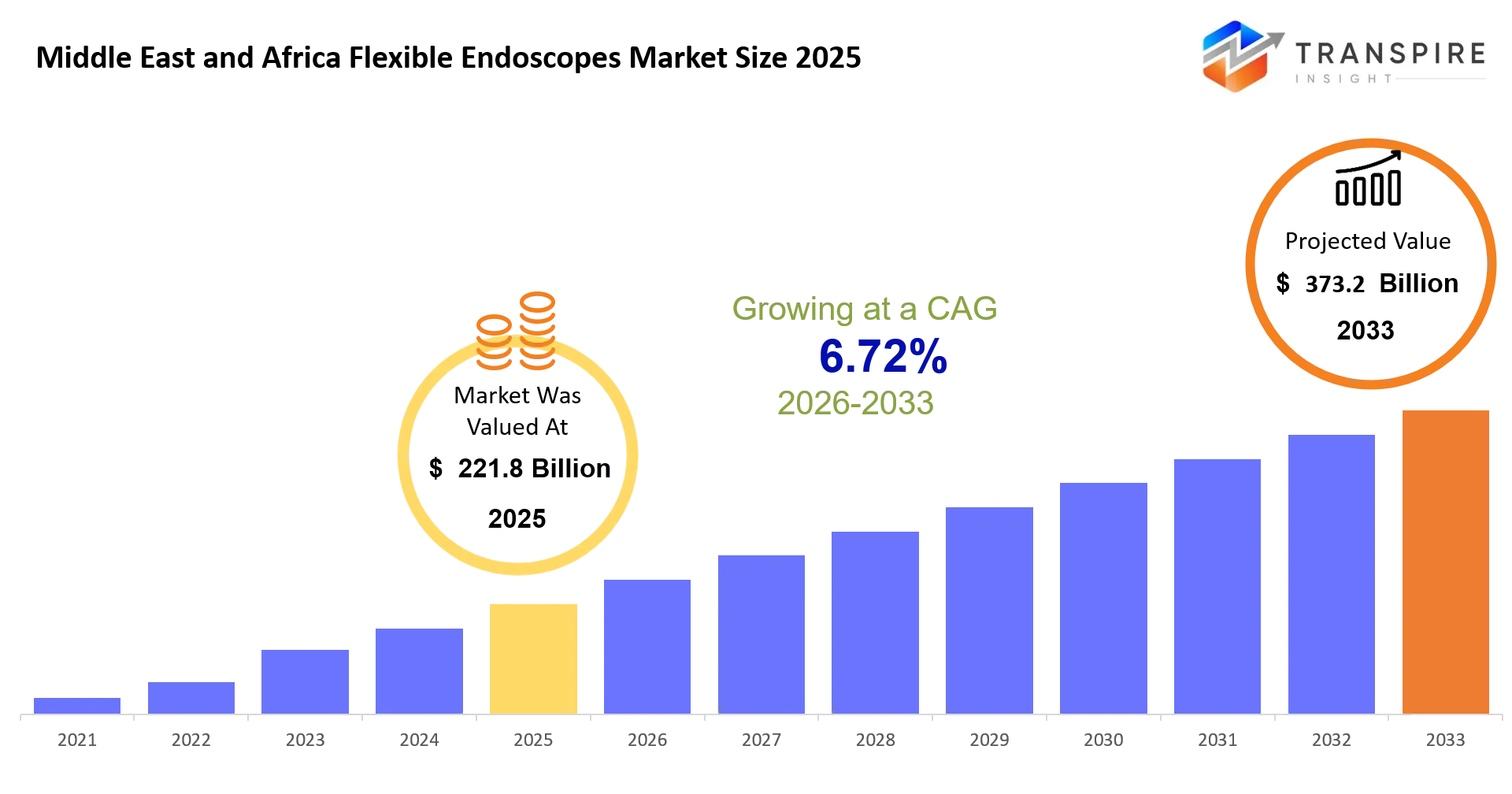
As per Transpire Insight Analysis the Middle East and Africa Flexible Endoscopes Market size is estimated at USD 221.8 Million in 2025 and is anticipated to reach USD 373.2 Million by 2033, growing at a CAGR of 6.72% from 2026 to 2033.
Flexible endoscopes are kind of a big deal in modern healthcare, since they help clinicians diagnose and manage gastrointestinal, pulmonary, urology, ENT, and gynecological problems using minimally invasive approaches. In practice, the devices lower surgical trauma , they can also help patients leave hospital sooner and they make clinical decisions move quicker. because of that, they’re basically needed everywhere across hospitals and specialty clinics in the Middle East and Africa.
Over the last five years, the market has been leaning more and more toward high definition , 4K, and AI-assisted visualization platforms, which really help with lesion detection and the overall accuracy of a procedure. The COVID-19 pandemic did disrupt elective work for a while. but it also pushed more funding into infection control, better endoscope reprocessing, and digital workflow systems, so when diagnostic services restarted, health providers were faster and more prepared.
Meanwhile, governments across Gulf countries have expanded healthcare infrastructure, while private hospitals keep putting money into advanced endoscopy rooms and upgraded imaging setups. Taken together, these technology upgrades, wider screening efforts, and improved procedural efficiency are driving broader adoption and more frequent equipment replacement cycles, which should support steady long-term revenue growth for the market.
Middle East and Africa Flexible Endoscopes Market Size & Forecast:
- Middle East and Africa Flexible Endoscopes Market Size 2025: USD 221.8 Million
- Expected Market Value 2033: USD 373.2 Million
- Forecast CAGR: 6.72%
- Leading country in 2025: Saudi Arabia
- Fastest-growing country: South Africa
- Key Profile: Olympus, Fujifilm, Karl Storz, HOYA (PENTAX Medical), Stryker, Boston Scientific, Medtronic, Ambu, Richard Wolf, ConMed, Cook Medical, Smith+Nephew, B. Braun, Canon Medical, Johnson & Johnson MedTech
Key Market Insights
- The Middle East and Africa Flexible Endoscopes Market is expected to hit about USD 373.2 million by 2033, pulled along by tech modernization too and the steadily growing number of procedures that clinicians are doing.
- In 2025, Saudi Arabia still leads the regional scene, taking roughly 30–35% market share, mostly because of heavy healthcare investment and those Vision 2030 initiatives that keep getting pushed forward.
- South Africa should show the quickest pace all the way through 2033, helped by the expansion of private healthcare and the fact that endoscopy capacity is increasing bit by bit.
- When you look at product use, gastrointestinal endoscopes are in front with nearly 40% of the market, which kind of lines up with colorectal cancer screening efforts and broader digestive disease programs.
- Bronchoscopes stay as the second major product group, since diagnosis for respiratory conditions and critical care procedures are still growing, even if the demand trends vary by country.
- For newer formats, AI-assisted flexible endoscopes along with 4K flexible endoscopes are projected to see the most rapid adoption from 2026 to 2033, mainly improving lesion detection and making workflow feel more efficient.
- By application area, gastroenterology is the top driver, making up more than 45% of endoscopy procedures overall. Pulmonology, however, is emerging as the fastest-growing specialty segment, kind of catching up as hospitals expand respiratory diagnostics.
- In terms of end users, hospitals generate over 70% of the overall demand, while ambulatory surgical centers keep widening their endoscopy capabilities across GCC nations, step by step.
- Key players like Olympus, Fujifilm, Karl Storz, PENTAX Medical, Boston Scientific, and Medtronic are putting emphasis on AI integration, digital imaging, and also stronger regional partnerships.
- Overall, strategic growth via distributor collaborations, physician training programs and advanced visualization technologies is helping companies improve their competitive positioning across the Middle East and Africa Flexible Endoscopes Market.
What are the Key Drivers, Restraints, and Opportunities in the Middle East and Africa Flexible Endoscopes Market?
The strongest growth driver is that expansion of minimally invasive diagnosis, backed by government healthcare modernization programs, plus more spending on advanced hospital infrastructure. In practice national initiatives like Saudi Vision 2030 and the UAE healthcare transformation strategies have sped up procurement of HD, and AI enabled endoscopy systems. At the same time colorectal cancer screening , gastrointestinal disease management, and respiratory diagnostics are turning into higher clinical priorities. All of this tends to lift procedural volumes, and it also pushes hospitals to swap older kit for advanced flexible endoscopes, which really feeds into equipment sales and service revenues , directly.
Still, the biggest structural hurdle stays pretty stubborn: the high acquisition, maintenance, and reprocessing costs related to flexible endoscope systems. Premium imaging platforms need dedicated sterilization areas, trained staff, ongoing maintenance agreements, and compliance with tight infection control protocols. Many public hospitals, and smaller healthcare providers across developing African economies have limited capital budgets. So replacement cycles get delayed, and access to advanced technology becomes narrower. Because of this financial squeeze, overall market penetration is held back even while clinical requirements keep rising.
AI-enabled endoscopy platforms also look like one of the strongest future opportunities for the regional market. Computer aided detection software that can flag colorectal polyps and early stage lesions is getting better at diagnostic accuracy, and it helps reduce physician variability too.
What Has the Impact of Artificial Intelligence Been on the Middle East and Africa Flexible Endoscopes Market?
Artificial intelligence together with modern digital tools is kind of changing flexible endoscopy in a big way, mostly by boosting diagnostic accuracy, making processes run faster, and improving how devices get handled and managed. AI assisted computer aided detection systems look at the endoscopic video stream more or less continuously, they flag things like polyps, early gastrointestinal lesions, and unusual tissue patterns that clinicians might otherwise miss because, well, it’s easy to overlook in the moment. In practice, these tools can help make diagnostic results more consistent across different operators, so the quality doesn’t swing so much from one person to another. At the same time, digital workflow platforms help by automating image capture and saving, procedure notes, and linking patient records, so physicians can finish the steps with less friction, and typically faster.
On the maintenance side, machine learning is also being used for predictive maintenance by tracking endoscope use, monitoring component wear, and watching sterilization cycles. Hospitals then plan maintenance in advance rather than after something breaks, which reduces idle time and also helps stretch the service life of the devices. Then there are cloud connected analytics platforms that can improve inventory control and endoscope utilization across multiple hospitals, which raises overall operational effectiveness while keeping service expenses lower. Some AI based quality assurance approaches further support infection prevention by logging reprocessing compliance and keeping records about how well sterilization is actually performing.
Still, despite these benefits, broad adoption is held back in a few places. Integration can be expensive, and several African healthcare systems don’t yet have enough digital infrastructure in place. There’s also a shortage of labeled or annotated clinical datasets needed to train AI models for region specific patterns. Plus, many health providers want extra training so clinicians feel comfortable, before they fully fold AI assisted endoscopy into everyday clinical routines.
Key Market Trends
- Since 2021, many hospitals kind of moved away from older HD setups and leaned into 4K plus AI-assisted endoscopy platforms, mainly for better lesion detection , and higher diagnostic confidence.
- After COVID-19 changed how things were run, healthcare providers also started swapping out aging reusable equipment with newer systems that offer stronger infection prevention, or at least more robust controls.
- In the same period, manufacturers broadened physician education efforts across GCC countries, to boost uptake of advanced visualization tools, and even digital reporting platforms that feel a bit more modern.
- Since 2022, cloud-enabled endoscopy reporting platforms have shown up more often, helping clinicians with clearer documentation, and improving overall hospital workflow efficiency as well.
- Meanwhile, private hospital groups are investing more in premium endoscopy suites, as medical tourism keeps expanding across Saudi Arabia and the UAE, which really changes demand patterns.
- AI-supported polyp detection software has moved from initial pilot steps into routine clinical evaluation across several prominent regional hospitals too.
- Endoscope makers have also strengthened ties with local distributors, in order to improve after-sales service, maintenance support, and clinician training know-how.
- On the sustainability side, initiatives pushed manufacturers to build more durable endoscope platforms, with lower maintenance burdens and longer working lifecycles.
- Digital linkage with hospital information systems became a sort of competitive edge for premium endoscopy vendors.
- And strategic collaboration efforts among Olympus, Fujifilm, Karl Storz, Boston Scientific, and Medtronic continue to speed up technology transfer across Middle Eastern healthcare markets.
Middle East and Africa Flexible Endoscopes Market Segmentation
By Product Type
Gastrointestinal endoscopes are still in the lead because in practice digestive disease diagnosis, and also therapeutic actions happen everyday across hospitals and specialty centers. Colonoscopes back colorectal cancer screening as well as routine bowel checkups, and duodenoscopes help with more intricate biliary work plus pancreatic procedures. Bronchoscopes stay a major tool for respiratory disease diagnosis, notably when you are in critical care, and also in pulmonary medicine. In a similar way, urology endoscopes keep supporting stone management and urinary tract assessment, using minimally invasive strategies.
ENT endoscopes help clinicians look closely at nasal passages, the throat, and nearby tissues with better clarity, during both outpatient visits and operative care. Gynecology endoscopes play a role in finding and treating reproductive health issues while speeding up patient recovery a bit. There are also other flexible endoscopes for specialized clinical fields, areas where visualization needs to be tailored and where interventions aren’t exactly standard. This range of products means healthcare facilities can match their equipment with varied procedural demands, and with the right kind of clinical specialty.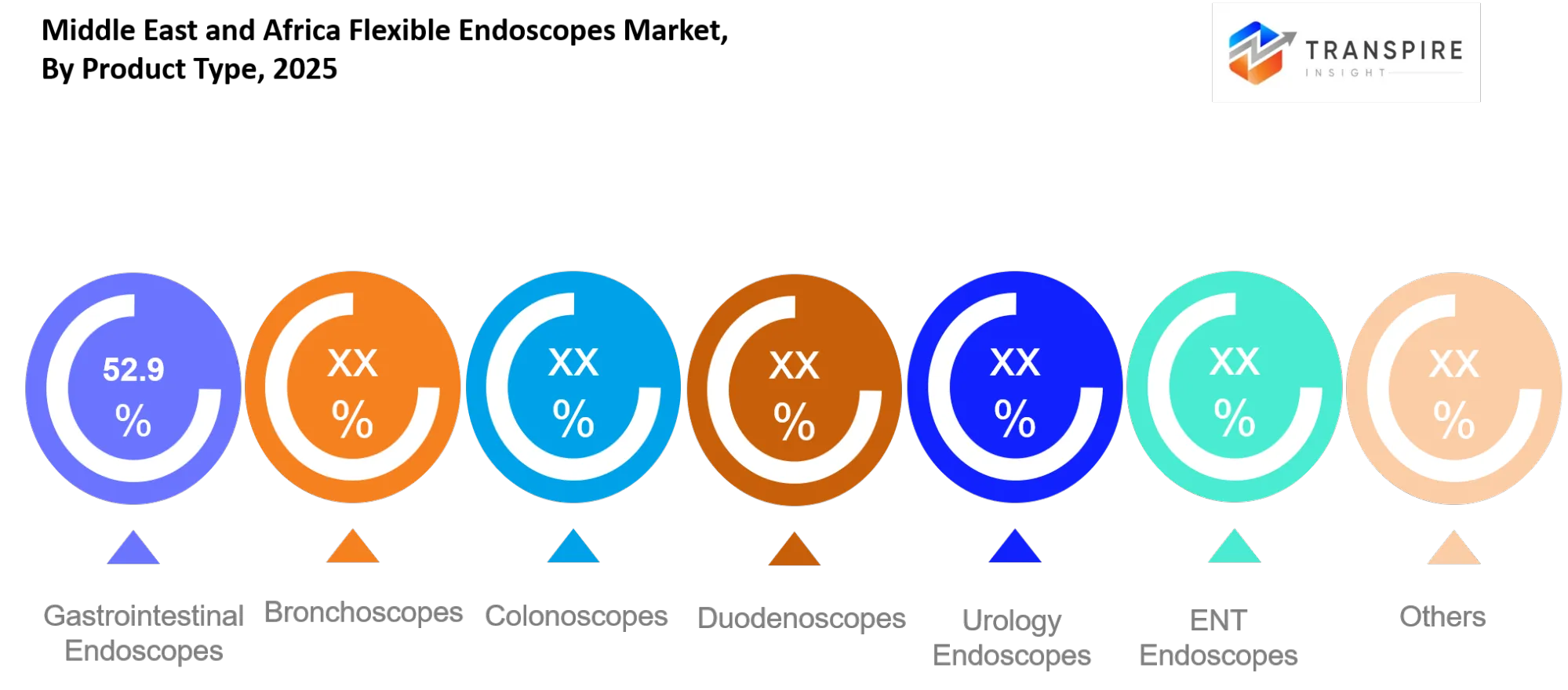
By Technology
HD endoscopy still shows as the usual standard technology , kind of because dependable picture quality helps with both routine diagnostic work and therapeutic procedures across many areas. In day to day practice , healthcare teams slowly swap out older setups for 4K endoscopy so they can get a clearer view and better tissue separation when exams get complicated. AI aided endoscopy also boosts lesion detection and makes it easier for clinicians to spot abnormal areas more consistently, which is honestly a big deal. Capsule endoscopy gives a noninvasive choice for small bowel imaging where classic procedures can be hard to reach, or simply not practical.
Then there is robot assisted endoscopy , which allows very accurate instrument handling during certain advanced steps carried out in specialized hospitals. Wireless endoscopy further improves mobility and makes workflow simpler by cutting down on cable reliance in procedure rooms. Beyond that, other technologies keep showing up to meet specific clinical needs, mainly by improving imaging and digital integration. New progress keeps pushing healthcare providers to upgrade existing platforms for better clinical efficiency and improved patient outcomes.
By Application
Gastroenterology holds the biggest portion, mainly because flexible endoscopy is still crucial for diagnosing digestive disorders, for cancer screening, and for doing therapeutic interventions, yes. Pulmonology is still growing too, since bronchoscopy procedures get used in respiratory infections, lung diseases, and also for getting biopsy samples. Urology leans on flexible visualization for checking the urinary tract, and for minimally invasive work like stone treatment and other related issues. ENT procedures, on the other hand, gain from detailed visualization, it helps with more accurate diagnosis and even the surgical plan.
Gynecology uses flexible endoscopy to look into reproductive health conditions while keeping surgical trauma down and recovery time shorter. Orthopedics applies some specialized endoscopic techniques during certain minimally invasive procedures that involve joints, and the tissues nearby, generally. General surgery also brings flexible visualization into the mix to back diagnosis and treatment across many different clinical moments. And beyond that, other uses keep showing up as medical technology keeps moving into new therapeutic spaces.
By End User
Hospitals still seem like the biggest end users , because their advanced infrastructure helps them handle high procedural volumes , plus emergency services, and those more complex therapeutic interventions. Ambulatory surgical centers keep growing too, as minimally invasive procedures shift toward briefer treatment cycles and same day discharge. Specialty clinics tend to zero in on focused care areas like gastroenterology, pulmonology, and urology, which makes patient management feel smoother, more efficient, and honestly a bit more streamlined. Diagnostic centers add value by enabling early disease detection, and they run routine screening programs as well.
Academic institutes back physician education, clinical training, and technology evaluation, and that in turn strengthens future adoption of advanced endoscopic systems. Research centers look into new imaging approaches , device enhancements, and clinical uses that will likely steer future healthcare practices. Other healthcare facilities also invest in flexible endoscopy in order to widen diagnostic capabilities. In the end, this kind of diverse end user base keeps equipment demand steady across both public and private healthcare systems .
By Distribution Channel
Direct sales still really matter for big healthcare providers who want customized solutions, on site installation help, and those long-term service contracts from manufacturers. Medical device distributors, in turn , help broaden what’s available across different countries while they also handle local sales , maintenance, and technical guidance. In most hospitals, the procurement teams look at equipment through a clinical lens first, but also consider lifecycle expenses and regulatory requirements, then only after all that do they decide what to buy. Government procurement programs often route things to public hospitals via centralized buying procedures, which kind of boosts access to essential medical technology.
On the other side, specialty suppliers tend to concentrate on narrow categories, accessories , and replacement parts that keep clinical workflows running smoothly. Other distribution routes let smaller healthcare providers obtain devices that match their operational needs and financial boundaries, more or less. When distribution networks are strong, products stay easier to find and after-sales support is better across very different healthcare markets. At the same time, efficient supply pathways cut down on delivery delays and they help solidify longer term customer relationships.
What are the Key Use Cases Driving the Middle East and Africa Flexible Endoscopes Market?
Gastroenterology still seems to be the main use case because routine upper gastrointestinal checks, colorectal cancer screening, and the therapeutic kind of procedures all need flexible visualization systems day after day. Big hospitals run huge numbers of these procedures, so gastrointestinal endoscopy ends up being the most important driver for how much the equipment is used and when it needs to be replaced.
Pulmonology and urology keep getting more traction too, kind of steadily, because respiratory illness diagnosis is happening more often, and minimally invasive urinary procedures are also on the rise. Specialty clinics plus ambulatory surgical centers are also investing more in advanced endoscopic platforms, these help with workflow efficiency ,and they help patients recover faster.
AI assisted lesion detection and capsule endoscopy are more like upcoming use cases, but they look promising for the long run. Digital hospitals and research centers keep testing these options, for earlier disease finding improved diagnostic consistency, and for getting wider clinical use as healthcare infrastructure keeps moving forward across the area.
|
Report Metrics |
Details |
|
Market size value in 2025 |
USD 221.8 Million |
|
Market size value in 2026 |
USD 236.7 Million |
|
Revenue forecast in 2033 |
USD 373.2 Million |
|
Growth rate |
CAGR of 6.72% from 2026 to 2033 |
|
Base year |
2025 |
|
Historical data |
2021 - 2024 |
|
Forecast period |
2026 - 2033 |
|
Report coverage |
Revenue forecast, competitive landscape, growth factors, and trends |
|
Regional scope |
Middle East and Africa (Saudi Arabia, United Arab Emirates, South Africa, Rest of Middle East and Africa) |
|
Key company profiled |
Olympus, Fujifilm, Karl Storz, HOYA (PENTAX Medical), Stryker, Boston Scientific, Medtronic, Ambu, Richard Wolf, ConMed, Cook Medical, Smith+Nephew, B. Braun, Canon Medical, Johnson & Johnson MedTech |
|
Customization scope |
Free report customization (country, regional & segment scope). Avail customized purchase options to meet your exact research needs. |
|
Report Segmentation |
By Product Type (Gastrointestinal Endoscopes, Bronchoscopes, Colonoscopes, Duodenoscopes, Urology Endoscopes, ENT Endoscopes, Gynecology Endoscopes, Others); By Technology (HD Endoscopy, 4K Endoscopy, AI-Assisted Endoscopy, Capsule Endoscopy, Robot-Assisted Endoscopy, Wireless Endoscopy, Others); By Application (Gastroenterology, Pulmonology, Urology, ENT Procedures, Gynecology, Orthopedics, General Surgery, Others); By End User (Hospitals, Ambulatory Surgical Centers, Specialty Clinics, Diagnostic Centers, Academic Institutes, Research Centers, Others); By Distribution Channel (Direct Sales, Medical Device Distributors, Hospital Procurement, Government Procurement, Specialty Suppliers, Others) |
Which Regions are Driving the Middle East and Africa Flexible Endoscopes Market Growth?
The Gulf Cooperation Council, guided mostly by Saudi Arabia and the United Arab Emirates, is seen as the biggest regional market for flexible endoscopes, with conditions that kind of just keep turning in favor of advanced endoscopy devices. Strong spending in public healthcare, plus long-run national healthcare changes and continuous money toward tertiary hospitals have helped form a supportive setting for newer endoscopy systems. Regulatory bodies keep fairly clear routes for medical device approval, while hospitals often refresh their imaging equipment to push better diagnostic accuracy , and yes , outcomes for patients. There’s also a solid ecosystem involving international manufacturers, regional distributors , physician training hubs, and private healthcare providers that keeps reinforcing the region’s leadership.
South Africa still sits as the second-largest contributor, even if the momentum there looks a bit different compared to the Gulf. The private healthcare sector is well established, there are specialist hospitals already, and diagnostic services get regular investment, so equipment demand stays steady even when economic pressure pops up from time to time. Local distributors also keep reliable service coverage which helps with maintenance, training, and the usual replacement cycles for premium endoscopy systems. Because of this kind of balanced healthcare setup, revenue possibilities look dependable and adoption of advanced visualization technology can continue at a calm pace.
Meanwhile, the Rest of Middle East and Africa, which includes Egypt, Kenya, Nigeria, and Morocco, is expected to show the fastest expansion between 2026 and 2033. Newer efforts to modernize public hospitals, wider health coverage, and international funding aimed at diagnostic infrastructure have sped up procurement of minimally invasive medical equipment . Overall, the buying cycle is becoming more active during this period.
Who are the Key Players in the Middle East and Africa Flexible Endoscopes Market and How Do They Compete?
Competition still looks fairly consolidated because just a smaller set of global med device firms supply most of the more advanced flexible endoscopy platforms in the region, kind of like the heavyweights. In practice the main competitive levers aren’t just price, it’s technology innovation and the quality of the picture, plus how well the system fits into clinical workflow , physician training also counts a lot, and after-sales service matters more than people think. Existing manufacturers keep deepening regional distribution agreements while also pushing digital imaging and artificial intelligence capabilities so they can hold on to market share.
Olympus, for example, stands out with a portfolio built around advanced imaging technologies, AI enabled visualization, and endoscopy platforms that are integrated in a way aimed at improving diagnostic precision. The company is also expanding robot-assisted endoscopic capabilities via strategic collaborations, at the same time as it strengthens physician education and therapeutic endoscopy solutions. Fujifilm then competes through high-resolution imaging, image enhancement technologies, and ongoing investment in endoscopy manufacturing and product development, which helps enable faster regional supply and better customer support.
Karl Storz leans into premium visualization systems and focused minimally invasive surgical applications, backed by fairly comprehensive clinician training programs. HOYA, through PENTAX Medical, emphasizes digital endoscopy platforms using image enhancement technologies that are meant for early lesion detection and more efficient clinical workflows. Boston Scientific improves its positioning by tying therapeutic devices together with endoscopy solutions for gastrointestinal procedures , while Ambu works on increasing adoption via single-use endoscope technology, aiming to reduce reprocessing duties and lower infection risks in certain clinical environments.
Company List
Olympus, Fujifilm, Karl Storz, HOYA (PENTAX Medical), Stryker, Boston Scientific, Medtronic, Ambu, Richard Wolf, ConMed, Cook Medical, Smith+Nephew, B. Braun, Canon Medical, Johnson & Johnson MedTech
Recent Development News
In May 2026, Olympus entered a global distribution agreement with EndoRobotics. The partnership adds robot-assisted technologies to the Olympus EndoTherapy portfolio and expands access to advanced minimally invasive endoscopic procedures worldwide.https://www.olympus-global.com
In February 2026, FUJIFILM India inaugurated an endoscopy manufacturing facility in Jodhpur. The investment strengthens local production capacity, supports healthcare infrastructure development, and improves availability of advanced endoscopy systems.https://www.fujifilm.com
In May 2025, Olympus received FDA clearance for its EZ1500 series imaging endoscopes featuring Extended Depth of Field technology. The launch enhances image clarity across the EVIS X1 platform and supports improved lesion visualization during gastrointestinal examinations.https://www.olympusamerica.com
What Strategic Insights Define the Future of the Middle East and Africa Flexible Endoscopes Market?
The market seems to be moving toward intelligent, digitally linked endoscopy platforms, where artificial intelligence, improved visualization, cloud reporting, and minimally invasive therapeutic features sit together… kind of as one package. This direction should get a lift from healthcare modernization programs, plus more expansion of cancer screening initiatives, and also ongoing investment in tertiary care facilities across Gulf nations and a handful of African economies.
A less obvious risk, though, is the increasing concentration of premium technology with only a small group of multinational suppliers. That could end up squeezing pricing flexibility, and in turn, it can slow down access to new technology for healthcare providers who are working with tighter budgets.
At the same time, AI-assisted computer aided detection, when it is built into cloud based workflow platforms, is turning into a real opportunity, especially as digital hospitals become more common across the region. The players that set up local clinical training centers, improve distributor service ability, and offer scalable financing models for hospitals are likely to be in a stronger position. In other words, they can grab the long term growth angle and expand adoption in both mature healthcare markets and those still emerging.
Middle East and Africa Flexible Endoscopes Market Report Segmentation
By Product Type
• Gastrointestinal Endoscopes
• Bronchoscopes
• Colonoscopes
• Duodenoscopes
• Urology Endoscopes
• ENT Endoscopes
• Gynecology Endoscopes
• Others
By Technology
• HD Endoscopy
• 4K Endoscopy
• AI-Assisted Endoscopy
• Capsule Endoscopy
• Robot-Assisted Endoscopy
• Wireless Endoscopy
• Others
By Application
• Gastroenterology
• Pulmonology
• Urology
• ENT Procedures
• Gynecology
• Orthopedics
• General Surgery
• Others
By End User
• Hospitals
• Ambulatory Surgical Centers
• Specialty Clinics
• Diagnostic Centers
• Academic Institutes
• Research Centers
• Others
By Distribution Channel
• Direct Sales
• Medical Device Distributors
• Hospital Procurement
• Government Procurement
• Specialty Suppliers
• Others
Frequently Asked Questions
Find quick answers to common questions.
The Expected Middle East and Africa Flexible Endoscopes Market size for the Market will be USD 373.2 Million in 2033.
Key Segments for the Middle East and Africa Flexible Endoscopes Market are By Product Type (Gastrointestinal Endoscopes, Bronchoscopes, Colonoscopes, Duodenoscopes, Urology Endoscopes, ENT Endoscopes, Gynecology Endoscopes, Others); By Technology (HD Endoscopy, 4K Endoscopy, AI-Assisted Endoscopy, Capsule Endoscopy, Robot-Assisted Endoscopy, Wireless Endoscopy, Others); By Application (Gastroenterology, Pulmonology, Urology, ENT Procedures, Gynecology, Orthopedics, General Surgery, Others); By End User (Hospitals, Ambulatory Surgical Centers, Specialty Clinics, Diagnostic Centers, Academic Institutes, Research Centers, Others); By Distribution Channel (Direct Sales, Medical Device Distributors, Hospital Procurement, Government Procurement, Specialty Suppliers, Others).
Major Middle East and Africa Flexible Endoscopes Market players are Olympus, Fujifilm, Karl Storz, HOYA (PENTAX Medical), Stryker, Boston Scientific, Medtronic, Ambu, Richard Wolf, ConMed, Cook Medical, Smith+Nephew, B. Braun, Canon Medical, Johnson & Johnson MedTech.
The Current Middle East and Africa Flexible Endoscopes Market size is USD 221.8 Million in 2025.
The Middle East and Africa Flexible Endoscopes Market CAGR is 6.72% from 2026 to 2033.
- Olympus,
- Fujifilm,
- Karl Storz,
- HOYA (PENTAX Medical),
- Stryker,
- Boston Scientific,
- Medtronic,
- Ambu,
- Richard Wolf,
- ConMed,
- Cook Medical,
- Smith+Nephew,
- B. Braun,
- Canon Medical,
- Johnson & Johnson MedTech
About the Authors

Pankaj Ghogare Patil
I am Pankaj Ghogare Patil, a Senior Research Analyst at Transpire Insight, specializing in the Pharmaceutical, Chemicals & Materials, Healthcare IT, and Biotechnology industry. My expertise lies in conducting comprehensive market research, analyzing industry trends, evaluating competitive landscapes, and translating complex data into actionable insights. At Transpire Insight, I closely follow emerging technologies, regulatory developments, and market innovations to create accurate, well-researched, and informative content that helps businesses and professionals make informed decisions. I am committed to producing credible, evidence-based articles that reflect industry best practices while making technical topics accessible and valuable for a broad audience.

Chakradhar Khansole
Chakradhar serves as the Research Director at Transpire Insight, bringing over 8 years of experience in technology, innovation, and strategic market intelligence. He specializes in transforming complex market data into actionable business insights that enable organizations to make informed, growth-oriented decisions. Recognized for his strategic vision and analytical expertise, Chakradhar leads high-impact research initiatives, delivering comprehensive market assessments, competitive intelligence, and forward-looking industry analysis.
Recently Published Reports
-
Jul 2026
Alopecia Treatment Market
Alopecia Treatment Market Size, Share & Analysis Report By Disease Type (Alopecia Areata, Cicatricial Alopecia, Traction Alopecia, Alopecia Totalis, Androgenetic Alopecia, Alopecia Universalis, and Other Disease Types), By Treatment Type (Topical Treatments, Oral Medications, Injectable Therapies, and Hair Transplantation), By Gender (Male, and Female), By Distribution Channel (Hospitals and Clinics, Retail Pharmacies, and Online Retailers), and Geography (North America, Europe, Asia-Pacific, Middle East and Africa, South and Central America), 2021 - 2031
-
Jul 2026
Medical Ultrasound Probe Market
Medical Ultrasound Probe Market Size, Share & Analysis Report By Type (Linear Type, Convex Type, Endocavitary Probe, Phased Array/Cardiac Probe, Transesophageal (TEE) Probe, and Others), By Application (Ophthalmology, Cardiology, Musculoskeletal, Oncology, Obstetrics & Gynecology, General Imaging, and Others), By End User (Hospitals & Clinics, Diagnostic Centers, Ambulatory Surgical Centers, and Others), and Geography (North America, Europe, Asia-Pacific, Middle East and Africa, South and Central America), 2021 – 2031
-
May 2026
Biosimilars Market
Biosimilars Market By Product Type (Monoclonal Antibodies, Recombinant Hormones, Erythropoietin, G-CSF, Others), By Indication (Oncology, Autoimmune Diseases, Blood Disorders, Diabetes, Others), By Manufacturing Type (In-House Manufacturing, Contract Manufacturing), By Distribution Channel (Hospital Pharmacies, Retail Pharmacies, Online Pharmacies), By Industry Analysis, Size, Share, Growth, Trends, and Forecasts 2021-2033
-
Apr 2026
Gastrointestinal Endoscopy Market
Gastrointestinal Endoscopy Market By Type (Rigid Gastrointestinal Endoscope, Flexible Gastrointestinal Endoscopes, Disposable Gastrointestinal Endoscope), By Procedure Type (Colonoscopy, Gastroscopy, Duodenoscopy, Enteroscopy, Flexible Sigmoidoscopy, Others), By Application (Diagnosis, Treatment), By End-Users (Hospitals, Ambulatory Surgical Centers, Specialty Clinics, Laboratories, Others), By Industry Analysis, Size, Share, Growth, Trends, and Forecasts 2021-2033