
United States Transient Ischemic Attack (TIA) Market Summary
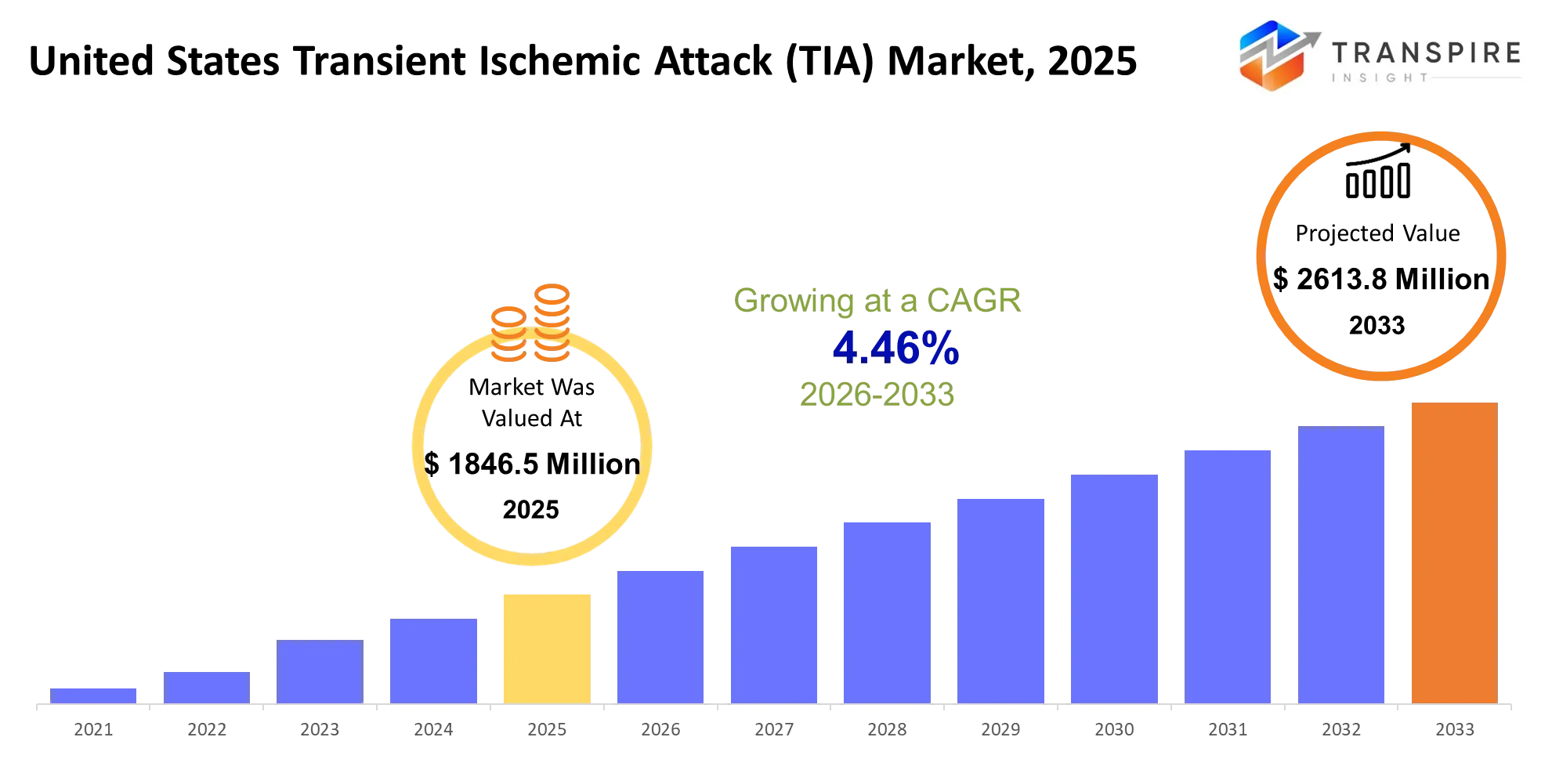
According to Transpire Insight, the United States Transient Ischemic Attack (TIA) Market size is estimated at USD 1846.5 million in 2025 and is anticipated to reach USD 2613.8 million by 2033, growing at a CAGR of 4.46% from 2026 to 2033.
The United States Transient Ischemic Attack (TIA) Market helps with quicker diagnose, risk assessment, and secondary prevention after brief neurological episodes that might show up before a bigger stroke. In hospitals and specialist centers they lean on brain imaging, cardiovascular checks, medicines, and vascular interventions so they can pin down the underlying cause, then lower the probability of another cerebrovascular incident. In the last 3–5 years the care style has kind of moved toward faster emergency evaluation , MRI based assessment, longer heart monitoring , and more coordinated stroke pathways. The American Heart Association states that around 240,000 people experience a TIA each year in the United States, and the 90-day stroke risk can go up to 17.8% , with a large share of happenings occurring in the first few days. Due to this time rush , clinicians end up being way more prone to put money in fast imaging, tele neurology, digital intake triage, and a suite of tools for risk stratification, rather than only the usual workflow. So basically the market is expected to grow from USD 1,846.5 million in 2025, to about USD 2,613.8 million by 2033, and that growth is being pushed by earlier interventions and more widespread adoption of diagnostic technologies. It’s kind of like the shift happens gradually, but the numbers trend upward anyway.
United States Transient Ischemic Attack (TIA) Market Size & Forecast:
- United States Transient Ischemic Attack (TIA) Market Size 2025: USD 1846.5 Million
- Expected Market Value 2033: USD 2613.8 Million
- Forecast CAGR: 4.46%
- Key Profile: Pfizer Inc., Bristol Myers Squibb, Sanofi, Bayer AG, Novartis AG, AstraZeneca plc, Johnson & Johnson, Abbott Laboratories, Medtronic plc, GE HealthCare, Siemens Healthineers, Boston Scientific, Stryker Corporation, Penumbra Inc., Terumo Corporation
Key Market Insights
- The United States Transient Ischemic Attack , or TIA Market, is expected to hit around USD 1,846.5 million in 2025, which gives a solid runway for diagnostic and treatment investment, and honestly it feels like that momentum is still there.
- The forecast says the market value could climb to about USD 2,613.8 million by 2033, a gain of roughly 41.6% compared with 2025.
- Region wise, the Northeast is set to lead, mostly since tertiary hospitals , academic centers and dedicated neurology services support swifter TIA triage and evaluation.
- Meanwhile the West may grow quicker, with tele-neurology, digital diagnostics , and easier specialist access spreading into more geographically separate communities.
- MRI with diffusion-weighted imaging is becoming more and more important , since clinical guidance tends to favor MRI rather than non-contrast CT for spotting meaningful brain tissue changes after a TIA.
- Extended cardiac monitoring is also gaining traction after a TIA with no clear explanation, especially when ECG results hint at atrial fibrillation or another probable embolic origin.
- Hospitals still sit as the main end user group but ambulatory and specialty settings are getting more attention too, as rapid outpatient neurological assessment pathways keep expanding.
- In terms of care, antiplatelet therapy remains the core for secondary prevention, while anticoagulation becomes crucial once atrial fibrillation, or some other cardioembolic source is identified.
- Artificial intelligence adoption has shifted from pure research into real clinical workflow support, and FDA-cleared systems often focus on suspected stroke-related findings on medical images.
- Competition is getting more blended, with pharmaceuticals, vascular devices, imaging platforms, and digital decision-support technologies working together more frequently , pushing integrated ways to manage TIA.
What are the Key Drivers, Restraints, and Opportunities in the United States Transient Ischemic Attack (TIA) Market?
Driver: The biggest market driver, I mean really, is the need to spot patients with higher short term stroke risk and move them fast into diagnostic and prevention pathways. The American Heart Association says there are around 240,000 TIA events each year in the United States, and it also notes that the 90 day stroke risk can go up to 17.8%. It adds that nearly half of later strokes happen within two days. That kind of clinical push supports ongoing spending on MRI, vascular imaging, ECG, longer cardiac monitoring, antithrombotic medicines, and specialist consultations. Also, when emergency assessment speeds up, the whole coordinated diagnostic platforms thing becomes more valuable, because hospitals can cut down those delays between arriving, getting imaging, waiting for specialist review, and starting secondary prevention.
Restraint: But, diagnostic uncertainty is still this kind of built in constraint, because TIA symptoms vanish quickly and they can feel like migraine, seizure, syncope, or other neurological conditions. The American Heart Association points out that TIA diagnosis is difficult, since the symptoms are temporary and they recommend a full neurological evaluation, vascular imaging, and the right cardiac workup. On top of that, rural hospitals run into neurologist shortages, plus fewer advanced diagnostic resources. So specialist assessment may take longer and that makes it harder to adopt consistent use of more sophisticated workflows. As a result, patients can end up being steered toward referral centers and smaller facilities may see higher operational costs.
Opportunity: AI supported diagnostic triage is a solid practical opportunity for the next phase of market growth. FDA cleared software has already shown how machine learning can be used to prioritize suspected abnormalities on CT images and notify clinical teams, pretty quickly, too.
What Has the Impact of Artificial Intelligence Been on the United States Transient Ischemic Attack (TIA) Market?
Artificial intelligence is, um, shifting how TIA assessment works by helping healthcare teams sort out medical images , spot possible cerebrovascular abnormalities, and fold clinical details into a better risk picture. In particular, FDA-cleared radiological computer-assisted triage tools can scan CT images and flag suspected stuff so a clinician can review it sooner. For instance, the FDA describes Viz.AI Contact as software that looks through CT results for potential stroke signs and then alerts neurovascular specialists, and in parallel, other cleared systems lean on deep learning to rank suspected intracranial findings. In practice, these tools can take away a chunk of the hand work involved in prioritizing images, and they can support faster routing of urgent cases through typical hospital pathways.
At the same time, machine-learning research is pushing further than simple image triage, toward TIA diagnosis, prognosis, and risk stratification. A recent systematic review suggested that models can draw from clinical variables, imaging findings, and electronic health record data to single out patients who may need expedited prevention, but their performance may drop when they try to tell TIA from stroke mimics or when dealing with more complicated patient populations. AI-assisted MRI analysis has also been showing encouraging performance for ischemic lesion detection, with one meta-analysis reporting 93% sensitivity and 93% specificity across the included studies. Still, the big constraint is clinical validation, plus issues like data diversity, workflow integration, and the ongoing requirement for specialist oversight, so overall AI supports clinical judgment rather than replacing it, or so the evidence is currently suggesting.
Key Market Trends
- Since 2023, hospitals have been putting more focus on quick TIA assessment routes, kind of linking emergency departments with neurology specialists and imaging services, or at least that is what most teams say.
- MRI use has also moved ahead , because diffusion weighted imaging can detect meaningful tissue changes with higher sensitivity than non contrast CT, by itself.
- At the same time, extended cardiac monitoring has gained more weight as clinicians look into atrial fibrillation and other cardiac origins following neurological events that do not have an obvious cause.
- Since 2021, FDA clearances have widened the part that AI assisted radiological triage plays, especially inside time critical neurological imaging workflows.
- Tele neurology has ended up being way more useful for rural communities as well, because it links patients with specialists when the local neurological know how is still pretty limited .
- About 240,000 TIA episodes occur each year across the United States, and that keeps steady demand for speedy diagnostic workups and preventive care pathways .
- The 17.8% possible 90 day stroke risk after a TIA has nudged clinicians toward earlier assessment, and secondary prevention , more so than before.
- Since 2025, extra FDA clearances have kept broadening AI supported stroke imaging tools , which hints at stronger commercial momentum in clinical image routing and sorting.
- Pharmaceutical and device companies are also competing harder, by expanding cardiovascular portfolios, tying prevention , continuous monitoring, diagnostic evaluation and intervention together in one broader play.
- Regional providers are moving toward coordinated stroke networks that connect emergency departments , diagnostic centers, specialty clinics, and tertiary hospitals.
United States Transient Ischemic Attack (TIA) Market Segmentation
By Diagnosis:
A CT Scan helps a lot with fast emergency triage and, it can basically rule out bleeding or other sudden brain problems. MRI on the other hand gives more detail brain views and its able to spot tiny ischemic injury areas through diffusion weighted imaging. Then Carotid Ultrasound checks on how tight the carotid artery gets, while an Electrocardiogram or ECG is used to catch rhythm oddities, like atrial fibrillation. Echocardiography inspects heart structure and how well it performs when a cardiac reason is suspected and it really should be investigated properly.
Blood Tests cover glucose, cholesterol, blood counts plus coagulation factors linked to neurological and cardiovascular risk. Cerebral Angiography gives high resolution vessel images for certain people, especially if deeper evaluation is required or if procedure planning needs to happen. Holter Monitoring keeps watch on heart rhythm for longer stretches and it may catch intermittent trouble that a usual ECG might overlook. Neurological Examination reviews speech, motion, sensation, sight, coordination, and thinking abilities , while Others includes extra diagnostic tests that are chosen based on what the clinician finds.
By Treatment:
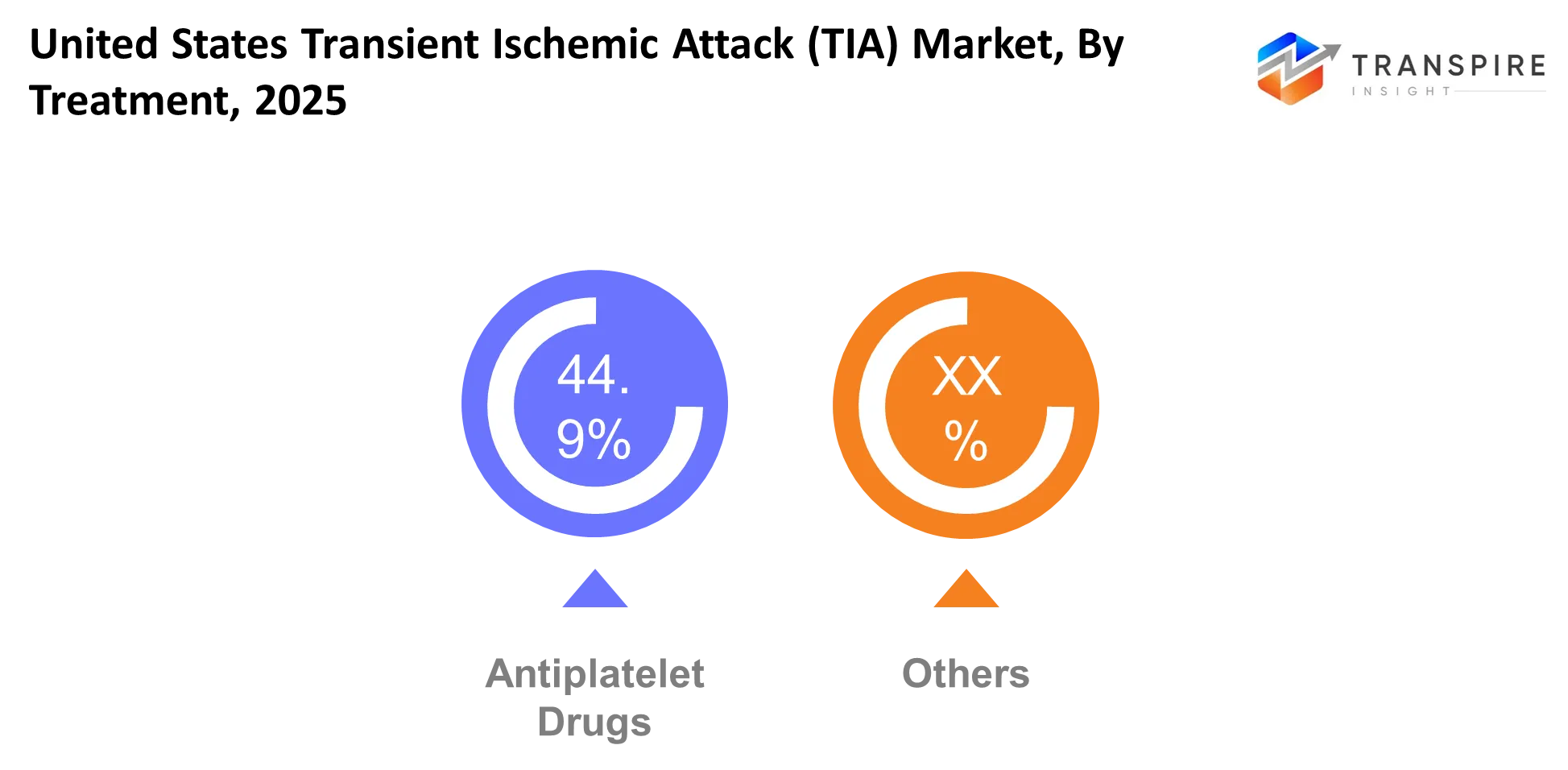
Antiplatelet drugs help to cut down platelet related clot formation, and they are still very important for secondary prevention. Anticoagulants are used when atrial fibrillation or some other cardioembolic origin asks for actual anticoagulation. Statins assist with cholesterol management and also vascular risk , whereas Carotid Endarterectomy removes plaque right from certain carotid arteries when there is significant narrowing. Carotid Angioplasty & Stenting provides a catheter based alternative for selected vascular conditions.
Blood Pressure Management supports long term lowering of cerebrovascular risk, using medication and ongoing monitoring. Lifestyle Modification targets smoking , diet, physical activity, body weight, and other changeable influences. Thrombolytic Therapy is mostly for cases where the work up points to an acute ischemic stroke , not a TIA episode that has already resolved. Combination Therapy blends medicines monitoring lifestyle steps, and selected procedures. Others is basically everything else that is cause specific treatment plus follow up care.
By End User:
Hospitals sort of hold that central role since emergency departments give fast access to imaging, lab testing, cardiac assessment, and specialist consult, kind of in one place. Neurology Clinics do the more focused work for specialist diagnosis, risk appraisal, ongoing follow-up, and even prevention planning. Ambulatory Surgical Centers support selected procedures that fit outpatient care, whereas Rehabilitation Centers deliver recovery services for people who need physical, occupational, speech, or cognitive support.
Academic Medical Centers tend to bring advanced diagnostics, specialist teams, clinical research, and complicated case coordination, overall. Diagnostic Centers offer CT , MRI, ultrasound, ECG, and lab services for outpatient evaluation. Home Healthcare helps with medication handling, blood pressure checks, and post-discharge care too. Research Institutes run clinical studies and they also evaluate newer diagnostics, treatments, plus digital technologies.
Specialty Clinics concentrate on neurological cardiovascular vascular, or stroke-related support and Others includes primary care practices, urgent care facilities, community health centers and integrated healthcare networks
By Distribution Channel:
Hospital Pharmacies, supply meds during acute care, discharge, and inpatient treatment , while they help with medication reconciliation in a kind of ongoing way. Retail Pharmacies bring more practical access to long-term medicines like antiplatelet agents, statins, anticoagulants and antihypertensive treatments, for everyday continuity. Online Pharmacies make it easier with home delivery, electronic prescriptions , and refill management that keeps going. Specialty Pharmacies manage certain medicines that need extra monitoring , extra reimbursement help, or patient services, which is why they’re not just “regular” pharmacy stuff.
Government Supply backs procurement across public healthcare facilities and also through government- supported programs. Institutional Sales connect manufacturers with hospitals, healthcare networks, and big medical organizations by using purchasing agreements. Wholesalers distribute medicines across hospitals clinics and pharmacies, and they also keep inventory availability steadier. Direct Tender lets large healthcare organizations obtain products through competitive contracts, while Others covers physician dispensing, community initiatives, and integrated healthcare distribution models.
By Patient Type:
Adults are a broad patient cohort ,and they need diagnosis and prevention work that lines up with neurological symptoms as well as vascular risk factors. Older geriatric patients often need a wider workup, because hypertension , atrial fibrillation , vascular disease, medication use, and other conditions can really swing how treatment decisions are made. Higher-risk cardiovascular patients usually need tight follow up for both cardiac and vascular states , while diabetic patients must keep glucose controlled alongside cerebrovascular risk management. Hypertensive patients in particular need routine blood pressure checks and a fitting therapeutic plan.
Smokers need help with cessation, since tobacco exposure adds to cardiovascular and cerebrovascular danger. Male patients and female patients get diagnostic and preventive care based on clinical findings, prior medical history, and personalized risk drivers. Others is kind of a mixed box ,it may include patients with complicated neurological histories, inherited vascular conditions , unusual risk patterns ,or even unclear reasons for brief neurological episodes. For the more intricate assessments, advanced imaging, cardiac monitoring, laboratory investigations, and specialist consultations can be used, step by step.
What are the Key Use Cases Driving the United States Transient Ischemic Attack (TIA) Market?
The main use case is pretty much rapid TIA diagnosis and stroke-risk evaluation in hospital emergency departments , so MRI, CT, vascular imaging, ECG , lab testing, and a neurological examination sort of work together to pin down plausible causes , and then route the patient toward the right prevention pathway. The American Heart Association keeps stressing speed because a meaningful slice of later strokes can happen within two days after TIA. That urgency means hospitals become the default place for the diagnostic machinery, specialist coverage, and preventive medicines.
More use cases are showing up too, like rapid-access neurology clinics , plus longer cardiac monitoring for people where the first assessment doesnt show a crisp cause. Tele-neurology helps rural and underserved areas as well, by linking emergency departments and outpatient clinicians to specialists . In practice, these approaches carry TIA care beyond the usual hospital rhythm, and they also help coordination between diagnostic sites, neurology clinics, cardiology services, and primary care teams.
Newer directions include AI-assisted image sorting, machine-learning based risk prediction , and connected home monitoring after discharge. FDA-cleared systems already flag suspected findings on CT scans first, while research keeps looking at how machine learning can support TIA diagnosis and prognosis. If regional stroke networks adopt these tools more widely, it could open up chances for digital diagnostics, remote specialist review , and more tailored secondary prevention strategies .
|
Report Metrics |
Details |
|
Market size value in 2025 |
USD 1846.5 Million |
|
Market size value in 2026 |
USD 1925.2 Million |
|
Revenue forecast in 2033 |
USD 2613.8 Million |
|
Growth rate |
CAGR of 4.46% from 2026 to 2033 |
|
Base year |
2025 |
|
Historical data |
2021 - 2024 |
|
Forecast period |
2026 - 2033 |
|
Report coverage |
Revenue forecast, competitive landscape, growth factors, and trends |
|
Regional scope |
United States; Canada; Mexico; United Kingdom; Germany; France; Italy; Spain; Denmark; Sweden; Norway; China; Japan; India; Australia; South Korea; Thailand; Brazil; Argentina; South Africa; Saudi Arabia; United Arab Emirates |
|
Key company profiled |
Pfizer Inc., Bristol Myers Squibb, Sanofi, Bayer AG, Novartis AG, AstraZeneca plc, Johnson & Johnson, Abbott Laboratories, Medtronic plc, GE HealthCare, Siemens Healthineers, Boston Scientific, Stryker Corporation, Penumbra Inc., Terumo Corporation |
|
Customization scope |
Free report customization (country, regional & segment scope). Avail customized purchase options to meet your exact research needs. |
|
Report Segmentation |
By Diagnosis (CT Scan, MRI, Carotid Ultrasound, Electrocardiogram (ECG), Echocardiography, Blood Tests, Cerebral Angiography, Holter Monitoring, Neurological Examination, Others); By Treatment (Antiplatelet Drugs, Anticoagulants, Statins, Carotid Endarterectomy, Carotid Angioplasty & Stenting, Blood Pressure Management, Lifestyle Modification, Thrombolytic Therapy, Combination Therapy, Others); By End User (Hospitals, Neurology Clinics, Ambulatory Surgical Centers, Rehabilitation Centers, Academic Medical Centers, Diagnostic Centers, Home Healthcare, Research Institutes, Specialty Clinics, Others); By Distribution Channel (Hospital Pharmacies, Retail Pharmacies, Online Pharmacies, Specialty Pharmacies, Government Supply, Institutional Sales, Wholesalers, Direct Tender, Others); By Patient Type (Adults, Geriatric Patients, High-Risk Cardiovascular Patients, Diabetic Patients, Hypertensive Patients, Smokers, Male Patients, Female Patients, Others) |
Which Regions are Driving the United States Transient Ischemic Attack (TIA) Market Growth?
The Northeast is expected to stay the main regional market, mostly because it has a clumping of tertiary hospitals, academic medical centers, comprehensive stroke centers, and a lot of specialist neurology services. Big healthcare systems across New York, Massachusetts, Pennsylvania , and nearby states help deliver faster access to MRI, CT angiography, cardiac monitoring and vascular intervention. Also dense specialist networks makes it easier for multidisciplinary care to happen,with emergency physicians, neurologists, cardiologists, and vascular specialists all involved. With that built up clinical setup the Northeast ends up with a strong base for continued revenue generation from advanced TIA diagnosis and secondary prevention, more or less.
The Midwest shows a different growth pattern, supported by large integrated healthcare systems and a wide web of community hospitals serving populations that are kind of spread out. Compared with the Northeast, the region leans more on referral networks, tele-neurology and arranged transfers to tertiary stroke centers when cases get complicated. Economic stability across major healthcare markets, plus continued investment in hospital imaging capacity, gives a steady footing for diagnostic and treatment spending. And expansion of remote specialist consultation can help smaller facilities align with advanced neurological services in a smoother way.
The West is set up as the fastest-growing region, mainly through stronger uptake of digital healthcare, tele-neurology, AI supported imaging, and connected patient monitoring. Large technology focused healthcare markets in California and other western states create helpful conditions for testing digital clinical workflows, and for merging advanced software with hospital systems.
Who are the Key Players in the United States Transient Ischemic Attack (TIA) Market and How Do They Compete?
Competition across the United States TIA market isn’t really one clean lane for a single product type. It’s more like a bundle of different things—pharmaceuticals , diagnostic imaging, cardiovascular monitoring, and neurovascular devices that all kinda overlap in practice. Firms mostly win by leaning on clinical evidence, overall device performance , imaging capabilities, how well the workflow fits, relationship building with physicians, and the ability to stitch diagnosis straight into treatment. You can also see consolidation creeping in more clearly within neurovascular devices, like when Boston Scientific agreed in January 2026 to buy Penumbra for about $14.5 billion , which is a pretty big signal.
Medtronic is trying to tighten its neurovascular standing by pairing intervention products with digital options, and it’s not subtle. In March 2025 , Medtronic teamed up with Methinks AI to plug AI-based stroke assessment into its neurovascular portfolio, with the goal of enabling quicker triage, and smoother care coordination. Stryker Corporation, meanwhile, is pushing a technology-led path through its partnership from September 2025 with Siemens Healthineers, aimed at building a robotic neurovascular system. That system would pull together imaging, robotics, access devices, and implants into one coordinated approach, kind of an all-in-one setup. Penumbra Inc., for its part, focuses on specialized thrombectomy and aspiration technologies, and because of that its planned combination with Boston Scientific is strategically important for widening neurovascular reach.
Company List
- Pfizer Inc.
- Bristol Myers Squibb
- Sanofi
- Bayer AG
- Novartis AG
- AstraZeneca plc
- Johnson & Johnson
- Abbott Laboratories
- Medtronic plc
- GE HealthCare
- Siemens Healthineers
- Boston Scientific
- Stryker Corporation
- Penumbra Inc.
- Terumo Corporation
Recent Development News
- "In January 2026, Boston Scientific announced acquisition of Penumbra Inc. Boston Scientific agreed to acquire Penumbra in a cash-and-stock transaction valued at approximately $14.5 billion, adding mechanical thrombectomy and neurovascular technologies to its cardiovascular portfolio and increasing consolidation in the stroke-device market. https://www.sec.gov/Archives/edgar/data/1321732/000094787126000035/ss5822817-8k.htm (U.S. Securities and Exchange Commission)."
- "In September 2025, Siemens Healthineers entered a partnership with Stryker Corporation. The companies agreed to develop an integrated robotic system for neurovascular procedures by combining Siemens Healthineers' imaging and robotics expertise with Stryker's neurovascular technologies, supporting more precise and efficient stroke intervention. https://www.siemens-healthineers.com/press/releases/stryker-partnership (Siemens Healthineers)."
- "In March 2025, Medtronic entered a strategic partnership with Methinks AI. The collaboration integrates AI-driven radiological stroke triage with Medtronic's neurovascular treatment portfolio, aiming to improve early assessment and care coordination across regional hospitals and stroke centers. https://news.medtronic.com/Medtronic-announces-strategic-partnership-with-Methinks-AI-to-advance-stroke-care-development (Medtronic)."
What Strategic Insights Define the Future of the United States Transient Ischemic Attack (TIA) Market?
The United States TIA market is kinda moving in a more integrated prevention pathway direction, where imaging, cardiac monitoring, clinical decision support, and treatment planning link up in a shorter diagnostic window. The driving force isn’t just about patient volume, it’s more about the economic value of catching high-risk cases early enough to stop expensive , repeated cerebrovascular events. There’s also a quieter sort of risk that people gloss over, which is technology concentration. Like consolidation among the bigger device companies could shrink supplier diversity, and then you’re stuck with increased dependence on a small set of integrated platforms. Another concern is AI adoption without enough external validation, especially when the models face patient groups or clinical routines that were underrepresented in the development data.
What’s starting to look like the opportunity is AI-enabled multimodal risk assessment, sort of stitching together imaging, ECG, electronic health records, plus wearable signals to flag who needs expedited specialist attention. Market participants should really focus on interoperable platforms with solid clinical validation, instead of just standalone solutions. And they should be building partnerships with hospitals and regional stroke networks before reimbursement rules and procurement standards get fully locked in and more broadly established.
United States Transient Ischemic Attack (TIA) Market Report Segmentation
By Diagnosis
- CT Scan
- MRI
- Carotid Ultrasound
- Electrocardiogram (ECG)
- Echocardiography
- Blood Tests
- Cerebral Angiography
- Holter Monitoring
- Neurological Examination
- Others
By Treatment
- Antiplatelet Drugs
- Anticoagulants
- Statins
- Carotid Endarterectomy
- Carotid Angioplasty & Stenting
- Blood Pressure Management
- Lifestyle Modification
- Thrombolytic Therapy
- Combination Therapy
- Others
By End User
- Hospitals
- Neurology Clinics
- Ambulatory Surgical Centers
- Rehabilitation Centers
- Academic Medical Centers
- Diagnostic Centers
- Home Healthcare
- Research Institutes
- Specialty Clinics
- Others
By Distribution Channel
- Hospital Pharmacies
- Retail Pharmacies
- Online Pharmacies
- Specialty Pharmacies
- Government Supply
- Institutional Sales
- Wholesalers
- Direct Tender
- Others
By Patient Type
- Adults
- Geriatric Patients
- High-Risk Cardiovascular Patients
- Diabetic Patients
- Hypertensive Patients
- Smokers
- Male Patients
- Female Patients
- Others
Frequently Asked Questions
Find quick answers to common questions.
The expected United States Transient Ischemic Attack (TIA) Market size for the market will be USD 2613.8 Million in 2033.
Key segments for the United States Transient Ischemic Attack (TIA) Market are By Diagnosis (CT Scan, MRI, Carotid Ultrasound, Electrocardiogram (ECG), Echocardiography, Blood Tests, Cerebral Angiography, Holter Monitoring, Neurological Examination, Others); By Treatment (Antiplatelet Drugs, Anticoagulants, Statins, Carotid Endarterectomy, Carotid Angioplasty & Stenting, Blood Pressure Management, Lifestyle Modification, Thrombolytic Therapy, Combination Therapy, Others); By End User (Hospitals, Neurology Clinics, Ambulatory Surgical Centers, Rehabilitation Centers, Academic Medical Centers, Diagnostic Centers, Home Healthcare, Research Institutes, Specialty Clinics, Others); By Distribution Channel (Hospital Pharmacies, Retail Pharmacies, Online Pharmacies, Specialty Pharmacies, Government Supply, Institutional Sales, Wholesalers, Direct Tender, Others); By Patient Type (Adults, Geriatric Patients, High-Risk Cardiovascular Patients, Diabetic Patients, Hypertensive Patients, Smokers, Male Patients, Female Patients, Others).
Major United States Transient Ischemic Attack (TIA) Market players are Pfizer Inc., Bristol Myers Squibb, Sanofi, Bayer AG, Novartis AG, AstraZeneca plc, Johnson & Johnson, Abbott Laboratories, Medtronic plc, GE HealthCare, Siemens Healthineers, Boston Scientific, Stryker Corporation, Penumbra Inc., Terumo Corporation.
The United States Transient Ischemic Attack (TIA) Market size is USD 1846.5 Million in 2025.
The United States Transient Ischemic Attack (TIA) Market CAGR is 4.46%from 2026 to 2033.
- Pfizer Inc.
- Bristol Myers Squibb
- Sanofi
- Bayer AG
- Novartis AG
- AstraZeneca plc
- Johnson & Johnson
- Abbott Laboratories
- Medtronic plc
- GE HealthCare
- Siemens Healthineers
- Boston Scientific
- Stryker Corporation
- Penumbra Inc.
- Terumo Corporation
About the Authors

Pankaj Ghogare Patil
I am Pankaj Ghogare Patil, a Senior Research Analyst at Transpire Insight, specializing in the Pharmaceutical, Chemicals & Materials, Healthcare IT, and Biotechnology industry. My expertise lies in conducting comprehensive market research, analyzing industry trends, evaluating competitive landscapes, and translating complex data into actionable insights. At Transpire Insight, I closely follow emerging technologies, regulatory developments, and market innovations to create accurate, well-researched, and informative content that helps businesses and professionals make informed decisions. I am committed to producing credible, evidence-based articles that reflect industry best practices while making technical topics accessible and valuable for a broad audience.

Chakradhar Khansole
Chakradhar serves as the Research Director at Transpire Insight, bringing over 8 years of experience in technology, innovation, and strategic market intelligence. He specializes in transforming complex market data into actionable business insights that enable organizations to make informed, growth-oriented decisions. Recognized for his strategic vision and analytical expertise, Chakradhar leads high-impact research initiatives, delivering comprehensive market assessments, competitive intelligence, and forward-looking industry analysis.
Recently Published Reports
-
Jul 2026
Alopecia Treatment Market
Alopecia Treatment Market Size, Share & Analysis Report By Disease Type (Alopecia Areata, Cicatricial Alopecia, Traction Alopecia, Alopecia Totalis, Androgenetic Alopecia, Alopecia Universalis, and Other Disease Types), By Treatment Type (Topical Treatments, Oral Medications, Injectable Therapies, and Hair Transplantation), By Gender (Male, and Female), By Distribution Channel (Hospitals and Clinics, Retail Pharmacies, and Online Retailers), and Geography (North America, Europe, Asia-Pacific, Middle East and Africa, South and Central America), 2021 - 2031
-
Jul 2026
Medical Ultrasound Probe Market
Medical Ultrasound Probe Market Size, Share & Analysis Report By Type (Linear Type, Convex Type, Endocavitary Probe, Phased Array/Cardiac Probe, Transesophageal (TEE) Probe, and Others), By Application (Ophthalmology, Cardiology, Musculoskeletal, Oncology, Obstetrics & Gynecology, General Imaging, and Others), By End User (Hospitals & Clinics, Diagnostic Centers, Ambulatory Surgical Centers, and Others), and Geography (North America, Europe, Asia-Pacific, Middle East and Africa, South and Central America), 2021 – 2031
-
May 2026
Biosimilars Market
Biosimilars Market By Product Type (Monoclonal Antibodies, Recombinant Hormones, Erythropoietin, G-CSF, Others), By Indication (Oncology, Autoimmune Diseases, Blood Disorders, Diabetes, Others), By Manufacturing Type (In-House Manufacturing, Contract Manufacturing), By Distribution Channel (Hospital Pharmacies, Retail Pharmacies, Online Pharmacies), By Industry Analysis, Size, Share, Growth, Trends, and Forecasts 2021-2033
-
Apr 2026
Gastrointestinal Endoscopy Market
Gastrointestinal Endoscopy Market By Type (Rigid Gastrointestinal Endoscope, Flexible Gastrointestinal Endoscopes, Disposable Gastrointestinal Endoscope), By Procedure Type (Colonoscopy, Gastroscopy, Duodenoscopy, Enteroscopy, Flexible Sigmoidoscopy, Others), By Application (Diagnosis, Treatment), By End-Users (Hospitals, Ambulatory Surgical Centers, Specialty Clinics, Laboratories, Others), By Industry Analysis, Size, Share, Growth, Trends, and Forecasts 2021-2033