
United States Smart Refrigerated Vending Machine Market Size & Forecast:
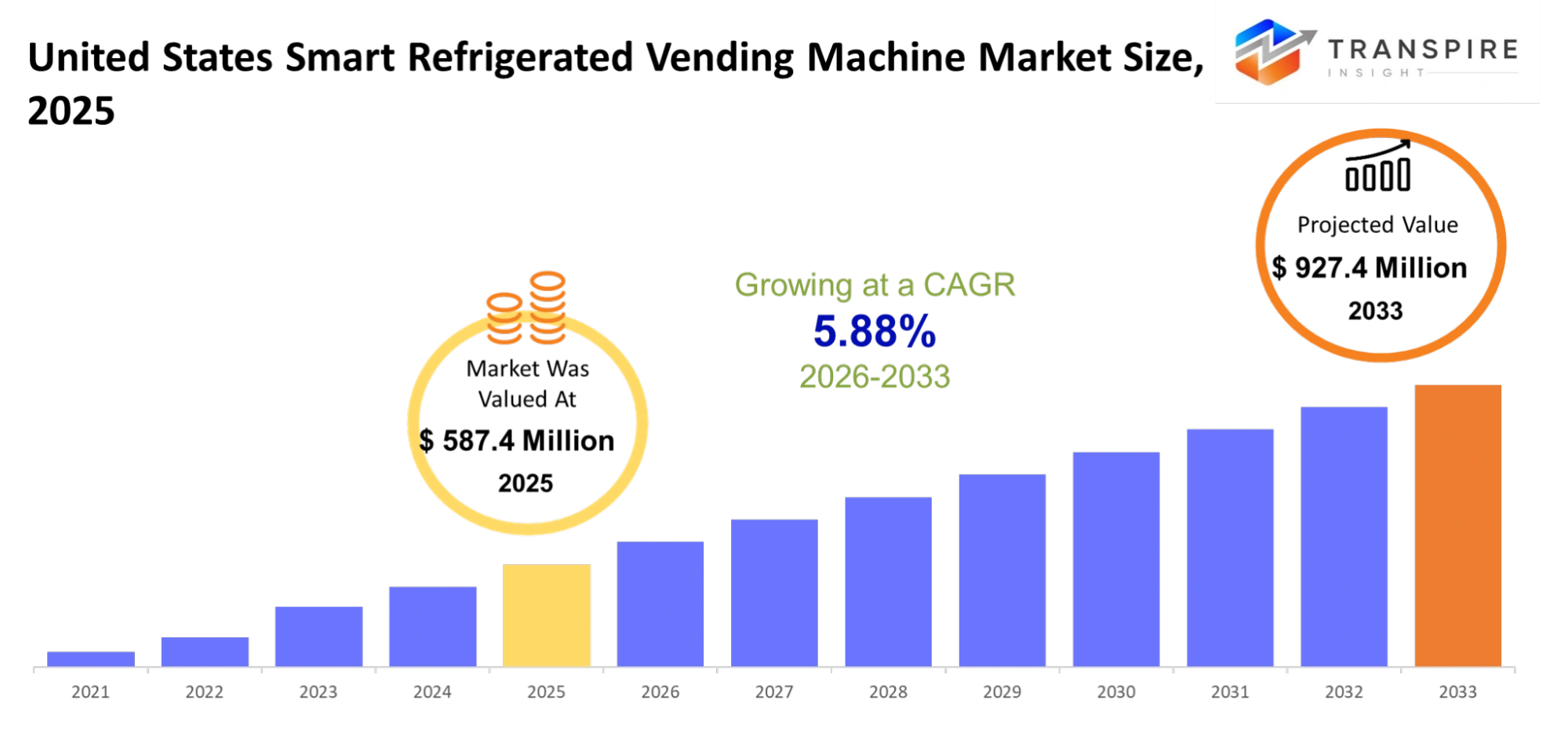
- United States Smart Refrigerated Vending Machine Market Size 2025: USD 587.4 Million
- United States Smart Refrigerated Vending Machine Market Size 2033: USD 927.4 Million
- United States Smart Refrigerated Vending Machine Market CAGR: 5.88%
- United States Smart Refrigerated Vending Machine Market Segments:By Type (Glass Front, Closed, Smart IoT-enabled, AI-enabled, Cashless, Combo, Modular), By Application (Food, Beverages, Pharma, Fresh Products, Snacks, Retail, Offices), By Technology (IoT, AI, Cloud, Touchscreen, Cashless Payment, Sensors, Remote Monitoring), By Placement (Offices, Airports, Hospitals, Retail, Schools, Hotels, Public Spaces), By End-User (Enterprises, Retailers, Healthcare, Govt, Hospitality, Consumers, Corporates).
To learn more about this report,  Download Free Sample Report
United States Smart Refrigerated Vending Machine Market Summary:
The United States Smart Refrigerated Vending Machine Market size is estimated at USD 587.4 Million in 2025 and is anticipated to reach USD 927.4 Million by 2033, growing at a CAGR of 5.88% from 2026 to 2033. The market for Smart Refrigerated Vending Machines in the United States experiences continuous expansion because people increasingly seek out contactless food and beverage options that provide them with convenience.
The vending machines provide advanced functions which include cashless payment systems and real-time inventory monitoring and temperature regulation systems that maintain product freshness and operational efficiency. The combination of urban population growth and high-speed contemporary living conditions drives increased usage of smart technologies in workplaces and public areas and transportation stations. The implementation of Internet of Things and artificial intelligence technologies improves customer interactions with smart vending machines which serve as contemporary retail solutions.
What Has the Impact of Artificial Intelligence Been on the United States Smart Refrigerated Vending Machine Market?
Artificial intelligence is currently revolutionizing the smart refrigerated vending machine industry of the United States through its ability to improve operational efficiency and enable data-based decision-making processes. AI in the United States smart refrigerated vending machine market enables advanced market research through real-time data collection which helps operators track customer preferences and shopping habits and determine demand based on specific locations.
Machine learning algorithms examine this data to create precise demand forecasts and trend predictions which help businesses maintain appropriate inventory levels during their operational activities. The process results in substantial waste reduction, better product availability, and enhanced market competitiveness for businesses.
The smart refrigerated vending machine market in the United States uses artificial intelligence to automate its production sites and inventory control systems and supply chain management processes. Predictive analytics tools create restocking schedules which choose optimal times for inventory replenishment while reducing operational expenses through their ability to detect operational issues before they happen.
AI-powered systems enhance user experience by providing product suggestions based on individual preferences and enabling users to make payments through integrated payment systems. The United States' smart refrigerated vending machine market creates its competitive edge by using innovative technologies and efficient operational processes to deliver products which meet customer requirements.
Key Market Trends & Insights:
- The Northeast region leads the smart refrigerated vending machine market in the United States because it operates in densely populated areas that cover 35% of market territory during 2024.
- The West region will achieve its highest growth rate because its projected CAGR between 2025 and 2030 will exceed 10%, which results from increasing technology adoption and the development of smart retail businesses.
- The market for fully automated smart refrigerated vending machines serves as the top segment because it has achieved over 45% market share through advanced AI technology and IoT systems and its capability to handle cashless payments.
- The second-largest market segment consists of semi-automated machines, which provide affordable solutions that business offices and educational institutions can implement for their moderate-sized operations.
- The vending system segment that uses AI technology experiences the fastest growth rate, which will continue until 2030 because the system incorporates both predictive analytics and machine learning technology.
- The food and beverage retail sector leads the United States smart refrigerated vending machine market because it accounts for approximately 60% market share in 2024 through its ability to satisfy strong consumer demand.
- The healthcare and fitness centre area represents the fastest-growing use case because people require fresh, healthy meals that they can eat while moving.
- The market is controlled by commercial spaces that include offices and transit hubs, which hold almost 50% market share because they attract large numbers of customers who seek convenient access.
- Educational institutions become the fastest-growing end-user market segment because campuses quickly implement smart vending systems that provide 24-hour vending access.
- The United States smart refrigerated vending machine market requires product innovation from companies, which they achieve through their AI integration efforts to create personalised solutions that enhance their operational processes.
United States Smart Refrigerated Vending Machine Market Segmentation
By Type
The transparent design of glass-front machines enables customers to see products, which helps them make purchase decisions faster while creating better customer interaction in high-traffic areas. The design of closed machines enables businesses to handle product storage under controlled conditions, which prevents product damage and maintains freshness for items that need special handling.
The combination of Smart IoT technology and AI-enabled machines will boost operational efficiency through their capability to track equipment status in real time and send alerts for automatic restocking while selecting products based on market demand.
The cashless machines enable customers to make digital payments, which streamlines transactions while decreasing their waiting time and enhancing their overall experience. The combination of combo machines and modular machines enables users to select from different product options, which they can access through one device, which makes it suitable for various operational situations. The system of type-based segmentation enables companies to develop new products while they customise their machine equipment to match customer preferences and their operational requirements at different sites.
By Application
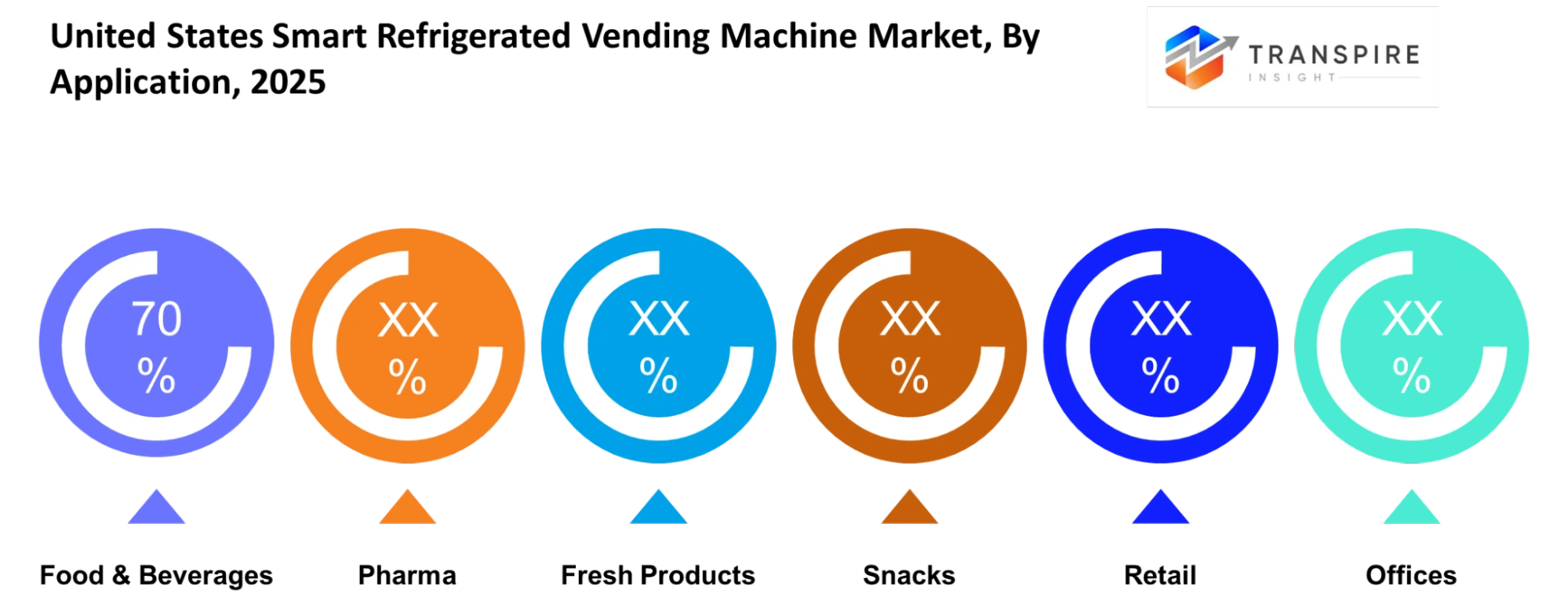
Food and beverages hold a major share because people demand ready-to-eat meals and drinks throughout workplaces and public areas. Fresh products, which include salads and dairy products, will become more popular because consumers choose healthier options that can maintain their temperature. Pharmaceutical applications will enable secure distribution of temperature-sensitive medical supplies, which will enhance access to these materials in healthcare facilities.
Automated retail solutions will drive business expansion in both snack and retail markets as these systems become more prevalent throughout urban areas. The demand for office space will increase because employees want fast access to various food options. This application mix demonstrates that both essential and convenience-orientated product categories will experience steady demand growth throughout the year.
To learn more about this report, Download Free Sample Report
By Technology
The Internet of Things system will establish connected networks that monitor inventory amounts, equipment status, and product condition at all times. AI integration will support demand prediction, helping operators stock items based on usage patterns and reduce product waste. Centralised control through cloud-based systems enables the operational management of multiple machines that operate in various facilities.
Touchscreen interfaces enable users to interact with products by offering intuitive-to-use selection methods. Digital payment systems will boost user convenience while enhancing security measures for online transactions. The system achieves better reliability and operational efficiency through its combination of sensors and remote monitoring systems which continuously control temperature and detect faults.
By Placement
The office spaces will become the most important placement sites because people frequently walk through the area and need fast food service during work hours. Travelers will prefer airports and public spaces because they need quick and easy service options. Hospitals will establish dependable systems which deliver fresh food and essential supplies to staff members and patients and visitors.
Retail stores will use these machines to provide longer operational hours which will make shopping easier for their customers. Schools and hotels will use these solutions to deliver food and beverage service at all times. The various placement options will enable business growth across areas which receive high foot traffic and provide services to customers.
By End-User
The demand from workers for food solutions that provide easy access and quick preparation will drive companies to adopt these solutions according to their workplace requirements. Retailers will use vending machines to extend their business operations by providing customers with automated purchasing options which they can use during non-business hours. Healthcare facilities will use these systems to achieve secure and efficient product distribution processes.
Public service operations and guest services in the hospitality industry will see improvements through the deployment of these machines. Consumers will find it easy to purchase fresh and packaged products because multiple locations offer them access to these items. This end-user segmentation shows how both institutions and individual users have started to adopt this technology.
What are the Main Challenges for the United States Smart Refrigerated Vending Machine Market Growth?
The united states smart refrigerated vending machine market faces major technical and operational obstacles which reduce its ability to function and grow. The system requires constant temperature maintenance because it needs to handle fresh products which require specific conditions. The system experiences operational disruptions because of system failures and connectivity issues which arise from AI and IoT technology integration. The United States smart refrigerated vending machine market faces supply chain problems which create delays in product delivery and hamper store operations.
The United States smart refrigerated vending machine market experiences growth limitations which arise from manufacturing and commercialization obstacles. The total investment requirements increase because of high production expenses and difficulties in merging hardware with software and the need to meet food safety regulations. The product development process creates delays which lead to market entry obstacles while smaller companies face challenges because of increased operating expenses. The market needs these two aspects because they create obstacles which prevent businesses from growing their production and maintaining steady profits.
The United States smart refrigerated vending machine market faces expansion barriers because of adoption challenges which restrict its growth. The deployment of systems needs skilled workers who can maintain and operate them, but limited infrastructure in semi-urban areas and insufficient workers create problems for their implementation. Small businesses face adoption challenges because of funding shortages and poor knowledge about available solutions. The market experiences growth limitations because different regions have not reached their complete potential.
Market competition and future risks continue to shape the united states smart refrigerated vending machine market landscape. The presence of traditional vending machines together with other retail channels creates pricing pressure which restricts product differentiation. The combination of fast technological progress and changing regulations creates uncertainty which demands ongoing system updates and regulatory compliance expenditures. The business needs to solve its adoption challenges together with its competitive threats because these issues will disrupt its ability to grow sustainably.
Country Insights
The Northeast region demonstrates high consumer demand because its urban areas contain many people who spend money and use smart retail technology. The advanced vending solutions will experience steady installation throughout major cities and their adjacent areas because of corporate offices and transit hubs and tech-based infrastructure.
The West region experiences fast development because its technology-driven surroundings enable people to use artificial intelligence systems. Smart retail systems will expand their presence because people want contactless services, which will drive their implementation in public areas and office buildings and lifestyle centres. The market for the region will grow due to ongoing product developments that bring new solutions to the market.
The Midwest and South regions show steady market growth because better infrastructure develops and people become more aware of automated retail solutions. Businesses that enter semi-urban markets will find new prospects for growth, yet their development will progress at a slower pace than in city areas. The regional presence of businesses will continue to grow because of increased investment and business growth.
Recent Development News
In April 2026, Shyndigz Plans 24/7 Dessert-Focused Refrigerated Vending Machine Launch with Smart Freshness Control: Shyndigz revealed plans to launch its 24/7 dessert-focused refrigerated vending machine featuring multiple temperature-controlled lockers for fresh bakery items and packaged goods. The system is designed to expand late-night food access while using smart refrigerated vending technology for automated dispensing and freshness control.
Source: https://www.axios.com
In March 2026, Neuroshop Enhances AI-Powered Refrigerated Vending System with Advanced Inventory Tracking and Predictive Maintenance: Neuroshop announced enhancements to its AI-powered refrigerated vending system, focusing on improved real-time inventory tracking and predictive maintenance features for high-traffic retail environments. The update strengthens automation in smart refrigeration units used across commercial spaces, supporting better temperature control and product accuracy
Source: https://neuroshop.tech
|
Report Metrics |
Details |
|
Market size value in 2025 |
USD 587.4 Million |
|
Market size value in 2026 |
USD 621.5 Million |
|
Revenue forecast in 2033 |
USD 927.4 Million |
|
Growth rate |
CAGR of 5.88% from 2026 to 2033 |
|
Base year |
2025 |
|
Historical data |
2021 – 2024 |
|
Forecast period |
2026 – 2033 |
|
Report coverage |
Revenue forecast, competitive landscape, growth factors, and trends |
|
Country scope |
United States |
|
Key company profiled |
Crane Co, Azkoyen, Fuji Electric, Sanden, Seaga, Royal Vendors, Nayax, Evoca Group, Westomatic, Bianchi, FAS International, Sielaff, Selecta, Vendekin, Intelligent Vending |
|
Customization scope |
Free report customization (country, regional & segment scope). Avail customized purchase options to meet your exact research needs. |
|
Report Segmentation |
By Type (Glass Front, Closed, Smart IoT-enabled, AI-enabled, Cashless, Combo, Modular), By Application (Food, Beverages, Pharma, Fresh Products, Snacks, Retail, Offices), By Technology (IoT, AI, Cloud, Touchscreen, Cashless Payment, Sensors, Remote Monitoring), By Placement (Offices, Airports, Hospitals, Retail, Schools, Hotels, Public Spaces), By End-User (Enterprises, Retailers, Healthcare, Govt, Hospitality, Consumers, Corporates). |
How Can New Companies Establish a Strong Foothold in the United States Smart Refrigerated Vending Machine Market?
New companies entering the United States smart refrigerated vending machine market need to establish specific target markets and develop distinct product features to achieve their initial business success. Automated cold storage solutions provide effective operational solutions at three high-demand entry points which include healthcare facilities, smart offices and transportation hubs. Startups such as Byte Technology and 365 Retail Markets demonstrate that businesses can achieve market visibility through deliberate deployment methods and intelligent automation systems.
The United States smart refrigerated vending machine market will experience growth through technology-based product differentiation which includes AI-driven inventory management systems and IoT monitoring devices and predictive analytics solutions. Companies that implement real-time data systems can achieve three benefits which include waste reduction and stock accuracy improvement and user experience enhancement.
Farmstead shows how data-driven refrigeration systems enable urban retailers to achieve better supply chain efficiency and higher customer satisfaction rates. Such innovation strategies strengthen long-term positioning in the market.
The United States smart refrigerated vending machine market will expand through strategic partnerships which will drive market growth. New market entrants will establish quick access to high-traffic locations through partnerships with property managers and healthcare networks and logistics providers.
The partnerships enable companies to accelerate their market entry process while decreasing their need for infrastructure resources. The industry trends show that companies which develop ecosystem partnerships and implement smart automation technologies will gain better competitive power and maintain their market growth.
Key United States Smart Refrigerated Vending Machine Market Company Insights
The United States Smart Refrigerated Vending Machine Market experiences rising competition because established manufacturers and new technology-based companies increase their product lines. Companies focus on AI integration smart monitoring systems and energy-efficient refrigeration as their main strategies to enhance performance while attracting clients. The retail and healthcare sectors maintain strong demand which drives service innovations and quality improvements throughout the entire provider network.
Crane Merchandising Systems and Fuji Electric and Seaga Manufacturing maintain their market dominance because they operate extensive distribution systems which deliver dependable machine functionality. Emerging firms focus on smart automation and cloud-based monitoring and cashless payment systems as their main strategies to achieve successful competition. The competitive market environment will lead to ongoing technological advancements and enhanced customer experiences within the United States Smart Refrigeraged Vending Machine Market.
Company List
- Crane Co
- Azkoyen
- Fuji Electric
- Sanden
- Seaga
- Royal Vendors
- Nayax
- Evoca Group
- Westomatic
- Bianchi
- FAS International
- Sielaff
- Selecta
- Vendekin
- Intelligent Vending
What are the Key Use-Cases Driving the Growth of the United States Smart Refrigerated Vending Machine Market?
The United States smart refrigerated vending machine market is growing because different industries demand delivery systems that allow quick contactless access to fresh goods. The combination of AI monitoring systems with automated systems enables businesses to achieve better product distribution while decreasing their environmental impact through waste reduction. The United States smart refrigerated vending machine market keeps expanding because healthcare facilities and corporate offices and transportation hubs use these systems to deliver essential medicines and supplies at all times.
The United States smart refrigerated vending machine market experiences rapid growth because healthcare facilities require these machines to store temperature-controlled vaccines and medicines and essential items for patient care. Hospitals and clinics use these machines to improve access efficiency and reduce manual distribution delays. Corporate vending systems provide fresh meals and beverages to employees which boosts their productivity and creates a better customer experience that drives system usage in urban business districts.
The United States smart refrigerated vending machine market benefits from both retail and consumer applications. Automated systems in supermarkets and airports and public spaces dispense fresh food and snacks to improve shopping convenience and operational efficiency. Smart automation together with predictive analytics and IoT-enabled tracking systems enables businesses to achieve inventory optimization and cost reduction, which allows them to operate multiple operational sites.
The united states smart refrigerated vending machine market is developing new business opportunities through smart city development and AI-based retail expansion. The systems are being implemented in transportation networks and mixed-use spaces to meet the needs of consumers who seek convenience. The expansion of personalization technology and remote monitoring solutions will drive industrial sectors toward increased permanent usage of their systems.
United States Smart Refrigerated Vending Machine Market Report Segmentation
By Type
- Glass Front
- Closed
- Smart IoT-enabled
- AI-enabled
- Cashless
- Combo
- Modular
By Application
- Food
- Beverages
- Pharma
- Fresh Products
- Snacks
- Retail
- Offices
By Technology
- IoT
- AI
- Cloud
- Touchscreen
- Cashless Payment
- Sensors
- Remote Monitoring
By Placement
- Offices
- Airports
- Hospitals
- Retail
- Schools
- Hotels
- Public Spaces
By End-User
- Enterprises
- Retailers
- Healthcare
- Govt
- Hospitality,
- Consumers
- Corporates
Frequently Asked Questions
Find quick answers to common questions.
The approximate United States Smart Refrigerated Vending Machine Market size for the market will be USD 927.4 Million in 2033.
The key segments of the United States Smart Refrigerated Vending Machine Market are By Type (Glass Front, Closed, Smart IoT-enabled, AI-enabled, Cashless, Combo, Modular), By Application (Food, Beverages, Pharma, Fresh Products, Snacks, Retail, Offices), By Technology (IoT, AI, Cloud, Touchscreen, Cashless Payment, Sensors, Remote Monitoring), By Placement (Offices, Airports, Hospitals, Retail, Schools, Hotels, Public Spaces), By End-User (Enterprises, Retailers, Healthcare, Govt, Hospitality, Consumers, Corporates).
Major players in the United States Smart Refrigerated Vending Machine Market are Crane Co, Azkoyen, Fuji Electric, Sanden, Seaga, Royal Vendors, Nayax, Evoca Group, Westomatic, Bianchi, FAS International, Sielaff, Selecta, Vendekin, Intelligent Vending.
The current market size of the United States Smart Refrigerated Vending Machine Market is USD 587.4 Million in 2025.
The United States Smart Refrigerated Vending Machine Market CAGR is 5.88%.
- Crane Co
- Azkoyen
- Fuji Electric
- Sanden
- Seaga
- Royal Vendors
- Nayax
- Evoca Group
- Westomatic
- Bianchi
- FAS International
- Sielaff
- Selecta
- Vendekin
- Intelligent Vending
Recently Published Reports
-
Apr 2026
Bottled Water Market
Bottled Water Market Size, Share & Analysis Report By Product Type (Still Bottled Water, Carbonated Bottled Water, Functional Bottled Water, and Others), By Packaging (PET, Cans, and Others), By Sales Channel (Supermarkets/Hypermarkets, Convenience Stores/Drug Stores, Grocery Stores/Club Stores, Foodservice, and Others) and Geography (North America, Europe, Asia-Pacific, Middle East and Africa, South and Central America), 2021 - 2032
-
Apr 2026
Color Cosmetic Packaging Market
Color Cosmetic Packaging Market Size, Share & Analysis Report By Application (Mascara Packaging, Liquid Packaging, and Liquid Face), By Type (Tubes & Bottles, Pens & Markers, Compacts & Containers, and Droppers & Pumps), and Geography (North America, Europe, Asia-Pacific, Middle East and Africa, South and Central America), 2021 - 2031
-
Apr 2026
External Microphone For Camera Market
External Microphone For Camera Market Size, Share & Analysis Report By Type (Shotgun Microphone, Lavalier Microphone, and Others), By Application (Digital Camera, Professional Video Camera, and Others), and Geography (North America, Europe, Asia-Pacific, Middle East and Africa, South and Central America), 2021 - 2031
-
Apr 2026
Foot Orthotic Insoles Market
Foot Orthotic Insoles Market Size, Share & Analysis Report By Type (Pre-fabricated, and Custom-made), By Material (Thermoplastic, Composite Carbon Fiber, and Others), By Distribution Channel (Drug Stores, Hospitals & Clinics, and Others), and Geography (North America, Europe, Asia-Pacific, Middle East and Africa, South and Central America), 2021 - 2031